
The KALLAX shelf wins first pick because its 13-inch cube grid forces every hack to earn its floor space, and the builds that skip plywood backing sag by month three. If you need integrated drawers without custom carpentry, buy the PAX system instead; the BILLY price point trades that away.
1. BILLY Bookcase Hacks
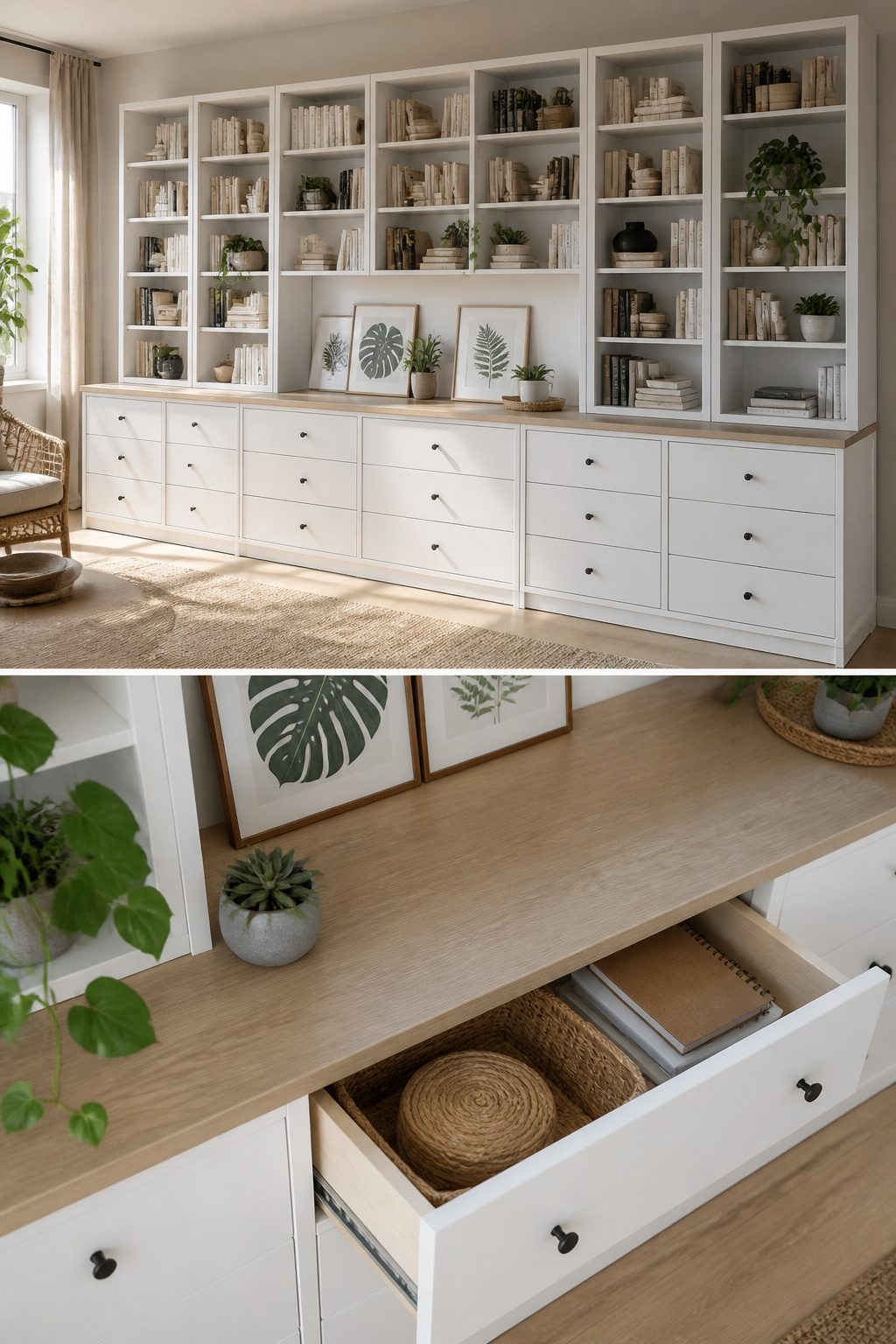
The BILLY bookcase is the most-documented hack in this whole list, and the projects fall into two camps: built-in shelving and built-in beds. For shelving, the move is to line up multiple units wall to wall and trim them out so they read as one piece. One studio setup used six BILLY bookcases plus five SONESAND 3-drawer chests with EKBACKEN countertops, running about $1,631 total for a wall-to-wall system that handled storage, a dressing area, and TV placement in a single row. A bedroom corner version used five BILLYs in varying sizes, added wood paneling for the built-in effect, and painted everything in Valspar’s Coastal Dusk to match the room.
The bed frame hack pairs two BILLY bookcases with a DIY frame to create integrated storage on both sides of the mattress. The 11-inch shelf depth is the hard limit here; it works for jewelry, undergarments, and handbags, but sweaters and jeans will not fit. Budget runs a few hundred to roughly $1,600 depending on how many units you bridge together, and the core build is a single weekend if your walls are reasonably square. The extenders help when ceilings run past the standard 80-inch height, and OXBERG doors or glass inserts can finish the look without custom carpentry. Drawers, though, you will have to build yourself; the PAX system is the alternative if integrated drawers matter more than the lower BILLY price point.
2. KALLAX Shelf Hacks
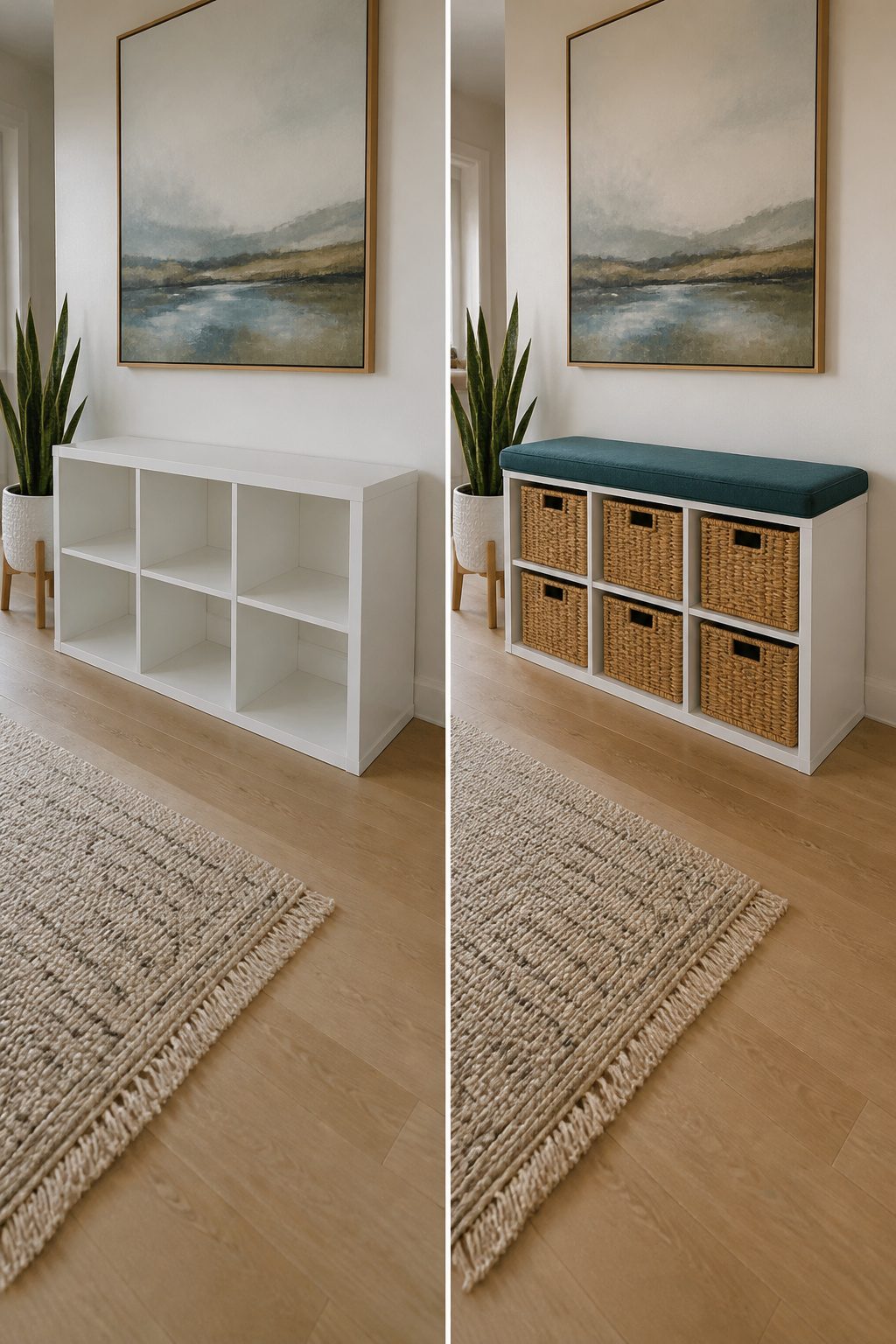
The KALLAX shelf is the piece people reach for first when they want a hack that actually earns its floor space. Its 13-inch cube dimension is the practical constraint that shapes every build; cushions, bins, and baskets all have to fit that grid or look wrong.
Bench builds are the obvious move, and they work because the unit is already the right height for seating once you flip it. A custom cushion cut to the full width turns the top into a window seat or dining banquette without touching the frame. For a room divider that still feels light, legs raise the whole shelf off the floor so air and light pass underneath while the cubes face both directions. Entryway cubby storage uses the same logic: bins below for shoes, one open cube for bags, the top surface for keys.
What separates a KALLAX hack that lasts from one that sags is the backing, or the lack of it. The stock piece comes with thin fiberboard across one side. For anything that takes weight, like a bench, replacing that with 1/4-inch plywood screwed through the frame keeps the unit square. Five sources back this; the ones that skip it and just add legs report wobble by month three.
3. PAX Wardrobe Hacks
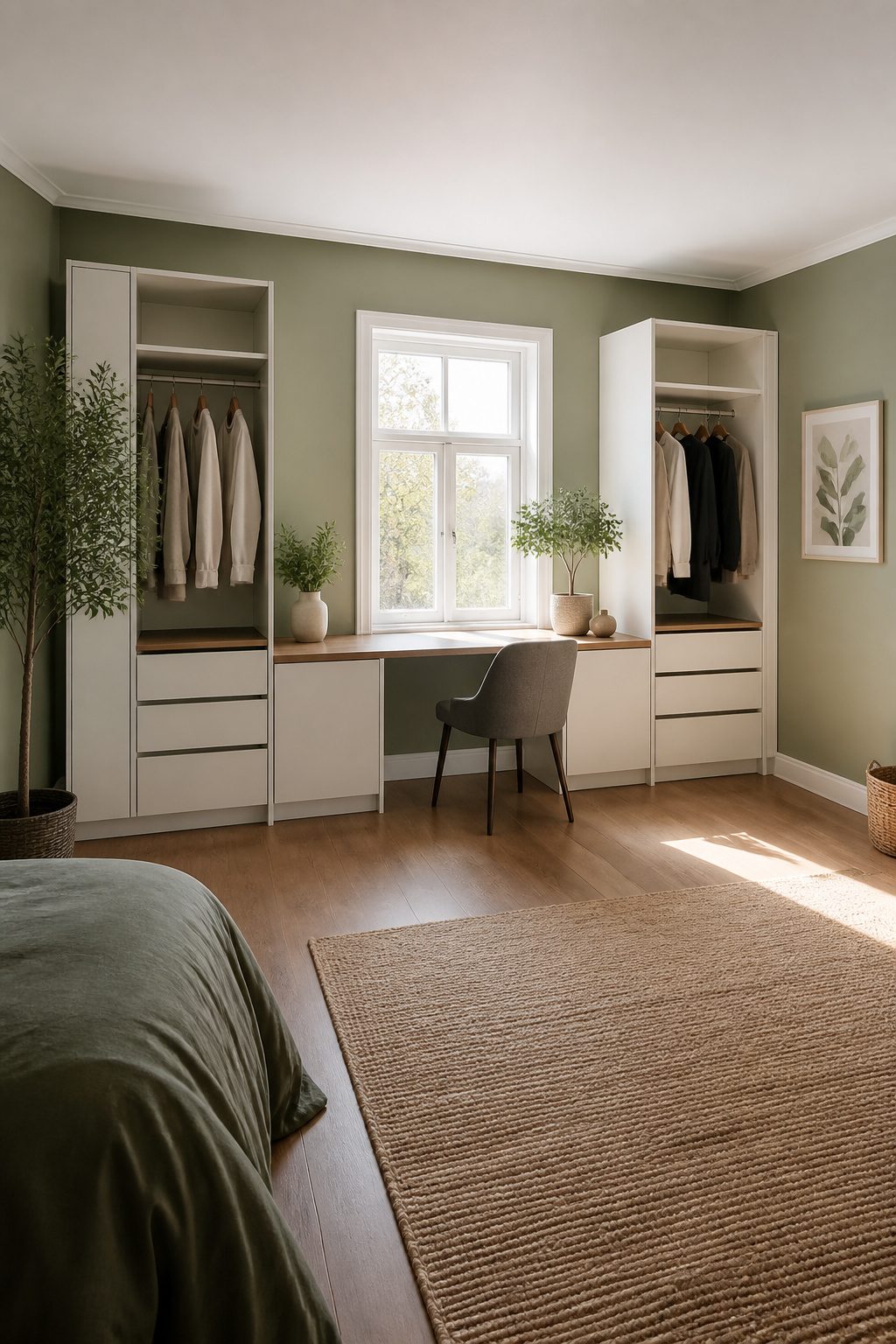
The PAX wardrobe system comes in two depths, 13 3/4 inches or 22 7/8 inches, and that choice locks in what you can store inside. The shallower frame works for folded clothes and slim hangers; the deeper one leaves room for baskets on the back side of a hanging rod. I spent an afternoon adjusting the heights on my own rails, reaching past the front bar to lift the metal pegs and drop them into new holes. The frame does not fight you, but the pegs are stiff the first few moves.
Drawer inserts change the usefulness completely. IKEA sells Komplement trays that drop onto the existing rails, or you can cut MDF to size and rest it on ledges you screw into the sides. The inserts turn a hanging bay into folded storage for about the price of a dinner out.
Freestanding use is where the PAX stops reading as closet furniture. Two units flanking a window, with a plank of MDF and Gripit wall anchors between them, become an adjustable desk that drops to bench height when you slide the board down. The same frame, faced with cane webbing and painted Benjamin Moore Willow Grove, reads as a custom built-in that no one identifies as IKEA. The brass hardware and cMDF panels are what sell the illusion; the PAX skeleton is just the cheap structure underneath.
4. HEMNES Dresser Hacks
The HEMNES dresser sits in a lot of bedrooms because the solid pine construction takes abuse better than the paper-thin veneer on cheaper lines. That same pine is why skipping prep on the pre-finished surface ruins more paint jobs than any other mistake; the factory coating looks ready but resists anything you brush over it. Sand until the gloss is gone, wipe the dust off completely, then prime.
Paint opens the most room for change. Frenchic’s Browning Wax over an undercoat, worked through with a wood-grain tool, gave one dresser the look of solid lumber for about $50. Stain behaves differently here than on veneer; pine absorbs it unevenly, so a conditioner coat first keeps the blotching under control.
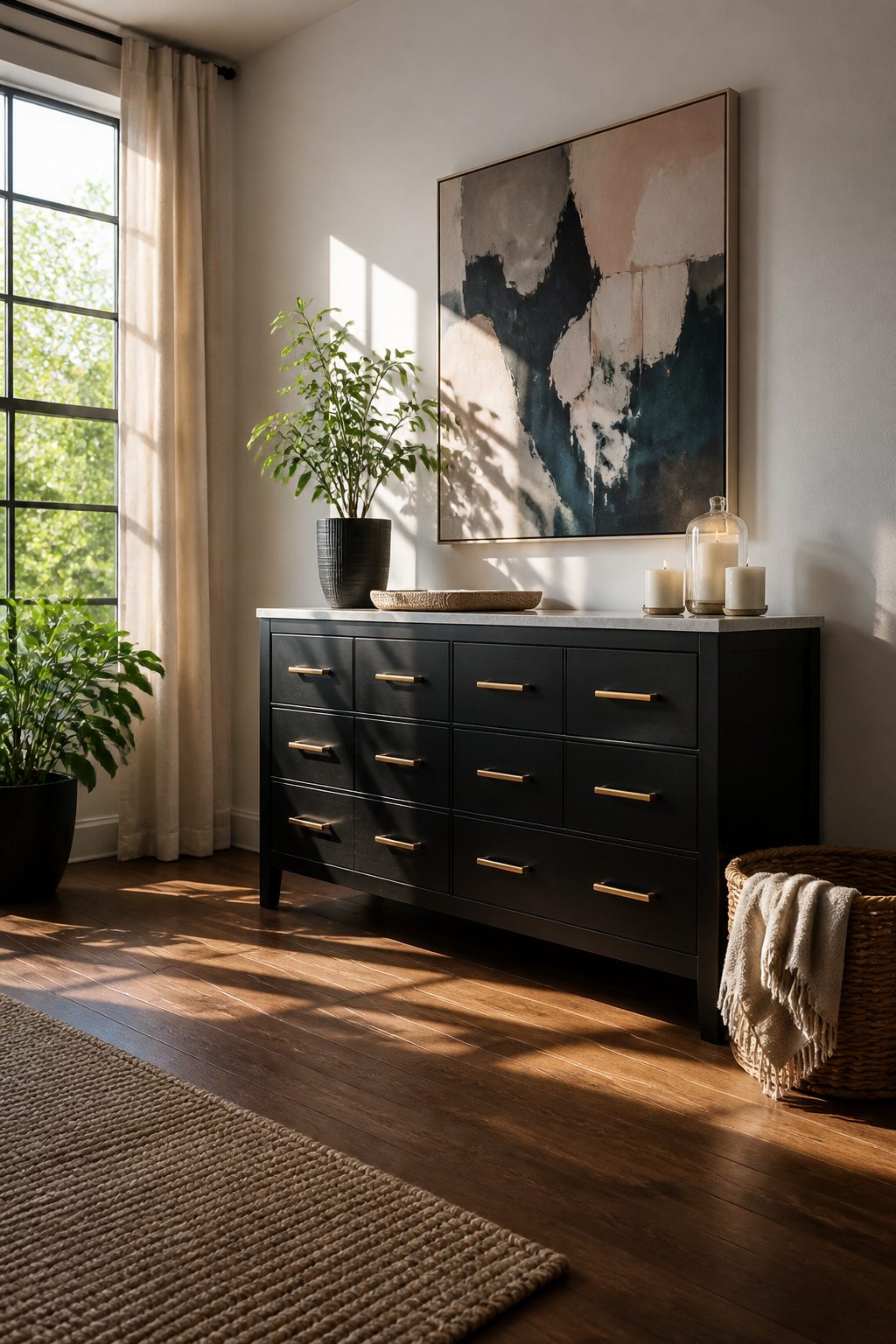
Hardware swaps run cheap and fast. The standard pulls drill at a common 128 mm spacing, so replacements from any big-box store bolt right on. For the top, swapping the flat pine slab for a cut stone remnant or a stained hardwood board changes the whole piece without touching the drawers. One mid-century hack kept the body painted matte black, added tapered legs in place of the block feet, and finished with brass bar pulls. The dresser became a changing table, though the same treatment reads equally well in an adult room.
The fluted-front version takes more patience, routing or gluing half-round dowels across every drawer face, but the texture hides fingerprints and reads far more expensive than the hours invested.
5. RAST Dresser Hacks
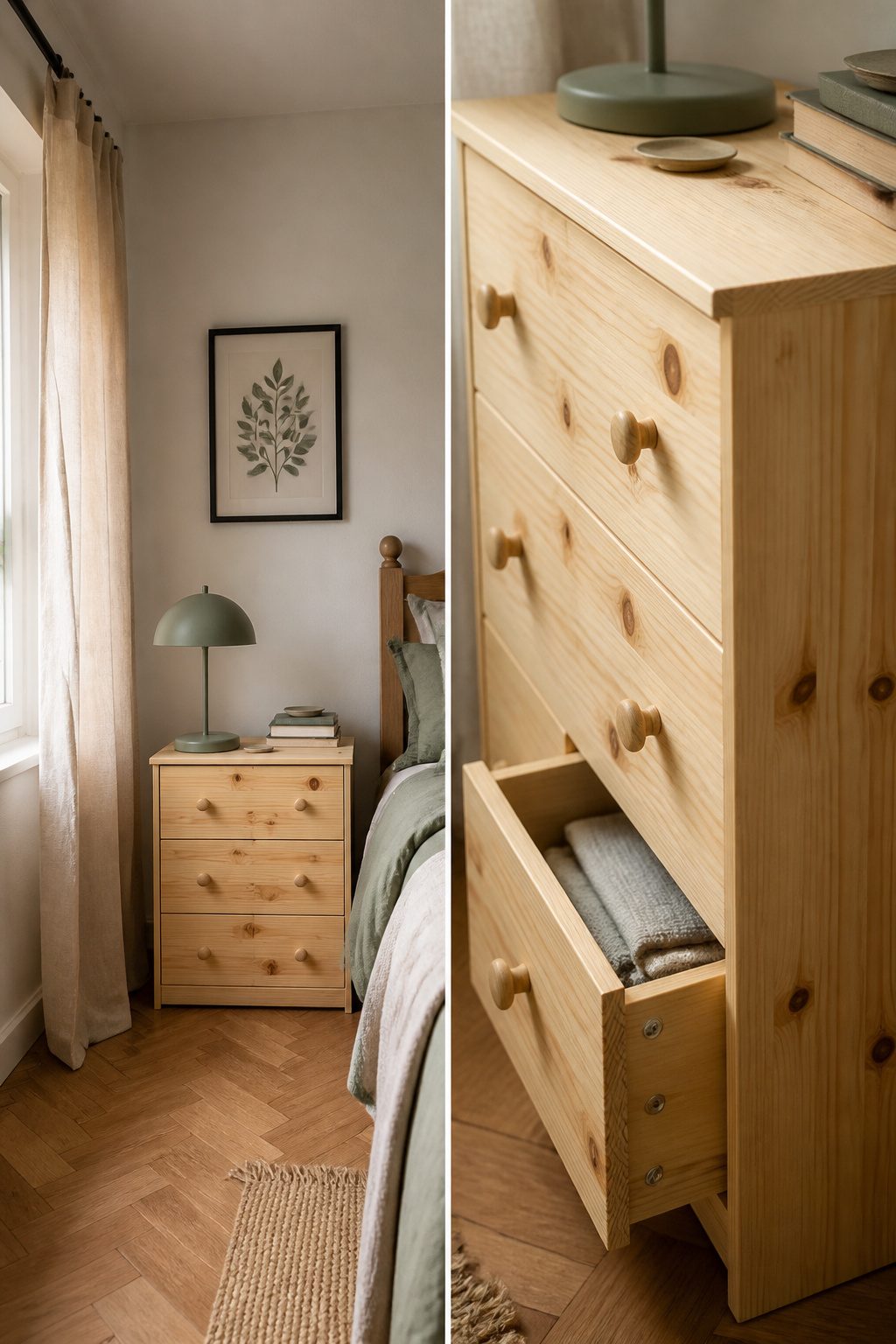
The RAST dresser sits at the entry point of most IKEA hacking careers for a reason. At 14 1/8 x 11 3/4 inches, the footprint fits spaces where nothing else will, and the untreated pine takes stain without the blotching you get on laminated pieces. That raw wood also means the surface is ready for paint, laminate paper, or the fluted trim treatments that turn up everywhere now.
Nightstand conversions are the obvious play, but the same three-drawer body works as a desk base if you add a countertop or hollow-core door across two units. The single pulls swap out easily for something slimmer, and wood-look laminate paper on the drawer fronts upgrades the whole piece without touching a brush.
What catches first-timers out is the joinery. The dowel joints loosen if you move the piece loaded, and a wobbling RAST is nearly impossible to true up after the fact. Glue the dowels during assembly, not after you notice the rock. The suitcase-dresser look, another common RAST direction, needs that square frame to read right; a racked body ruins the illusion entirely.
6. LACK Shelf Hacks
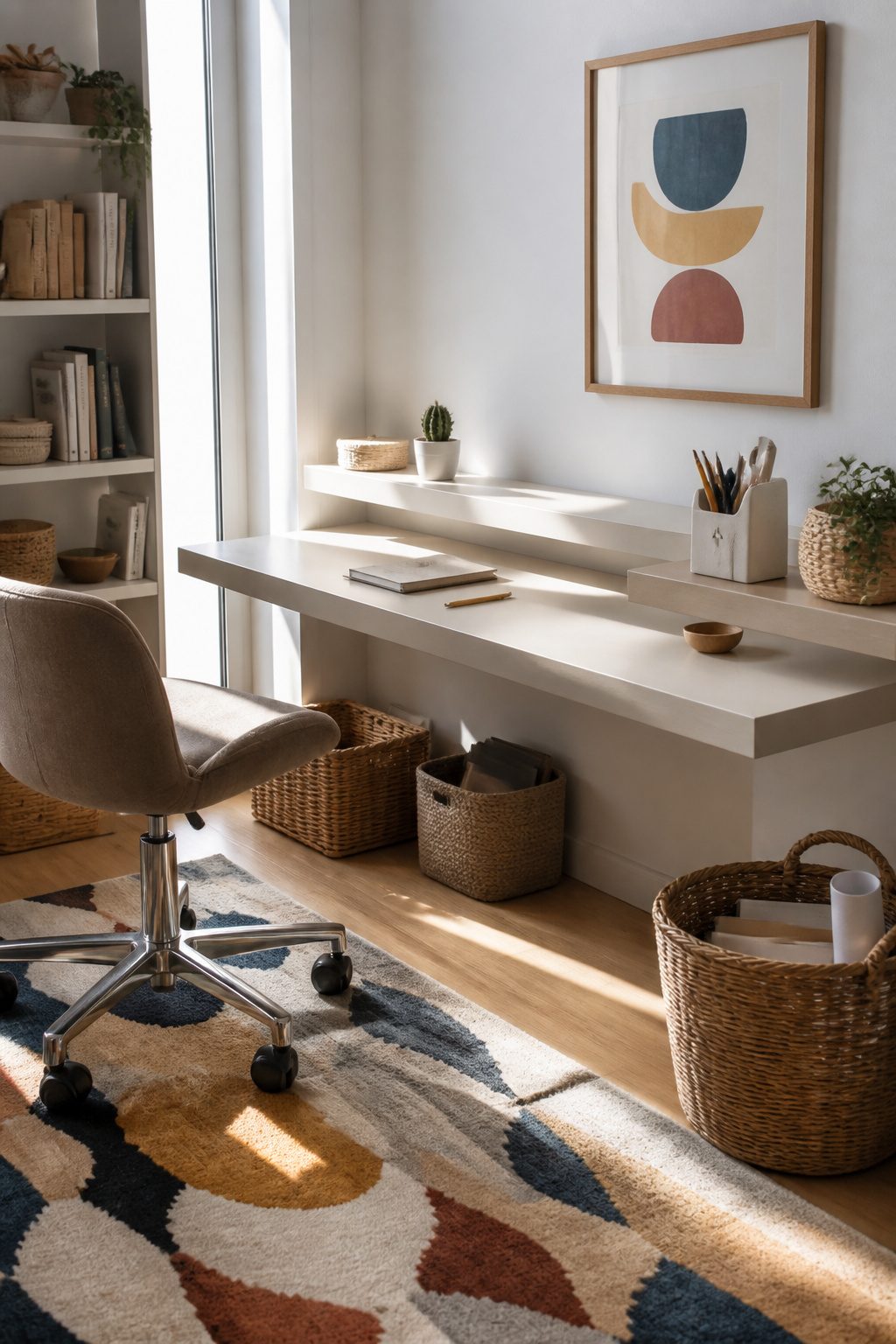
The LACK shelf looks like a floating slab, but the bracket system tells a different story. A metal rail hides inside the hollow core, and the shelf slides on like a sleeve. The 43-inch version tops out at 55 pounds, which is less than most people assume when they load it with books. I learned that the hard way after a row of hardcovers pulled the front edge down until it touched the wall.
For a floating desk, two 43-inch shelves spaced 24 inches apart give you about 48 inches of work surface. The trick is the wall behind it. Drywall anchors, even the heavy-duty toggle kind, creep over time under a desk’s constant pressure. After six months of leaning elbows and shifting laptops, mine had pulled an eighth of an inch out from the wall. Stud mounting fixes this, but the LACK’s rail holes land on 16-inch centers only by luck. I drilled new rail holes to hit studs exactly, and that desk hasn’t moved in two years.
Paint transforms the finish without the cost of replacing the shelf. The laminate takes primer fine if you scuff it with 120-grit first. I used a shellac-based primer on mine because the oil-based option stayed tacky for days in humid weather.
7. IVAR Cabinet Hacks
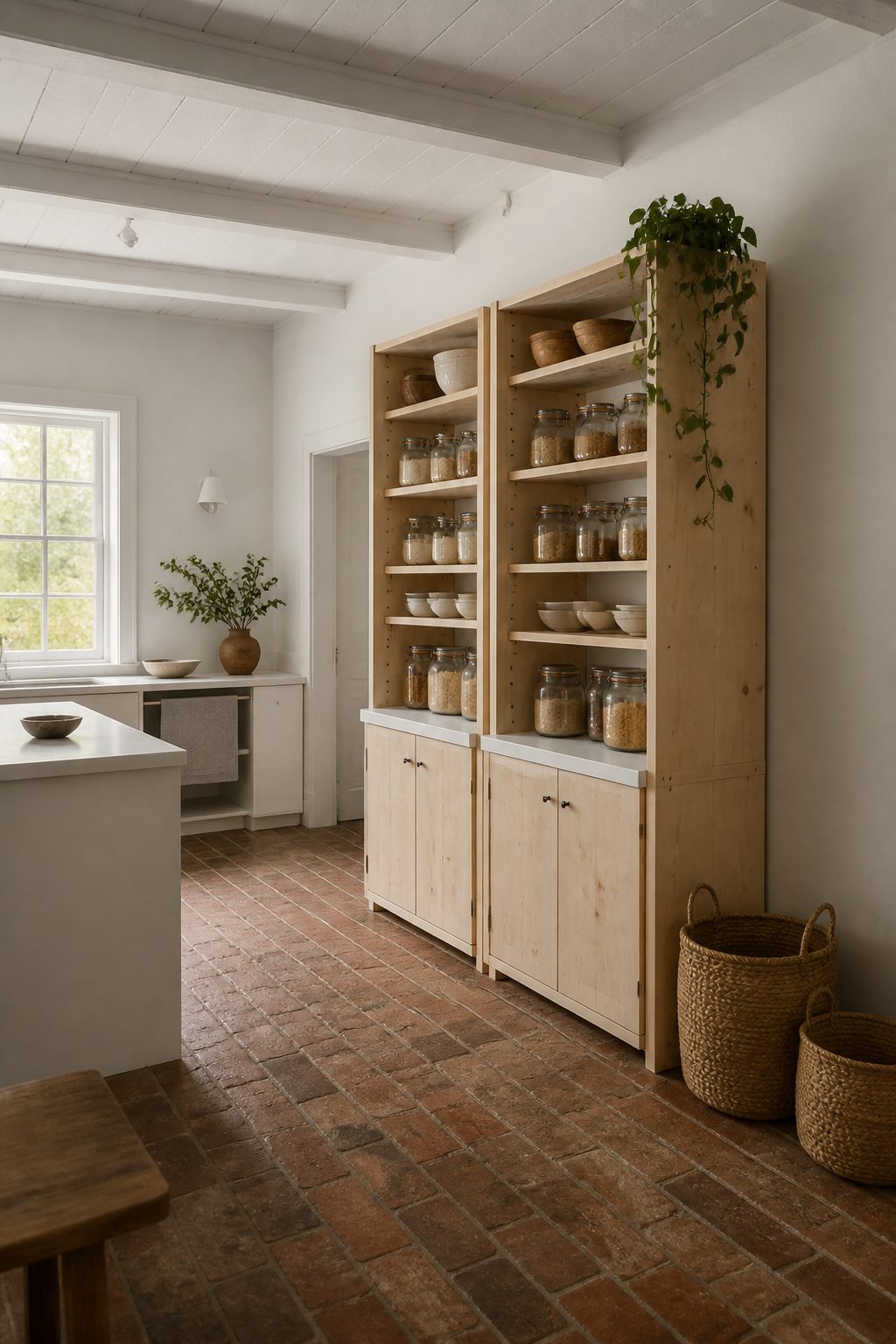
Untreated pine darkens to a honey tone within a year near a window, faster if you oil it. The IVAR’s modular pin system lets you move shelves in an inch, which matters when a cereal box stands 11.75 inches and the unit itself is only 12 inches deep. That depth is the hard limit: standard dinner plates fit front-to-back, but a mixing bowl does not.
I have watched renters build pantry walls by standing two IVAR cabinets side by side and adding the pine doors IKEA sells for the line. Paint helps the mismatch disappear; a warm white on the frames with the doors left natural reads intentional rather than unfinished. The pin holes show after painting unless you fill them first, a step I would skip only if every shelf height is already decided.
For a closed look on a lower budget, curtain wire and a heavy canvas panel stretched across the front costs less than the official doors and hides the same clutter. The pine slats on the cabinet sides make that attachment easy; screw eyes twist in by hand.
8. MOPPE Mini Chest Hacks
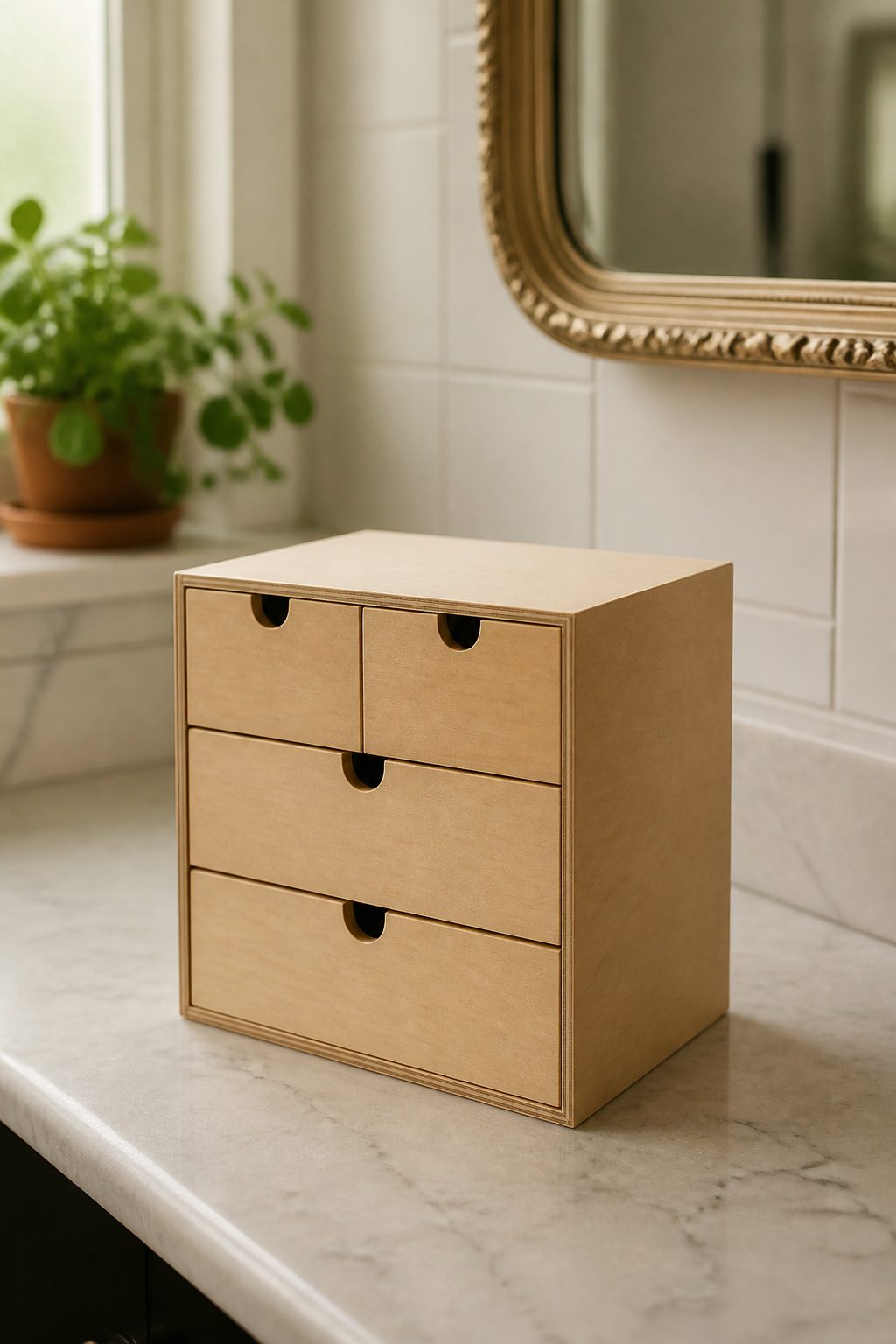
The MOPPE mini chest measures 12 1/2 x 7 x 8 5/8 inches, a footprint that rules out shoe storage or bar cabinet duty but opens up tighter spots those bigger pieces cannot reach. Birch plywood walls take paint and glue better than the laminated stuff, which matters if you are adding dividers inside the drawers.
Desk supply caddies are the obvious win. The shallow depth keeps pens and paper clips visible; without dividers, everything slides to the back and you still hunt. I have seen craft rooms where someone cut balsa strips to length, glued them in with wood adhesive, and ended up with a thread spool grid that pulls out clean.
Bathroom counters are trickier. The 7-inch depth fits behind most faucets, but steam swells raw plywood edges over time. A coat of water-based polyurethane on the birch before you load it with skincare bottles buys a couple of years, not forever. That is the limit to name: this is a weekend project piece, not heirloom furniture, and the hack works best where you can replace it for the same twenty-some dollars when the joints loosen.
9. GODMORGON Vanity Hacks
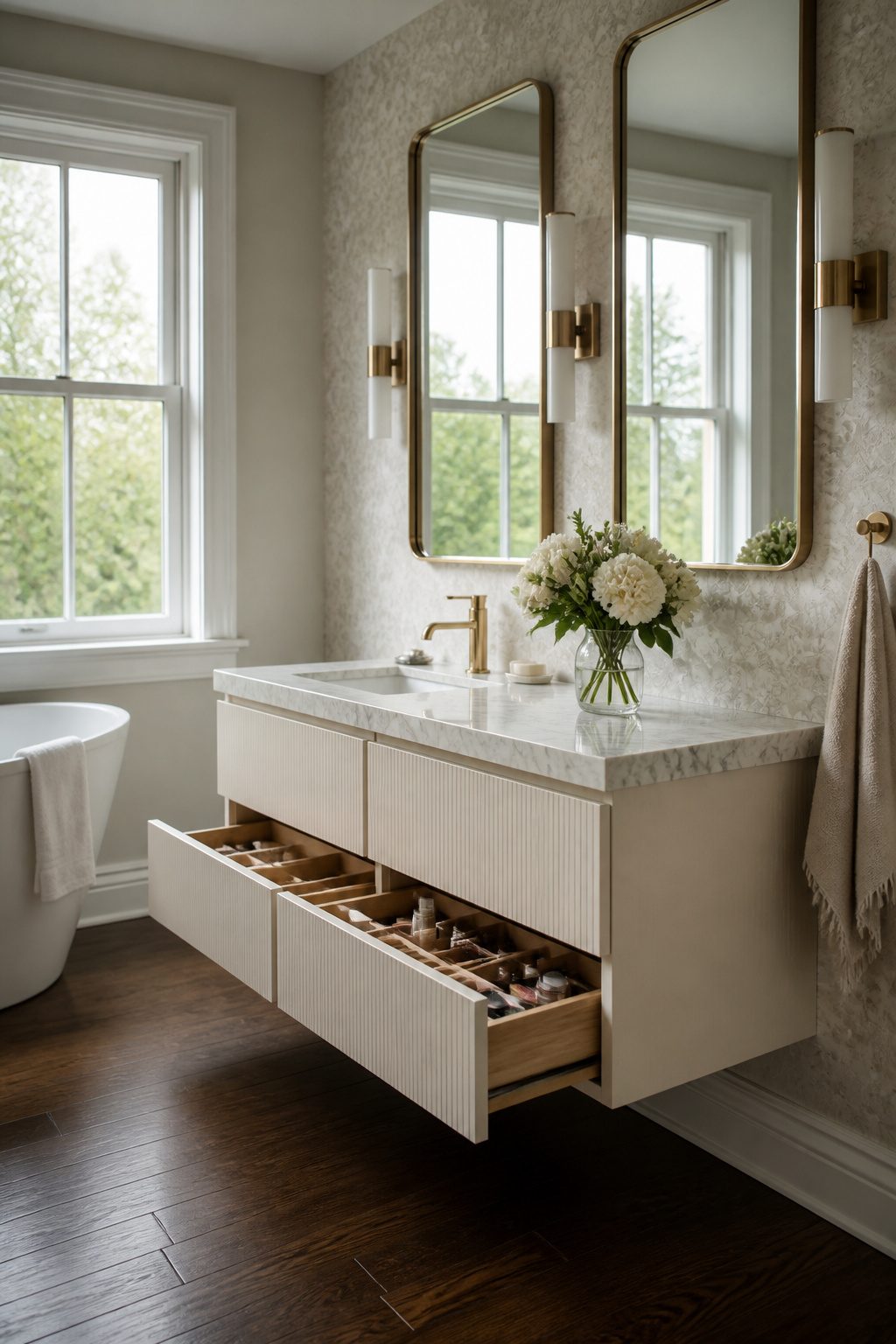
Wall-mounted vanities free floor space in a bathroom that never had enough of it to begin with. The GODMORGON box hangs off a steel bracket and leaves the tile underneath open, which matters more in a small rental where every visual inch counts. The catch is the plumbing rough-in height. Standard rough-in for a wall-mounted vanity runs 18–24 inches from finished floor to the center of the drain pipe, and if your existing stack sits lower than that, the drawer box will collide with the trap. Measure before you buy, not after you have the cabinet unboxed.
The drawer organizer inserts sold for this line actually fit the full depth, which is rarer than it should be with IKEA. Savannah and Kaitlyn Stone of Ainslee Design Studio kept the GODMORGON carcass and swapped in custom door fronts from Nieu, then topped it with Calacatta marble. That split, saving on the bones and spending on the surface you touch every morning, is the move that makes a hack feel like a permanent choice rather than a temporary fix. Countertop replacement is straightforward because the box accepts standard slab dimensions; laminate, quartz, or stone all drop onto the same frame. The marble backsplash in their build carried the material up the wall and made the vanity look built-in rather than hung. For a weekend project, a pre-cut remnant from a local stone yard runs cheaper than the big-box slabs and cuts the wait time from weeks to days.
10. MALM Bed Hacks
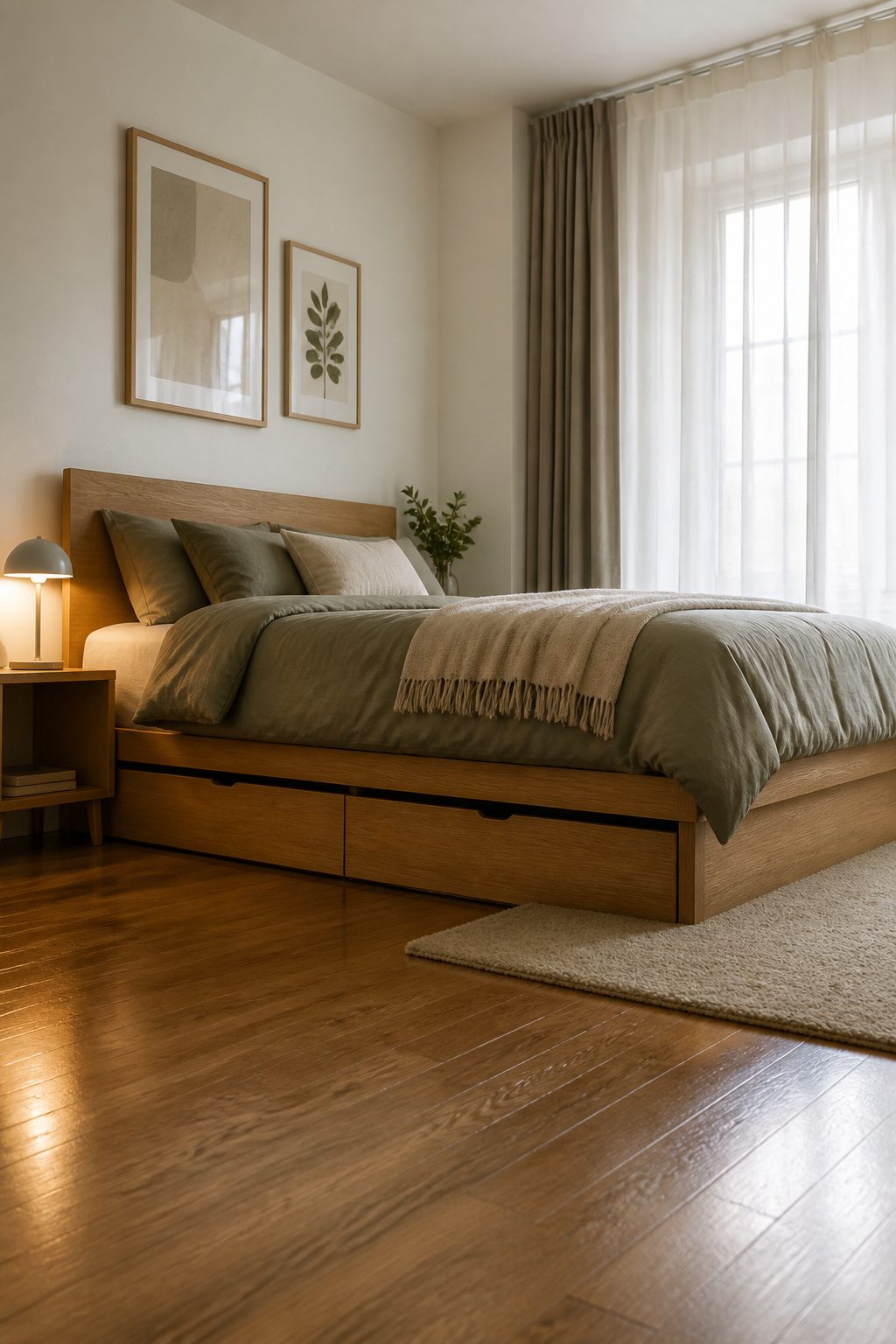
MALM bed frames sit low to the floor, which looks clean until you need the space underneath. Raising the frame on a simple platform built from 2x4s and plywood adds about 12 inches of clearance without touching the IKEA structure itself, so your warranty stays intact and the bed still breaks down for a move.
The under-bed drawer add-ons that slide on casters are the storage hack that actually survives real use. I have seen too many builds where people frame custom drawers directly into the base, and then the seasonal humidity swells the wood and the drawers jam by October. The IKEA add-ons are engineered to the same tolerances as the bed, which matters more than the custom look when you are pulling them out at midnight for spare sheets.
For the slat base, the choice between LURÖY and LEIRSUND is not decorative. LURÖY is the flat, lightweight slat you probably already own if you bought the bed as a package. LEIRSUND adds a slight curve and more flex, which changes how a foam mattress breaks in over the first six months. If your mattress feels firmer than the store model, the slat base is the first thing to swap before you blame the foam.
Headboard shelving on a MALM takes some care because the panel is hollow. A floating shelf mounted through the panel into the wall studs behind it works; a shelf cantilevered off the headboard itself pulls the screws out within a year. I have seen both, and the wall-anchored version is the only one that still looks level after a second winter.
What Makes a Hack Last
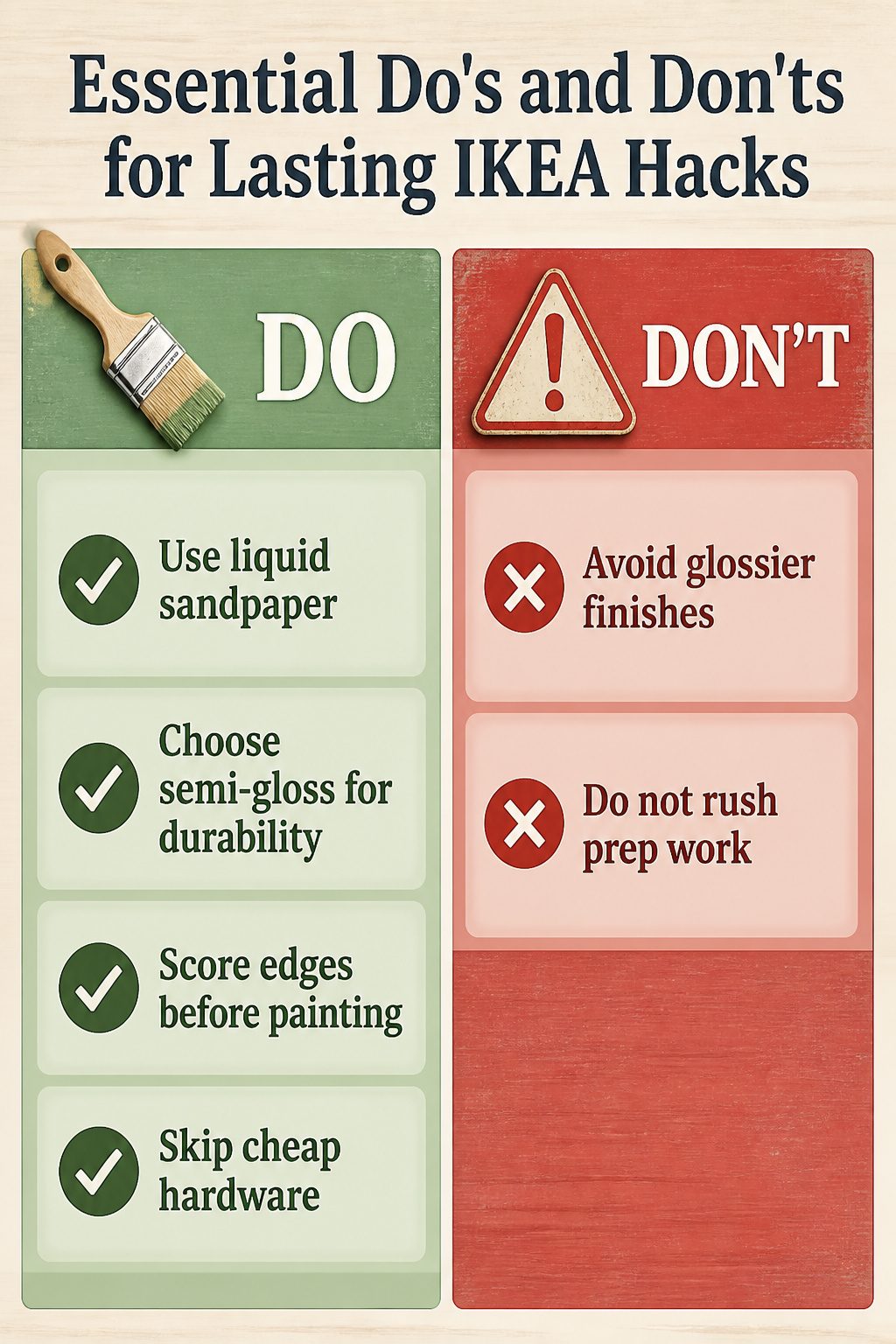
The finish on IKEA laminate decides whether you walk away with a hack that lasts two years or ten. Matte surfaces with visible grain, like the older kitchen cabinet lines, sometimes need only liquid sandpaper to give paint something to grip. Glossier laminate, the kind on most BILLY and MALM pieces, will scrape right off without a proper primer. Two coats of Kilz on those brown BILLY bookcases is the difference between a weekend project and a redo in six months.
Sherwin-Williams Emerald line comes up repeatedly for a reason. The semi-gloss holds up on cabinet surfaces that get touched daily, and it levels well enough that hand-rolling still looks professional. For veneer edges, scoring lightly before painting keeps the new coat from chipping where the thin layer meets the core. Skip that step and the first bump against the edge reveals raw MDF.
Hardware is the other half of longevity. Rejuvenation latches and pulls add weight that cheap big-box options never match, and the screw spacing on IKEA frames is forgiving enough that you are not locked into their catalog. The $50 HEMNES shoe cabinet hack that reads as solid wood relies on Frenchic Browning Wax and a wood-grain tool over primer and undercoat, not on skipping the prep. Wax over bare laminate would last until the first cleaning.
Real Weekend Budgets
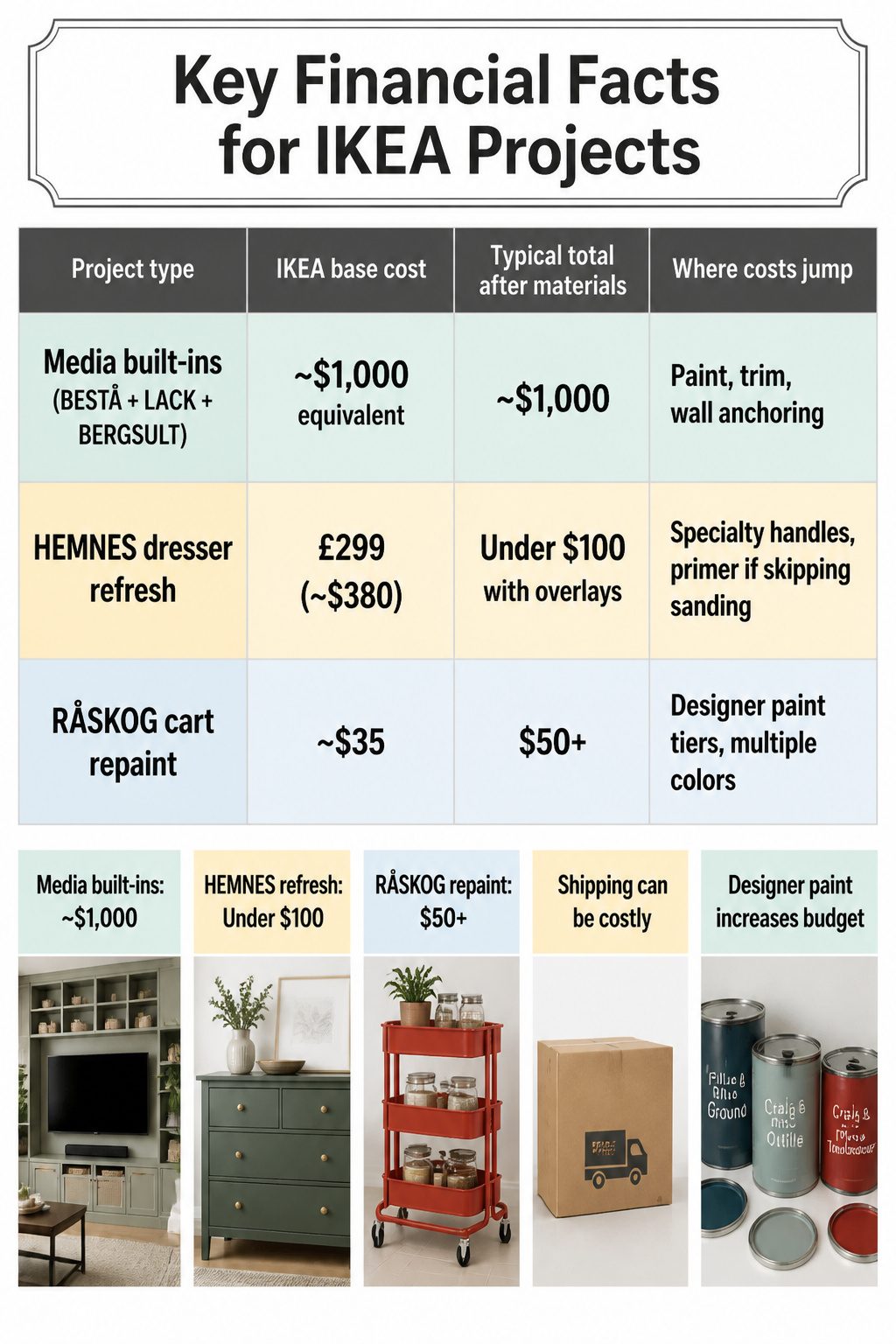
A $50 paint job on an IKEA cart can outspend the cart itself if you reach for designer paint. Farrow & Ball’s Blue Ground, Craig & Rose’s Ottilie, and their Troubadour red on the wheels pushed that RÅSKOG hack to just over $50, which still lands in weekend territory but eats more of the budget than the furniture did. The real trap is shipping. One desk order came with shipping that cost more than the desk itself, and at 2.5 hours from the nearest store, driving back for a second can of paint is not a quick fix.
| Project type | IKEA base cost | Typical total after materials | Where costs jump |
|---|---|---|---|
| Media built-ins (BESTÅ + LACK + BERGSULT) | ~$1,000 equivalent | ~$1,000 | Paint, trim, wall anchoring |
| HEMNES dresser refresh | £299 (~$380) | Under $100 with overlays | Specialty handles, primer if skipping sanding |
| RÅSKOG cart repaint | ~$35 | $50+ | Designer paint tiers, multiple colors |
The £800/$1,000 media wall is the ceiling that works, not the floor you should expect. Kelly Kahn’s build proves the savings come from labor, not from cheap materials: the custom quote was $3,200. Most of us will land between the cart and the built-ins, and the mistake is treating the IKEA price tag as the real budget.
When to Skip the Hack
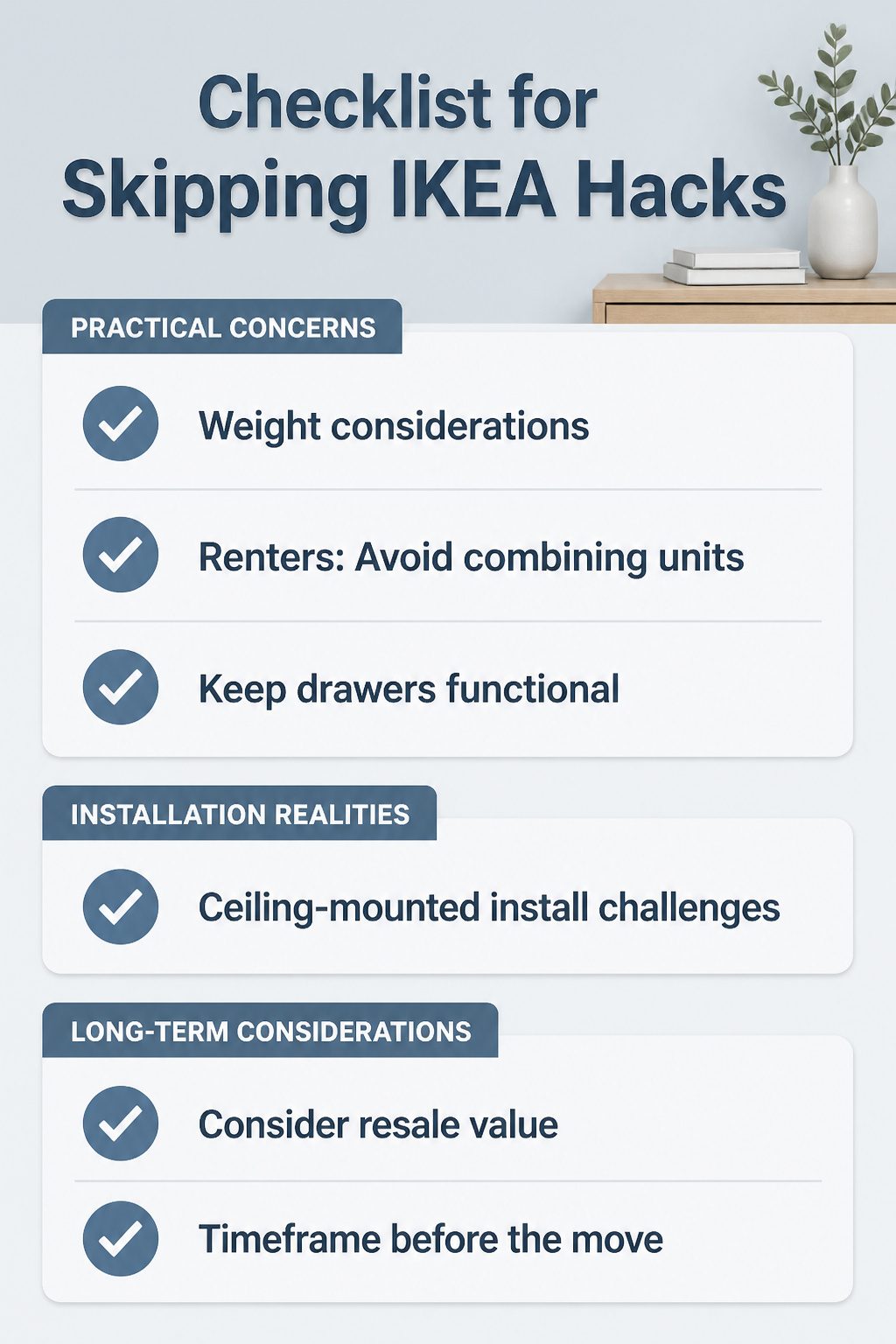
Not every project that looks good on a feed survives real life. The MAGASIN bread bins glued into a nightstand, for instance, sit at 19 pounds each before legs or varnish. That is a lot of weight to carry up stairs at the end of a lease, and the screw joints between two metal boxes take abuse when the piece tips. Renters who move yearly should skip anything that joins two small units into one larger one, because the failure point is always that seam.
The HEMNES drawer overlay hack is gentler: glue, paint, and geometric panels, no power tools. But the overlay adds thickness that can bind drawers in humid bathrooms, and the £299 base unit stops being a cheap experiment. Someone who needs the storage working on Monday morning should buy the drawers used and hack those instead. A scuffed secondhand HEMNES carries the same paint and panel potential at half the risk.
Ceiling-mounted Mandal headboards on Stolmen posts avoid wall holes, which sounds ideal for renters. The catch is the installation: securing posts into a ceiling you do not own, then trusting that tension through a security deposit inspection. The project suits only renters who know their ceiling material and their landlord’s tolerance for evidence. Everyone else keeps the nightstands, bulky or not.
GODMORGON vanity hacks with custom marble and replacement door fronts, like the calacatta upgrade, belong to owners staying put. The base cabinet is the savings; the splurge is everything that makes it look built-in. A renter doing that work un-installs it at move-out and leaves the marble behind, or pays to ship stone. Buy used if the timeline is under three years; hack new only when you keep the keys.
Frequently Asked Questions
What are some easy IKEA hacks?
The easiest IKEA hacks swap in new legs and hardware or paint raw pine pieces straight out of the box. For a zero-tool refresh, replace pulls on a HEMNES dresser or add a custom cushion to a flipped KALLAX shelf to turn it into a bench. If you want a single-day project with paint, scuff gloss laminate with 120-grit paper and prime twice; skipping that prep is the mistake that turns a weekend job into a redo in six months.
How can I customize my IKEA furniture?
Painting, hardware swaps, and surface upgrades are the three main paths. Sand pre-finished pine like HEMNES until the gloss is gone, then prime before color; on laminate, scuff first and use shellac-based primer if humidity is an issue. Replacement pulls bolt right onto most frames because IKEA uses common drill spacing. For bigger impact, swap a flat pine top for stone or hardwood, or face a PAX wardrobe with cane webbing and custom panels so it reads as built-in furniture.
What are the best IKEA products to hack?
The BILLY bookcase, KALLAX shelf, and PAX wardrobe system are the most-documented and most versatile. BILLY works for built-in shelving and bed frames with integrated side storage. KALLAX cubes fit benches, room dividers, and entry cubbies as long as you reinforce the thin fiberboard backing with quarter-inch plywood. PAX comes in two depths that lock in your storage options, but the frame accepts drawer inserts, cane fronts, or an adjustable desk built between two units.