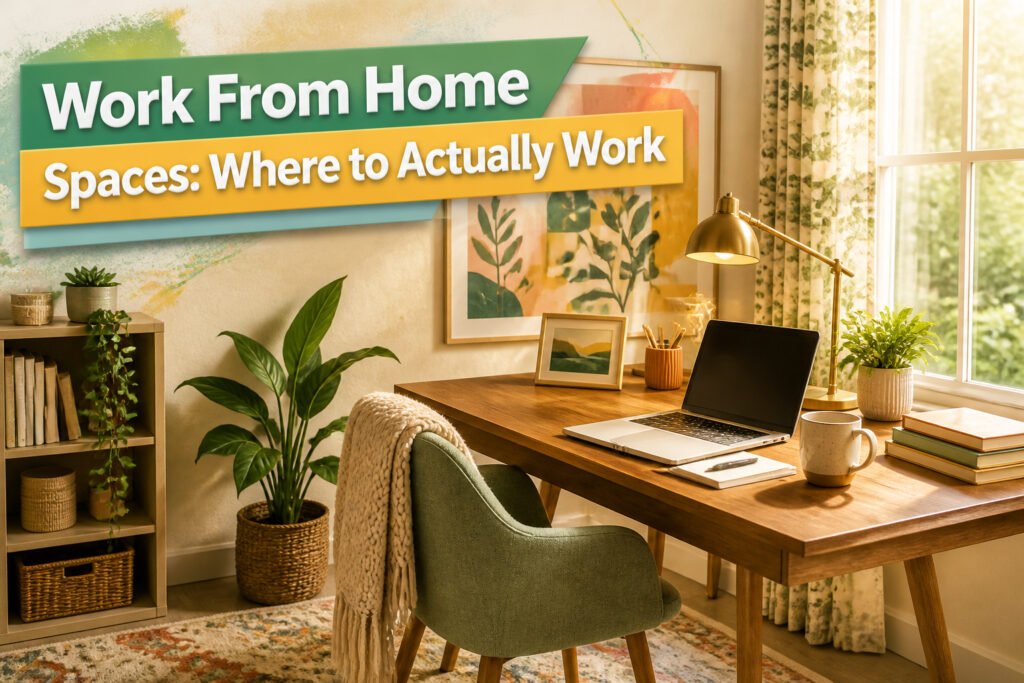
Work from home spaces are any place outside your actual home where remote workers get things done. The catch is that almost every option comes with a time limit, a cost, or a social contract you have to read right. A coworking desk averages $387 per month, but the real decision is whether you need that dedicated chair twice a week or twice a year.
Coworking Spaces
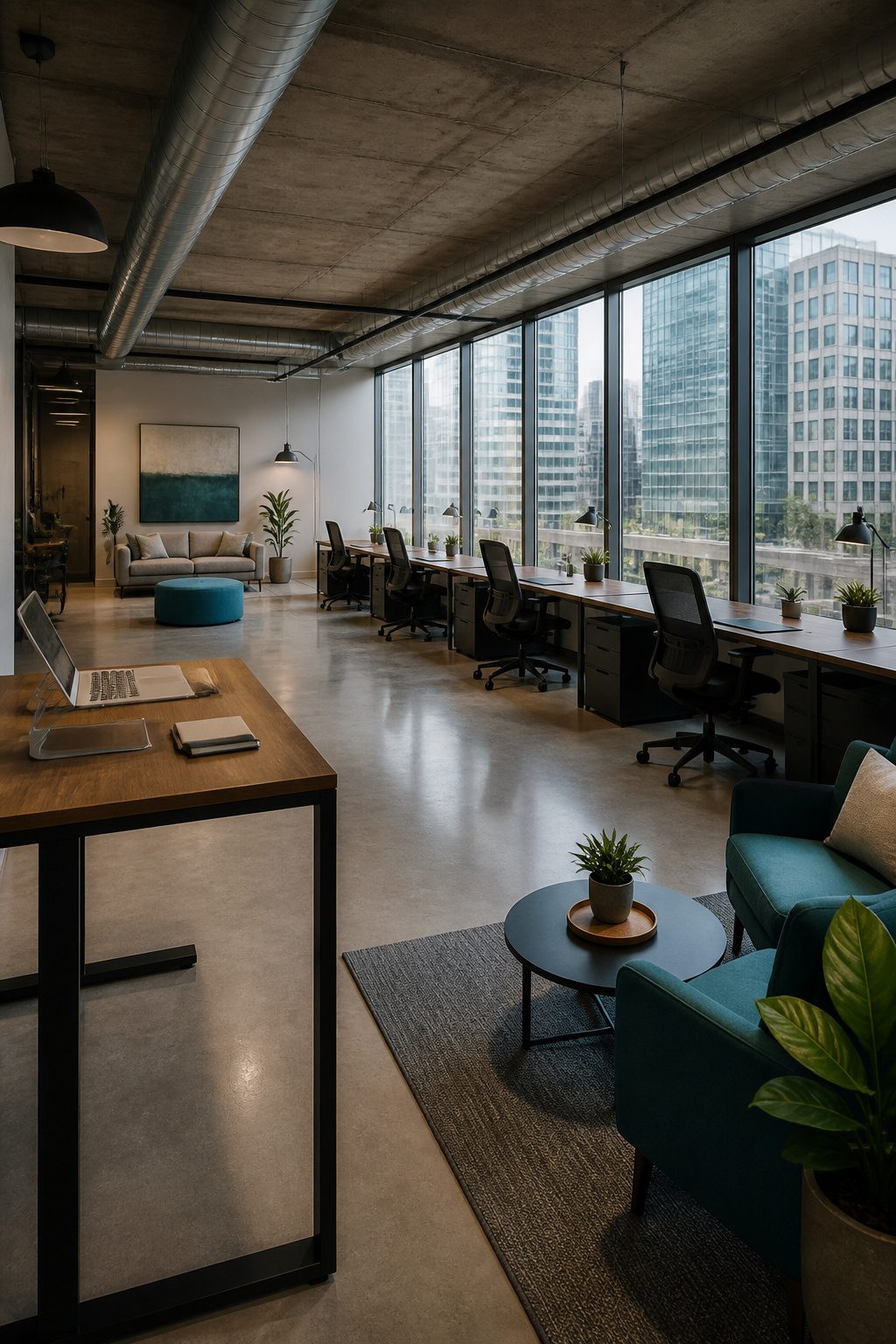
A desk at a coworking space runs about $387 per month on average in the U.S., though day passes start as low as $15 and drop-in rates at some chains sit around $50 per month for one day plus extras. For that, you get high-speed internet, meeting rooms, and the occasional networking event thrown in, which is why freelancers and remote workers keep showing up even when the kitchen table is free.
The professional environment matters more than the coffee. Having a door to close, or at least a zone that reads as "work" to your brain, separates the day into before and after in a way that home struggles to. Community-building happens in the margins: someone you borrow a charger from becomes a client referral six months later. That structure costs, though. Dedicated desks climb toward $450 monthly at the upper end, and private offices run higher still. For someone mid-project who only needs to escape the house twice a week, the math gets awkward fast. I weigh the $50 drop-in against what I actually accomplish in those hours, and some weeks it wins, some weeks it doesn’t.
Coffee Shops
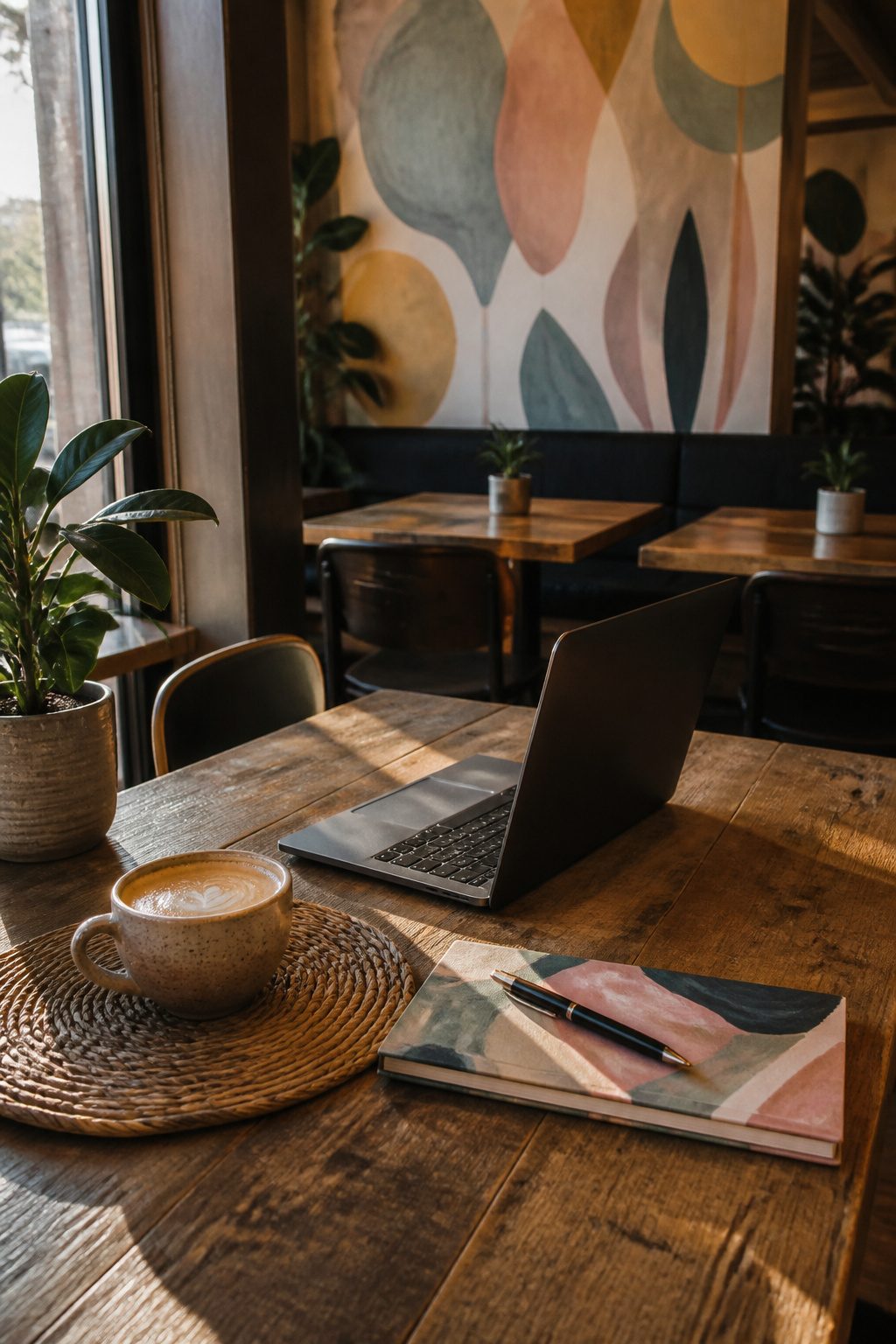
The coffee shop down the street from my apartment has become my default for two-hour sprints, not full days. The Wi-Fi stays reliable enough for cloud docs and light video calls, though I’ve watched it buckle when three people try Zoom at once. The real draw is the ambient noise: steam wands, quiet conversations, the clink of ceramic on wood. Research backs what most regulars already know, that steady background chatter at moderate volume can sharpen focus better than silence or sudden interruptions.
Food and drinks keep me from the kitchen-distraction loop I fall into at home. A single coffee earns about ninety minutes of camp time before I start feeling like furniture; two drinks stretches that to three hours, which feels like the honest ceiling. Outlet hunting is the practical skill here: corners and window ledges get claimed first, so mid-morning arrivals often end up in the center tables with dying batteries by afternoon.
Phone calls are the breaking point. The same buzz that helps concentration makes confidential conversations impossible. I save coffee shops for drafting, design review, anything that doesn’t require speaking aloud. For creative work or email clearing, though, the change of scene and the subtle pressure of being around other productive people does what my living room cannot.
Libraries
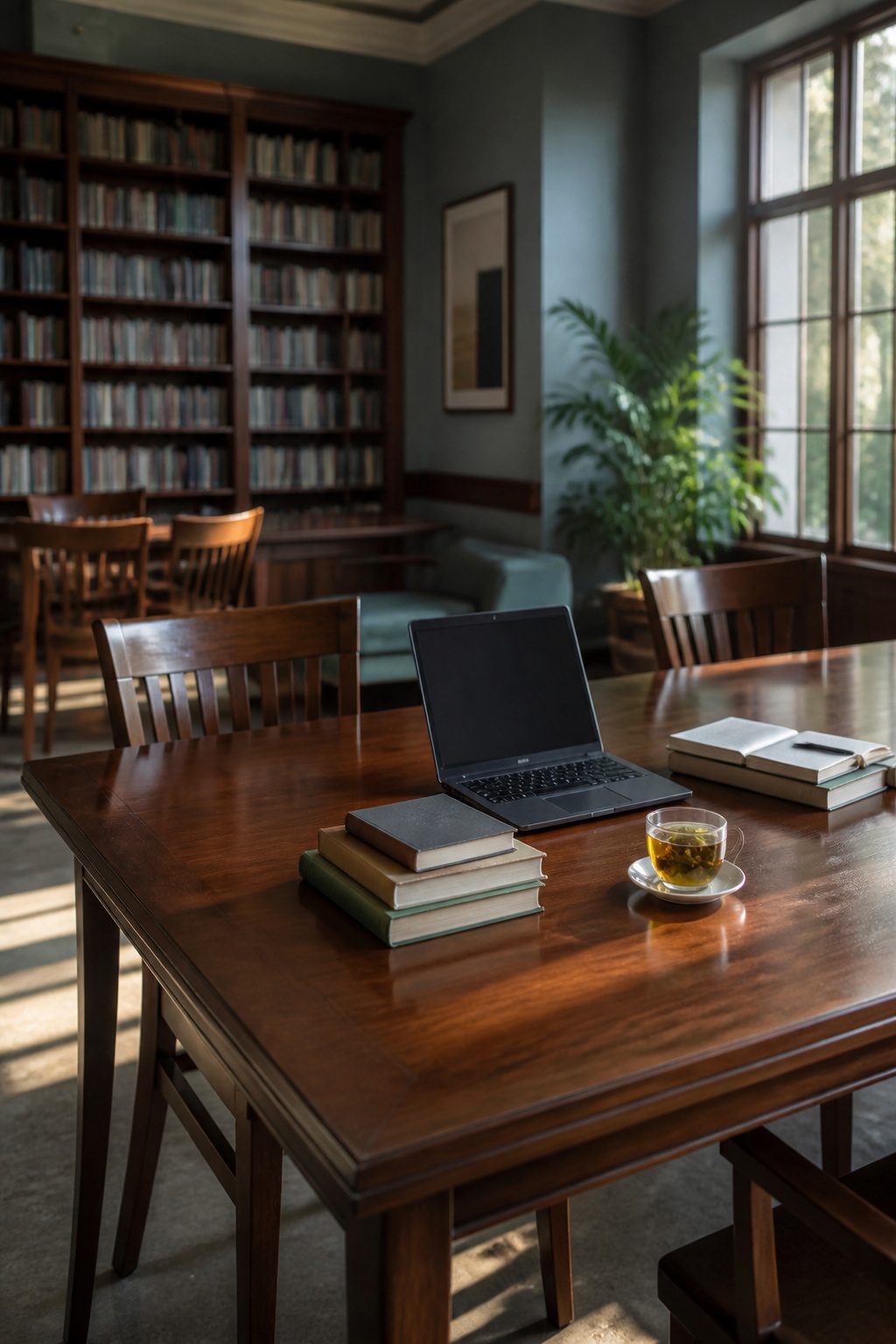
A public library still ranks as the quietest workspace I have found outside my own walls, and the price is hard to beat. Most branches now run free Wi-Fi with no purchase required, which already separates them from coffee shops where the tab climbs and the conversation volume rises with it. The real difference shows up when I need to think through something dense: the atmosphere is built for heads-down focus, not for turnover.
Study rooms change the equation entirely. My local branch takes reservations by the hour, and having four walls between me and the browsing area turns an afternoon of writing into something I can actually finish. Some neighborhood libraries, like the Hollywood branch in Portland, keep five of these rooms bookable and add low-cost printing on top. Hours vary by system, and the sign-up process ranges from a simple web form to a clipboard at the reference desk, so a phone call before heading out saves the trip.
University libraries open another path, though the rules are less uniform. A few allow public access during set visiting hours; others tie entry to a course registration or a remote-worker incentive program. Ball State University in Muncie runs one of the latter, bundling library access into its relocation package. The research resources run deeper there, but so do the restrictions, and I have learned to check the policy online rather than assume I can walk in and claim a carrel.
Hotel Lobbies
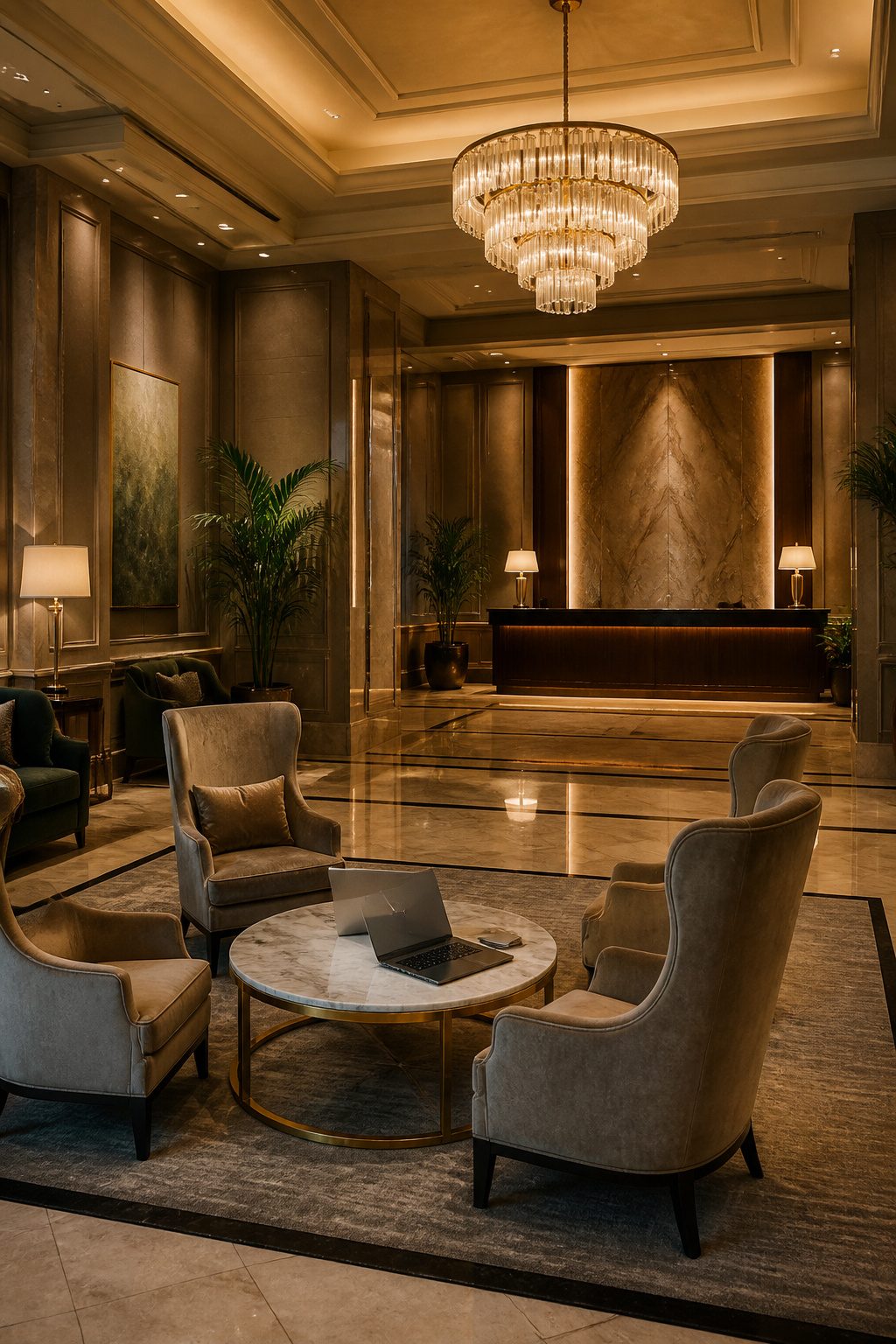
Hotel lobbies empty out on weekday mornings in a way that feels almost engineered for remote work. The seating is already built for lingering, the Wi-Fi is reliable enough for video calls, and if you need to print or fax, the business center is usually tucked just around a corner. I have walked into a midtown property at 10 a.m. and found two dozen seats with no one in them.
The comfort comes with a social contract. Order a coffee or a drink at the lobby bar and you have paid your rent for the afternoon; it runs about the same tab as a coffee shop, but the chairs do not leave your back sore. Rotate properties if you make this a habit, or the front desk staff will notice the same face on a laptop every Tuesday.
Some hotels have started packaging this directly. The Graduate offers an Out of Office deal that drops your nightly rate by 30 percent the first night, 40 the second, 50 the third, and gives the fourth free, with Wi-Fi, unlimited coffee, and a drink at checkout folded in. That is a stretch for a day-tripper, but for someone needing to escape a renovation or a housemate’s calls for a long weekend, the math works.
Public Parks
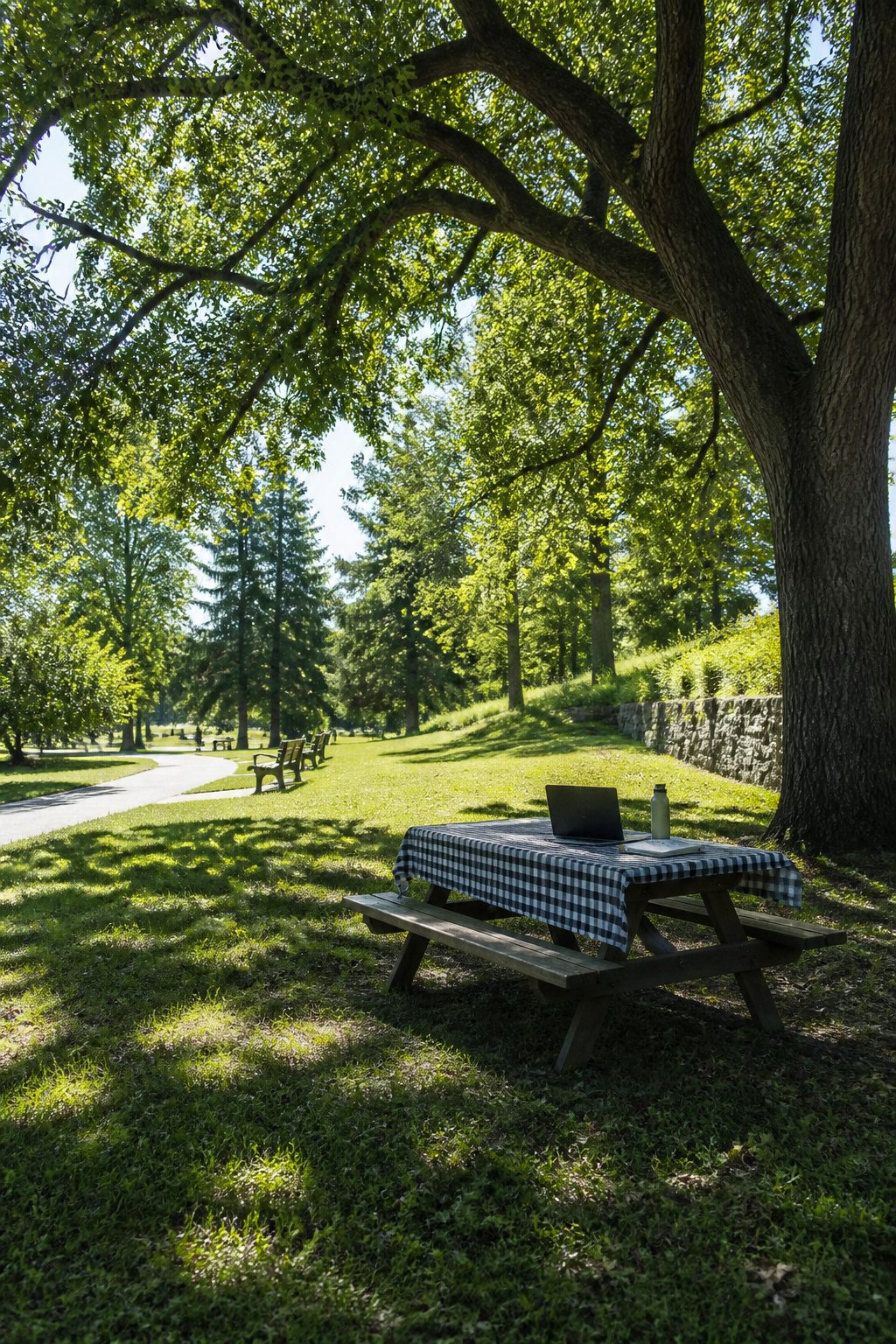
Natural scenery improves mood and productivity, which makes a public park worth considering on days when the weather cooperates. The catch is that most parks do not offer Wi-Fi, so a mobile hotspot or your phone’s tethering becomes the connection you actually have. I bring a battery pack large enough to keep both the laptop and the hotspot alive through a full morning, plus a sunshade or a matte screen protector so glare does not turn the display into a mirror. Tasks that work here are the ones that do not need a steady connection: drafting, editing offline documents, sketching layouts, or reading through materials I downloaded earlier. Video calls are usually out, and anything requiring real-time cloud syncing will stutter. The freedom is staying as long as the battery and the weather allow, which is often longer than a coffee shop would tolerate.
Restaurants and Bars
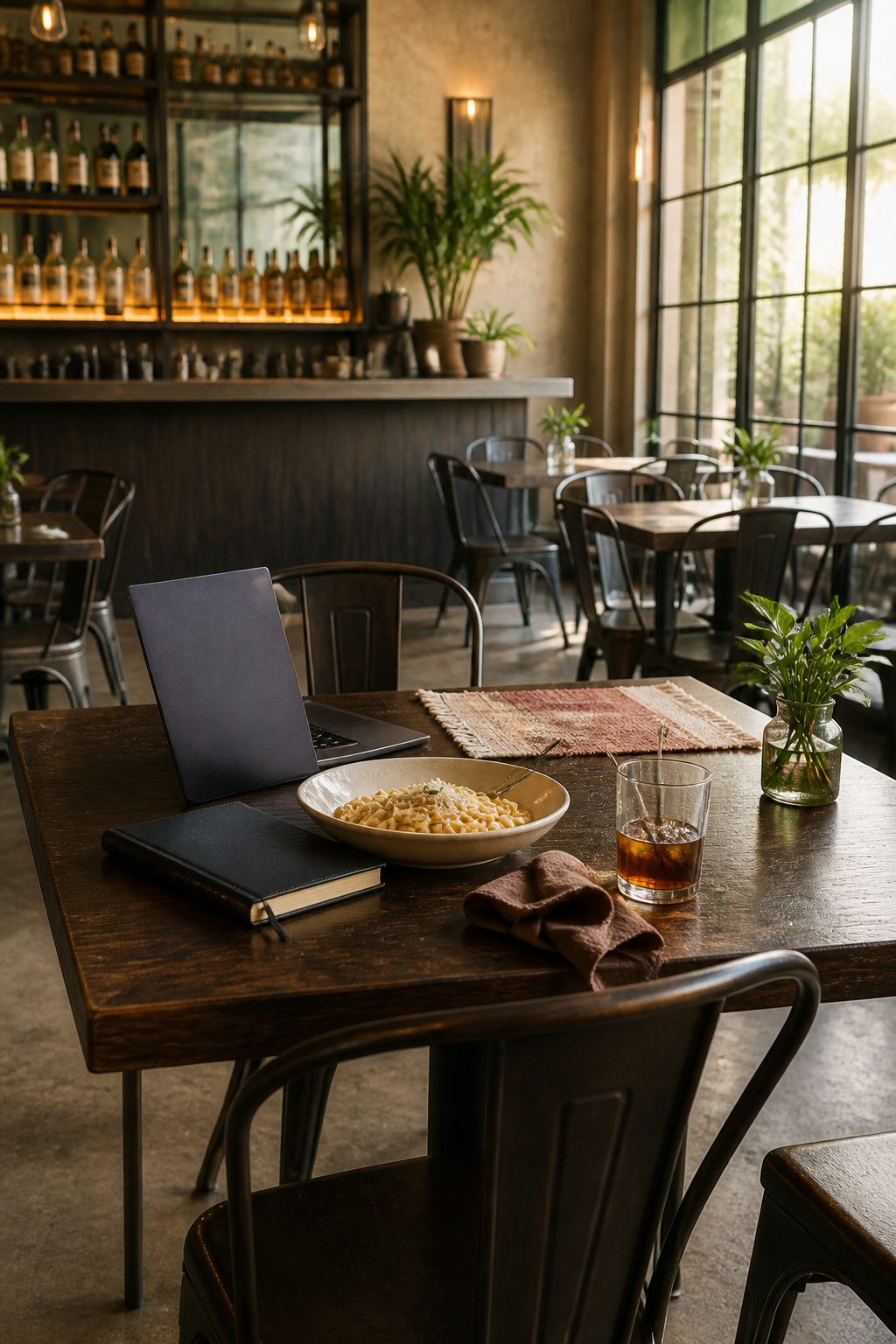
Restaurants and bars can work as a temporary desk if you time them right. The hours that actually function are the gap between lunch rush and happy hour, roughly 2:00 to 5:00 p.m., when tables sit empty and staff have nothing better to do than refill your water. Background noise at that hour sits low enough to keep you alert without demanding attention, a level coffee shops rarely manage anymore.
The expectation to order is real, though it does not have to break your budget. One solid lunch or a couple of coffees across two hours satisfies most places; sitting empty-handed past the first thirty minutes earns you glances. Avoid happy hour entirely. The shift in energy is immediate and absolute: volume jumps, seating shrinks, and the staff who ignored you at 3:00 p.m. need that table by 5:15 p.m. Bars and microbreweries follow the same curve, with the added twist that some now roast their own coffee for the afternoon lull, giving you a caffeine option that is not a second beer.
University Lounges and Libraries
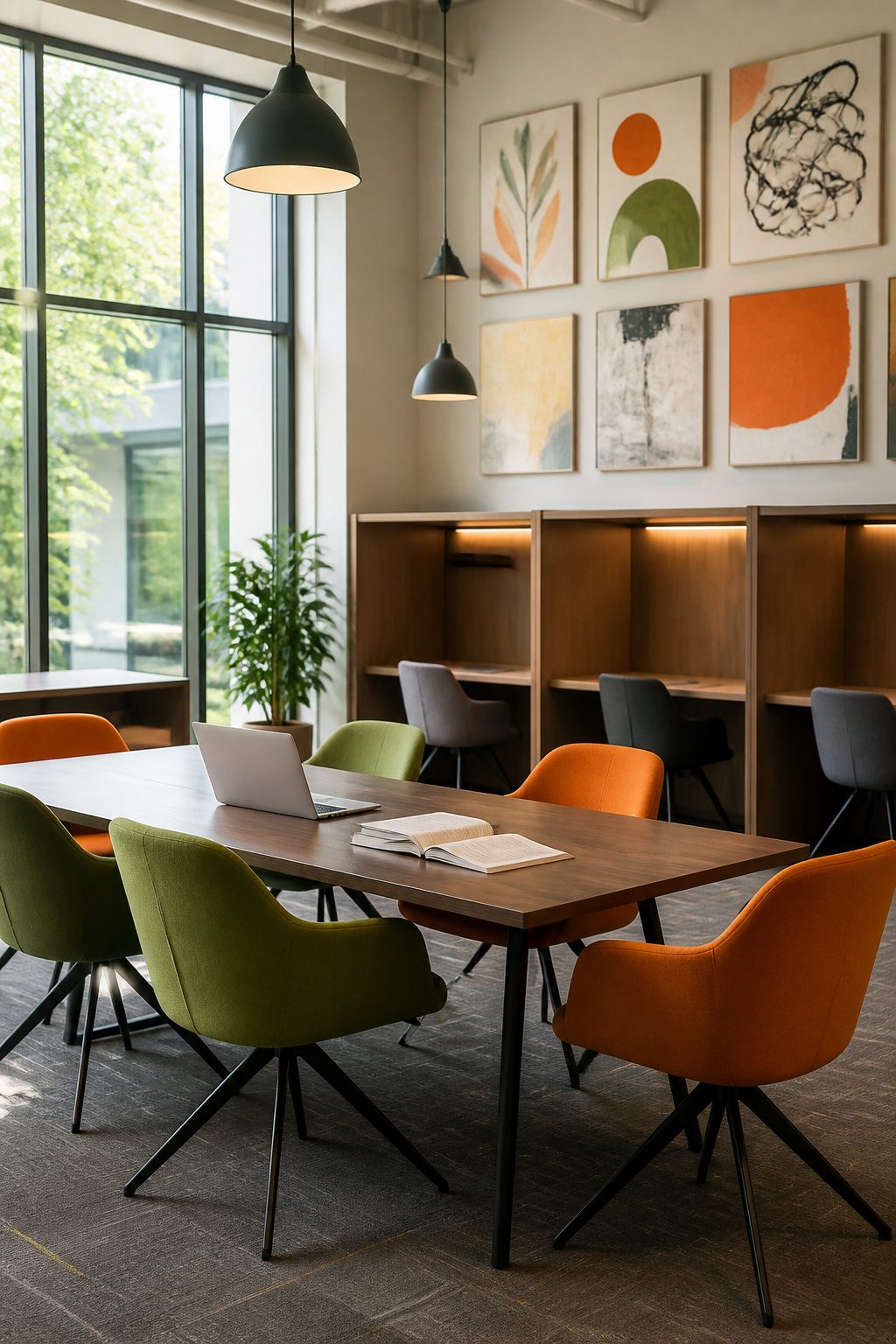
University libraries sit at a strange middle ground between public and private. Some keep their doors open to anyone during posted visiting hours, while others lock access behind a current student ID. The difference matters if you are driving across town to escape a noisy apartment.
Student unions and lounges are usually stricter. The Wi-Fi networks are secured, and the building itself may require card entry after hours. One path around this is enrolling in a single course at a community college. A student ID then opens the lounge, the library stacks, and sometimes the computer labs and eating spaces. For a few hundred dollars in tuition, you buy a semester of varied work locations.
Public libraries are simpler. No ID check, no tuition, and the dedicated remote-worker areas are free. The tradeoff is noise control: a university library enforces quiet by culture and staffing, while a public branch may let a phone ring without consequence. If you need deep focus for a full afternoon, the university option wins when you can get in.
Gyms and Fitness Centers
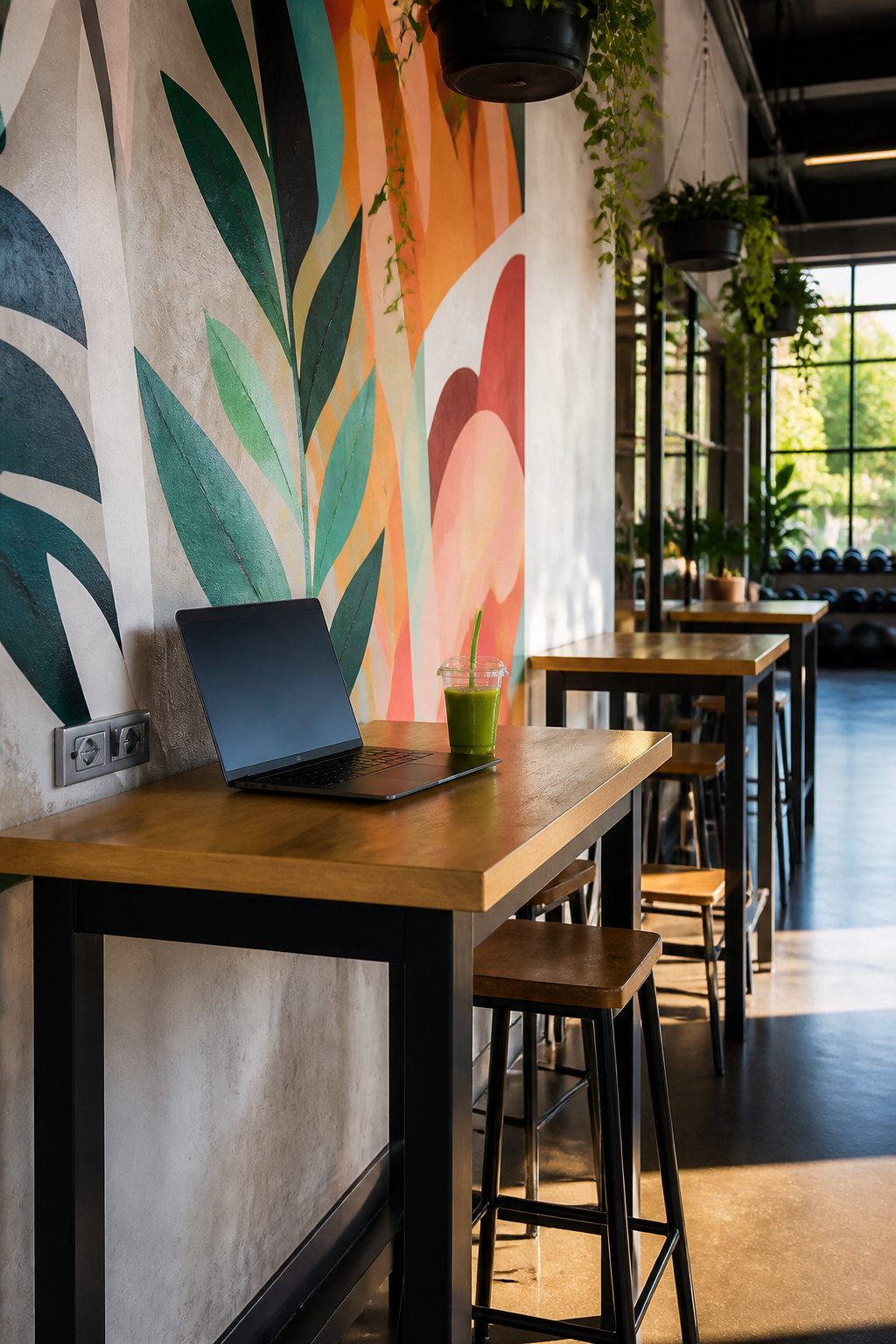
The smoothie bar at my local gym has become my Tuesday afternoon desk. It sits just past the check-in desk with a row of high-top tables, outlets spaced every other seat, and WiFi that actually reaches the corner where the blender noise drops to a hum. I have worked there through two membership cycles now, and the rhythm is specific: lift, shower, grab a protein shake, open the laptop while the post-workout clarity still holds. That window lasts about ninety minutes before the afternoon crowd arrives and the seating fills with people waiting for spin class.
Not every gym builds this out well. The ones that do it right put the work area far enough from the weight floor that you are not breathing chalk dust, but close enough to the cafe that you do not feel stranded. Equinox Sports Club New York runs WiFi through every corner of the club, which is the standard to compare against. My own gym charges $49 monthly, and I treat the workspace as a bonus feature that justifies the fee on weeks when I only make it in twice.
The real limit is the afternoon shift. Mornings after a workout, the tables are empty and the WiFi is fast. By two o’clock, the seating turns over to members who are between the gym and the rest of their day, not working through it. Plan the heavy-focus tasks for the quiet hours, and use the busier window for email or calls you can do with headphones on. The gym cafe works best as a hybrid stop, not a full replacement for a desk.
Community Centers
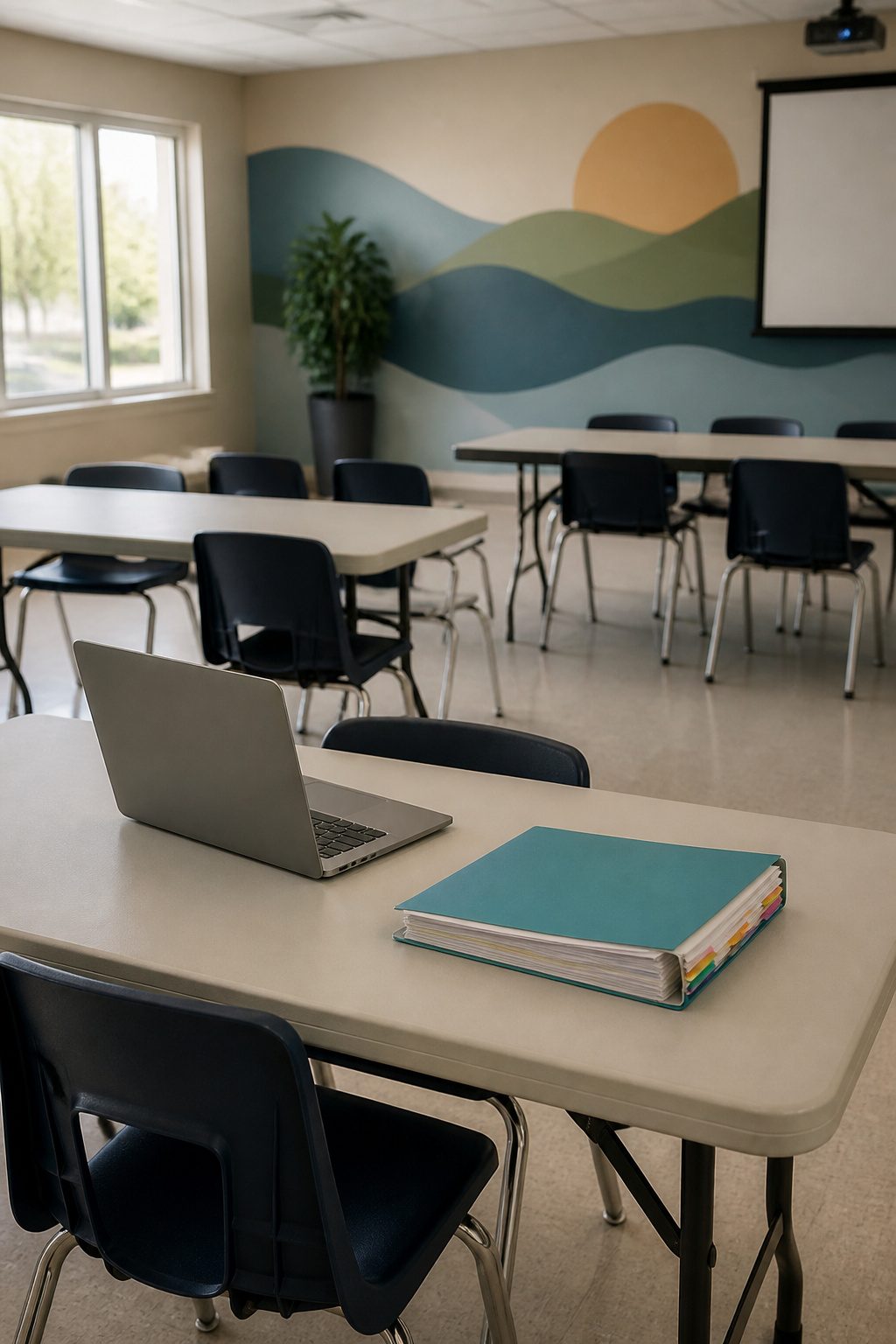
Community centers run on schedules that rarely match a full workday, and that mismatch is the first thing to check. Most open their public rooms by mid-morning and close by early evening, with a gap at lunch when staff rotates out and the building empties. The Wi-Fi is usually free and functional enough for email and documents, though video calls can stutter when the after-school crowd arrives. Seating tends toward folding tables and stackable chairs in multipurpose rooms that smell faintly of yesterday’s senior yoga class.
What these spaces actually offer depends heavily on whether anyone is using them for something else. A room that sits open at 10 a.m. might host a food pantry distribution by 2 p.m., displacing anyone who settled in. Some centers now run reservation systems for their quieter corners, which helps until you discover the two-hour limit and the fine-print rule that back-to-back bookings get cancelled. The people who make this work are doing focused, quiet tasks: spreadsheet cleanup, writing, invoice batching. Anyone needing extended concentration or client-facing professionalism will find the environment too exposed and too interrupted.
A Friend’s Place
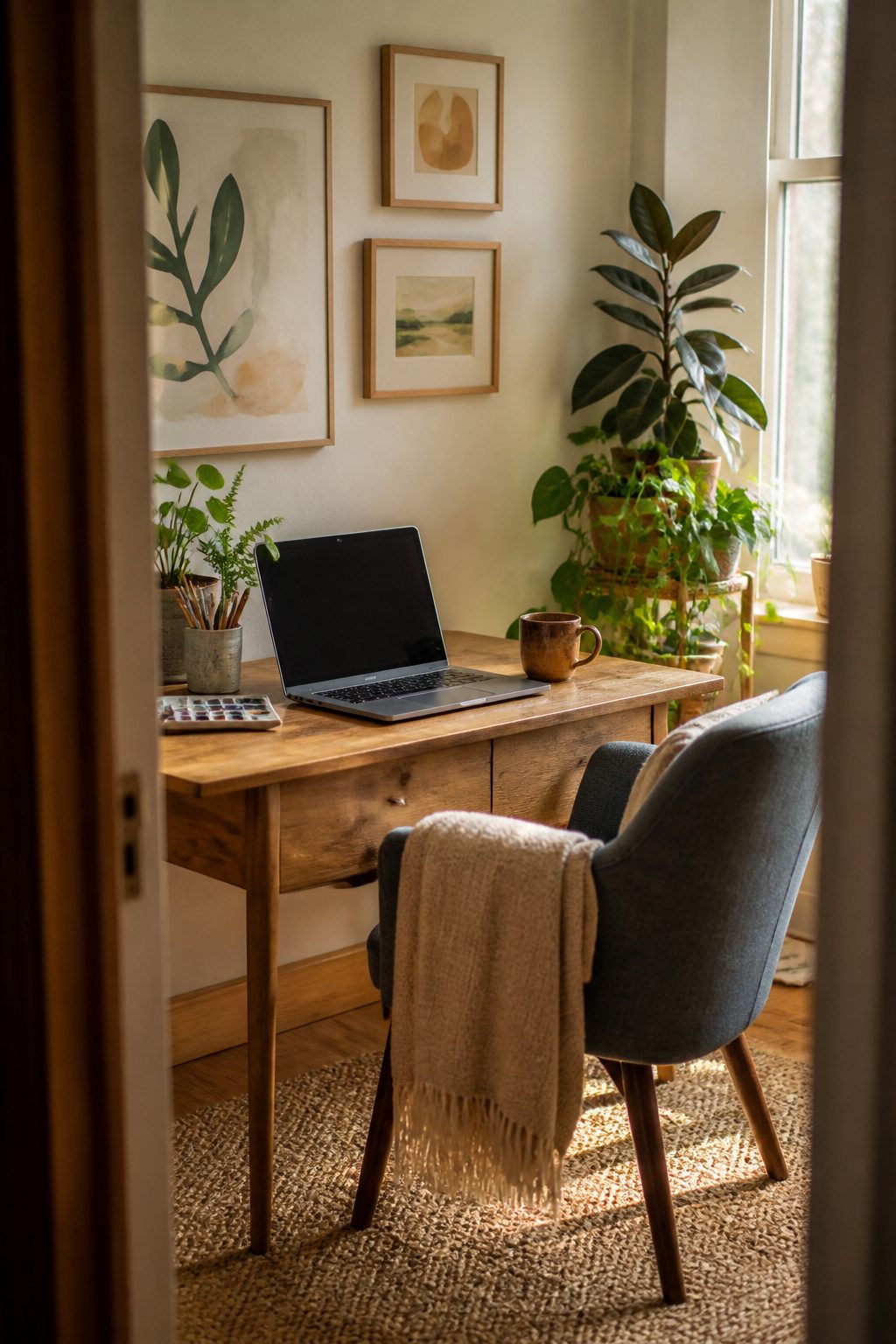
Swapping kitchens with a friend for the day removes the pile of laundry that keeps catching your eye and the couch that whispers nap time. The unfamiliar walls add just enough alertness to keep the brain in gear, and having another body in the room working toward their own deadline turns procrastination into something you can actually feel guilty about. I have learned that the arrangement only holds if you treat it like a real trade, not a favor. One week at her place, one week at mine, calendars blocked the same morning, or the whole thing slides into resentment. Reciprocity fails fast when one person is always the host and the other is always the guest with the better Wi-Fi. The other pitfall is scope creep: a shared workday quietly becomes lunch, then errands, then a project that eats the afternoon. When that happens, the fix is a hard stop at four o’clock and separate rides home, even if you arrived together.
What Coworking Costs in Practice
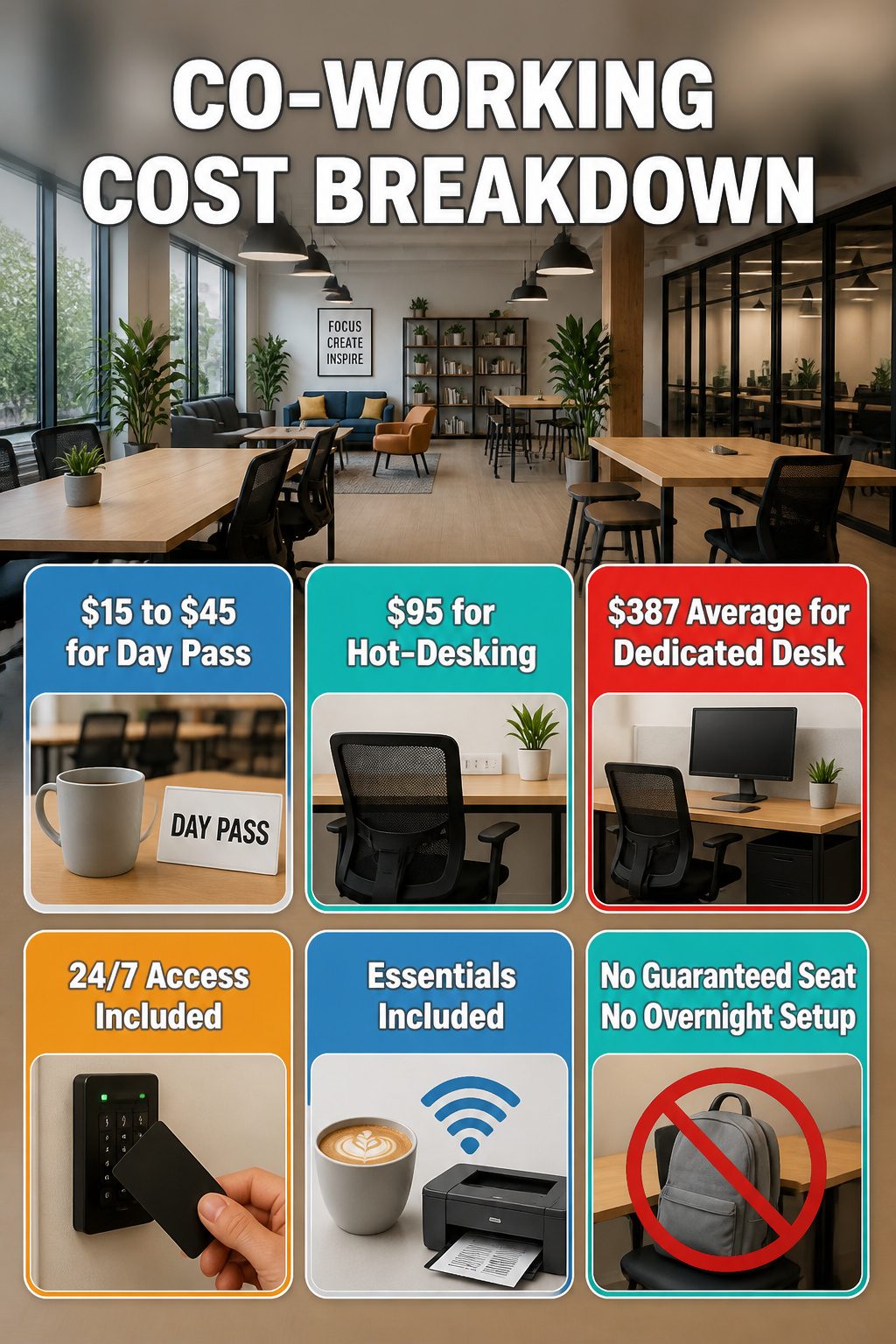
A day pass at most coworking spots runs $15 to $45, which is the sweet spot if you only need to escape the house once or twice a week. I have paid the $25 rate at a few places, and for that you get a chair at an open table, Wi-Fi, coffee, and usually a printer if you need it. The downside is no guaranteed seat and nowhere to leave your setup overnight.
Monthly memberships start around $95 for hot-desking, though $250 to $375 is more typical in mid-size cities. That gets you 24/7 access and sometimes a locker, but you are still fighting for the good spots near outlets.
The dedicated desk, averaging $387 according to DeskMag, is where the math gets questionable for part-timers. You get your own square of laminate, a chair that nobody else touches, and the ability to leave a monitor plugged in. At one or two days out of the house weekly, that works out to roughly $45 to $90 per visit. The productivity bump is real, and the coffee is better than what I brew at home, but I would need to be billing hourly or running client calls to justify it. For someone just trying to finish focused work without a laundry pile in peripheral vision, the day pass tier still wins.
Why Leaving the House Helps
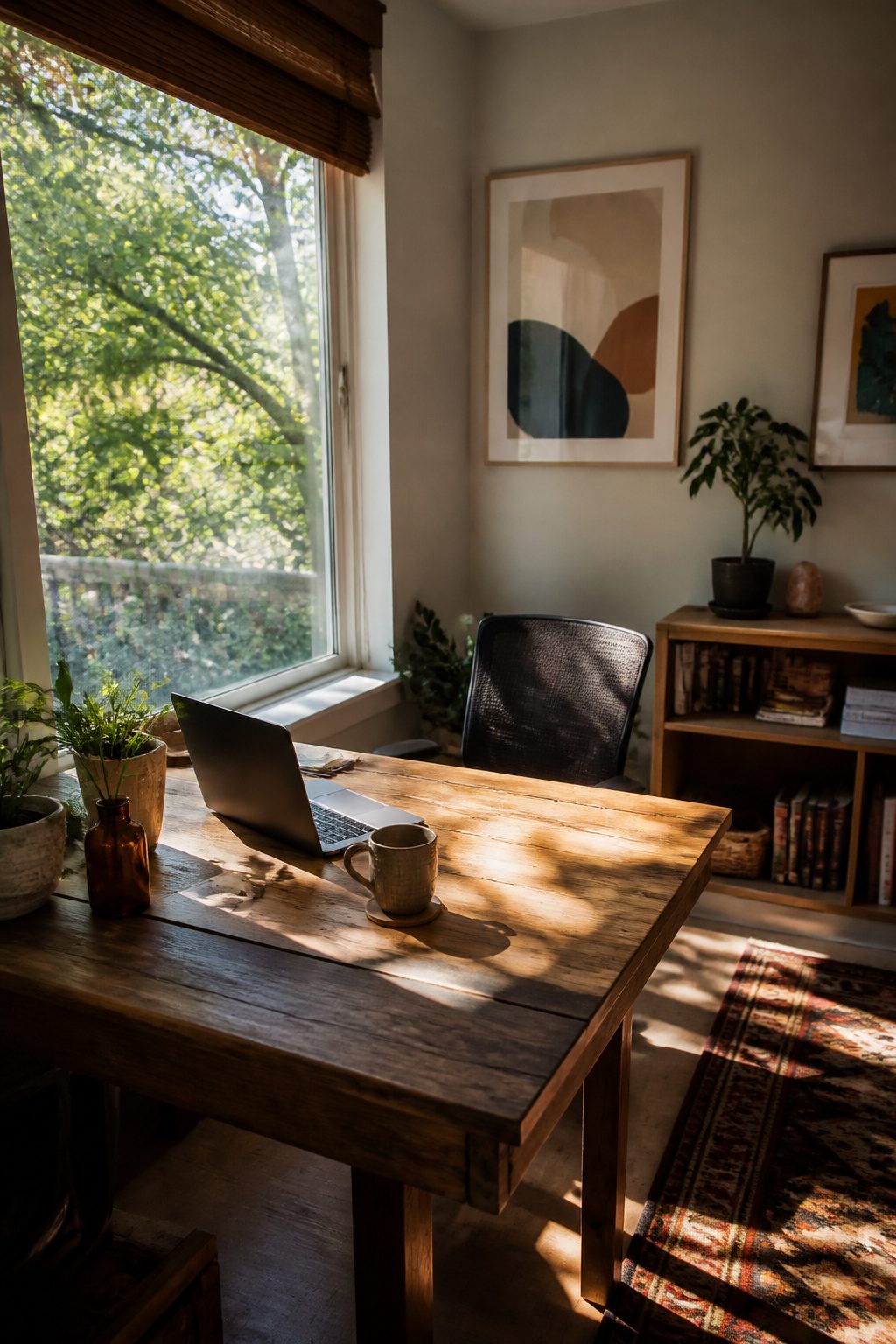
The same desk and the same light for months on end wears on something deeper than posture. Studies on environmental psychology have tracked what most remote workers sense halfway through Tuesday: productivity and creative problem-solving both climb after a location shift, even when the work itself stays identical. The reset is not about better furniture. It is about your brain registering new walls, new ambient sound, new light angles, and filing the day under a different heading than yesterday.
I noticed this first when I started splitting my week between a kitchen table and a borrowed corner desk across town. The days I moved, I hit flow faster and stayed there longer. The days I did not, the same two-hour task stretched to four with no clear leak I could point to. The change did not need to be dramatic. A different room in the same house helped some; a space with its own front door helped more. The mental boundary between "home" and "work" seemed to redraw itself around the threshold, not the task list.
Job satisfaction follows the same curve. Workers who vary their environment report higher engagement than those with identical setups, even when total hours and pay stay flat. The variety itself becomes a benefit, not a perk but a working condition. For someone building a remote career on a few hundred dollars and weekend energy, that is worth planning for deliberately rather than treating as a nice accident.
What I Pack for a Mobile Office
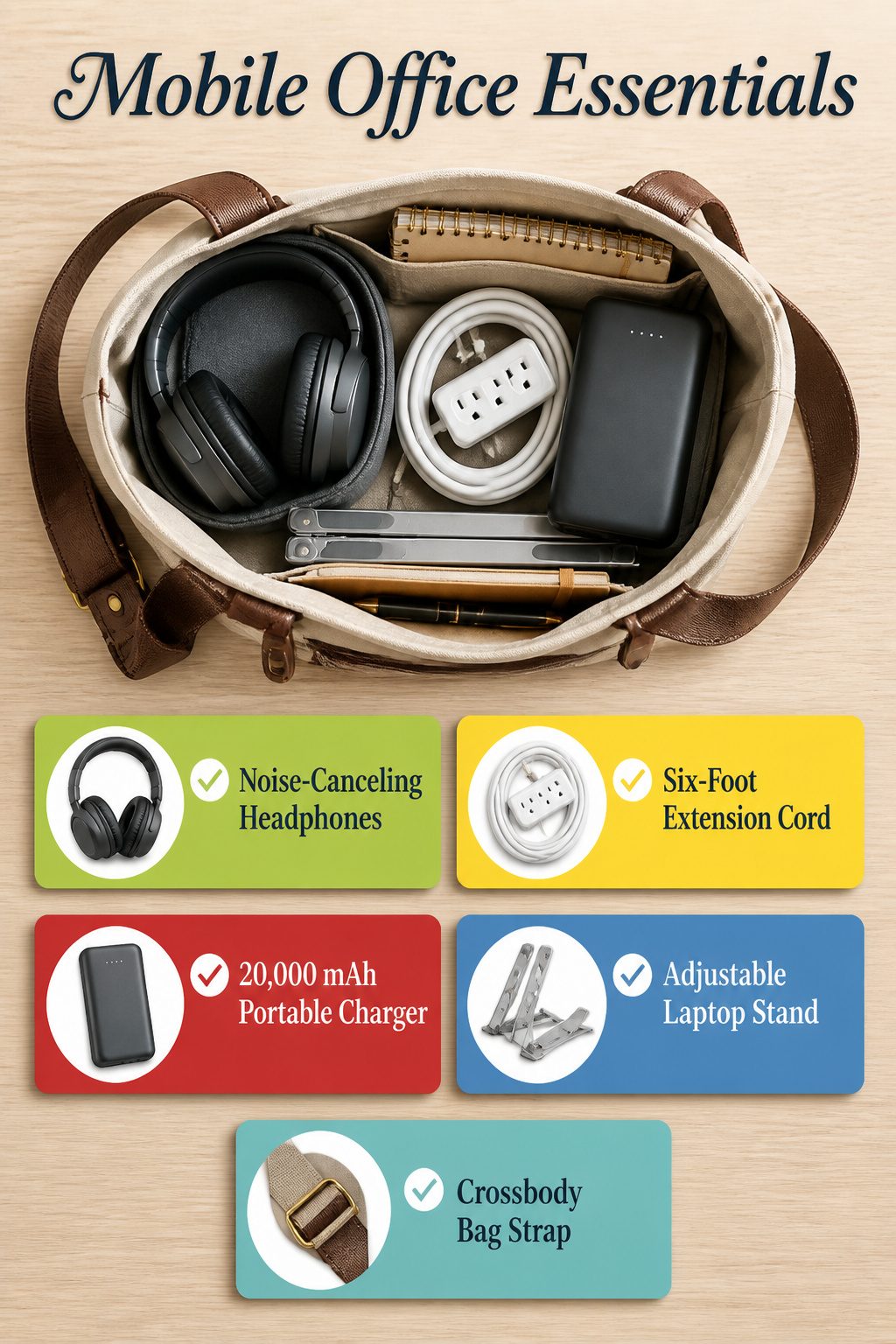
The bag matters more than most people think. A tote with a flat bottom keeps the laptop stand from digging into your side, and a separate padded sleeve for headphones saves the padding that makes them work.
- Noise-canceling headphones are the single item that turns a loud corner into a desk. Over-ear models with replaceable ear pads last longer than the sleek ones that look good in ads.
- A six-foot extension cord with three outlets handles the outlet that is always six inches too far. The flat plug profile fits behind furniture without crimping.
- The portable charger I carry is 20,000 mAh, which gets a laptop through one full charge or a phone through most of a week. Anything smaller and you are borrowing outlets by mid-afternoon.
- The laptop stand folds to the size of a hardcover book and raises the screen to eye level. Without it, three hours at a kitchen table means a neck ache by dinner.
- The bag itself should have a strap that crosses the body, not just shoulders. Hands free matters when you are carrying coffee through a doorway that locks behind you.
The Distractions I Left Home For
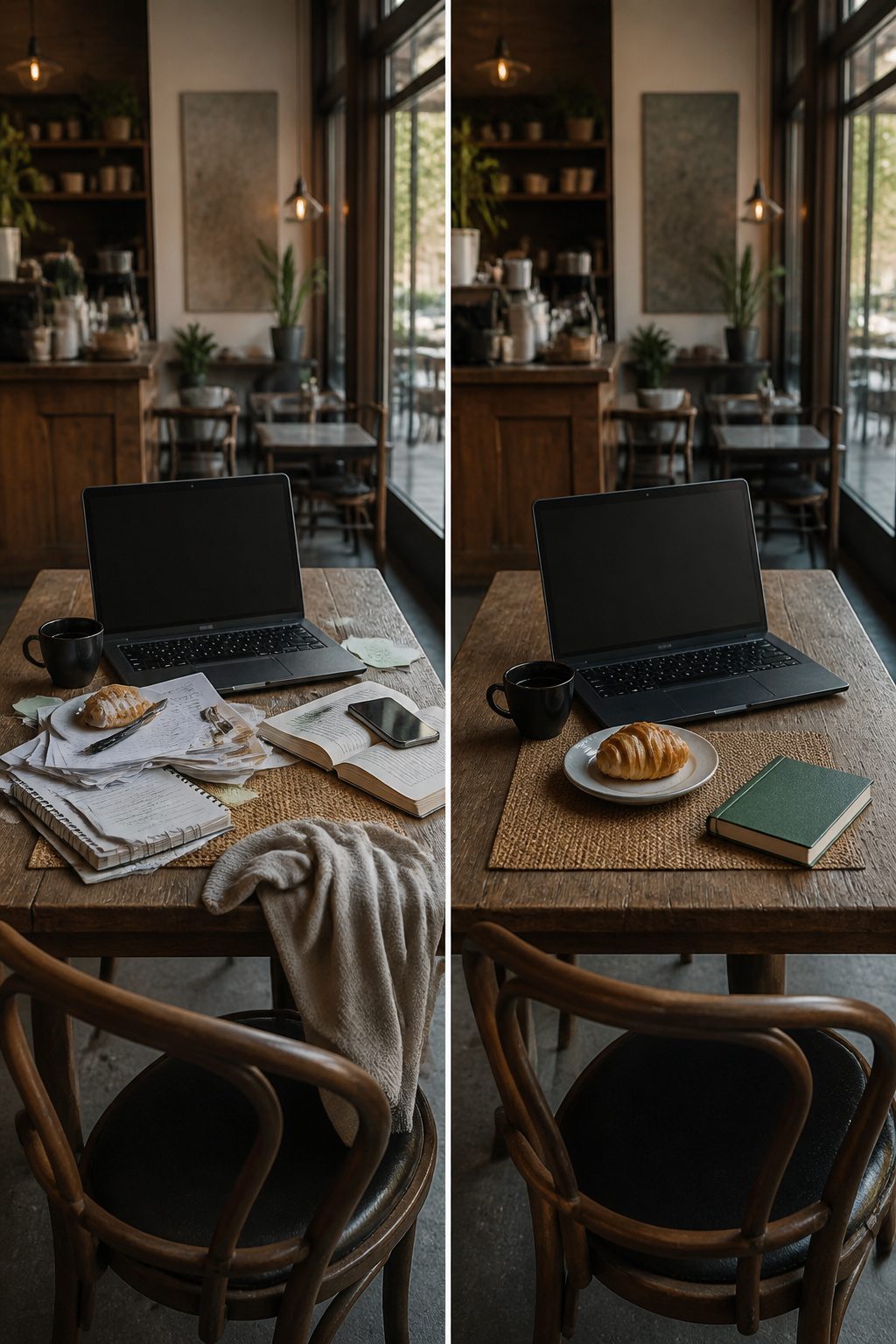
Laundry has a way of announcing itself the second you open a laptop. I have folded shirts mid-Zoom, the camera angled just high enough to hide the basket. The kitchen trades that interruption for a different one: the smell of someone else’s lunch, the clatter of an espresso machine, the silent pressure to buy another $6 oat latte just to keep the table. At a coworking desk, the distraction is a stranger’s phone call, which somehow bothers me less than my own dog whining at the door. Libraries replace the noise you know with a quieter kind, the cough three tables over, the rustle of a newspaper, and that trade is usually worth it until the afternoon school rush hits. Hotel lobbies give you grandeur and guilt: the staff knows you are not a guest, and the seating is built for twenty-minute waits, not three-hour sprints. Each space asks something in return. The only question is which tax you would rather pay.
Networking That Happens Without Planning
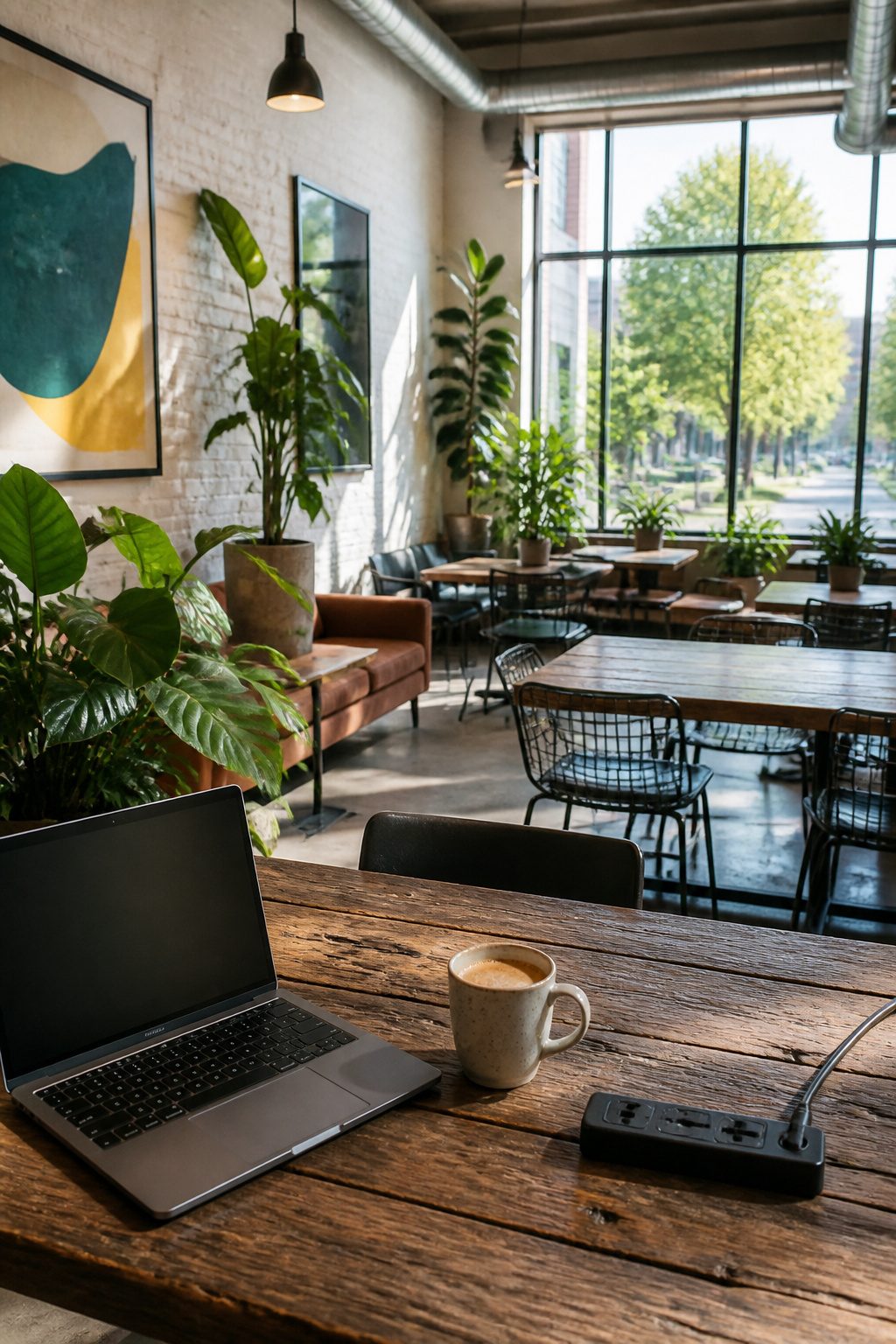
The casual professional connection almost never starts at a scheduled networking event. Mine have come from sharing a power strip at a coffee bar where the same faces show up every Tuesday morning, or from the coworking kitchen where someone asks whether the WiFi has been spotty for you too. A laptop-friendly coffee shop gives you flexibility, good coffee, and a more casual atmosphere than a formal membership, which is exactly why the conversation flows easier. You are not pitching; you are just being the person who remembered to bring the extra charger. Coworking spaces also provide flexible options for dedicated spaces to work and networking opportunities, but the real value is the repeat exposure. After three Thursdays at the same table, you know who runs the accounting firm and who is building an app, and they know you do something with interiors. That is the connection that survives a real budget and a weekend timeline, not the business card you collected at a conference.
Frequently Asked Questions
What are coworking spaces?
Coworking spaces are shared work environments that give remote workers and freelancers a professional setting outside the home. They typically provide desks, high-speed internet, meeting rooms, printers, and networking events. Most operate on monthly memberships or day passes, with dedicated desks averaging around $387 per month in the U.S.
How much do coworking spaces cost?
Day passes start as low as $15 and typically run up to $45, while monthly memberships for hot-desking begin around $95 and climb to $250–$375 in mid-size cities. A dedicated desk averages $387 per month nationally, with private offices running higher. Drop-in rates at some chains sit around $50 per month for one day plus extras.
What are the benefits of working in a coffee shop?
The moderate ambient noise of steam wands and quiet conversation can sharpen focus better than silence or sudden home interruptions. Food and drinks break the kitchen-distraction loop, and the subtle social pressure of being around other productive people helps momentum. Coffee shops work best for two-to-three hour sprints of drafting, design review, or email rather than calls or full days.
Are libraries good for remote work?
Public libraries rank among the quietest free workspaces available, with no purchase required for Wi-Fi. Study rooms that take hourly reservations turn an afternoon into finished work, though hours and booking processes vary by system. University libraries offer deeper quiet enforcement and research resources, but access rules range from open visiting hours to course registration requirements.
Can I work from a hotel lobby?
Hotel lobbies empty out on weekday mornings and offer reliable Wi-Fi, comfortable seating built for lingering, and business centers for printing or faxing. The unspoken contract is ordering a coffee or drink at the lobby bar to cover your stay. Some properties now package remote work directly, like the Graduate’s Out of Office deal with escalating nightly discounts across multiple nights.