
A great white sofa is the most demanding piece of upholstery you can put in a living room, because every spill, shadow, and scuff shows against a surface that refuses to hide anything. The difference between a white sofa that lasts and one that becomes a regret within a year comes down to material choice above all else: leather survives wipes and pets where cotton asks for immediate blotting, while performance fabric buys seconds but not immunity. The Alessia White Leather Sofa in the Bellini line runs toward the high end of that durability scale, developing patina rather than looking worn, while the Walters 82” Upholstered Sofa proves that buyers still rate standard fabric builds at 4.7 stars when comfort matters more than forgiveness.
White Leather Sofa
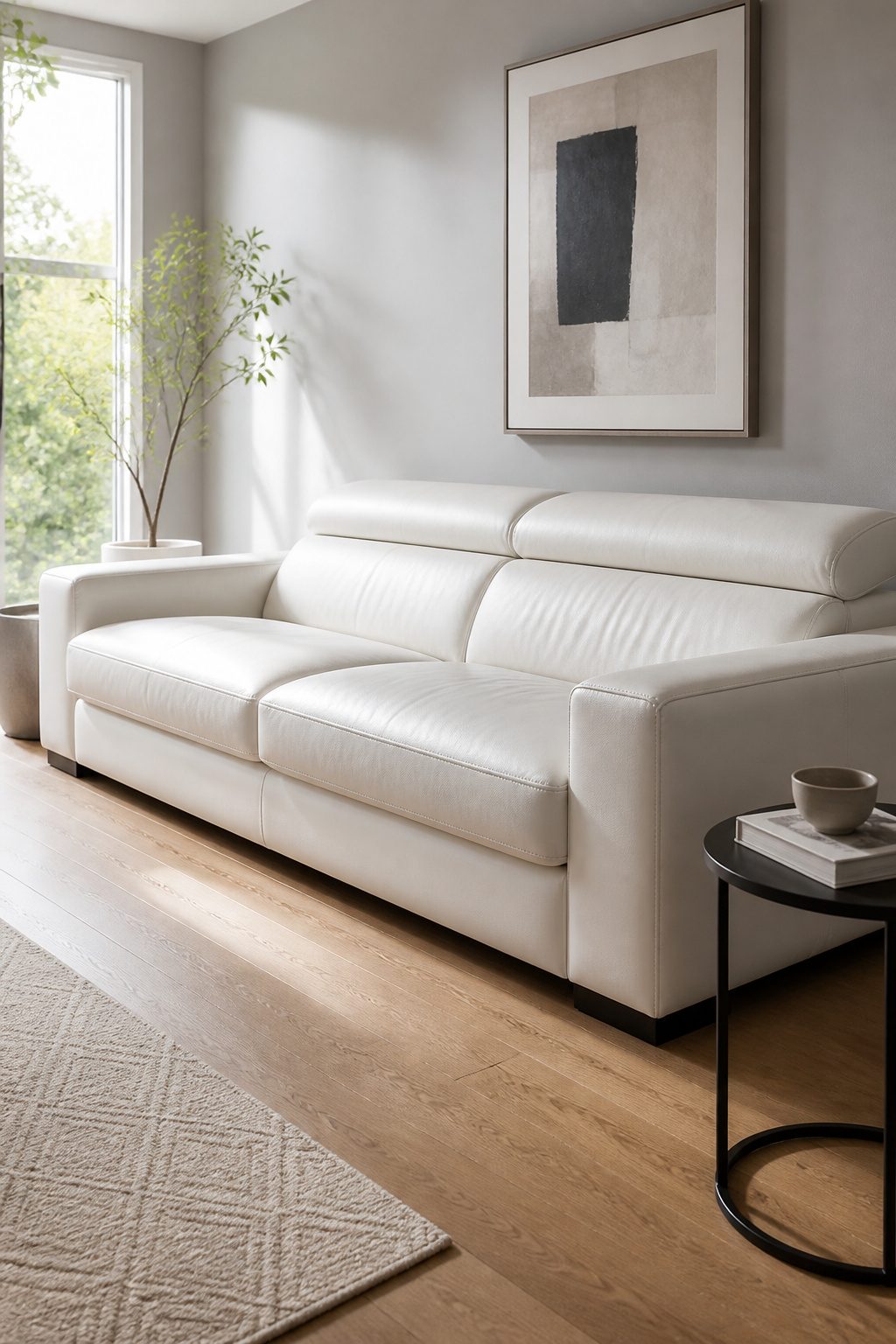
Leather changes the math on a white sofa. Spills wipe off instead of soaking in, and the surface holds up to years of daily use without the pilling or shadow-staining that sends fabric couches to the curb. The trade is upfront cost and a cooler sit, but for households that eat on the sofa or live with pets, that wipe-clean surface pays back fast.
The Alessia White Leather Sofa lands in the Bellini line with that balance in mind: the leather develops patina rather than looking worn, and the white stays crisp in both traditional and modern rooms without dominating the space. For something more modular, the Verona Reclining Leather Components run $1,299 as a build-your-own starting point, which lets you add pieces as budget and floor plan allow rather than committing to a full sectional at once. The Verona also shows up at $1,499 in another configuration, so the gap between entry and upgraded recline is narrow enough to make the choice about function, not just price.
My own leaning, reading the field, is toward leather only when the household will actually use the durability. A white leather sofa kept pristine with throws and rules is paying for protection it does not need. Buy it for the life you have, not the one you wish you lived.
White Sectional Sofa

A white sectional sofa anchors an open floor plan the way nothing else can, giving you one clean visual mass instead of three mismatched pieces fighting for attention. The Incanto I917 and Alessandro models both lean into this: leather or upholstered, they share the same logic of a single footprint that defines a zone without walls.
L-shaped sectionals work when the room has a natural corner to tuck into. U-shaped builds out from the center and seats more bodies, which matters if you actually have people over rather than imagining you might. The Jossa modular line takes it further with three units you can split for conversation or line up for movie nights. Solid pine frame, spring cushions, high-resilient foam, goose-down fill wrapped in pearl cotton. That is the spec sheet, but what it means is a sofa that still looks intentional after daily use rather than sagging into a rental-grade lump.
The catch with any white sectional is scale. A 113-inch run like the Jossa linen version demands width; force it into a 10-foot wall and the room becomes a hallway with cushions. Measure twice, and remember that sectionals read larger in person than on a screen because the depth adds another dimension the photo crops out.
White Sofa Bed
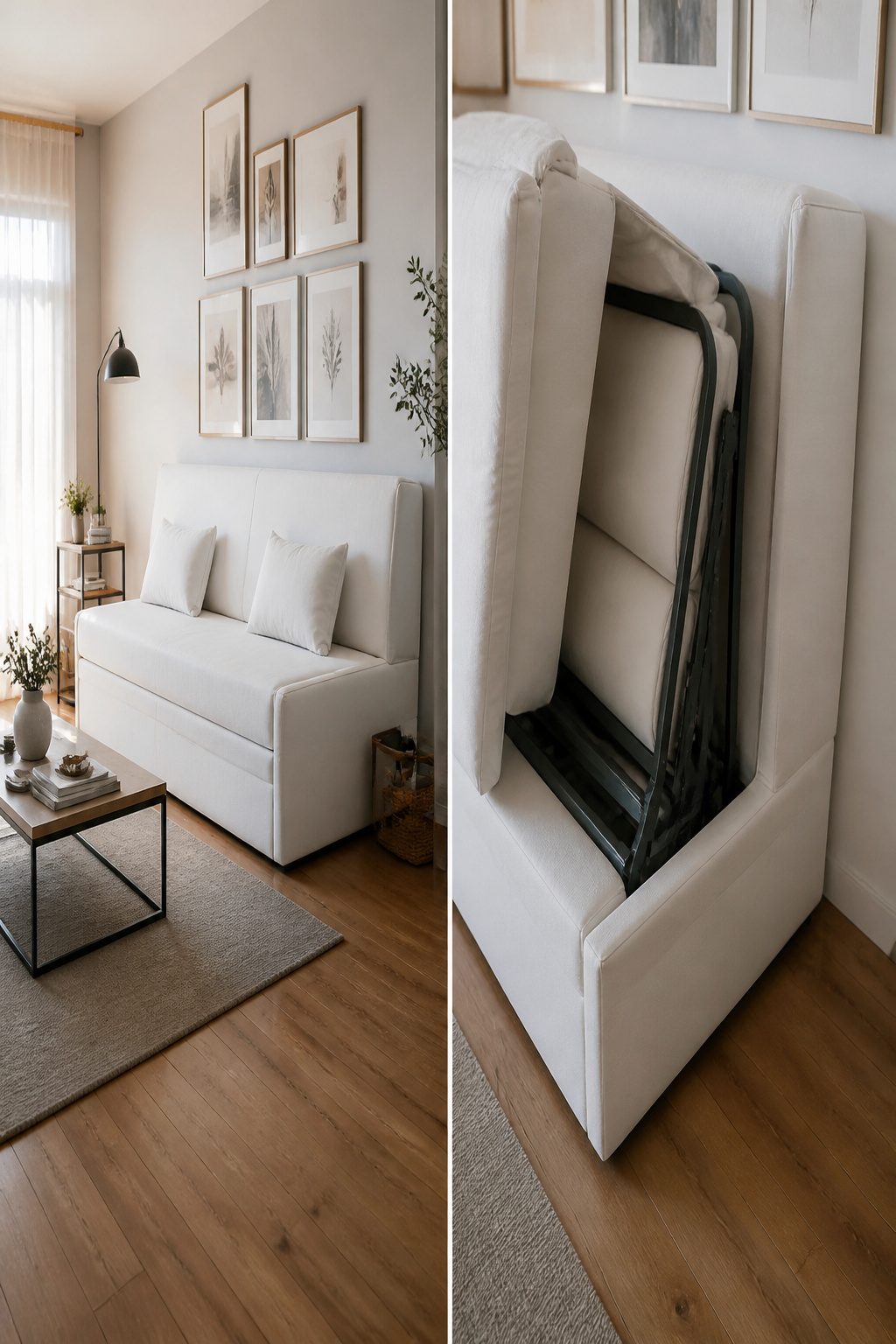
A white sofa bed is the only way to seat four people daily and still host overnight guests in a studio or one-bedroom. The Bishop Slip Queen Sleeper from Robin Bruce is the one I keep coming back to when friends ask for a name. It opens to a queen mattress, which means actual sleeping space instead of the cramped doubles that leave taller guests hanging off the edge.
The real question is how often that bed opens. A sleeper sofa with a proper innerspring or memory-foam mattress weighs more, sits higher, and usually costs you some seat depth in couch mode. If you are unfolding it twice a month, the tradeoff stings less. If it is twice a year, a basic click-clack futon or a daybed with a trundle saves money and living-room comfort. I have sat on sleepers that felt like park benches by day because the frame had to stay flat enough for a mattress inside. The Bishop line gets around some of that with a thinner seat back, which helps, but it is still a sofa that happens to sleep people, not a bed that happens to look like a sofa.
For a renter who moves every couple of years, the sleeper also means wrestling a heavier piece through doorways. The compact footprint that makes it great in a 400-square-foot apartment works against you on staircases. My rule: buy the sleeper only if guests stay more than five nights a year. Otherwise, a small white sofa plus a stored air mattress frees up budget and daily comfort alike.
Off White Couch
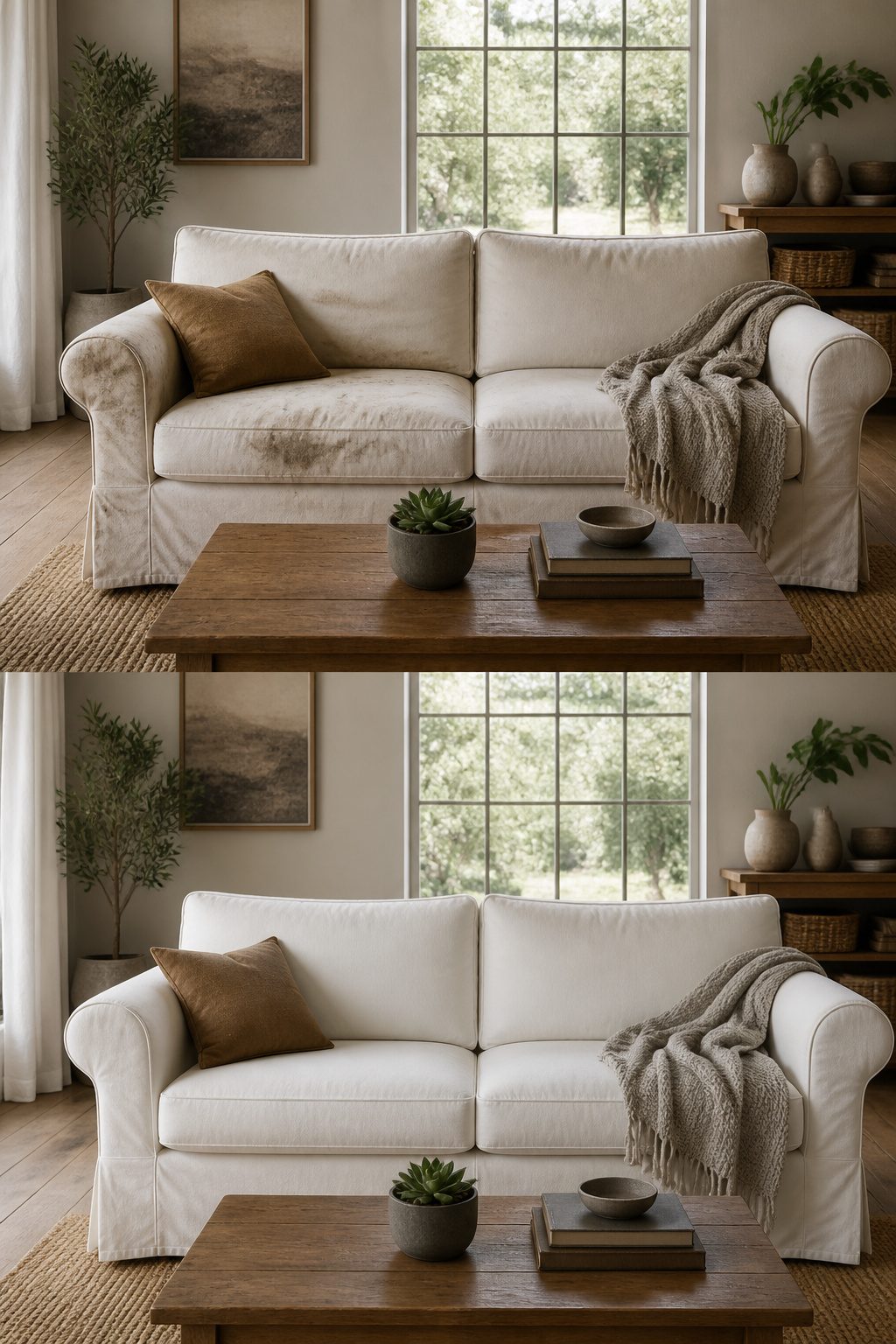
Bright optic white looks crisp in a showroom and high-maintenance by Tuesday. An off-white or cream tone hides the scuff from a shoe, the shadow of last year’s spill, and the dust that settles before noon. The warmth in the undertone does the work, not a darker shade.
I learned this the hard way with a pair of lamps I painted creamy white to kill a yellow undertone that read as dingy against my walls. The same principle applies to sofas: a true white demands constant vigilance, while an off-white lets real life happen. The Porter 84" slipcovered sofa in Bayou Off-White Canvas uses stain-resistant cotton and removable covers, which helps, but the color itself is doing half the cleaning for you.
Warmer walls, wood floors with honey tones, or brass hardware all push a bright white toward sterile. Off-white meets them in the middle. If your interior runs warm, the sofa should too.
White Modern Sofa
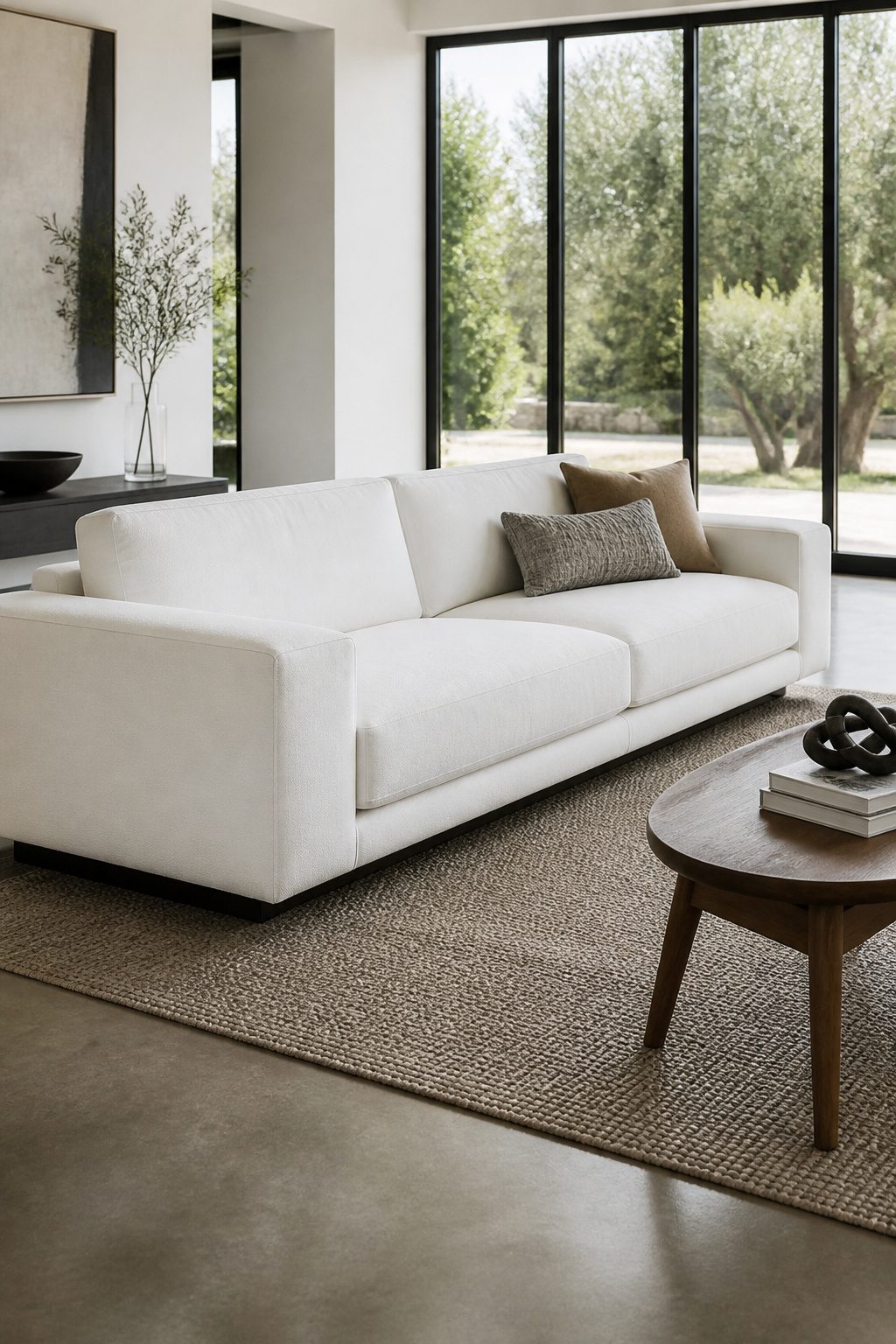
A white modern sofa lives or dies by its restraint. The profile stays low, the arms are thin or absent, and the cushions sit flush with the frame so nothing breaks the line. That spareness is what makes a small rental living room feel intentional instead of crowded.
The Luna 90” Upholstered Sofa in Classic Bleach White Twill gets this right. It rates 4.5 out of 5 stars from 56 votes, and the low-profile slipcover keeps the look unfussy while the integrated sinuous springs and foam fill give it a sinkable seat. Two accent pillows come included, which matters when you are budgeting piece by piece.
"Modern" and "contemporary" are not the same here. Modern means the clean, angular, low-slung language that grew out of mid-century work and stayed put. Contemporary shifts with whatever is current right now; it might borrow that low profile today and abandon it tomorrow. If you want a sofa that still reads as intentional in five years, modern is the safer bet because its rules are fixed.
White Leather Sectional Sofa
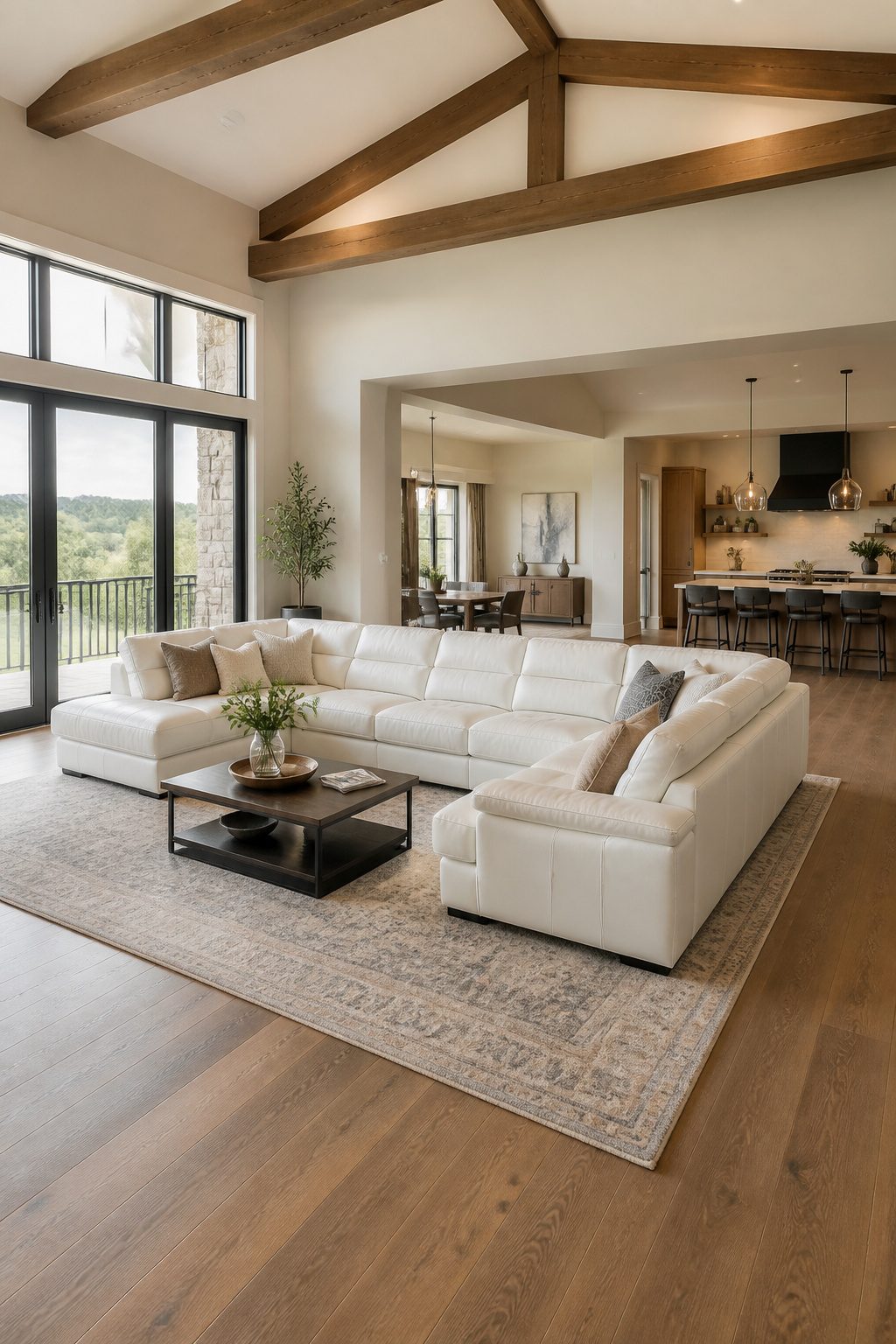
A white leather sectional sofa pulls two heavy commitments into one purchase. The leather side brings durability and that particular cleanable surface that survives spills, while the sectional shape gives you the flexible arrangement that works in open-plan spaces or against a wall. The Incanto I917 from Bondars and the Alessandro from American Leather both sit in this category, and both assume you have the floor space to justify them.
The combination starts to overreach when budget tightens. Genuine leather on a sectional frame pushes prices well past what the same footprint costs in fabric, and the semi-aniline upgrade with power-reclining seats that Z Gallerie shows is another tier entirely. For a few hundred to a thousand dollars, you are not in this market. You are looking at bonded leather or vinyl, which wears differently and does not carry the same cleanability.
Where the hybrid genuinely works is the busy household that needs both seating volume and wipeable surfaces. The Rae 85" from AllModern, with its top-grain leather and sinuous spring support, shows what the construction should look like: solid frame, metal legs, cushions that do not sag because the suspension is doing the work. If the leather is not genuine top-grain or better, the durability promise collapses, and you have paid sectional prices for a shape without the material to back it up.
My own take, reading through enough of these to spot the pattern: the white leather sectional is a specific tool for a specific room, not a default choice. It solves two problems at once, but only if both problems actually exist in your space.
White Velvet Sofa

Velvet catches light the way flat weave never does, and a white velvet sofa doubles that effect, turning the same wall color into something that seems to glow from inside the fabric. The pile shifts from bright to shadow as you move around the room, which is the whole reason you buy it. The maintenance is the rest of the story. I have spot-treated velvet twice after a party, and both times the nap held the stain long enough for me to catch it. Water rings are the real enemy; brushing the pile back into line while it dries keeps the mark from setting. A white velvet sofa is a single-source item, so budget for professional cleaning once a year or keep it in a room where food stays in the kitchen. The visual impact is worth that trade if you use the room mostly after dark, when the depth of the pile matters most.
White Modular Couch

A white modular couch is not the same thing as a sectional, though stores often file them together. A true modular system sells by the piece, and each piece stands on its own legs and frame. You can split a three-seat row into two chairs and an ottoman, or line the same units into an L, or break them apart for a party. A sectional is built to one shape, and the wedge corner or the chaise is fixed.
In five years of rearranging furniture for friends who rent, I have seen someone actually reconfigure a modular sofa exactly twice. Both times it was for a move, not for a Tuesday mood swing. The real value is not daily flexibility; it is that you can buy two pieces now and add a third when the budget loosens, or split the set between apartments when roommates part ways. The crisp white upholstery on these units reads as intentional in a modern space, but the seams between modules collect more dust than a continuous bench seat, and the gap shows if the floor is even slightly off.
Performance fabric matters more here than on a fixed sofa, because every edge is a sitting surface. If you are choosing white, the washable cover option is worth the hunt, even if it narrows the field.
Small White Sofa

A sofa under 72 inches is the only kind that fits through a 32-inch doorway without a fight. The Cecelia 47" Loveseat, rated 4.2 out of 5 stars, is narrow enough for a studio alcove but still seats two people without touching shoulders. I learned the hard way that floor space means nothing if the frame cannot clear the stairwell turn. Measure the height and width of every doorway, the diagonal depth of any stair landing, and the elevator opening if you are not on the ground floor. The Cecelia ships in one box, which matters more than the upholstery when you are hauling it up three flights solo. White linen-look weave on a frame this small reads intentional, not apologetic, and the 47-inch width leaves room for a side table you will actually use.
White Fabric Couch

Fabric upholstery is where most people land when they start hunting for a great white sofa, and the numbers back up the comfort. The Walters 82” Upholstered Sofa carries a 4.7 out of 5 stars rating, while the Amari 89” Sofa sits at 4.6, both proof that buyers get what they expect from a standard fabric build. Cotton blends and woven synthetics give that soft, sink-in feel that leather never quite matches, even if the marketing promises otherwise.
The cleaning gap is where fabric gets its reputation. Leather sellers love to show a single wipe erasing a spill, but fabric has come a long way from the fragile upholstery of ten years ago. Performance treatments and tighter weaves mean most fresh stains lift with mild soap and water if you move fast enough. The real difference is maintenance rhythm: leather asks for occasional conditioning, fabric asks for prompt spot treatment and a vacuum pass every week or two. Neither is zero work, and anyone promising otherwise is selling something.
White Slipcovered Sofa
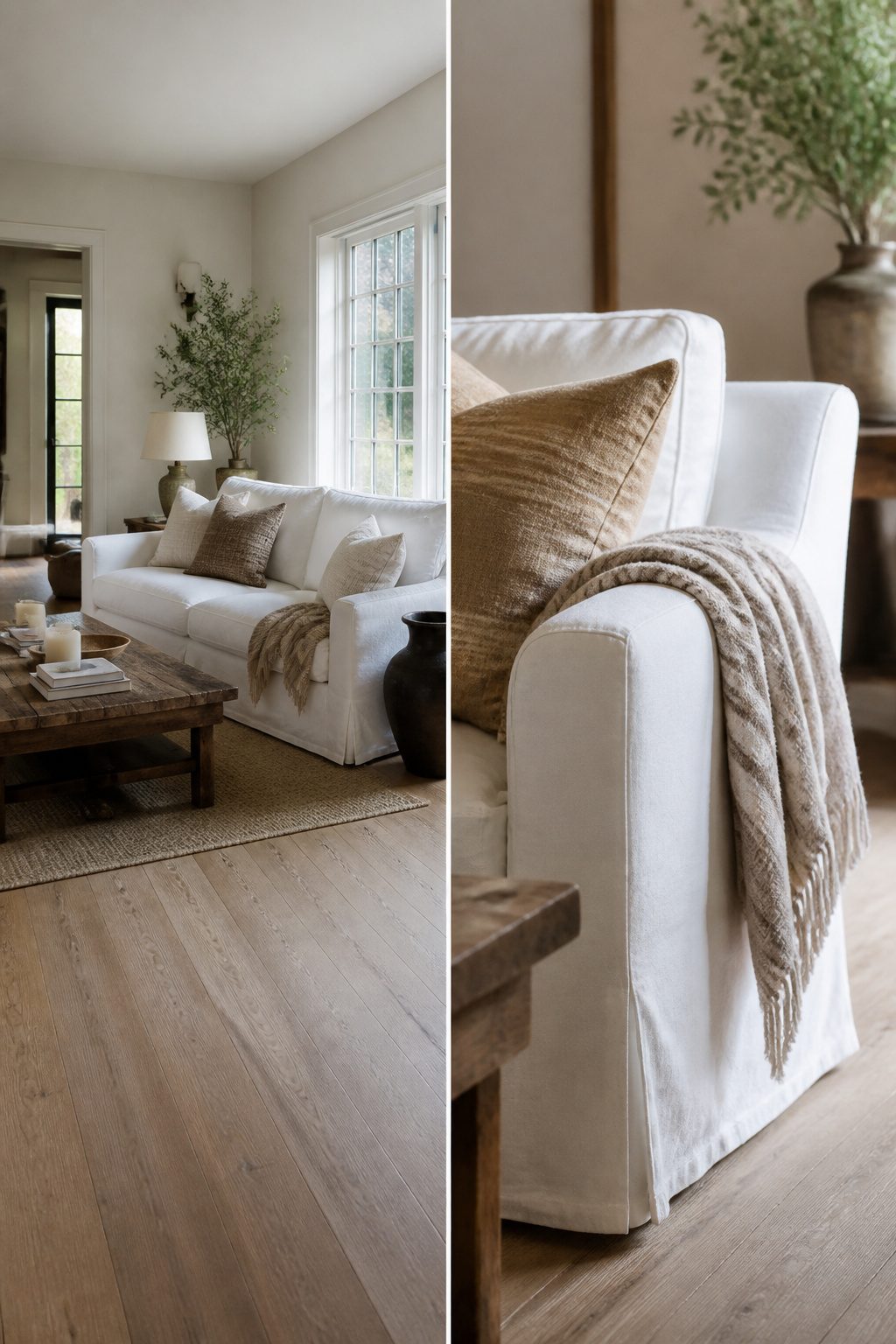
A white slipcovered sofa wears its maintenance on the outside, and that transparency is exactly why it works for households with kids or pets. The cover comes off, goes into the wash, and comes back on, no mystery about where the dirt went. I have washed Ikea Ektorp slipcovers in Vittaryd White many times without issue, and the fabric held up. Fit is where this gets personal: a loose cover looks sloppy, a tight one fights you every laundry day. The Amari 83" from Birchlane, with its rolled arms and loose back cushions, lands in that tailored middle ground, and the 30 color options mean white does not have to be the only choice you live with. Sinuous springs underneath keep the seat from sagging while you wrestle the cover back on. Washing frequency depends on your household traffic, but the ability to strip the whole thing down beats spot-cleaning a fixed upholstery and hoping the stain lifts. The Eagan 75" modular loveseat takes a similar approach with removable cushions, though its chenille upholstery is not a full slipcover system. For a true white sofa that survives real use, the slipcover model asks more of your laundry schedule and less of your anxiety.
White Upholstered Sofa

Fixed upholstery gives a sofa its sharpest lines. The fabric is stretched and stitched directly to the frame, so the silhouette stays crisp where a slipcover would eventually sag and bunch. That tailored look comes with a real cleaning penalty. Spills sit on the surface rather than hiding under a removable skin, and professional cleaning runs $150–$300 per round depending on your city and the size of the piece.
The Kayla Sofa at $2,249 sits at the upper end of what most weekend-project budgets allow, but it shows where the money goes: tight corners, even welting, and a back that looks intentional from every angle. For something closer to entry-level, the Iden Upholstered Sofa in pearl white LiveSmart performance fabric runs a 91-inch width with a bench seat between low, wide arms. A reviewer noted it works for both everyday lounging and entertaining, which matters when your living room is also your office. The Shelby 82-inch in bleach white twill takes the tailored idea in a softer direction with a skirted base and loose back cushions, though buyers mention the seat starts firm and needs breaking in.
Performance fabric helps close the cleaning gap. LiveSmart and similar treatments buy you time to blot before a stain sets, but they do not make fixed upholstery as forgiving as a slipcover you can throw in the wash. The tradeoff is worth it when the room needs that finished, intentional look, or when you know you will not stay in the apartment long enough to wear out a sofa anyway. Renters who move every two to three years often come out ahead on style and lose less on practicality than they fear.
White Performance Fabric Sofa
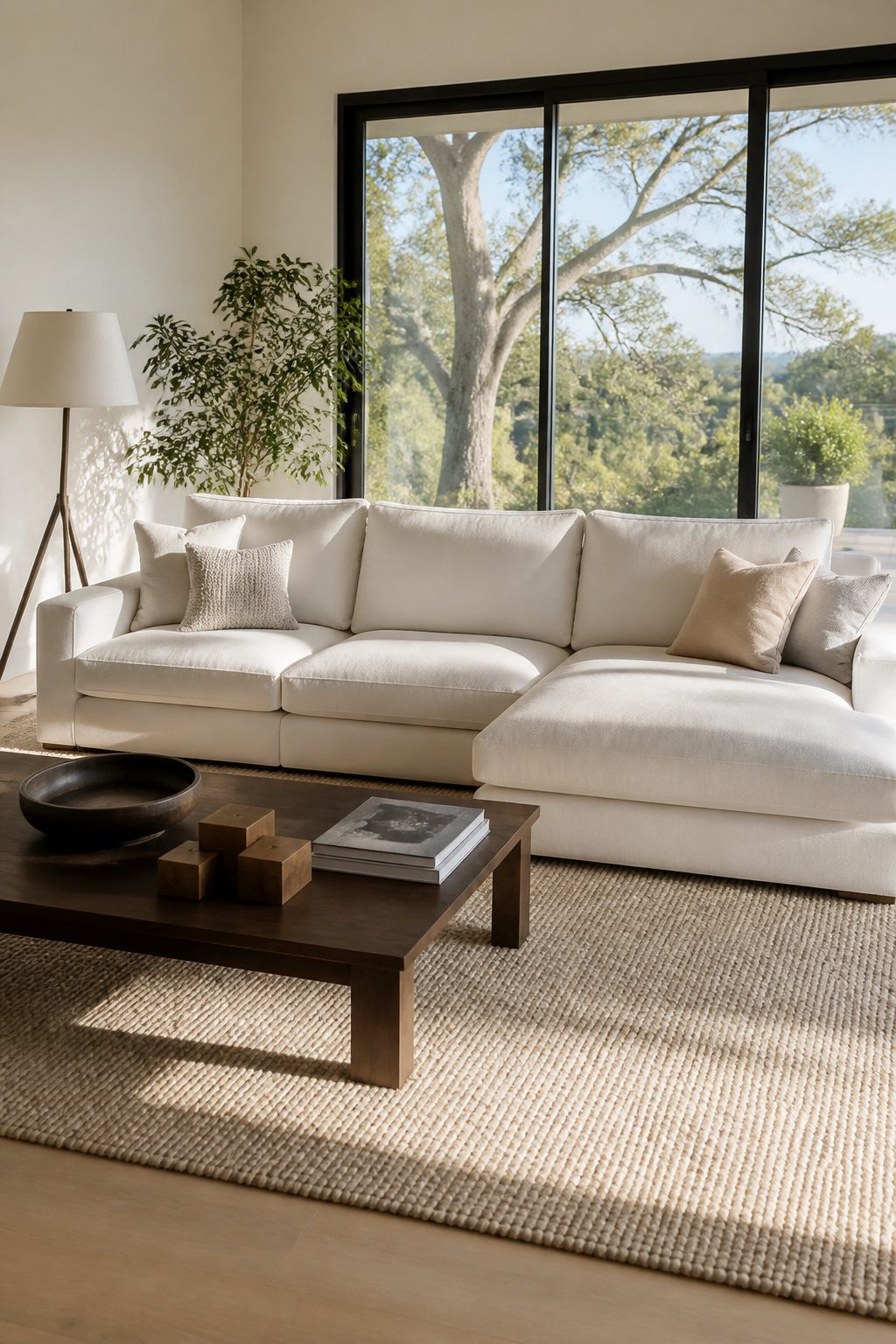
Performance fabric on a white sofa sounds like a contradiction that solves itself. The technology is straightforward: fibers are coated or woven tight enough that liquid beads instead of soaking in, giving you a few seconds to blot a spill before it becomes a stain. The Cami 90" sofa from Birch Lane uses this treatment, and owners with pets and kids mention it holding up in daily use. LiveSmart fabric on the Iden sofa works the same way, rated for everyday lounging and entertaining.
What performance fabric does not do is make a white sofa invincible. The coating wears, especially on seat cushions where friction is constant, and oil-based stains still set if they sit. I have spot-treated upholstery successfully, but only when I caught the spill within minutes. After that, even engineered fibers behave like regular fabric.
This leaves the question of whether performance fabric replaces slipcovers or leather. Two ways to play it. Performance fabric wins if you want the look of upholstered furniture without the maintenance ritual, and if your messes are mostly water-based. Slipcovers still make sense for the deeper disasters, the kind that send you to the washing machine, as anyone who has washed an Ektorp cover multiple times already knows. Leather remains the choice for oil and dye resistance, though at a different price point and feel. Performance fabric sits in the middle, not a substitute for either extreme but a practical compromise for a household that wants white without the anxiety.
White Rustic Sofa
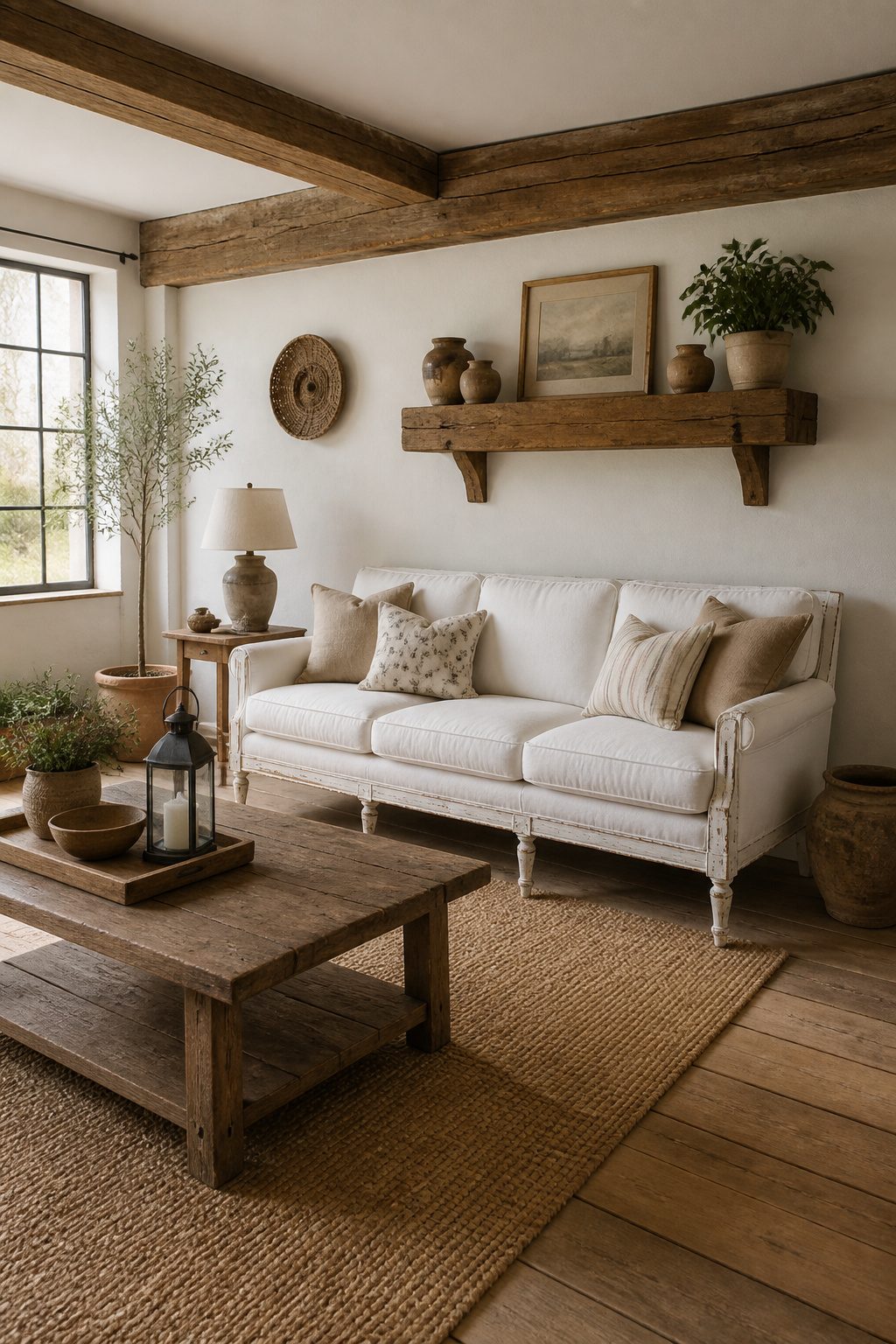
A white rustic sofa lives or dies on where the finish stops looking intentional and starts looking neglected. The line is thinner than most product photos suggest. Distressed paint on an exposed wood frame reads farmhouse when the wear is in the right places, arms and front rail where hands actually land, but the same rubbed edges on the back panels just look like water damage you have not fixed yet.
The weathered beige finish on a solid wood frame is the safer bet if you want the look without the upkeep. White paint on raw wood needs a harder topcoat than most buyers expect. Performance upholstery helps, stain and water resistance matters in a house with pets or kids, but the frame is what people bump with vacuum cleaners and kick with boots. A muted hue on the cushions keeps the whole piece from reading as a showroom prop.
Two ways to play this: let the wood tone stay warm and natural, or commit to a creamy white that you touch up every eighteen months. The warm frame wins if you actually live in the space. I have seen too many sky blue and bright white farmhouse pieces turn into a maintenance diary the owner did not sign up for. The low profile and coil spring seat are comfortable enough for a den or office, but plan the room around it, not the other way around, because that light wood frame dictates every other tone in the room.
White Farmhouse Sofa
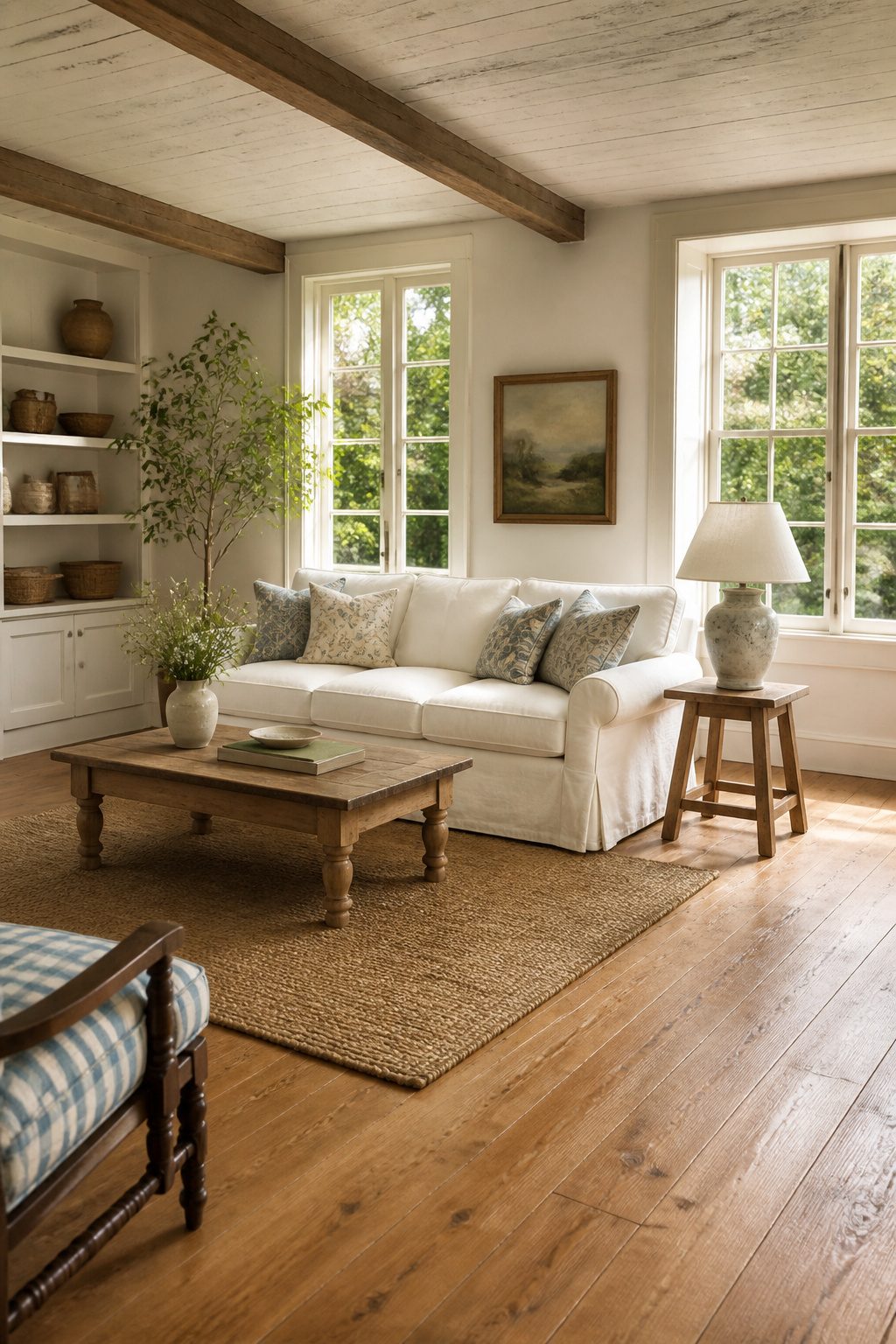
A white farmhouse sofa keeps the country feel but trades log-cabin bulk for cleaner lines and a plainer shape. The difference matters if you are trying to hit that look without building your living room around a barn door. Slipcovers are the usual move here, and the good ones wear a dressmaker-style skirt that hides the legs and frames the cushions without extra carving.
Joanna Gaines put this style in every feed for a solid decade, and the effect is still in the water. The risk is buying the silhouette without the context. A rolled-arm slipcovered piece in off-white canvas can look settled in a room with wide-plank floors and actual vintage finds, and slightly lost in a rental with gray LVP and LED can lights. I have seen it work outside the native context exactly once, when the owner kept everything else plain and let the sofa read as the one soft thing in a box of hard angles. Every other attempt looked like a set piece waiting for the rest of the farmhouse to arrive.
The construction details that matter are the same as any slipcovered piece: a plywood or solid wood frame joined with mortise and tenon, sinuous springs underneath, and a down-and-feather blend in the cushions so the sit is deep enough for lounging without losing shape. Stain-resistant fabric helps, but a white farmhouse sofa in a house with muddy paws still asks for discipline about where food travels.
White Contemporary Sofa

A contemporary white sofa is whatever the current market is pushing right now, not a fixed set of rules like mid-century modern or traditional. Walking through showrooms the last few years, I have watched the definition slide from low-profile boxy frames with chrome legs to softer, rounded silhouettes on walnut plinths. The white upholstery stays, but the shape underneath keeps moving.
That mobility is the risk. Buy a contemporary piece at peak trend and it ages visibly once the silhouette shifts. I have seen five-year-old white sofas on resale sites that look dated not because the fabric failed, but because the chunky arm or the floating base suddenly reads as a specific year everyone wants to forget. The white makes it worse, not better; there is no patina or color variation to distract from a shape that has fallen out of favor.
If you are drawn to a contemporary white sofa, the safer bet is the simpler frame. Skip the gimmick, the asymmetrical back, the integrated side table. A clean rectangle in white linen or a tight-weave performance fabric holds longer because it has less era-specific detail to betray itself. I would rather buy boring and add personality with what sits around it.
White Traditional Sofa

Rolled arms and a skirted base still read as formal, but the formality has softened over the years. The Shelby from Birch Lane keeps the tailored skirt and gently flared arms, yet the loose back cushions with knife edges and the included throw pillows pull it toward everyday lounging. It comes in 42 colors, which tells you the silhouette sells well enough to justify the range.
The Walters sits further toward old-school proportions: Charles of London silhouette, recessed arms, turned front legs, down-filled cushions over sinuous springs. It is the sofa you inherit from an aunt, and the fact that it is still manufactured in 38 colors means someone is buying it new. That buyer is usually someone furnishing a first living room who wants the room to look finished without having to explain the furniture.
A skirted base hides legs and pet hair equally well, which matters more than the style admits. The Shelby’s welted edge and streamlined silhouette keep it from looking like a slipcover waiting to happen, while the Walters’ turned legs leave the skirt behind entirely. Both use loose back cushions, both seat three, and both rely on reviews that mention firmness needing break-in time. The traditional white sofa survives because it photographs clean and lives in forgiving enough fabrics that the white reads as intentional rather than temporary.
White Chaise Sofa
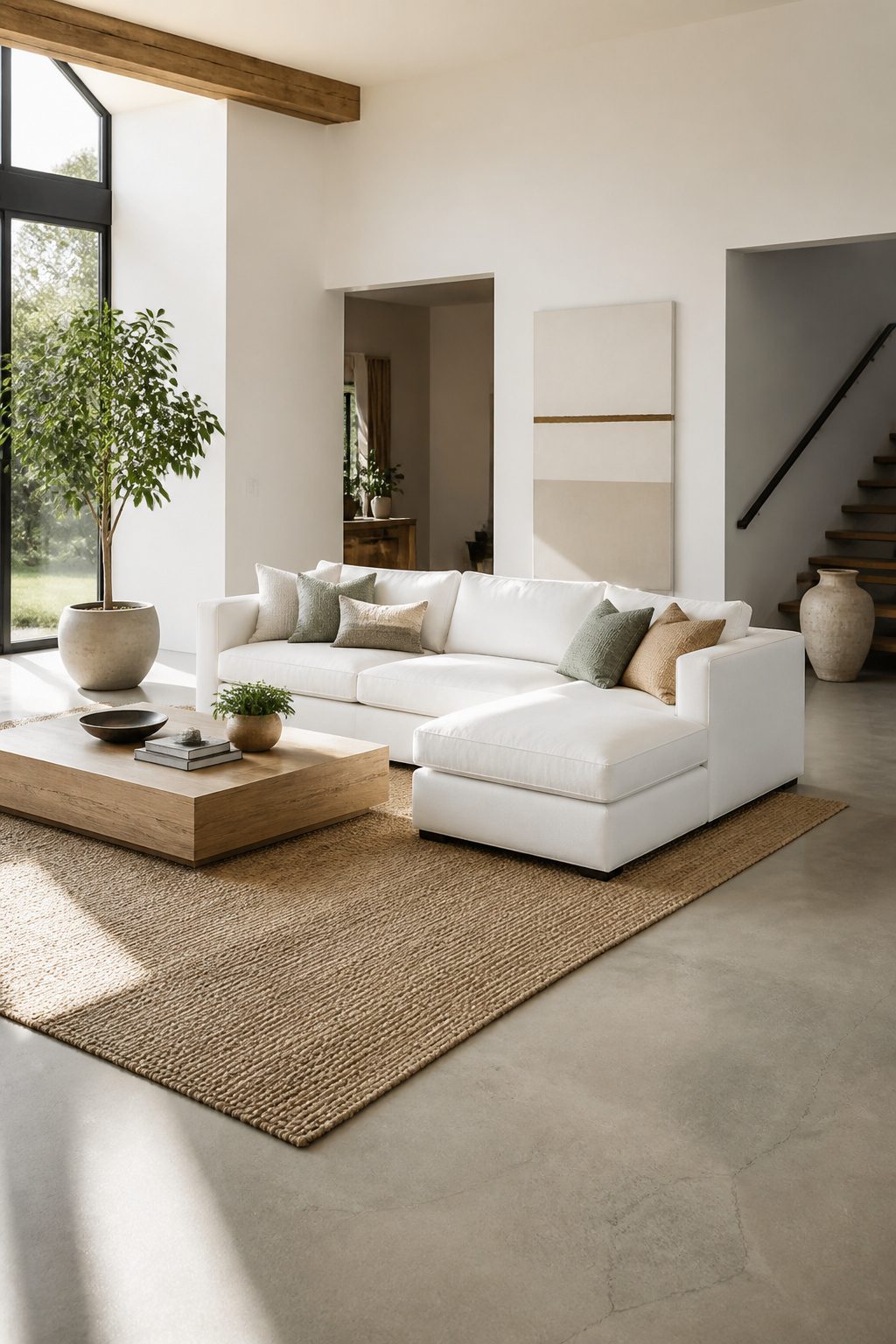
A chaise extension turns the short end of a white sofa into a full-length lounging spot without the footprint of a separate ottoman. The seat cushion simply runs deeper on one side, usually 60–72 inches from back to front, giving you room to stretch out while someone else sits upright.
Left-arm versus right-arm choice matters more than most buyers expect. Stand facing the sofa: the arm you see on your left means the chaise extends to your right. I once ordered a right-arm chaise for a room where the only wall space sat on the left, and the resulting gap between sofa and window made the whole arrangement look accidental. Measure your wall, mark your traffic path, then choose.
The chaise end collects problems. In my last apartment, that extended cushion became a landing strip for unfolded laundry, unopened mail, and a laptop I kept meaning to put away. The height difference between seat and chaise also makes it awkward as regular seating; guests instinctively avoid it, so you lose a usable spot when company comes. If your living room doubles as your only entertaining space, a standard sofa with a movable ottoman gives you the same stretch-out option with more flexibility on busy nights.
White Curved Sofa
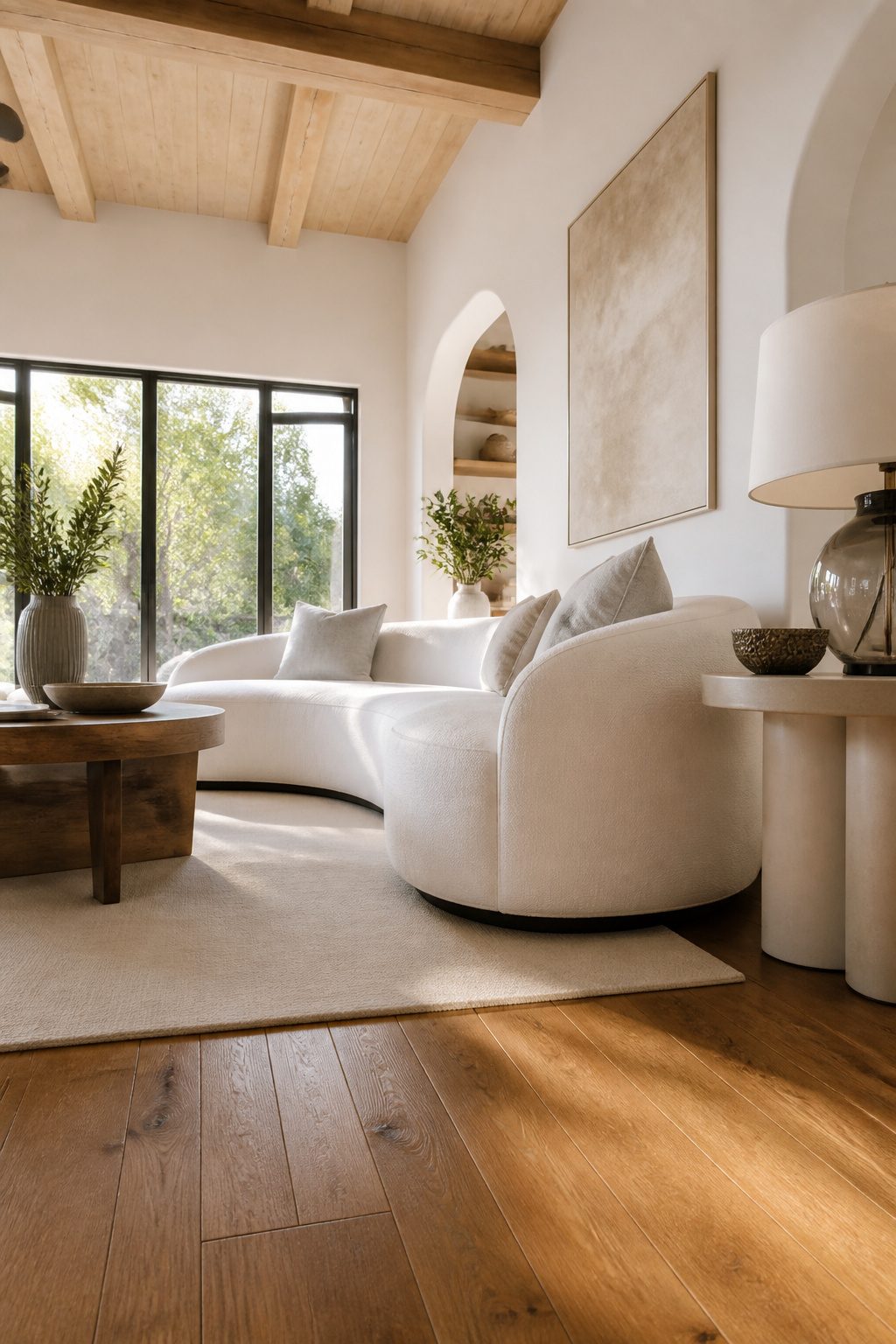
Curved sofas came back hard a couple of years ago, and the white ones in particular have become the piece people photograph first when they walk into a room. The shape reads as intentional in a way a straight line rarely does, but that same curve demands space to breathe. You need roughly three feet of clearance on the bow side or the silhouette collapses into the wall and the whole point is lost.
The conversation-circle logic is real. I have watched friends arrange four chairs around a curved white sofa at a party and the grouping actually worked; everyone faced everyone without the rigid geometry of a sectional. The curve does the social organizing for you.
What surprised me, reading through enough listings to make my eyes cross, is how rarely anyone admits the portability problem. A curved sofa built for one corner does not translate to another room. The back is shaped, not flat, so it cannot float against a wall in a new apartment. It either dominates the center of a space or it looks stranded. If you rent and move every few years, treat this shape as a commitment to a specific footprint, not a piece you will carry with you.
White Sofa with Bench Seat

A bench seat is one long cushion across the full width of the sofa, and after three years of daily sitting, the difference from a three-cushion seat becomes impossible to miss. The single cushion looks sleeker when you first bring it home. No seams interrupt the line, and the surface stays even if nobody has sat on it yet.
Cushion migration is the problem that shows up month six, not year three. One person tends to sit in the same spot, and that foam softens faster than the rest. On a three-cushion sofa, each cushion wears in its own box; you can rotate them or flip one. A bench seat has nowhere for that wear to go. The dent becomes a valley, and because the cover is one continuous piece, you cannot swap the tired center for a fresher edge.
The firmness tradeoff is real. Bench seats need denser foam to hold their shape, which feels harder at first. Softer foam feels better the day you test it in the showroom, but a year later the sag is permanent. I sat on a bench-seat sofa at a friend’s place last fall, three years into its life, and the center was visibly lower than the frame on either side. She had started throwing a blanket over it to hide the dip.
For a weekend-buyer on a tight budget, this matters because a bench seat is harder to rescue. Re-stuffing one long cushion costs more than replacing a single standard cushion, and finding a match for the original fabric three years out is often not worth the hunt. If you want the clean look, buy the firmest foam you can stand, and plan to sit in different spots on purpose.
White Sofa with Tapered Legs
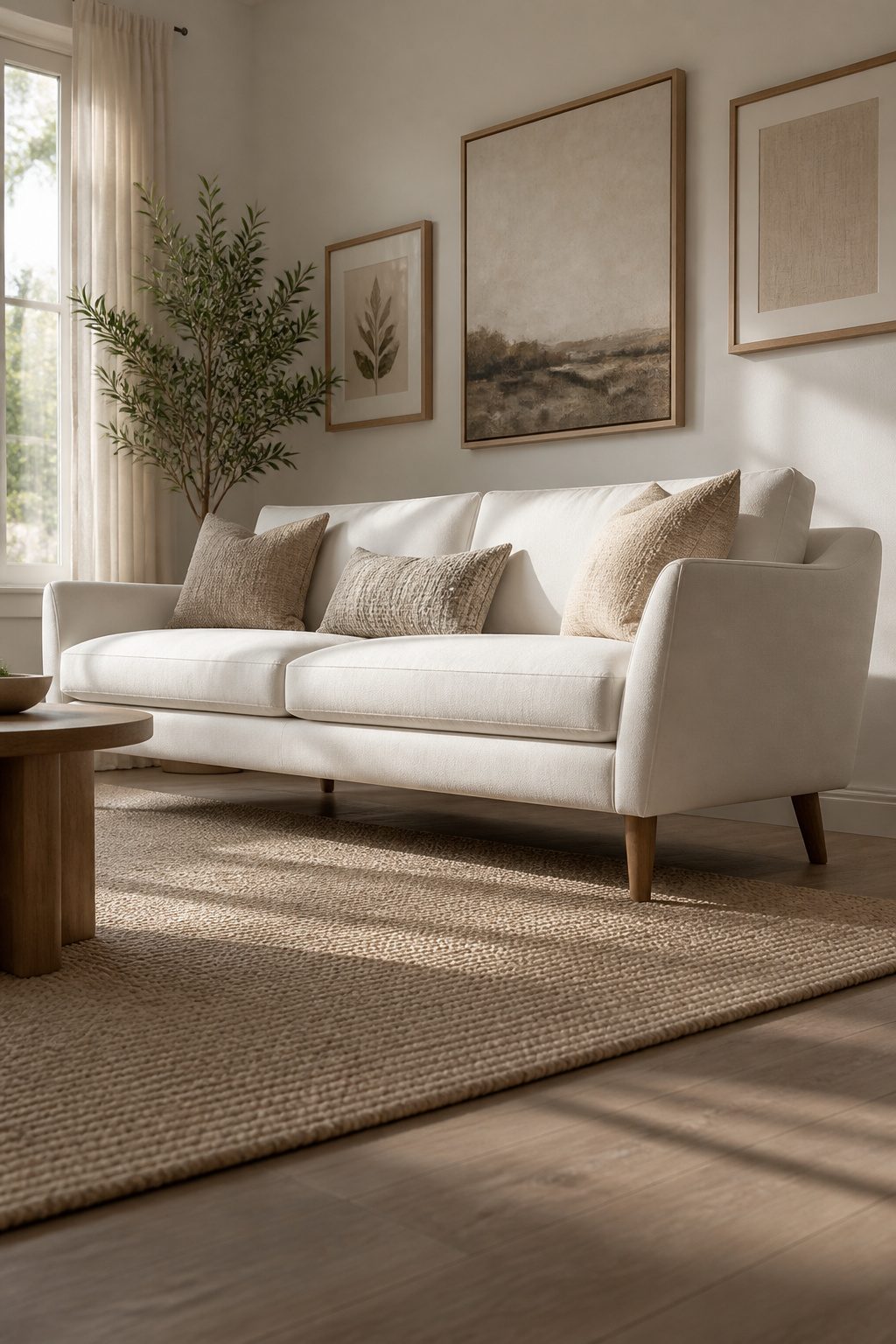
Tapered legs carry the clearest mid-century signal of any sofa detail, and on a white frame they keep the whole piece from reading as a block of drywall. The narrow footprint lifts the seat visually and practically: a vacuum slides straight underneath without the gymnastics that skirted sofas demand. What convinced me, reading through a dozen of these listings, is that the leg proportion matters more than the cushion weight above it. A heavy three-seater with thick cushions can look anchored rather than bulky if the legs angle slightly outward, but straight vertical tapers on the same body read top-heavy, like a cake on toothpicks. Angle out at least five degrees if the seat depth passes 36 inches. Most buyers skip this check and end up with a sofa that photographs clean but looms wrong in the room. Wood tone is the other quiet decision. Walnut against white upholstery warms the whole piece; black or raw steel pushes it colder and more graphic. Neither is wrong, but the choice commits the sofa to a temperature that paint and pillows only partly offset later.
White Sofa with Recessed Arms
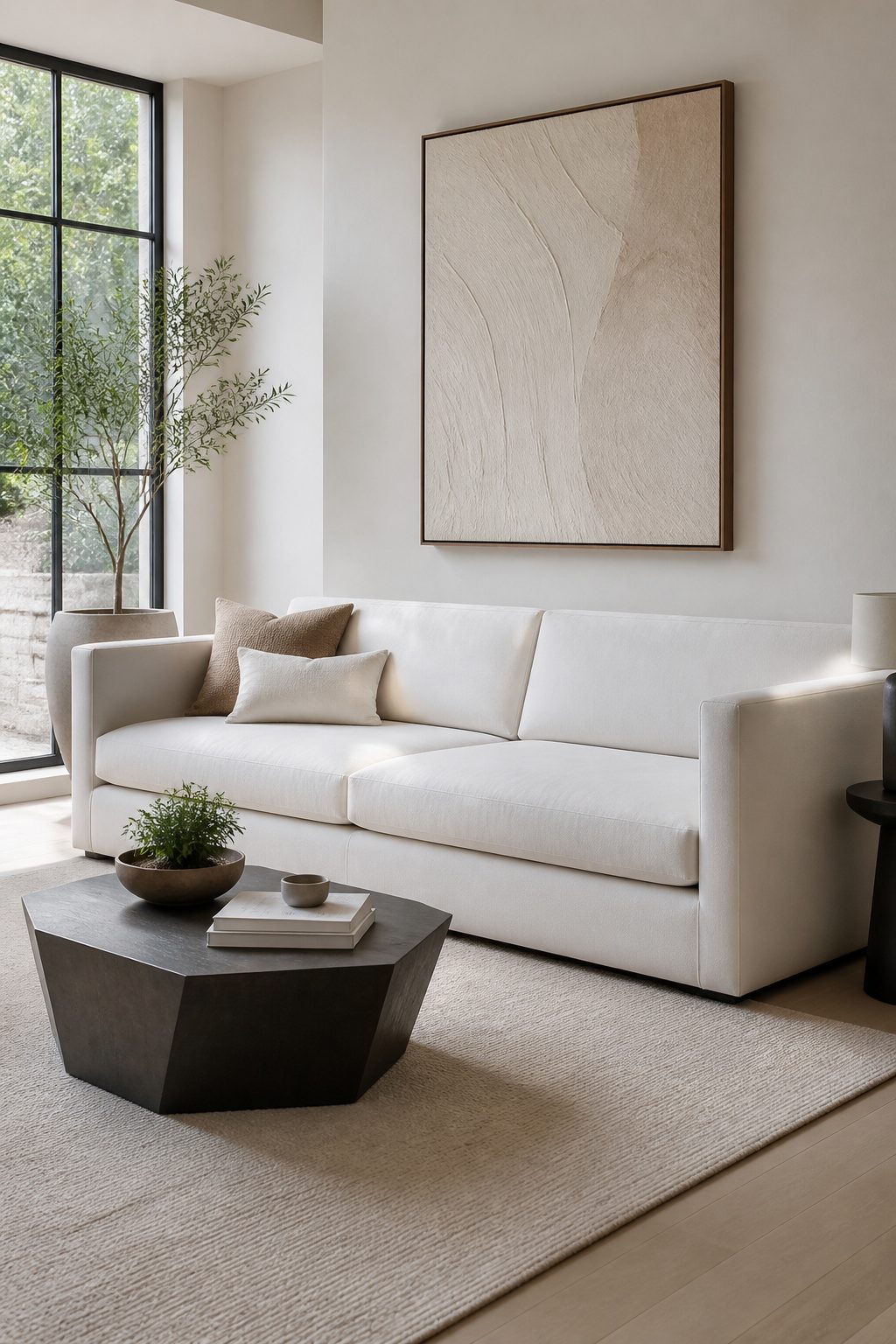
Recessed arms sit slightly behind the front plane of the sofa, which buys you a few inches in a narrow living room or awkward apartment entry. I noticed this first on the Emilio 90-inch upholstered sofa, where the arms are set back enough that the piece reads as low-profile without actually being a loveseat. The Walters 78-inch tight back does the same trick at a shorter length, and both rely on that arm position to keep the silhouette modern rather than bulky.
The catch is the lean. Recessed arms are not comfortable to prop an elbow on; the padding starts farther back than your shoulder expects, so you end up bracing against the front rail or sliding sideways into the corner. In photographs, this style looks clean and intentional, almost architectural. In person, the same line can feel slightly withholding, like the sofa is keeping its distance. If you nap on the couch or want a place to fold your legs up against something, recessed arms will remind you of that choice every time.
White Sofa with Loose Back Cushions
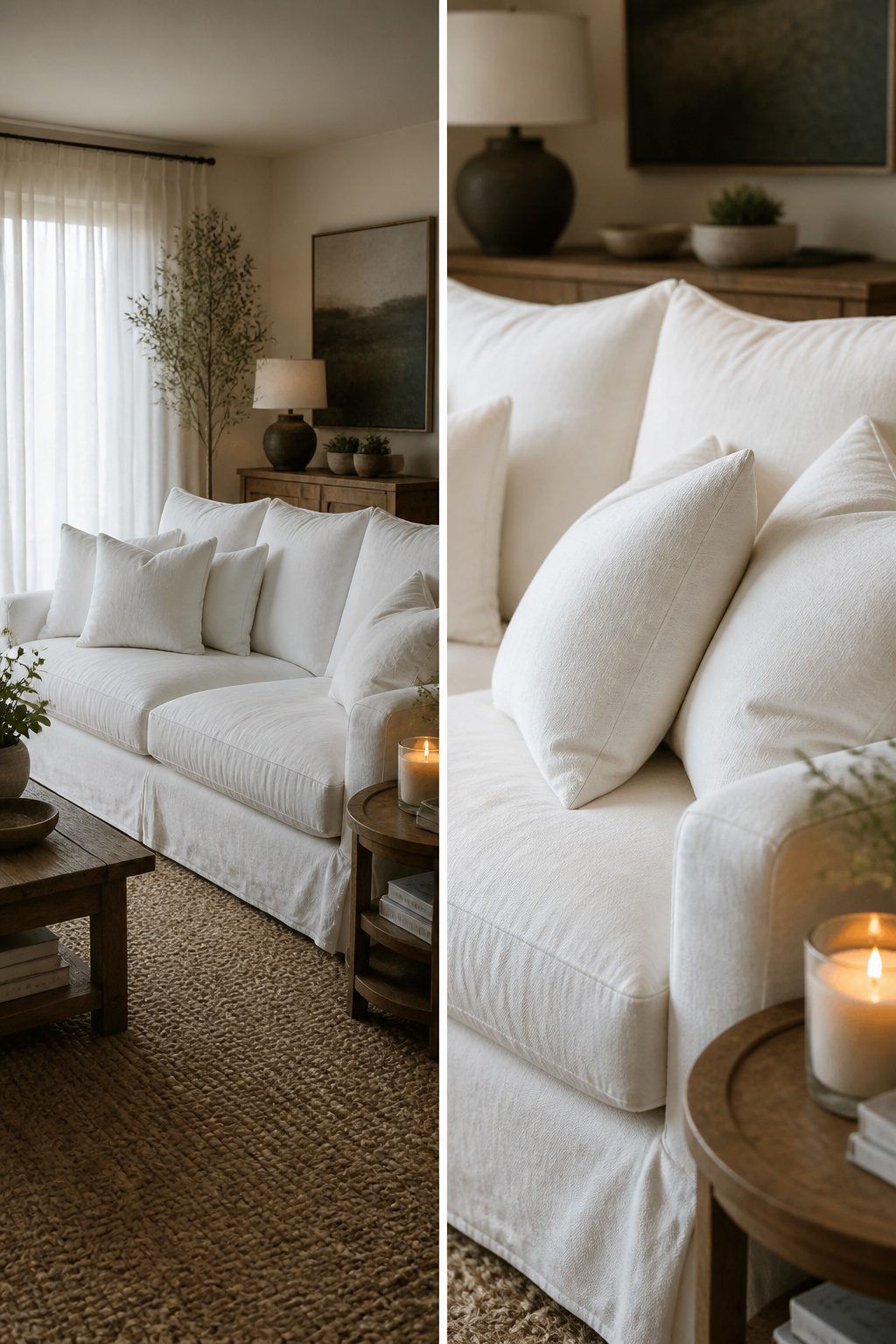
Loose back cushions on a white sofa look relaxed the day they arrive, but flipping and fluffing them weekly is the maintenance reality that keeps them from going sloppy. I noticed this tension reading through listings: the Berger 98-inch sofa gets praised for easy cleaning because its back cushions come off, yet the same reviewer admits the pillows don’t fill out the frame the way the staged photo promises. That gap between showroom fullness and lived-in slump is what you’re buying into.
Attached backs hold their shape without your help. Loose backs let you replace a single cushion when the polyester blend mats down or a red-wine spot won’t lift, instead of reupholstering the whole frame. The Rae 85-inch leather sofa uses foam-and-feather fill with web suspension to fight sagging, but even there the maker includes two lumbar pillows, as if expecting the main cushions to settle. Over a few years, the intentional casual look tips toward neglected unless you stay on top of it. For a weekend-project budget and timeline, that upkeep cost matters as much as the ticket price.
White Sofa with Down-Filled Cushions

Down fill sinks. That is the first thing to know, and the reason I pause before recommending it in a white sofa. A blended down cushion, like the kind in the Walters 82” from Birch Lane, starts out generous and ends the evening as a shallow dent that needs fluffing before anyone sits again. The Jossa Modular Sectional uses goose down wrapped in pearl cotton, which slows the collapse some, but the core behavior stays: air escapes, the loft drops, and someone has to restore it.
Foam or high-resilient foam holds shape. Sinuous springs under either type do the actual weight-bearing work, so the fill debate is really about surface feel. Down wins on that first sit, the one where you drop in and the cushion receives you. By the third sit of the night, foam has caught up and passed it.
The cleaning question matters more on white. Down absorbs. A spilled drink or a smear of pizza grease travels inward rather than beading on the surface. Spot-treating works, as the Hello Lovely studio notes from their own white upholstery experience, but down complicates it because the stain and the fill intermingle. A slipcover helps, which is why the Walters now comes in that option, yet the cushion inside still has to be dried thoroughly or it mildews.
For a renter or a first-home owner doing one project a year on a tight weekend, down in white asks more maintenance than the plush is worth. If the sink-and-fluff ritual sounds acceptable, buy the slipcover version and treat the cushion like a pillow that needs a sunny day now and then.
White Sofa with Sinuous Springs
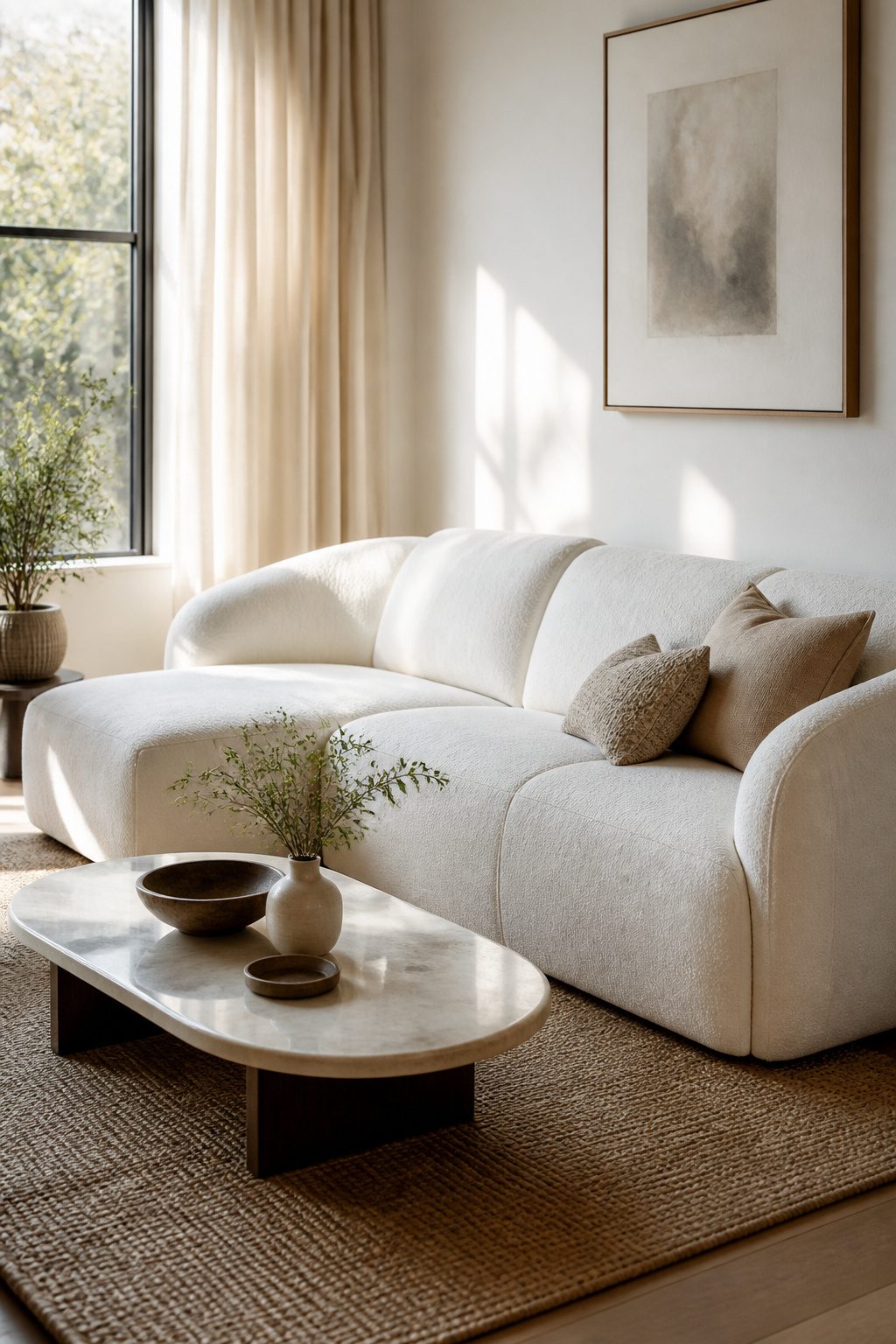
Sinuous springs are the zig-zag metal bands you will find in most sofas built after about 1980, including nearly every white sofa under $2,000. They run front to back across the frame and cost manufacturers far less than eight-way hand-tied coils while still giving decent support for the first several years. The problem is not collapse, it is noise. A sinuous spring system starts to squeak or pop when the clips that anchor it to the frame work loose, or when the springs themselves fatigue and rub against the wood. I have heard this happen on a three-year-old sofa that looked pristine from the outside.
If you are shopping for a white sofa in a showroom, sit down, get up, and sit again. Do this near one end, then the middle. Any click or groan in the frame is a spring system already announcing its expiration date. Online, the spec sheet rarely says "sinuous," but if the listing does not mention eight-way hand-tied, you are almost certainly looking at sinuous springs. For a weekend project sofa that you plan to keep five to eight years, this is acceptable. For something you hope to hand down, it is worth saving longer for the older system or at least checking whether the frame uses additional webbing or a solid platform beneath the springs.
White Sofa with Removable Cushion Covers

A white sofa with removable cushion covers sits in a middle ground that most shoppers miss until they are standing in the store. The frame and the shell stay fixed; only the seat and back cushions zip off for washing. That distinction matters because it costs less than a full slipcover replacement, but it also protects less.
The zippers are the weak link in real use. Polyester blends and cotton canvases both shrink, and a cover that fit snugly at purchase can turn into a wrestling match after the first hot wash. One buyer noted the back pillows on their sofa never filled out the frame quite the same after cleaning, even when the fabric itself held up. Feather-blend or poly-fill cushions complicate this further: the insert may outlast the cover, or the cover may outlast the insert, but they rarely age at the same rate.
Stain-resistant finishes help, yet they do not make the cushions self-cleaning. A household with pets or kids still faces the math of how many cushion covers can be in the laundry at once while the sofa sits usable. Two or three covers is manageable; six or eight turns into a rotation schedule.
For a renter or a first-home owner doing one project a year, this format works best when the risk is moderate: occasional spills, not daily mud. The price sits below a full slipcovered piece, and the weekend timeline holds because you are not fitting a whole new skin to the frame. The tradeoff is accepting that the fixed shell will still show wear, and no amount of clean cushions hides a stained armrest you cannot remove.
White Sofa with Stain-Resistant Fabric

Stain-resistant fabric on a white sofa is not the same thing as performance fabric, though the showroom tags often blur the two together. Performance fabric builds the resistance into the fiber itself, usually at the yarn level. Stain-resistant fabric starts as standard upholstery and gets a surface treatment applied after weaving, a fluorocarbon or similar coating that makes liquid bead up instead of soaking in.
That coating wears away. Armrests go first, then seat cushions, anywhere friction meets skin. Reapplication runs about $150–250 for a full sofa if you hire it out, or you can buy a spray bottle and do it yourself every six to twelve months. The catch is that reapplication only works if the original treatment was compatible, and most manufacturers will not tell you what they used.
After reading through the claims on this, I treat stain-resistant fabric as a marketing layer more than a material one. It buys you time on a spill, not forgiveness on a lifestyle. If you are choosing between a treated standard fabric and a true performance weave at close prices, the performance weave wins for anything that sees daily use.
Material Choices
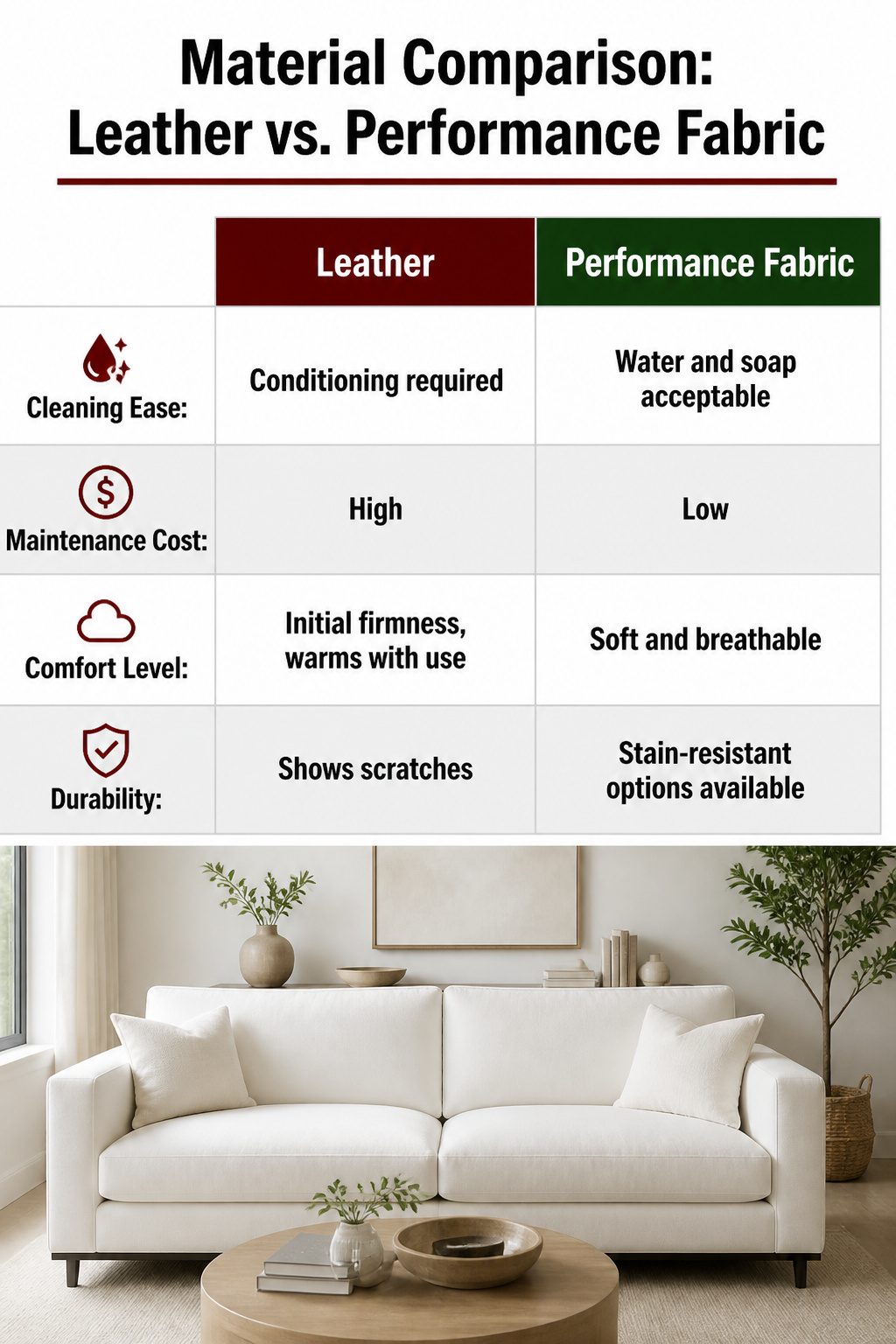
Leather on a white sofa sounds elegant until you are chasing a red-wine drip with a specialty cleaner you paid thirty dollars for. Fabric, especially a performance weave, is what most people end up buying for a reason. The stain- and water-resistant finishes on the current generation of upholstery mean muddy paws and coffee cups do not have to be emergencies. I have never had trouble spot-treating a performance fabric, and I am not unusually careful; my own rule was simply keeping food in the kitchen, which cut the risk down to party-night accidents.
The cleaning reality breaks cleanly. Leather needs conditioning, shows scratches, and darkens where skin oils collect. Performance fabric lets you blot with water and mild soap. A fixed fabric cover without that treatment is the budget option that will cost more later, because professional cleaning a white sofa runs well past the hundred-dollar mark each time. Coil springs and foam-and-feather fill, like the construction on the Birch Lane Cami, hold up under actual sitting better than the frame alone suggests; the upholstery takes the wear first.
If you are renting or this is your first sofa purchase, performance fabric wins on every count except one: it does not patina. A white leather sofa ages into something, for better or worse. Performance fabric just stays clean, which for a weekend-project budget and a household with pets or kids is usually the point.
Measuring Your Space

The tape trick I learned from a Pottery Barn delivery that almost went wrong: before you order, mark the sofa footprint on your floor with painter’s tape. Measure the doorway and stairwell first, not just the room. A 36-inch entry with a tight turn at the landing will reject a sofa that fits perfectly against your living room wall. I watched a crew wrestle a Tallulah Upholstered Sofa through a narrow hall once; the legs came off, but the frame still scraped the drywall because nobody had checked the ceiling height at the stairwell turn.
White sofas already fight a visual battle in small rooms, so a piece that arrives and cannot be placed turns the whole room into storage for a return label. The standard advice says measure the room to avoid overwhelm, but the real mistake is stopping at the floor plan. The path in matters more than the destination.
Style That Lasts
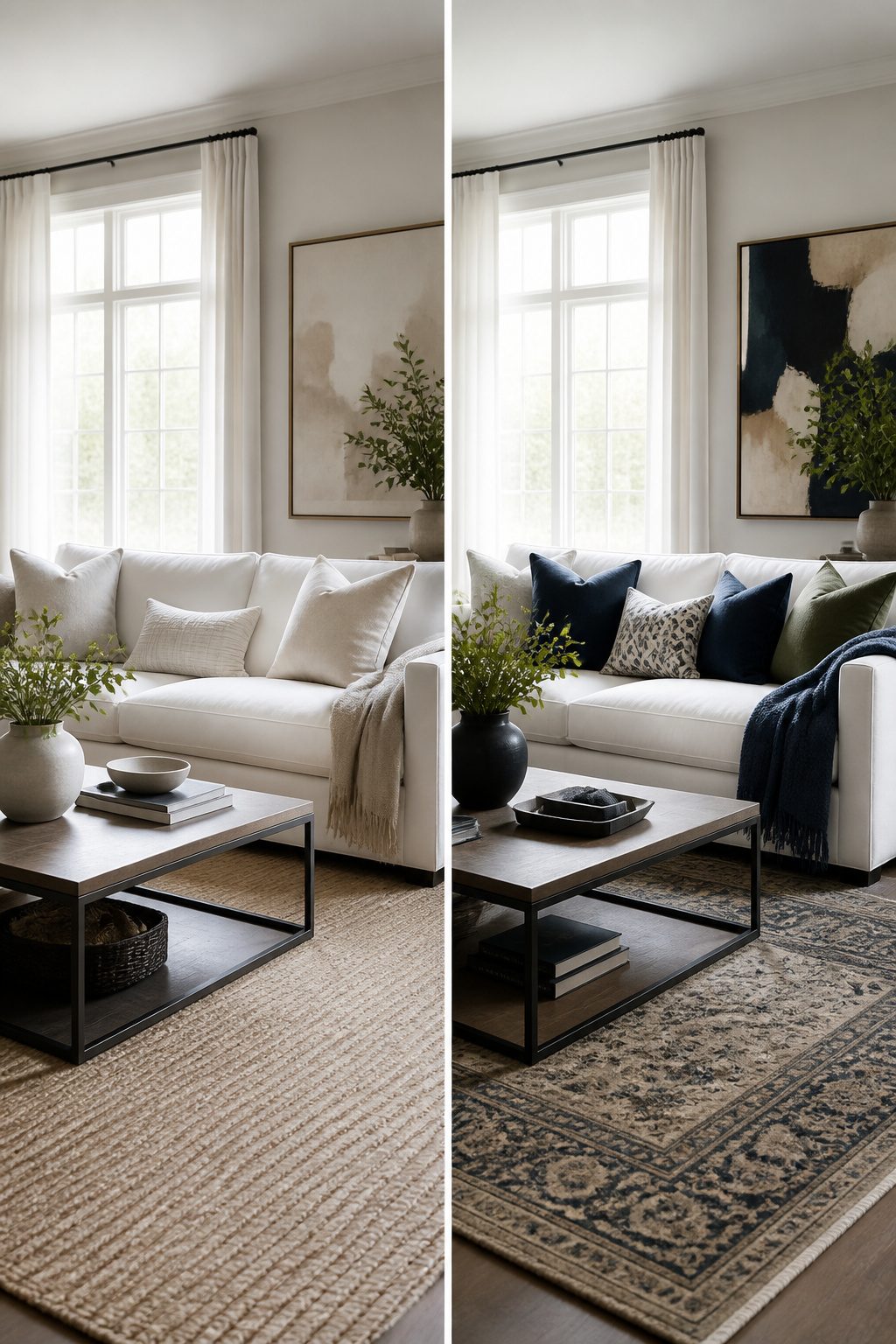
A white sofa earns its keep by outlasting the paint on your walls. I have watched friends repaint three times while the same ivory slipcovered frame carried through every mood, from a light blue-grey phase to something warmer and back again. The Willow Modern Slipcovered Sofa or the Cove Square Arm from Pottery Barn both sit in that territory: pale enough to read as neutral, grounded enough to not feel temporary.
The real test is resale. Bold colors date fast; white holds. Rachel Ashwell built a whole aesthetic on that staying power, and Leanne Ford’s all-white rooms shift season to season without swapping the largest piece in the room. What changes is the layer on top: jewel-toned pillows when you want depth, crisp linens for summer, a bold rug when you need the room to feel new.
The sofa stays; everything else rotates.
That flexibility cuts both ways. Some call it safe, others call it risky for the upkeep. Both miss the point. White is not a style choice so much as a refusal to lock yourself into one. Paint is cheaper than furniture, and a throw pillow is cheaper than either.
Daily Function

A white sofa has to survive the way your house actually runs, not the way a showroom looks at noon on a Tuesday. Sectionals draw families because the seating stretches wide enough for three people and a dog, but that same footprint turns a small living room into an obstacle course. I have watched friends buy the Incanto white leather sectional for open-plan space and then spend two years apologizing for the corner that blocks the balcony door. Sofa beds trade on flexibility, and the modern ones do sleep better than the clanking metal frames I remember from college. Still, the mattress folds into three inches of foam over bars. A guest staying more than two nights will notice. For daily living, a standard three-seat sofa like the 88-inch Haven or the 84-inch Porter keeps the proportions honest. The Haven runs deep with high-density foam that holds shape through daily use; the Porter uses a feather blend that feels plush at first but needs fluffing to stay level. Reversible seat cushions are what separate a sofa that lasts three years from one that looks tired in eighteen months. If your living room is the path from kitchen to front door, skip the sectional unless you have real width to burn. If you host overnight guests twice a year, the sofa bed penalty on daily comfort is not worth the rare payoff.
Keeping It Clean

A white sofa that stays white demands a rhythm more than a miracle. Vacuuming the surface every week or two lifts the dust before it settles into the weave, and spot-cleaning with a drop of dish soap in cool water handles most of what daily life drops on it. Even red wine has come out of Belgian linen for people who attack it early with that same mild soap solution.
Professional deep cleaning every 12 to 18 months is the interval that actually protects the investment; stretching it to two years lets body oils and ambient grime migrate past the surface where home tools reach. Between those visits, rotating cushions so the same seat does not take every afternoon of sun slows the fading that windows quietly deliver. Throws on the arms and back, swapped out seasonally, do the same protective work without looking like a cover-up.
Performance fabrics or easy-clean upholstery buys peace of mind if the household includes the chaos of daily family life. Machine-washable throws and accent pillows that can go straight into the laundry turn a white sofa from a dare into a practical choice. The mistake is treating the color as fragile; the real risk is waiting too long between cleanings and letting a light surface go dull from neglect rather than use.
Slipcovered vs. Fixed
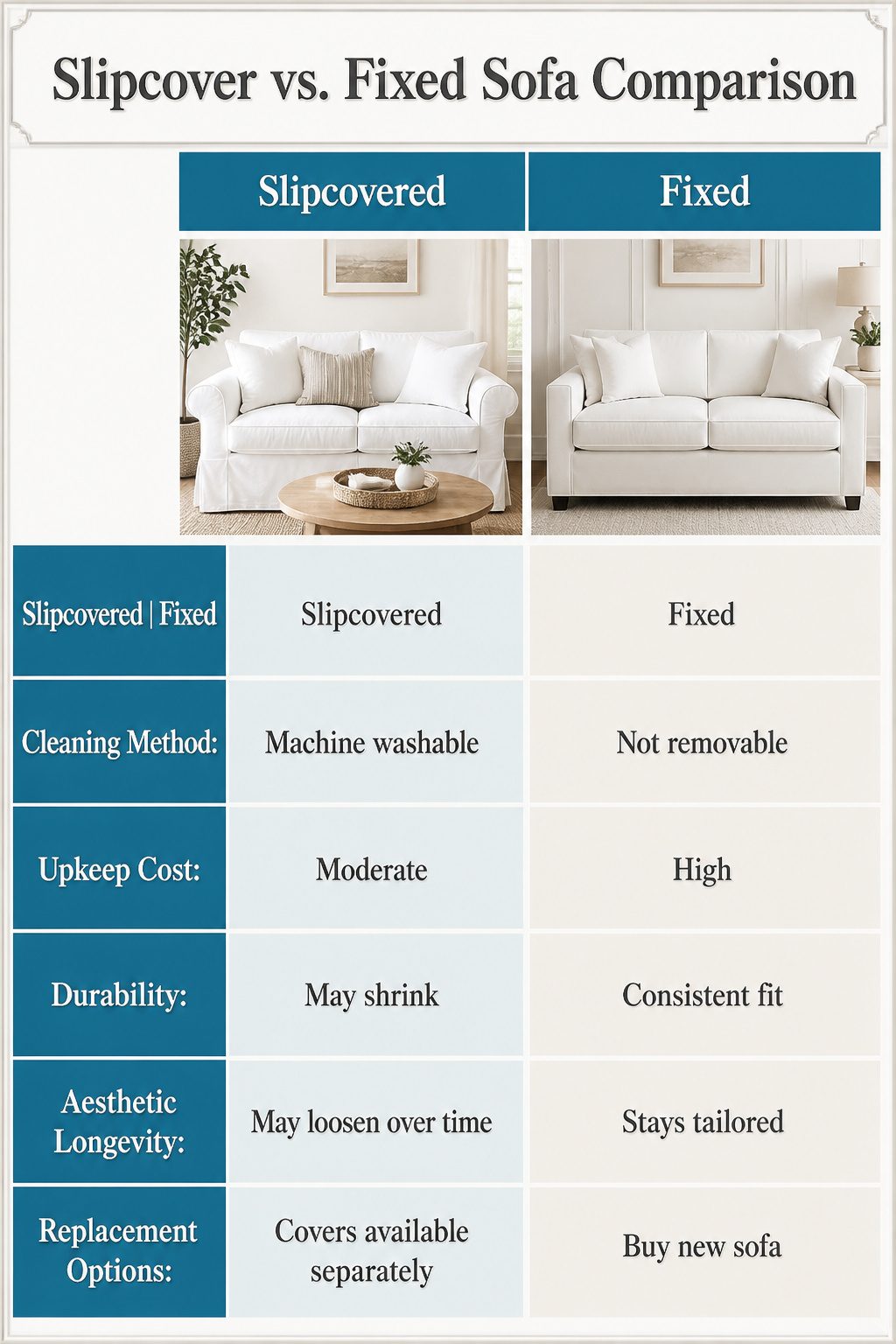
A fixed white sofa looks cleaner day one, but the cushion covers do not come off. That is the whole decision right there. If you have a dog that jumps up with wet paws or a toddler who treats the couch like a napkin, a slipcover that zips off and goes through the wash is the only realistic way to own white.
Not every slipcover is actually washable, though. Some designs sold under the name require dry cleaning, which means you still have a white sofa you cannot easily clean. Check the tag before you buy. Real machine-washable covers, usually cotton or a cotton blend, let you treat a spill the same afternoon it happens.
The catch comes after a year of washes. The fabric shrinks slightly each cycle, and the tailored fit loosens. I have had a cover that no longer zipped at the back after its sixth wash; the seams still held, but the closure strained by half an inch. Replacement covers solve this if the manufacturer still stocks them. Some brands, like the Porter 84-inch with its 33 color options, keep covers available separately, so you are not buying a whole new sofa when the white goes gray or the fit goes wrong.
Stain-resistant fabric helps either way. The Porter uses it, and that layer buys time on a spill even if the cover is fixed. For a family sofa, though, stain resistance plus removable beats stain resistance alone. The wash is your insurance policy; the replacement cover is your reset button.
Performance Fabric Reality

Performance fabric on a white sofa sounds like permission to stop worrying, but the warranty language tells a different story. What sold me on the term was liquid repellency, which is exactly what it sounds like: water beads up long enough for you to grab a towel. Oil-based stains, though, sit under that same barrier and wait. A dropped slice of pepperoni pizza does not bead; it seeps.
The rubbing test, the one that gets advertised in thousands of cycles, measures abrasion resistance, not stain recovery. It means the weave survives your jeans sliding across it for years. It does not mean red wine disappears without a trace.
I spent an afternoon once reading the care tags on three different "performance" white sofas in a showroom. Two of them listed the same cleaning code: water-based cleaner only, blot immediately, no heat. The fabric had bought me minutes, not immunity. For a household with a dog who loves the couch after the park, that delay matters. For a household hoping to ignore maintenance entirely, the disappointment arrives around month six, when the armrest greys in a way that does not blot out.
Styling Around White
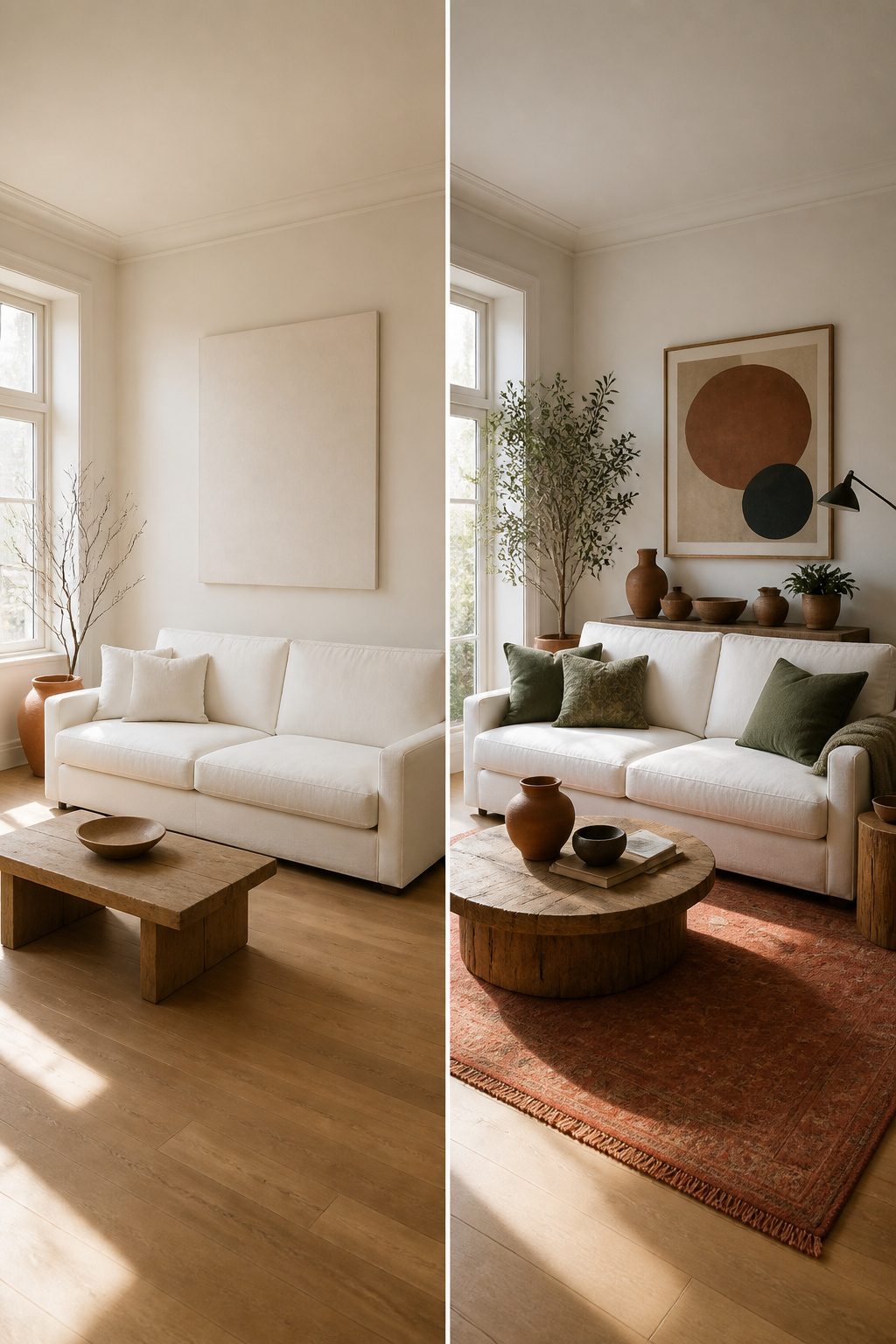
A white sofa reads as a blank page until you place something next to it. The combinations that worked in my living room started with terracotta and raw wood, which warmed the white without making it look dirty. Navy and brass felt too staged, like a hotel lobby I did not want to live in. Sage green and rattan looked accidental at first, then settled after I swapped the throw pillows for a heavier linen weave. Texture matters more than color alone. A flat weave rug plus smooth leather pillows made the whole corner feel like a showroom display; switching to a nubby wool and slubby cotton gave it the lived-in quality that shows up in the saved pins I actually return to. The Pinterest boards that keep my attention pair white sofas with blackened steel lamps or vintage kilims, never with another white element in the frame. One cream throw was enough to kill the contrast and turn the sofa into a blob. For renters who swap accessories between leases, ochre and charcoal travel well across apartment beige walls and landlord-special wood trim without fighting either one.
Frequently Asked Questions
How can I remove stains from my white sofa?
Move fast. For fabric, blot with mild soap and water while the spill is still fresh. Leather takes a damp cloth or a cleaner made for the hide. Oil-based stains on any surface set quickly, so speed matters more than the product you grab.
How often should I deep clean my white sofa?
Schedule professional cleaning every 12 to 18 months. Between those visits, vacuum weekly and spot-treat as needed. A slipcover you can strip and wash yourself stretches that interval, but fixed upholstery benefits from the deeper extraction a pro can provide.
Is it possible to prevent discoloration over time?
Keep the sofa out of direct sunlight, which fades white faster than it darkens most colors. Performance fabrics and leather hold their tone longer, but no material is immune to UV exposure. Rotate cushions if the light hits one side harder than the other.