
Cozy living rooms run from a $35 secondhand rug to a full weekend rearrangement, and the deciding factor is almost always the light source you already refuse to turn on. The overhead fixture in my last apartment was a single dome that made everything look like a waiting room, and swapping it out in practice, not wiring, cost nothing but the decision to leave it off. That same choice is what separates the rooms you actually stay in from the ones you pass through.
1. Comfortable Seating Options

A sectional sofa tends to anchor a cozy living room better than a straight sofa because it gives everyone a corner to claim. I like the reversible kind; you can flip the chaise end when you rearrange, which matters more than people admit in rentals or first homes where the room’s purpose shifts year to year. Surround it with a coffee table, an area rug, and an end table or two so drinks and remotes land within reach.
Keep sofas, chairs, and coffee tables within eight feet of one another. That distance is the edge of comfortable hearing in normal conversation, and a room that looks intimate on paper falls apart when people have to lean forward to catch a sentence. For the layout itself, position the sofa across from a barrel chair or two, with the coffee table centered between them. If there is a fireplace, let it serve as the backdrop rather than competing with the TV for attention. I have seen rooms where every seat faced a different focal point, and the space felt scattered even though the furniture was close together. One clear center, seats pulled inward even by a few inches, and the room starts to feel like it knows what it is for.
2. Layered Textiles

A living room starts to feel lived-in when you can reach for a throw without asking permission. I keep two or three spare blankets folded over the sofa arm, not tucked away in a closet where they become decoration instead of utility. Machine-washable ones win; the nubby wool and chunky-knit textures that photograph well are the same ones that collect popcorn crumbs and pet hair.
Pillows follow the same rule. A bouclé cover next to a velvet one creates the contrast that makes a sofa look assembled over time rather than bought in a set. I stopped matching my pillow covers after realizing the rooms I kept returning to in magazines mixed cowhide, faux fur, and buttery leather without trying to make them relatives. The mix works because each texture reads as something you’d actually touch, not just look at.
The cost stays low because none of these are investment pieces. Throws pill; pillows flatten. Buying for the texture rather than the brand means replacing a $20 cover when the zipper jams instead of mourning a $200 one.
3. Warm Lighting

The overhead fixture in my last apartment was a single dome light that made everything look like a waiting room. I swapped it out in practice, not wiring, by refusing to turn it on.
Lamps do the actual work. A floor lamp with a fabric shade behind the reading chair, a ceramic table lamp on the sideboard, a pair of wall sconces flanking the sofa: each one drops the light level to something that actually lets shoulders come down. The sources I trust on this say to dot your living room with lamps to create a warm and relaxed environment, and that phrasing stuck because it is the opposite of what most of us inherit. Frosted glass or fabric shades filter what comes through; anything labeled warm white or soft white, never cool, keeps the tone after sunset.
Wall sconces matter especially when floor space is tight. Twin brackets on either side of the fireplace or sofa give you that symmetrical pool of light without the footprint of a second table. Smart bulbs paired to a voice command are a nice extra if you already have the setup, but the physical placement matters more than the switch method.
The mistake is thinking the overhead fixture plus one lamp is enough. Two sources minimum, three better, and the overhead left off entirely. That single dome light is for finding dropped keys, not for staying in.
4. Rugs

A rug keeps furniture from feeling like it is floating in the middle of the room, which is the quickest way to kill a cozy vibe. At least all front legs of every piece should sit on the rug, not just the coffee table. That rule is what separates a grounded seating area from a postage stamp floating between sofas.
Shag rugs with their extra-long pile add that silklike softness underfoot, but a thick area rug in any texture does the same work of warming up hardwood. The whole sofa can rest on a large rug if you have the square footage, or you can keep just the front two legs on and still hit the mark. What matters is that the rug reaches far enough to catch your step from the sofa to the kitchen and back, so the coziness follows you instead of ending at the edge of the weave.
5. Color Schemes

Warm neutrals do the heavy lifting in a cozy living room. Terracotta, caramel, cream, and beige settle the eye and make a space feel lived-in rather than staged. I tend to reach for these first in smaller rooms or apartments where the goal is airiness without sterility. A cream area rug underfoot, a caramel-finished coffee table, maybe a tan leather accent chair: the palette stays quiet so the room does not.
Darker tones trade that openness for something more enclosed. Navy, charcoal, even deep teal or chocolate brown pull the walls inward and turn a large living room into an evening space that actually invites you to stay. The sources I read split hard on this choice. Light colors for airy calm, darker hues for cocooning intimacy — and the decision really comes down to when you use the room. If Friday night takeout and dim lamps are the priority, dark wins. If you need the space to feel gentle at noon, stay with the warm neutrals and add depth through olive green or deep rust in small doses, a lamp base, a throw pillow, a print.
The practical move for renters: peel-and-stick wallpaper in charcoal or navy gives you that cocoon effect without the landlord conversation later. Balance it with light gray decor or crisp white fixtures so the room does not flatten into a cave. Solid wood floors against caramel wood accents help here, the warmth of the material keeps the dark color from going cold.
6. Functional Furniture

An ottoman with a lid turns dead space into storage for throw blankets or the remote you keep losing. I bought one from a big-box store years ago after realizing my coffee table was just a shelf for clutter I didn’t want to look at. The swap gave me a place to kick up my feet and a bin underneath for magazines.
Coffee tables with drawers or a lower shelf do the same work. The surface stays clear for drinks, but board games and charging cables slide out of sight. In a smaller living room, that division matters. A piece that does two jobs beats two pieces fighting for the same floor space.
Multi-functional furniture has its limits. A sleeper sofa sounds clever until you unfold it twice a year and hate the mattress. I learned that the hard way in my first apartment. The ottoman stayed. The sofa bed went to a friend with a guest room, not a guest policy.
7. Personal Decor

Books and art do the work that furniture alone cannot. A corner bookcase, even a small one, turns an empty wall into something that reads like a home rather than a display. Deep shelves let you stack books two rows deep and still leave room for a basket that holds the remote, the charger, the thing you reach for after dark. The books themselves do not need to match; the spines you have actually read carry a warmth that color-coordinated sets never manage.
Wall space above a console or cabinet is where a single large piece of art changes the whole room’s temperature. A landscape from a place you have been, or an abstract in colors that slow your breathing down, makes the wall feel intimate rather than bare. The scale matters more than the frame: something that fills the width of the furniture below it, not a postcard floating in empty drywall.
The vignette on the end table is where restraint and clutter meet. A stack of two or three books, a small object from somewhere you actually went, a lamp close enough to read by. The table stops being a surface and becomes part of the story the room tells. The best cozy living rooms look curated because they are lived in, not because they were styled for a photograph.
8. Furniture Layout
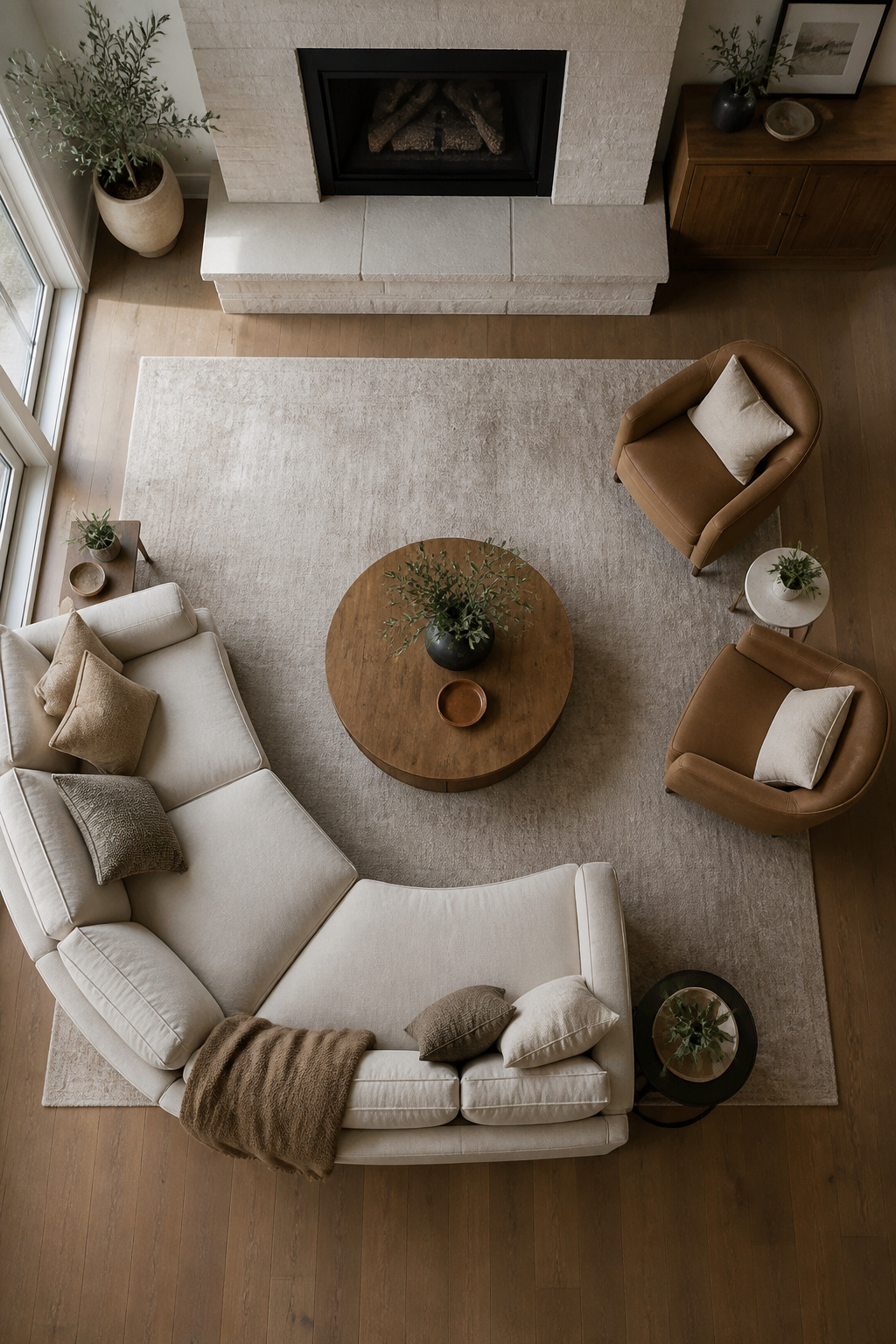
A U-shape or semicircle of seating does more for a living room than any rug or lamp ever will. Two sofas facing each other, or a sofa with chairs angled inward, puts people in position to actually see each other. The furniture does not belong against the wall. Pull it into the room, even six inches, and the whole space settles into itself.
Keep the distance between seats within eight feet. Anything wider and you are leaning forward, asking people to repeat themselves, breaking the thread of conversation. That eight-foot hearing distance is the hard limit that separates a room that feels connected from one that just looks staged.
One clear focal point holds the arrangement together: a coffee table, a fireplace, a TV wall. Not three competing ones. Let the coffee table sit within easy reach of every seat, leave walking paths clear but not generous, and the room will feel like it has a single purpose.
9. Natural Elements

Wood and plants do the heavy lifting in a cozy living room without the markup of trend pieces. A coffee table with a natural, rustic woodgrain brings immediate warmth, and exposed wood legs on a sofa keep that texture in the sightline even in a smaller footprint. Jute rugs extend the same idea underfoot; they vacuum clean and mask spills well enough that I would not hesitate to put one in a room with kids or pets. For renters, the win is that these are pieces you take with you: a solid wood table or a woven rug survives a move far better than wall treatments you leave behind.
Plants fill the gaps where wood alone reads as too still. A single trailing pothos on a shelf or a small fern on an end table softens the geometry of rental furniture in a way that costs less than a new throw pillow and only asks for water. The light-toned end tables that keep natural elements coherent work as neutral ground for either approach.
10. Built-In Storage Solutions

Built-in shelves keep a cozy room from tipping into clutter, but the storage itself should fade behind what it holds. I learned this after installing a corner bookcase that fought for attention until I filled it with books and a single basket for remotes. The contents became the feature; the unit disappeared.
Low storage keeps a room grounded where tall units would feel top-heavy. A 71-inch media console with slatted fronts hides cables and components while the warm wood finish adds texture without shouting for notice. The slats still let air and signals pass, so the setup reads relaxed rather than technical.
Deep shelves matter more than height. Mine hold books in front and a basket with chargers behind, which means the living room stays usable through an evening without the visual noise of devices scattered across every surface.
Mirrors for Light and Space

Mirrors do the quiet work in a cozy living room. They bounce light back into corners that lamps never reach, and they push walls outward without moving a single piece of furniture. The placement matters more than the frame. A large mirror hung opposite a window catches daylight and spreads it across the room, which is the difference between a space that feels dim at three in the afternoon and one that still reads warm. Behind a sofa or a console, the same mirror opens depth where the wall would otherwise stop the eye flat.
The sources split on whether to pair that mirror with furniture or leave it alone. A console table behind the sofa adds storage and a spot for a lamp, but it also breaks the reflection into pieces. For a tight room, the cleaner play is the mirror solo, floor to near-ceiling if the lease allows the hardware. For renters, leaning an oversized mirror against the wall skips holes entirely and still catches the window light.
The one mistake is hanging a mirror where it reflects nothing worth seeing: a blank wall, a ceiling fixture, the back of a television. The reflection becomes dead space, and the room feels smaller for it. Check what the mirror shows before you settle on the spot. If the view is clutter or a hallway, shift the angle or choose a different wall. The cozy effect only works when the doubled space looks like somewhere you would actually want to sit.
Defining Zones with Rugs and Placement

A living room that tries to do everything at once usually ends up doing nothing well. The sofa drifts toward the wall, the coffee table floats in no man’s land, and the room feels like a waiting area instead of a place to live in.
Rugs fix this by drawing a border around what happens where. A large area rug under the whole seating group creates a conversation pit that pulls people together. The front two legs of the sofa resting on the rug is enough to anchor the space without demanding a rug size most budgets can’t cover.
Moveable pieces finish the job. Poufs and stools let a single living room shift from family movie night to a spot where smaller groups can break off without anyone feeling stranded. Two low-profile lounge chairs angled across from the sofa, rather than lined up along the wall, make that split feel natural.
For renters especially, this matters because rugs, curtains, and portable lighting do the zoning work that built-ins would do in a permanent home. A washable texture handles the family-room traffic, and when the lease ends, the whole setup moves with you.
What Cozy Actually Costs

The first time I tried to make my living room feel cozy, I spent about $340 and still sat on a couch that felt like a waiting room. The money went to a matching set of throw pillows and a heavy curtain I later realized blocked the afternoon light I actually liked. That taught me where the dollars matter.
Spend on the thing your body touches first. For most people that is seating, then the rug under your feet. A $50 memory foam topper on a firm sofa changed how long I could sit there without noticing the frame. The rug I bought secondhand for $35 did more for the room’s warmth than the $120 curtain ever managed.
Lighting comes next, and it runs cheaper than people expect. Swapping three bulbs to 2700K and adding one $22 floor lamp with a paper shade shifted the whole mood after dark. I skipped the dimmer switches because my rental agreement made that a headache, and I do not miss them.
Paint is the last place to put money if you are renting. Command strips and a borrowed steamer let me hang fabric on a blank wall for under $15, and I took it down clean when I moved. The $80 I almost spent on a single accent wall would have been mostly labor I would never see again.
Where I would not spend again: matching sets of anything, and anything labeled "ambient" that plugs in and hums.
Weekend Projects That Last

The first thing to know is that nothing in a living room weekend goes in the order you planned. I always start with what will dry the slowest.
- Paint an accent wall or the backs of built-ins first thing Saturday morning. By the time you’ve had coffee and moved the furniture back at noon, it’s ready for the next layer.
- Swap in warmer bulbs and install dimmers on any lamp that takes a plug-in version. This takes twenty minutes per fixture, but you’ll do it last if you start with it, because the wall color looks wrong under the old light and you’ll second-guess everything.
- Lay the rug while the wall is curing and the light is changed. The furniture sits on painter’s tape marks you made before you moved anything, so you’re not guessing with a couch in the hallway.
- Hang curtains high and wide only after the rug anchors the room’s proportions. Doing this before the rug is down is how I ended up with rods an inch too narrow; the wall looked generous, the floor looked cramped, and I re-drilled on Sunday.
- Add textiles last: pillows, throws, the soft stuff. They hide the sins of everything that ran long, and they’re what you’ll actually touch when the room is done.
Mistakes That Undo the Cozy

A few mistakes keep cozy living rooms from actually feeling warm, and most of them are easier to make than to notice.
- The overhead light stays on alone. One bright ceiling fixture reads as clinical the instant you walk in. Lamps with soft or warm white bulbs, placed around the seating area, do the work of making a room feel like somewhere you want to linger.
- The rug floats. A rug that sits in the middle of the room with bare floor showing all around it leaves furniture looking disconnected. The rule that saves it: at minimum, the front legs of every seat should sit on the rug. Without that grounding, the whole seating zone feels adrift.
- Storage turns into clutter. Too many small decor items create visual noise, and the eye reads that busyness as cold. Editing matters more than adding. One larger piece with real texture beats six tiny objects competing for attention.
I once left a perfectly good overhead fixture as the only light source for months, wondering why the room still felt like a waiting area. The lamps cost under a hundred dollars total and changed the space that same evening.
Frequently Asked Questions
How can I make my living room cozy?
Start with seating that invites people to settle in, like a sectional that gives everyone a corner, and keep pieces within eight feet so conversation flows without strain. Layer in machine-washable throws and mixed-texture pillows you will actually use, not just display. Then add two or three lamps with warm white bulbs and leave the overhead off; the drop in light level is what lets shoulders come down.
What colors make a living room cozy?
Warm neutrals like terracotta, caramel, cream, and beige settle the eye and keep a space from feeling staged. In larger rooms or for evening use, darker tones like navy, charcoal, or chocolate brown pull the walls inward for a cocooning effect. The choice comes down to when you use the room: light for gentle midday calm, dark for Friday night takeout under dim lamps.
How should I arrange my furniture for a cozy living room?
Pull seating into a U-shape or semicircle with pieces facing each other, not lined up against walls; even six inches inward changes how the room holds together. Keep every seat within eight feet of the others, the edge of comfortable hearing distance, so no one has to lean forward to catch a sentence. Anchor the arrangement with one clear focal point, a fireplace, coffee table, or TV wall, not several competing for attention.