
Wallpaper designs are repeating patterns or single-image murals printed onto rolls you paste to a wall, and the category only works if you match the scale to the wall you actually have. A cherry blossom panel cut by a swinging door reads as clutter; the same print on an uninterrupted powder room wall reads as drama. Four major retailers treat florals as their largest single category, which tracks with how many rooms they can suit once you get that pairing right.
Floral Wallpaper
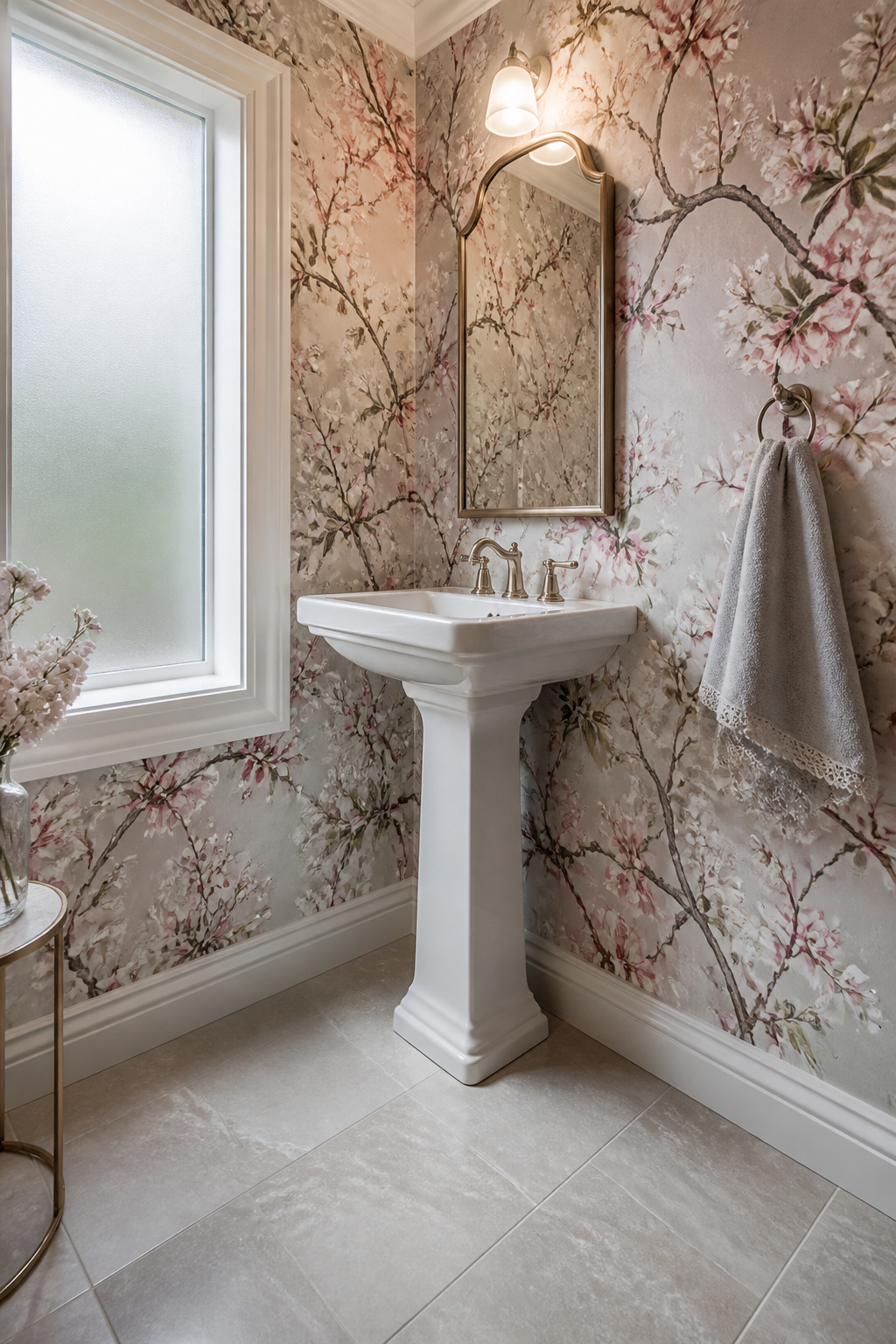
Floral wallpaper still dominates the category for a reason: the pattern range is enormous, and the mood shifts completely depending on scale. A tight repeat of small leaves reads as texture from across the room, which makes it forgiving in narrow hallways or behind cluttered vanities where you never get a full view. Oversized blooms need breathing room. I learned that hanging cherry blossom panels in a bathroom that had no exhaust fan. The paper held up fine, but the scale demanded a clear sightline I couldn’t give it; the door swung open and cut the flowers in half, so the impact landed as clutter instead of drama. That bathroom needed the smaller repeat, or at least a wall without interruption. Powder rooms with one solid wall and a pedestal sink are where large florals earn their keep. Bedrooms work too, though I would keep the color saturation lower there unless you want the walls to do all the talking. Four of the major retailers I checked treat florals as their largest single category, which tracks with how many rooms they can suit once you match the scale to the wall you actually have.
Geometric Patterns
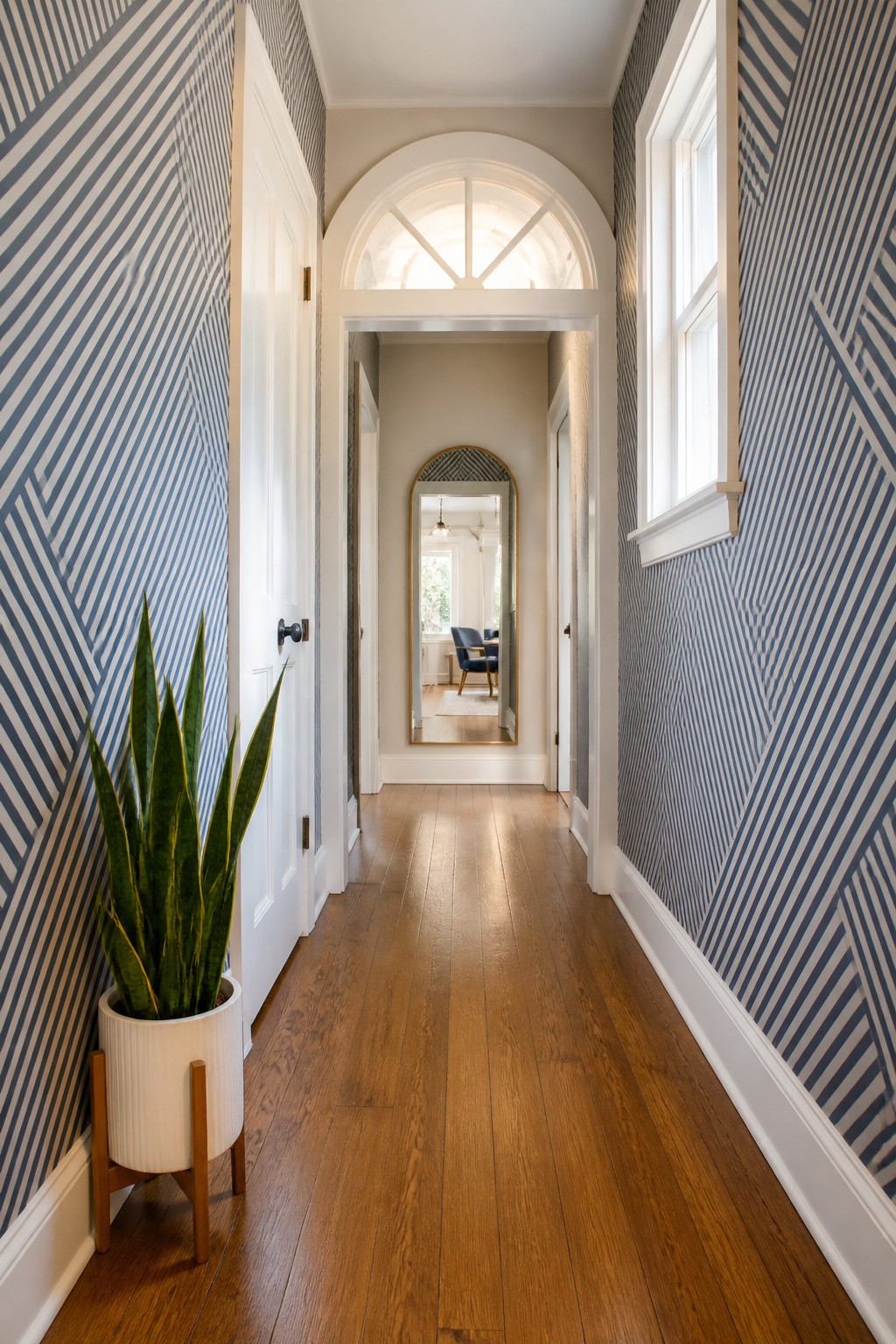
Thin lines running vertically draw the eye up and make a ceiling feel higher than it is. Horizontal bands do the opposite, widening a wall but sometimes making the room feel squat. I learned that the hard way in a hallway where I hung a bold stripe that turned the space into a tunnel I couldn’t wait to repaint.
Small repeats, roughly the size of your hand, read almost like texture from a few feet back and work on walls broken up by windows or doors. Large-scale geometry needs uninterrupted surface to breathe; cut it short beside a closet frame and the pattern looks like a printing mistake. Wall width should decide pattern scale, not the other way around.
Alignment is where geometric wallpaper earns its reputation for cruelty. A half-inch drift at the seam multiplies across the wall until the last panel looks like it belongs to a different room. I once spent three hours on a single corner, peeling and re-sticking, because the manufacturer had trimmed the repeat a hair narrow. Prepasted paper is unforgiving that way; unpasted gives you the few extra minutes to check before the glue sets.
Animal Prints
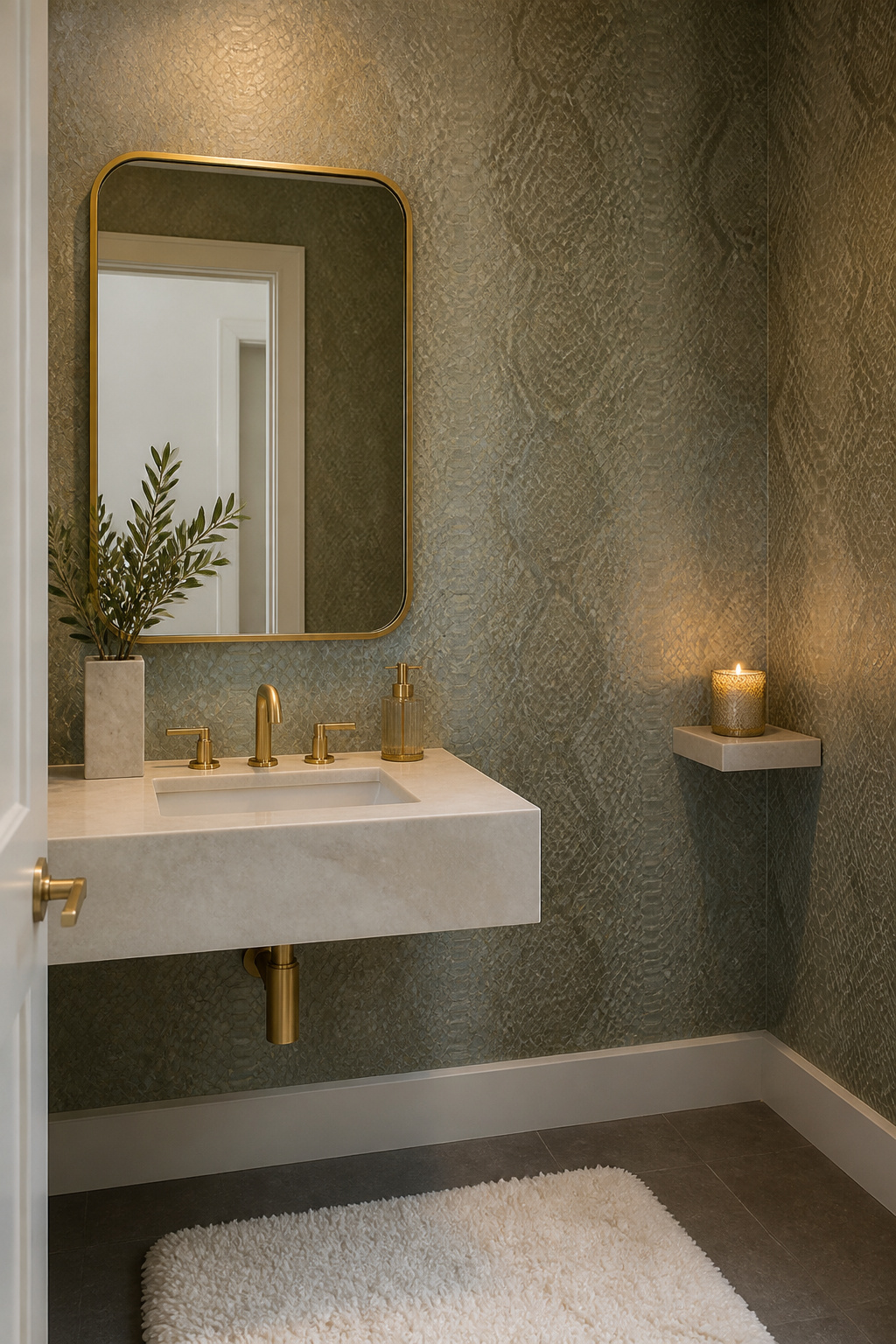
Animal print wallpaper walks a thinner line than most patterns. Leopard spots in a warm ochre on cream read as texture from across the room, while zebra stripes in stark black and white announce themselves the second you walk in. The subtler interpretations, what some makers call "abstracted" or "softened" versions, trade literal accuracy for suggestion: a snakeskin pattern reduced to overlapping scales in muted sage and gray, or a giraffe print blurred until it resembles nothing more specific than organic geometry.
The powder room is the forgiving test space. A small room with the door closed contains the drama, and guests expect something bolder than your hallway. Bedrooms need more care. My own attempt with a snakeskin accent wall behind the headboard taught me the hard ceiling on this: the metallic sheen caught every morning light and turned the wall into a mirror by 7 a.m., fine for a hotel lobby, exhausting to wake up to. A matte finish and a colorway two shades quieter than your first instinct keeps the pattern from owning the room entirely. I repapered six months later in a gray-brown scale pattern with zero reflectivity, and the wall finally did what I wanted: it added depth without demanding commentary.
Textured Wallpapers
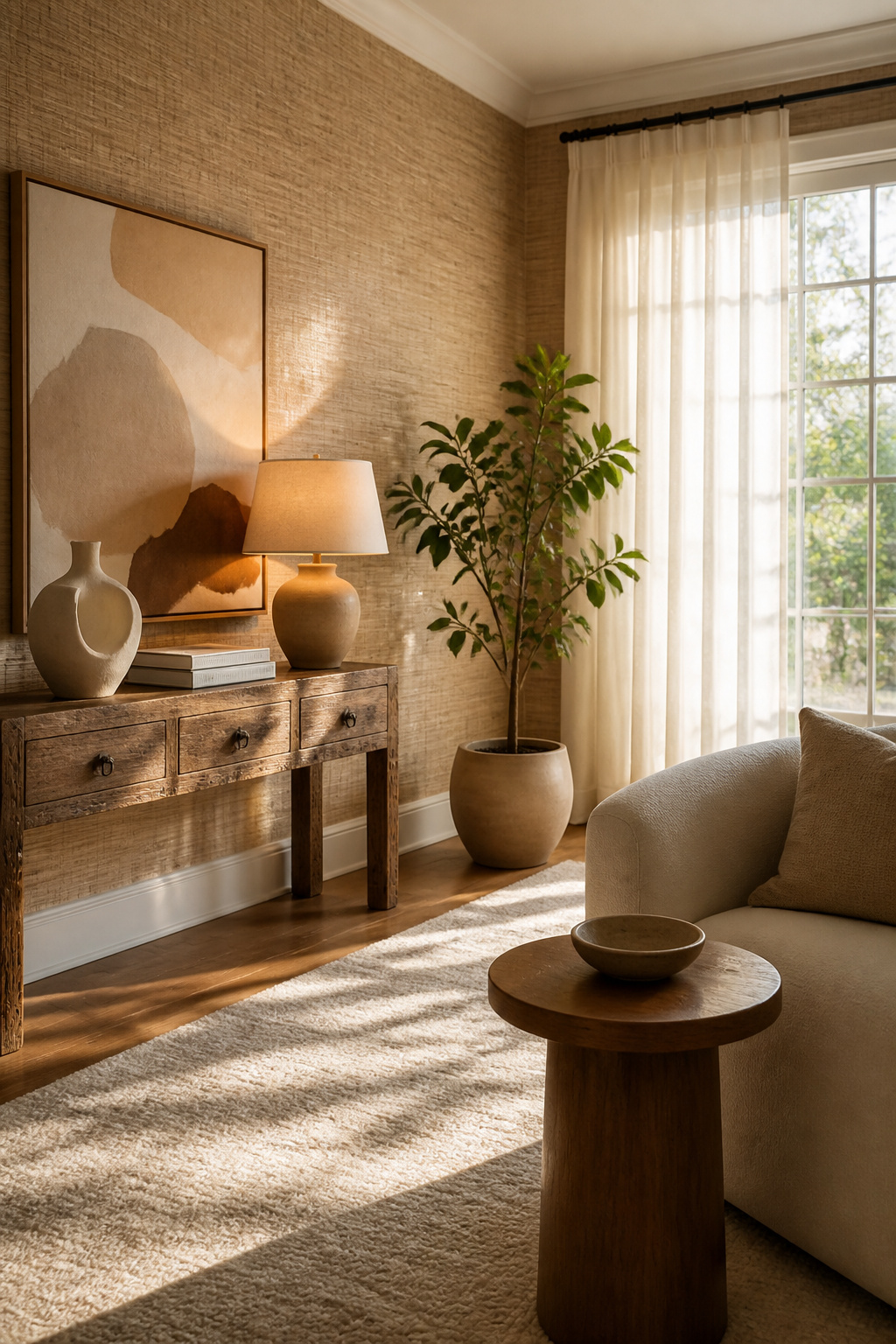
Textured wallpaper hides wall sins that flat paper broadcasts. Grasscloth, linen effects, and embossed vinyl each do this differently, and the difference matters once you start hanging.
Grasscloth is the one people reach for first. It is natural fiber woven and backed, and the irregular surface catches light in a way that makes a slightly wavy wall read as intentional shadow instead of flaw. The catch is the adhesive. Standard paste soaks through and stains the face, so you need a clear, heavy-bodied vinyl adhesive applied to the wall, not the paper. Even then, the seams never disappear; they are part of the look, dark lines where the grass meets.
I learned the corner lesson the hard way. Grasscloth has no stretch and no forgiveness. My outside corner was off by maybe three degrees, enough that the strip wrapping around showed a stair-step gap where the weave ended and the next began. You cannot patch it. You cannot caulk it. You stare at it until you rip it down. I will never again hang grasscloth anywhere I cannot make dead square first.
Linen effects and embossed vinyl are the easier cousins. Both are printed or molded patterns on standard paper or vinyl backings, so they paste normally and trim like regular wallpaper. The texture is shallower, which means less shadow play but also less bulk at seams and corners. For a weekend project with one straight wall and a few hundred dollars, that trade is usually the smarter one.
Murals
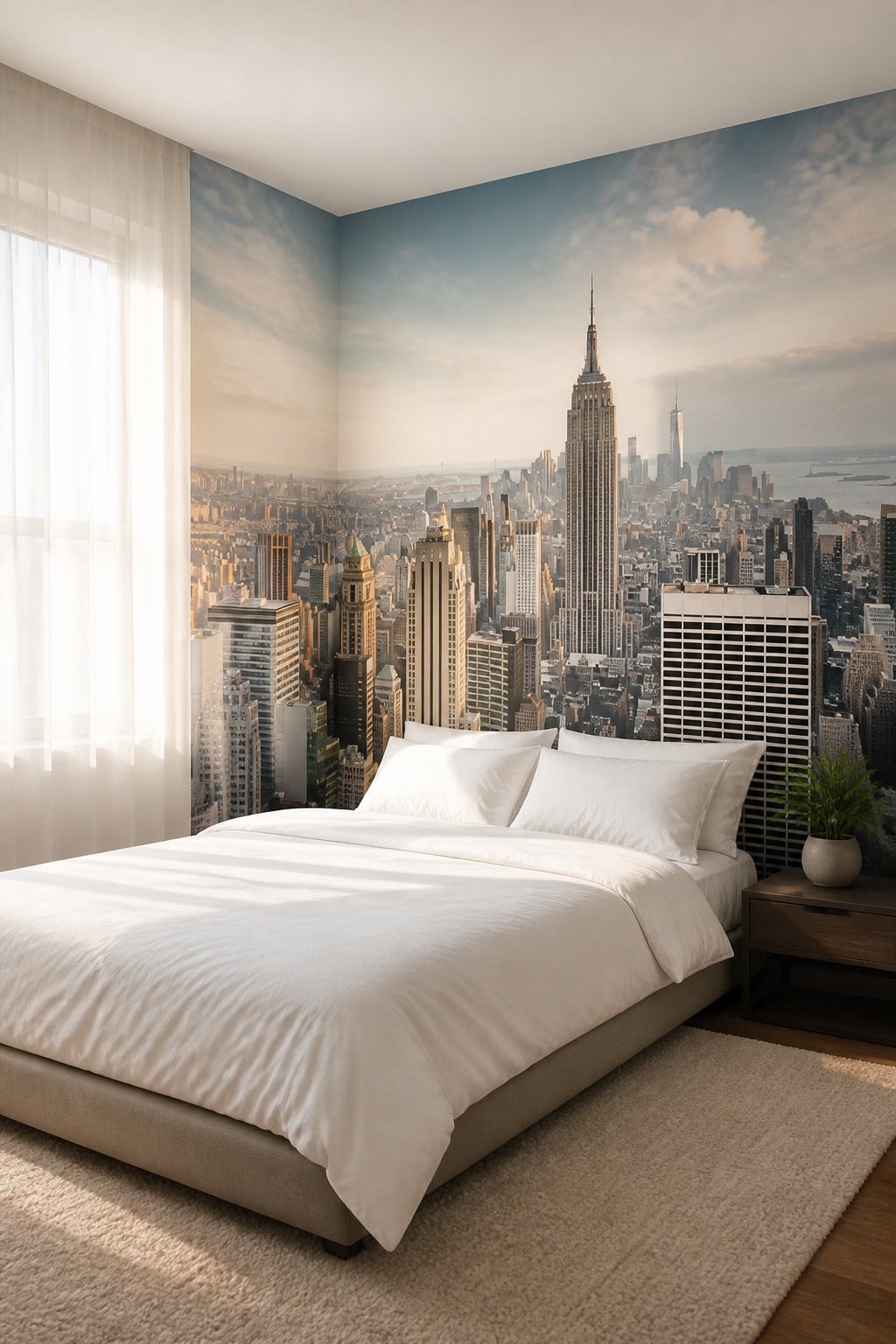
Wall murals occupy a different category than repeating rolls. A single image at scale demands measuring the whole width and the whole height overall, then measuring any part of it like a window or a door you are not going to wallpaper, because the calculator at checkout depends on net surface, not gross wall. Skip that step and you order panels that stop short or overlap into trim.
Custom murals let you submit a photograph or commission an illustration. Prefabricated ones ship faster and cost less, though you live with someone else’s crop and color grade. Either way, the single-wall rule holds: one mural per room, treated as the focal point, with the remaining walls in paint or quiet paper so the eye has somewhere to rest.
My own mismeasurement ran four inches short on a cityscape I had planned for the bedroom. The skyline clipped at the second building from the left. Rather than reorder, I cut it down for the closet interior, where the partial view reads as a glimpse through a window rather than a botched installation. The mistake cost me a weekend and the original placement, but the paper itself stayed out of the trash.
Classic and Timeless Styles
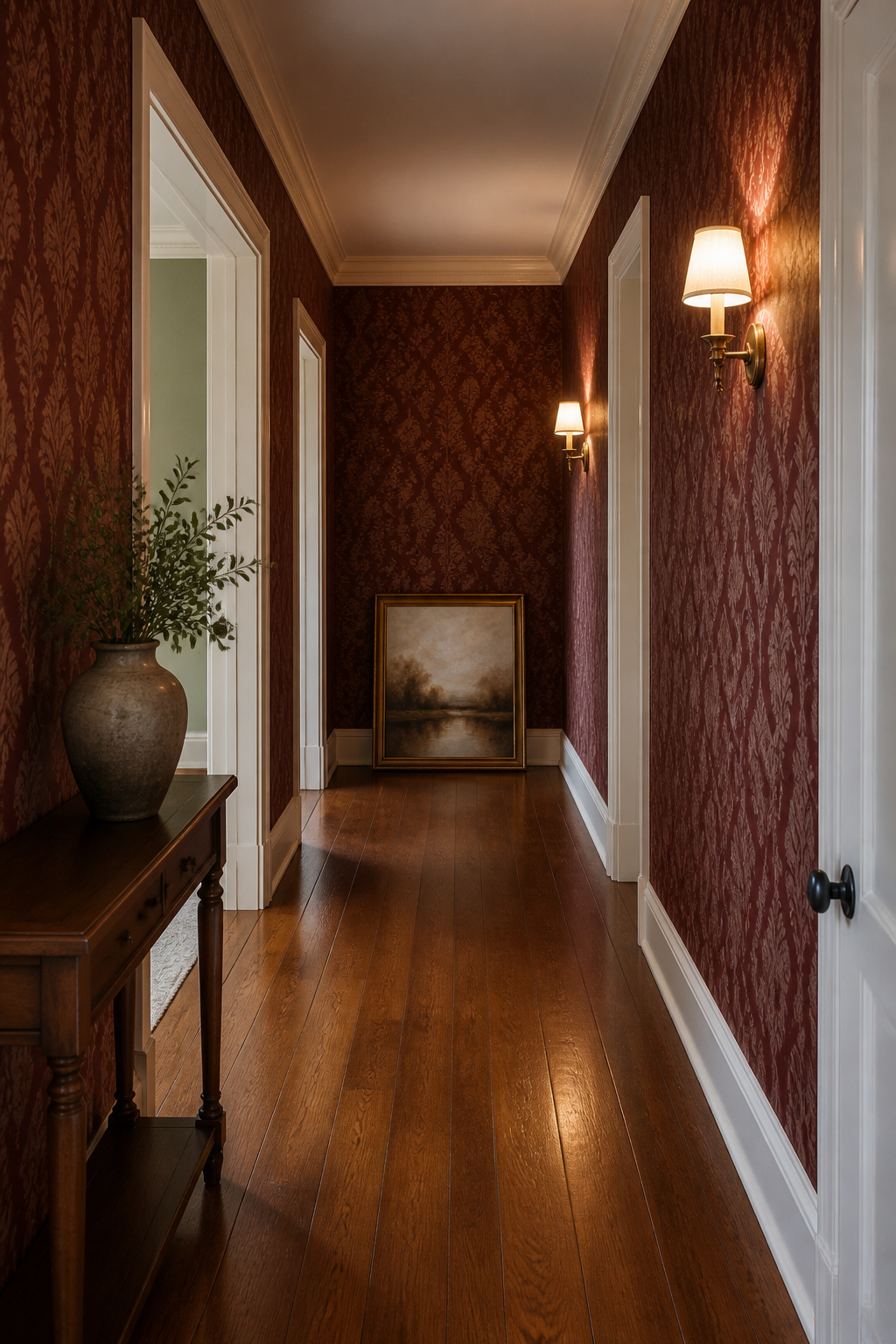
Damask reads as expensive even when the roll costs the same as a trendy print because the pattern carries the weight of older houses, inherited furniture, rooms that were finished decades ago and never needed updating. That psychological square foot matters in a first home where the budget goes to fixing the roof, not to convincing yourself the living room feels settled. I hung a deep red damask in a hallway once, the cheapest vinyl-backed version the store carried, and guests still asked whether the paper was original to the house. The pattern did the work.
Small-scale motifs, stripes, and toile operate the same way. A narrow stripe in a bedroom reads as intentional rather than temporary, and toile, for all its fussiness, gives a rental bathroom the odd effect of looking like someone chose it on purpose. These papers earn their keep in the spaces you pass through quickly, hallways and powder rooms and the wall behind a headboard, where a bold geometric or a full mural would demand too much attention and too much commitment. The classic patterns recede. They let the room accumulate other things, a mirror, a chair, a paint color you change on impulse, without the wallpaper becoming the mistake that has to come down first.
A stripe or a small repeat costs the same per roll as anything else, but it buys you permission to leave it up for ten years.
Custom Designs
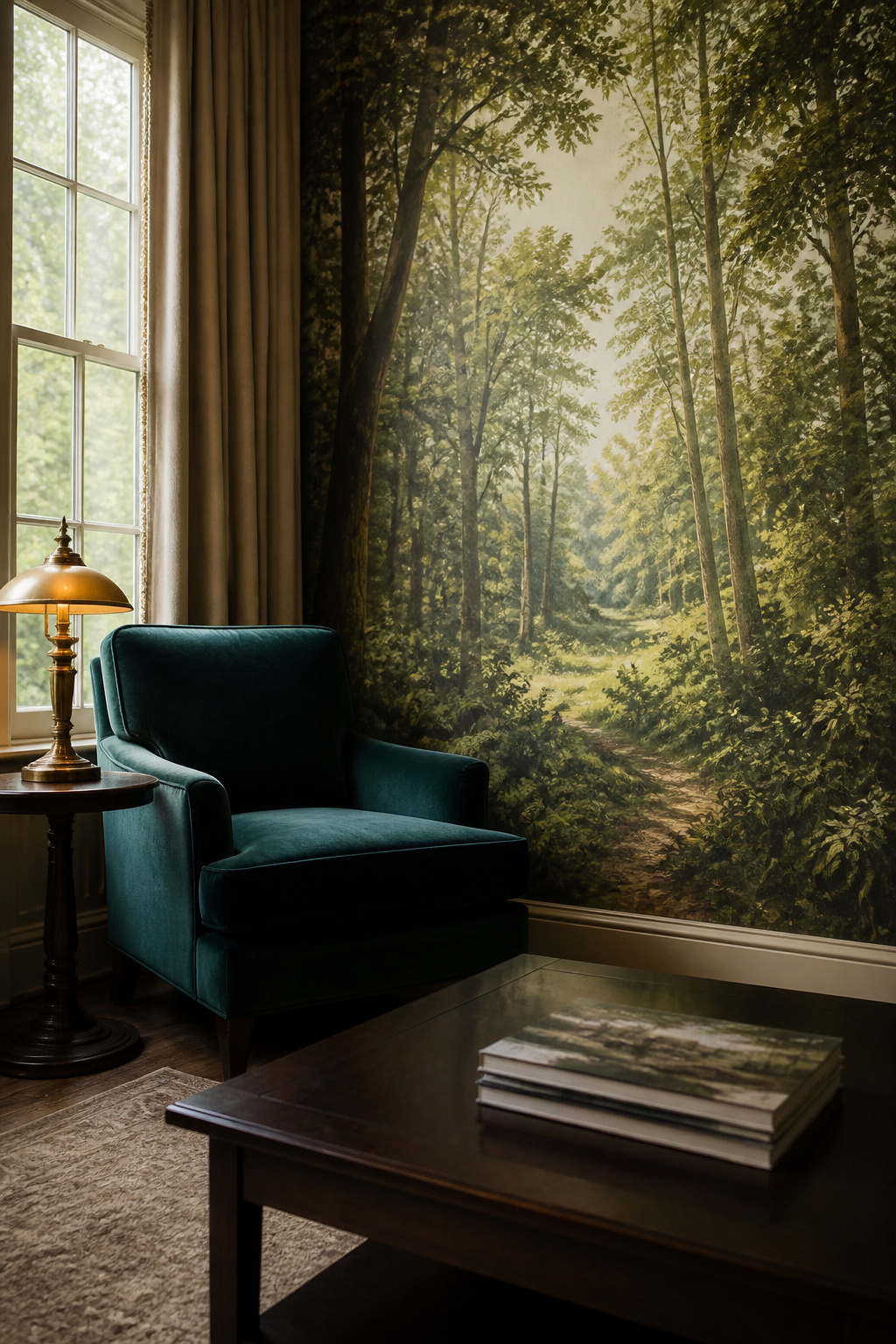
Digital printing has opened up custom wallpaper to anyone with a high-resolution image and a few hundred dollars, but the reality is less flexible than the marketing suggests. Most print shops require a minimum order of one full roll, which means a single accent wall can leave you with expensive leftover paper and no return option. Lead times stretch to two or three weeks, and file preparation is picky: the image needs to be 150 dpi at actual print size, color-matched to CMYK, and padded with bleed that the shop will not add for you.
For a one-room weekend project, the premium over off-the-shelf rarely pays off unless you are dead-set on a specific photograph or artwork. I have priced this out twice, once for a nursery with a family photo enlarged to wall size and once for a geometric pattern I could not find in stock. Both times, the custom quote ran roughly double the cost of a comparable ready-made design, and the proofing process ate the first weekend before installation even started. The photo mural looked flat compared to how it rendered on screen; the colors shifted toward cyan in the sky, and the shop treated it as my problem because I had approved the digital proof.
Stock wallpaper has gotten good enough that the gap in quality has narrowed, while the gap in hassle and price has not. My call: reserve custom printing for a permanent space where you will live with the result for years, and only if the image is something no manufacturer carries. For a rental refresh or a room you might repaint in two years, the off-the-shelf selection is wide enough that you will find something close enough without the wait or the risk.
Eco-Friendly Options
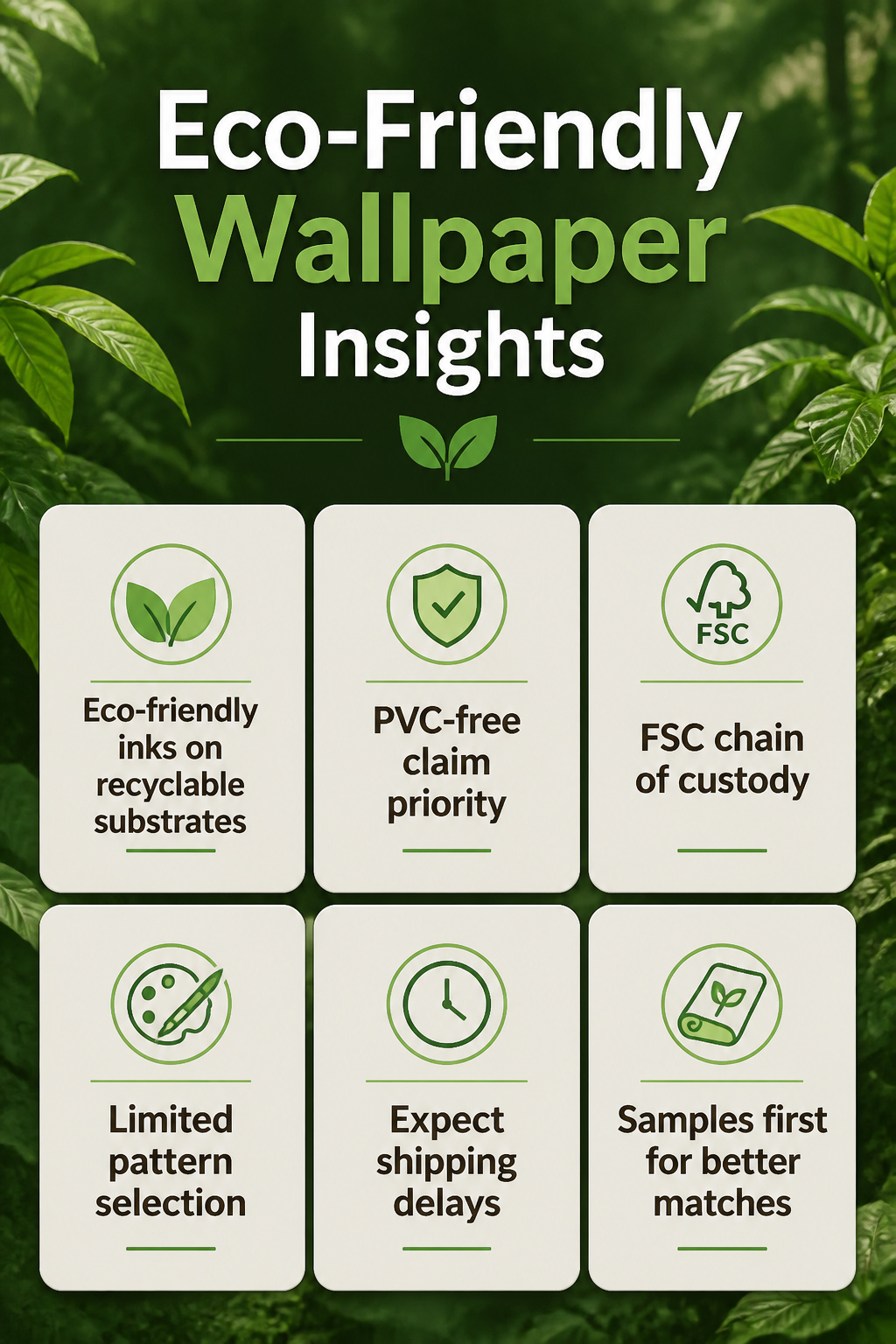
Eco-friendly wallpaper used to mean something different to me than it actually does on a product label. I assumed it signaled fully biodegradable or zero-waste manufacturing, but what you are mostly buying is eco-friendly inks on recyclable substrates with a stated environmental commitment from the brand.
Rebel Walls prints with eco-friendly inks and materials, which is the more honest framing. The inks reduce volatile compounds, and the substrate can go back into the paper stream, but the PVC-free claim or the FSC chain of custody is what I now check for first. Sandberg leans on Scandinavian heritage and quality rather than certifying specifics, so the environmental angle reads more as mood than data.
For a weekend project with a few hundred dollars, the real limit is selection. Eco lines run smaller and restock slower. If the pattern you want is only available in standard vinyl, you are choosing between the wall you imagined and the principle you planned on. My own compromise has been to order eco samples first and accept that the color match might take an extra week, since the batch sizes are tighter.
Installation Basics
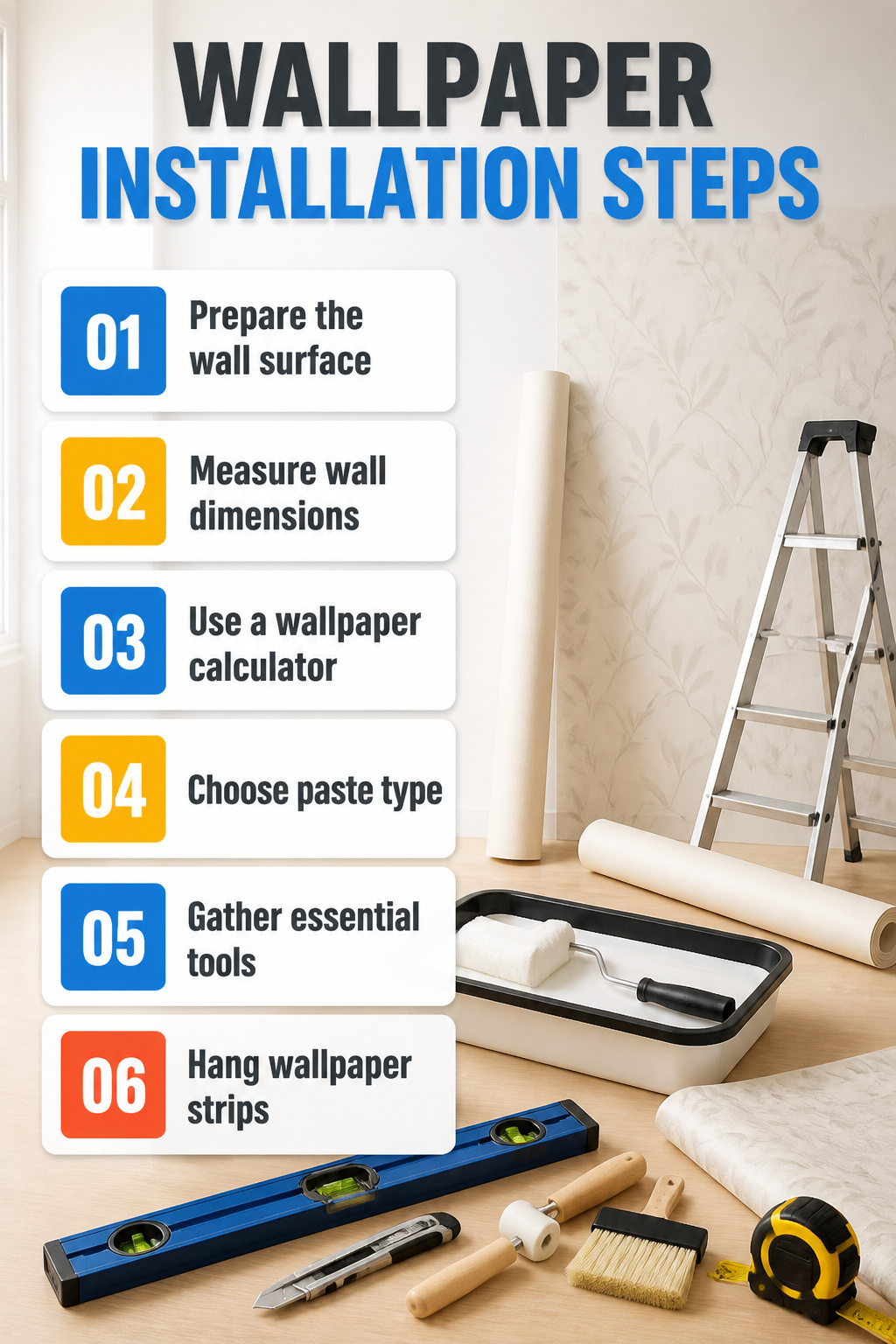
Wallpaper only looks as good as the wall beneath it, and the two hours I spent filling nail holes and sanding a guest-bedroom wall saved me from bubbles that would have shown through by day three. Smooth, clean, and sized if the paper demands it; skip the sizing and the paste can pull moisture from the drywall and weaken the bond.
Measuring is where rolls get wasted or walls run short. Measure the full width and height of each wall, then subtract windows and doors, and feed those numbers into a calculator before you order. Wallpaper Direct runs one at checkout that accounts for pattern repeat, and their video tutorials walk through the part that still trips me up: where the last strip meets the corner and the pattern drifts by half an inch. I used to buy an extra roll "just in case" and now I buy exactly what the calculator says plus one, because the batch number matters; dye lots shift, and a reorder two weeks later never matches.
Paste-the-wall papers let you hang dry strips straight onto a coated surface, which is faster and cleaner for a solo job. Paste-the-paper demands a folding table, wet paste, and the clock running before the glue skins over. I started with paste-the-paper because it felt traditional and bought a plastic pasting table that now lives in my garage, taking up space I do not have. A good level, a sharp snap-blade knife, and a seam roller are the tools that earn their keep; the table I wish I had skipped.
What Reviews Actually Tell You
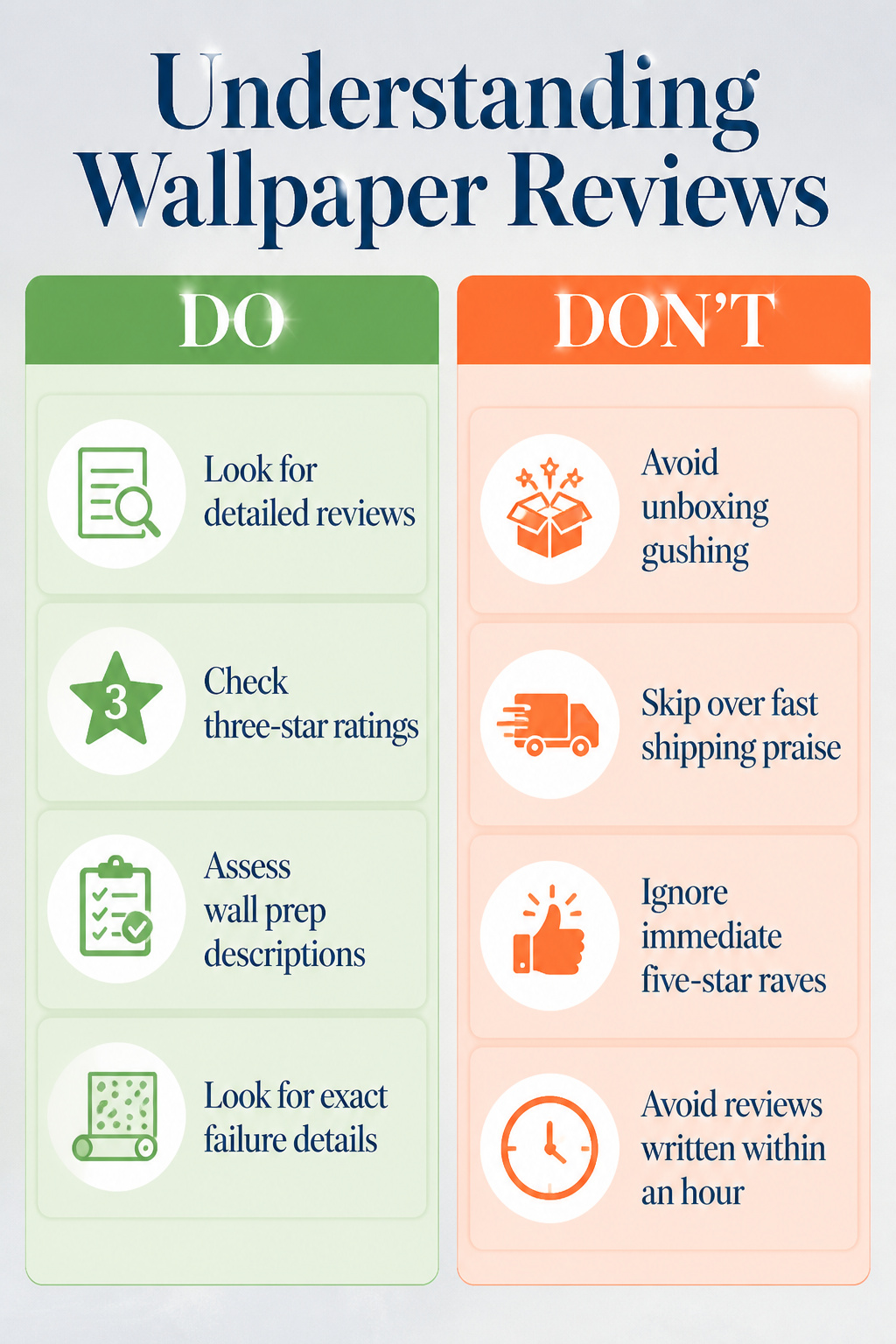
Customer reviews for wallpaper read differently than they do for a toaster. What people call "five stars" often means the roll arrived intact and the color looked roughly like the photo. That is useful baseline information, but it tells you almost nothing about how the paper hangs, whether the adhesive holds on painted drywall, or if the pattern actually matches at the seams after a full day of drying.
The red flags hide in the enthusiasm itself. A review that gushes about packaging or fast shipping has usually been written within an hour of unboxing, before the person has lived with the result. I skip straight past those now and look for the three-star entries instead. Those reviewers have typically finished the job, lived with the wall for a week or two, and still care enough to explain what went slightly wrong. They mention the pattern drifting at the fourth strip, or the color reading more yellow under LED light than it did in daylight, or the adhesive failing where the wall had been primed with a high-gloss sealant.
A three-star review that describes the exact wall prep and the exact failure is worth more than fifty unboxing raves. That is the review that tells you whether the paper suits your actual project, not your imagination of it.
Frequently Asked Questions
What are the best wallpaper designs?
The best wallpaper designs depend on matching the pattern to the room you have, not the room you imagine. Florals dominate because their scale range is enormous; small repeats read as texture in narrow hallways, while oversized blooms need a clear sightline and uninterrupted wall. Geometrics, animal prints, textured papers like grasscloth, and single-wall murals each suit different spaces based on wall width, light conditions, and how much attention you want the wall to demand.
How do I install wallpaper?
Start by filling holes and sanding until the wall is smooth, then size it if the paper requires. Measure each wall’s full width and height, subtract windows and doors, and feed those numbers into a calculator that accounts for pattern repeat before ordering. Paste-the-wall papers let you hang dry strips onto a coated surface for solo jobs; paste-the-paper needs a folding table and works against a running clock before the glue skins over. Buy exactly what the calculator says plus one roll, since dye lots shift and a later reorder never matches.
Are there eco-friendly wallpaper options?
Yes, though the label mostly means eco-friendly inks on recyclable substrates rather than fully biodegradable production. Rebel Walls prints with reduced volatile compounds and materials that can re-enter the paper stream, and checking for PVC-free claims or FSC chain of custody gives you harder data than brand mood. The tradeoff is smaller selection and slower restocks; if your chosen pattern only comes in standard vinyl, you choose between the wall you imagined and the principle you planned on.