
A porch only earns its keep as a room if you treat it like one, and the mistake most people make is buying a matching set and calling it finished. The sources that got this right stack a jute base with a patterned outdoor rug, run string lights through winter, and keep a twenty-five-year-old wrought iron set alive with $30 stretch covers. What separates a pass-through from a space you actually sit in is the willingness to layer: real and faux plants at different heights, thrifted wood with a coat of outdoor-rated paint, throws that survive dew because you chose acrylic over wool. The condition is overhead cover. Without it, every cushion needs a bin, every candle needs a battery, and the whole arrangement gets packed away by October.
1. Cozy Cushions and Throw Pillows

Charleston green cushions on a twenty-five-year-old wrought iron set taught me the hard math of outdoor upholstery. Custom replacements cost as much as a new set, so stretch covers from Amazon bought another five years on the covered porch. They wash like a fitted sheet and the back side hides under a cotton throw.
For throw pillows, I spend less and plan to replace. Two square pillows at $5 from Home Depot and a lumbar from Target tied a lime loveseat into a blue-and-white scheme. Outdoor-rated fabric matters less than the willingness to toss them every couple of seasons. Covered porches keep them year-round; open patios need a storage bin or a spot inside. Slight variety in size and texture looks collected, not matched, and if they get wet, they dry. No rescue needed.
2. Outdoor Rugs
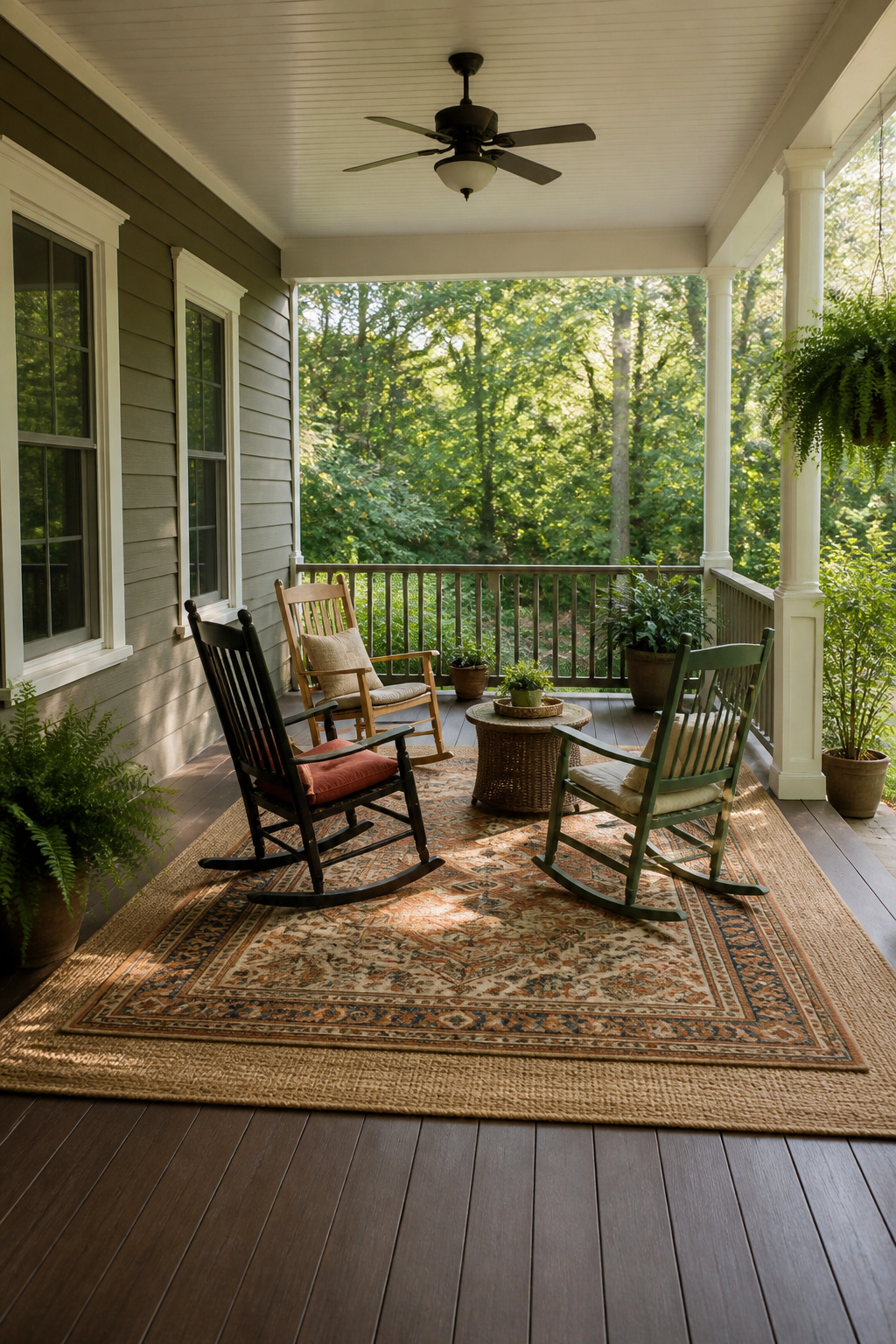
An outdoor rug does more than cover concrete. It draws a border around your seating area so the porch reads as a room, not a leftover slab, and the slight cushion underfoot matters more than you’d expect on cool mornings. The flatter weaves dry fastest after rain, which is why I skip the heavily hooked ones; you can feel the difference running your hand across the display.
Buy two rugs in the same pattern at different sizes if your porch is an awkward shape. A 6×9 under the chairs and an 8×10 reaching toward the door lets you layer the same visual anchor across an L-shaped space without fighting a single oversized rectangle that never sits right. The repeat pattern hides the seam between them.
For sizing, pull the rug at least six inches past the front legs of every piece of seating. Anything smaller looks like a bath mat that wandered outside. On my last screened porch, an 8×10 anchored a pair of rockers and a small side table with room to spare; the 6×9 I tried first left the back legs hanging on bare boards, which broke the illusion entirely.
3. Lighting Options

The white string lights I wrapped around a mirror on my porch have stayed up through two winters now, and the glow they throw across the seating area is the reason I bother with evening coffee out there at all. They are the cheap plug-in kind, not solar, so the color stays consistent and they actually work in December when daylight vanishes by five. Leave them up year-round if your outlet is covered; taking them down every fall is how people end up with a tangled box they never rehang.
For the family reunion last summer, I bought about ten lanterns with battery candles on remotes, and that turned out to be the more useful purchase. They travel anywhere, steps to tabletop to a hook on the beam, and the remotes mean you are not crawling around with a lighter after dinner. Real candles flicker prettier but fail in any breeze; the battery ones are the only practical choice for an open porch.
4. Plants and Planters
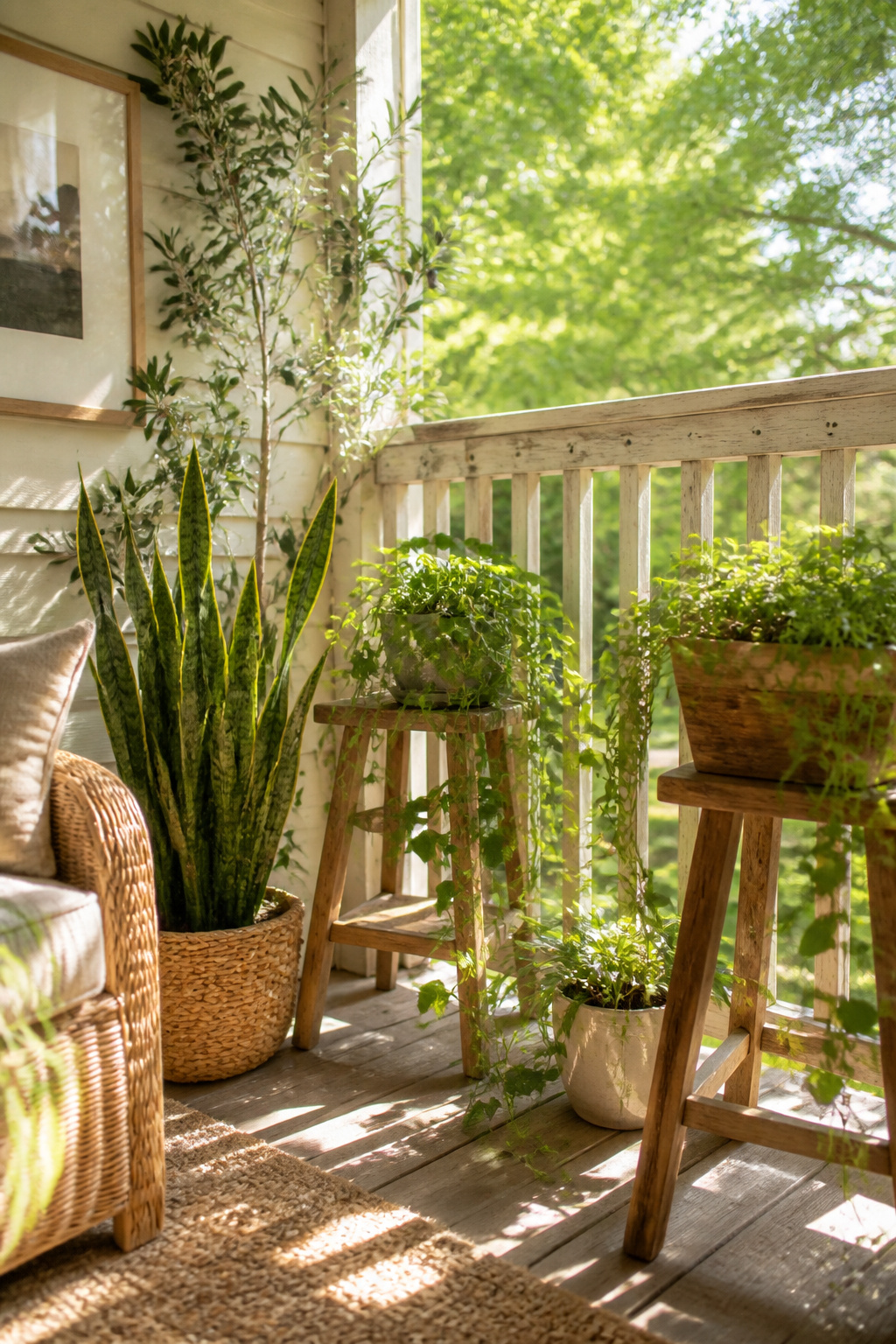
Greenery turns a porch from a pass-through into a room you want to sit in. Real plants give you texture and movement, but they also die back or dry out when the season shifts, which is where a mix of real and faux plants saves the look year-round.
I learned this the hard way after trailing vines I’d nursed through July crisped to nothing by mid-September. Now I keep a few real potted plants, usually something forgiving like a snake plant or a pothos that can handle morning light, and fill the gaps with faux trailing vines and a faux olive tree or fiddle leaf fig for structure. The trick is placing them at different heights, on stools, in woven baskets, or hung along the railing, so the eye reads it all as one lush layer rather than spotting the plastic stems first.
Woven baskets work better than slick planters for hiding the artificial base, and they tie into the same jute and natural texture story the rest of the porch is telling. If you’re buying faux, spend the extra few dollars on ones with some variation in the leaf color; the uniform green is what reads fake from five feet away. Real plants need water and rotation, faux ones need a dusting now and then, and together they keep the porch alive through every season without the pressure of a green thumb.
5. Fire Pits or Heaters

A propane fire pit turns a chilly evening into the reason you stay outside. I sprang for a gas fire pit I found on Amazon, and the cooler nights became something to look forward to: roasting s’mores, reading in the evening glow, not rushing back indoors. Propane means no wood smoke, no embers drifting toward the ceiling, no waiting for coals to die down before you can call it a night. The tank hides in the base or sits connected nearby, and the whole thing lights with a turn of a knob. Check your overhead clearance and local codes, but a propane unit rated for covered use sidesteps the insurance and blistering-paint risks that come with wood-burning pits under a roof. The tradeoff is the tank itself: 20-pound cylinders run about four to eight hours depending on the flame height, so I keep a spare on hand rather than letting the evening die mid-conversation. For a few hundred dollars and an afternoon of unboxing, the porch earns another three seasons.
6. Indoor Furniture Used Outdoors

Thrifted indoor furniture brings the kind of worn-in comfort that new outdoor sets rarely match. A green wicker table, for instance, gains cottage charm and a second life with one coat of outdoor-rated paint. Wood and wicker hold up beautifully with that prep; the paint seals what moisture would otherwise ruin.
The pieces that fail are the ones with hidden particle board or glued joints that swell the first time dew sits overnight. Solid wood, old wicker, and cast metal survive. Upholstered arms and original fabric do not, unless you plan to haul them in every evening.
Budget stays low because the starting cost is thrift-store and the work is a Saturday. Two quarts of paint and a brush run under $30, and the piece is usable by Sunday night. The real limit is your patience for sanding. Skip it, and the paint flakes by fall.
7. Textured Throws and Blankets

A throw blanket on a porch works differently than one on the sofa inside. Out here, it needs to survive dew, the occasional rain, and sun that will fade most fabrics within a season or two. I learned that the hard way after leaving a wool blend out on a covered porch and finding it musty by October.
Outdoor-rated acrylic or polyester fleece survives moisture and UV far better than anything meant for indoor use. The weave matters too: a loose, open knit dries faster than a dense blanket but offers less wind blocking. On a screened porch with decent overhead cover, you can get away with interior-weight throws, and I have, but they stay packed away in a bin until the forecast is clear.
Layering textures is where the coziness actually comes from. A smooth woven base with a nubby or sherpa-style second layer gives you options for temperature swings without cluttering the space. I keep one lightweight and one heavier throw per chair, folded rather than draped, so they look intentional even when nobody is wrapped in them.
Color strategy is worth a thought. The sun will bleach anything over time, so I buy toward the cheaper end for open patios and plan on replacement every couple of years. For covered spaces, a $5 Home Depot pillow or a Target lumbar in a diamond print holds up well enough to justify the small spend. Store them in a plastic bin through winter and they come back out looking fresh, which is the only way I’ve found to make soft goods last on a porch.
8. Decorative Accents

Vintage finds are where a porch stops looking staged and starts looking lived-in. A thrifted basket doubling as a planter costs next to nothing and adds more character than anything shipped flat-packed. I have used old wooden stools as plant stands and side tables; they wobble a little, but that unevenness reads as history, not flaw.
The collected look comes from mixing finishes and eras. Combine the new with the old, and let a found piece be the thing someone asks about. Chinoiserie garden stools, ginger jars, and ceramic planters work the same way, adding height and color while holding a drink or a fern. Coffee table books on gardening or birds tucked nearby turn a quiet morning into something that feels intentional.
Wind is the enemy of anything small and loose. On exposed porches, an outdoor storage ottoman or box keeps accent pieces safe when weather hits. I skip the delicate ceramics in open spots and save them for covered areas where they will survive. The personal pieces that last are the ones with some weight to them, or a hiding spot close by.
Layering Textures
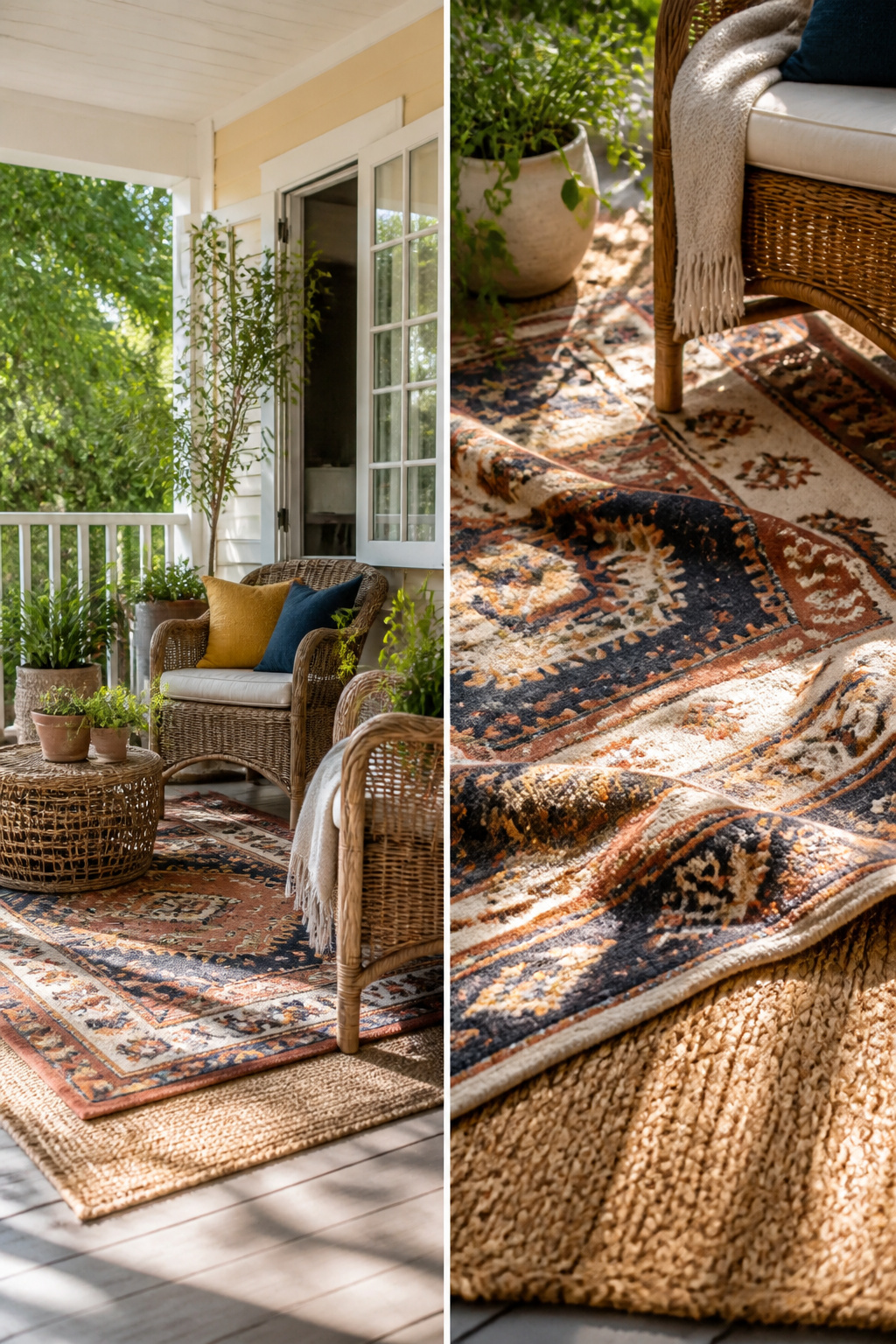
A porch that reads as cozy rather than staged usually has three or four materials working together without matching. Woven baskets against painted wood, a jute rug layered under something with a tighter weave, metal lanterns that have dulled enough to soften their shine. The mix matters more than any single piece.
On my own porch, the rug does the heaviest lifting. An 8×10 outdoor rug anchors the seating area the same way it would inside, and a smaller 6×9 works for tighter spots. The real trick is layering a thin jute base with a patterned outdoor rug on top. The raised edge where they meet catches shadow and makes the whole floor plane look intentional rather than leftover.
Pillows and throws are where most people stop, and where I used to stop too. Now I treat them as the bridge between inside and out. Faux trailing vines in a ceramic planter echo the softness of a throw; a garden stool in chinoiserie pattern gives the eye something hard and glossy to rest on between all that fabric. The sources that get this right mix real and fake greenery at different heights, stools and baskets and rail planters, so the texture varies at every level.
The mistake is buying everything in the same finish. All-weather wicker with more all-weather wicker reads as a catalog set. One found piece, one thing with some age on it, keeps the porch from feeling delivered in a single truck.
Creating a Room-Like Feel

A porch starts to feel like a real room once you stop treating it as a weatherproof afterthought. The sources that convinced me all describe the same shift: bringing in the same four categories you’d use indoors, then letting them overlap.
Seating comes first, and it does not need to match. One source still uses a Craigslist wrought iron set from 25 years ago with replacement covers from Amazon that she treats like fitted sheets; the rockers came from Kirkland’s years before that. The mix matters more than the pedigree. Side tables sit next to chairs the same way they would in a living room, not centered and alone.
Rugs, cushions, and pillows layer on top. Several writers stack a jute base with a smaller outdoor rug on top to define the space and add warmth. The textiles make the concrete or wood floor read as intentional, not leftover.
Lighting and plants finish the job. String lights along a railing, lanterns with candles, hanging fixtures: they move the porch from daytime-only to evening-usable. Potted plants at different heights, on stools or in woven baskets, give the vertical layering that a room has and a bare porch lacks.
The cohesive trick is repetition. Carry one color, one material, or one style from the house out through the door. A ceramic planter that echoes your indoor ginger jar, a throw pillow in the same palette as your sofa: those are the threads that make the porch feel like the next room over, not a separate building.
Seasonal Decor
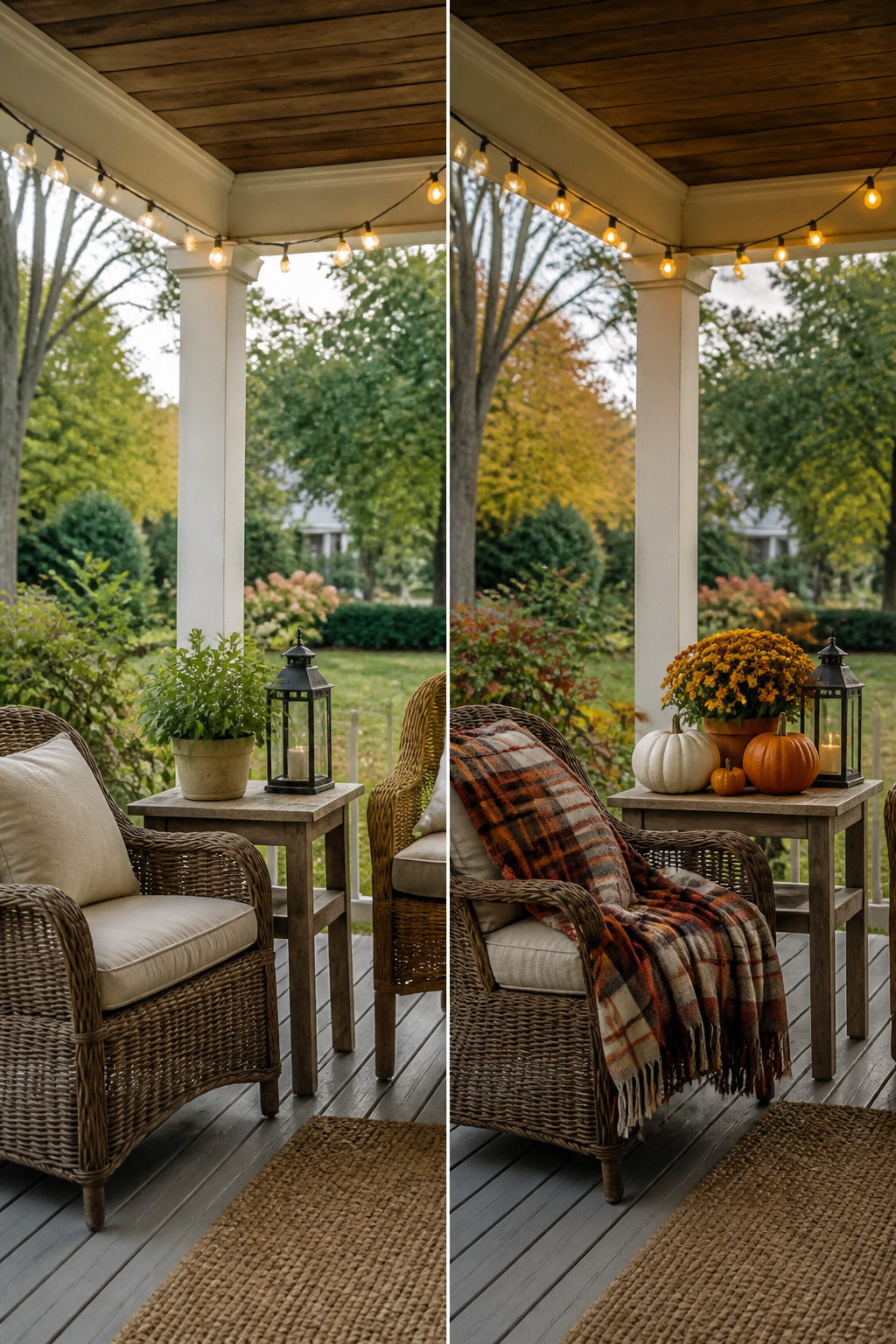
The porch changes with the seasons whether you plan it or not. One October I left a galvanized watering can out through a hard freeze, and the crack it earned now runs the full seam. That taught me to think in two categories: what stays and what rotates out.
String lights stay up year-round because the glow they throw after sunset matters in every season. The same hooks hold lanterns in fall, when I like the weight of railroad-spike brackets against the wood. Pumpkins and mums from the garden section come in for October, then the mums get swapped for forced bulbs once the pumpkins soften. Copper mugs stay on the shelf through winter; they read warm even holding plain cider.
Pillows are where I spend the swap effort. A collection in similar coloring, built from Home Depot $5 finds and Target lumbar prints, moves between the porch and a storage bin as weather shifts. The bin keeps them from the cold that fades the fabric. Plaid throws come out with the first real chill and get laundered before they go back in the closet. The lime loveseat stays put, but the blue-and-white pillow stack against it reads breezy in July and crisp in November.
Frequently Asked Questions
What are some cozy porch ideas?
Layer cushions and throw pillows in outdoor-rated fabrics, add an outdoor rug that extends past your seating, string lights you can leave up year-round, a mix of real and faux plants at different heights, and a propane fire pit for cooler evenings. Thrifted indoor pieces painted with outdoor-rated paint also bring in character new sets lack.
How can I make my porch feel like a room?
Treat it as an extension of your indoor space by carrying one color or material from inside out through the door. Add side tables next to chairs, not centered alone; pull rugs at least six inches past seating legs; and use lighting and plants to give the vertical layering a real room has. The porch should read as the next room over, not a separate building.
What types of plants are best for porches?
Use forgiving real plants like snake plants or pothos for morning light, then fill gaps with faux trailing vines and small trees for structure through every season. Woven baskets hide artificial bases better than slick planters, and varied leaf color on faux plants keeps them from reading plastic from five feet away.