A wallpaper mural is a single large-scale image printed across multiple panels that cover one wall from edge to edge, unlike repeating wallpaper patterns. The catch is that a forest panorama and a peony cluster do opposite work, one retreats visually while the other advances, so the room’s purpose decides which you hang. York’s Chambord Gardens runs 9 feet wide assembled, costs $500, and comes in two colorways warm or cool, which shows how manufacturers now treat these as atmospheric tools rather than mere decoration.
Nature Murals
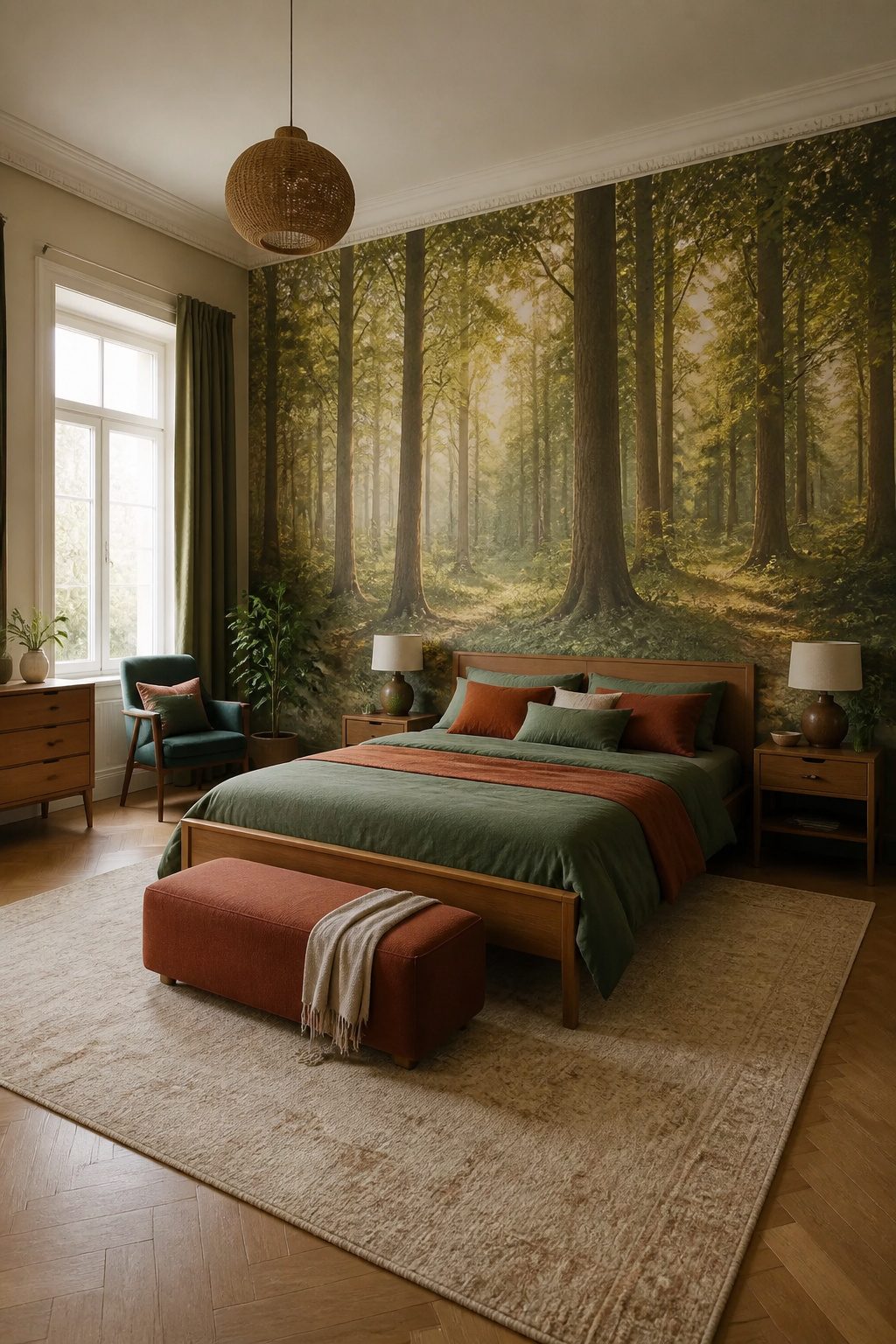
Forest, mountain, and beach scenes dominate the requests I see from renters who want one wall to do the heavy lifting in a bedroom. The logic is straightforward: these are the visuals people already seek out for calm, so wrapping an entire wall in them extends that effect past the frame and into the room itself.
A forest mural can read as either sun-drenched woodland or misty ancient growth depending on the print, and that choice changes whether the room feels like morning energy or evening wind-down. Mountains trade on scale; a peak-filled wall behind a bed replaces the need for a headboard and gives the eye distance to travel. Beach scenes work best when the palette stays muted, sand and weathered driftwood rather than saturated turquoise, so the effect stays restful instead of becoming vacation-postcard loud.
The Chambord Gardens mural from York measures approximately 9-ft wide by 11.2-ft tall when assembled, which is enough to fill the main wall of a standard bedroom without cutting panels around a window. It comes in two colorways, one running olive, teal, and terracotta, the other working in graphite, beige, and blue. Both are priced at $500, so the decision is purely atmospheric: warm and enveloping or cool and quiet. Either way, nature themes draw the most consistent backing across the sources I reviewed, nine in total, which suggests manufacturers have figured out where the steady demand sits.
Floral Murals
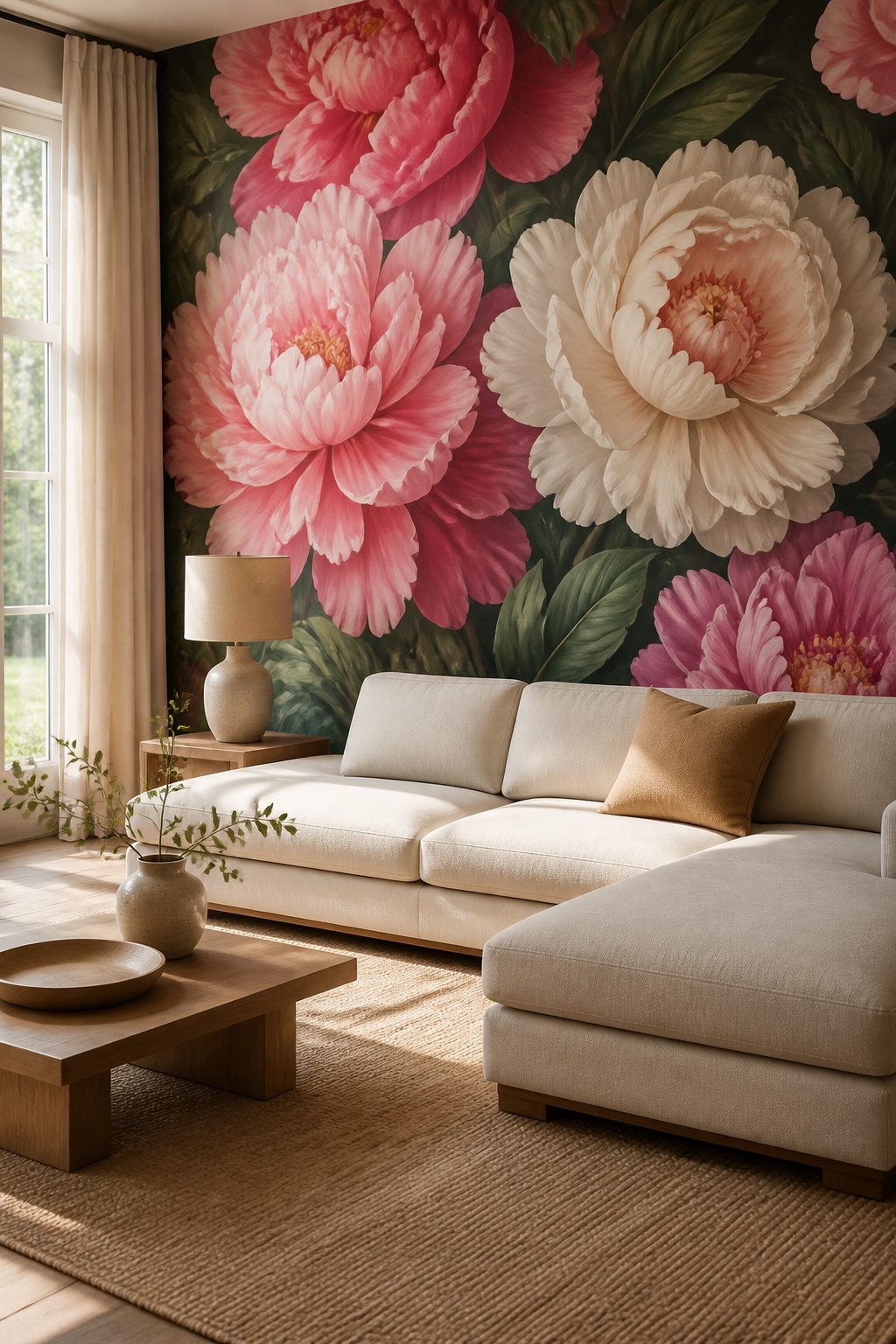
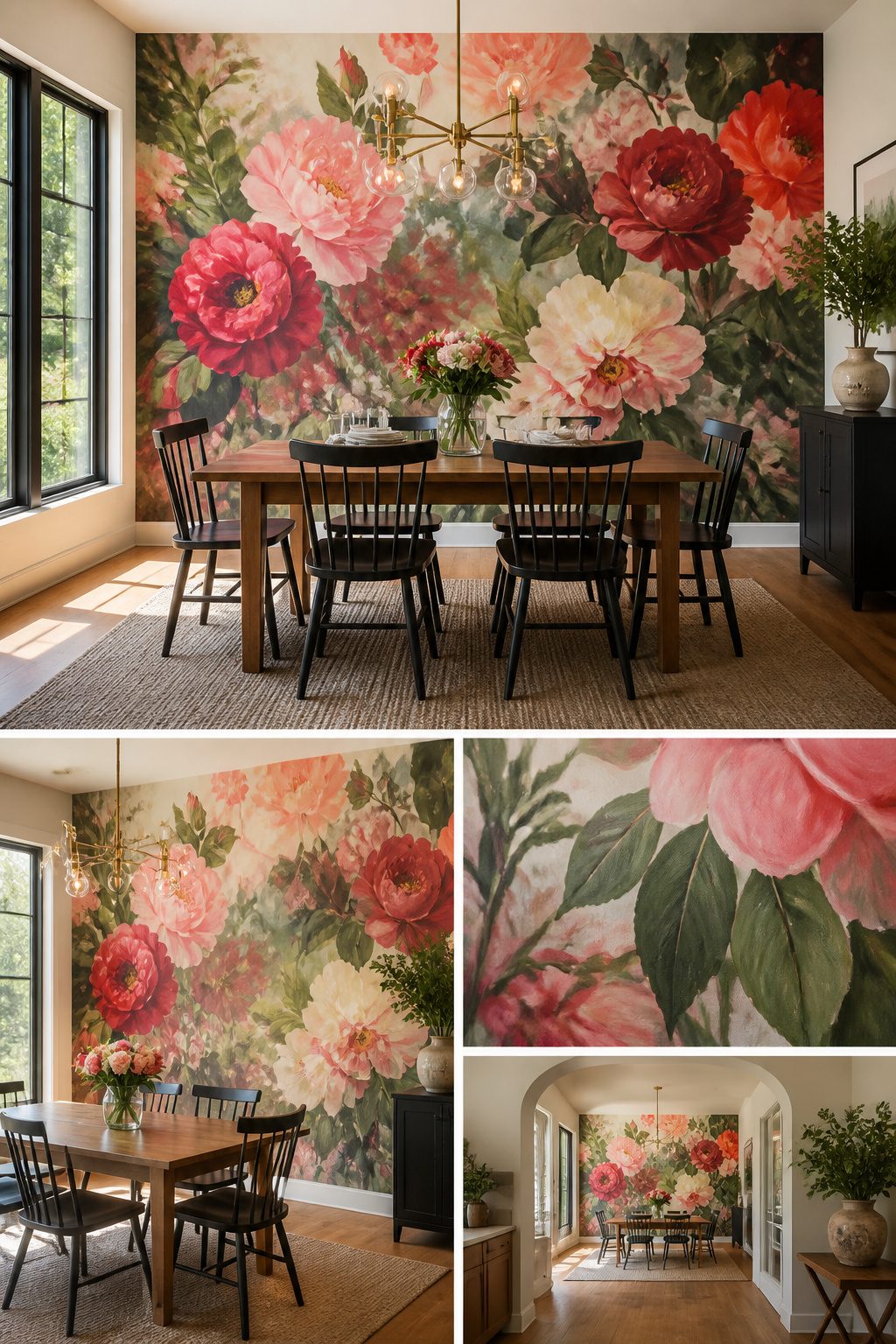
Peonies, tropical leaves, and abstract florals are where most wallpaper mural catalogs lean hardest into nature, and the overlap is easy to miss until you hang one. A palm-leaf print that fills an entire bedroom wall reads as "nature" in the search bar but behaves as floral in the room: the scale is oversized, the mood is lush rather than wild, and the color story runs warmer than a misty forest scene. The difference is intimacy versus distance. A mountain panorama pulls the wall back; a peony cluster six feet across brings the surface forward.
That forward presence is why florals suit spaces where you want the wall to act like upholstery, not a window. Some manufacturers now offer over 200 color customization options on a single floral design, which matters more here than with a cityscape or geometric. Shift the ground from cream to charcoal and the same peony drawing goes from cottage to downtown loft. Tropical prints skew bolder by default, blue and beige palms being the quieter exception I keep spotting. Abstract florals split the difference, loose enough to read as pattern up close but still recognizable as botanical from across the room.
The risk with floral scale is romantic overreach. A hand-drawn botanical at full wall width can feel like a boudoir no matter what furniture sits in front of it. I would test a cropped sample at actual size before committing, especially on a shared living room wall.
Abstract Murals
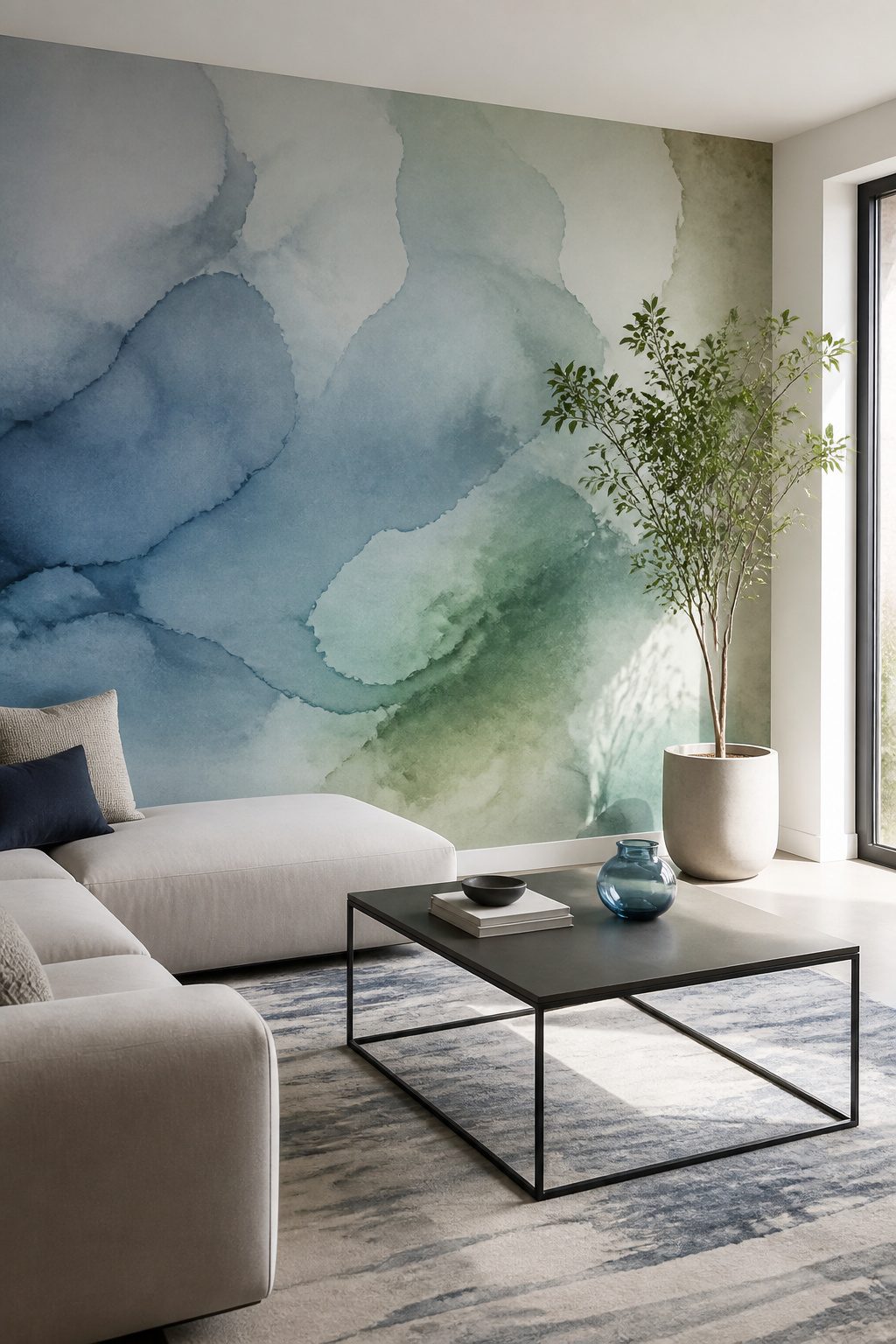
Abstract murals trade literal scenery for shape, color, and rhythm, which makes them easier to live with long-term than a specific scene you might tire of. Geometric patterns and watercolor washes both fall under this umbrella, and the real advantage is flexibility. A soft, bleeding watercolor design adds movement without demanding attention the way a photographic mural would, while repeating geometric forms give a room structure without the formality of traditional wallpaper borders.
What sold me on abstract for my own space was the color control. Most suppliers, including the ones I looked at, let you shift the palette before you order. You can pull a hex code straight from your sofa or your tile and match it rather than hunting for a pre-made design that happens to coordinate. That matters in modern spaces where the furniture is already doing a lot of visual work and the wall needs to complement, not compete.
The material options run from removable woven fabric to matte vinyl to pre-pasted paper, all with a flat finish that keeps the art from looking like a shiny sticker. For renters, the repositionable versions mean you can test the placement, peel it back up if the first attempt is crooked, and still get your deposit back.
Animal Murals
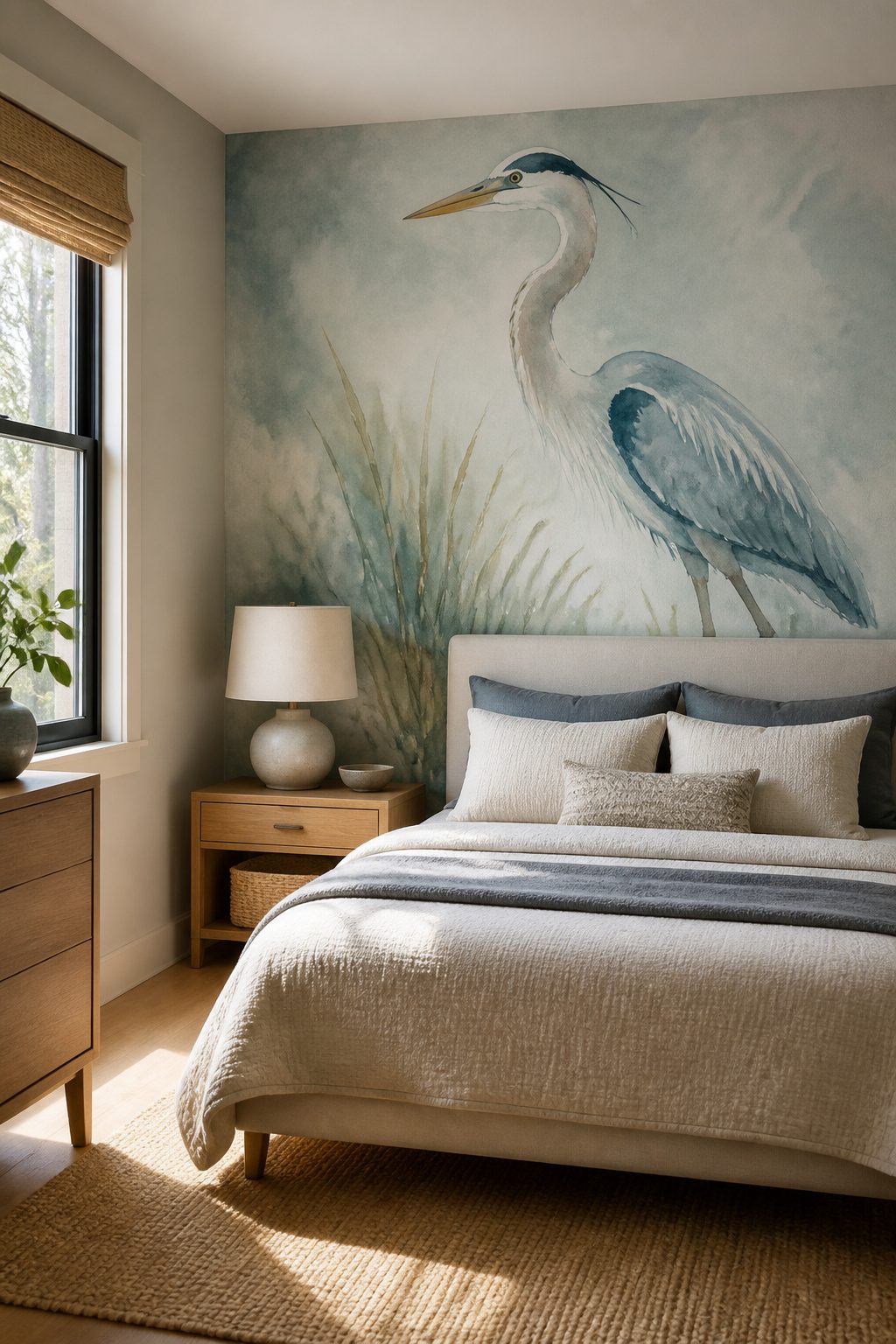
Animal murals split cleanly into two camps, and the wall you put them on decides which one belongs there. Photographic wildlife prints, the kind that show every whisker on a tiger or the scale of an elephant herd, read as nature photography first and decoration second. They work best in a home office or a hallway where you pass through rather than settle in. The sources note these are meant to "bring the outdoors in," but in a living room they can feel like a lodge that got stuck in 2008, especially when the image tries for drama with a lion at full roar.
Illustrated styles, hand-drawn or painterly, age better. A watercolor heron or a line-art fox has enough abstraction to feel like art rather than documentary, and it sits more quietly in a bedroom or a child’s room. The sources group animal themes with children’s wallpaper specifically, which tells you where the market has pushed them, but an illustrated peacock in a dining room can still look current if the palette stays restrained.
Pet portraits sit in their own category, rarely offered by the large mural houses but common in custom work. A photographic dog mural runs the same risk as the wildlife equivalent: too literal, too sentimental, too quickly dated. An illustrated pet, or one rendered in flat color blocks, keeps the affection without the greeting-card tone.
The material choice matters here more than with botanicals. Animals, especially dark-furred ones, show seams and panel shifts. Paste-the-wall papers with wider panels, or the custom sizing some makers offer, reduce the risk of a jaguar’s spine landing on a join.
Cityscape Murals
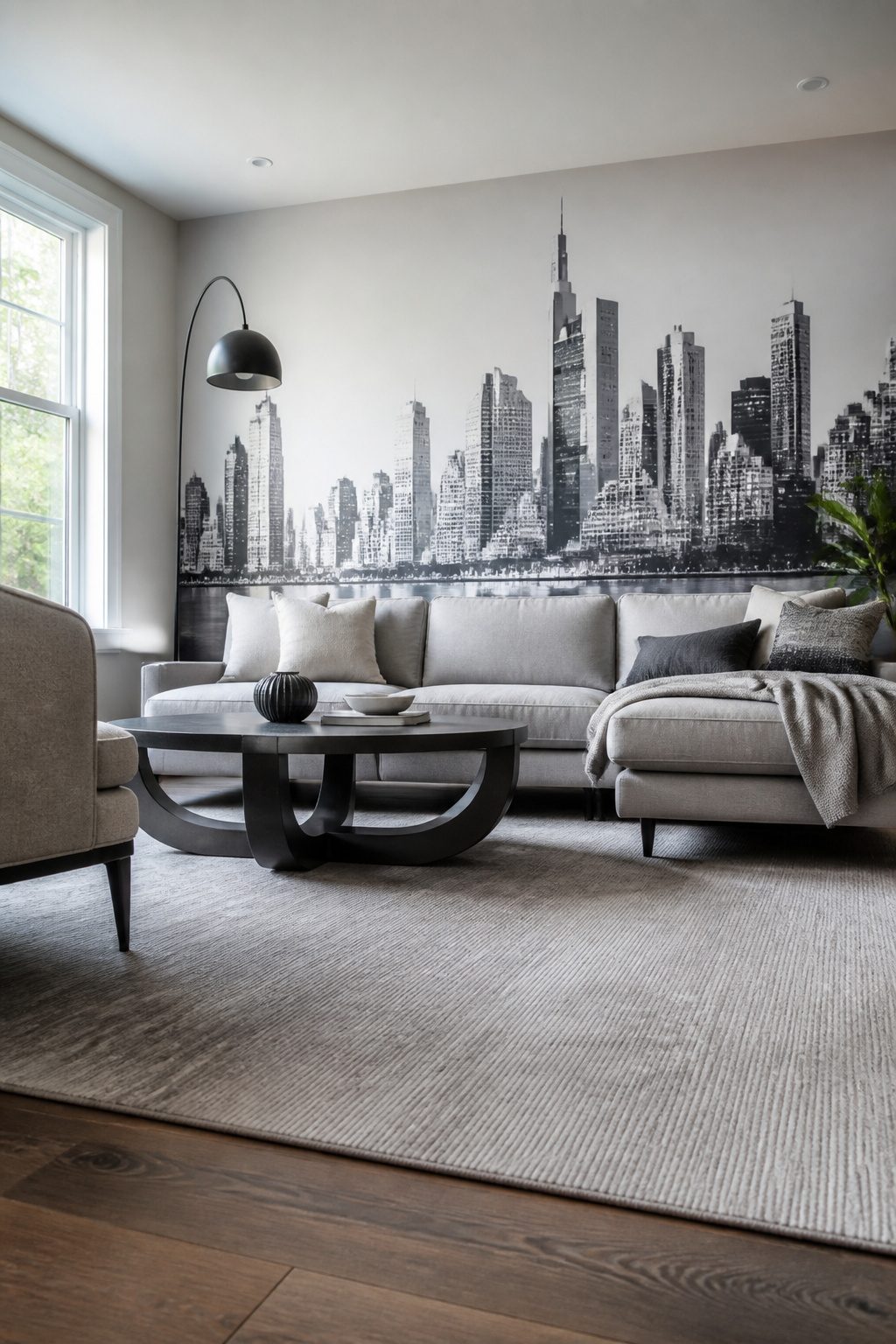
Cityscape murals lean on skylines and urban scenes to pull a wall back visually, which matters in a small room where every inch of depth counts. A black-and-white print reads as architecture rather than clutter, so the eye travels without tiring. Color versions carry more energy, but the risk of a busy wall climbs fast in tight quarters or against furniture that already holds pattern. The safer play for a renter working a weekend budget is a monochrome skyline on the far wall of a narrow space, letting the window lines do the stretching. Peel-and-stick options install in under an hour and peel off clean, so the experiment costs little beyond the mural itself. What stopped me on a few I considered was skyline detail so fine it turned to noise at three feet. A cityscape mural works when the building shapes stay readable from sofa distance, not just in the product thumbnail.
Vintage Murals
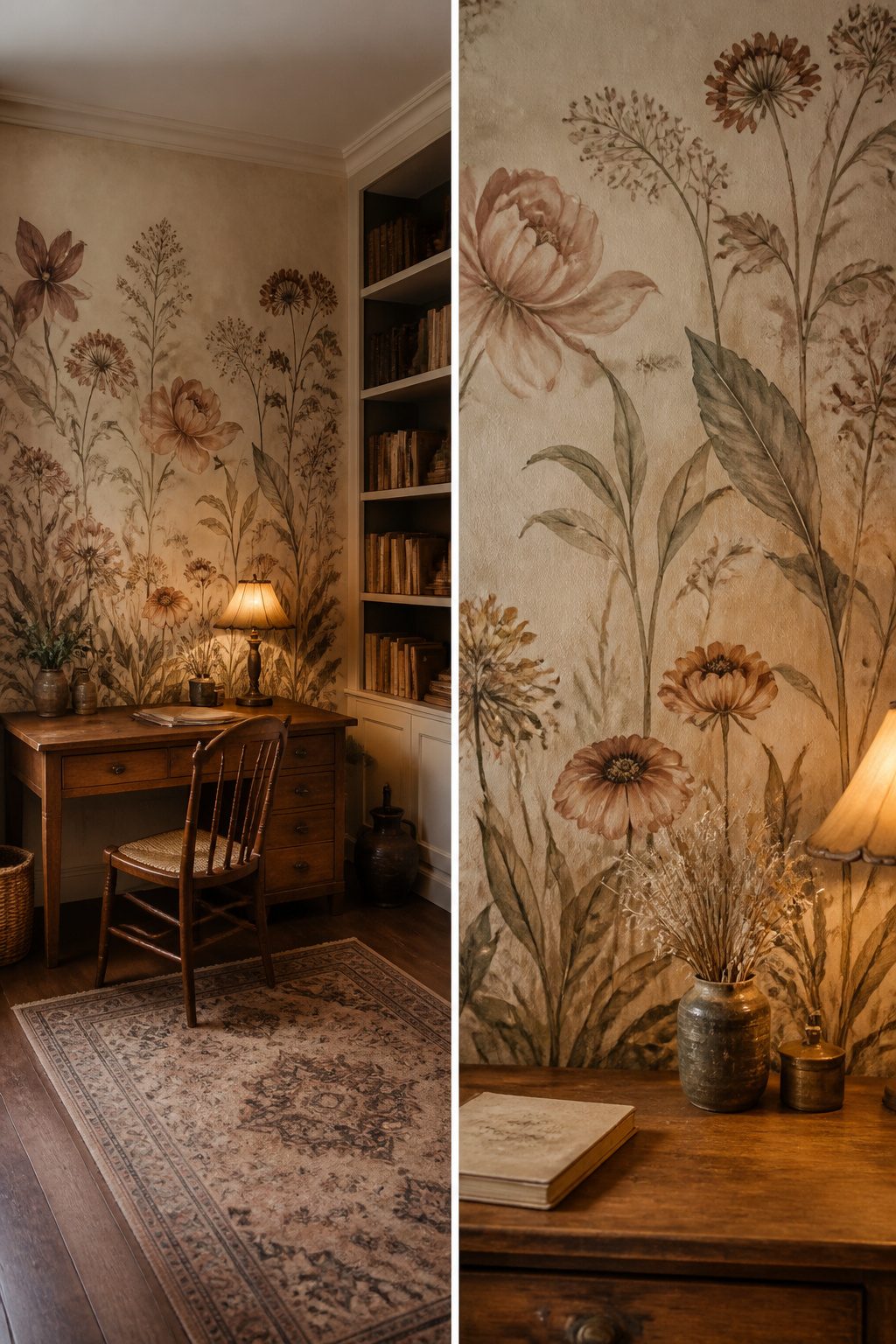
Vintage murals pull from two different directions, and the gap between them matters more than most product pages admit. One direction is actual period paper, the yellowed, brittle remnants of 1920s scenic rolls or 1970s photo walls that surface at salvage yards and sell for collector prices. The other direction, which is what you’ll actually hang, is a new print in a retro palette or composition: sepia woodland walks, hand-drawn botanicals in faded watercolor, the soft geometry of mid-century travel posters. York’s Woodlands Mural in sepia tones runs about 15.75 feet wide assembled, and at $600 it sits firmly in the new-print camp despite the nostalgic styling.
The risk with vintage-themed murals is that they read as costume rather than character. A room can start to feel like a stage set for a decade it never lived through, especially when the furniture around it is plain contemporary. What saves the look, in my experience scrolling through install photos that work versus ones that don’t, is treating the mural as one layer among several rather than the single statement. The collections that blend "nostalgic patterns with modern designs," as one manufacturer puts it, tend to fare better than the ones shouting a single era.
Fine art reproductions complicate this further. A Klimt or Monet at mural scale is technically vintage by definition, yet it carries a different weight than a period pattern. It reads as gallery aspiration, not domestic memory, and the room around it needs to match that formality or the dissonance becomes the whole story. For a weekend project on a few hundred dollars, the safer bet is usually the stylized woodland or botanical route: the mood is there, but the room can still hold your actual furniture without apology.
Kids Murals
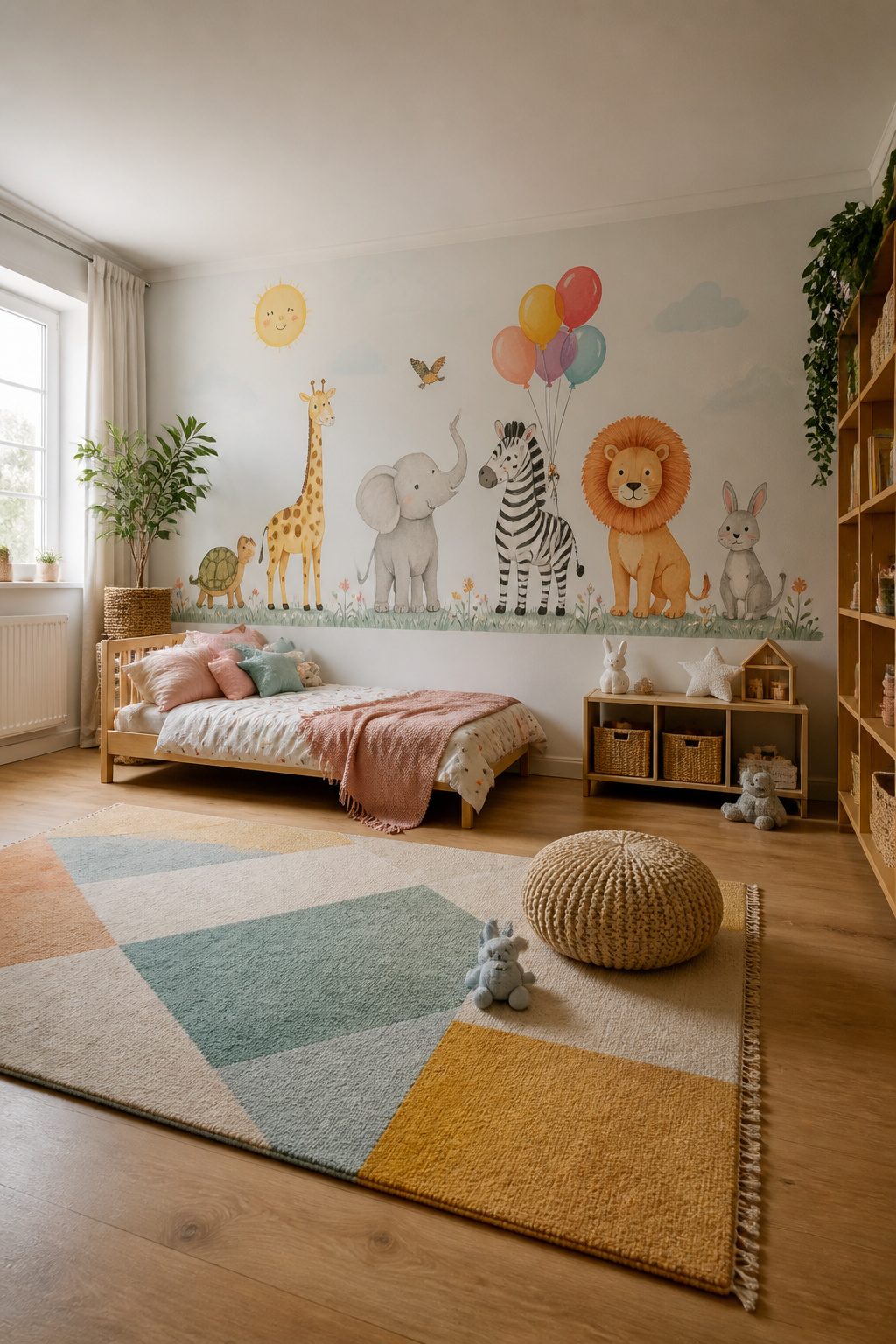
A world map or a parade of fairytale animals across the bedroom wall sounds like a gift to a child, but the real recipient is the parent who wants the room to feel finished. I leaned toward educational maps when my niece was small, thinking geography would stick, and within three years she was asking why the wall still looked like a preschool. Cartoon characters age even faster; the hero she worships at five becomes embarrassing by eight. Peel-and-stick material matters most here because the image that charms a three-year-old will need peeling off before middle school, and you want that wall clean for the next phase. The removable options go up in under an hour with no paste and no damage, which means you are not repainting between personalities. Standard paste-up murals lock you into a commitment that outlasts the childhood itself, and that is a cost in labor most weekend projects cannot absorb twice.
Custom Murals
Custom wallpaper murals start with either your own image or an existing design you tweak to fit the room. I spent an evening uploading a vacation photo to one service and adjusting a floral pattern on another, and the difference in control was immediate. Over 200 color options are available on several platforms, letting you shift a navy background to sage or warm up a gray print without starting from scratch. Size adjustments work the same way: enter your wall dimensions and the design scales to fit, with some studios widening panels to reduce seams or reformatting the crop so a skyline doesn’t lose its center.
The proof stage matters more than I expected. One company prints a custom sample of your exact color edits and ships it before the full run; another lets you preview the room in real time as you shift hues. Both beat guessing from a screen. If you’re working from your own photograph, resolution is the hard limit. A phone snapshot blown to eight feet wide turns soft and disappointing; a high-quality image keeps the detail intact.
Not every adjustment is free. Color amendments and panel reformatting sometimes route through a studio team rather than the instant tool, which adds a day or two. For renters, the peel-and-stick base helps here: order the sample, live with it, peel it off if the match is wrong. The money-back guarantees run from "no questions asked" satisfaction promises to review-based reputations, and the difference in how much risk you actually carry is worth checking before you upload.
Peel-and-Stick Installation
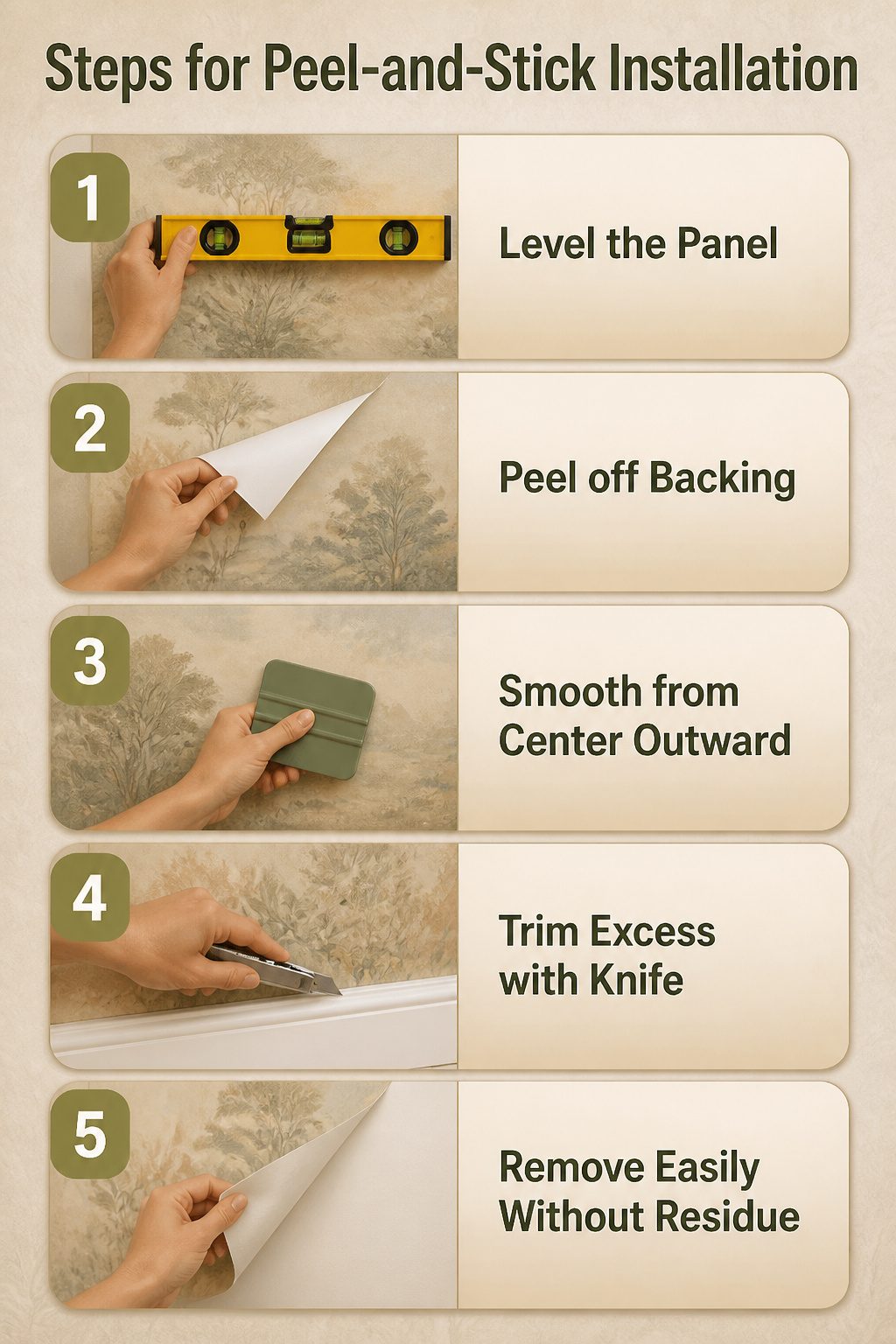
A level, a utility knife, and a plastic squeegee are the only tools you need for peel-and-stick wallpaper murals. The backing peels away cleanly, so you position the panel, smooth it flat from the center outward to press out air bubbles, and trim the excess at edges and corners with the knife. The adhesive leaves no residue and does not damage the wall when you remove it, which is why this method dominates for renters. Each panel goes up in minutes, and the whole wall typically finishes in under an hour. When you want a change, you simply peel the mural away; the wall underneath stays clean and ready for whatever comes next.
Paste-the-Wall and Other Methods
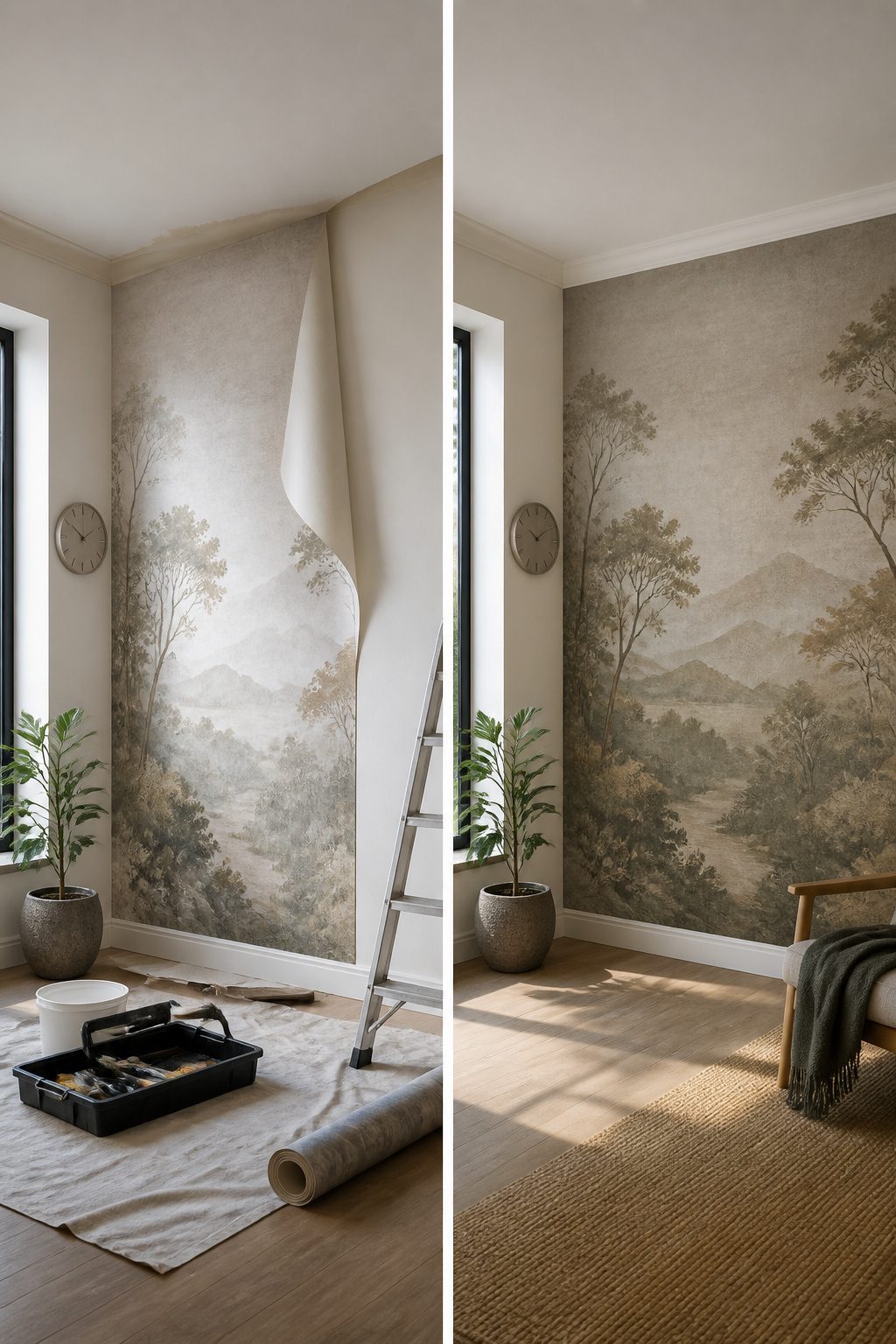
Paste-the-wall murals go up with standard wallpaper adhesive instead of a built-in backing, which means you need a roller or brush and a few extra hours of drying time. The tradeoff is worth it when you want a heavier material, since peel-and-stick carriers are usually thinner vinyls that can telegraph wall texture or soften at edges over time. Some murals arrive with the paste already dried onto the back, activated by a quick dip in water. That middle option saves the mess of a separate adhesive bucket while still giving you a more substantial paper than self-adhesive allows. A few textile-backed murals even ship with their own glue coating exposed under a protective liner, though those are less common and tend to run higher. For a weekend project in a rental you plan to leave within a couple years, peel-and-stick still wins on teardown speed. If the wall is staying yours for a while, the stronger bond and wider material choice of paste-the-wall is the smarter buy.
Vinyl, Fabric, and Paper Materials
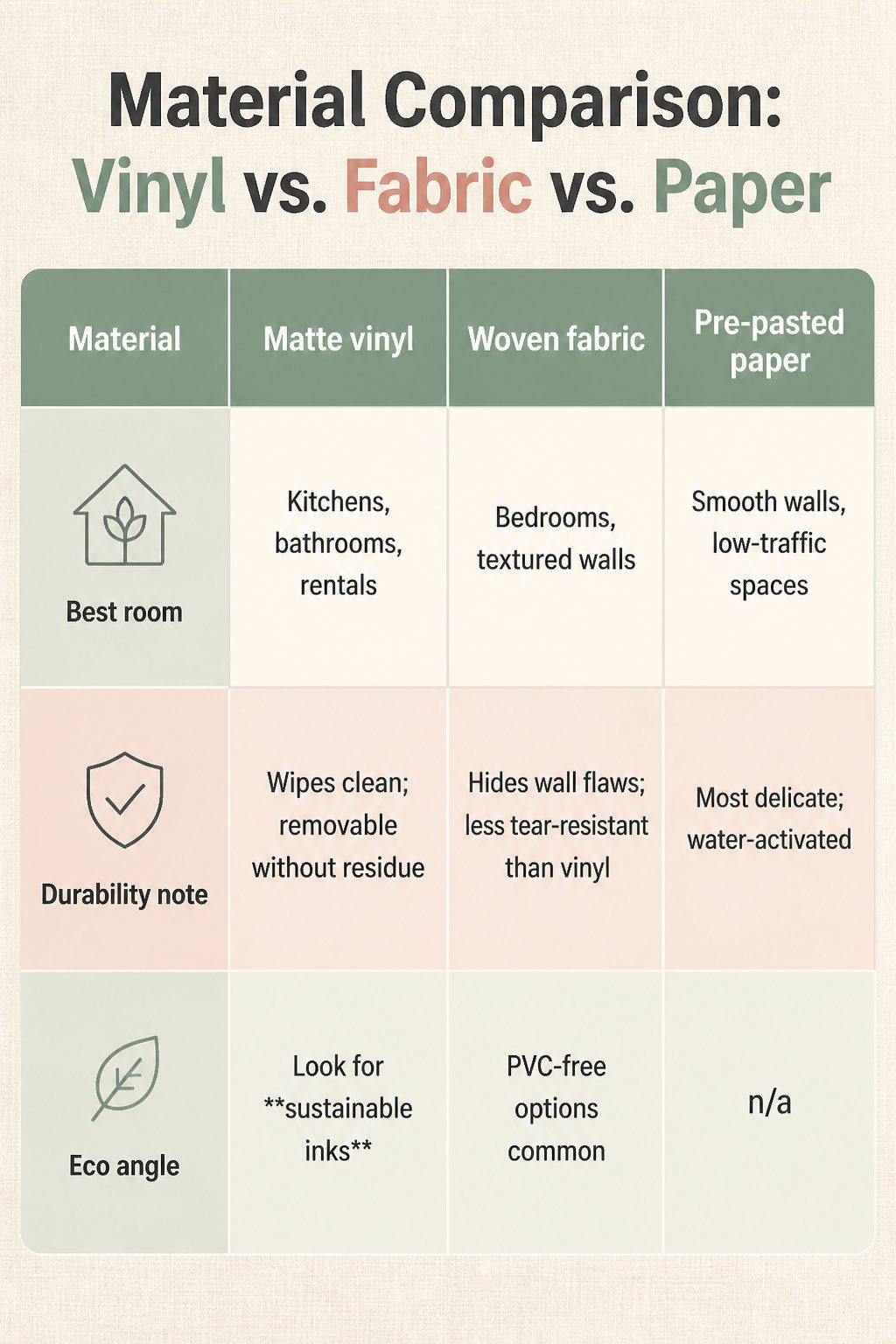
The three materials you will actually find in stock are non-toxic woven fabric, matte vinyl, and pre-pasted paper. Each arrives with a flat matte finish, and all three are marketed as safe for nurseries, which tells you something about how far the off-gassing conversation has moved in the last decade.
Vinyl dominates the peel-and-stick market for a reason. It handles bathroom humidity and kitchen splatter without bubbling, and when you pull it off, the wall stays clean. No residue, no patchy drywall paper, no weekend lost to repair. Fabric costs more but hangs straighter on textured walls, the weave forgiving slight imperfections that telegraph through vinyl. Paper is the lightest and the least forgiving, water-activated paste on the back that demands a steady hand and a level line from the first panel.
| Material | Best room | Durability note | Eco angle |
|---|---|---|---|
| Woven fabric | Bedrooms, textured walls | Hides wall flaws; less tear-resistant than vinyl | PVC-free options common |
| Matte vinyl | Kitchens, bathrooms, rentals | Wipes clean; removable without residue | Look for sustainable inks |
| Pre-pasted paper | Smooth walls, low-traffic spaces | Most delicate; water-activated | n/a |
If you are renting and may need to reverse the whole thing in twelve months, vinyl is the bet that pays off. The fabric upgrade only makes sense if your walls have the kind of orange-peel texture that vinyl will shadow.
What Wallpaper Murals Cost

Wallpaper murals start around $3.90 per square foot, with premium designs climbing to about $7.03 per square foot depending on the material and whether the artwork is licensed from a named designer. That spread matters more than it first appears, because a single accent wall in a small bedroom runs roughly 32 to 48 square feet once you subtract the baseboard.
Measuring is straightforward: width times height, in feet, rounded up at every step. A wall that is 12 feet wide and 8 feet tall is 96 square feet, not 90 or 93. I round up because the pattern needs to align at the seams, and the last strip is almost always waste.
Where the extra money goes is worth knowing before you browse. Custom sizing or bespoke artwork adds labor on the printer’s end. Licensed collections from brands like Rifle Paper Co. or York’s designer lines carry fees that show up in the per-foot price. The material itself splits the difference too: a non-woven or pre-pasted paper sits lower in the range, while repositionable matte vinyl or woven fabrics with flat matte finishes push toward that upper figure. For a renter doing one wall on a Saturday, the mid-range vinyl often wins on forgiveness during install, even if it costs a dollar more per foot than the paper backing.
Frequently Asked Questions
Do I need any special tools to install a peel and stick wall mural?
No. A level, a utility knife, and a plastic squeegee are enough. The backing peels away so you position the panel, smooth it flat from the center outward to press out air bubbles, and trim the excess at edges and corners.
What are peel and stick wall murals made of?
They come in three materials: non-toxic woven fabric, matte vinyl, or removable pre-pasted paper. All three ship with a flat matte finish and are marketed as safe for nurseries.
Are peel and stick wall murals durable?
Yes, they are designed for easy installation and removal without damage. The adhesive leaves no residue and does not harm the wall when you remove it, which is why this method dominates for renters.
How much do wallpaper murals cost?
They start around $3.90 per square foot, with premium designs climbing to about $7.03 per square foot depending on material and whether the artwork is licensed from a named designer. A single accent wall in a small bedroom typically runs 32 to 48 square feet once you subtract the baseboard.