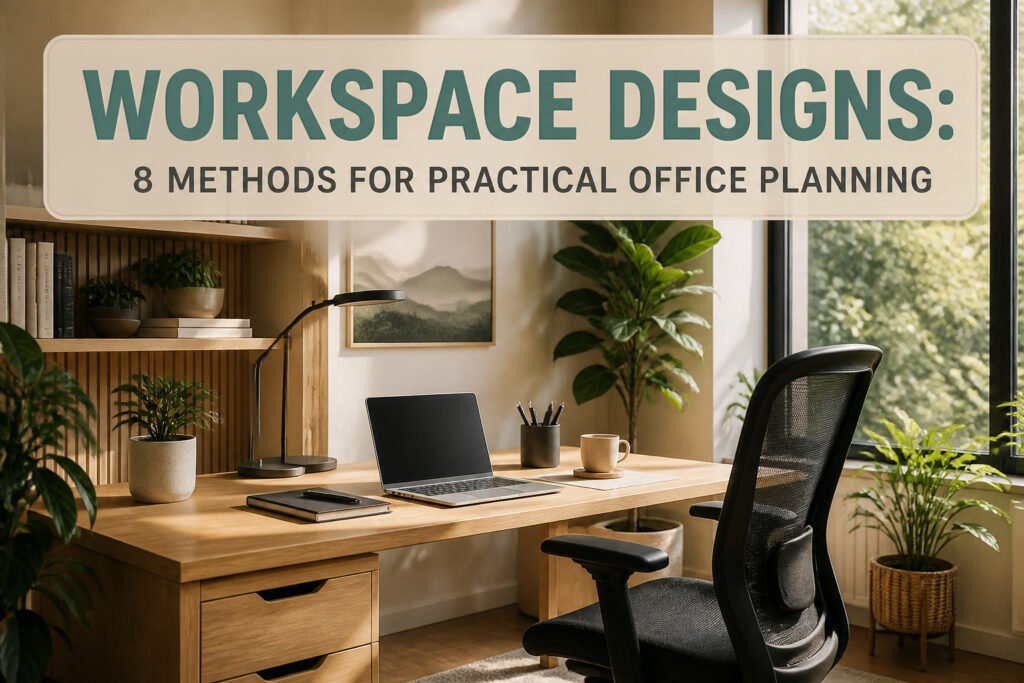
Workspace designs are the practical decisions that let an office support real work instead of fighting it. The catch is that most layouts look efficient while quietly wrecking focus; a study of 2,500 employees found 97% said their arrangement hurt concentration, yet 80% still called their offices efficient. I close that gap by zoning the space before buying a single chair.
Smart Layout and Zoning
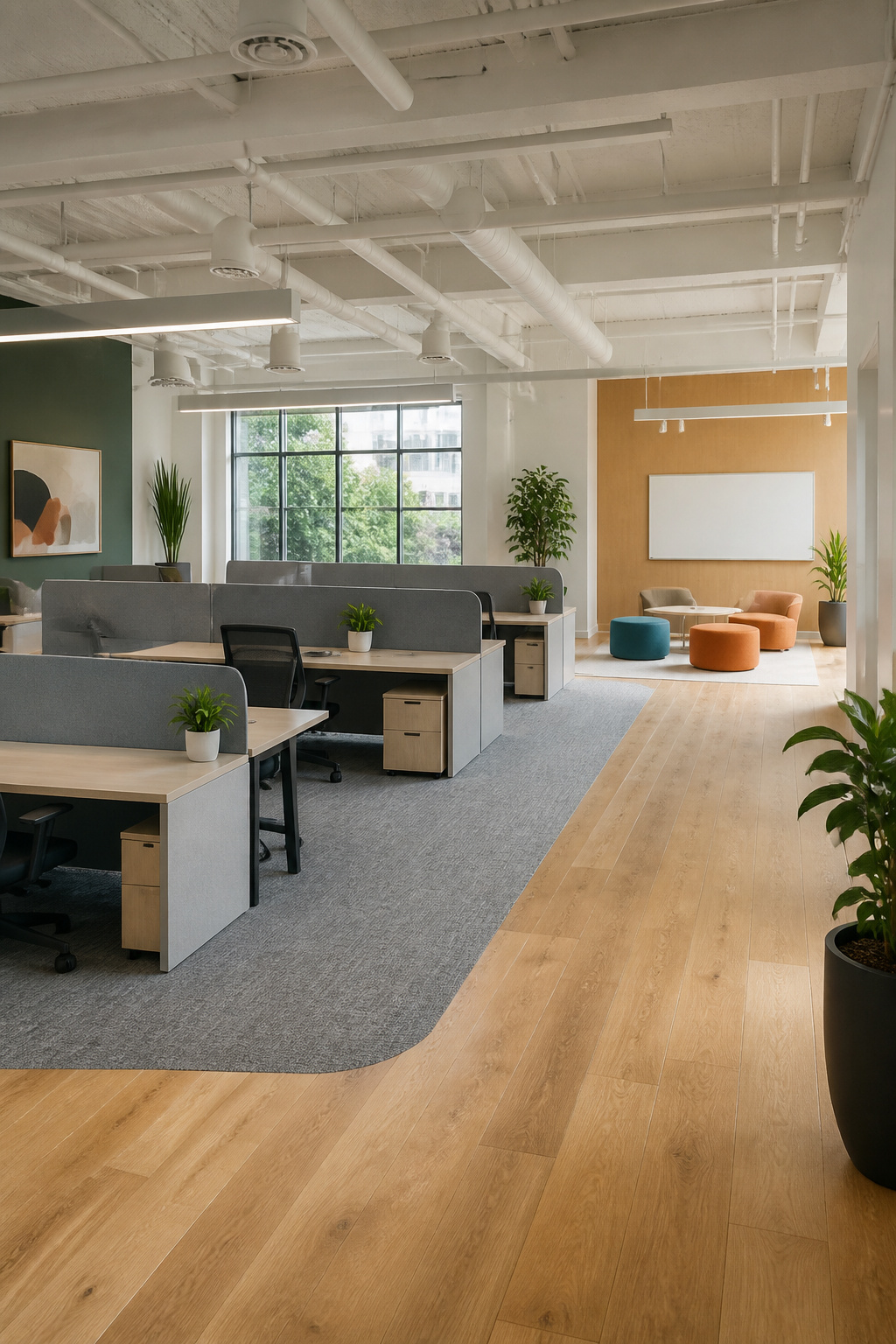
A Property Group study of 2,500 employees found that 97% said their office arrangement hurt their focus, yet 80% still claimed their offices allowed efficiency. That gap tells me most people have learned to tolerate layouts that quietly work against them.
Zoning is how you close it. Quiet desks for heads-down work need physical separation from the quick-meeting, whiteboard, back-and-forth zones. I sketch those areas before buying anything. Picking furniture before knowing where concentration happens is how you end up with a room that technically has everything and still doesn’t work.
For small offices, modular workstations and multi-use areas keep things organized without walls you can’t afford. Movable partitions and adaptable seating let the same square footage serve multiple purposes as the day shifts from solo tasks to collaboration. Carpeting under quiet zones dampens sound; harder surfaces in creative areas handle wheeled furniture and more motion. The layout should follow what actually happens in the space, not a template of what an office is supposed to look like.
Flexible, Multi-functional Furniture
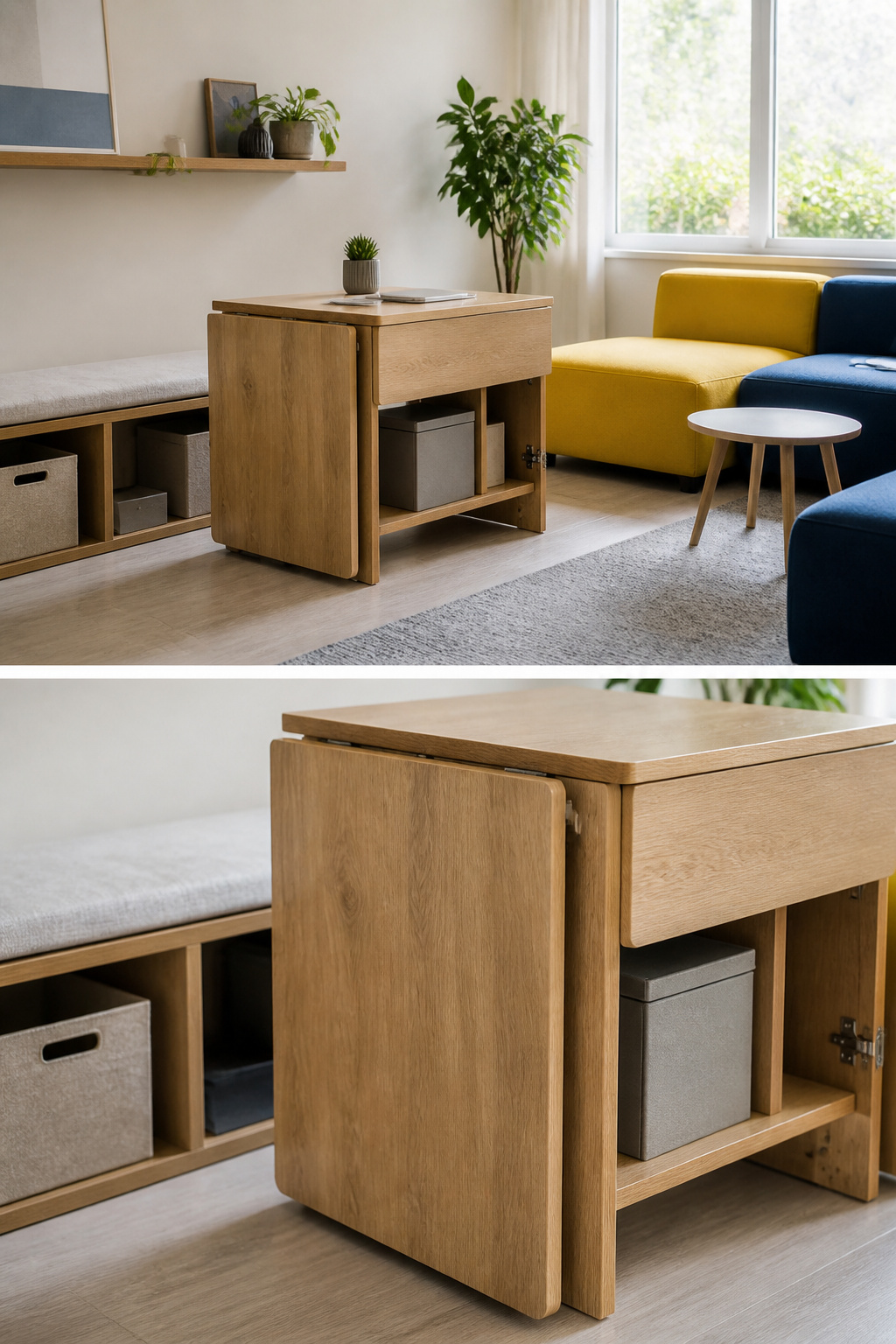
A desk that folds against the wall Monday and opens into a four-person table Thursday is the single piece that turned my spare room from storage closet into actual workspace. Convertible desks with drop-leaf or accordion mechanisms cost no more than a standard fixed desk and save the square footage a renter does not have to spare. I looked at wall-mounted options first, then settled on a freestanding model with locking casters so I could wheel it flat against the sofa when the in-laws visit.
Storage benches pull the same double shift. The one I built from a basic cube shelving unit and a hinged plywood top holds file boxes underneath and seats two people on top. Tesor’s line on this is dead right: the bench earns its keep only if the lid stays open on its own while you dig through contents. A cheap piano hinge and a $4 lid support from the hardware store solve that; skip the pneumatic struts unless you load the bench with something heavier than paper.
Modular couches and ottomans near windows or alcoves create what flexible workplaces call unassigned seating without requiring a corporate budget. The pieces rearrange for solo heads-down work or cluster for a project review, and they roll back apart when the meeting ends. I found a three-piece ottoman set on clearance, added casters to two of them, and left the third stationary as a coffee table anchor. The whole setup breaks down to fit a sedan if I move, which the built-in bench does not.
The real limit is weight. A conference table that doubles as a ping-pong surface sounds clever until you try to flip it alone. For a home office, a folding table with a decent top and locking legs handles collaboration and breaks down in ninety seconds. My rule: if I cannot move it by myself while holding a coffee, it is not flexible furniture, it is just furniture I will never reconfigure.
Biophilic Design Elements
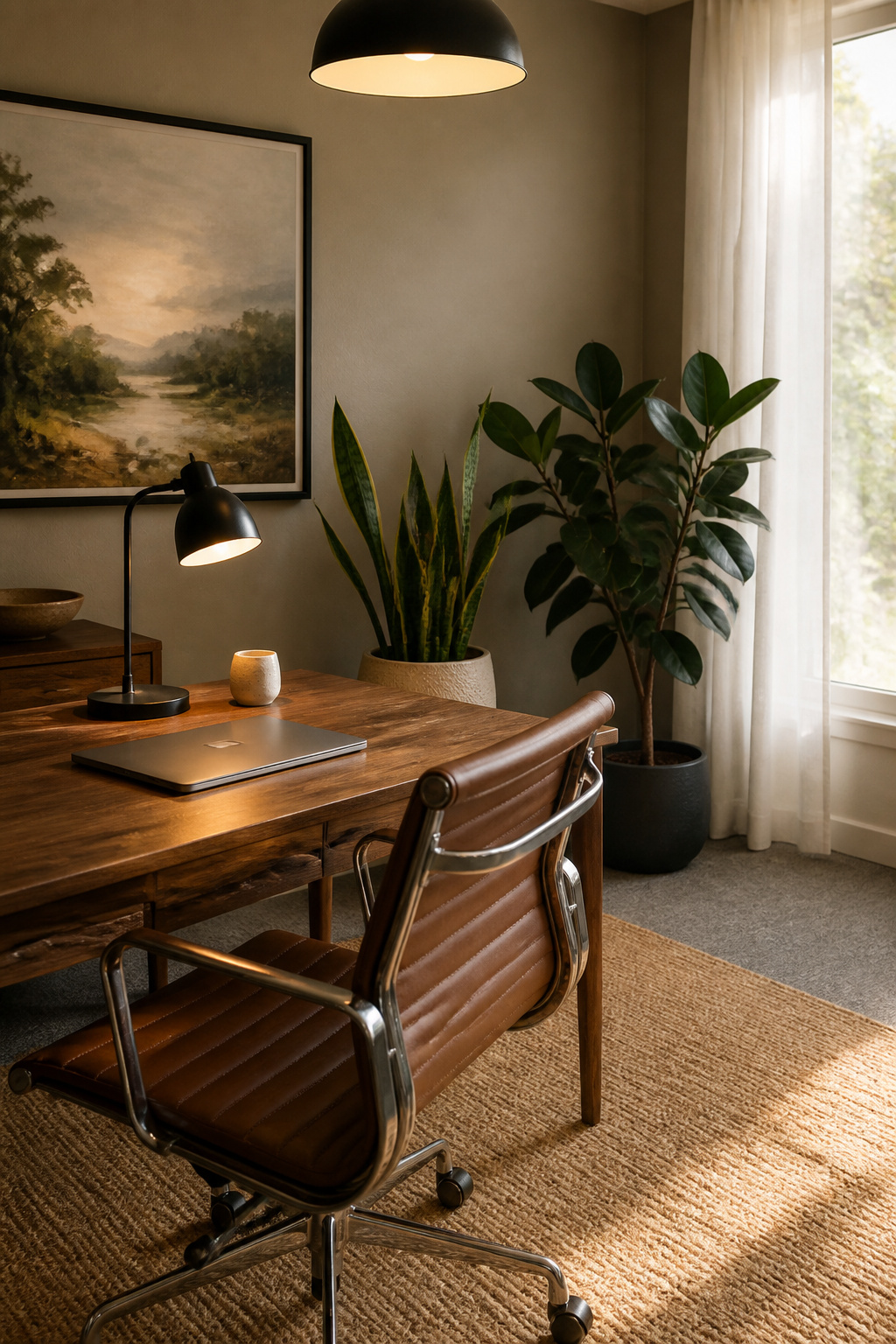
The snake plant on my desk has survived two moves and a winter of radiator heat, which is more than I can say for most things I’ve owned. That resilience is part of why plants are the cheapest biophilic upgrade that actually works: a snake plant tolerates low light and erratic watering, while a rubber plant in a corner with decent natural light makes a visual statement for $30 to $60.
Natural materials alongside the greenery compound the effect without drilling holes or painting walls. A jute or wool rug layered over rental carpet, a corkboard swapped for a metal grid, even a wooden desk surface if your lease allows it. The combination reads as grounded in a way that’s hard to achieve through any other design choice at the same price point.
Sunlight matters most, but when your window faces a brick wall, warm LED lighting can create a more comfortable, balanced environment. Small water features like fountains provide a tranquil soundscape if you have the surface space, though they’re over-the-top for many small offices. Nature-themed artwork is another powerful way to invoke the outdoors indoors when actual views aren’t available.
The studies keep confirming that offices with plants make people feel better and perform better, yet most offices continue to have none. For a renter, that’s an opportunity: the gap is worth closing with a single trip to a nursery and no landlord conversation required.
Effective Lighting
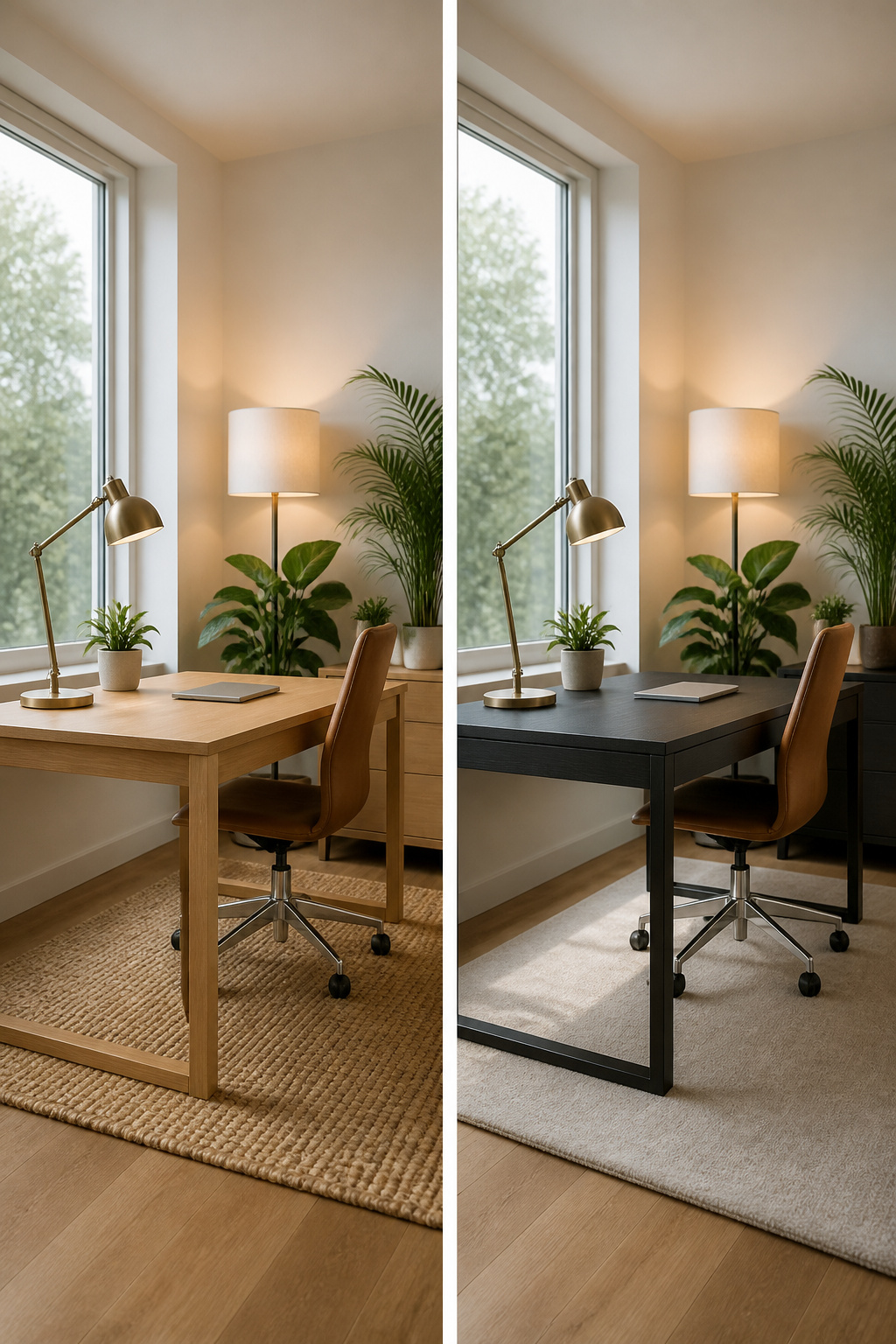
Natural light sets the baseline for any workspace I plan. When the desk sits near a window, the room needs almost nothing else for most of the day. The trouble starts in basements or interior rooms where windows are scarce or absent. Warm LED lighting fills that gap, and it does more than just let you see the keyboard. The color temperature shifts how the room feels, and that matters when you are trying to stay focused through an afternoon slump.
I learned this after moving my desk into a room with a single north-facing window. The space stayed dim even at noon, and the first bulb I tried, a cool white from the hardware store, made the walls feel like a clinic. Swapping it for a warm LED lamp changed the whole mood. The light felt balanced, comfortable enough that I stopped thinking about the fixture entirely.
For a practical setup without natural light, mix the sources rather than relying on one overhead fixture. A desk lamp with a warm LED bulb handles the task area, while a floor lamp with the same temperature washes the walls with softer ambient light. I spent about $34 on the desk lamp and $28 on a basic floor lamp, both from a big-box store. The bulbs ran another $12 each. That total, under a hundred dollars, bought a room I could actually work in for a full day.
Acoustic Considerations
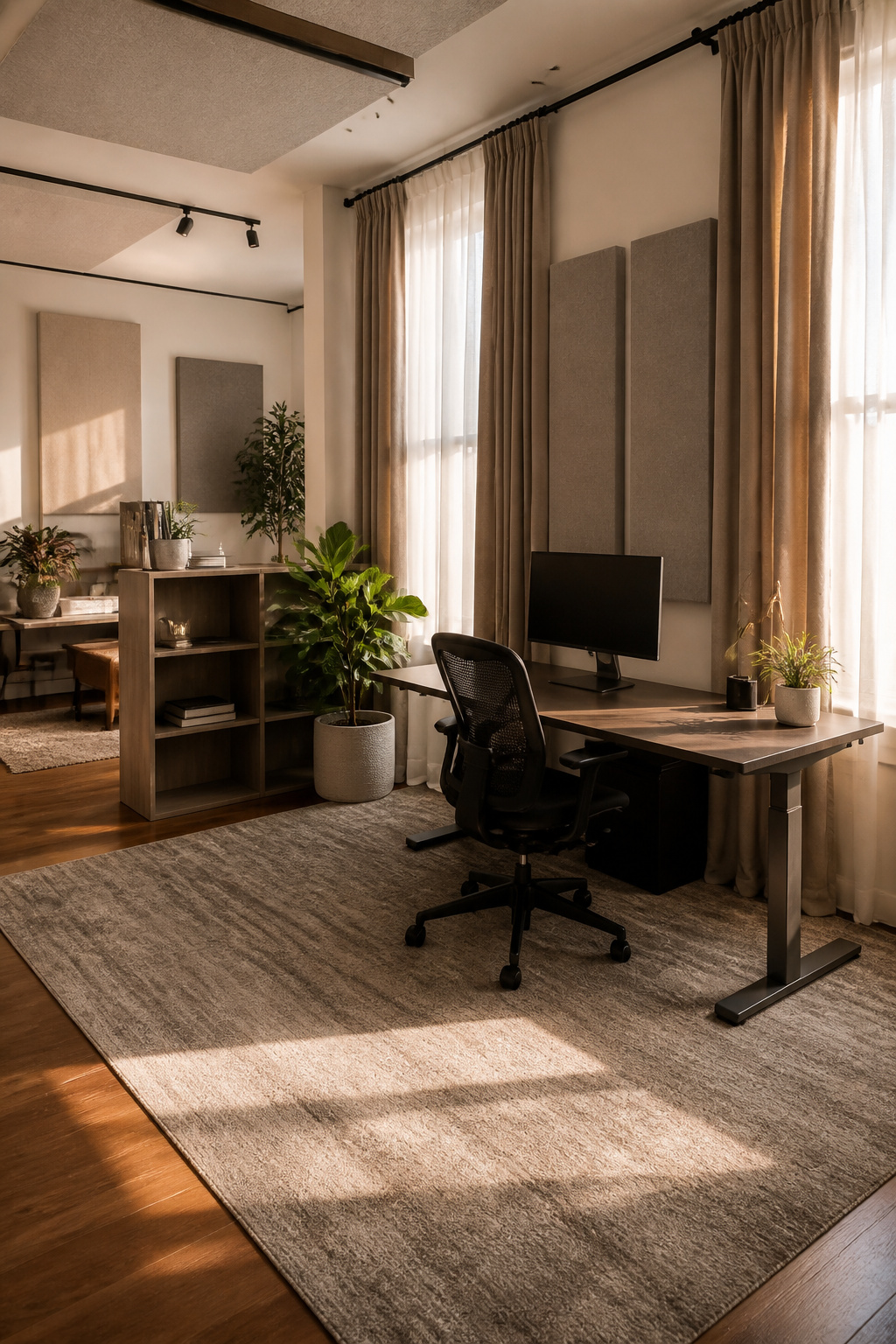
Acoustic panels are the first thing I look at now, after a year of trying to work three feet from my partner’s video calls. The hard truth is that open plans only function until multiple people need to actually hear themselves think. Rugs on hard floors, curtains instead of blinds, and upholstered seating absorb sound rather than bouncing it around. Fabric wall panels fall into the same category: inexpensive, renter-friendly, and genuinely effective.
What failed for me was the foam puzzle-mat approach I saw recommended for apartment floors. It deadened footsteps, but it looked like a daycare and did almost nothing for voice frequencies. Carpeting with a proper pad underneath handles both. I also tried hanging moving blankets as a temporary wall treatment. They worked acoustically, but the visual cost was too high for a space I spent eight hours a day in.
The layout choice that mattered most was distance, not decoration. Putting even a low bookcase between my desk and the main living area broke up sound paths better than anything I added to the walls. If your space allows, one enclosed corner, a phone booth, or even acoustic panels on two or three sides of a single desk creates a zone where calls are intelligible. In a hybrid workplace, that enclosed option is not a luxury. It is the difference between an office you use and one you avoid.
Brand Identity Integration
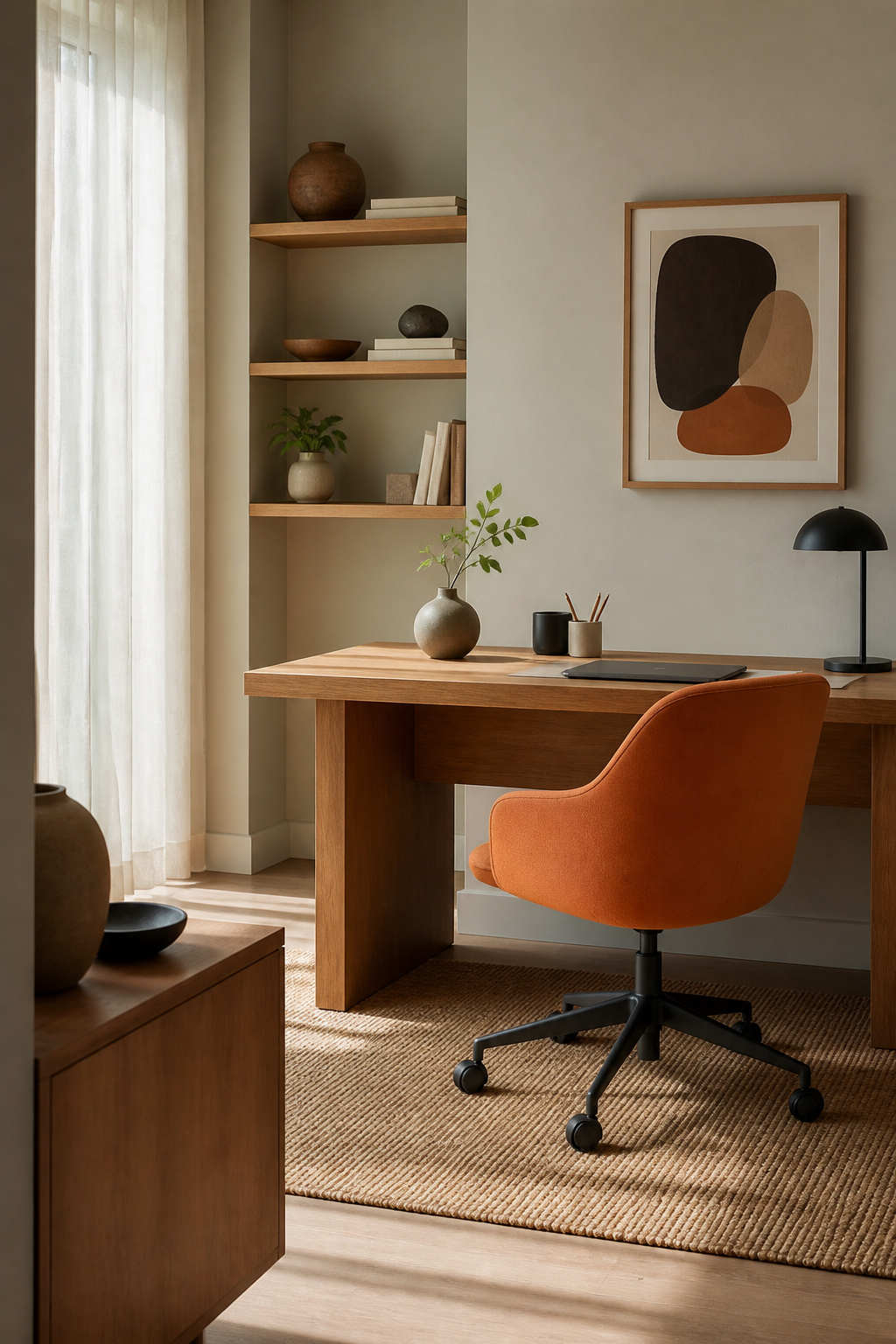
Brand colors work best when they show up in specific, strategic places rather than coating every wall. I learned this the hard way after painting my first home office in a vivid blue straight from my freelance logo. The room felt like the inside of a promotional brochure within a week, and I repainted by month two.
Blues and soft greens help people concentrate, which is why they make sense for the wall behind your desk. Warm neutrals like beige, greige, or a soft off-white handle the rest of the room without competing for attention. My current palette came from three paint samples taped to the wall for a full week, viewed in morning light and late afternoon. The sample that looked crisp at 10 a.m. turned muddy by four; the one I almost dismissed for being boring held up across every hour.
For the brand punch, I re-covered a $90 thrifted chair in fabric that matched my logo orange. One accent. The chair sits where video calls catch it, so the color registers as intentional without surrounding me. Small businesses and home offices share the same risk: consistency across finishes matters more than the budget spent. A wooden desk surface, a jute rug, and that single colored chair read as grounded and human in a way that costs less than one designer hour and survives a real weekend timeline.
Technology Integration
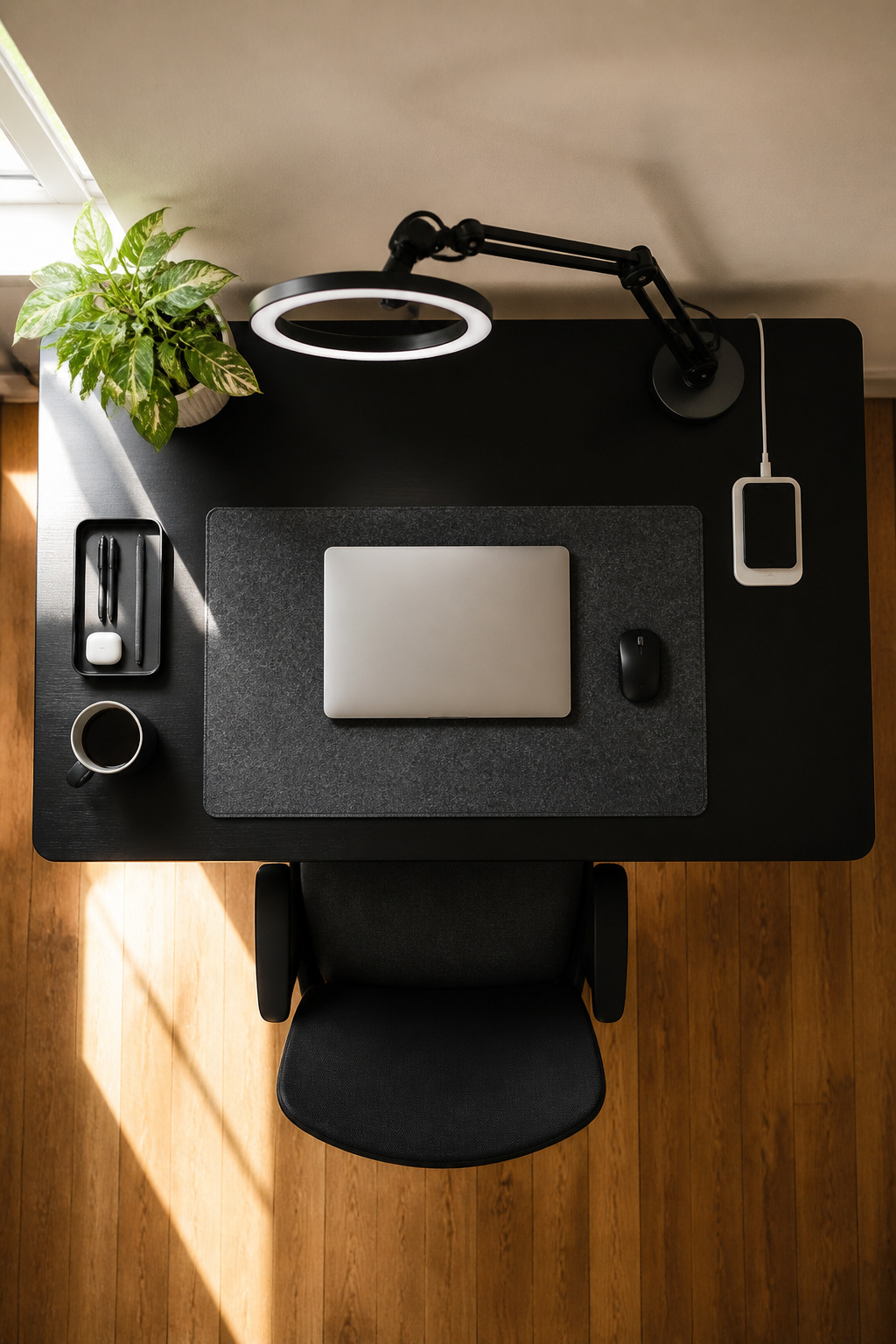
A desk that looks clean on Instagram and fights you for every outlet is a desk you stop using. I learned this after routing cables through a basket screwed to the underside of my work surface, which kept the floor clear but turned plug swaps into a crawl-space workout. Under-desk cable pathways fixed that, running power and USB along a channel I can actually reach. Modular electrical panels let me add a port where I need it instead of stretching a power strip across the room.
Video calls demand their own planning. A camera perched on a monitor puts the lens at chin height, and the overhead light in my old setup cast shadows that made me look like I was testifying in a hearing. A ring light on a desk arm, set slightly above eye level and angled down, flattened those shadows without the flat look of direct front lighting. The arm cost about thirty dollars, the light another twenty-five, and the difference in how I appear to clients is immediate.
Wireless charging stations earn their spot only if your phone case cooperates; mine did not, so the pad sits unused while the cable channel gets daily use. Spend on power access and cable routing before you spend on charging aesthetics.
Collaboration Spaces
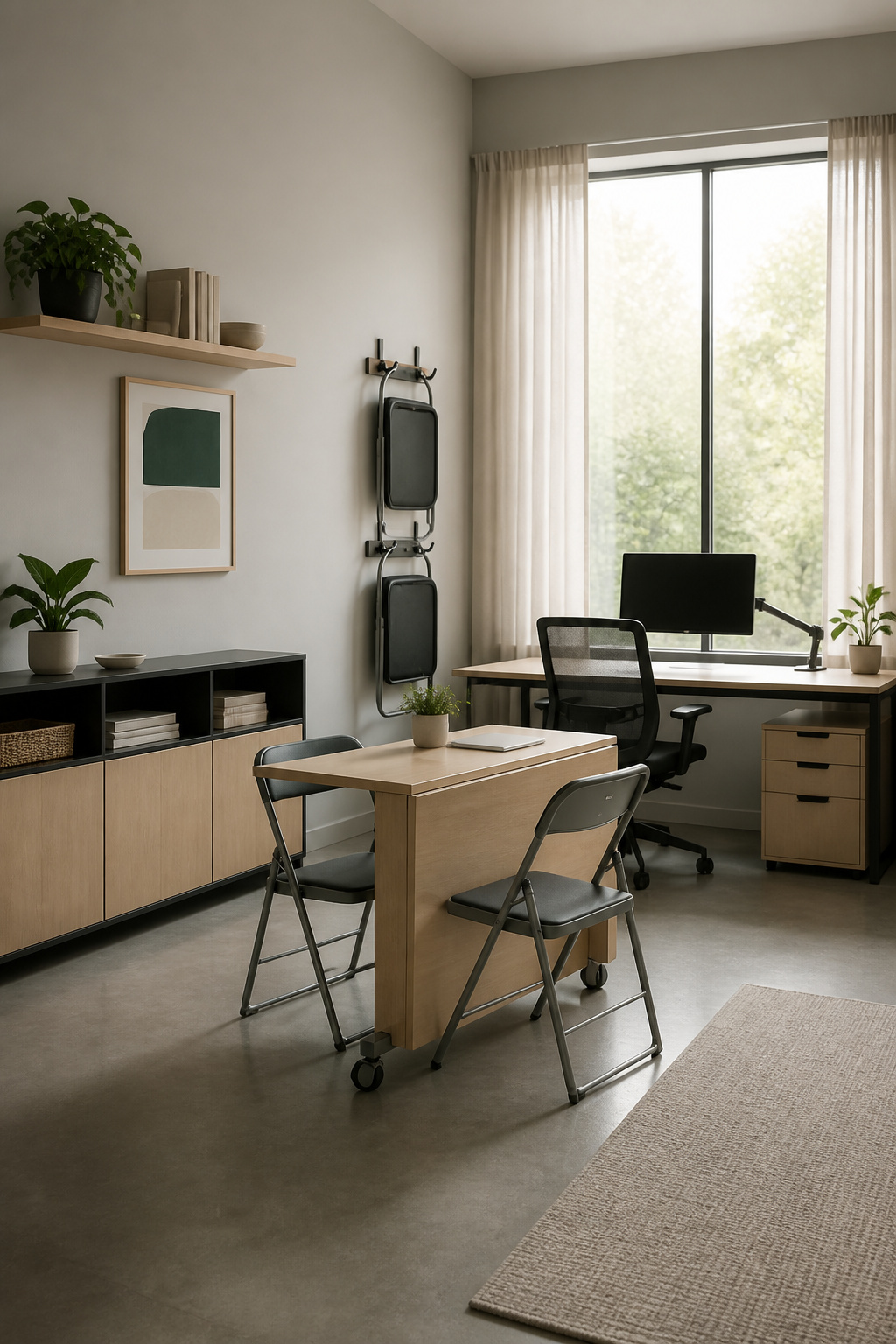
A 12-by-14 room forces you to choose between quiet and collaboration, or find a way to split the difference. I handled it by keeping the desk against the window for solo work, then adding a small communal table on casters that rolls out when someone needs to spread out papers or I need to meet with my partner on a project. When the table is stowed, the room still functions as a private office. When it is out, the whole space shifts.
The tension with quiet zones is real. A semi-open layout works best when you can retreat, so I treat the desk as the quiet pod and the table as the shared zone. Movable dividers help, but in a footprint this small, the real divider is behavior: headphones on means solo time, table out means conversation is welcome. Lounge seating would eat too much floor space, so I skipped the sofa and used two folding chairs that hang on wall hooks. They come down for a quick stand-up meeting, then disappear.
The mistake I almost made was buying a second desk for collaboration. Two fixed desks would have locked the room into one configuration. Flexible furniture costs about the same and keeps the room from feeling like a cubicle farm.
Ergonomics on a Real Budget
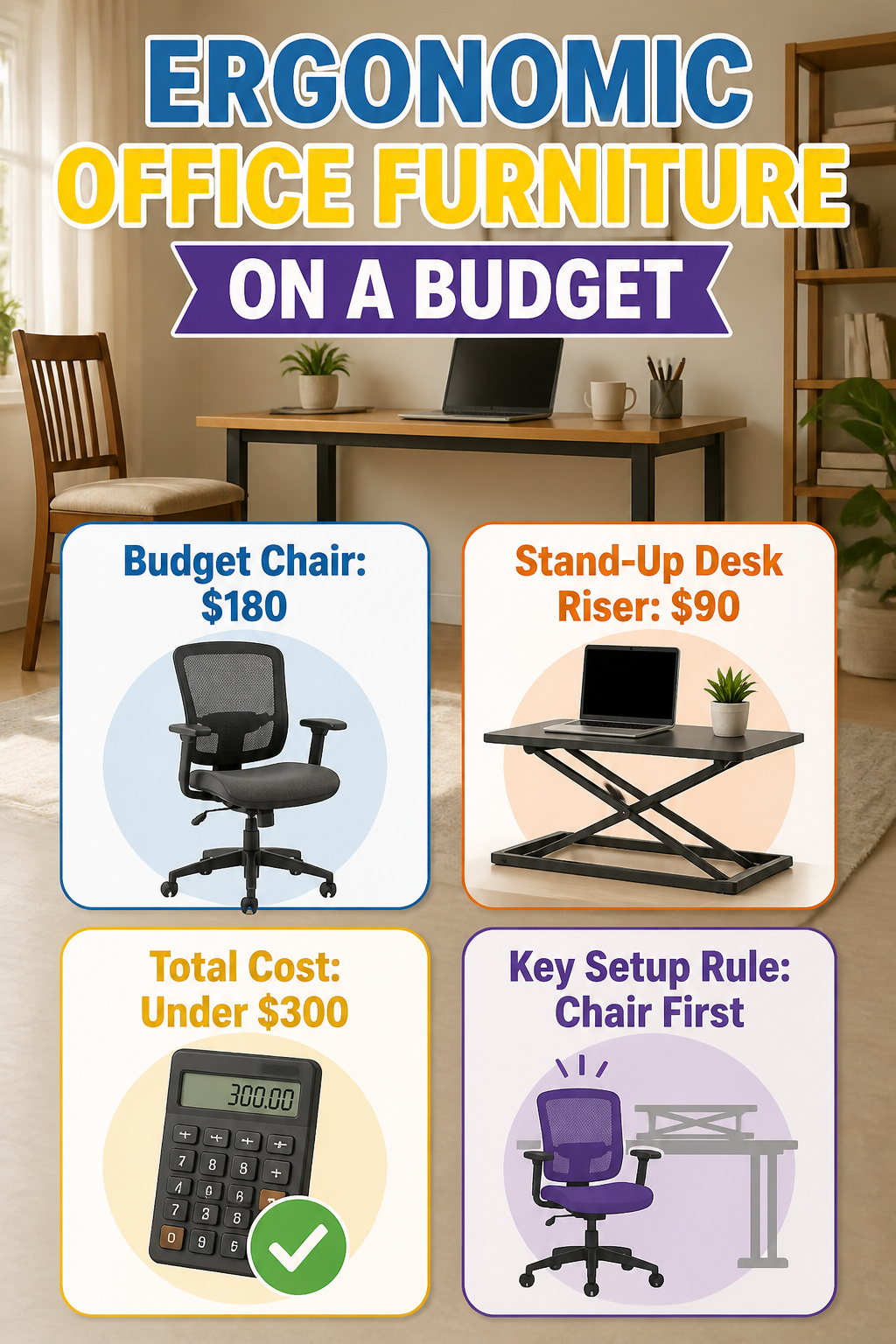
My back pain started six months into working from a dining chair at a desk that was two inches too high. The fix cost less than a single visit to a chiropractor. Chair first: that is the order that actually matters. A sit-stand desk running $1,200 paired with a chair that forces your shoulders up or in is mostly a waste of money, and the sources that push standing desks as the headline rarely say this loud enough.
I found a mesh-back chair with adjustable seat height and armrests for $180. Mesh breathes better than solid foam during long sessions, which I noticed the first humid August week. The seat height adjusts so both feet plant flat, and the armrests sit level without hiking my shoulders toward my ears. Screen at eye level, keyboard at elbow height: most workstations get both wrong because nobody showed the person sitting there that the knobs move.
For the desk, I skipped the electric motor entirely. A desk riser, the mechanical platform that sits on top of a standard surface, cost $90 used. It gives the option to shift between sitting and standing, which breaks the physical monotony; that shift, not standing all day, is where the benefit lives. Total outlay: under $300, and the back problems that had me searching "workspace designs" at midnight are gone because the setup got optimized past day one.
Sustainable Materials I Actually Found
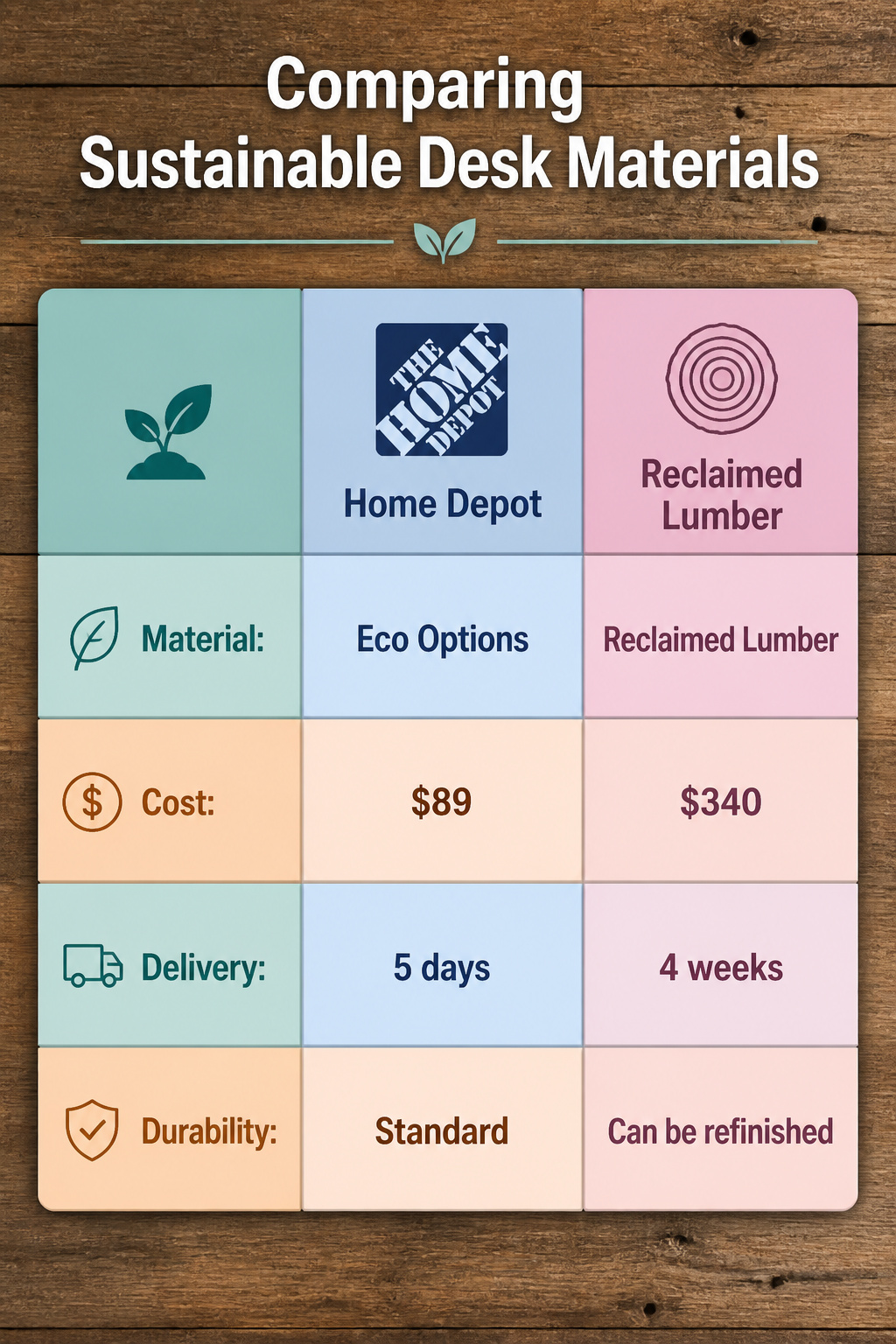
"Sustainable" at a big-box store usually means recycled content or FSC-certified wood, and the markup is modest, maybe ten to fifteen percent over the standard line. Specialty suppliers will sell you fully traceable bamboo ply or reclaimed lumber with a chain of custody, but the price gap can hit three to four times once shipping and small-batch labor get folded in. I spent a weekend comparing two desk tops with nearly identical grain: one from Home Depot’s Eco Options program, one from a regional reclaimed dealer. The Home Depot piece arrived in five days, had a few filler patches I could live with, and cost $89. The reclaimed piece took four weeks, had nail holes I ended up loving, and ran $340. For a renter who might move in two years, the math is obvious. For someone building a permanent setup, the reclaimed desk ages better and can be refinished instead of replaced. The real trade-off is time and certainty, not just money. Big-box stock is predictable; specialty stock has stories but also variability you have to design around. My call: put the specialty money where you touch it daily, the desk surface or the chair seat, and let the shelving be the sustainable-ish stuff from the nearest hardware store.
What I Do for Well-being
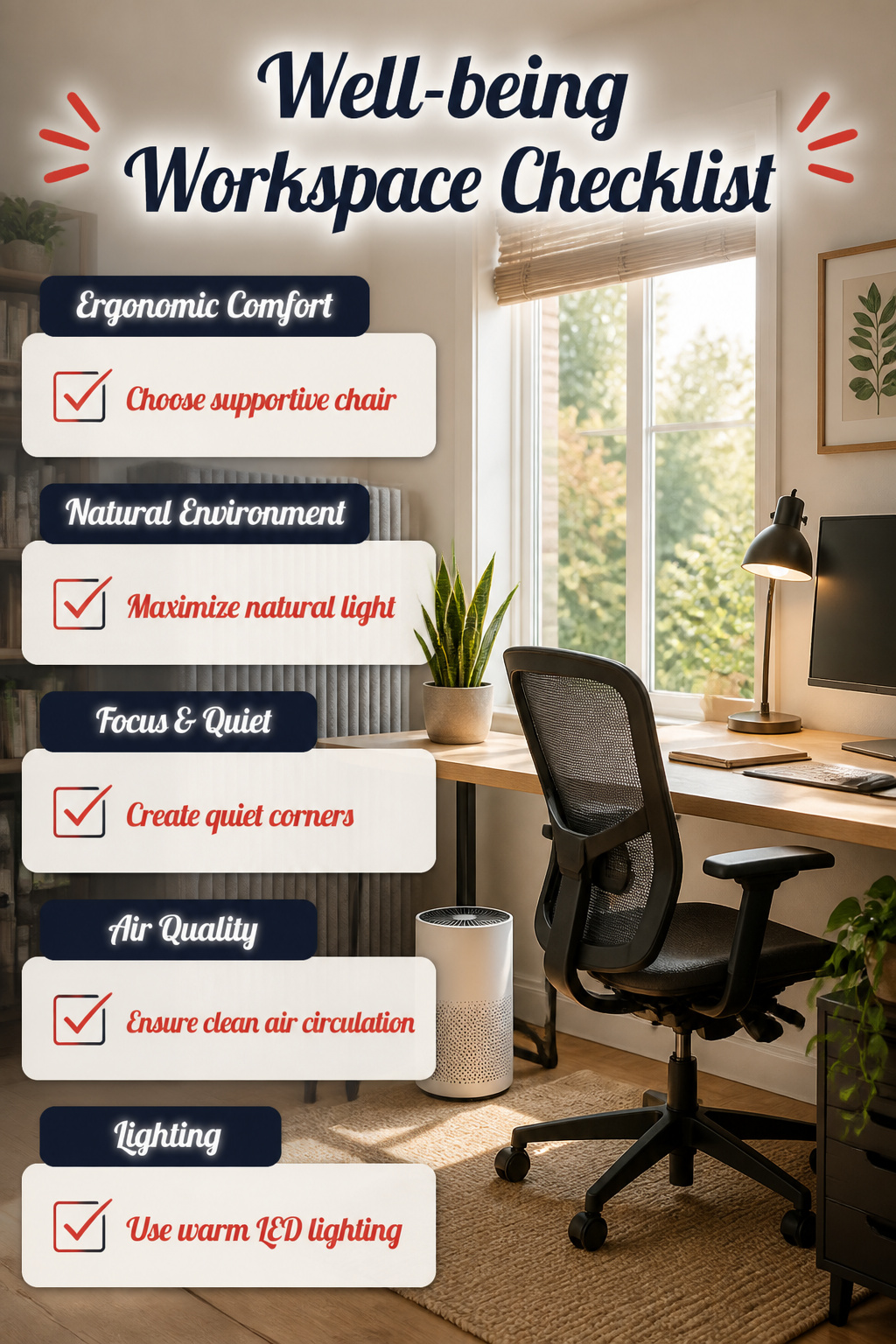
The chair I bought for my first desk was an ergonomic-looking thing from a big-box store that cost about what a nice dinner out runs. Within a month my lower back let me know I’d chosen style over structure. For seating that actually supports a full workday, budget around the same $30 to $60 you’d drop on a statement plant and watch for seat depth that keeps your hips slightly above your knees. That single adjustment matters more than lumbar marketing.
Natural light should hit the workspace before any fixture gets switched on. When I planned my own office refresh, I started by tracking which wall got morning sun, then positioned the desk to catch it without glare on the monitor. The biophilic section covers plants and materials; here the point is placement. A snake plant on that sunlit desk tolerates the light, filters air, and gives your eyes somewhere soft to land between screen sessions.
Quiet corners for focused work don’t need built-in walls. A pair of noise-reducing panels or even a repositioned bookshelf can break the visual and acoustic flow enough to signal "focus here." Clean air circulation pairs with this: a small purifier in that zone, or simply keeping the door cracked to let the room breathe, keeps the CO2 level from climbing to afternoon-fog territory.
Warm LED lighting fills in when daylight fades. The lighting section gets into mixing types; my own rule is one warm desk lamp that comes on at the same hour every evening, so the transition feels intentional rather than desperate.
Frequently Asked Questions
What are the best layout ideas for a small business office?
Smart zoning, modular workstations, and multi-use areas keep small offices organized and efficient. Quiet desks need physical separation from collaboration zones, and movable partitions let the same square footage serve multiple purposes as the day shifts. Carpeting under quiet areas dampens sound, while harder surfaces in creative zones handle more motion.
How can small offices incorporate wellness design without huge cost?
Indoor plants, natural textures, clean air circulation, and comfortable seating improve well-being for little money. A snake plant tolerates low light and costs less than a nice dinner out; a jute or wool rug and a wooden desk surface compound the grounded feeling. Warm LED lighting fills in when daylight fades, and simply keeping a door cracked helps the room breathe.
What furniture types work best in flexible small business workspaces?
Modular desks, mobile partitions, ergonomic chairs, and storage benches create adaptable layouts. Convertible desks with drop-leaf or accordion mechanisms cost no more than fixed desks and save square footage; storage benches built from cube shelving hold files underneath and seat people on top. The real limit is weight: if you cannot move it alone while holding coffee, it is not flexible furniture.
Why should a small business hire a commercial interior designer?
Designers bring expertise in space planning, compliance, technical integration, and execution that helps avoid costly mistakes. They deliver a polished, functional workspace without the trial-and-error a business owner pays for in lost time and repainted walls. For most small offices, though, the article’s methods let you plan the space yourself once you know the priorities: zoning first, then furniture, then brand accents.