
A white living room sofa is the most adaptable large purchase you can make, but only if the proportions and construction match how you actually live. The oversized cushion styles starting around $1,665 need 40 inches of depth and open floor space to read intentional rather than abandoned. Get that wrong and even the right shade of white sits like a showroom mistake.
Soft Minimal, Big Impact
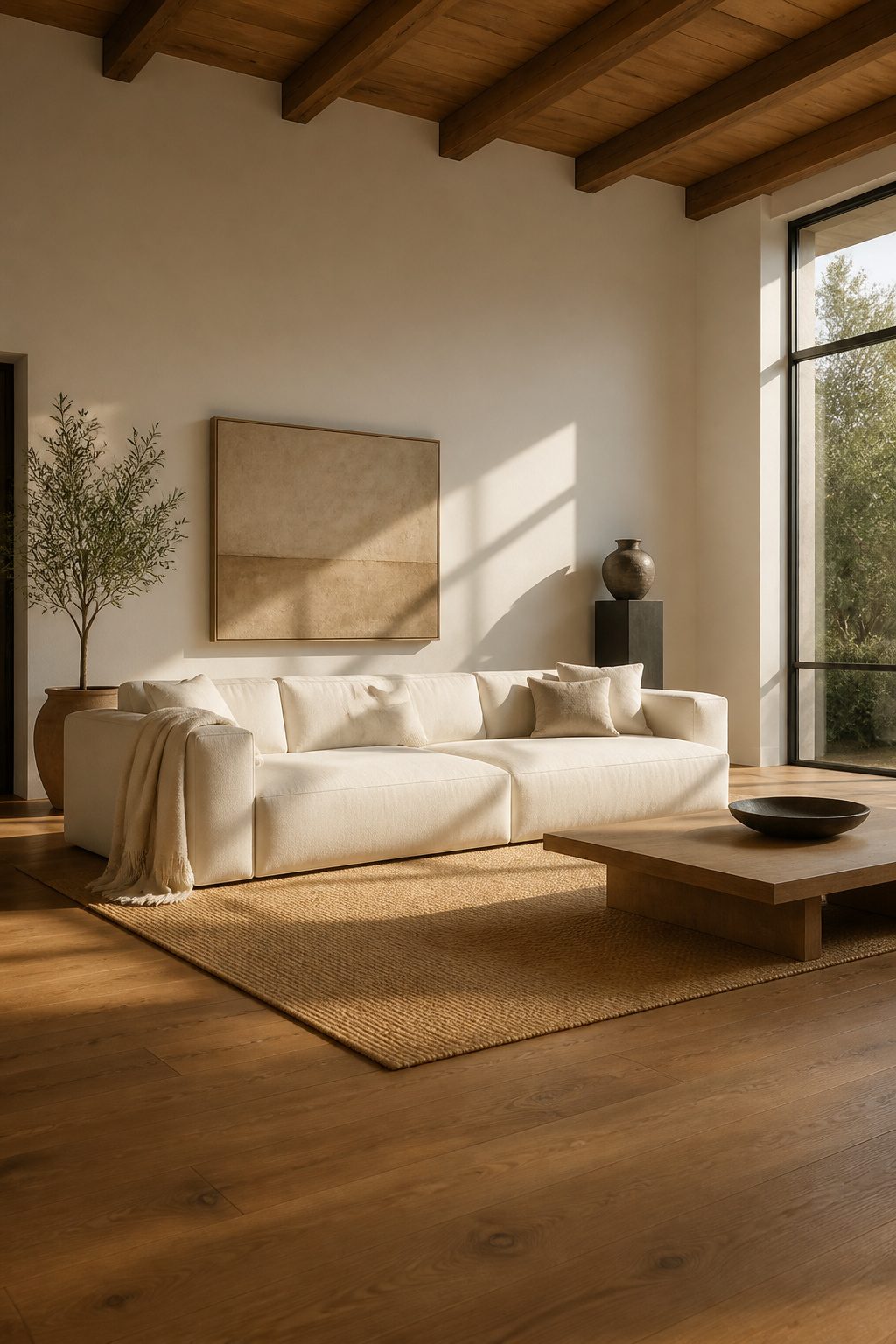
The oversized cushion look only works if the proportions actually fit your room. A low-profile frame with cushions that read as one continuous surface needs breathing room on all sides; cram it against a wall and it starts looking like a mattress store display. What saves the style from feeling bare is the weight of the piece itself. The clean lines read as intentional when the sofa has real depth, 40 inches or more, so someone sitting on it feels tucked in rather than perched on top.
Warm floors help. The white stays soft against oak or walnut, and the contrast keeps the room from going clinical. A thin rug underneath can tip it into showroom territory; better to let the wood do the work.
Price reality for this look starts around $1,665 for a complete set if you catch a sale, though most of what I saw sat between $2,700 and $3,700. The jump past $6,000 buys better fabric and joinery you will notice after year three, not year one. For a weekend-project budget, the lower half of that range is where the clean-line sofas live.
Classic White, Elevated
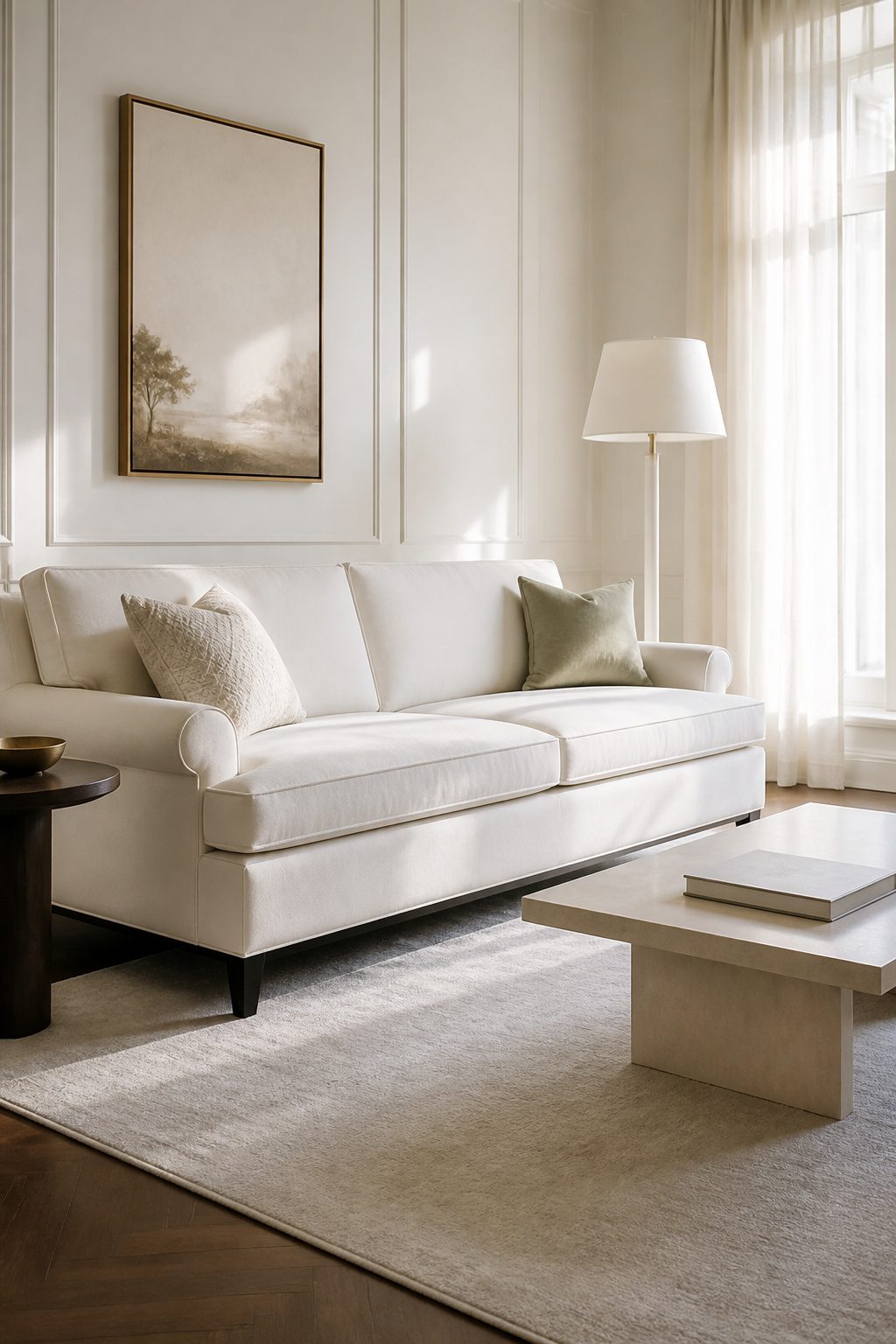
A tailored white sofa keeps its form through the arms and back, not through stiffness you are afraid to touch. The silhouette that works here is tight: a straight back, arms that are rolled but low, and cushions that sit within the frame rather than sprawling past it. Fabric matters as much as shape. A tight-weave cotton or a linen blend with some synthetic content holds the line of the tailoring and resists the sag that makes a formal piece look abandoned after six months of Netflix.
I have watched a crisp white sectional go from "company ready" to "lived in" inside a single winter, and the difference was the wall behind it. Pairing the sofa with simple panel molding or even just a clean, pale color above keeps the room feeling finished without adding objects you will dust. The sculptural lighting the sources mention, a single soft pendant or a pair of curved floor lamps, does more work than a coffee table stacked with books you never open.
The aging is the real test. A tailored white sofa in daily use will soften at the edges, not collapse. The seat loosens slightly, the arms pick up a faint polish from sleeves and elbows, and that is the point where most people panic and over-clean. The better move is to let it age into itself. A sofa that starts rigid and ends only slightly relaxed reads as expensive; one that starts relaxed and ends shapeless reads as a mistake you are still paying for.
Cozy Loft Energy
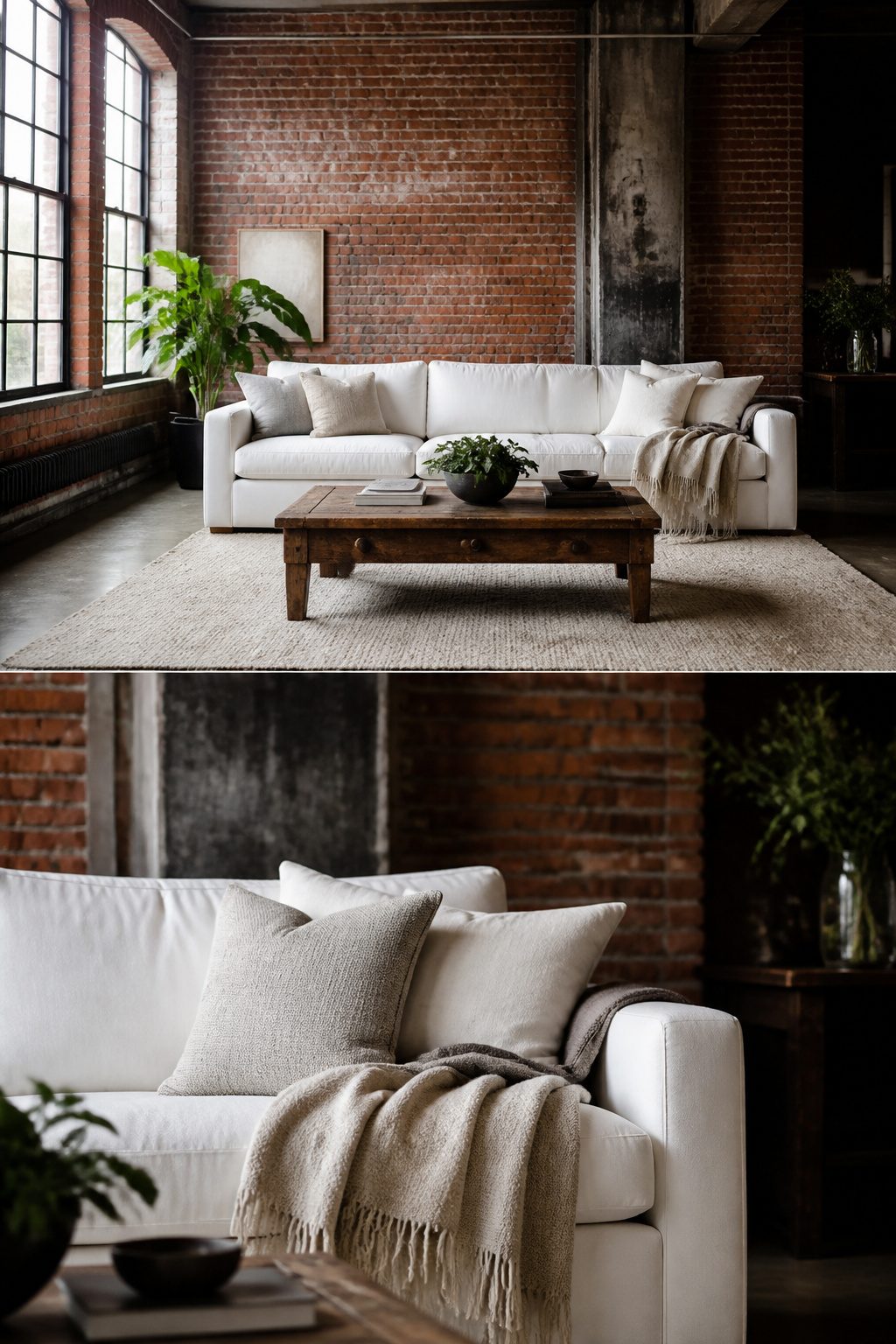
Exposed brick and a soft white sofa are the pairing that makes a loft feel livable instead of like a showroom. The brick gives the room its bones; the sofa gives it somewhere you actually want to sit. I have seen this combination work in spaces where the metal ductwork and concrete floors could have felt cold, and the white upholstery was what tipped it toward comfortable.
White works here where gray or brown would fall flat because it reads as deliberate contrast rather than matching the industrial palette. Gray sofas sink into concrete floors. Brown leather competes with warm brick and ends up muddy. White sits apart, bright against the rough texture, and catches whatever natural light the tall windows let in. The result is casual but considered, the kind of room that looks lived-in because it is.
Family-Friendly Neutral
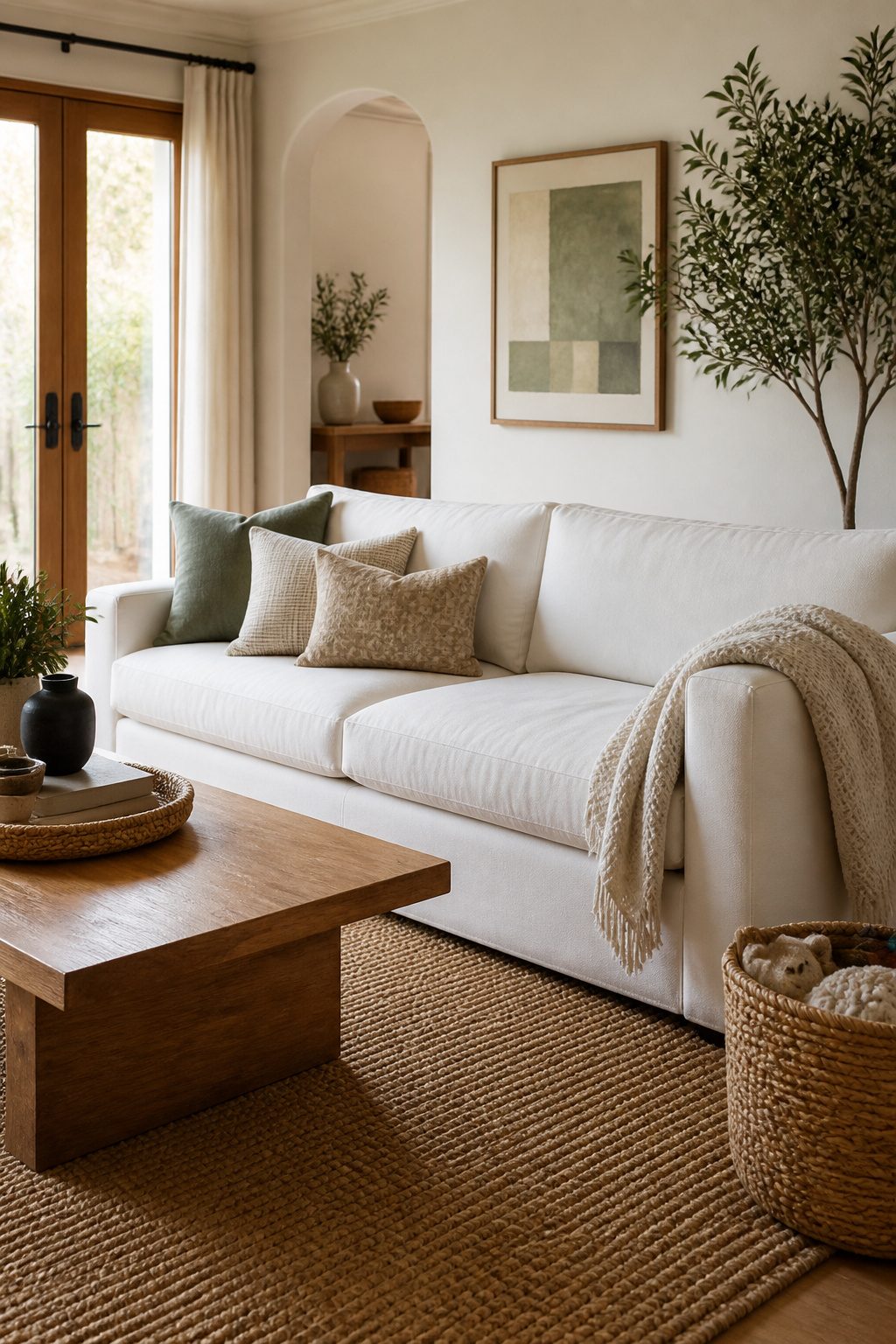
The white sofa my sister bought after her second kid looked nothing like the showroom floor model within six months. Stain-resistant upholstery treatments bought her the time to wipe up juice before it set, but the real difference was the weave: a tight, flat basketweave hid the life happening on it far better than the plush velvet she had originally wanted. Construction mattered more than the color. A kiln-dried hardwood frame and eight-way hand-tied springs held their shape through three years of fort-building and dog jumps; the sofa that sagged was always the one with a plywood frame and webbing that looked fine in the staged photo. Woven rugs and soft throws did the heavy lifting in her room, layering texture so the white never read as precious or off-limits. The gap between how a white sofa photographs and how it lives is mostly about pile height and fiber density. Low, tight upholstery survives; high, loose pile photographs like a cloud and collects like a lint trap.
Warm Modern Balance
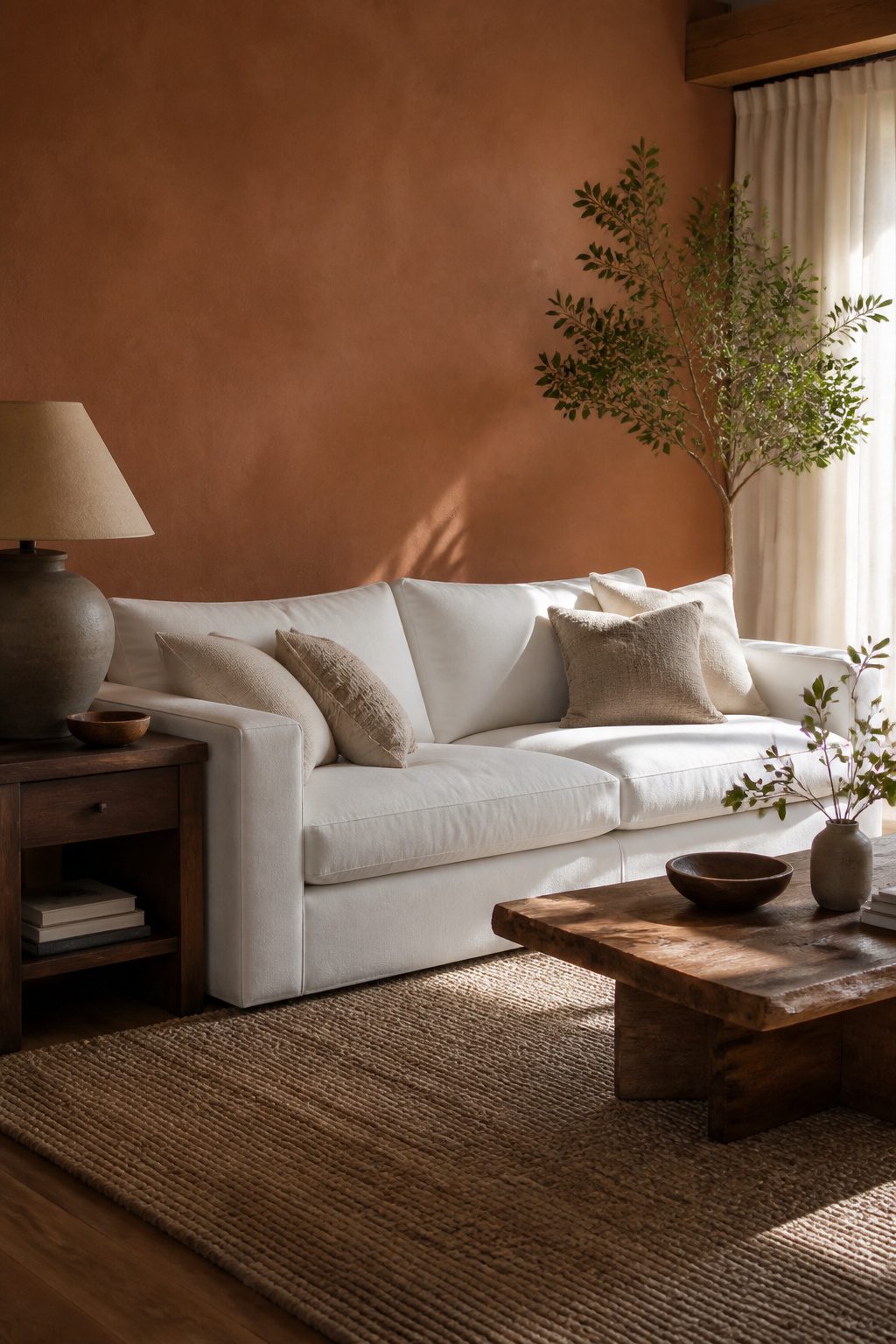
A white sofa can read as sterile fast if the room around it stays too cool. The living room that gets this right keeps the modern lines but softens them with wood tones that carry a little amber in them, not the pale ash that reads as gray under LED bulbs. Think walnut side tables, oak shelving with visible grain, or even a single teak bowl on the coffee table. The organic shape matters as much as the species; a rounded stool or a live-edge piece breaks the straight geometry before the room starts feeling like a showroom.
Textile choice is where the warmth actually lands. Linen in a natural oatmeal tone on a throw pillow reads warmer than bright white cotton, even if both are technically neutrals. A low-pile wool rug with some variation in its weave catches light differently than a flat synthetic, and that unevenness is what makes the space feel lived in rather than staged.
The surrounding color should stay muted. Terracotta, sage, or a dusty mustard on a single wall or in framed prints keeps the palette earthy without fighting the sofa for attention. The finished room looks like someone already settled in: modern enough to photograph well, but with enough movement in the materials that you would not hesitate to put your feet up.
Clean Lines, Soft Layers
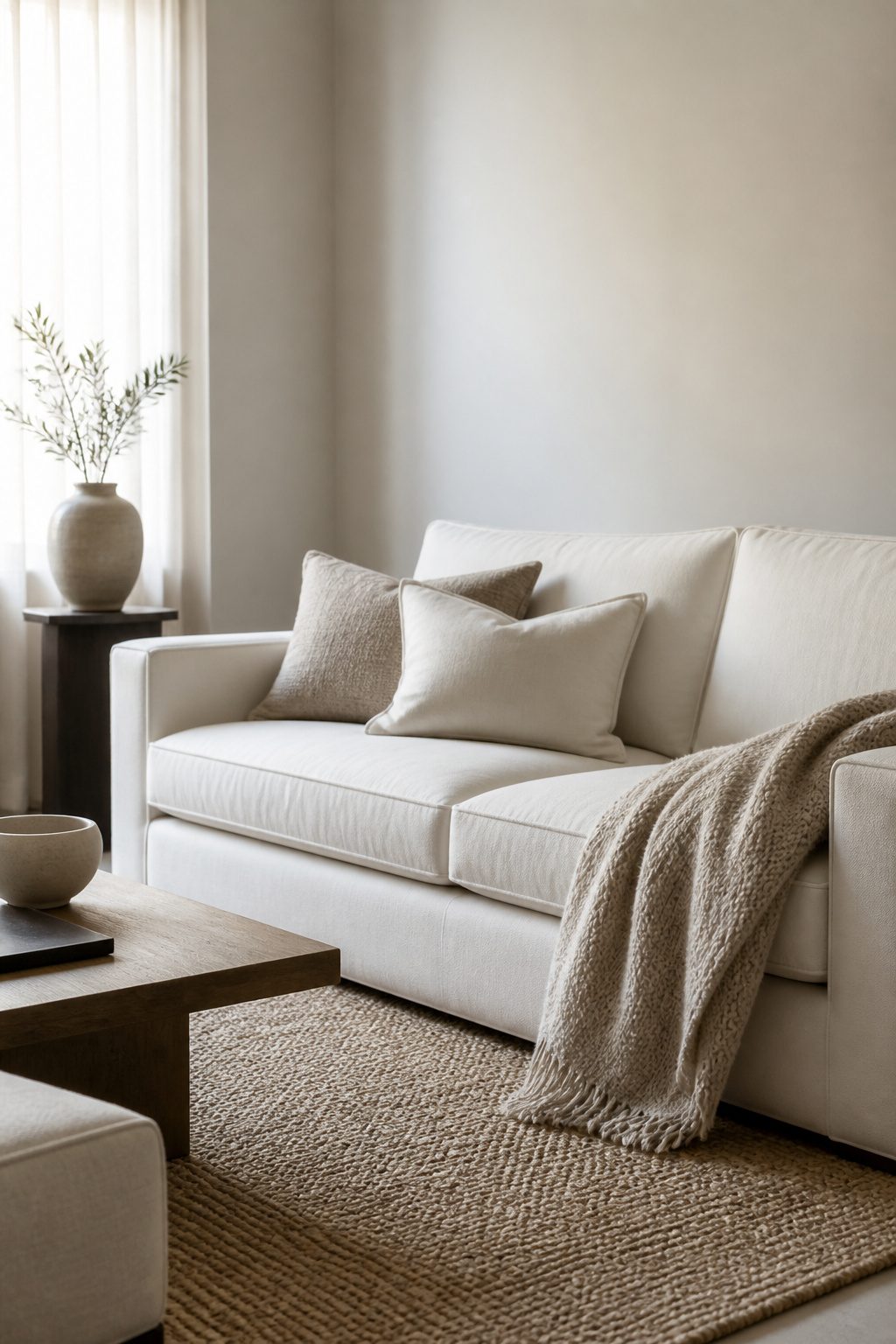
A white sofa with a sharp, structured frame reads as architecture first and furniture second. The trick is keeping that clarity while the room still feels lived in. I start with the sofa itself: a clean-lined shape in white upholstery already carries enough visual weight that heavy pattern on top of it just competes. Solid throws in a nubby weave or a low-pile mohair do more for the seat than printed fabric ever would.
Layering happens at the edges, not the center. A single throw draped over one arm and a pillow or two clustered in the corner keeps the silhouette open. The sources point to subtle tonal shifts and contrast in texture as what makes white interesting, not more white thrown on top. A oatmeal-colored linen pillow against the bright upholstery, a slightly darker rug underneath: the eye reads the difference in material, not color.
The balance tilts fast. Three pillows with different weaves start to look like a collection instead of a decision. Two, matched in size but not in fabric, usually covers it. The structured sofa gives the room its grammar; the plush pieces are just the inflection.
Everyday Modern Comfort
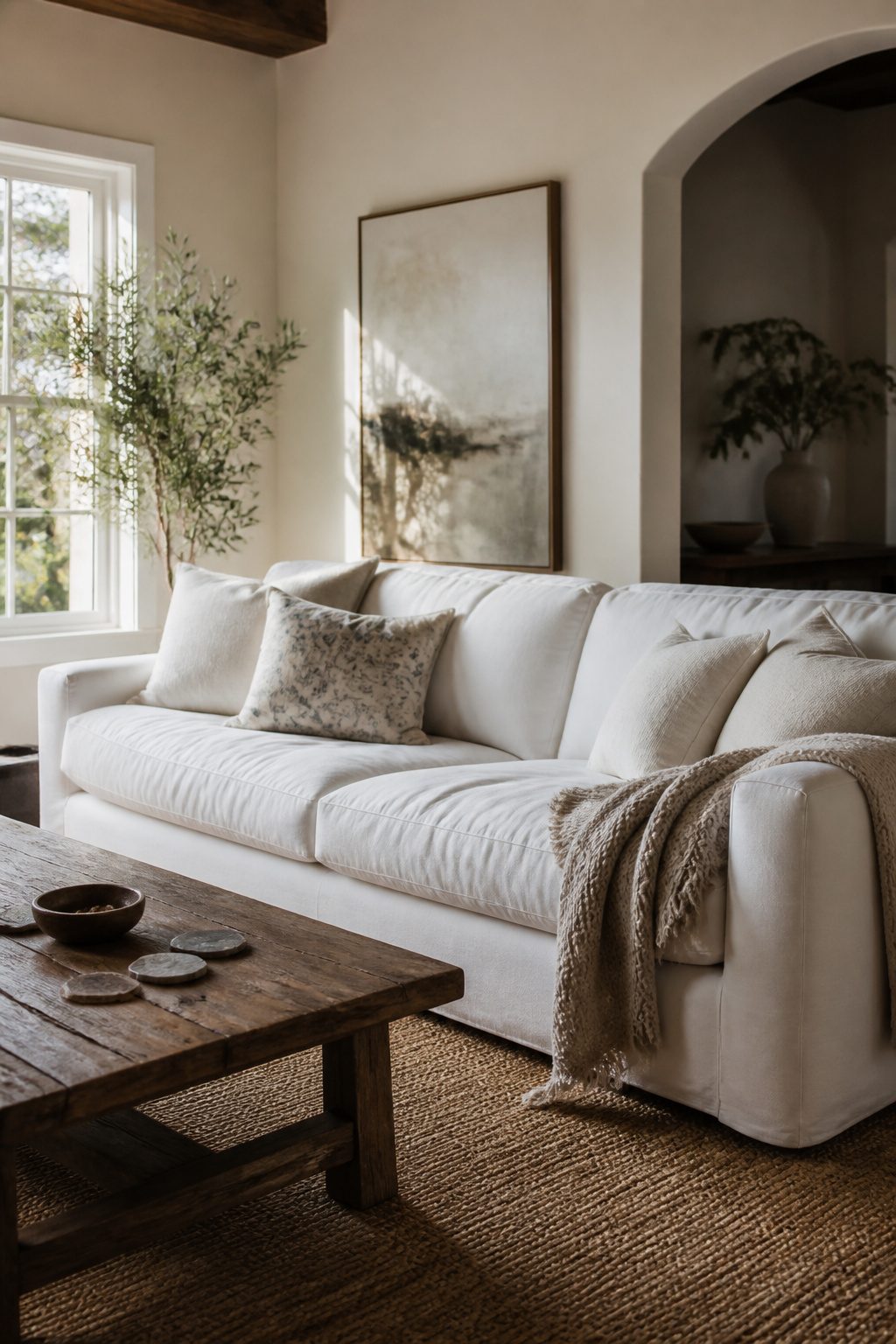
A white living room sofa built for daily use starts with depth. Anything under 36 inches looks tidy in a catalog but leaves your legs dangling after twenty minutes. I learned that the hard way with a 33-inch model that photographed beautifully and felt like a waiting-room bench by evening three.
Cushion fill matters more than fabric for how the sofa ages. All-foam cores hold their shape longest but can feel like sitting on a cooler. Down-wrapped poly is the compromise most people actually want: the foam keeps structure, the down layer adds give. Pure down looks luxurious in a showroom and requires constant fluffing to avoid looking like a deflated balloon by Tuesday.
Frame construction is harder to judge online. Kiln-dried hardwood costs more upfront but handles the stress of daily sitting without the joints loosening. Plywood frames save money and work fine for occasional use; in a house where the sofa sees four hours a day, the corners start to creak inside two years.
Livability also means cushion covers you can actually remove. Tight upholstery looks sleek until the first coffee incident. A zip-off seat cover turns a panic moment into a laundry afternoon.
Sculptural and Serene
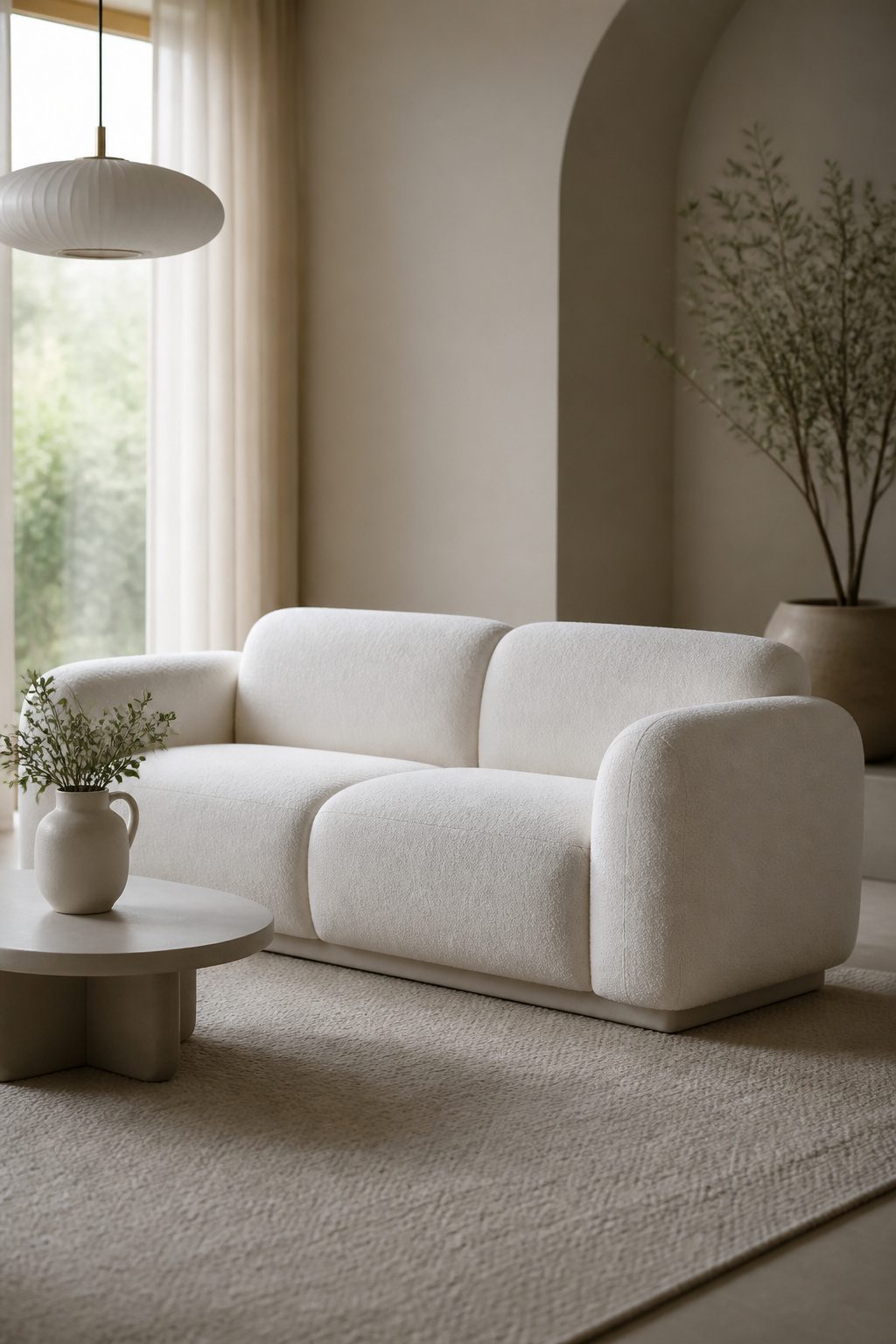
A white sofa with real sculptural presence reads as intentional the moment someone walks in. The symmetry and refined finishes around it matter as much as the piece itself; without that framing, the form can look like furniture that got lost on its way to a museum. I have seen rooms where the sofa was beautiful and basically unusable, the arms too high for leaning, the seat depth wrong for anything but sitting straight. The upholstery’s softness has to balance the formality, or the space turns cold despite the white. This works best when you have the floor space to let the sofa breathe from every angle, at least three feet clear on the sides that face the room. In a tighter layout, the sculptural quality fights the walls and the whole thing feels forced. The coastal version of this same calm, what Pure Salt Interiors does, eases the problem by blending the white sofa into natural textures and light, so the form matters less than the feeling. That is the easier path for most renters, and probably the smarter one if the sofa needs to survive actual weekends rather than just photograph well for them.
Relaxed Designer Ease
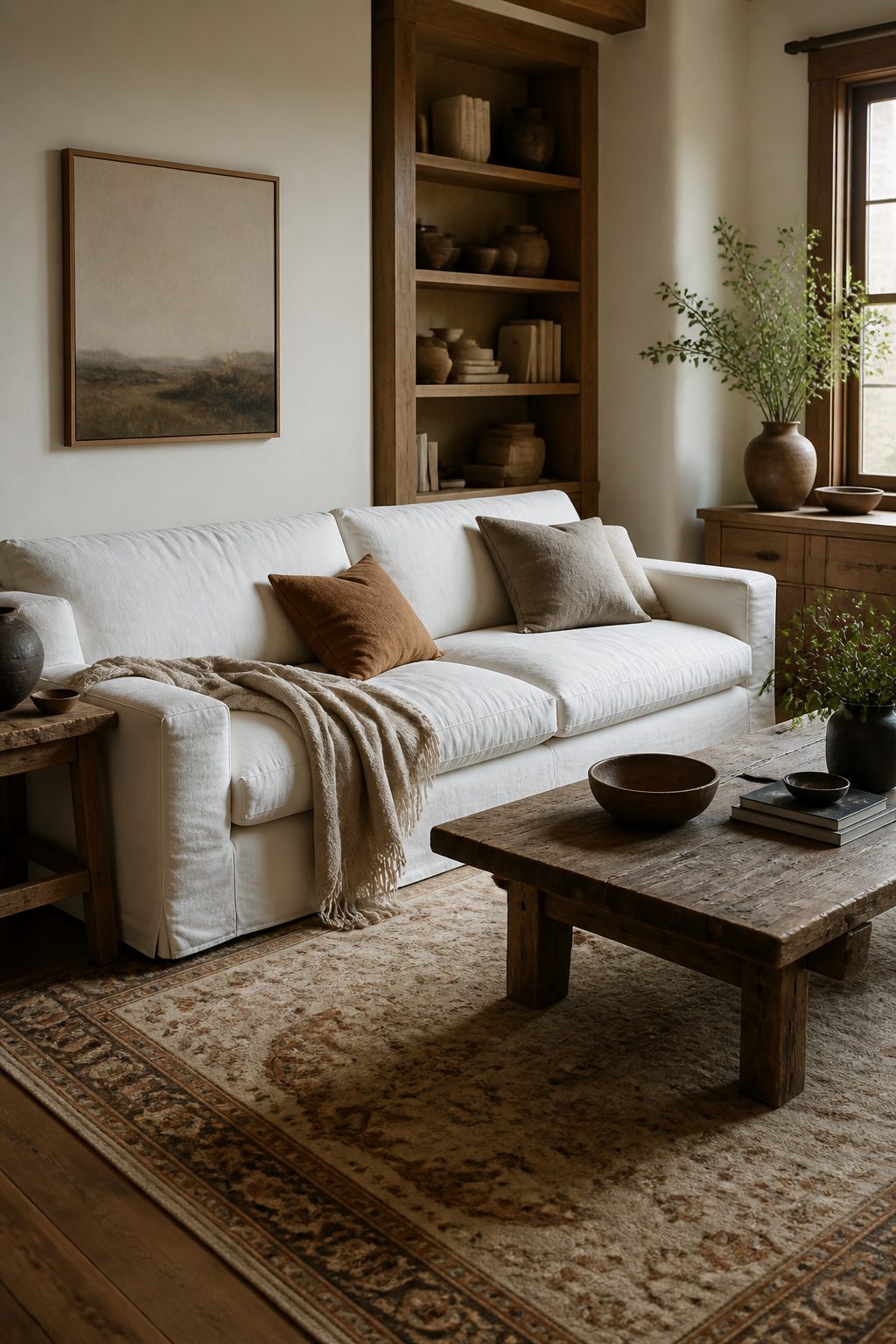
A white sofa with casual proportions sets the tone here, something low-armed and soft enough that you actually want to flop onto it. The look works when the surrounding pieces carry the story instead of matching perfectly. Warm woods, a vintage rug with some fade to it, and a throw that looks like it came from a closet rather than a styling cart give the room that collected-over-years feeling without the years of collecting.
I keep coming back to this balance after paging through too many living rooms that feel staged for a photograph instead of a nap. The Scandinavian approach gets close: clean lines, honest materials, a sofa that looks as good as it feels. But the relaxed version loosens the grip a little. Maybe the pillows don’t quite match. Maybe the coffee table has a water ring you’re not rushing to hide.
What separates the two is intention without precision. One room reads as designed for real life, lounging, hosting, probably a lazy Sunday afternoon nap. The other reads as trying to prove something. The white sofa simply adapts and belongs when you stop adjusting it every time someone sits down.
Timeless, Made Yours
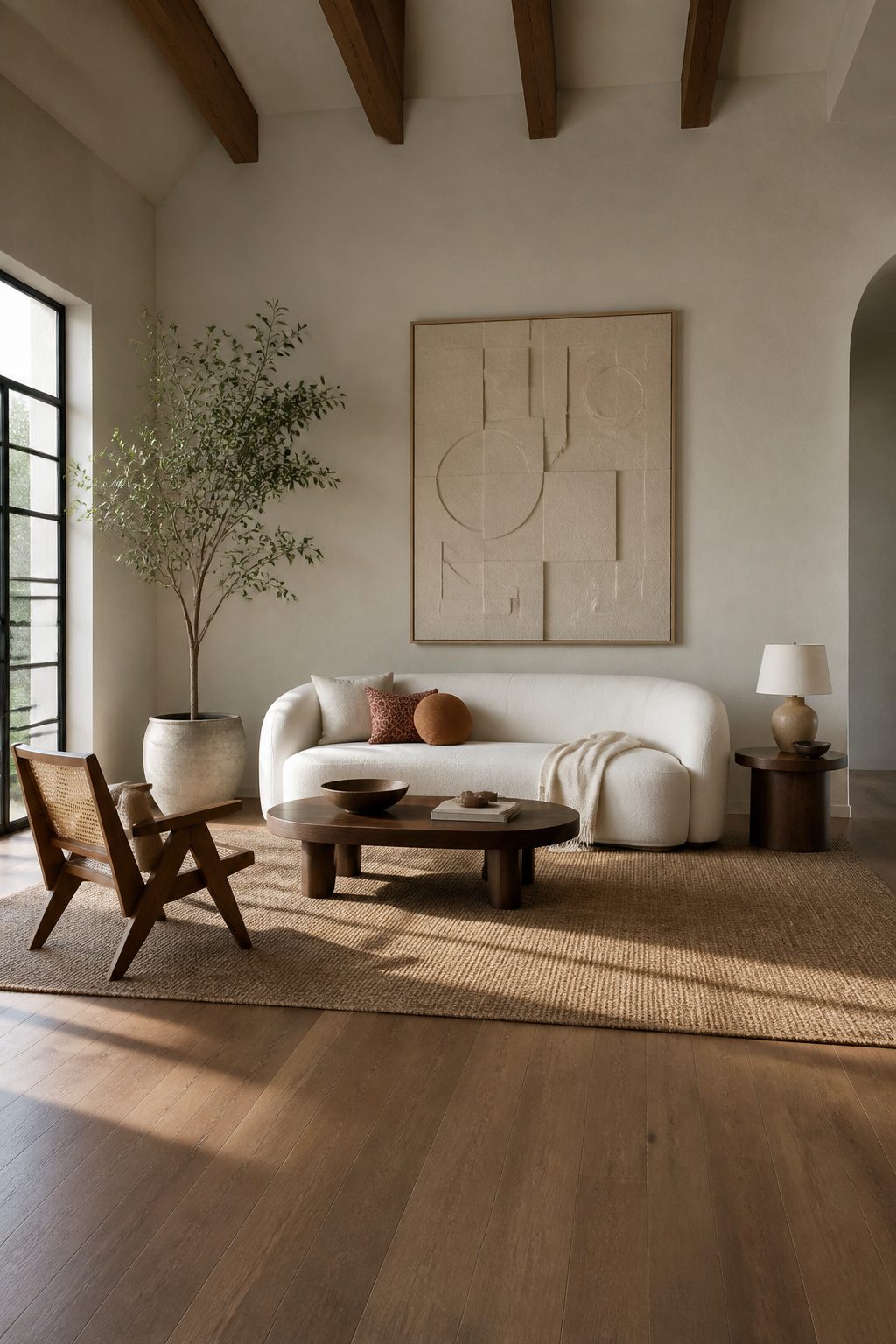
Rounded shapes and soft curves on a white sofa tend to outlast sharper silhouettes that anchor themselves to one decade. I noticed this while paging through enough living rooms to see the pattern: the white piece with gentle arms reads as a blank canvas, while the aggressively angled one fights every new pillow you throw at it.
White itself does the heavy lifting. A cream or true white shell accepts walnut side tables one year, black metal the next, without the clash you’d get from a sofa already carrying a strong color story. The neutral ground lets you shift wall color, swap rugs, or bring in a single loud chair without the room turning into a competition.
What separates flexible from merely safe is proportion. A seat depth around 24 inches works for lounging and for sitting upright with a laptop. Arms under six inches wide don’t dominate the floor plan in a small rental but still give you somewhere to rest an elbow. Those numbers matter more than any "transitional" label in the description.
The mistake I kept seeing was treating "timeless" as permission to buy boring. A curved white sofa with a low back still has personality; it just doesn’t date itself by shouting a trend. The soft curves let you change everything around it and still have the room feel intentional.
Soft English Calm
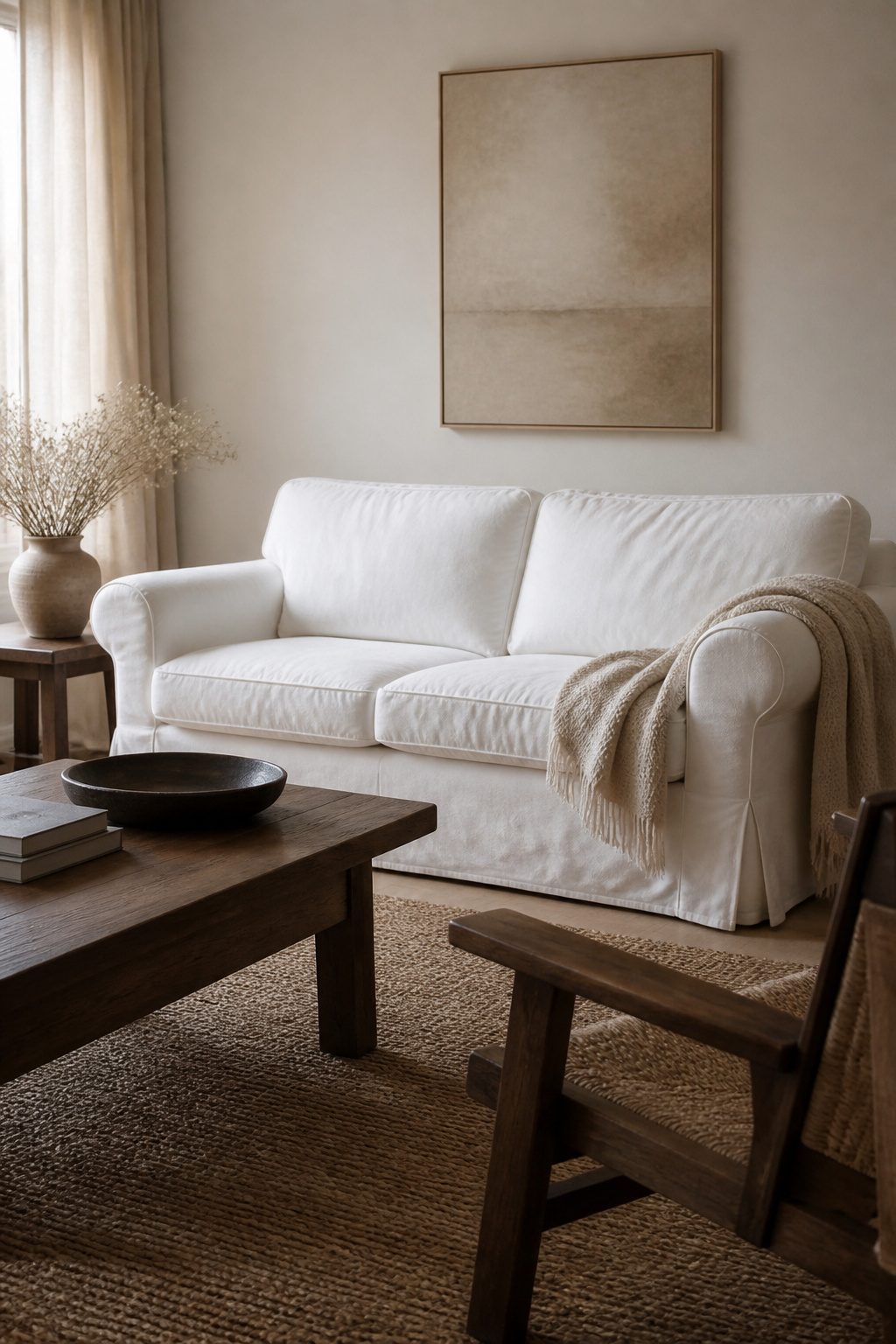
The white sofa that carries this English calm sits on a few specific choices. A rounded club arm, not a sharp track arm, is what softens the silhouette without letting it go sloppy. That curve matters more than the leg style, though a short skirt that just brushes the floor beats exposed legs for the relaxed half of the equation. I kept noticing this in the rooms that pulled it off: the tailoring shows up in the seat cushion being firm and the back cushion holding its shape, but the arm invites you to actually lean against it.
What separates this from formal traditional is the unstudied quality of the layers around it. The throw lands where someone left it. The pillow fabric is linen that wrinkles honestly, not velvet that demands smoothing. The sources kept pointing to that balance, and the ones that missed it looked either too stiff or too careless. The skirt choice is part of this too. A gathered skirt reads cottage; a straight skirt with a single shallow pleat at each corner reads English without trying for period drama. That distinction is worth getting right if you are ordering fabric and not buying off a showroom floor.
Bright and Effortlessly Coastal
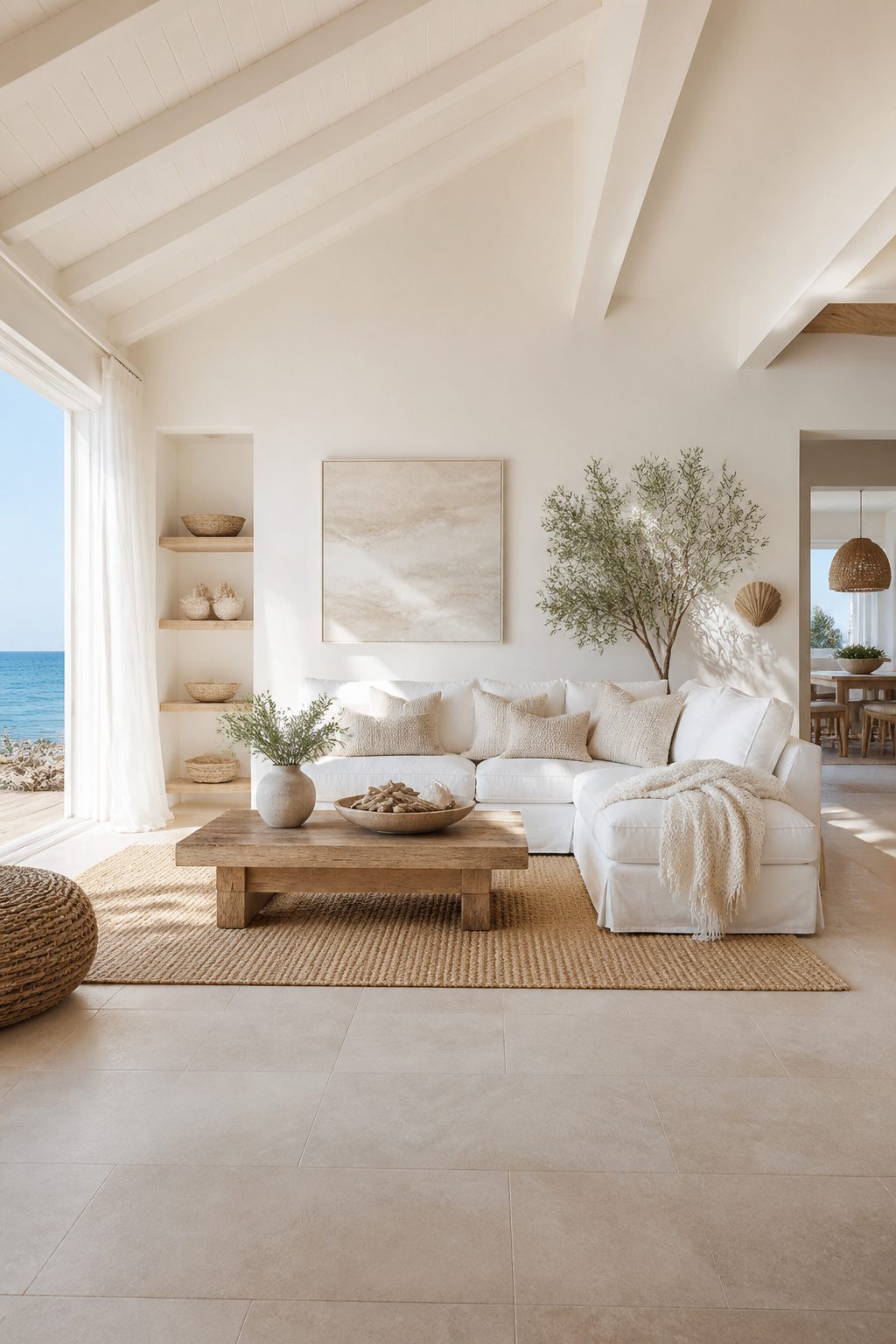
Crisp upholstery on a white sofa reads coastal only when the room around it earns the reference. The look works because natural light and texture do the heavy lifting, not anchors and rope prints. A breezy, coastal sensibility stays airy without feeling empty when you keep the palette restrained: white, sand, maybe a single muted blue if you must.
The line between borrowed coastal style and theme-park decor is thinner than most people think. What keeps it from tipping over is restraint in the accessories. Nothing loud, nothing forced. The white sofa blends seamlessly with light-filled surroundings and natural textures, and that quiet mix is what makes the space feel serene the longer you sit in it.
I have seen rooms where the homeowner clearly wanted that lifted, sunlit mood and instead landed on something that felt like a vacation rental lobby. The difference was usually one object too many: a driftwood candle holder that looked bought in a rush, or throw pillows with printed coral. Strip the coastal references back to texture and light, and the white sofa does the rest.
Cozy but Collected
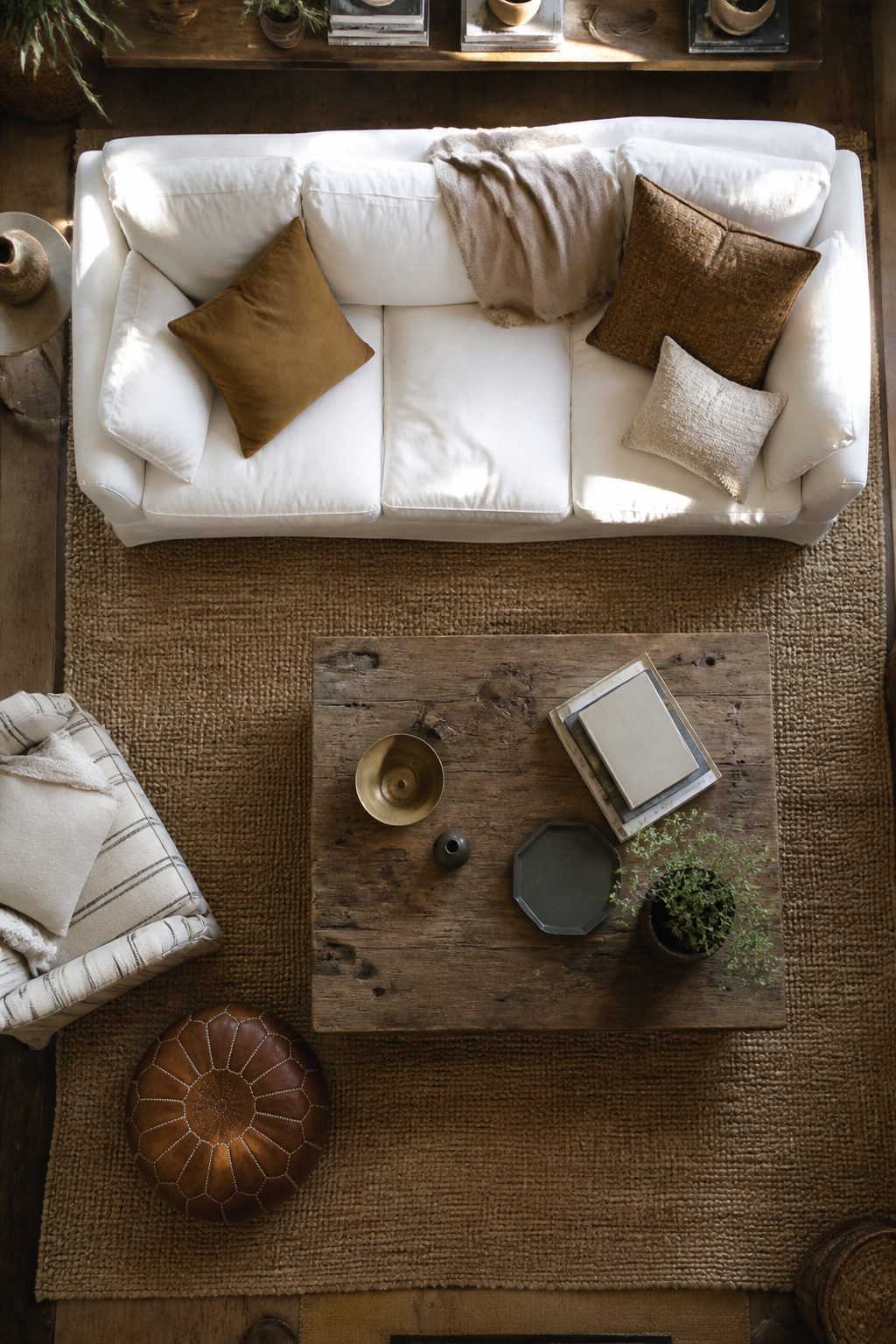
Generous seating reads as inviting only when the scale around it stays grounded. A white sofa that is too small for the wall behind it floats; too large and the room collapses into clutter. The sweet spot sits a few inches shy of the wall width on either side, leaving breathing room without looking stranded.
Earthy accents layered around the white base do the heavy lifting. Rich textures in the throw pillows, a worn-in rug underfoot, and warm wood tones on the side table keep the palette from drifting toward cold minimalism. The white sofa holds this together because it refuses to compete. It is the quiet constant that lets the collected pieces around it speak.
The "exhale" energy these rooms give off comes from proportion, not perfection. A little rustic mixed with something refined ages better than a staged look ever could. The white sofa wins here when it reads as lived-in from day one, not protected.
Thrifted Charm Meets Modern
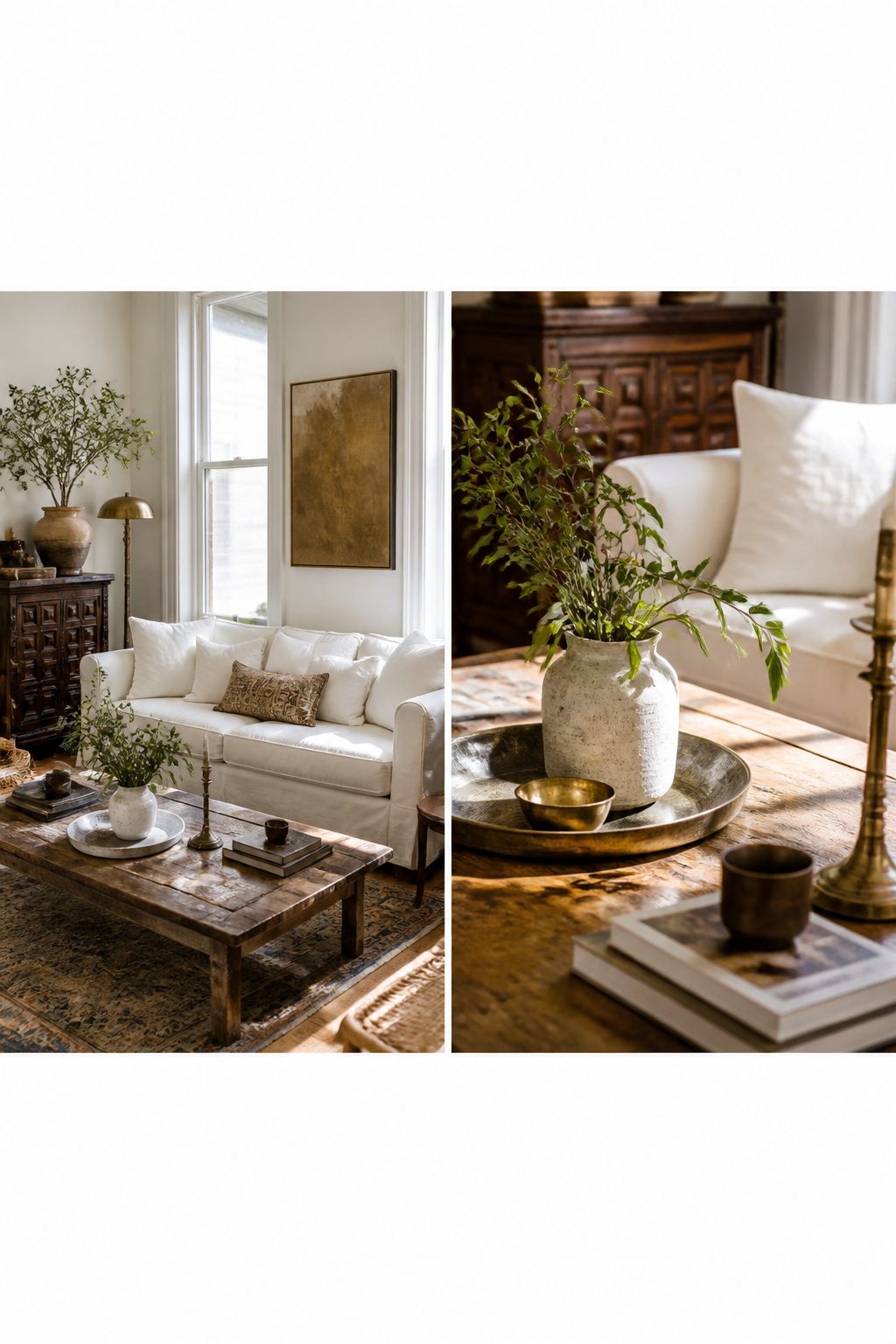
A white sofa sits at the center of the tension between old and new, and that is exactly why it works. The clean upholstery does not compete with a thrifted find; it steps back and lets the vintage piece carry the story. I have seen rooms where a carved wood cabinet or a tarnished brass lamp looked stranded against busy modern patterns, but against white, that same piece reads as intentional.
The friction points are real. Scale is the first one. Vintage furniture often runs smaller and lower than contemporary seating, so a white sofa with a slightly raised leg line keeps sightlines open rather than crowding the eye. Color temperature is the second. Old wood carries years of patina, and a stark, cool white can make it look muddy by comparison. A warmer white, something with a drop of cream in it, bridges the gap without either side looking like a compromise.
Texture matters more than era. A nubby old textile or a dented metal tray holds its own against smooth upholstery because the contrast is tactile, not chronological. The white sofa becomes the quiet ground that lets the thrifted piece sing, and the room ends up feeling curated rather than decorated. That soulfulness, the sense that nothing came from a single showroom, is what survives a real budget and a weekend hunt.
Grand Scale, Soft Touch
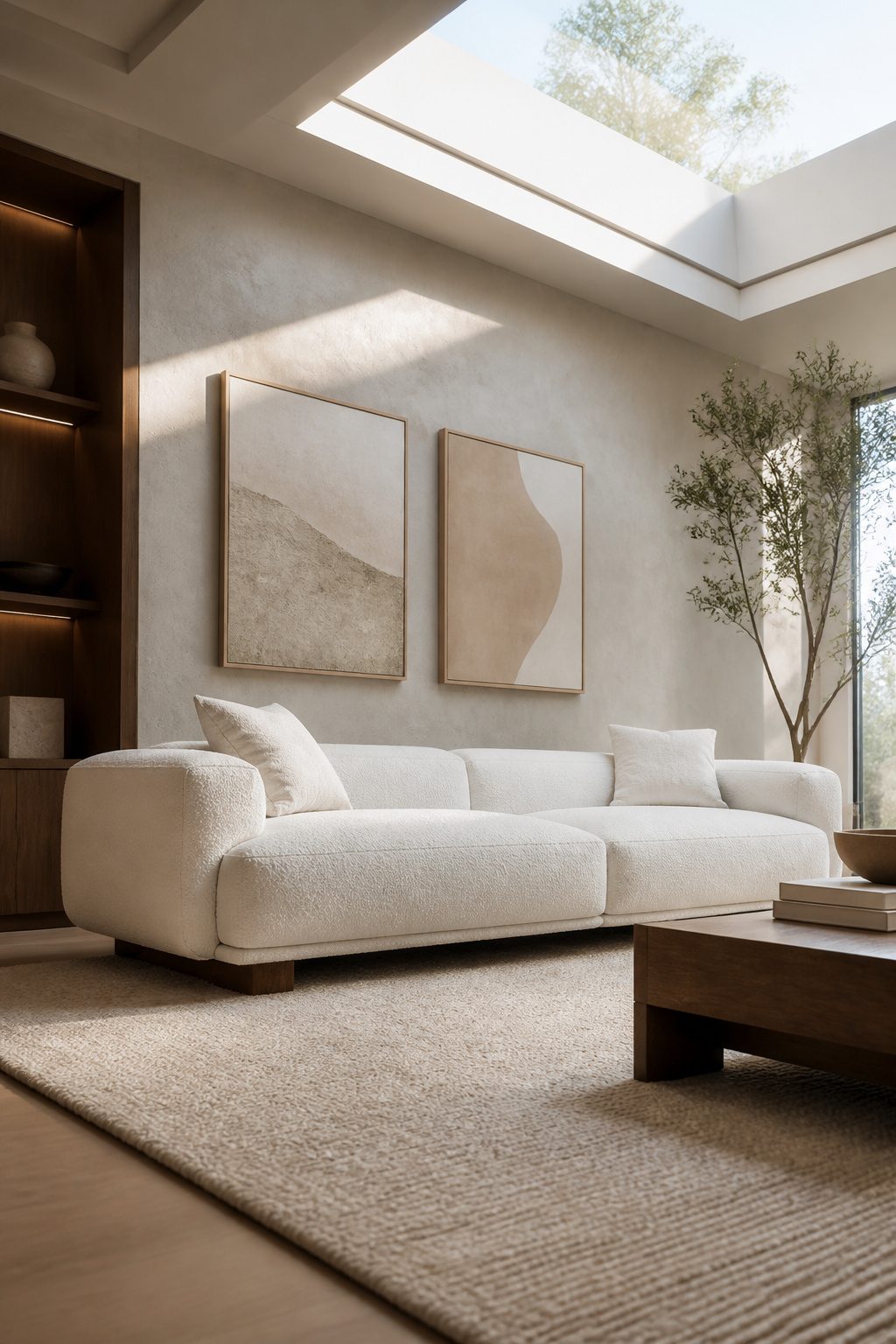
A white sofa at 96 inches or wider can swallow a room whole if the proportions are wrong. What keeps it livable is the upholstery: a bouclé or softly woven linen with a visible nap reads approachable where tight leather or high-sheen velvet would read showroom. I have seen the same footprint feel like a landing pad and like a museum piece, and the difference was almost always the fabric depth.
Scale becomes overwhelming when the seat depth passes 40 inches without a corresponding back height. The eye needs vertical structure to anchor all that horizontal mass. A lower profile works only if the arms are substantial enough to break up the expanse. Otherwise the piece starts to look like a mattress on a platform, and no throw pillow fixes that.
Warm wood or bronze-toned legs help too. They ground the white mass and keep it from floating. The soft upholstery and warm finishes are what let a grand sofa stay in daily use rather than becoming the room you walk past on the way to the kitchen.
Styling White Sofas Season to Season
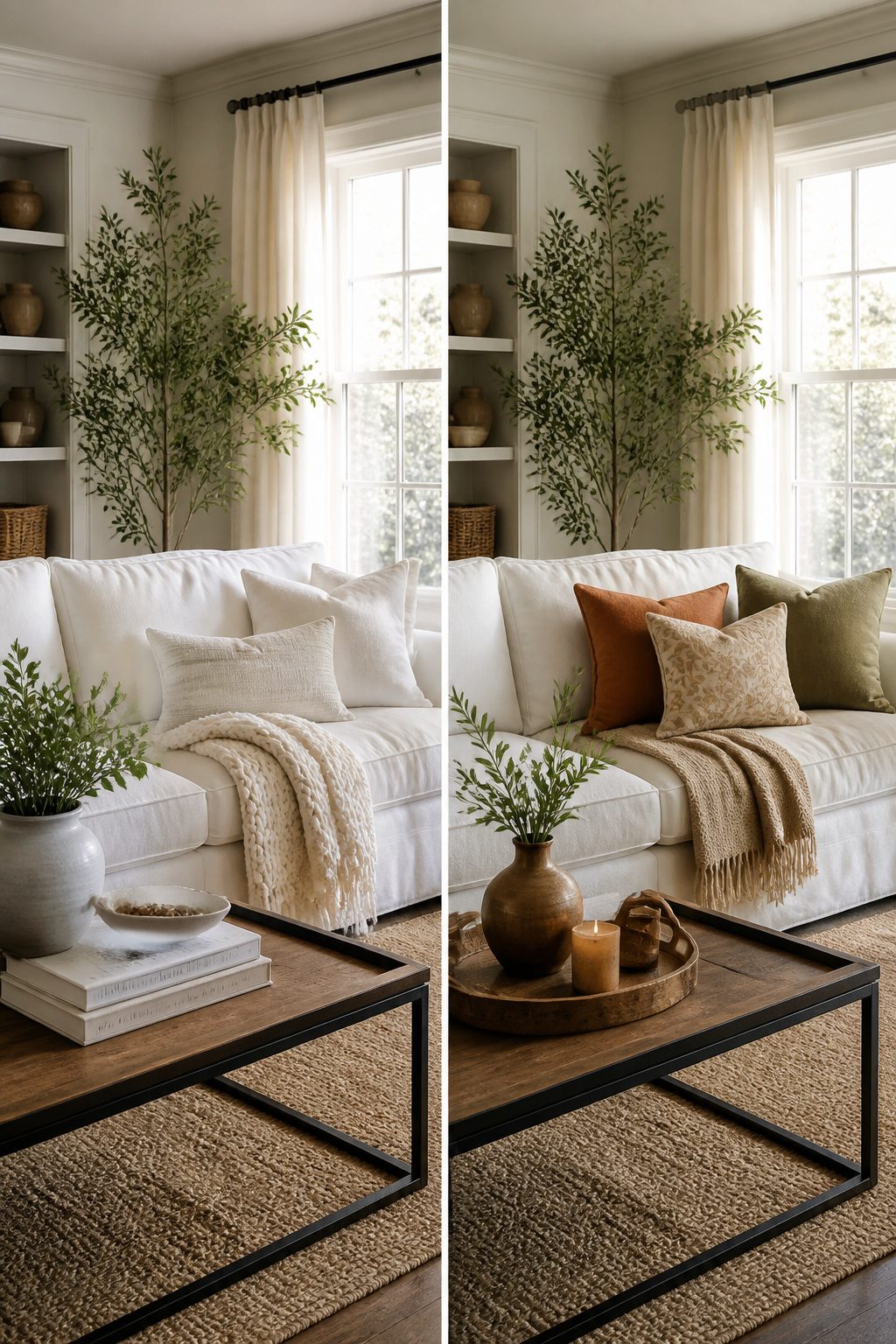
A white living room sofa earns its keep by staying quiet while everything around it talks. In January, mine carries a heavy knit throw in oatmeal and two pillows with a rust stripe that I found on clearance after the holidays. The texture does the work; the color just keeps the room from feeling sterile. By April, the same sofa wears linen covers in a faded blue that reads coastal without going full beach house. The switch takes twenty minutes and costs less than a single new side table.
The sources that rank for this all hit the same note: layered textures do the heavy lifting. Woven rugs, soft throws, and the kind of pillows that look like they were borrowed from somewhere else. A white base never fights the change. That is the practical argument for buying one in the first place, especially if your budget only stretches to one big piece this year.
What I skip: the themed seasonal overhaul. No pumpkin pillows in October, no flag-adjacent reds in July. The white sofa makes those choices look cheap because it shows the effort. Better to move a terracotta pot onto the coffee table and let the eye connect the color back to the couch. The sofa stays neutral, the room shifts around it, and the credit card stays in the drawer.
Keeping White Upholstery Clean
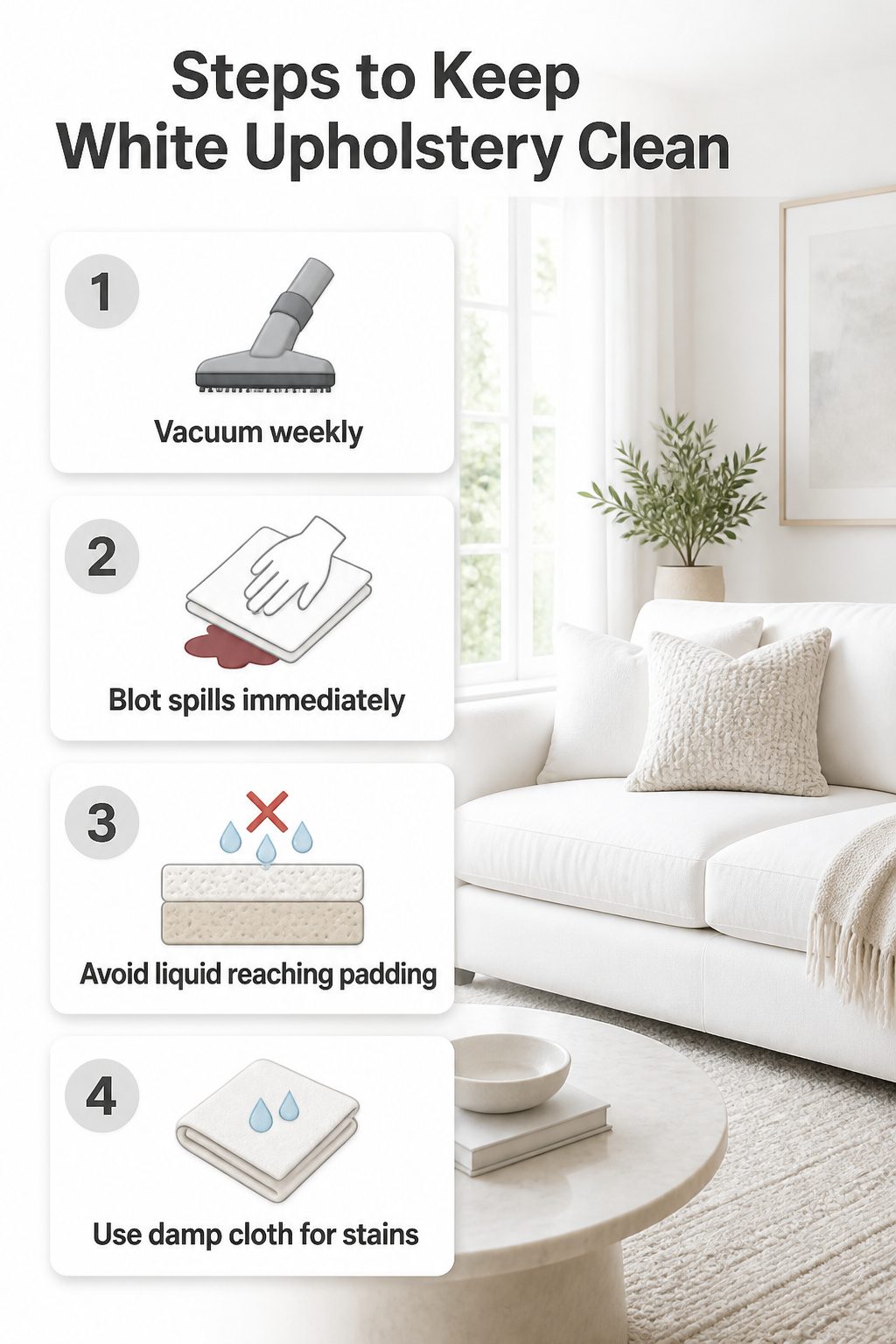
Most upholstery sold today arrives with a stain-resistant treatment already built in, which closes the gap between the fear of a white sofa and the actual work of keeping it. The routine is simpler than the reputation: vacuum the surface weekly with an upholstery attachment, and when a spill happens, blot it immediately before it sets. That second part is where the real damage happens, not in the slow fade of everyday dust. I have watched friends talk themselves out of white upholstery for years based on a hypothetical red-wine catastrophe, then move into homes with light-colored treated sofas and realize the maintenance was twenty minutes a week plus a damp cloth. The manufacturers have already done the heavy lifting; your job is quick spill response before the liquid reaches the padding, because once it does, the treatment cannot reverse it.
White Sofa, Any Room
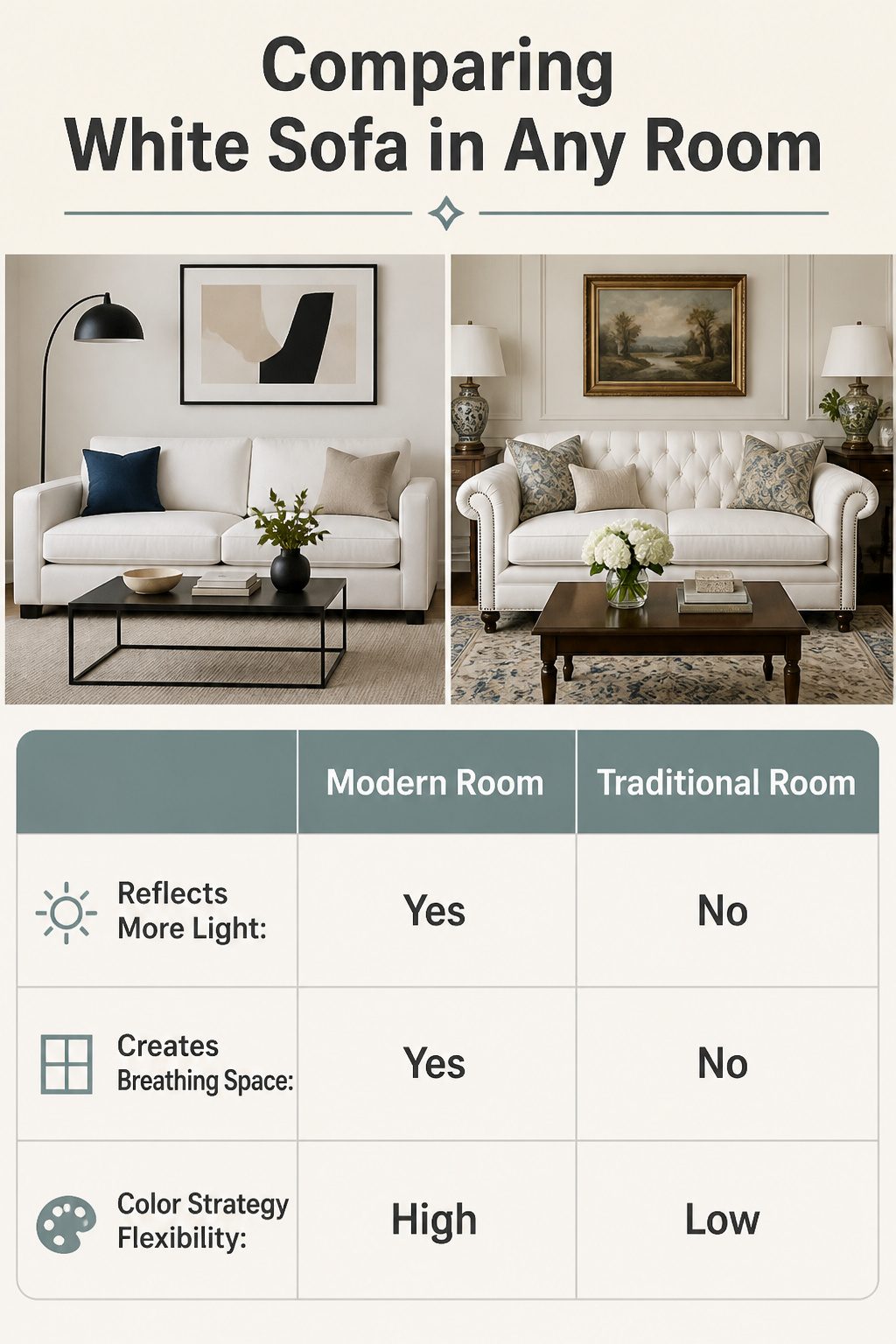
A white sofa reads as modern in a room with clean lines, then shifts traditional the moment you pair it with rolled arms and a tufted back. The same piece works coastal beside pale wood and rattan, or turns minimal under a single large print. That flexibility is why I keep coming back to it when friends ask for something that survives a move or a style change.
White reflects more light than any other upholstery choice, which matters in apartments with one window or north-facing walls. The eye reads the sofa as open space, so a room gains breathing room without knocking down drywall. I have seen a 78-inch sofa disappear less into a cramped living room than a charcoal one of the same size.
The real payoff is color strategy. White does not compete; it steps back and lets a rust throw, a navy pillow, or a single large fern do the visual work. In my own place, I swap accent colors seasonally without touching the largest, most expensive piece. The sofa stays; the mood changes around it.
Frequently Asked Questions
How do I keep my white sofa clean?
Most white upholstery sold today comes with a stain-resistant treatment already built in. The real maintenance is twenty minutes a week with an upholstery vacuum attachment, plus blotting spills immediately before liquid reaches the padding. Once a spill soaks through to the foam core, even the best treatment cannot reverse it.
What colors go well with a white sofa?
White acts as a blank canvas that pairs with any color without clashing, and it reflects more light than any other upholstery choice. For warmth, add walnut or oak tones, terracotta, sage, or dusty mustard. Coastal palettes stay restrained with sand and a single muted blue. The sofa stays neutral while the room shifts around it.
Are white sofas practical for families?
A white sofa survives family life when you choose the right construction and fabric. A tight, flat basketweave hides daily wear better than plush velvet, and stain-resistant treatments buy time to wipe up spills before they set. The frame matters most: kiln-dried hardwood and eight-way hand-tied springs hold shape through years of use, while plywood frames sag inside two years.