Painting a house white is a single-color project that lives or dies by the work nobody sees. The prep, the undertone, and the finish choice decide whether the result reads fresh or flat, and white’s complete lack of hiding power means every flaw you skipped becomes the main feature. Sherwin-Williams Alabaster SW 7008 is the forgiving warm option that works almost anywhere if you test it under your actual light first.
Choose the Right Shade
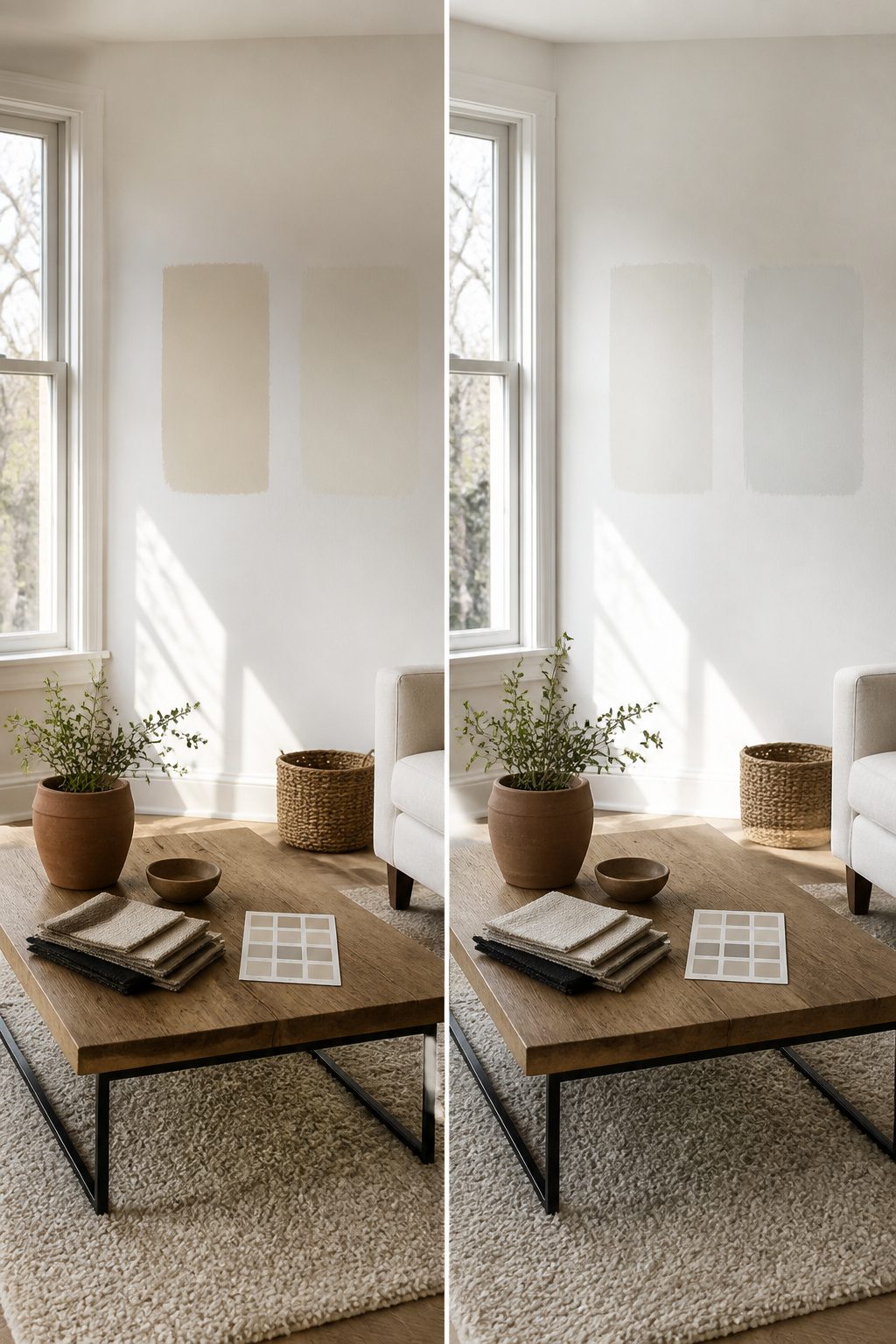
Light direction decides whether a white wall reads cozy or clinical, and getting it wrong is expensive to fix. North-facing rooms pull cool light across the wall all day, so a warm white with yellow or beige undertones keeps the space from feeling like a refrigerator. South-facing rooms drink in warm light for hours; a cooler white with blue or gray underneath stops the room from going buttery.
Testing is non-negotiable. Brush two-foot squares on the wall you mean to paint, then check them morning, noon, and evening. The same sample can shift from crisp to dingy as the sun moves.
For warm and forgiving, Sherwin-Williams Alabaster SW 7008 carries just enough cream to work almost anywhere. Benjamin Moore Simply White OC-117 is the bright, clean best-seller if you want punch without chill. Benjamin Moore White Dove OC-17 runs softer and creamier; it belongs in colonial-style spaces where you want history without yellowing. Sherwin-Williams Extra White SW 7006 is the true clean white for contemporary rooms that can handle its edge. Farrow & Ball Wimborne White No. 239 sits slightly warm, classic against stone or wood, and reads expensive in older homes.
Prepare the Surface
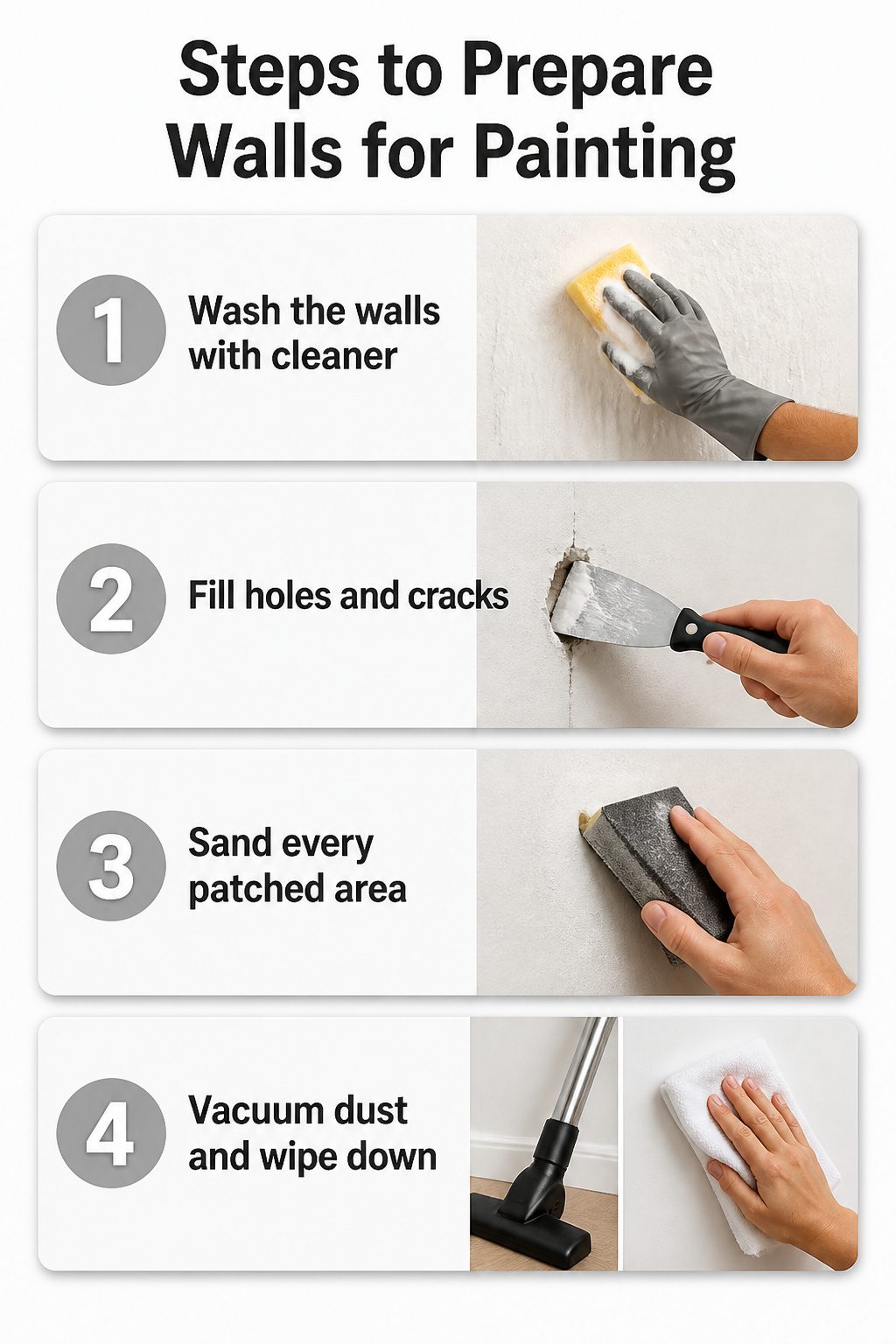
Paint will not hide what is already on the wall. It will glue itself to it. A clean, smooth surface is the only thing that lets white paint look like white paint instead of a magnifying glass for every flaw underneath.
- Wash the walls with a degreasing cleaner. Kitchens and bathrooms need extra attention; cooking oil and shampoo residue sit invisibly until the first brushstroke turns them into fisheyes or spots where the new coat beads up and refuses to stick.
- Fill holes and cracks with spackle or joint compound. I use a putty knife wider than the damage, pressing the filler slightly proud so it shrinks back flat. Deep holes take two passes; rushing this means sanding through to the void again later.
- Sand every patched area once it is fully dry. The goal is not glass-smooth; it is level, with no ridge where old wall meets new compound. A handheld sanding sponge works faster than paper on a block for corners and baseboards.
- Vacuum the dust, then wipe with a damp cloth. White primer over a dusty wall becomes gray primer, and the topcoat never recovers.
Select the Finish
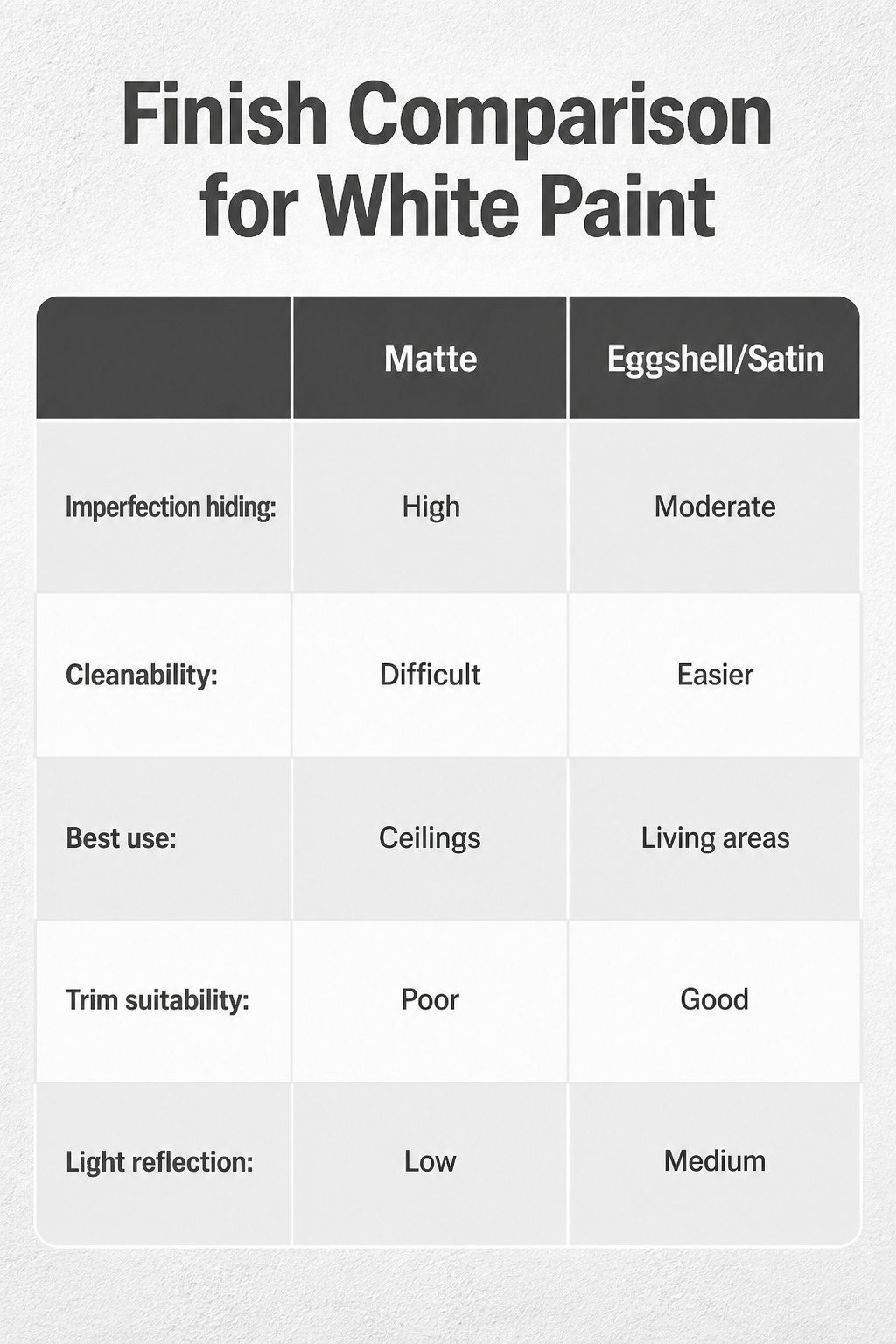
White paint looks different in every finish, and the wrong one turns a weekend project into a wall you notice for the wrong reasons. Matte hides drywall seams and old texture better than anything, which is why it works on ceilings and bedrooms you do not touch much. The downside is real: scuffs sit on the surface and do not wipe off, so a hallway or a kitchen in matte white starts looking lived-in fast.
Eggshell and satin split the difference. Eggshell has just enough sheen that a damp cloth picks up most marks without catching the light like a mirror; satin goes slightly glossier and cleans easier still. A kitchen, a bathroom, or any door that gets grabbed with dirty hands wants one of these two. I would not put matte on trim or baseboards unless I wanted to repaint them yearly.
Gloss is the opposite problem. It reflects light, makes a room feel larger, and scrubs almost like tile, but it shows every wave in old plaster and every brush stroke you left behind. Save it for doors, built-ins, or that one brick wall you want to photograph against. The semi-gloss white brick in that photo setup works because the texture was already interesting; flat drywall in gloss would read as mistake, not choice.
For most renters and first-time owners painting a house white, eggshell on walls and satin on trim is the combination that forgives the most while still letting you clean up after real life.
Apply Primer
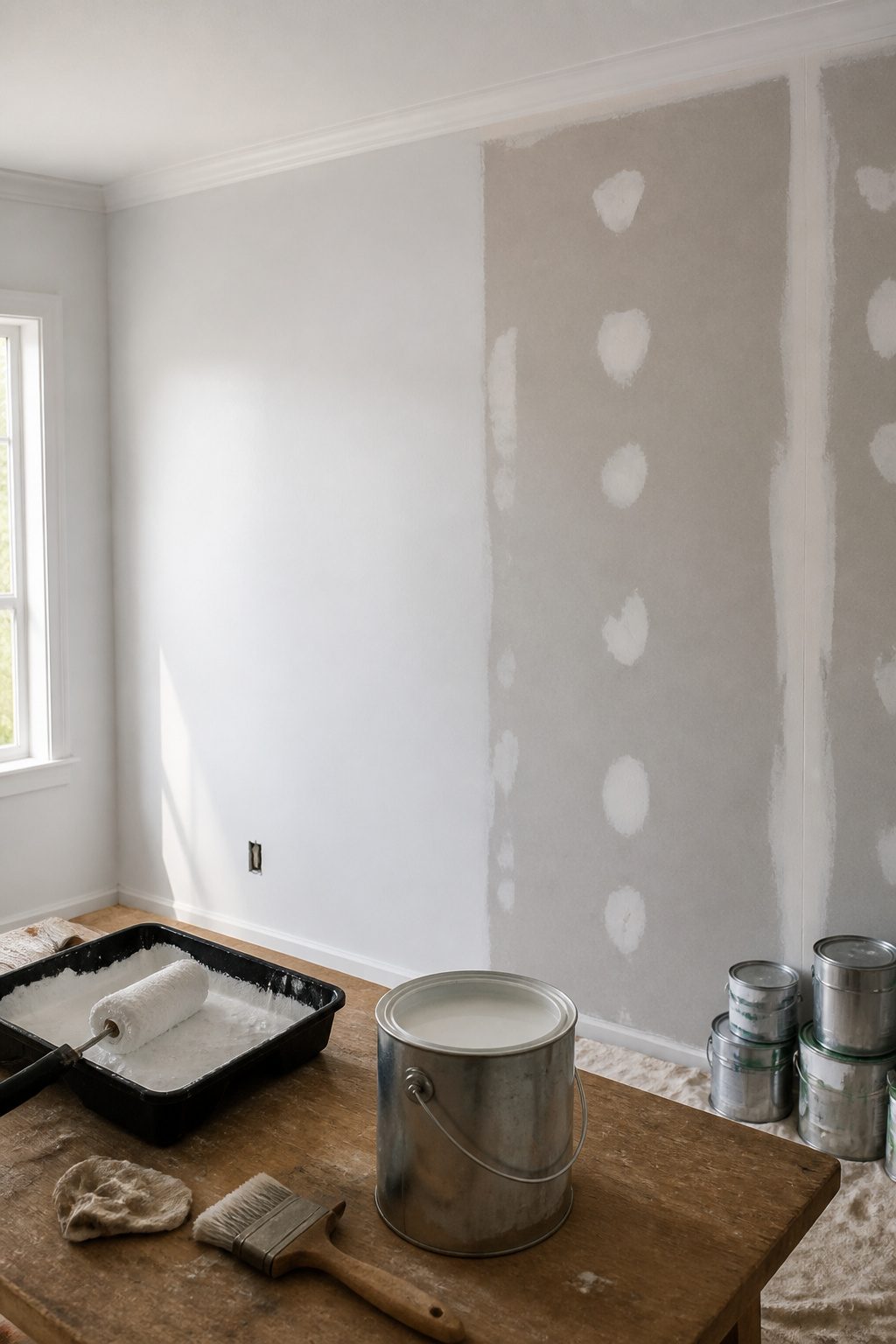
White paint has less hiding power than darker colors, which means the surface underneath shows through more easily. A primer coat is the difference between a finish that looks solid and one that looks patchy after two coats of white.
Primer becomes non-negotiable when you are covering a darker color or working with raw surfaces that have never been painted before. On my own projects, skipping primer over a medium gray always meant a third coat of white to get full coverage, and the finish still looked thinner at the edges. Raw drywall or bare wood sucks up paint differently than a sealed surface; without primer, the white dries uneven and you notice it once the furniture is back in place.
For exteriors, the same rule holds, but the stakes are higher. White highlights every flaw, and primer gives the topcoat a uniform base so weathering shows up evenly rather than in blotches. If the existing paint is sound and light-colored, one coat of a quality paint-plus-primer product can work. Over red brick, deep green shutters, or any surface that has never seen paint, separate primer saves time and material in the long run.
Paint the Walls
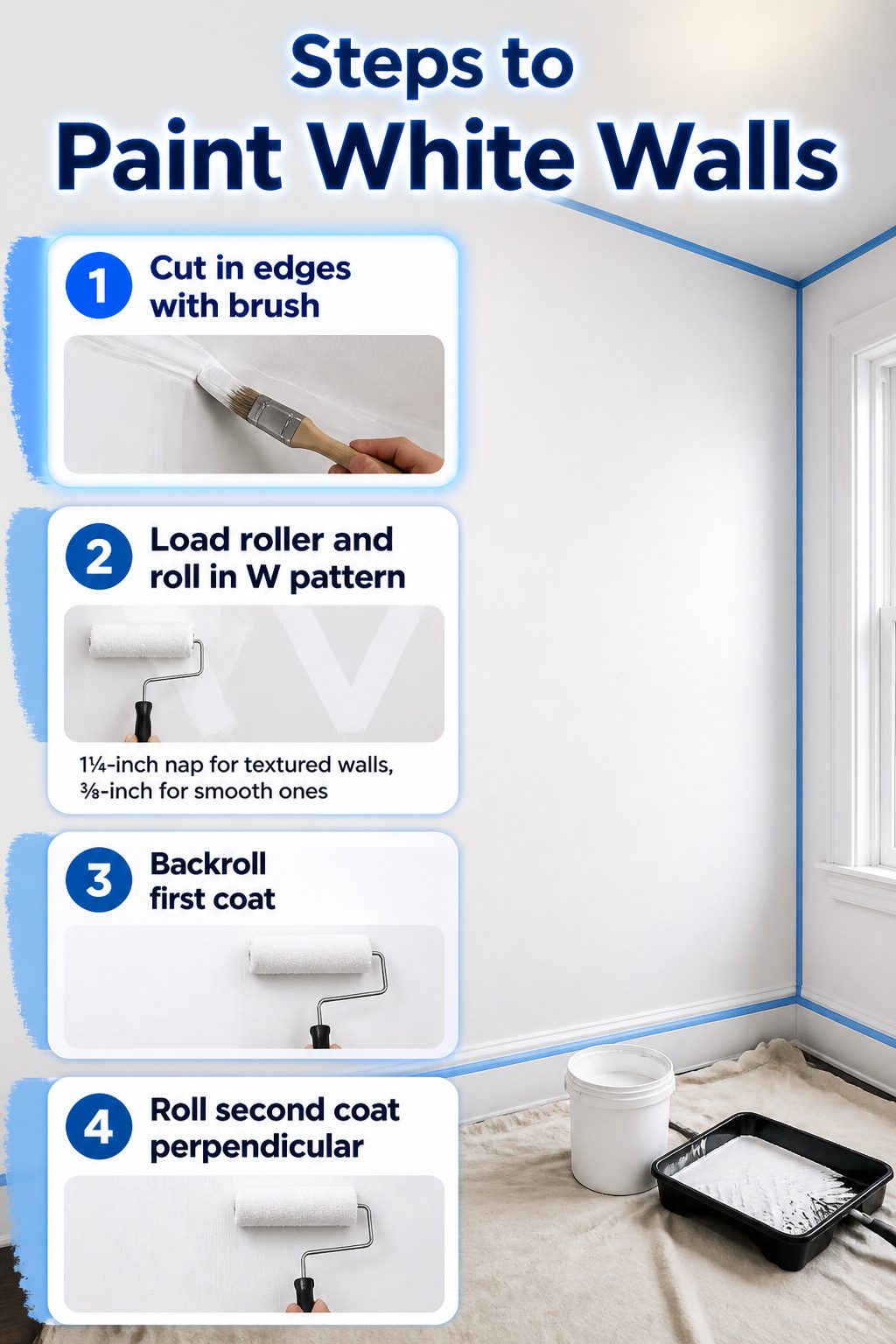
- Cut in the edges first with a brush, working a two- to three-foot strip along ceilings, baseboards, and corners. White paint shows every thin spot, so a full, even line here keeps the whole wall from looking patchy.
- Load a roller with a 1¼-inch nap for textured walls, ⅜-inch for smooth ones, and work in a W pattern without lifting the roller until the section is covered. Two coats are the minimum for even white coverage; the first coat almost always looks streaky once it dries.
- Backroll your first coat while it is still wet, rolling back over the area with a fresh load of paint to push material into the pores and even the lap marks. This makes the second coat faster and truer in color.
- Let the first coat dry fully, then roll the second coat perpendicular to the first. White reflects light, and cross-hatching catches the last thin spots that a single direction leaves behind.
Touch Up
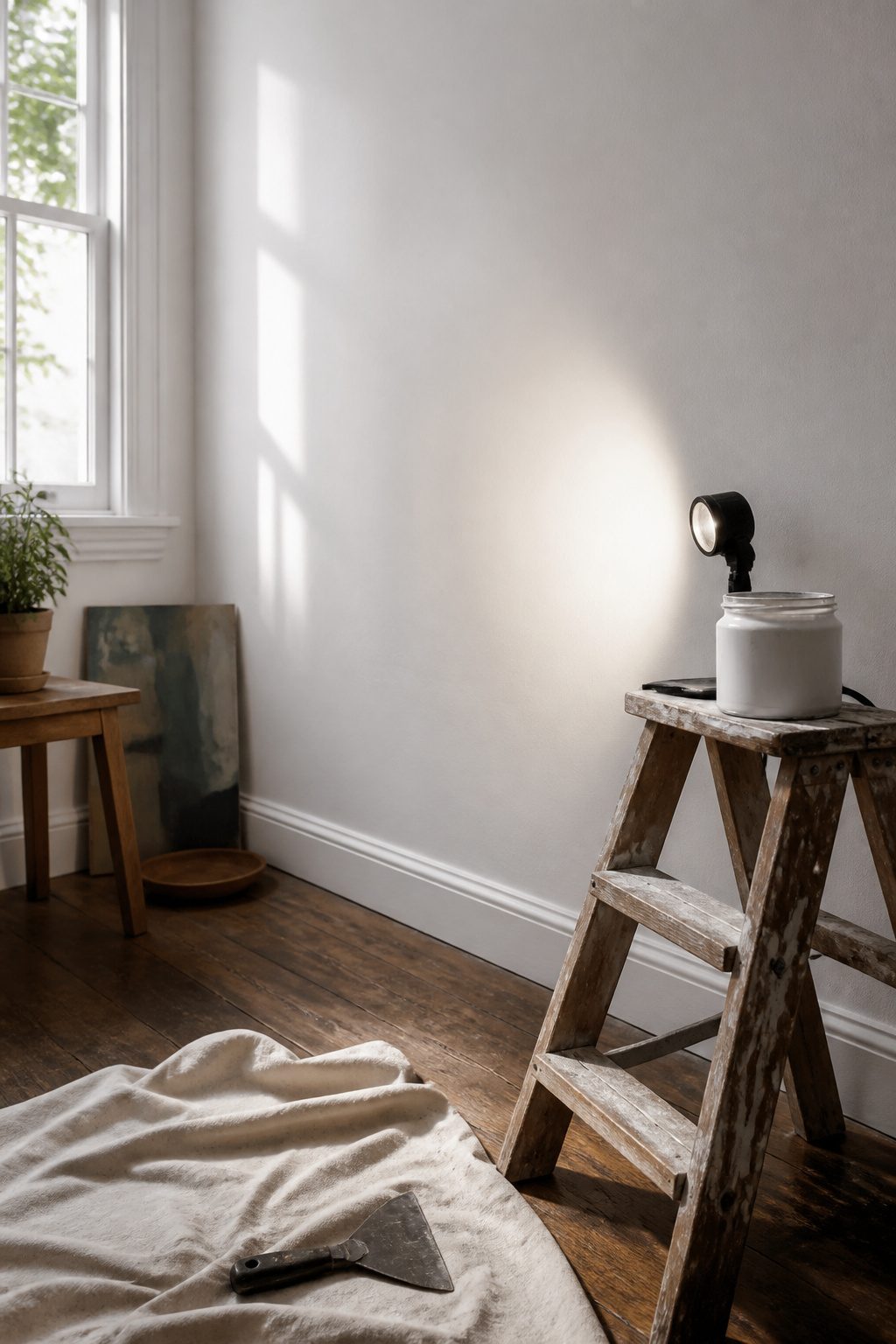
White paint shows every imperfection, so the real work starts once the first coat is dry. I learned this the hard way on a hallway job where spots I swore were covered reappeared as chalky patches by morning. Touch-ups on white stand out rather than blend in the way they do on darker colors, which means a single missed inch can undo hours of careful rolling.
The inspection needs daylight, not the warm glow of the fixture you just worked under. I walk the wall with a handheld LED held at an angle, which throws shadows across any thin spot. Corners and cut lines are the usual suspects, but white also reveals the subtle texture difference between brushed edges and rolled fields. Flat white makes this easier to fix, since a quick dab with the original can usually disappears. Eggshell or satin demand more care; the sheen catches light differently on fresh paint, so I feather the repair an inch or two past the flaw and thin the paint slightly with water to match the surrounding film.
One can of paint, kept sealed, covers most of a house’s ten-minute maintenance for the year. The trim, if it is eggshell, needs its own can. I label the lid with the room and date, because white shifts in the can over time and a match that was perfect in March reads slightly blue by October.
Warm Whites Against Cool Whites
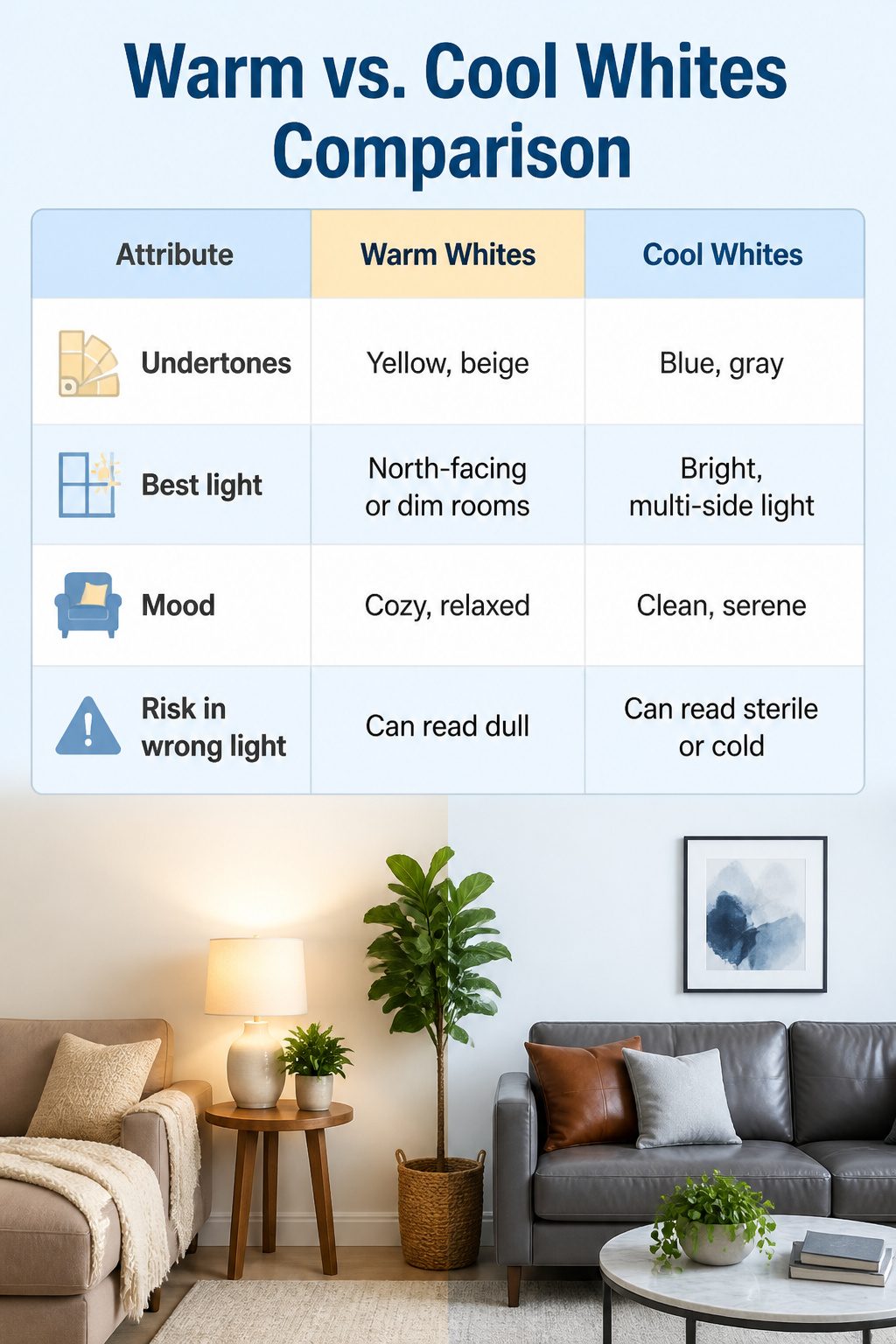
Warm whites carry yellow or beige undertones that pull a room toward cozy and welcoming, while cool whites lean on blue or gray for a crisp, modern feel. The direction your light comes from decides which one survives a weekend of painting.
| Attribute | Warm Whites | Cool Whites |
|---|---|---|
| Undertones | Yellow, beige | Blue, gray |
| Best light | North-facing or dim rooms | Bright, multi-side light |
| Mood | Cozy, relaxed | Clean, serene |
| Risk in wrong light | Can read dull | Can read sterile or cold |
I learned the hard way that furniture matters as much as the wall. My taupe sectional, carried over from a previous place, clashed badly with cool white walls in a new house; the warm tones against the cool cast looked off until I swapped for gray and brown leather. Light on two or three walls is what makes either white liveable. A room with light from one side only tends to fight the paint, and that is where I have most wanted to repaint. Houseplants help either tone, adding texture that keeps all-white spaces from feeling flat.
Finish Comparison
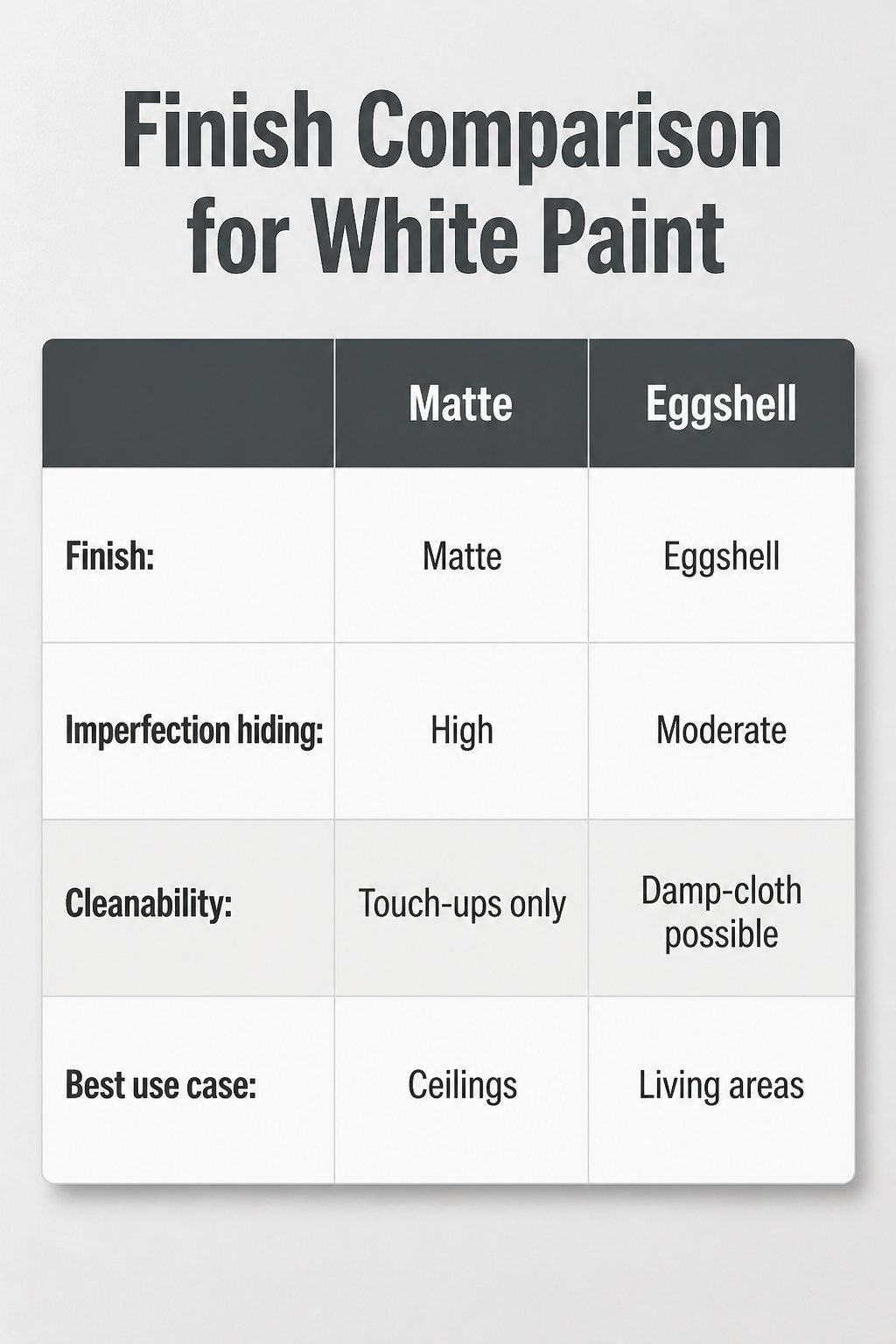
Matte white walls hide the dings and uneven texture that every rental or first home collects, but the tradeoff is real: flat paint can’t be wiped clean. A mother of four with a dog found this out the hard way. Her walls are flat white, and when the kids leave marks, touch-up paint is the only fix. Her trim, painted eggshell, fares slightly better, though she still calls the cleaning "easier, but not easy."
That middle ground matters. Eggshell and satin sit between matte and gloss, adding just enough sheen to let a damp cloth do its job without turning every wall imperfection into a spotlight. High-gloss goes further, reflecting light so aggressively that rooms feel larger and brighter, but every brush stroke, dent, or patched hole stands at attention. The same blogger learned this with her semi-gloss white brick wall: it photographs beautifully, but it also broadcasts every texture beneath the paint.
| Finish | Imperfection hiding | Cleanability | Best use case |
|---|---|---|---|
| Matte / flat | High | Wipeable only with touch-up paint | Ceilings, low-traffic spaces |
| Eggshell | Moderate | Damp-cloth possible with care | Living areas, trim |
| Satin | Moderate | Easier wipe-down | Kitchens, bathrooms, high-traffic walls |
| High-gloss | Low | Very easy | Trim, doors, accent walls you want to highlight |
For a weekend project on a few hundred dollars, eggshell on walls and satin on trim is the combination I’d reach for. You get the forgiving surface where you need it and the durability where hands actually land.
Testing Paint in Real Light
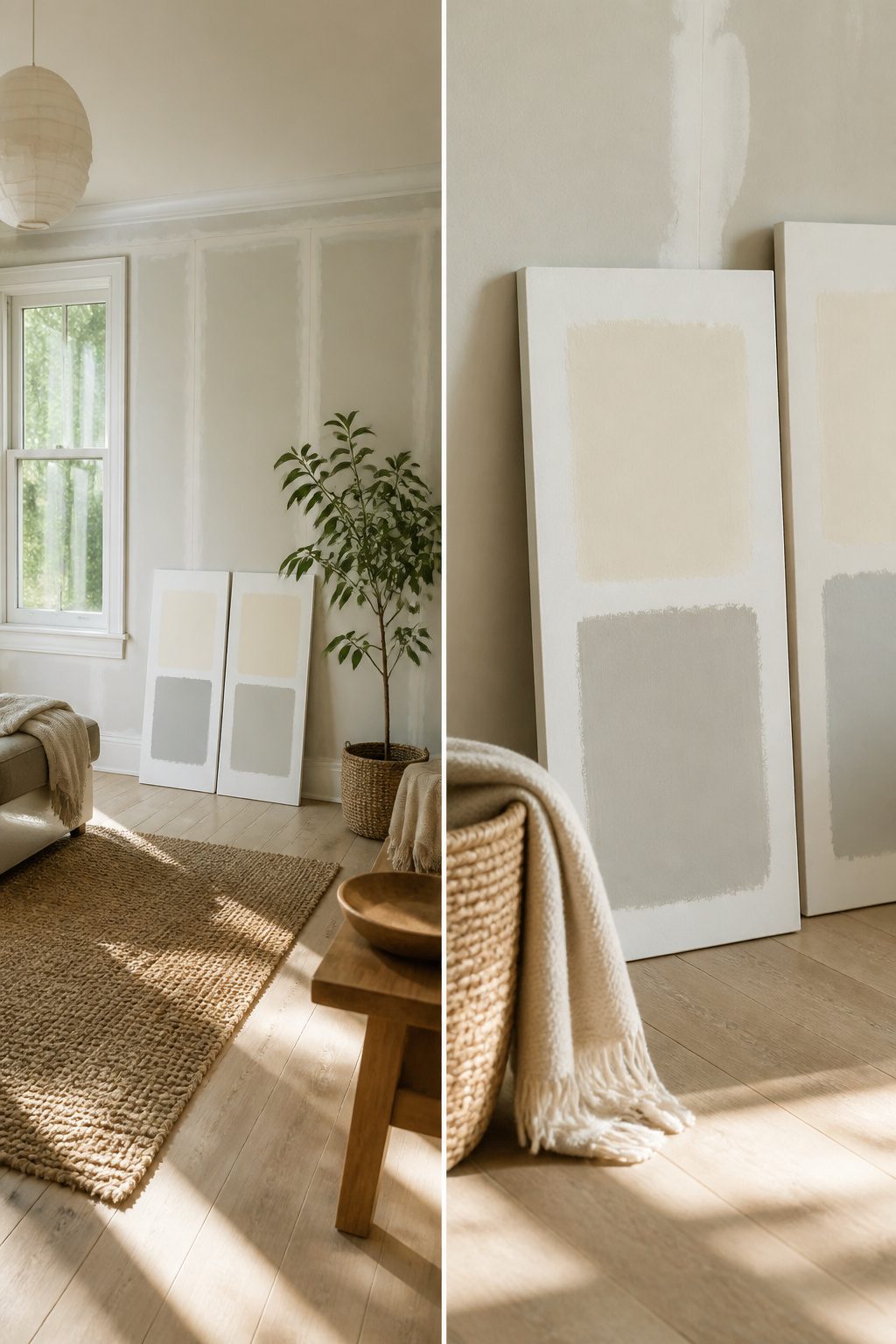
Paint chips under fluorescent store lighting have almost nothing to do with what happens on your wall. I learned this the expensive way on a hallway project a few years back, watching a warm cream turn into something closer to institutional beige once the sun went down. The sample board needs to live on the actual surface for at least two full days, morning light through evening lamp light, before you commit.
Most people skip this step. They tape up a swatch for an hour, decide it looks fine, and buy five gallons. Two coats in they notice the north-facing bedroom reads gray while the living room glows yellow, and by then the return policy has expired. I keep a stack of 12-inch primed boards in the garage now for exactly this reason. Brush two coats of sample, lean it against the wall where it will actually live, and move it around to catch different angles.
The difference between a white that works and one that fights you is usually a half-step in undertone, invisible on the chip but unmistakable at scale. Morning sun will pull out any hidden pink or green. Artificial light at night does the opposite, flattening everything toward mud. The only way to see the full range is to wait through both.
Keeping White Walls Clean
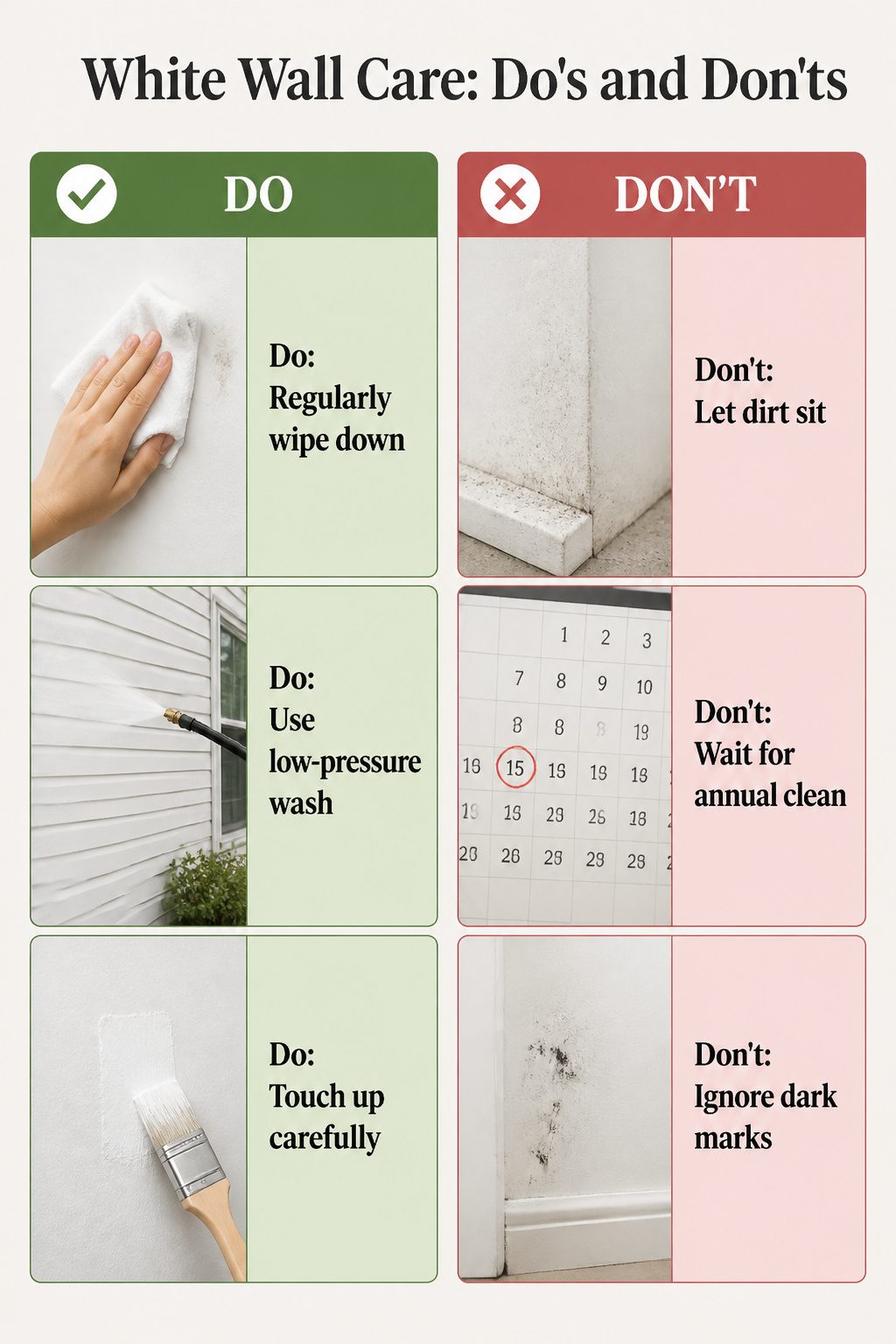
White walls turn every fingerprint and scuff into a headline. In my last rental, the hallway I painted a clean white looked sharp for maybe three weeks before the door frame started collecting dark marks from bags brushing past. Interior white needs wiping down more often than any neutral I have lived with, and the marks do not forgive the way they sink into taupe or sage.
Exteriors run harder. Dirt, pollen, bird droppings, and mildew all read loud against a white field, and they collect fast enough that a house can look neglected by late summer if you let it sit. The fix is a rinse or a low-pressure wash every few months, not waiting for the annual big clean. I have watched neighbors let that slide; by fall the north side of their white garage carried a gray-green bloom that scrubbing could not fully lift.
Touch-ups bring their own trouble. A fresh patch on white almost always flashes, because the surrounding paint has dulled slightly from light and wiping. You are either repainting whole walls or learning to live with the ghost. For a weekend project on a tight budget, that cycle of clean, mark, touch-up, repeat is the real cost of choosing white, and it starts sooner than most people figure.
White Paint and Resale Value
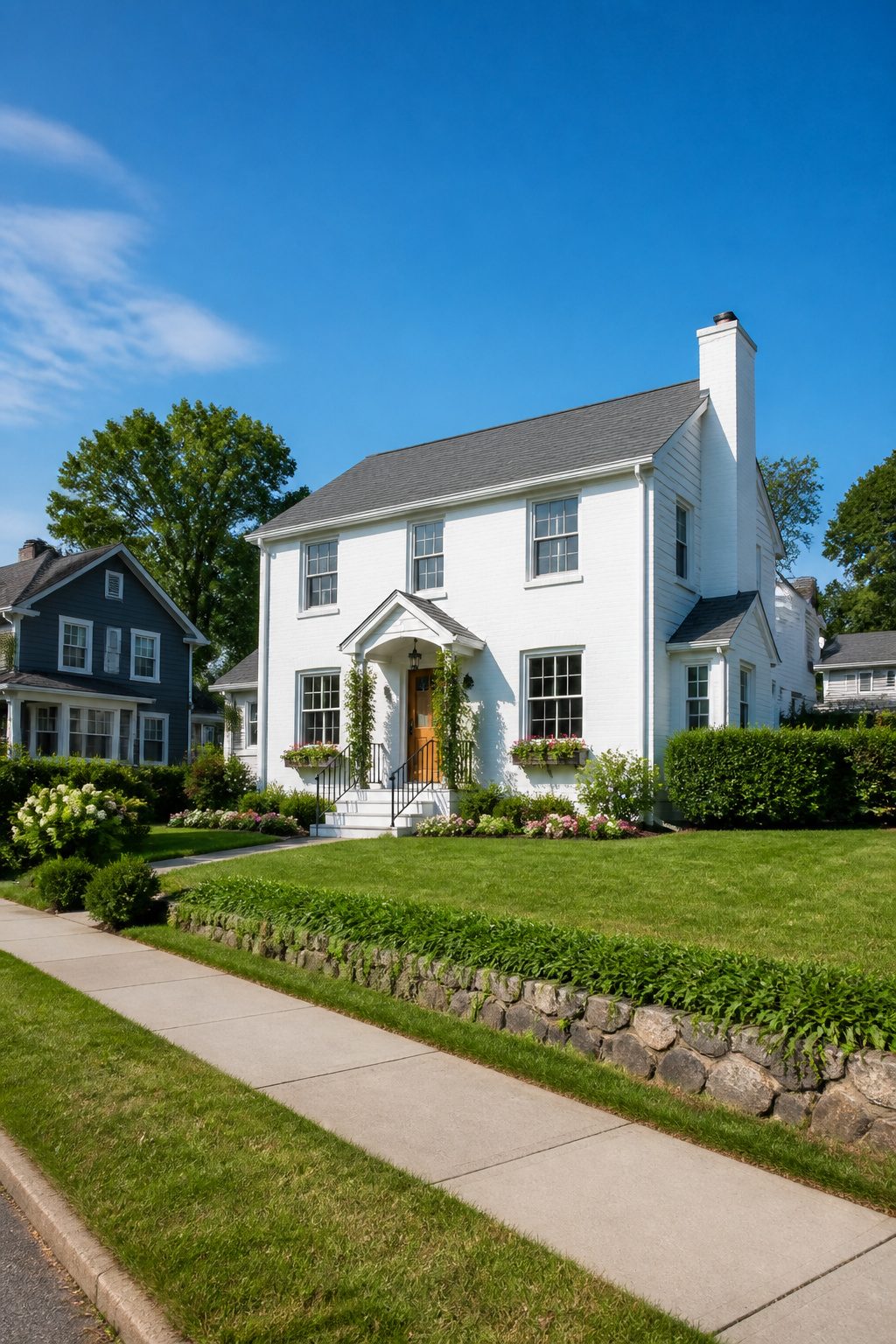
A white exterior brightens a home, gives it a timeless look, and reads as clean the moment a buyer pulls up. That versatility is what makes white paint one of the safer bets for resale value; it hides imperfections, shifts well across morning and evening light, and complements everything from traditional siding to modern minimalist lines. The fresh, crisp appearance stands out in a neighborhood without demanding attention, and the message it sends is that the property has been kept up.
I have seen the difference play out in flips where the only major change was swapping dated beige trim for a clean white. Those properties moved fast. The same logic holds for a full exterior: buyers walk up already convinced the place is well-maintained, which translates to higher offers or shorter days on market. For a few hundred dollars and a weekend of work, that return is hard to match with any other single upgrade.
Texture and Color Against White
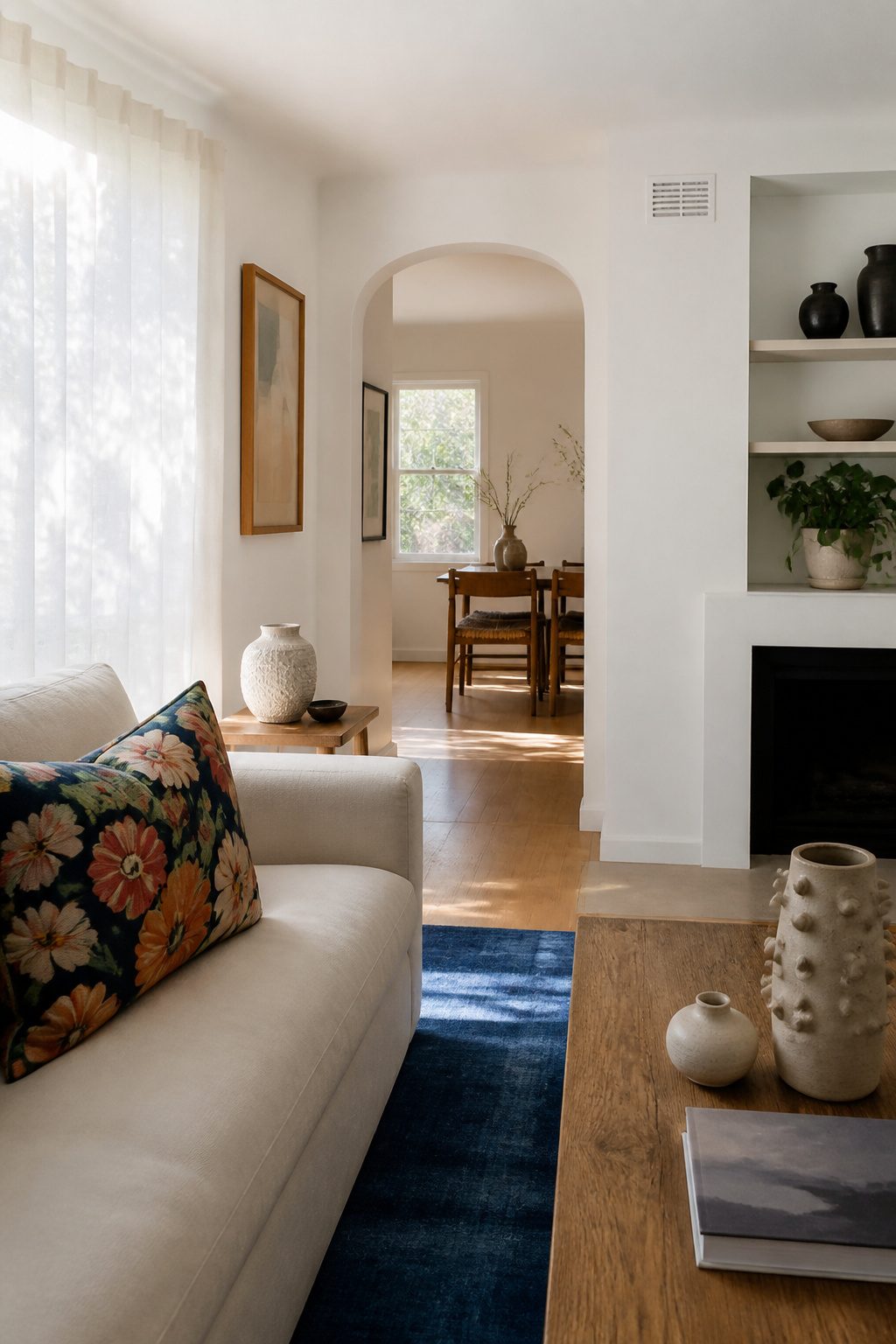
White walls can go flat fast without something to break the plane. The first time I painted a room white, I stood back and realized the color itself was fine; the room just felt like a gallery that had forgotten to hang the art. Texture and color against white is what pulls it back from that edge.
Wood grain, woven fabric, or a rough ceramic surface catches light differently than flat drywall, and that variation reads as warmth even when every wall reads the same. A single bold cushion or a rug with some saturation in it does more than add color; it gives the eye a place to land so the white becomes a frame instead of the whole statement. Metallic pieces, brass or blackened steel, add another layer without demanding a second paint color.
Layering helps too. Two whites with slightly different undertones, one matte and one eggshell, create a subtle shift that keeps the space from feeling like a single coat of primer. In rooms that get cold light for half the year, that layering matters more; warm tones in accessories keep the room from feeling clinical when the sun is low.
How Long White Exterior Paint Lasts
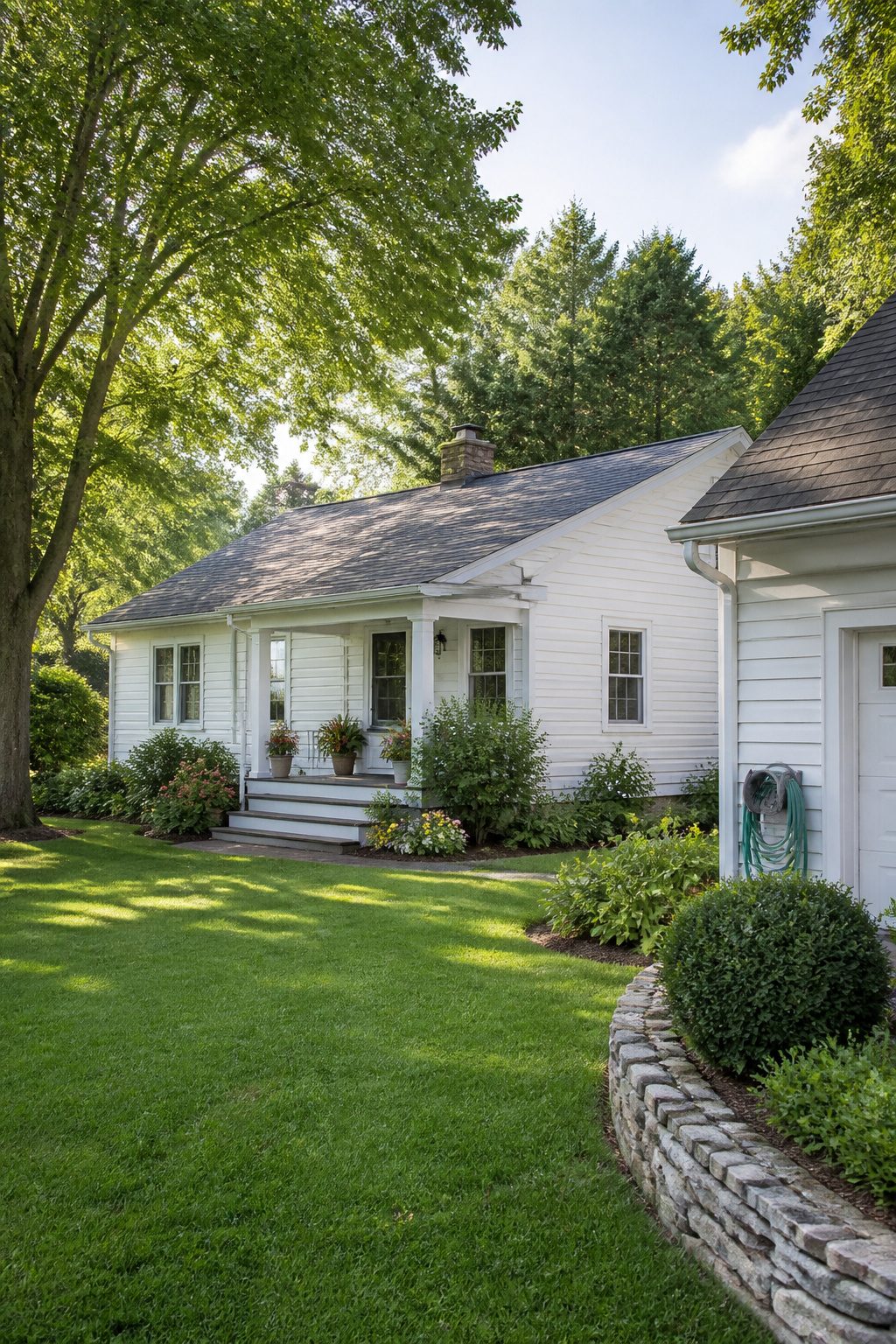
A quality white exterior paint job lasts 7 to 10 years with proper maintenance, though premium acrylic-latex formulas like Sherwin-Williams Duration or Benjamin Moore Aura Exterior can stretch that closer to 10 to 15 years on walls that sit back from direct sun. The lighter surface simply shows wear sooner. UV exposure, moisture, and organic growth all read louder on white than on charcoal or navy, which means the maintenance interval matters as much as the paint choice itself.
The upkeep is straightforward but non-negotiable. Rinse the siding each spring with a garden hose to clear pollen and dust before it bakes in. Spot-treat mildew with diluted bleach and water the moment it appears, because white makes the spread impossible to ignore. Inspect window and door caulking annually; failed caulk is the most common path for moisture to get behind the film. In high-humidity climates, a mildewcide additive mixed into the paint buys extra insurance. Skip any of this and the timeline collapses toward the five-year mark, especially on trim and doors that take the hardest hits from sun and handling.
Frequently Asked Questions
What white paint is best for walls?
Benjamin Moore Simply White OC-117 is the bright, clean best-seller if you want punch without chill, and Sherwin-Williams Alabaster SW 7008 carries just enough cream to work almost anywhere. For colonial-style spaces, Benjamin Moore White Dove OC-17 runs softer and creamier. The right choice depends on your room’s light direction and the mood you want.
How do I choose the right shade of white?
Let the room’s light direction decide. North-facing rooms need warm whites with yellow or beige undertones to avoid a cold feel, while south-facing rooms want cooler whites with blue or gray underneath to stop from going buttery. Always brush two-foot test squares on the actual wall and check them morning, noon, and evening before committing.
Does white paint get dirty easily?
Yes, white surfaces show every fingerprint, scuff, and mark more readily than darker colors. Interior white needs wiping down more often, and exterior white collects dirt, pollen, and mildew fast enough that a house can look neglected by late summer without regular rinsing. The real cost of choosing white is the cycle of clean, mark, and touch-up that starts sooner than most people expect.
How long does white exterior paint last?
A quality white exterior paint job lasts 7 to 10 years with proper maintenance, though premium acrylic-latex formulas can stretch toward 10 to 15 years on walls shielded from direct sun. Without regular rinsing, mildew treatment, and caulking checks, that timeline collapses closer to five years, especially on trim and doors.
What finish should I use for white paint?
Matte hides imperfections best but cannot be wiped clean, making it suitable only for ceilings and low-traffic spaces. Eggshell and satin split the difference; eggshell forgives more on living area walls, while satin cleans easier in kitchens, bathrooms, and on trim. For most first-time owners painting a house white, eggshell on walls and satin on trim is the combination that forgives the most while still letting you clean up after real life.