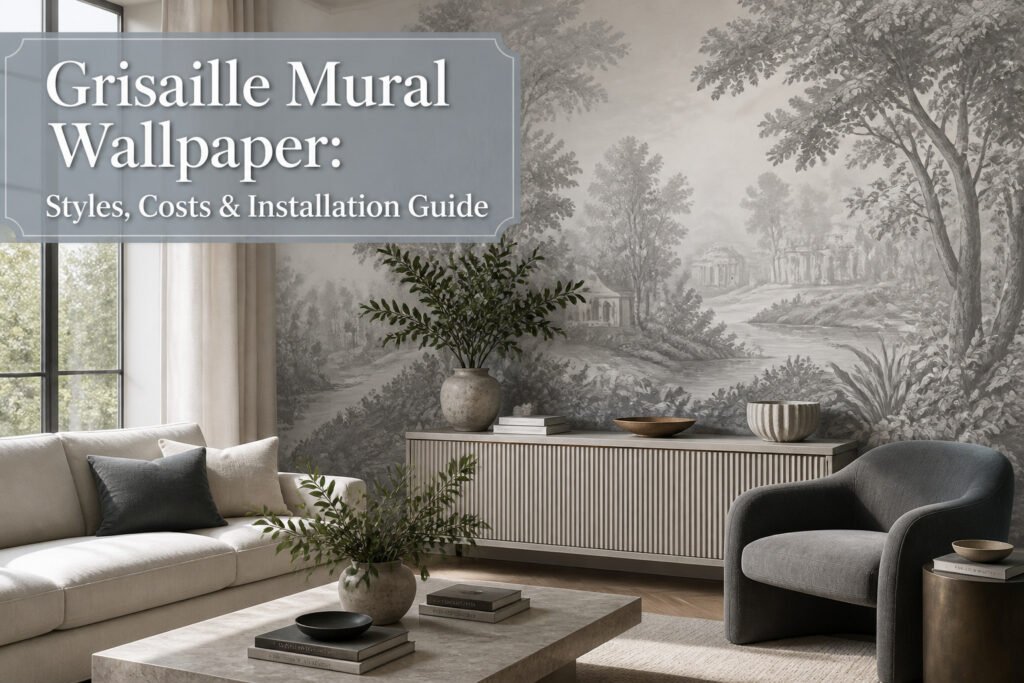
Grisaille mural wallpaper is a wall covering printed entirely in shades of gray, using the same tonal painting technique French masters once used to imitate carved stone on flat canvas. The catch is that gray is the color most likely to shift under your actual light, so a sample that reads pearl at noon can turn greenish by dusk. Printed versions run about $3 per square foot with custom cropping, while hand-painted commissions start near $5,000.
What Grisaille Means on a Wall
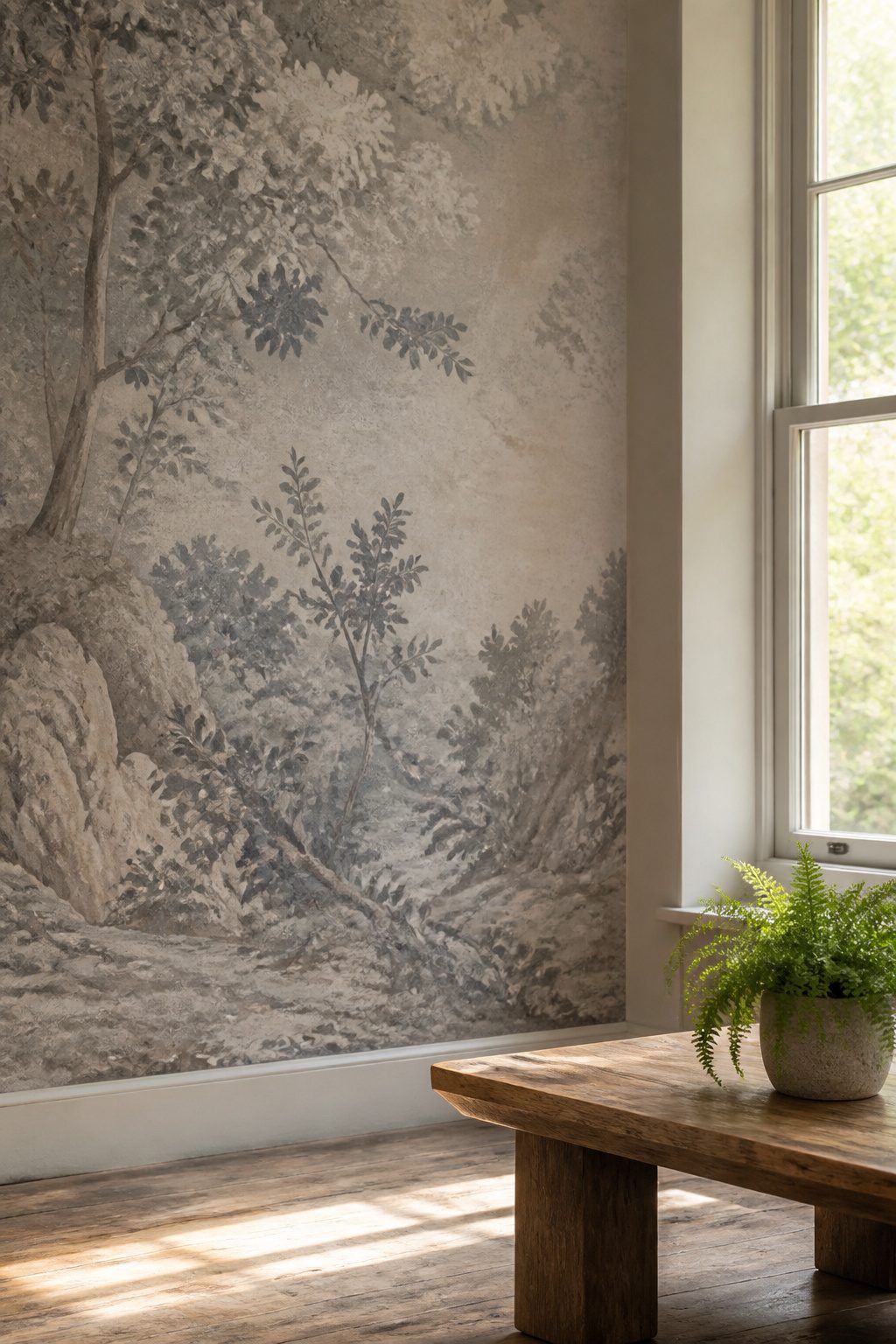
The word grisaille comes from the French gris, meaning gray, and you pronounce it roughly griz-EYE. At its root it is a painting technique worked entirely in shades of gray, or occasionally another neutral like greige, taupe, or sepia. Centuries ago, when colorful pigments were scarce and expensive, artists discovered that a single tone in different shades could create a convincing illusion of depth and dimension. Early masters used it to imitate carved sculpture on flat surfaces, or as an underpainting that gave later color layers an intense glow in the highlights and deep, lustrous shadows. On a wall, that same restrained palette does the heavy lifting: your eye reads the gray tones as shadow and form, so a flat printed mural suddenly carries the weight of something three-dimensional. The first known use of the term dates to 1848, though the practice itself is far older. Today, when you see grisaille on wallpaper, you are looking at a translation of that old discipline into something meant to wrap a room rather than fill a frame.
Where Grisaille Came From
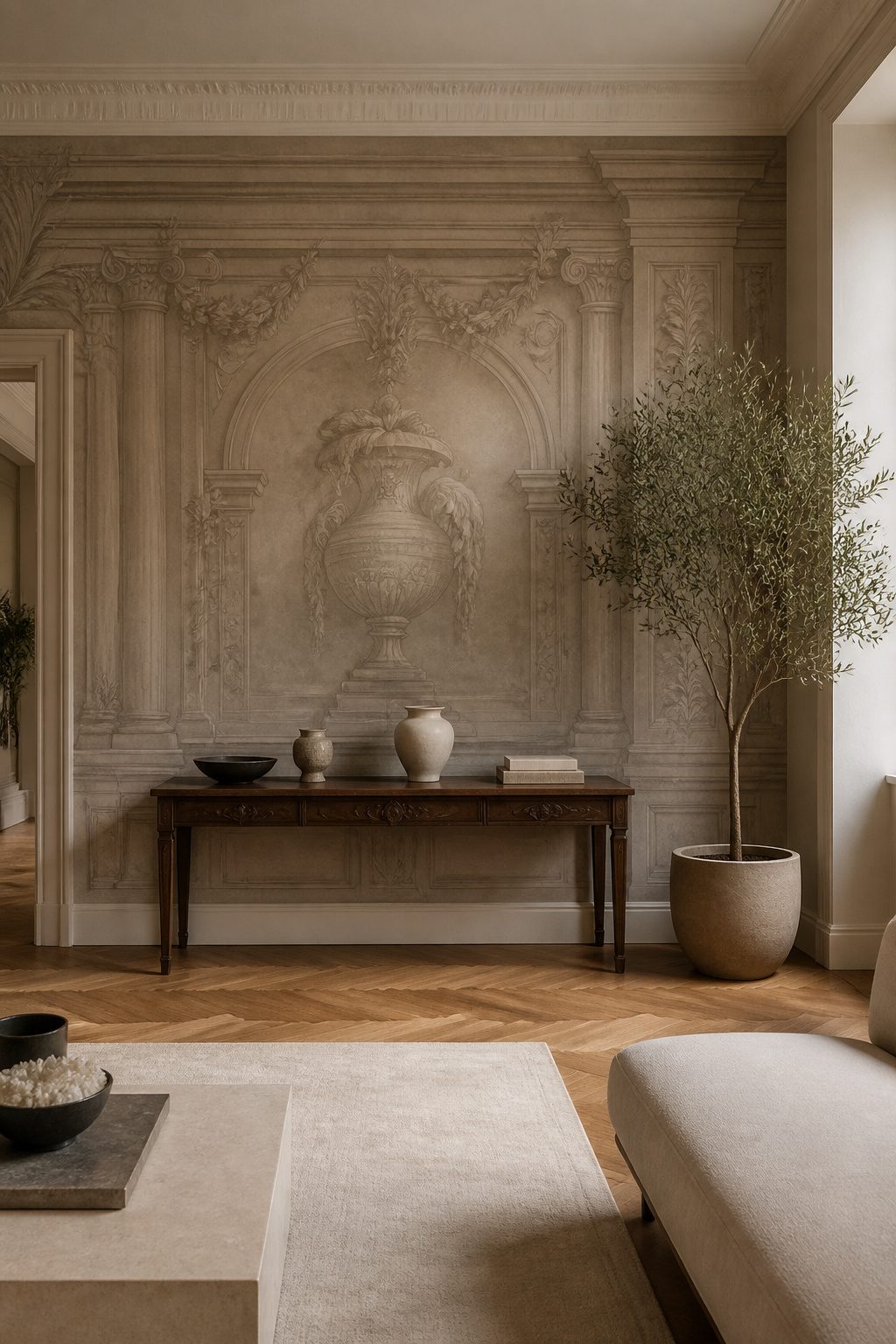
Grisaille takes its name from the French gris, or gray, and began as a practical workaround. Centuries ago, colorful pigments were scarce and expensive, so artists worked entirely in shades of gray to build convincing depth from a single neutral tone. The real payoff came when they realized this limitation could imitate carved stone sculpture on a flat surface, creating the kind of trompe l’oeil trick that made viewers look twice.
The technique served double duty. Some masters used it as an underpainting, laying down a gray base that would intensify the glow of colors added later. Others left it bare, treating grisaille as the finished piece, a cheaper alternative that still carried visual weight.
Over time, the style shook off its reputation as merely practical. What started as a budget move in fine art became desirable for its own sake, and the same illusion that once fooled the eye on canvas transferred naturally to walls. By the 1800s, block-printed grisaille wallpapers were turning up in England and the United States, carrying that sculpted, shadowed look into domestic spaces without the stone or the sculptor’s fee.
Scenic Murals
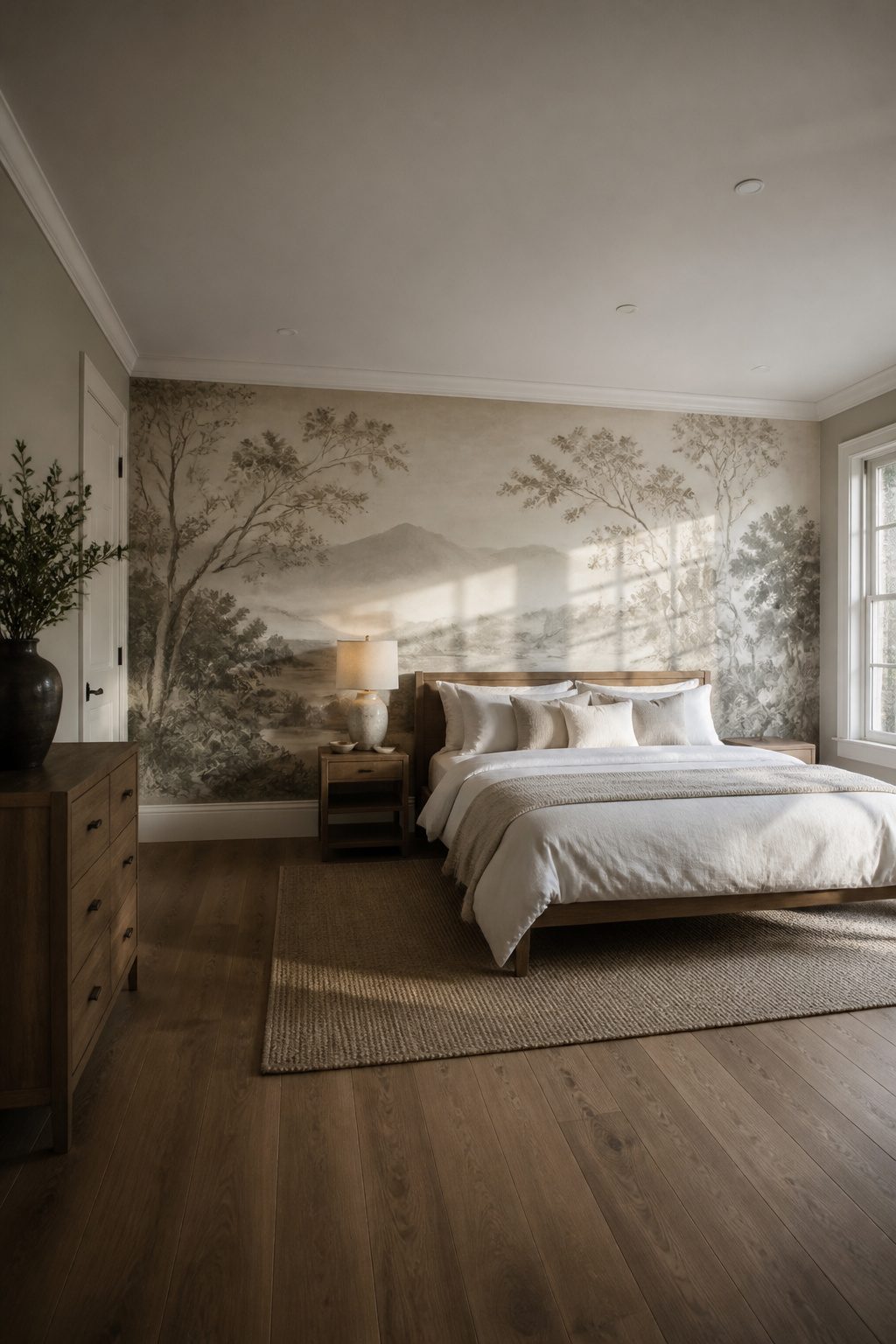
Landscape scenes in grisaille strip away the noise of color and leave only depth, distance, and quiet. A bedroom wall covered in soft grey branches or a misted valley does something saturated prints rarely manage: it lets the room exhale. The 37" x 102" and 75" x 102" standard sizes fit most single panels above a headboard or across a narrow powder room, and custom width x 102" height runs let you stretch the same calm across a wider dining wall without breaking the image into mismatched strips.
Where these murals earn their keep is in rooms that already fight for peace. A nursery with bright toys scattered everywhere, a stairway that reads as tunnel-like, a guest bedroom that doubles as your unfolded-laundry holding pen. The grey scale softens the architecture without demanding attention the way a full-color scenic would. Designers using this approach in modern spaces note that the technique adds texture and depth where flat paint reads as bare; in more traditional rooms, it reads as neo-classical restraint rather than trendy gesture.
The catch is ordering the right section of a larger mural. Some panels run abstract at the edges, just a few trailing branches, while the center holds the full scene. If your wall is narrow, you are essentially cropping a landscape. Request the proof before print, and mark exactly where your 37 or 75 inches will fall.
Abstract Designs
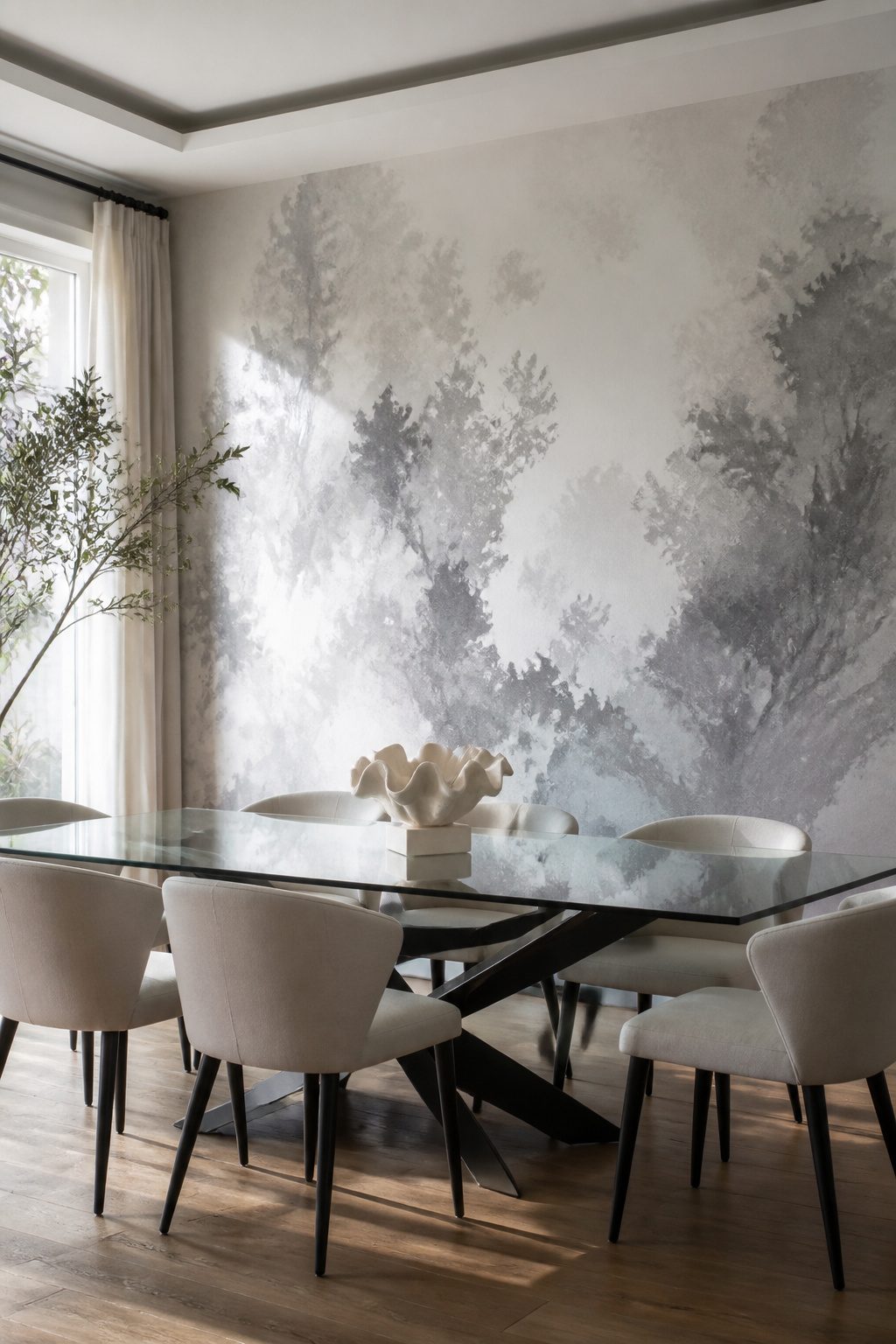
Not every grisaille mural needs a garden gate or a draped figure to read as grisaille. The technique itself, layers of gray built up until the wall carries real depth, works just as well when the shapes are abstract. I keep seeing this in newer installations: a single branch form cropped so tight it becomes texture rather than tree, or cloud-like masses that read as weather until you step close and the image dissolves into brushstroke.
Abstract grisaille fits modern rooms because it borrows the mood without the narrative. A scenic mural tells a story your furniture has to live inside. An abstract one gives you the tonal range, the hand-worked surface, the way light moves across gray pigment, but leaves the room open for whatever sofa or paint color you already own. Sources describe a "Beauty Everywhere" mural section customized to just a few branches at the edge, really about the calm of those gray shades rather than the botanical accuracy. That is the move: scale the recognizable motif down until the grisaille itself becomes the subject.
Designers are using this in clean, bright spaces where a full scene would feel like a stage set. One dining room took a grisaille texture for depth alone; a nursery softened minimalist design with the same approach. The single tone adapts to almost any color scheme already in place. For a renter or a first homeowner working weekend-scale projects, this is the lower-stakes entry point. You get the gravitas of the technique without committing to a specific century or style.
Customizable Options
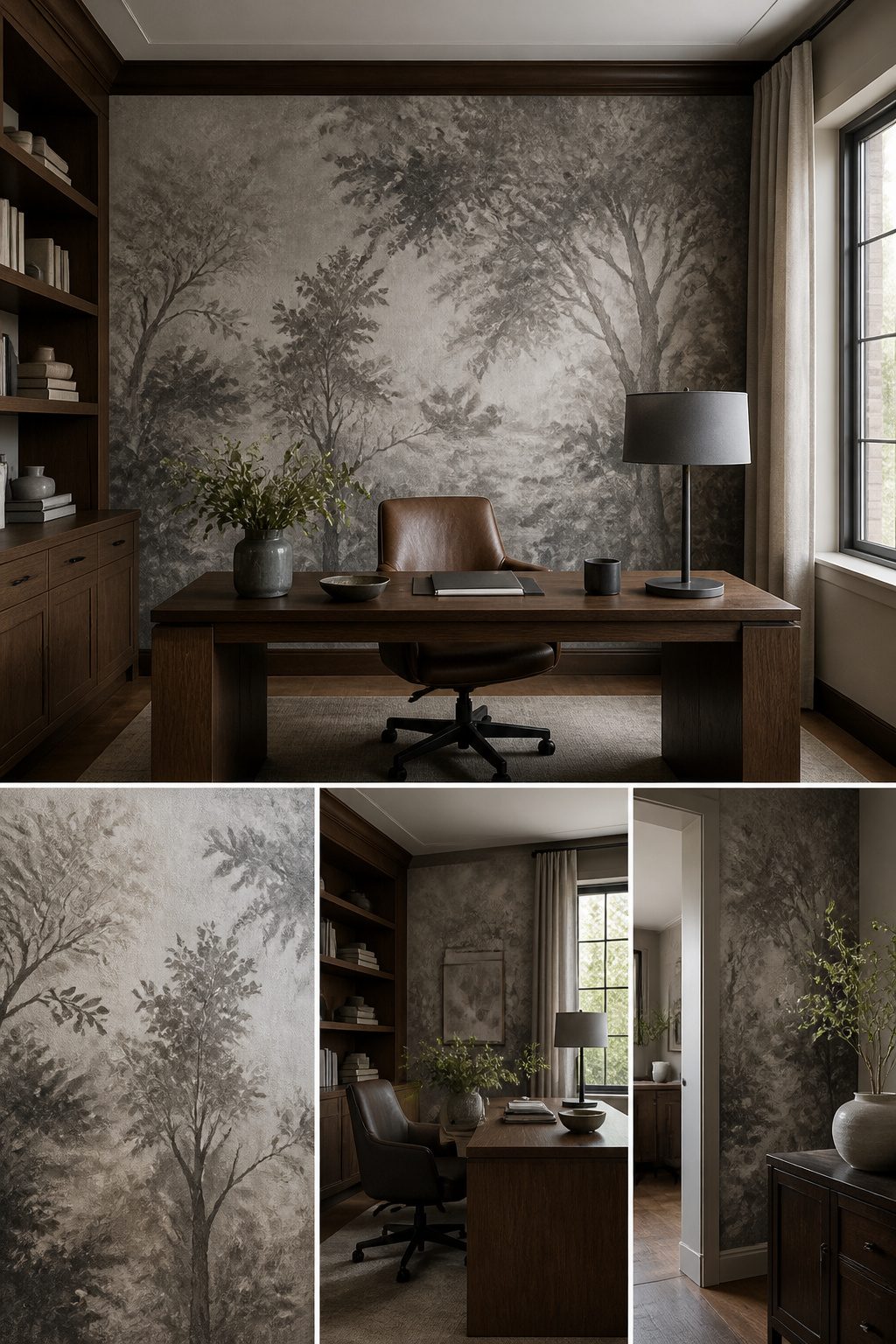
Some mural companies let you pick the exact slice of a design you want on your wall, not just accept a preset crop. Photowall works this way: you open the image in their tool and drag the frame until the composition feels right for your space. I used their "Beauty Everywhere" mural twice, and the second time I pulled the crop toward a quieter corner where the branches thin out, so the grisaille grey tones dominate without the busier center. That kind of control matters when you are fitting a scene around a bed or a sofa and need the visual weight to land in a specific spot.
The cost lands near $3 per square foot, which is not much above standard printed mural pricing even though you are getting a one-off crop. For a weekend project on a real budget, that gap is small enough that the custom version usually wins if the standard crop fights your furniture layout.
High-End Hand-Painted
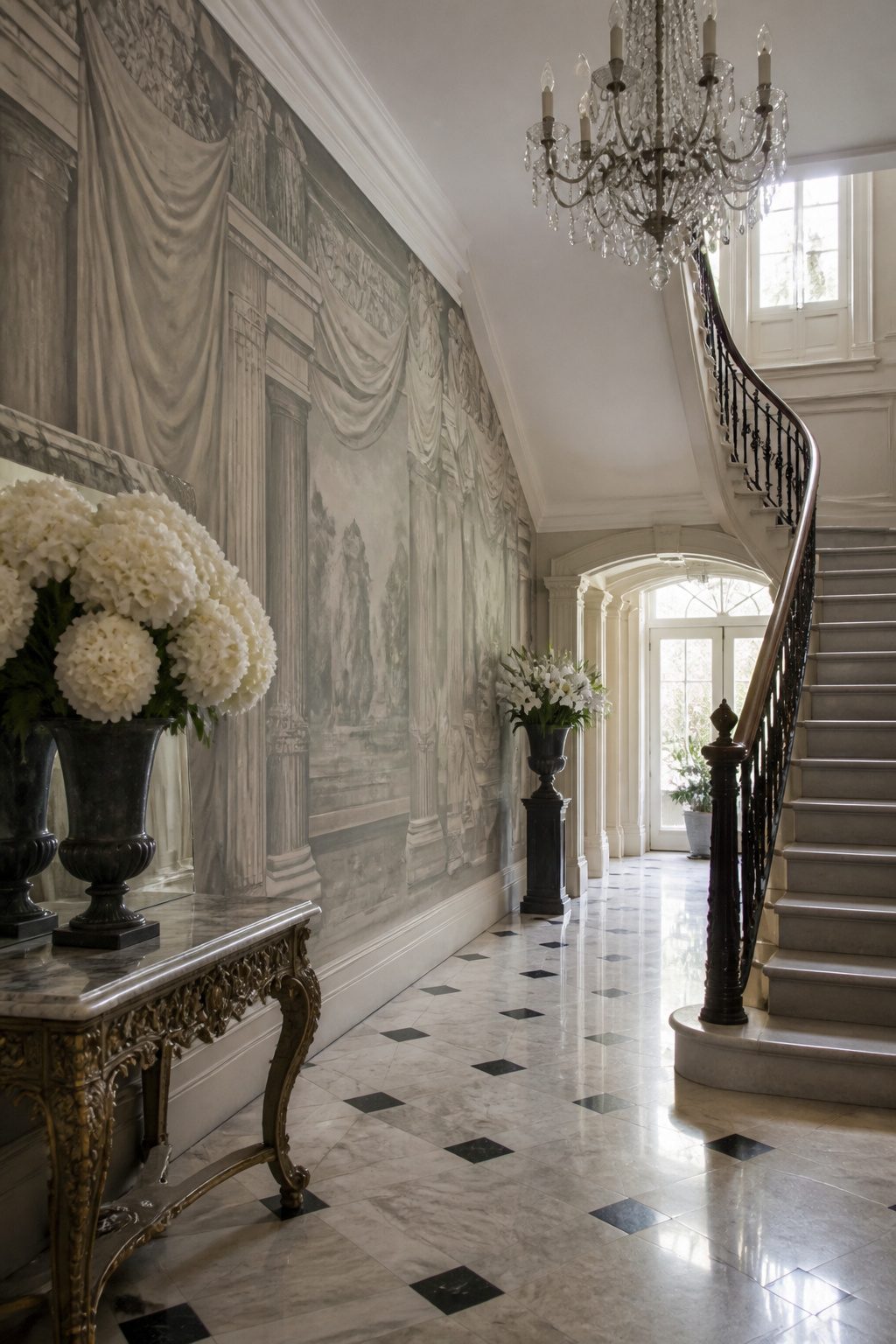
Hand-painted grisaille wallpaper sits at the top of the market, and the price makes that clear fast. A full room runs $5,000 to $10,000, which puts it squarely in the territory of de Gournay commissions and Fornasetti murals you spot in shelter magazines. The technique itself is what drives the cost: each panel gets built up in layers of gray tempera, with artists working freehand to get the tonal depth that makes flat walls read like carved stone or draped fabric.
That level of craft is why I treat this as a look-at rather than a buy. Most renters and first-time owners I know budget a few hundred to maybe a thousand dollars for a weekend project, and even the "relatively affordable" printed alternatives land closer to that range. The hand-painted original is something you commission for a forever dining room, not something you roll on between Saturday morning and Sunday evening.
Affordable Printed Versions
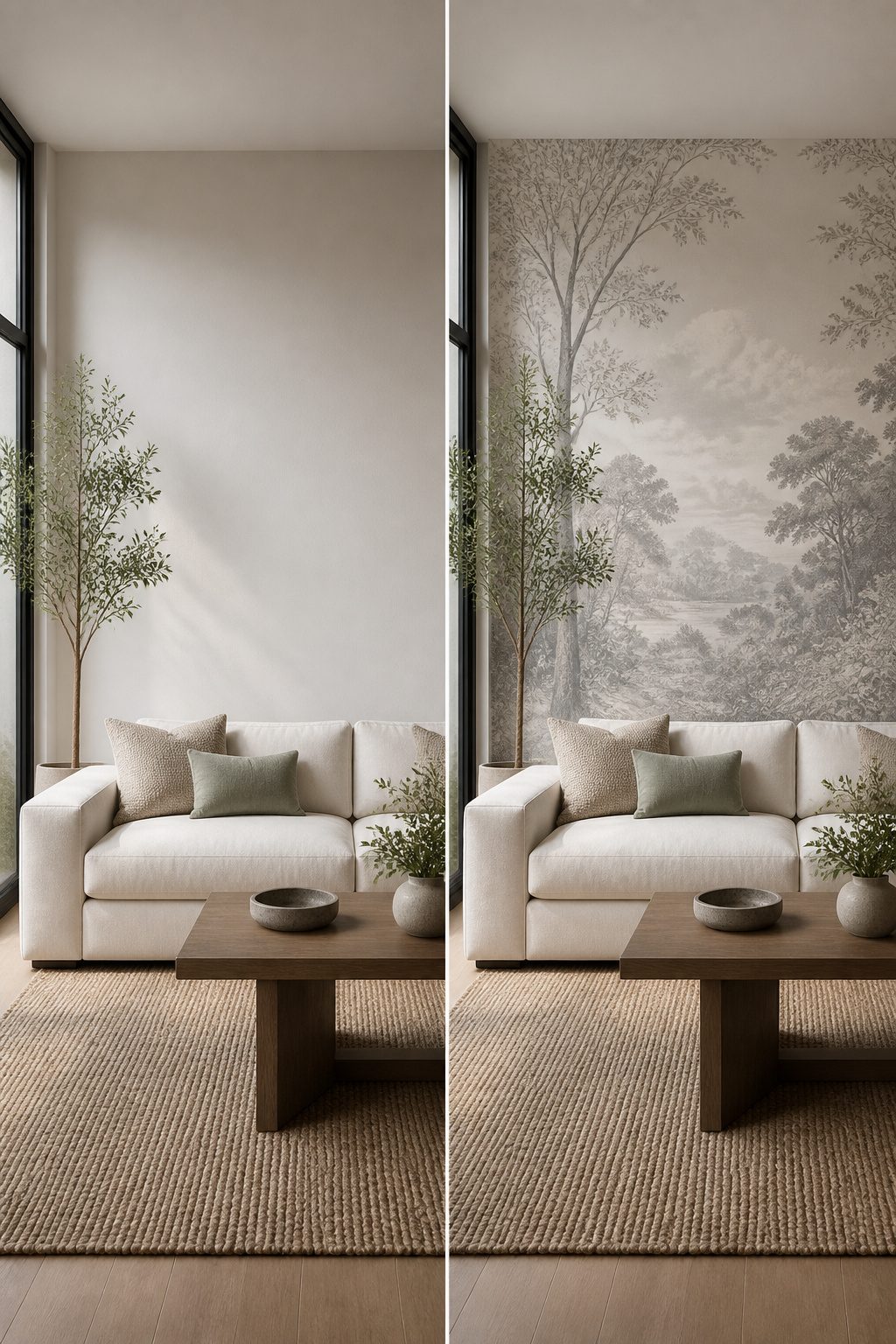
Most printed grisaille murals run about $3 per square foot from shops like Photowall, which is a fraction of what hand-painted work costs. The trade is in the surface: you get the tonal range and the scenic depth, but not the layered pigment or the slight irregularity that makes antique grisaille feel alive under shifting light. Ink sits on top of the substrate rather than sinking in, so the matte versions read flatter and the satin ones can throw a faint glare near windows.
I learned this ordering samples for a guest room project. The non-woven paste-the-wall option held the image crisply and went up in about two hours with a second pair of hands, but the removable peel-and-stick version felt thinner and showed every bump I had not sanded. For renters, that convenience is real; the adhesive lifts clean off standard painted walls, though latex or Teflon finishes need a light sanding first or the strip will fail.
Custom sizing is standard now, which keeps the budget in reach even for wide walls. The printed versions sacrifice the one-of-a-kind variation you’d get from a studio like Susan Harter’s collection, but they keep the mood: the same grey-to-cream scale, the same sense of distance. If your room already has decent light and you are not trying to fool anyone into thinking it is 18th-century France, the printed route is where the money actually makes sense.
Choose Your Design
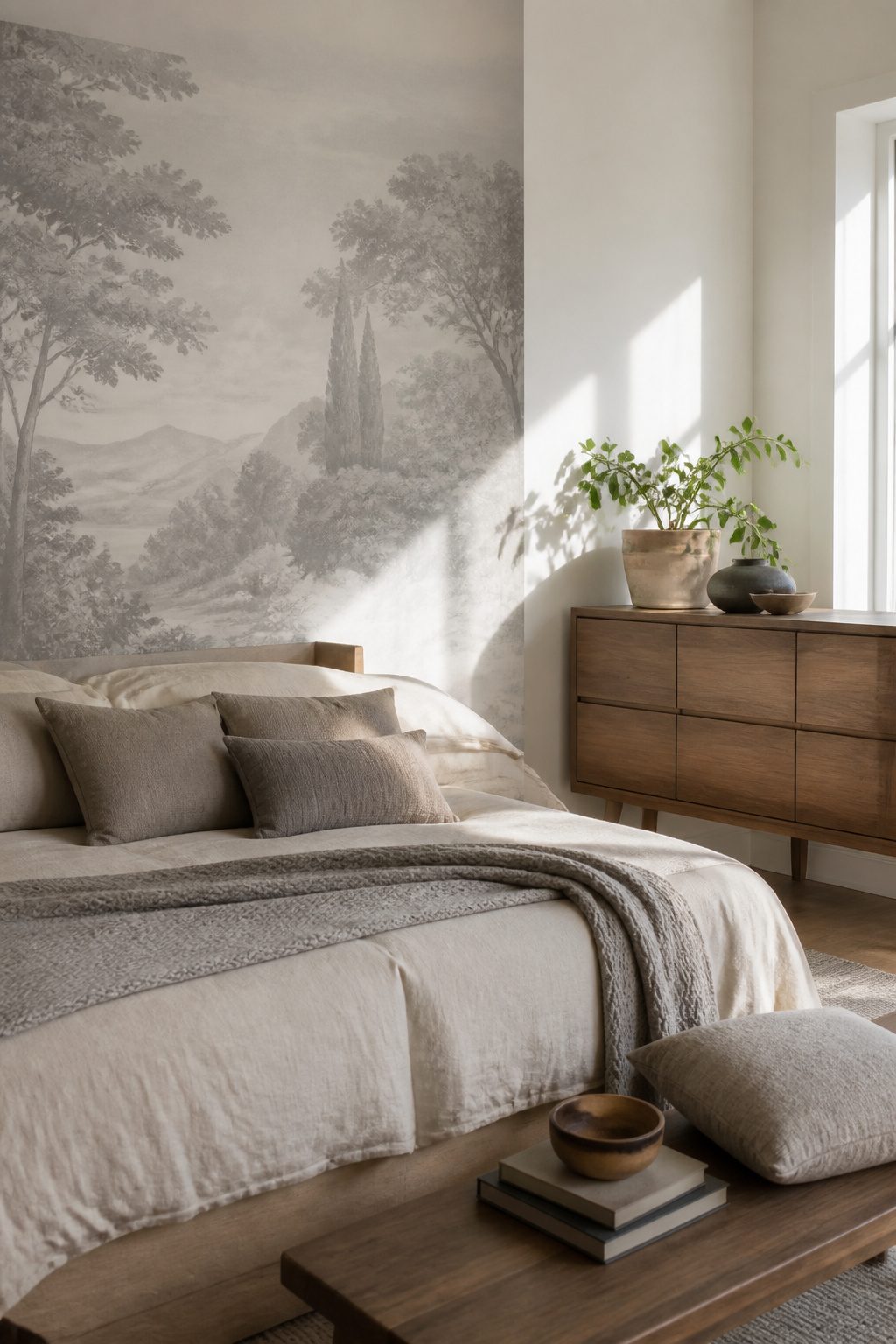
Grisaille mural wallpaper comes in two basic postures: the full-wall scene and the partial accent. A frieze, running just the top third of the wall, lets you keep color below and still get that tonal depth without the room going monochrome. I have only installed on flat walls, and textured drywall will fight adhesion, so factor sanding into your weekend if your surface has any orange-peel or knockdown finish.
The single-toned nature of grisaille means it reads as texture more than pattern, which is why it works in both clean modern spaces and traditional rooms. But the exact design matters. Calmsden Grisaille, for instance, carries enough detail to stand alone on a full wall; Barringtons reads softer and suits a nursery or a neo-classical stairway where you want the architecture to stay dominant. Order multiple samples and live with them in your actual light for a day or two before committing. The same gray can shift warm or cool depending on what your windows throw at it, and a sample held up at 3 p.m. tells you something the product photo never will.
If your wall has breaks, doorways, or windows, check whether the mural panels repeat or dead-end. A non-repeating 9-by-12-foot design like Etched Arcadia leaves you with visible seams on longer walls unless you frame it deliberately within the architecture. That decision, full scene versus partial accent, is the one that drives everything after it: how much paper you order, whether you need a pro, and what the final bill looks like.
Measure Your Wall
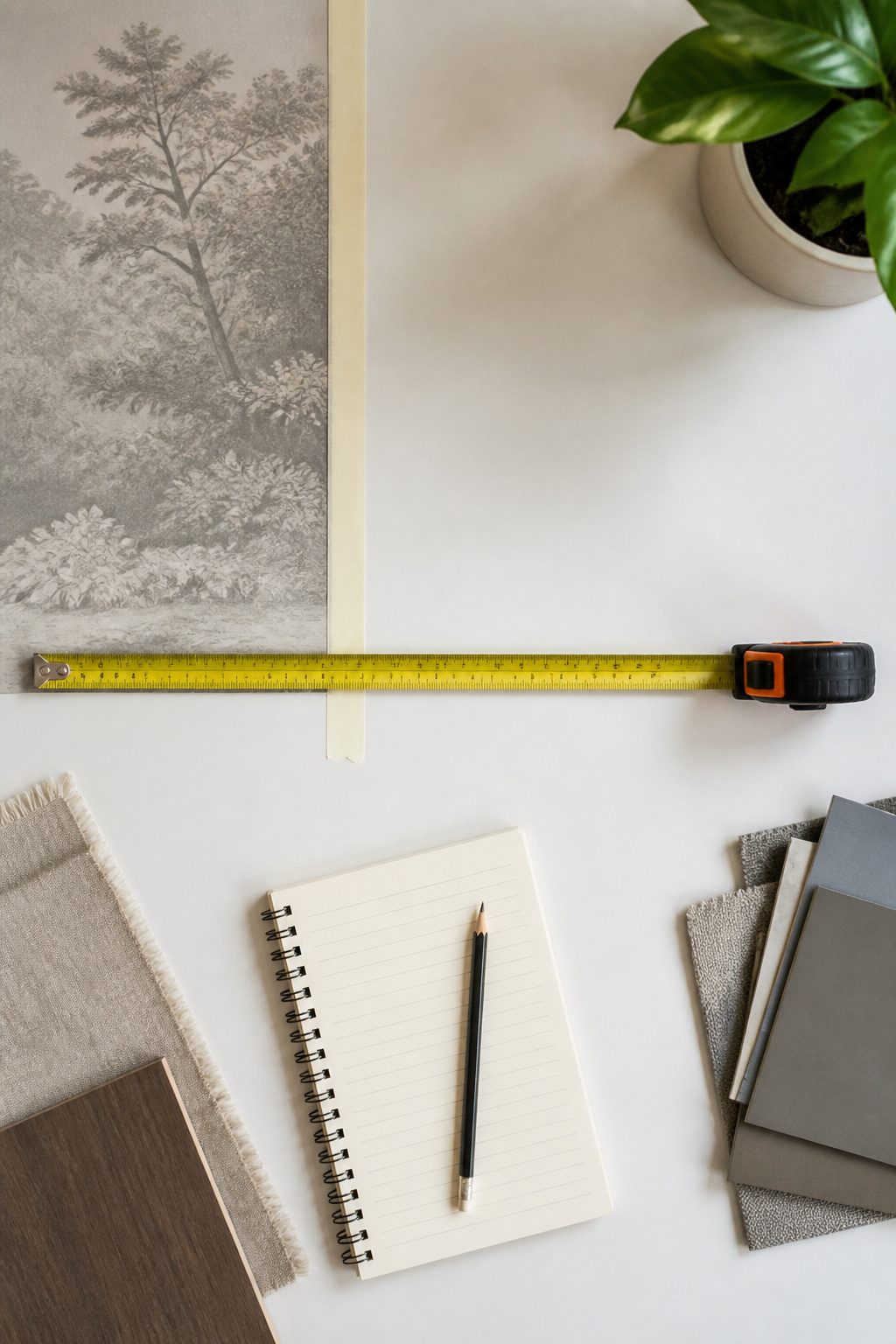
Wallpaper that ships in panels, usually about 35 inches wide, leaves almost no forgiveness for a measurement that is even an inch short. The last strip gets stretched or trimmed awkwardly, and with a grisaille mural the seam can break the illusion of continuous tone that makes the style work. I measure width and height at three points: left, center, and right for width; top, middle, and bottom for height. The largest number in each direction is what I order, and I add roughly 5% extra to both dimensions for trimming and for the fact that no wall is truly plumb.
Odd dimensions are where custom sizing becomes necessary. A wall with a sloped ceiling, a built-in bench, or a doorway that interrupts the field means the standard panel width will land wrong. Most makers of these murals will cut to your exact height; the width gets handled by choosing how many panels you need and sometimes by cropping the design at the edges. What matters is telling them whether your stated dimensions already include that 5% buffer or whether they should add it. I learned to state it plainly in the order notes rather than assume.
A wall with windows or a chimney breast takes more thought. I treat each uninterrupted plane as its own measurement rather than wrapping one mural around corners, since the perspective in a grisaille scene rarely lines up across an inside corner anyway. Two separate ordered sections costs more, but it avoids the stretched, distorted trees or columns that come from forcing continuity where the architecture will not allow it.
Order Samples
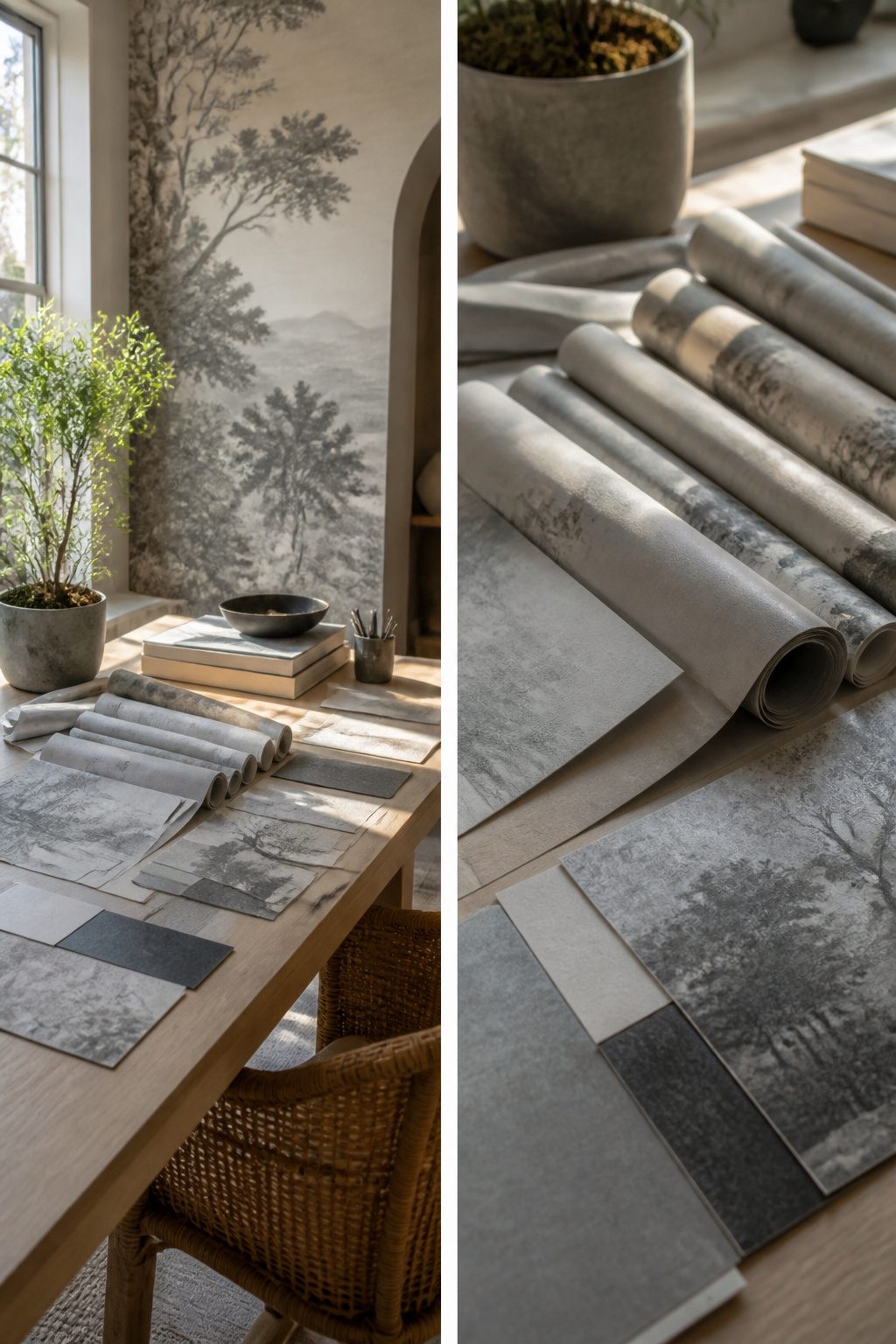
Grisaille lives or dies by its gray tones, and gray is the color most likely to lie to you about what it is. A sample that reads as soft pearl under the store’s LEDs can turn flat and greenish against your north-facing bedroom wall, or suddenly pick up a violet edge at sunset. The technique depends entirely on shades of gray creating depth, so the sample needs to face your actual light for a full day before you decide.
When the envelope arrives, tape it up where the mural will go and check it morning, afternoon, and after dark with your lamps on. Look for whether the lightest tones stay warm or go cold, and whether the darkest shadows hold detail or sink to pure black. Photowall and other makers offer customizable sections of the same mural, so if the branch-heavy version feels too busy in your light, a more abstract crop with fewer elements might read better. I have ordered samples I loved at 10 a.m. and barely recognized by dinner, and that second look always saved me from a wall I would have regretted.
Prepare the Wall
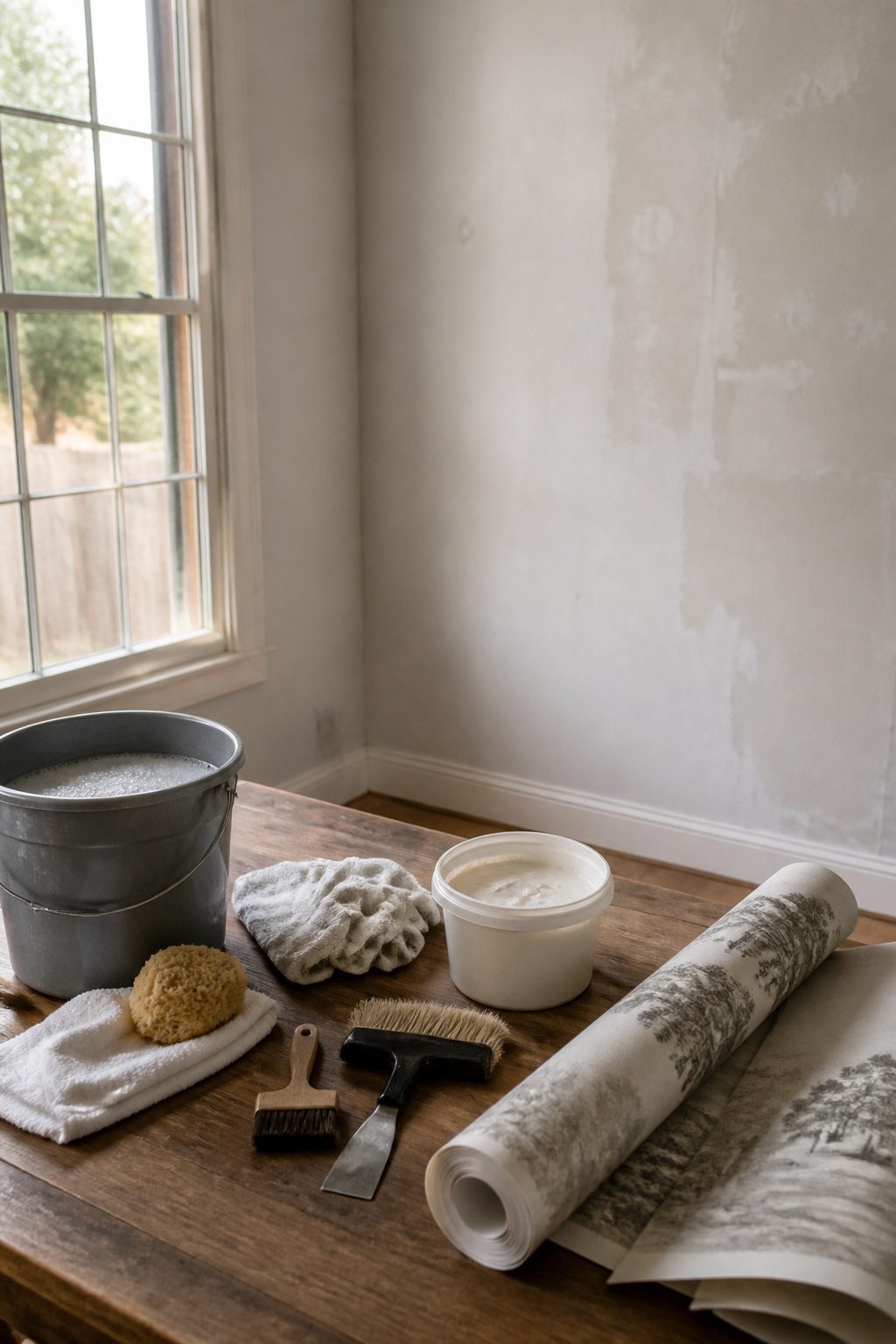
The wall underneath a grisaille mural matters more than the paper itself. I learned this the hard way with a peel-and-stick panel that lifted at every corner because I had trusted a wall that looked clean.
Start by washing with plain water and a little dish soap, then let it dry overnight. Latex or Teflon paint needs sanding; those washable finishes repel adhesive like waxed paper. A quick scuff with 120-grit paper and a wipe-down changes everything. In a rental with decades of layered paint, you will not get perfection, but you can get flat: fill the worst gouges with spackle, sand when dry, and accept that the mural’s own texture will hide minor sins. The paste-the-wall option forgives more than peel-and-stick, which is why I switched after that first failure.
Drying time is the step renters skip and regret. Fresh paint wants three weeks minimum; I have pushed it to ten days in a dry winter month and paid with a bubble I had to slit and re-glue. If your lease ends before your patience does, go with the heavier non-woven or vinyl-backed paper and prime first. It adds half a day and twenty dollars, but it beats stripping failed wallpaper at midnight.
Install the Wallpaper
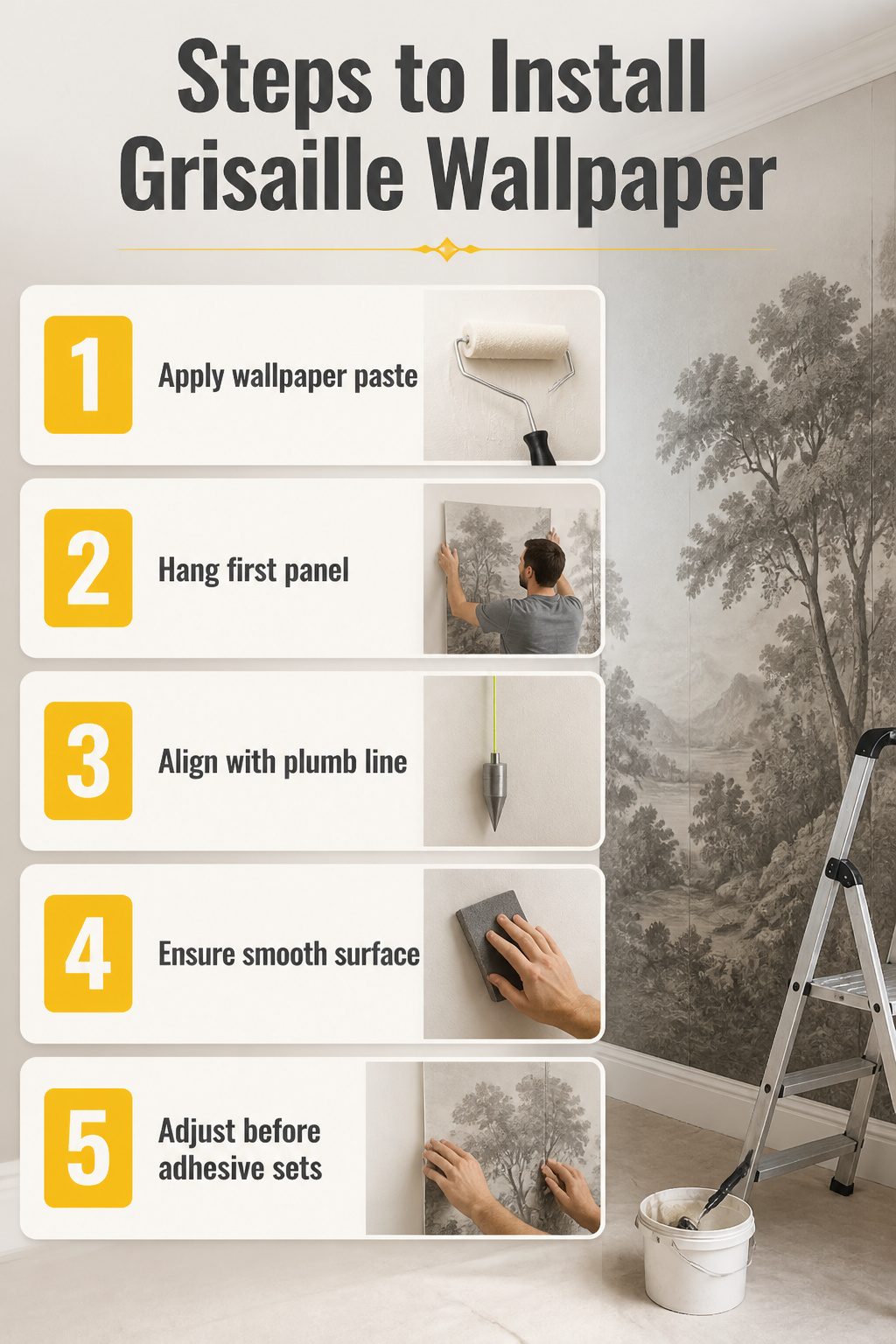
Wallpaper paste goes on the wall, not the paper, with most grisaille murals I have looked at. The non-woven and vinyl-backed options are labeled paste-the-wall, which means you roll adhesive directly onto the surface and hang the dry panel into it. Peel-and-stick exists too, but the fine detail in a grisaille print shows every bubble and skew, so the repositioning advantage matters less than getting that first panel dead level.
The first strip sets everything. I measure out from a corner, find my plumb line, and hang the left edge of panel one exactly on it. If that edge tilts, the whole landscape tilts with it, and a grisaille scene gives you nothing to hide behind: no busy pattern, no forgiving motif. The manufacturer instructions for paste-the-wall products specify a smooth, light-colored surface, and some warn that latex or Teflon paint can block adhesion. In that case, a quick sanding with fine-grit paper and a wipedown is the fix, not a different paste.
Peel-and-stick reads easier on paper, but the self-adhesive layer can relax and shift under its own weight across a tall mural panel. For a weekend install with real stakes, paste-the-wall buys you open time to slide and true the seam before the adhesive grabs.
Material Types Compared
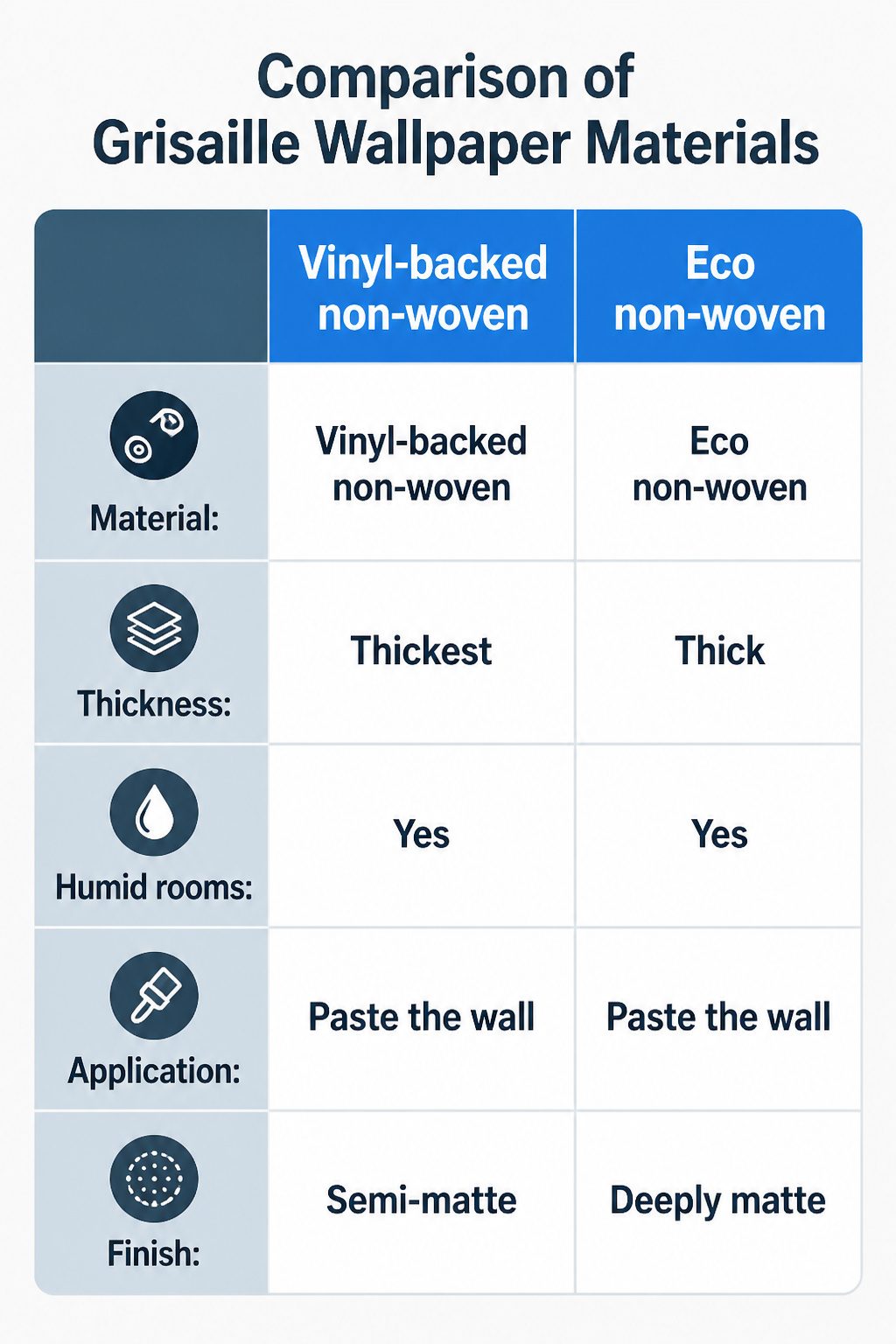
Vinyl-backed non-woven is the thickest of the three, built with two layers that make it washable and suited to humid rooms like bathrooms. The eco non-woven drops the PVC, keeps the durability, and goes up with paste-the-wall ease since the glue hits the surface, not the sheet. Paper sits at the other end: lighter, matte, and less forgiving near a shower.
| Material | Thickness | Humid rooms | Application | Finish |
|---|---|---|---|---|
| Vinyl-backed non-woven | Thickest | Yes | Paste the wall | Semi-matte |
| Eco non-woven | Thick | Yes | Paste the wall | Deeply matte |
| Paper | Lightest | No | Paste the wall | 100% matte |
For a living room or bedroom where moisture is not the issue, 170g non-woven paper carries the print cleanly without the vinyl layer. The Seascape Grisaille mural runs 59 x 83 inches on exactly that weight, PVC-free, with a straight match and strong light resistance. Scrubbable and strippable, it is the grade I would hang in a dining room where the wall sees hands but not water.
What Grisaille Costs
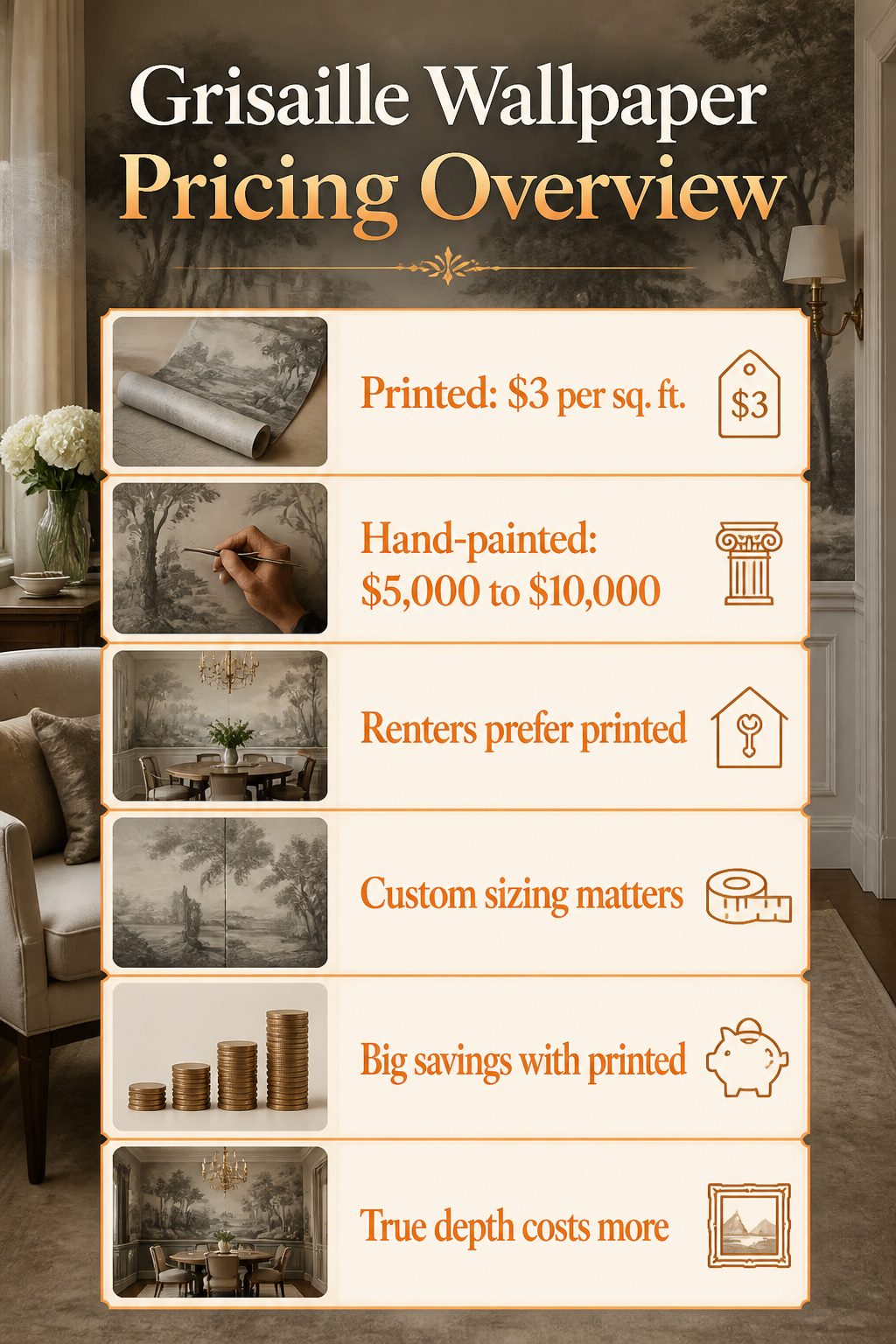
Printed grisaille murals run about $3 per square foot through services like Photowall, where you pick the exact crop you want. That custom sizing matters: a 9-by-12-foot mural from Anthropologie, for instance, leaves you with visible seams on longer walls since the ends do not repeat.
Hand-painted work from studios like de Gournay, Gracie, or Zuber starts around $5,000 to $10,000 for a full room. I spent $500 doing a similarly sized dining room with printed paper at our old house, and even the Etched Arcadia design would have hit roughly $1,500 for all four walls, not that the pattern would line up.
The gap is real. Printed murals give you the tonal look without the hand-painted price tag, though you lose the true depth and the seamless repeat. For a renter or a first project, the tradeoff leans printed. For a permanent dining room where you want the wall to read as actual oil work, the cost jumps an order of magnitude, and that is before installation.
Rooms That Work
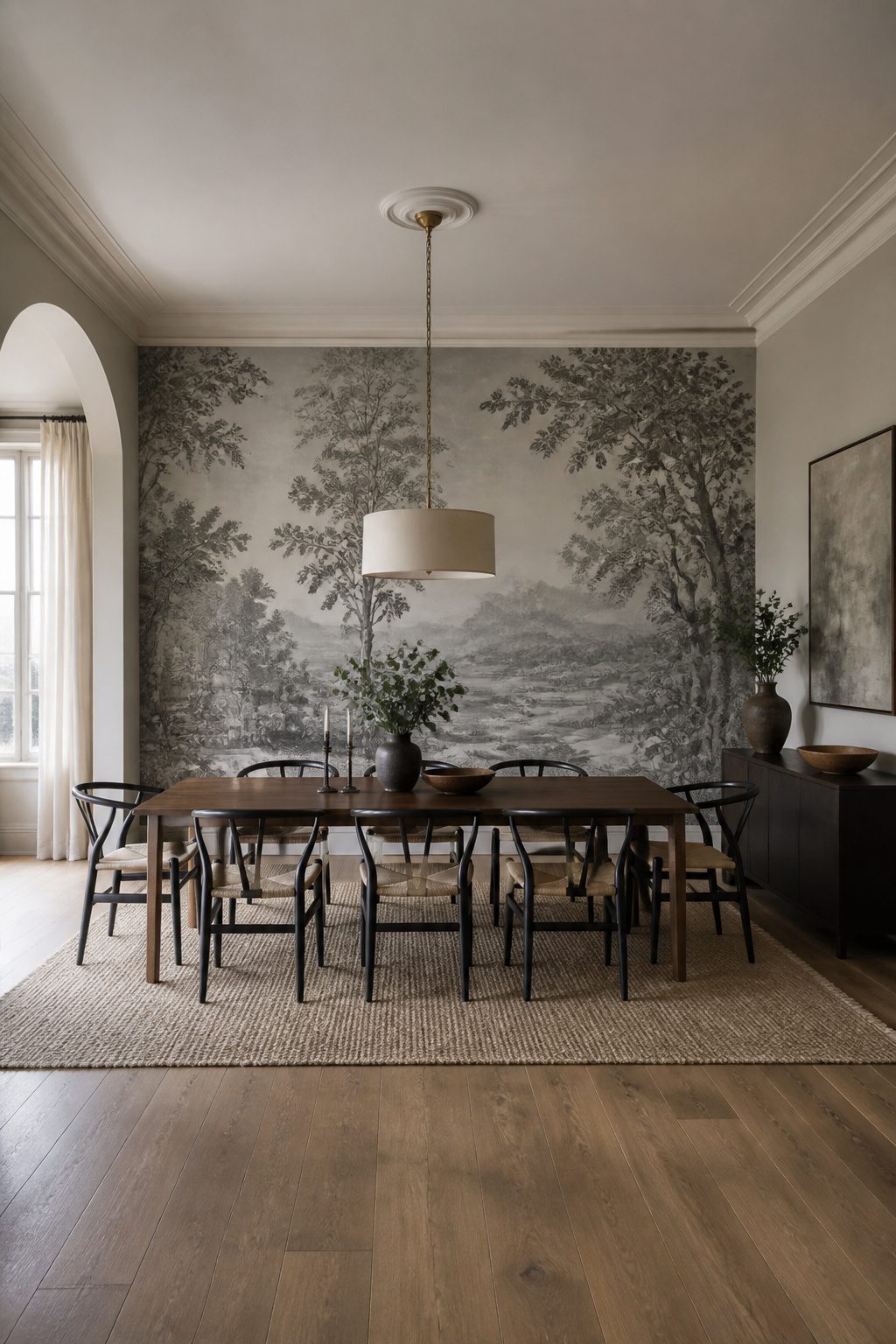
Grisaille mural wallpaper works hardest in rooms where you want the walls to carry weight without shouting. A dining room with clean, bright lines gains texture and depth from a full-wall treatment like Calmsden Grisaille, the monochrome surface catching light differently than flat paint. The same design, scaled down to a frieze, tucks quietly under a ceiling in a colorful space and keeps the eye from drifting upward.
Nurseries soften around it too. Barringtons Grisaille in a minimalist nursery keeps the room calm without defaulting to pastel, and the single tone adapts as furniture and toys accumulate over the years. Traditional interiors take it just as easily. That same Barringtons pattern climbs a neo-classical stairway with the kind of architectural presence that would feel heavy in full color.
The real advantage is that grisaille never competes with what you already own. No shade to clash with the sofa you inherited, no dominant hue steering your next purchase. It adds surface interest while staying visually quiet, which is why designers keep reaching for it across styles that otherwise share nothing.
Frequently Asked Questions
What is grisaille wallpaper?
Grisaille wallpaper is a wall covering done entirely in shades of gray or another neutral tone, using the same painting technique developed centuries ago when colorful pigments were scarce. The restricted palette creates an illusion of depth and dimension that reads as texture or carved form rather than flat pattern. On a wall, it turns a printed mural into something that carries visual weight and architectural presence.
How do you install grisaille wallpaper?
Installation starts with a clean, smooth wall that has been sanded if painted with latex or Teflon finishes. Most grisaille murals use paste-the-wall application, rolling adhesive directly onto the surface and hanging dry panels into it. The first panel must be perfectly level, checked with a plumb line, because a tilted start throws off the entire scene and grisaille gives no busy pattern to hide the error.
Where can I buy grisaille wallpaper?
Printed grisaille murals are available through online services like Photowall, where you can customize the exact crop of a design for your space. Specialty companies including Anthropologie also carry select designs. For hand-painted commissions, studios such as de Gournay, Gracie, Zuber, and Susan Harter produce original work at a significantly higher price point.