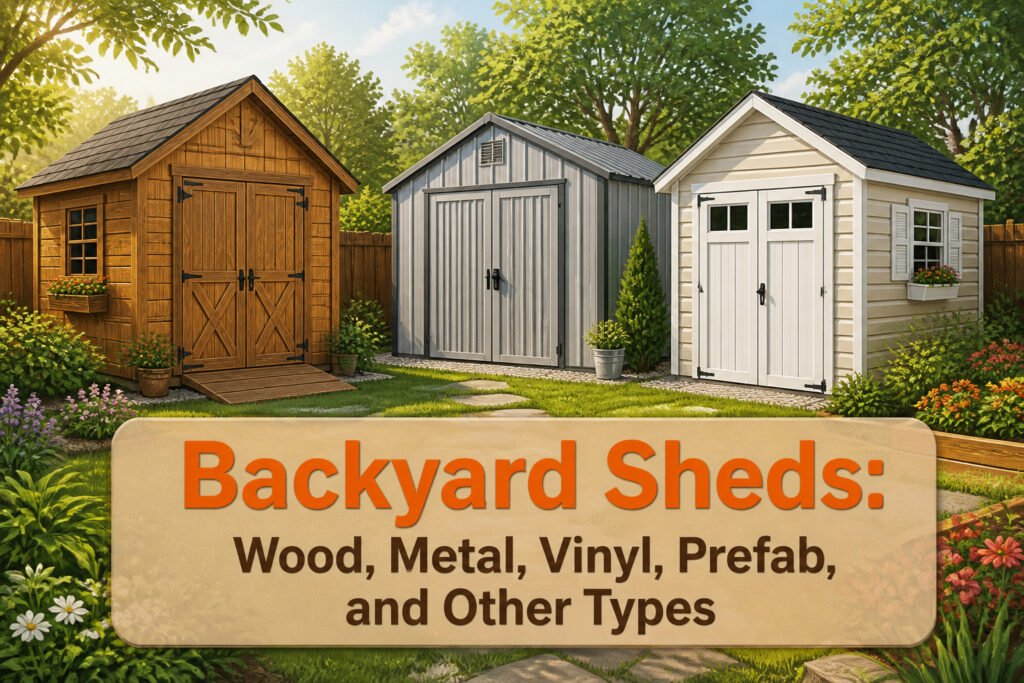
A backyard shed is a freestanding structure built on a residential property for storage, workspace, or shelter, and the material you choose changes almost everything about how much it costs and how much time you will spend maintaining it. Wood starts around $3,000 for a basic kit but demands fresh paint or stain every two to four years; metal drops as low as $300 and asks for almost nothing afterward. That gap between looking good and staying easy is what most buyers trip over.
Wooden Sheds
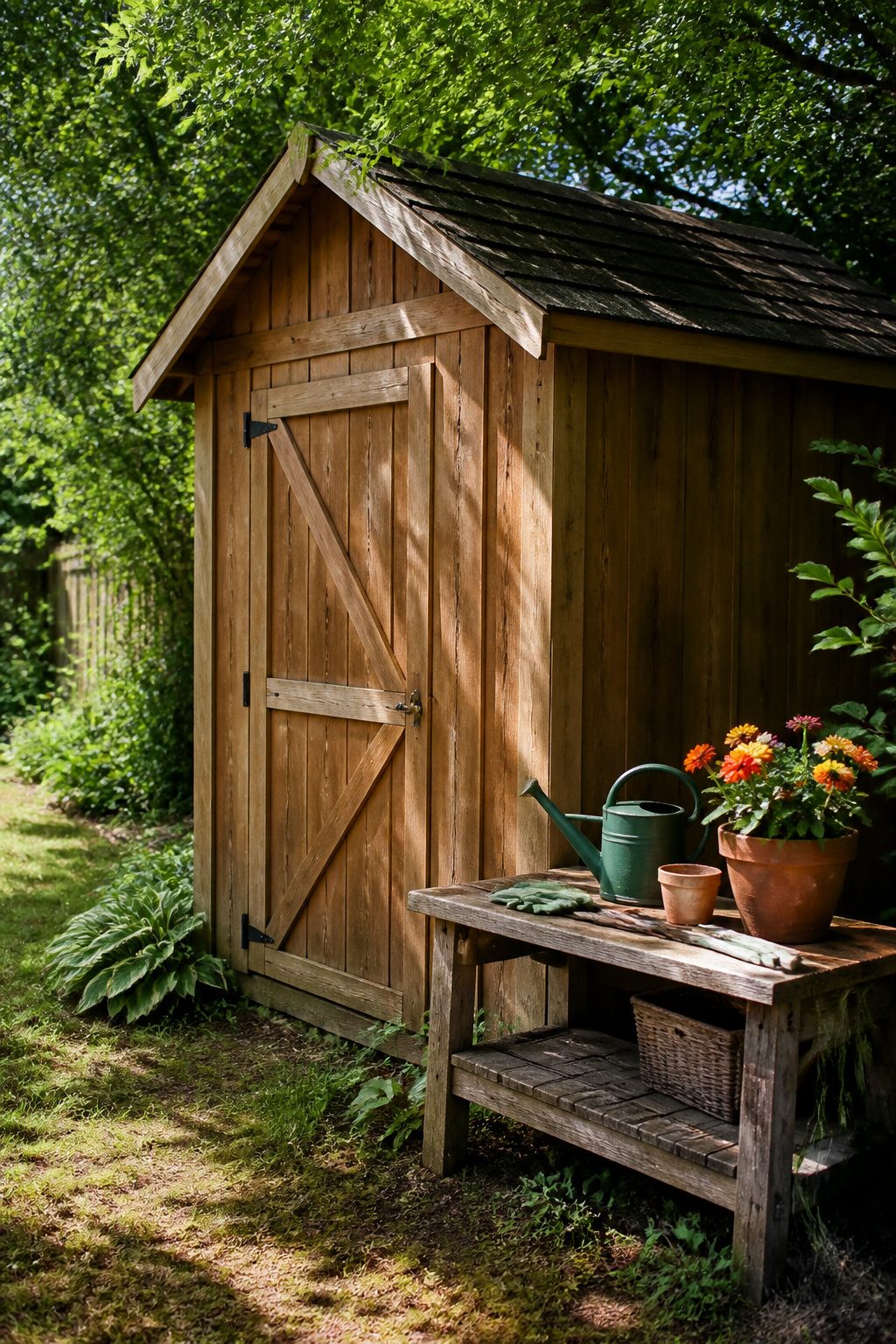
Treated wood still carries the weight of being the traditional choice for backyard sheds, and the look is hard to fake. The grain reads as garden-appropriate in a way metal or vinyl rarely manages, especially if you are trying to match an older house or soften a fence line. I have watched neighbors spend whole weekends deciding between board-and-batten and clapboard, then more weekends on the trim color, which tells you something about how much the material invites that kind of attention.
The catch is what happens after the build. Pressure-treated lumber resists insects and fungal decay at the start, but the factory treatment does not seal out moisture indefinitely. You will need to paint or stain within the first year, then repeat every two to four depending on your climate and how much sun hits the walls. Skip this, and the boards check, cup, and eventually rot where water sits. I have seen a ten-year-old shed that looked thirty because the owner treated it like masonry.
Sizes tend to cluster around 8×10, 10×12, and 12×16 feet, with the 10×12 probably the most common compromise between storing a mower and still having wall space for rakes. A basic kit you assemble yourself, pre-cut with pre-hung doors, can land in the low thousands. Start adding windows, a steeper roof pitch, or custom siding, and the number climbs fast. The prefab custom builds I priced out for this article ran from roughly $6,000 up past $8,000, with one studio-style kit at $8,895 before any delivery or site prep. That is real money for a weekend project, and it is worth knowing where the line sits before you fall in love with a design.
Metal Sheds
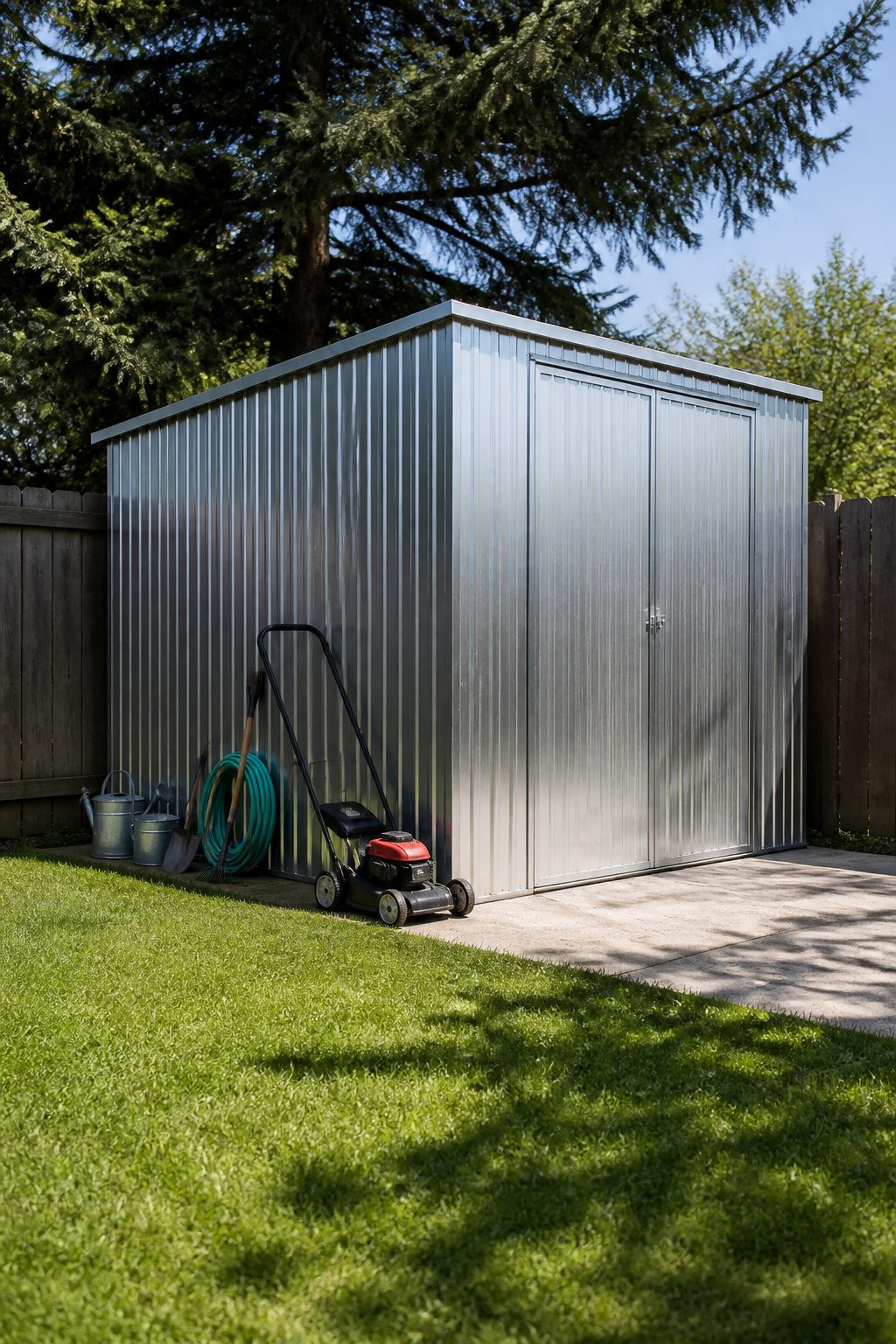
Galvanized steel sheds start around $300 and climb from there, which makes them the entry point for anyone who needs storage now and does not want to spend a weekend staining or re-staining. The panels are thin, but the material itself is strong enough for lawnmowers, bikes, and the rest of the yard gear that does not belong in the garage. Rust is the worry with any metal, and the hot-dipped coating is what buys you the years without touch-up work.
I looked at the Arrow Woodridge and the Absco Regent lines when I was comparing options last spring. Both use that same galvanized construction, and both come in fairly standard footprints: 10 by 12, 10 by 14, the sizes that fit most backyards without a permit fight. The Absco adds a faster assembly system, which matters if you are working alone.
The trade is looks. A metal shed reads as utility, not charm. Woodgrain finishes like the Woodridge help, but up close the panels still sound hollow when rain hits them. If your shed sits against a fence where no one walks, that does not matter. If it faces the patio, it might. Upkeep is where metal wins outright: no rot, no insect damage, no resealing every two years. For pure storage, that is the calculation that usually closes the sale.
Vinyl Sheds
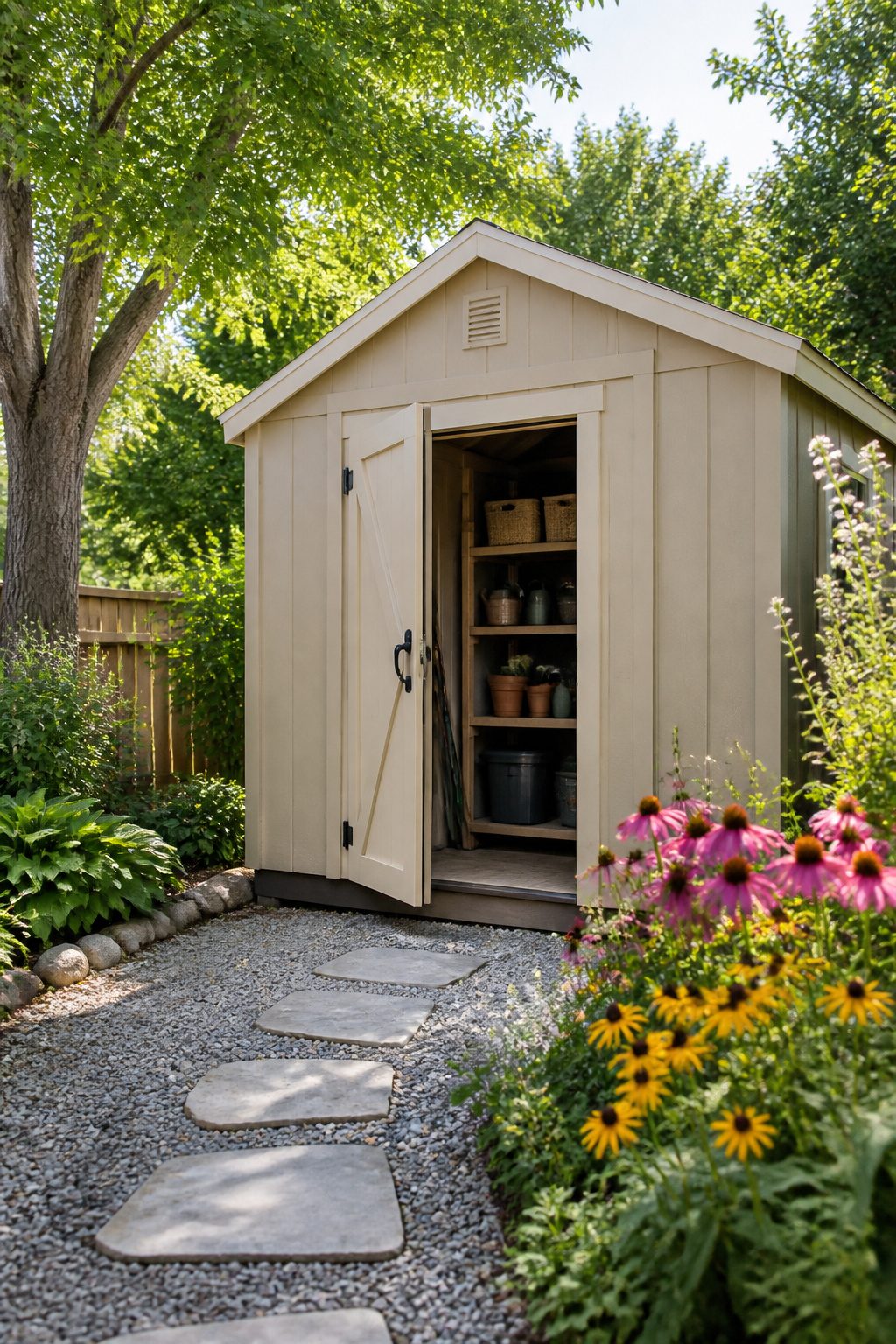
High-density polyethylene, the same plastic used for milk jugs and cutting boards, gets molded into shed panels that snap together or screw onto a metal frame. The material does not absorb water, so rot and termites are not a concern, and the color runs through the panel rather than sitting on top, which means scratches do not turn into maintenance trips with a paint can.
A vinyl shed lands somewhere between wood and metal on most yard priorities. The texture is stamped to look like board-and-batten or clapboard from ten feet away, but up close it reads as plastic, and the roofline tends toward the generic. That said, the panels hold up to hose-down cleaning and do not rust where lawn fertilizer piles against the base.
The catch is structural. The walls flex more than metal or wood, so hanging a heavy tool rack inside requires finding the metal studs rather than driving a screw anywhere you please. And while the material itself lasts, the doors and hinges are usually the lightest grade that keeps the kit price down. I would plan on replacing those latches after a few seasons of summer heat and winter contraction rather than hoping they outlast the shell.
Prefab Sheds
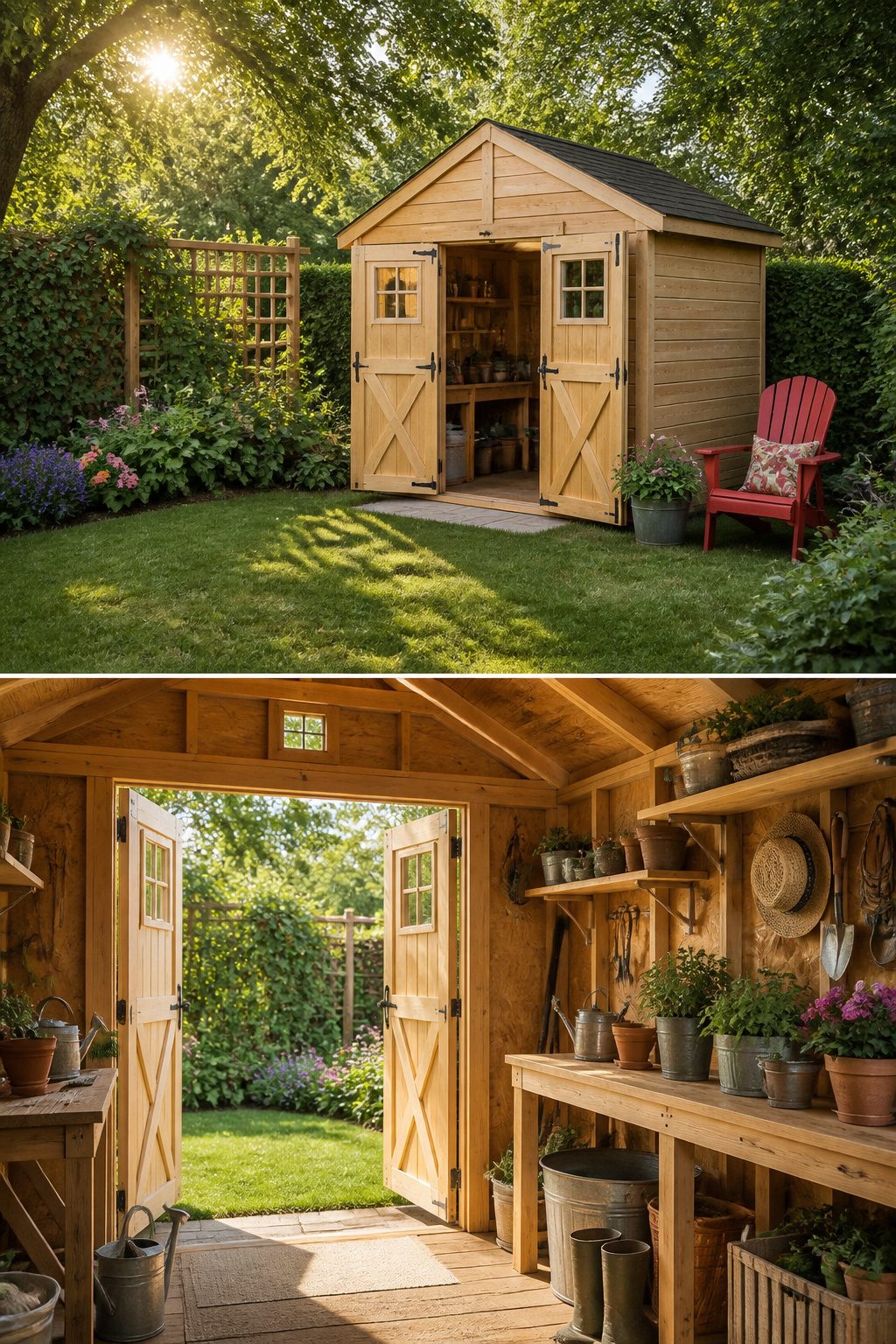
Prefab kits land somewhere between a furniture build and actual construction. The wood arrives pre-cut, the doors already hung, and two people with basic tools can usually get the walls up and roof on in about one day. That timeline assumes nothing in the kit is warped and the site is actually level, which in my experience is the point where the "easy" label starts to sting.
The range runs wider than most buyers expect. Some brands sell a fixed package: one size, one door placement, take it or leave it. Others let you step through windows, paint colors, and roof styles before the order ships. Tuff Shed and ShedMaster both play in that second space, though the degree of choice varies by model line. A basic storage box needs little more than a color swap to stop looking like a backyard appliance; a home-office or studio build benefits from the extra window and the side door you added at the configurator stage.
Handy Home Products, sold through The Home Depot for over four decades, pitches the same split: buy the kit and self-assemble, or pay for their crew to handle it. The DIY route saves money you will later spend on a Saturday and probably a second trip for the drill bit you did not know you needed.
Garden Sheds
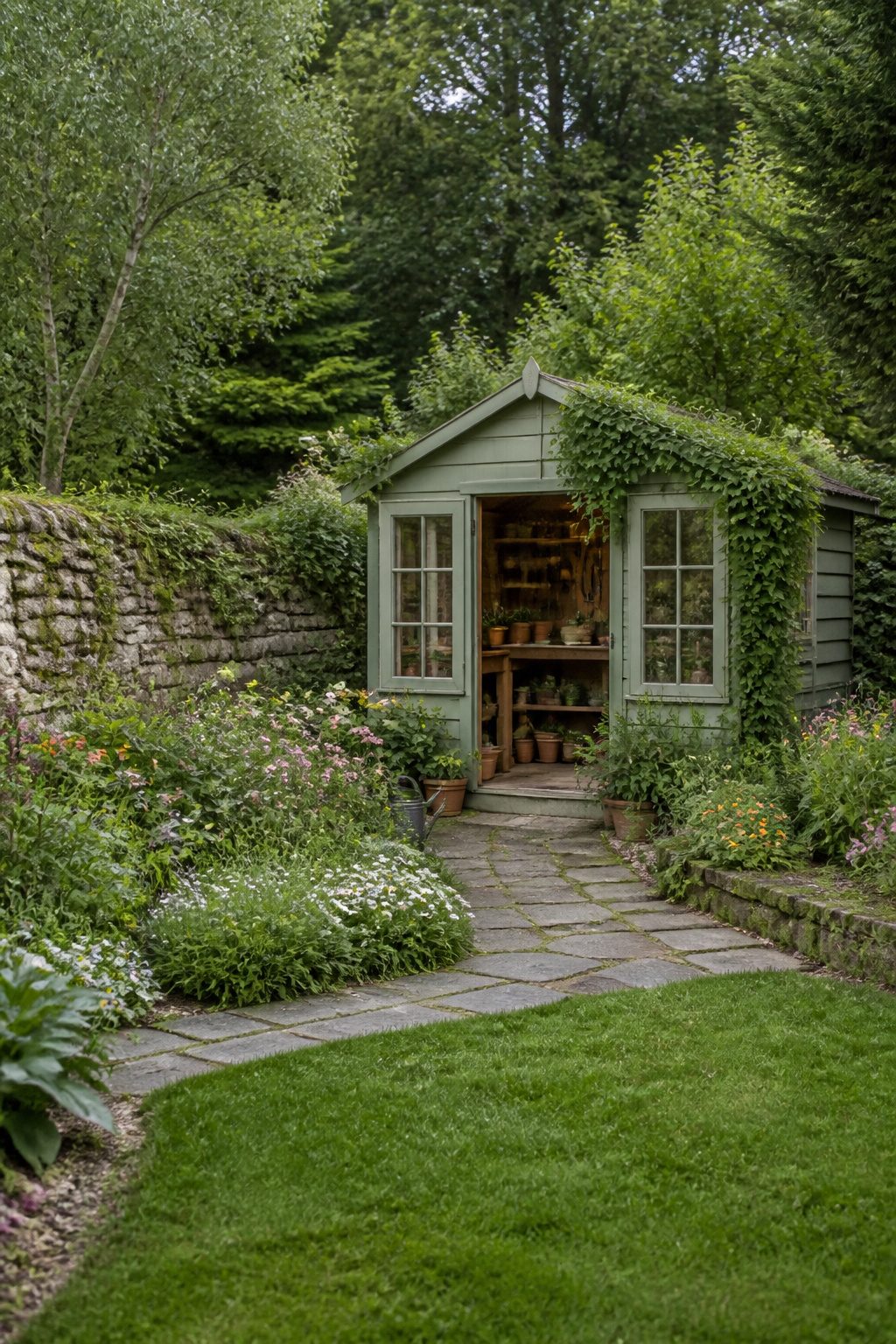
A garden shed lives or dies by how fast you can get a trowel in your hand and get back to the dirt. The best ones keep potting soil dry and long-handled tools off the floor, which means built-in shelving and at least one window you can actually see by. I learned that the hard way after installing a windowless 8×8 and spending two seasons working by the light of my phone flashlight.
Windows matter more here than in a plain storage shed because you are inside during daylight, sorting seed packets or mixing fertilizer. One operable window also vents humidity so metal tools do not rust in their hooks. Most dedicated garden sheds run 80 to 120 square feet; anything smaller and the wheelbarrow ends up parked outside, defeating the purpose. Placement should put the door within a few steps of the beds, not tucked behind the garage where you will skip the trip and leave hoses coiled on the patio instead.
The wall kit route, with pegboard and a lockable cabinet for chemicals, costs around $299 and saves floor space for bags of mulch. That is money you will earn back the first season you are not tripping over a flat of petunias.
Studio Sheds
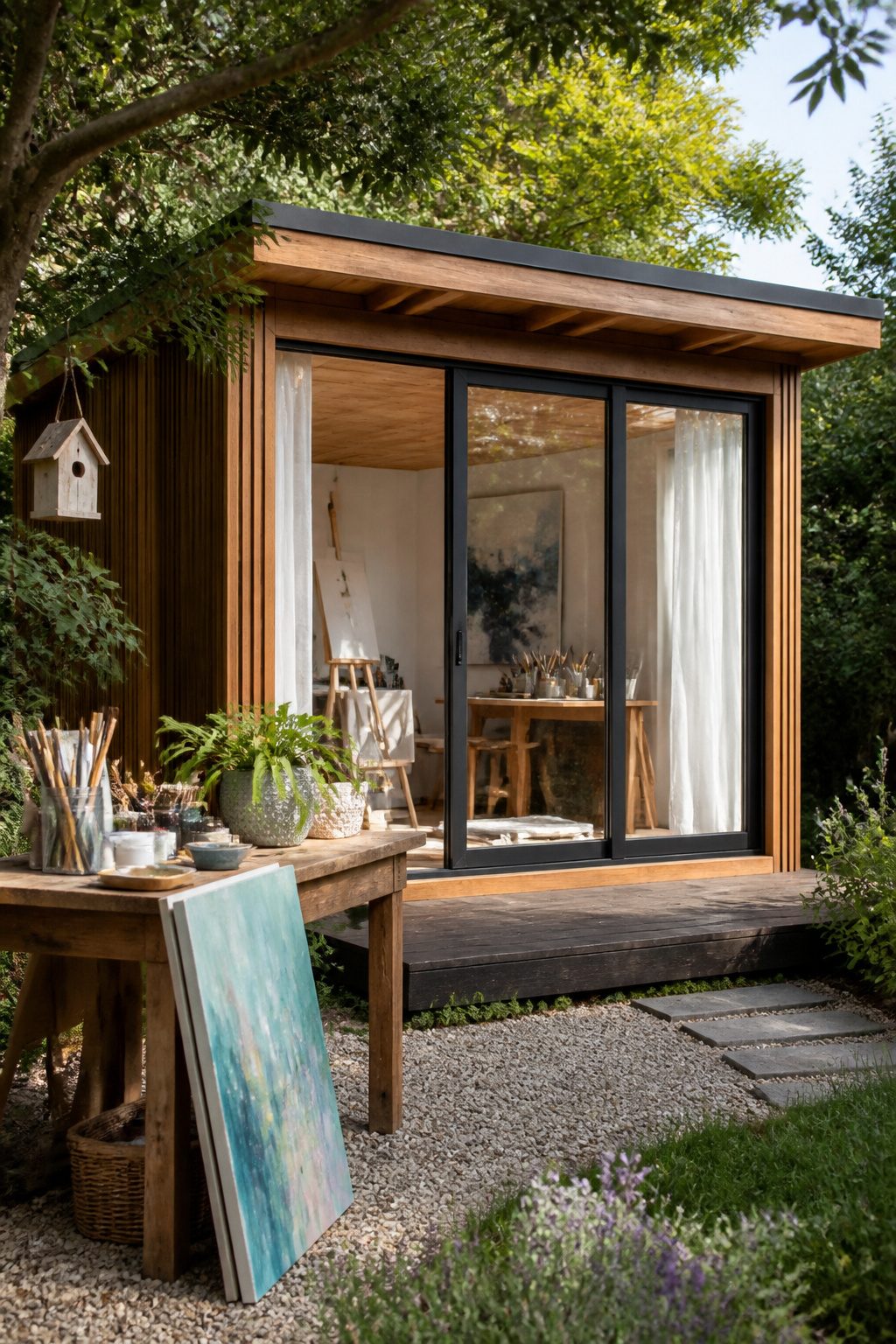
Studio sheds push backyard sheds well past the storage-only idea, and that shift is where the budget breaks open. A finished interior for a home office or art space means real insulation, maybe wiring, and wall treatments that read like a room, not a box. The prefab kits I tracked start around $6,295 for an 80-square-foot contemporary shell and climb past $8,895 for a 117-square-foot studio with overhangs and pine detailing. Those numbers land squarely in the upper half of what most weekend builders expect to spend.
The aesthetic payoff is real, though. Slimline overhangs, angled roofs with two wall heights, and 32-inch gable porches turn the structure into something you actually want to walk up to. Large windows matter more here than in any other shed type; without them, you’re just working in a bright closet. Insulation is the line between a three-season hobby space and a year-round office you can actually focus in, and skipping it to save a thousand dollars is the mistake you’ll notice every February morning.
What separates these from standard prefab is the design intent. Scandinavian-influenced lines or cottage-style cladding signal that someone thought about how this sits against your house, not just how fast it ships. The catch: that thinking costs. If your project ceiling is mid-range, a basic shell with DIY interior finish gets you most of the function without the premium markup.
Utility Sheds
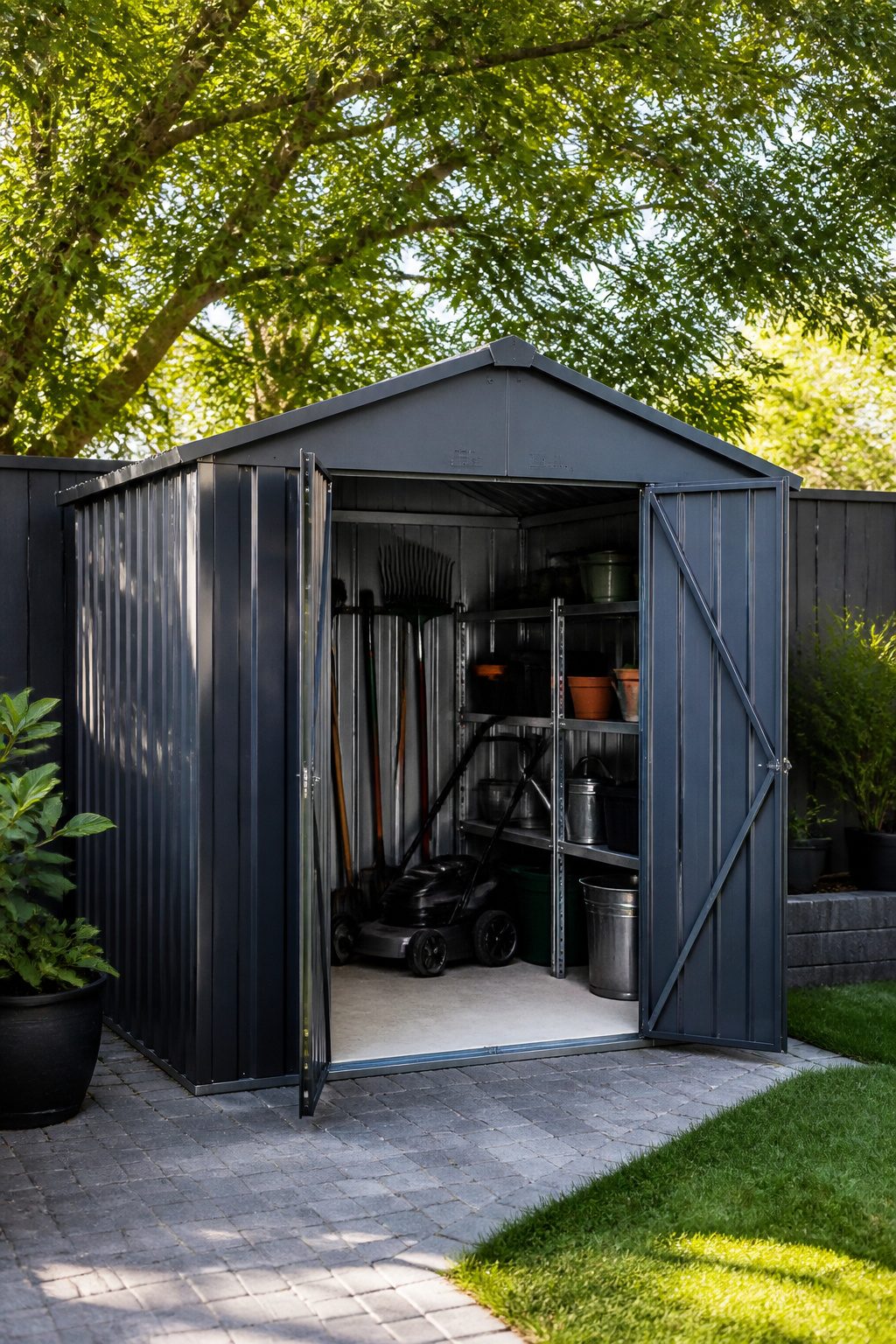
A utility shed is the baseline most people picture when they think of backyard sheds: four walls, a door, and enough floor space for a mower, a few shovels, and the garden tools that otherwise clutter a garage. The Absco Utility 10 ft. x 19.5 ft. and the Absco Workshop 20×10 in Woodland Gray both fit this description, built from galvanized steel with wide double doors and the SNAPTiTE assembly system that snaps panels together without hundreds of loose screws. Those dimensions matter because a 10-by-19 or 20-by-10 footprint is where the overlap with metal and prefab options becomes obvious; at these sizes, steel kits dominate the lower price points and wood becomes harder to justify unless you are matching house siding.
What separates a utility shed from the garden or studio types is the absence of charm as a priority. The Lexington 10×14 with its high barn roof and baked-on enamel finish still reads as storage first, style second, and that is the point. For a weekend build with basic tools, the metal prefab kits land in the few-hundred to mid-thousand dollar range, which is where most renters and first-home owners already budgeted. The catch is the floor; some kits include flooring, others expect you to build a base or buy the foundation framing kit separately, and skipping that step turns a two-day project into a regret by the first heavy rain.
Greenhouses
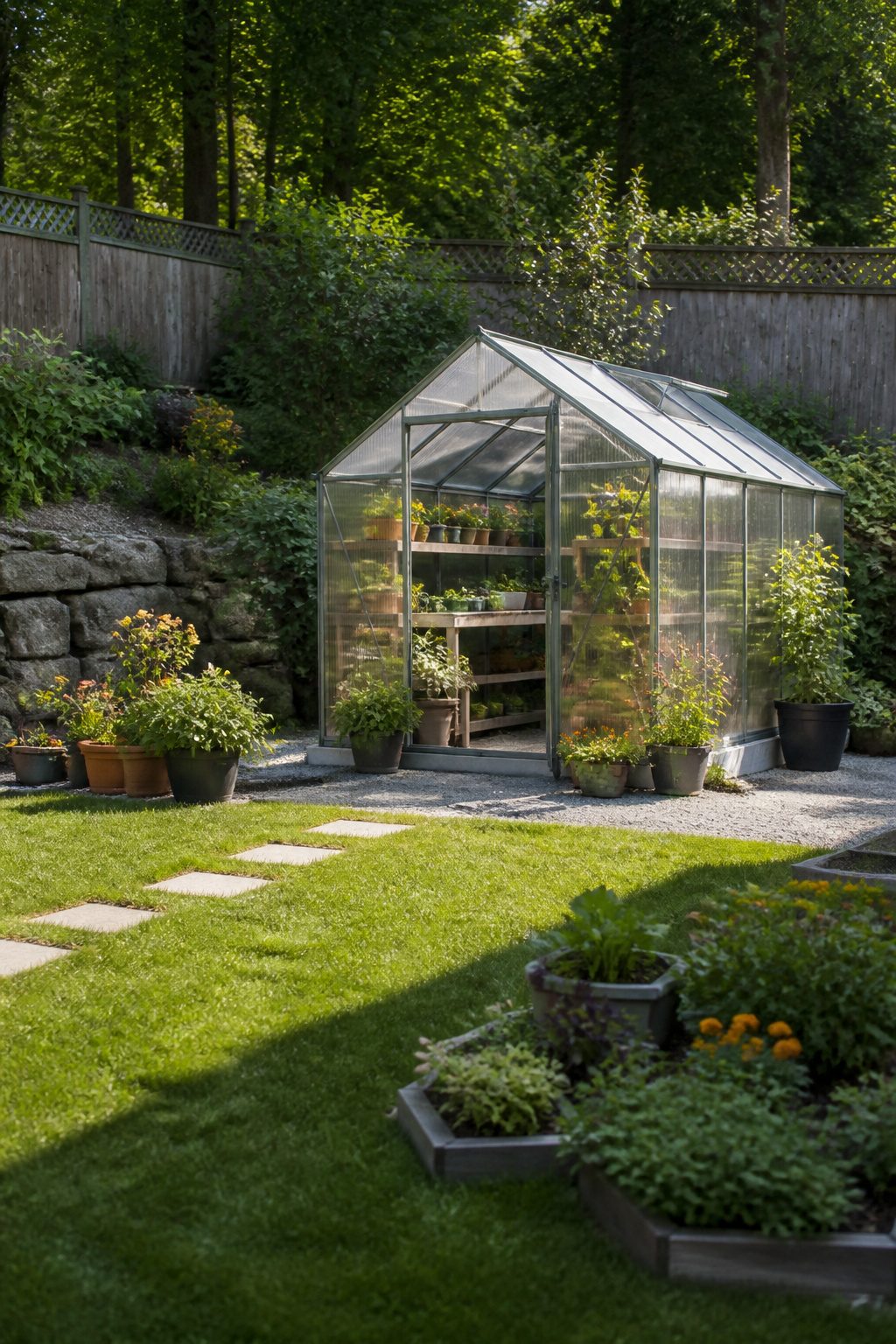
A greenhouse is a backyard shed built around one purpose: keeping plants alive through weather they would not survive outside. That changes every structural choice. The roof needs to be transparent or translucent, not weatherproofed against light but designed for it. Corrugated clear panels are common, and screened windows have to open so you do not cook the seedlings on a warm spring day. Without that cross-ventilation, a sealed greenhouse traps heat and rots more plants than it saves.
Storage sheds fight moisture to protect tools; greenhouses manage moisture to sustain growth. The floor is often dirt or gravel, not a raised platform, because pots and in-ground beds need drainage and root access. I looked at one kit that included a 12-foot potter’s bench along the wall, which tells you how the interior is organized. Light comes first, then work surfaces at the right height for hours of transplanting and watering. The framing still carries snow load and wind, but the openings for light and air make the engineering different from a sealed box meant for lawnmowers and bikes.
What Sheds Cost
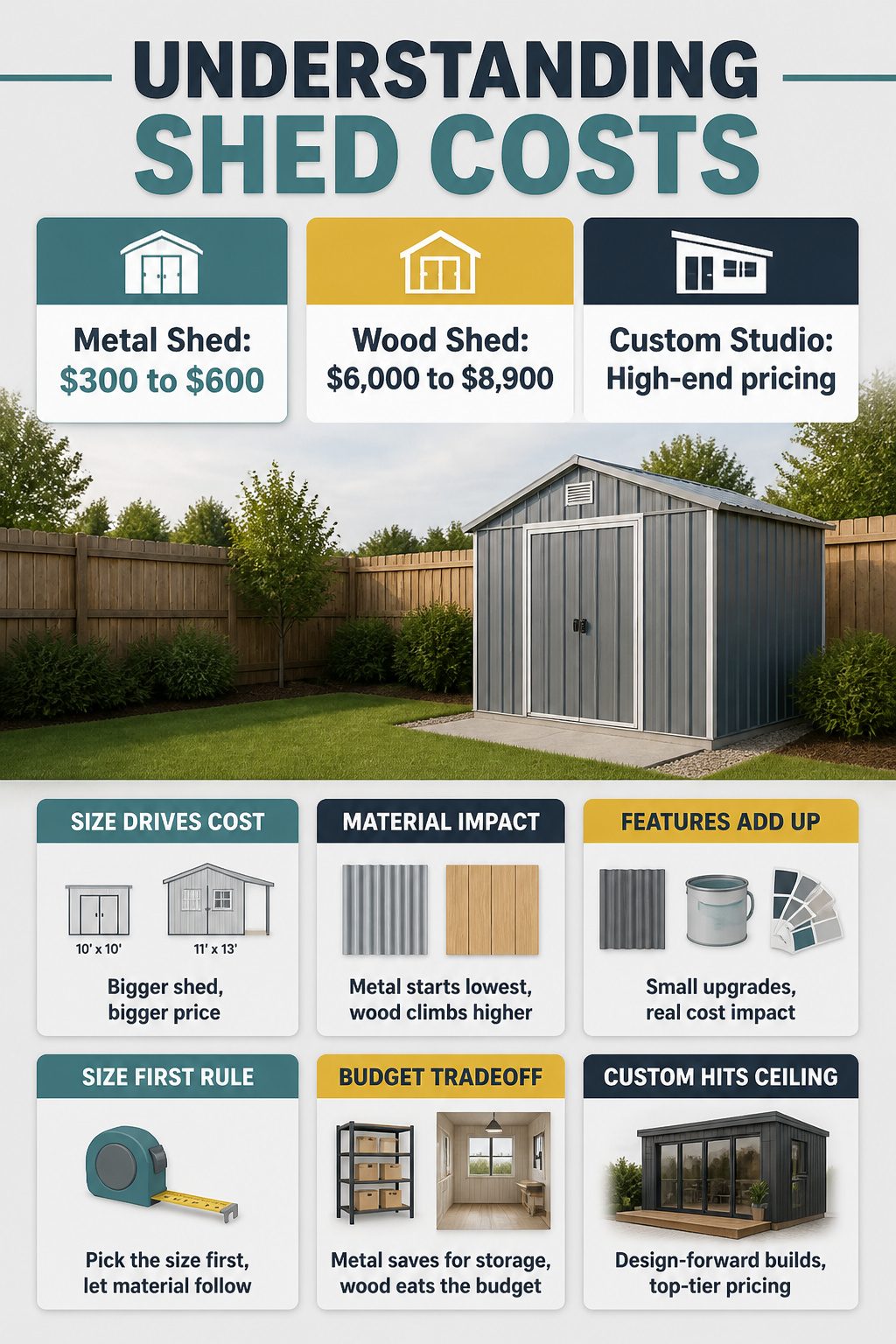
Metal starts cheapest, with bare-bones steel units running around $300 to $600 for a small storage box that gets the job done and nothing more. Wood climbs from there, and prefab kits from brands like Solid Build land in the $6,000 to $8,900 range depending on square footage and styling. The Solana at 80 square feet sits near $6,800; the Astoria studio at 117 square feet pushes past $8,500. Size drives the jump more than material does. A 10-by-10 foot shed costs roughly half what an 11-by-13 with windows and overhang demands.
Custom studio builds hit the ceiling. Modern Shed and Studio Home both pitch design-forward backyard structures that blur into home office territory, and their price tags follow the ambition. Features move the number in smaller steps: a ribbed metal base versus a smooth one, a shade that looks cheap versus one that does not, a coat of paint to kill a yellow undertone. Those $40 fixes add up fast when you are already spending thousands on the shell. My own rule, after pricing out three different setups last spring, is to pick the size first and let the material follow. A metal shed at 50 square feet saves enough to fund the shelving inside; a wood studio at 120 square feet eats the budget before you wire it for lights.
DIY Kits Against Professional Build
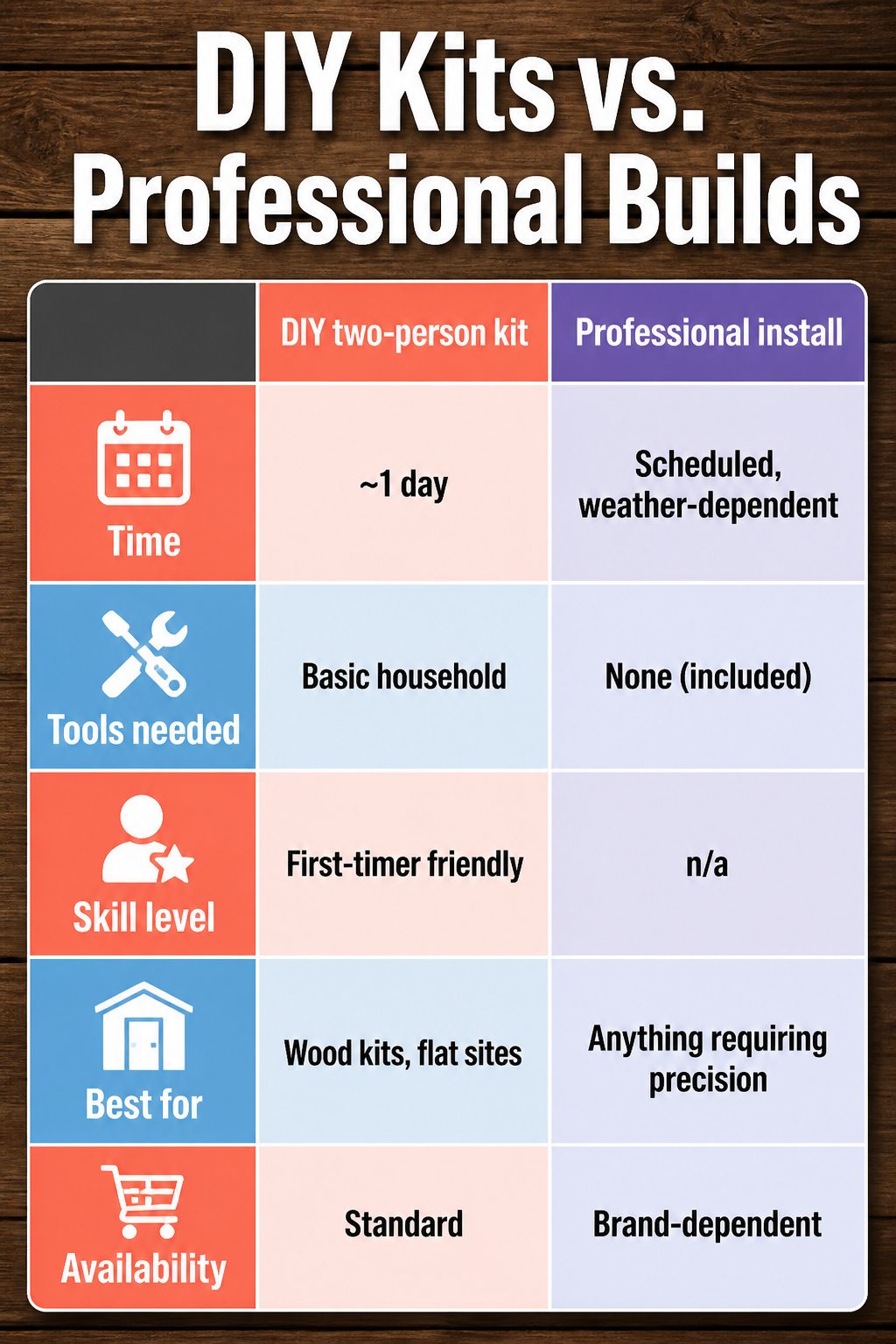
Most shed kits arrive with the wood already cut to length and the doors pre-hung, which changes the math on whether to hire out the build. A two-person team with basic household tools can finish a wooden kit in about a day, and manufacturers like Handy Home Products design their instructions for first-timers. That path works best when the site is level, the weather holds, and you have someone steady to hold panels square while you fasten them.
Professional installation makes more sense for anything you need perfectly plumb or wired, and some brands, including Handy Home, offer experienced builders as an add-on. The price gap is real, but so is the cost of a weekend lost to re-drilling holes that drifted half an inch off.
| DIY two-person kit | Professional install | |
|---|---|---|
| Time | ~1 day | Scheduled, weather-dependent |
| Tools needed | Basic household | None (included) |
| Skill level | First-timer friendly | n/a |
| Best for | Wood kits, flat sites | Anything requiring precision |
| Availability | Standard | Brand-dependent |
ShedMaster and similar lines stay DIY-only, so if you want a premium build without the sweat, check whether the brand even offers pros before you buy.
Customization That Matters
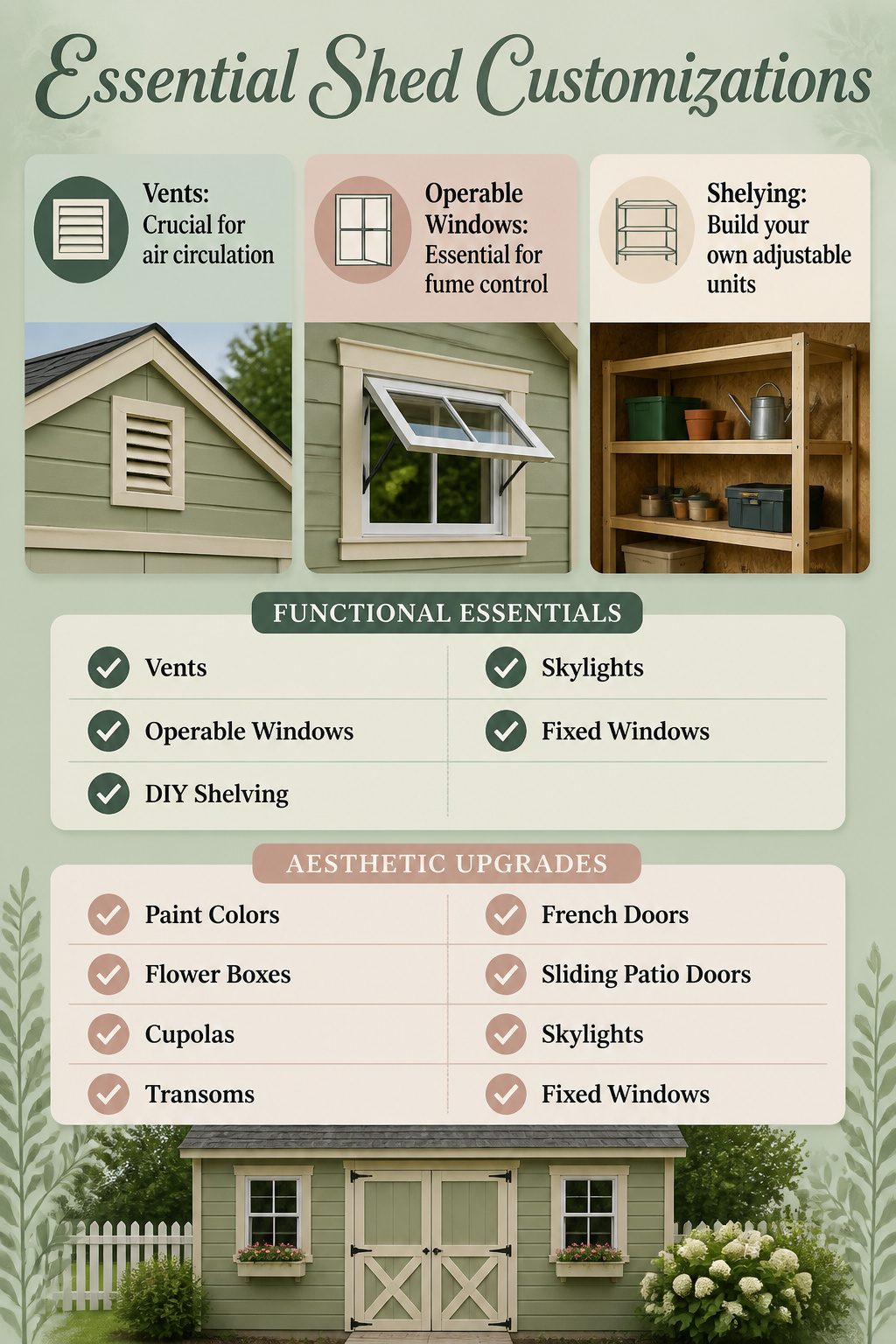
The options that actually change how a shed works are worth separating from the ones that just make it prettier.
- Vents matter more than almost anything else on this list. A pair runs about $46 and keeps air moving so moisture, heat, and chemical fumes from gasoline or fertilizer do not sit inside the walls. Skip them and you are trapping problems you will smell later.
- Windows come fixed or operable, as awnings, sliders, or casements that open to the outside breeze. Fixed glass only brings in light; operable ones let you air the space without opening the door. That function gap is worth the small upcharge if you are storing anything with fumes.
- Shelving is not mentioned in the source catalogs, which tells you it is usually an after-market add, not a factory option. Build your own with 2x4s and plywood and spend the custom budget elsewhere.
- Skylights fill the shed with sunlight. Nice for a studio, overkill for a mower and half a dozen paint cans.
- Paint colors and flower boxes dress up the exterior but do not change what the building does. Same with cupolas, transoms, and French or sliding patio doors. They look good in the yard, and they push the price up without adding function.
My own leaning: start with vents and operable windows, add shelving yourself, and let the paint color be whatever comes standard. You can always repaint a wall; you cannot un-rot one.
Maintenance by Material
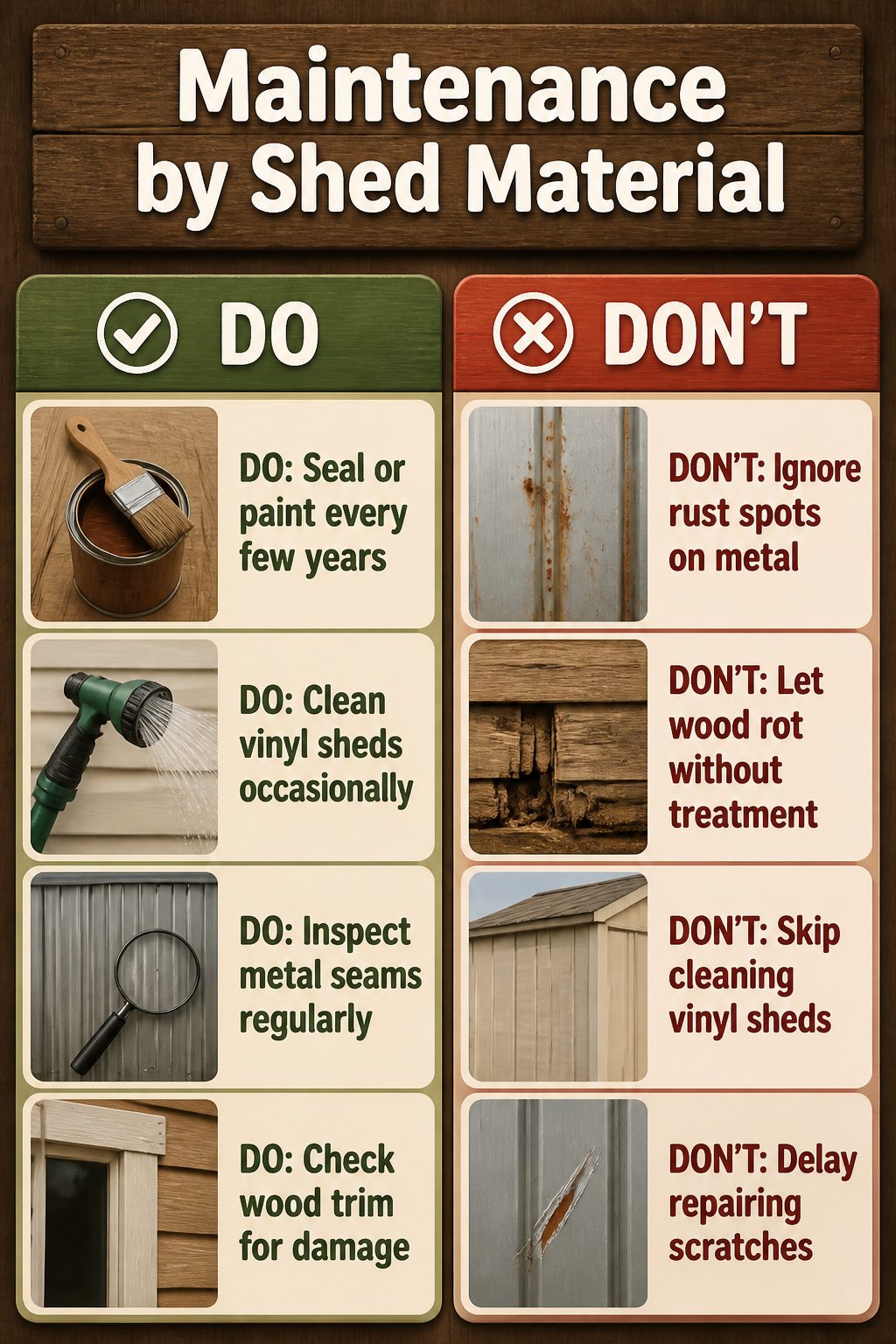
Wood sheds demand the most attention over the years, and skipping that upkeep is how rot sets in. I reseal mine every two to three years, and I still found soft spots where water had worked behind the trim after I let it slide one season too long. Paint or solid stain buys you a little more time than bare sealant, but neither is a one-and-done job.
Metal and vinyl are the lower-maintenance picks. Vinyl sheds need little beyond a wash with the hose now and then. Metal can show rust at scratches or seams, so touching those spots early keeps the problem small.
| Material | Annual attention needed | Main risk if ignored |
|---|---|---|
| Wood | Sealing or painting; trim checks | Rot, insect damage, frame decay |
| Metal | Spot rust repair, seam inspection | Rust spread, panel failure |
| Vinyl | Occasional wash | Fading, brittleness in extreme sun |
For a weekend project budget, that maintenance gap matters. Wood looks better to me, but I would not choose it again for a shed I planned to ignore for five years.
Frequently Asked Questions
What are the best materials for backyard sheds?
Wood suits homeowners who want a traditional look that matches an older house or softens a fence line, but it needs painting or staining every two to four years. Metal starts around $300, resists rot and insects, and needs almost no upkeep beyond occasional rust touch-ups. Vinyl falls between the two: it does not absorb water or fade, yet the walls flex more and the stock doors and hinges often need replacing after a few seasons.
How much do backyard sheds cost?
Bare-bones metal units run about $300 to $600, while wood prefab kits from brands like Solid Build land between $6,000 and $8,900 depending on size and styling. A basic 80-square-foot studio shell starts near $6,295, and a 117-square-foot model with overhangs and detailing pushes past $8,500. Custom studio builds from design-forward brands climb even higher.
How long does it take to assemble a shed?
Two people with basic tools can usually get a prefab wood kit assembled in about one day, assuming the site is level and nothing in the box is warped. Metal kits with snap-together systems like Absco’s SNAPTiTE can also finish in a weekend. Professional installation is available from some brands if you want to skip the labor entirely.
Do I need a permit to build a shed?
Permit requirements vary by location and may depend on the size and intended use of the shed. Some retailers offer permit services for around $299 that cover administrative costs, but the actual permit fee, engineered drawings, and any local requirements like septic or seismic regulations are separate expenses set by your municipality.