
Linen covered chairs are upholstered seating where the visible fabric is linen or a linen-look weave, ranging from pure flax fiber to polyester blends that mimic the texture at a lower price. The catch is that "linen" on a tag rarely means 100% linen until you pass the $1,200 mark for a dining pair; below that, you’re usually looking at a blend like the 78% polyester / 22% linen weave on West Elm’s Marin swivel at $949. The Berea Slouchy Lounge Chair from Target at $365 uses that same blend strategy to deliver the look with French seams and a machine-washable cover.
Linen Dining Chairs
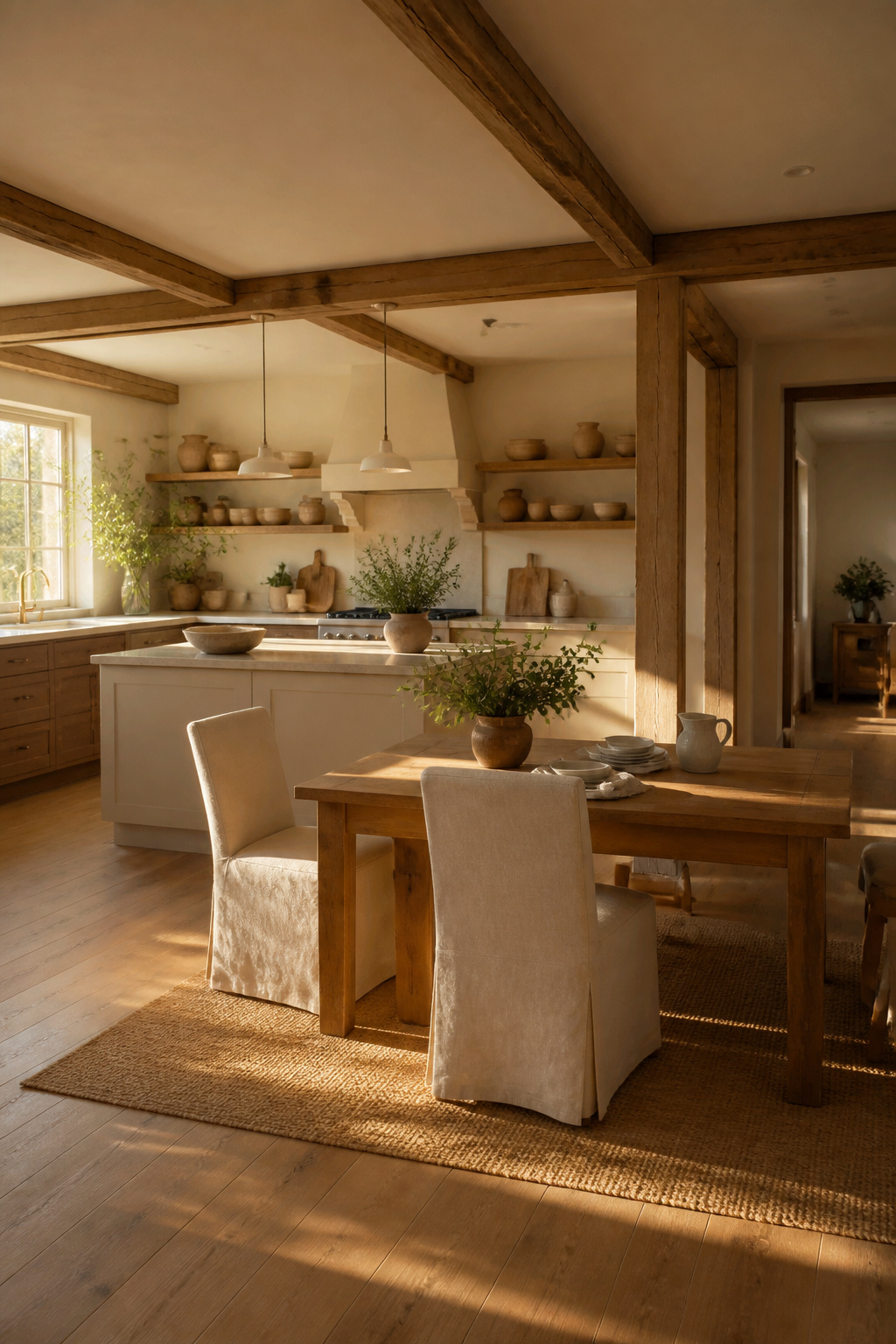
Linen dining chairs run from about $387 on sale to $2,150 for a designer set, and that spread tells you most of what you need to know about where your money goes. The lower end gets you a single Graham side chair or a set of two Catherine chairs at $465; the upper end lands you pairs like the Orielle in hemp at $2,150 or the Adele slipcovered set in bisque at $1,600. I spent an afternoon sorting through these numbers, and the pattern that emerged is straightforward: armchairs cost more than side chairs, slipcovered more than upholstered, and 100% natural linen more than performance blends or faux linen.
The fabric choice shapes the price more than the silhouette does. Affordable options are usually linen blends or faux linen with polyester or cotton mixed in, which still gives the look but holds up differently at the dinner table. Higher-end chairs specify 100% linen or performance weaves like Crypton, and some brands, such as the Amber Lewis line, sell the cushion alone for $149 so you can refresh what you have.
These chairs slide into most dining rooms without a fight. The cleaner lines, like the Sylvella or the Noah, read modern or transitional; skirted or tufted versions, such as the Shaheen wingback, lean traditional. A set of two-tone James chairs in pearl and bisque linen bridges both directions. My own preference, after comparing too many product pages, is for the simpler slipcovered styles if you actually sit down to eat every night; the fringed or tufted details collect crumbs and require more attention than a quick shake of a washable cover.
Linen Accent Chairs
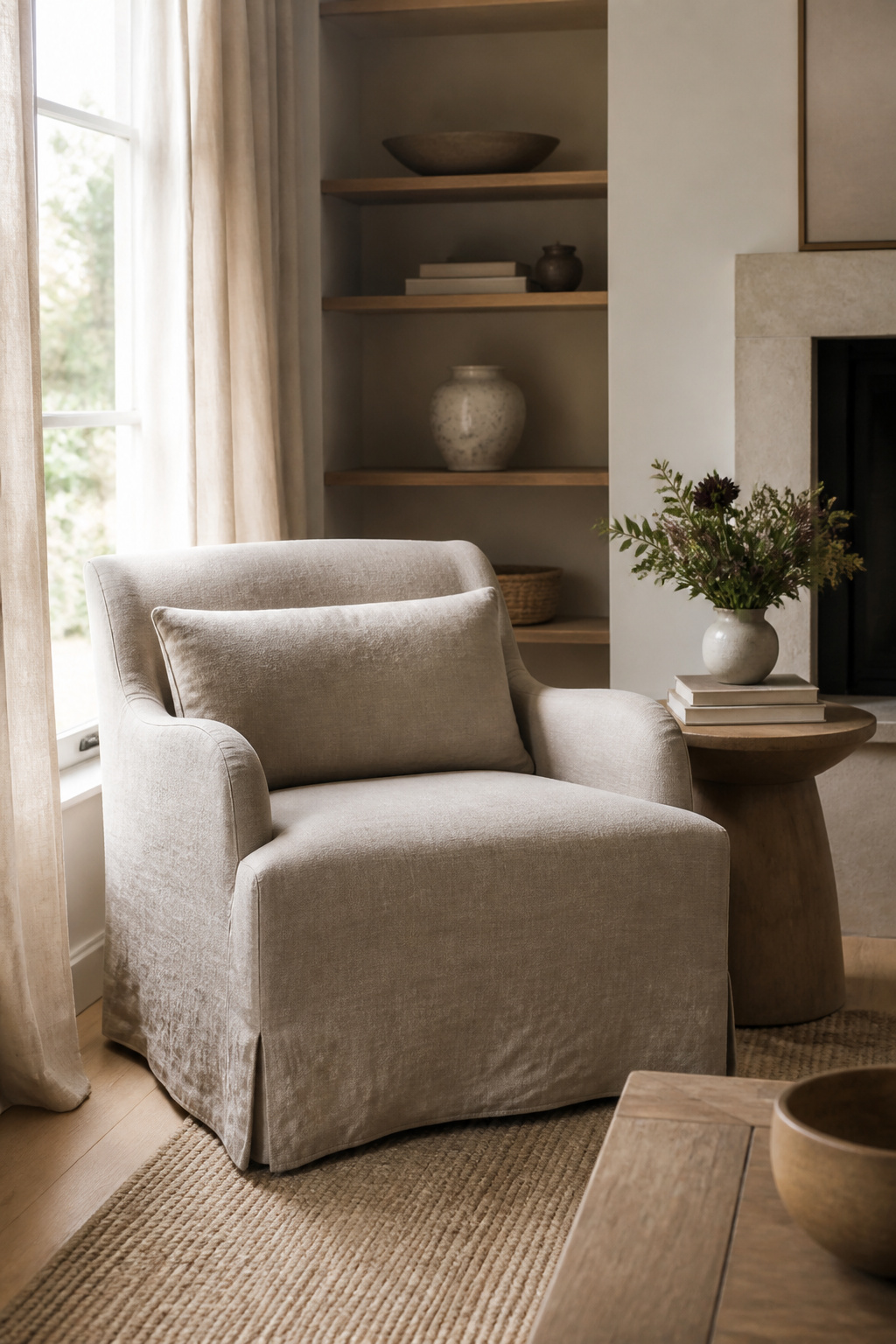
A single linen accent chair in a reading nook needs to earn its keep, and the ones that do it best start around $365. That price point gets you a frame substantial enough to sit in for an hour without fidgeting, not a perch that looks good in a photo and sends you to the sofa.
In a living room, two chairs flanking a fireplace or window give you symmetry without matching the main sofa. The slouchy, slipcovered kind, like the Berea style that turns up in a lot of real rooms, reads casual enough for jeans but still pulled-together when guests arrive. I have seen the same chair work in a corner bedroom nook in "textured mushroom," which tells me the shape translates to smaller spaces without shrinking into irrelevance.
For seasonal changes, the linen itself does half the work. A light waffle throw and neutral florals in spring keep the look from going sterile; come fall, brown gingham or a burgundy chunky knit against the natural fabric warms the room without repainting a wall. The trick is letting the chair’s texture stay visible, not burying it under layers.
If the chair is your only seating in a home office or guest corner, skip the busy pattern and go with the plainest linen you can find. The fabric’s slight irregularity is the interest; competing prints make the whole corner look like you tried too hard.
Linen Slipcovered Chairs
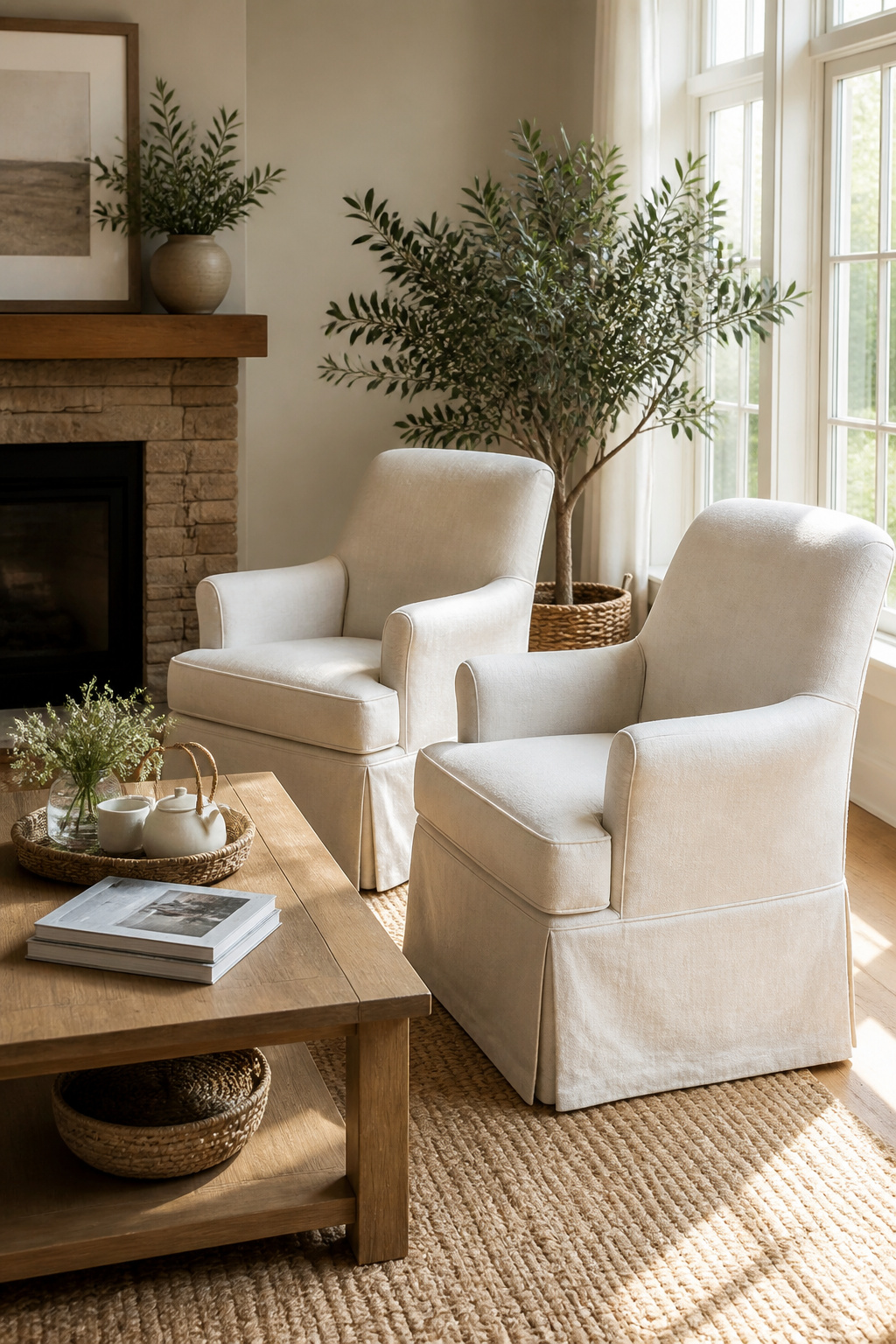
Linen slipcovers make sense for the room where juice gets spilled and dog hair collects daily. The Berea Linen Slouchy Lounge Chair from Target runs $365 and measures 33.25"W x 33.5"D x 33"H, a size that fills a corner without blocking traffic paths. Its polyester-linen blend carries the texture and color variation of natural fiber while shedding the high-maintenance reputation: the synthetic content means a damp cloth lifts most stains before they set, and the weave hides the kind of surface wear that reads as shabby on pure linen.
French seams on a chair at this price point surprised me. They give the cover the look of something tailored rather than shrink-wrapped, and that slouchy fit leaves room to add a washable layer underneath if you want to rotate covers seasonally. Stock runs unpredictable on this one, so the wait itself became part of my planning timeline.
For family spaces, the care advantage sits in that blend ratio. Pure linen demands professional cleaning or careful hand-washing; here, the polyester backbone means you can lift the cover, run it on gentle, and stretch it back while damp before wrinkles set. The beige tone shifts slightly across the surface, which reads as intentional variation rather than fading once you have lived with it through two wash cycles.
Swivel Linen Chairs
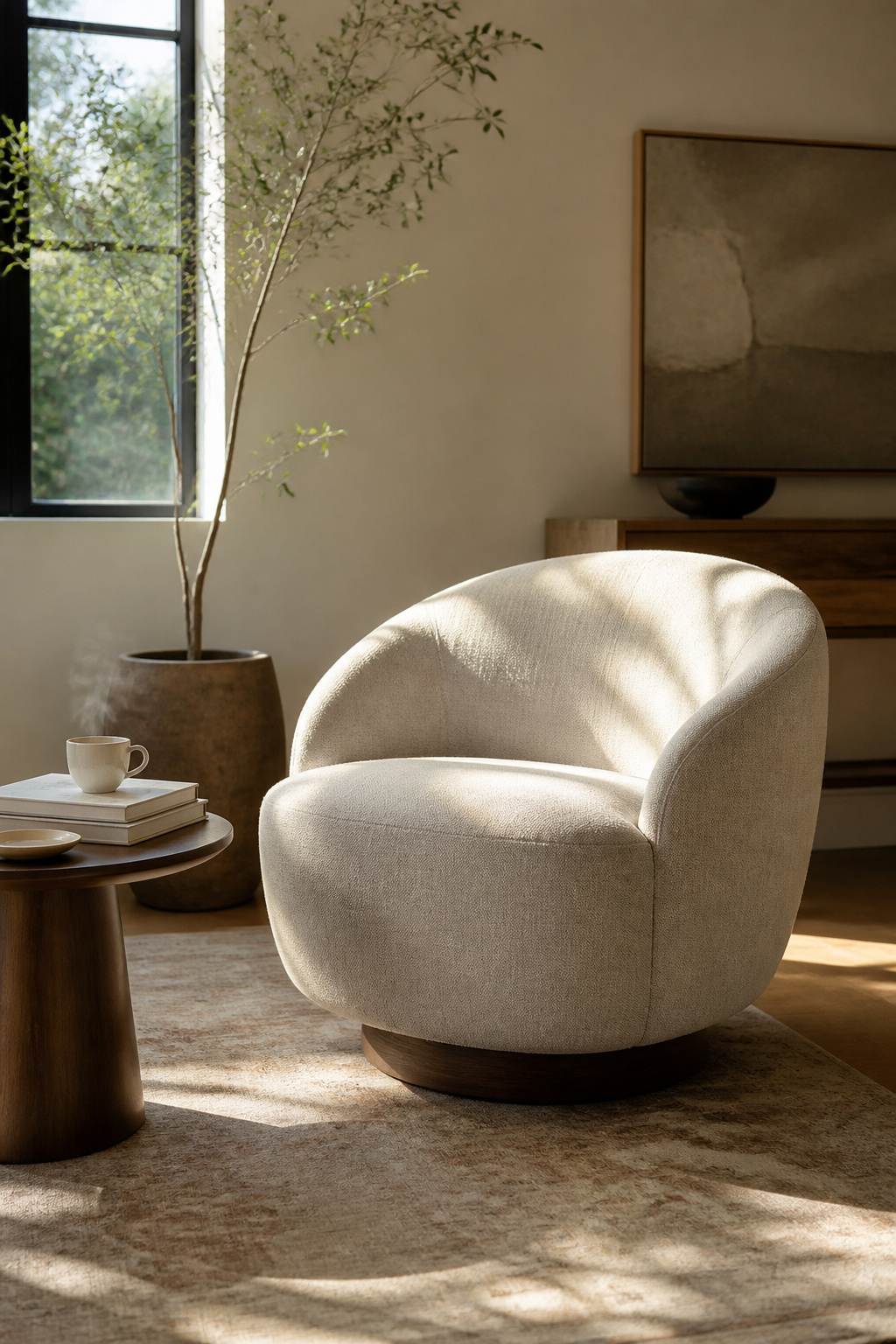
Swivel bases turn a linen chair from a static piece into something you actually use. The Bennett Upholstered Swivel Barrel Chair from Birch Lane sits on a kiln-dried wood frame with sinuous spring support and comes in 17 colors, including their Effie Linen Performance Linen. It is rated 4.8 out of 5 stars from 2,869 votes, and reviewers mention the rounded silhouette works in neutral-toned rooms without fighting the rest of the furniture.
The Bobbi Upholstered Swivel Armchair, also in Effie Linen Performance Linen, runs on a walnut-finished base with piped edges. It is rated 4.8 out of 5 stars from 543 votes and comes in 11 colors. One buyer in Amherst, Ohio splattered blue paint on the back and removed it with light scrubbing, which tells you what "performance linen" actually means in a house with kids or projects in progress.
For a slipcovered option, the Amia Beige Slipcovered Swivel Armchair at Kathy Kuo Home measures 30"W x 36"D x 37"H and lists at $1,420. The fabric is beige polyester performance fabric with French seams, not linen itself, though the look reads as linen from a few feet away. At that price and size, it fills a specific spot: living room or home office where you want the relaxed slipcover aesthetic with the ability to turn toward a conversation or away from a window.
Linen Armchairs
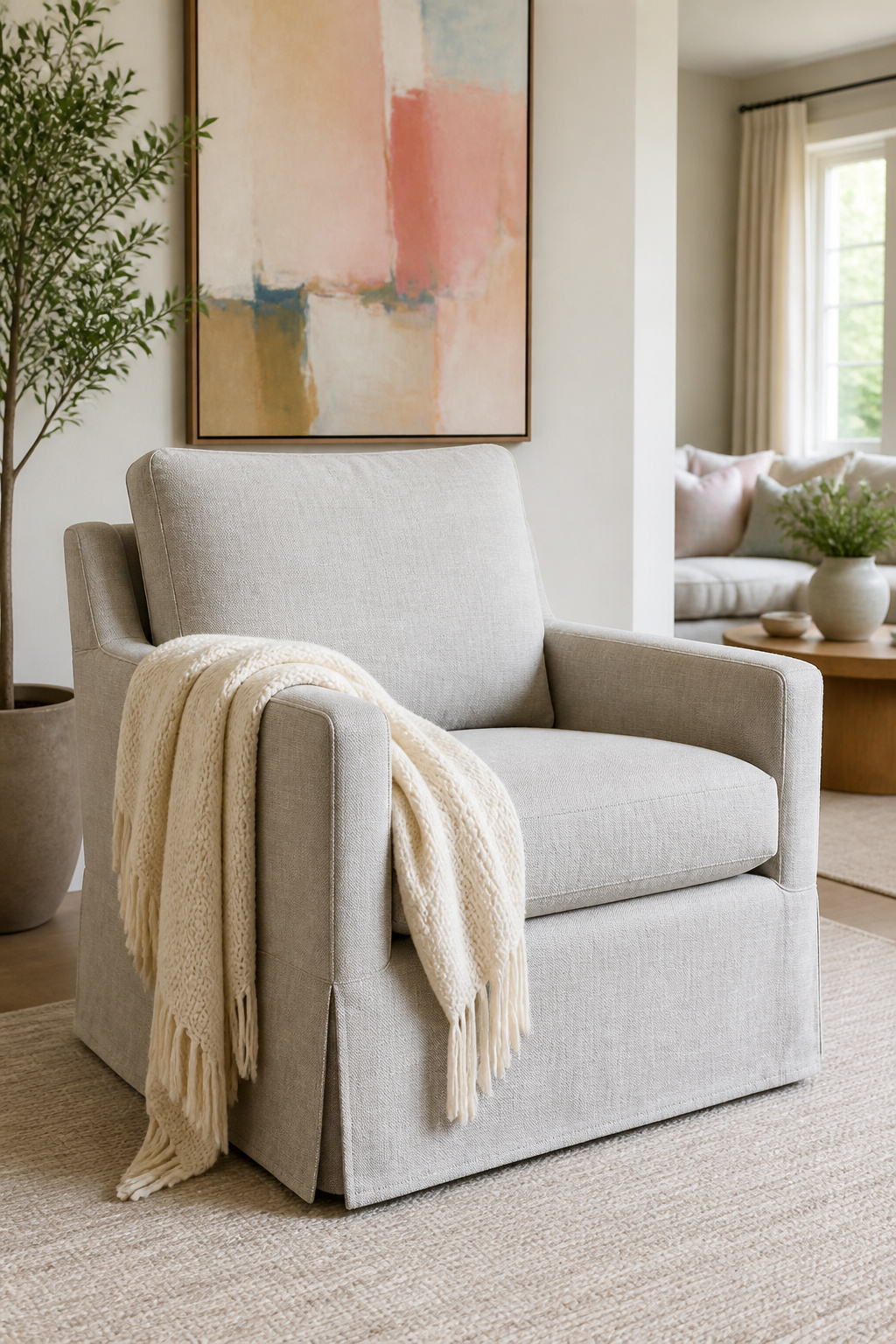
A linen armchair works best when the frame stays simple and lets the fabric do the talking. The Carmel Slim Arm Slipcovered Chair from Pottery Barn is the one I keep coming back to for this: 32"W x 36"D x 35"H, priced at $1,799. The straight, modern arms keep the silhouette clean, and the slipcover means you can pull it off and wash it when the dog jumps up or the coffee spills.
The fabric choice matters more than the shape here. The Performance Everydaylinen blend, at 51% rayon, 22% linen, 16% polyester and 11% cotton, has a basketweave that reads as texture from across the room but holds up to daily use. Crypton treatment is built in, so stains sit on top rather than sinking straight through. The Rustic Linen option, 55% linen and 45% cotton, feels softer and more relaxed, but I would not put it in a house with small children or a cat who kneads before settling down.
Solid wood legs and steel springs in the frame keep the chair from feeling flimsy, which is the risk with a lot of slim-arm designs in this price range.
Linen Benches
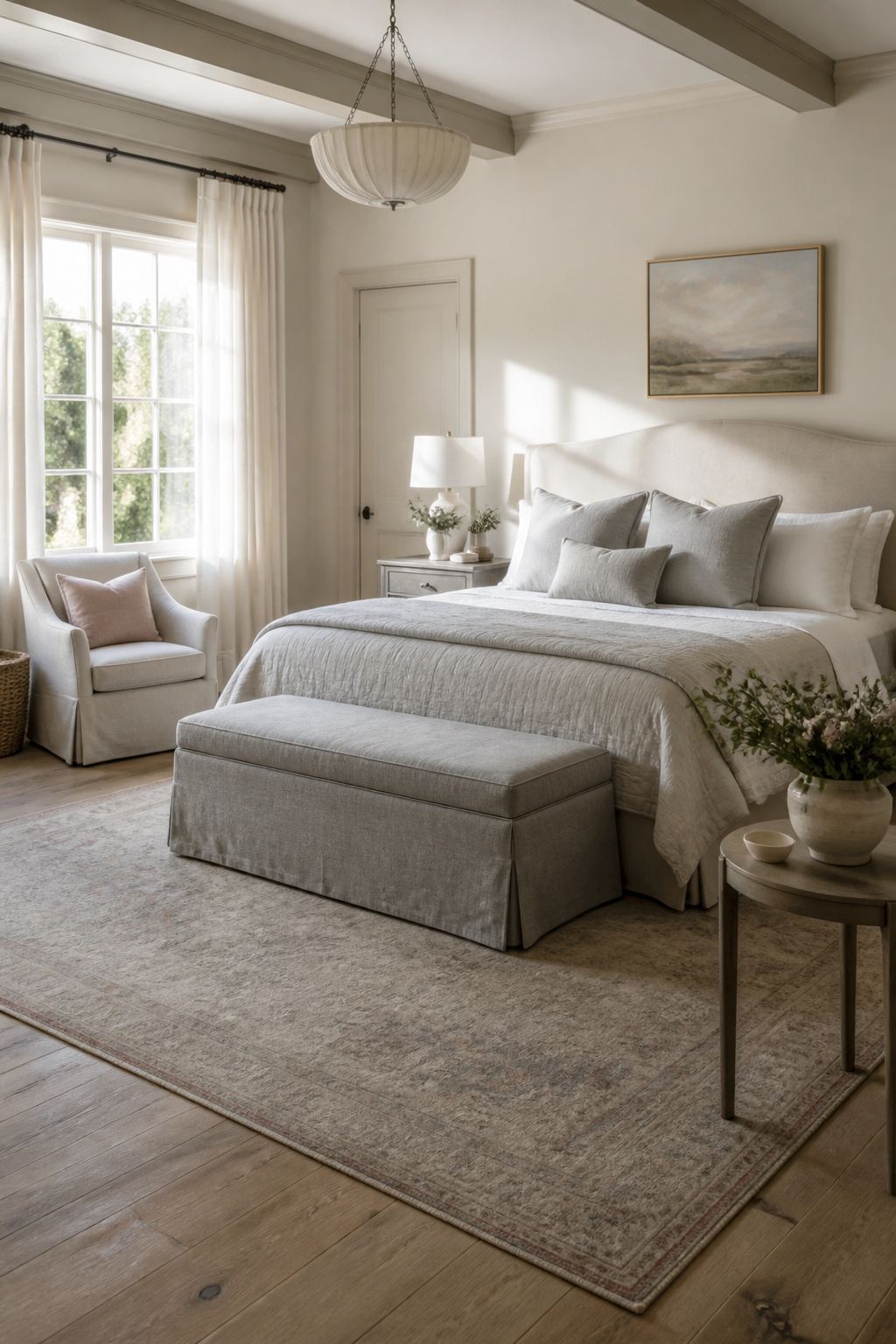
A linen bench at the foot of the bed earns its keep by catching tomorrow’s clothes without looking like a laundry pile. The same piece, dragged to the dining table, handles the overflow when someone brings a plus-one to Sunday dinner. Entryway duty is where I see them most in real homes: a 48-inch bench under a row of hooks gives two people a place to tie shoes without blocking the door swing.
The trick is picking a height that works for all three jobs. 18 inches is the seat height that clears most bed frames and still tucks under standard 30-inch dining tables. Anything taller and you’re banging knees; much lower and the bed swallows it visually.
Slipcovered bench cushions in linen make sense if the dog sleeps on it or if coffee gets spilled during breakfast. The bare frame with a fixed upholstered top looks cleaner but commits you to spot-cleaning the weave. Sources show dining benches running from about $357 for simpler silhouettes up past $800 once you add tufting or a ruffle skirt. For a piece that lives in three rooms over the course of a year, I’d put the money into the slipcover and save on the frame.
Linen Club Chairs

A club chair in linen hits a balance I didn’t expect until I sat in one. The frame keeps that structured silhouette with square arms that reads formal in a leather version, but the linen upholstery pulls it back into daily life. The fabric relaxes the lines without collapsing them, so the chair works in a living room that sees actual use rather than just display.
The construction details matter more here than on a slipcovered piece because the tailored fit leaves nowhere to hide. Sinuous springs and web suspension give the seat its support; fiber-wrapped foam on top keeps it comfortable for longer sitting. I look for reversible cushions when I can find them, since the cover isn’t coming off for washing and flipping extends the useful life.
Performance linen or a linen blend is the practical choice for most homes. The water and stain-resistant versions handle the kind of splatter that would ruin pure linen, and the blended fabrics hold their shape better against the tension of that structured frame. A 100% natural linen chair feels more luxurious and breathes better, but it asks for more careful placement, away from the kitchen pass-through and the dog’s favorite corner.
Linen Chaise Lounges

A linen chaise lounge reads as indulgent until you price one against a decent armchair and ottoman pair. The single footprint saves space in a bedroom reading corner where a full seating group would crowd the bed frame. I looked at dozens of sunroom setups while planning my own, and the chaises that lasted in real photos were the ones pushed against a wall or window bank, not floating in the middle of the room like a showroom display.
The placement matters more than the frame style. In a bedroom, a chaise with the back to the door lets you stretch out without feeling exposed. For a sunroom, the linen weave you want is the slightly looser, more open one; it breathes in heat and the slubs hide pollen dust that would show instantly on a tight, polished upholstery. Cleaning that dust is the maintenance reality nobody photographs: a vacuum with the brush attachment, done weekly, keeps the seat from turning grimy where your calves rest.
Reading corners fail when the chaise is too deep to sit upright in. Test the pitch before committing; a back angle under 100 degrees forces you to slouch to reach a book, and your neck pays for it inside an hour. I passed on two otherwise perfect options because the cushion profile was clearly built for napping, not for hours with a novel.
Linen Counter Stools
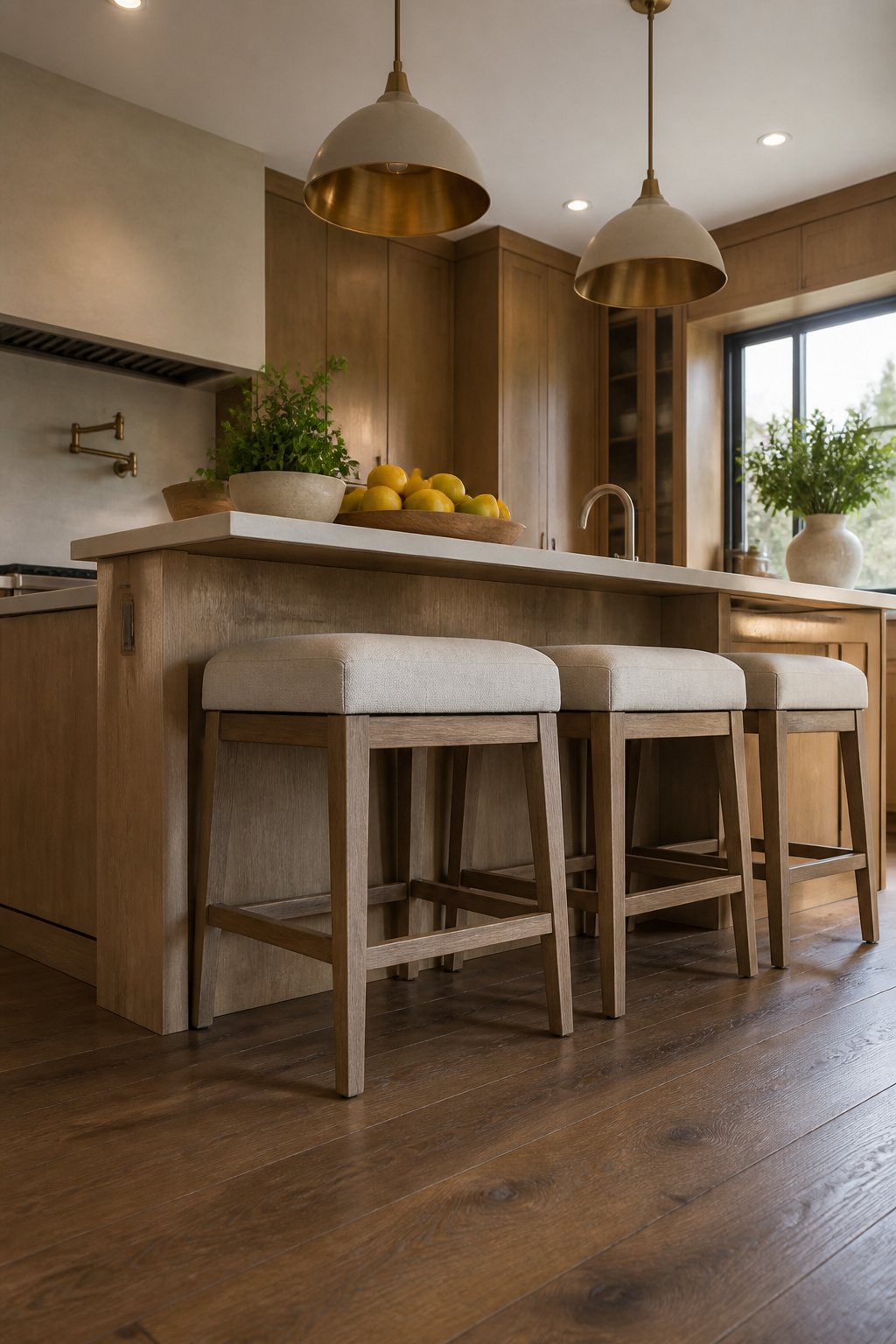
Backless linen counter stools tuck under an overhang without fighting for space, which matters more than most people guess until they try to close a drawer against a backed seat. I learned that the hard way in my last apartment, where the island had a twelve-inch overhang and every backed stool stuck out far enough to block the dishwasher. The linen gave the kitchen the soft texture I wanted, but the silhouette had to earn its keep first.
For seating you actually lean against, a low-backed linen stool changes the equation. The back stops around lumbar height, so the profile stays low enough for most counters while still catching you when you shift. Full backs belong at bar height, where the extra inches of counter elevation leave room for the visual weight. Mix the two heights in one kitchen and the sight line turns messy fast; I would rather use all backless or all backed at a single counter than try to alternate.
The linen itself matters less for counter stools than for dining chairs because the wear pattern is different. Grease splatter and shoe scuffs at the base are the real threats, not the friction of sliding in and out. A darker flax tone or a tight weave hides that longer than the airy open weaves that look so good in catalog photos. Bar height demands a footrest you actually use; without one, the linen at the knee wears first from bracing against the seat rail.
Linen Upholstered Settees

A linen upholstered settee fills the gap between a full sofa and a single chair without demanding the wall space either one needs. Most run about 48 to 60 inches wide, which means two people can sit without touching shoulders, but the footprint stays tight enough for an entryway or a living room corner that would swallow a standard sofa.
I looked at settees for a long time before I understood why they work in small rentals: the back stays low, usually under 36 inches, so they do not block sight lines across a room. That matters more than I expected in an open plan where every piece competes for visual space. The linen keeps the shape from looking too heavy, and the natural creasing hides the fact that two people just sat there and left.
The real limit is seating depth. Most settees run shallow, around 20 to 22 inches, which keeps them compact but means taller guests end up perched rather than settled. I would not use one as primary seating unless the room is genuinely constrained. For entryways, though, the shallow depth is an advantage: you can pull shoes on without feeling like you are falling backward into upholstery.
Linen Performance Chairs
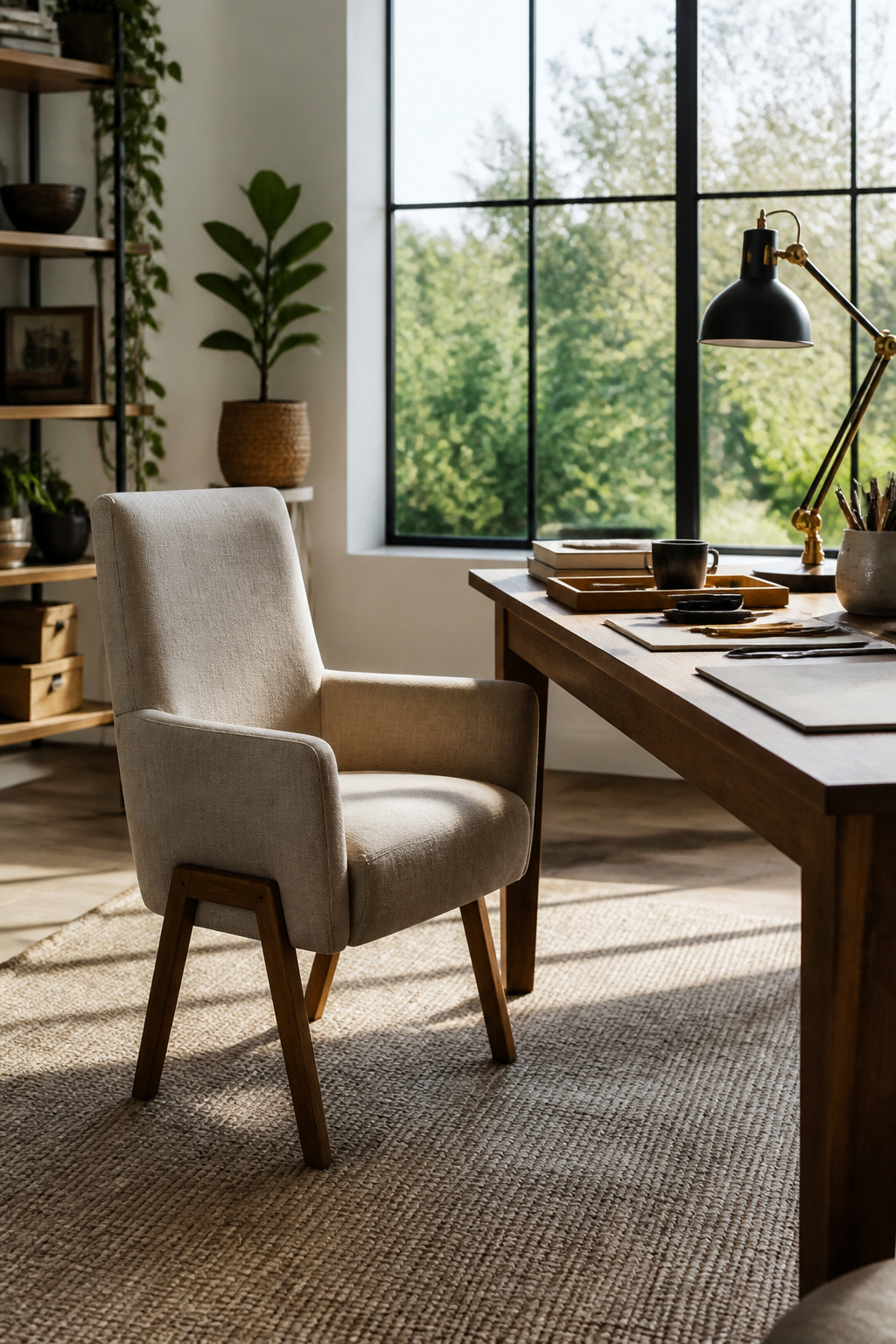
Performance linen starts with the same flax fiber as standard linen, but the weave gets a tighter twist and a finish that repels water and stains before they sink in. The difference shows up fast in a house where people actually sit down with coffee or a glass of wine. One Birch Lane reviewer in Ohio splattered blue paint on the back of her Effie swivel chair and scrubbed it out completely; standard linen would have held that stain permanently.
The extra durability matters most on seats that see daily rotation, not the occasional chair in a corner. A breakfast nook with teens, or a reading area that doubles as a homework spot, is where the upcharge pays back. The Effie line uses fiber-wrapped foam and sinuous springs under that performance fabric, so the structure and the surface are both built for wear.
Spot-cleaning with water and a little scrubbing is usually enough on performance linen, which changes how you use the room. You stop treating the chair like a museum piece. The tradeoff is a slightly stiffer hand at first; the fabric relaxes after a few months of sitting, but it never gets as soft and slubby as untreated linen. If you want the crumpled, lived-in look from day one, standard linen is the better choice and a slipcover is your insurance policy.
Linen Blends

Most linen accent chairs that ship for under a thousand dollars are not pure linen at all. The fabric is a linen blend with polyester or cotton, sometimes called performance linen, which gives the visual texture without the price of the real thing. The Maiden Home Dune Chair lists both options: a 22% performance linen blend at the entry price, or 100% stonewashed linen if you climb to the top of its $1,740–$2,340 range. That gap is the trade-off in plain numbers.
A blend wrinkles less and costs less, which matters when you are covering a chair you actually sit in every day. The Birchlane Joelle uses a stain-resistant linen blend with reversible cushions and a removable cover for spot cleaning, which is how manufacturers compensate for what the fabric loses in breathability. Pure linen lasts longer and softens better, but it demands more care and a higher budget. For a renter or a first project, the blend is usually the practical call. Check the product description for the percentage; retailers do not always lead with it, and the difference shows up two years in when the seat starts pilling or holding its shape.
What Belgian Linen Actually Means for Daily Use
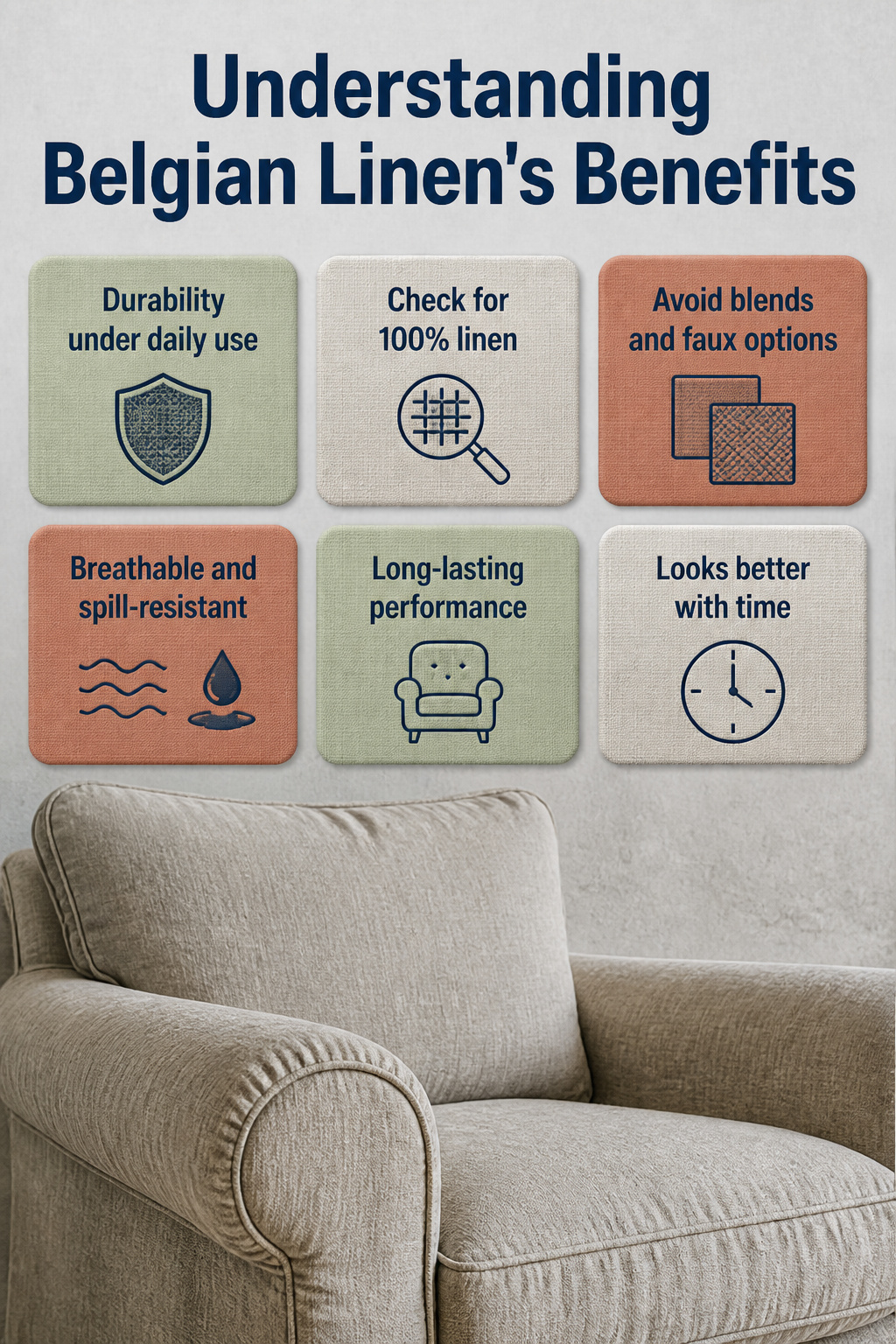
Belgian linen carries a reputation for durability that holds up under daily abuse from imperfect humans, as one longtime owner put it after more than a decade of breakfast-nook wear. The fabric still looks and performs wonderfully, which matters when you are choosing a chair you will actually sit in every morning rather than photograph for a board.
That longevity comes with a catch in the marketplace. "Linen" in a product description can mean anything from a linen blend to a fabric dyed a linen color, so the Belgian label alone does not guarantee the fiber content you are paying for. Pure Belgian flax linen is durable, breathable, and takes spills better than its reputation suggests, but affordable options are usually faux linen or a polyester blend engineered to mimic the look. If you want the genuine maintenance profile, check the full description for 100% linen or a performance weave like Crypton rather than trusting the color name.
Spot Cleaning and Regular Care
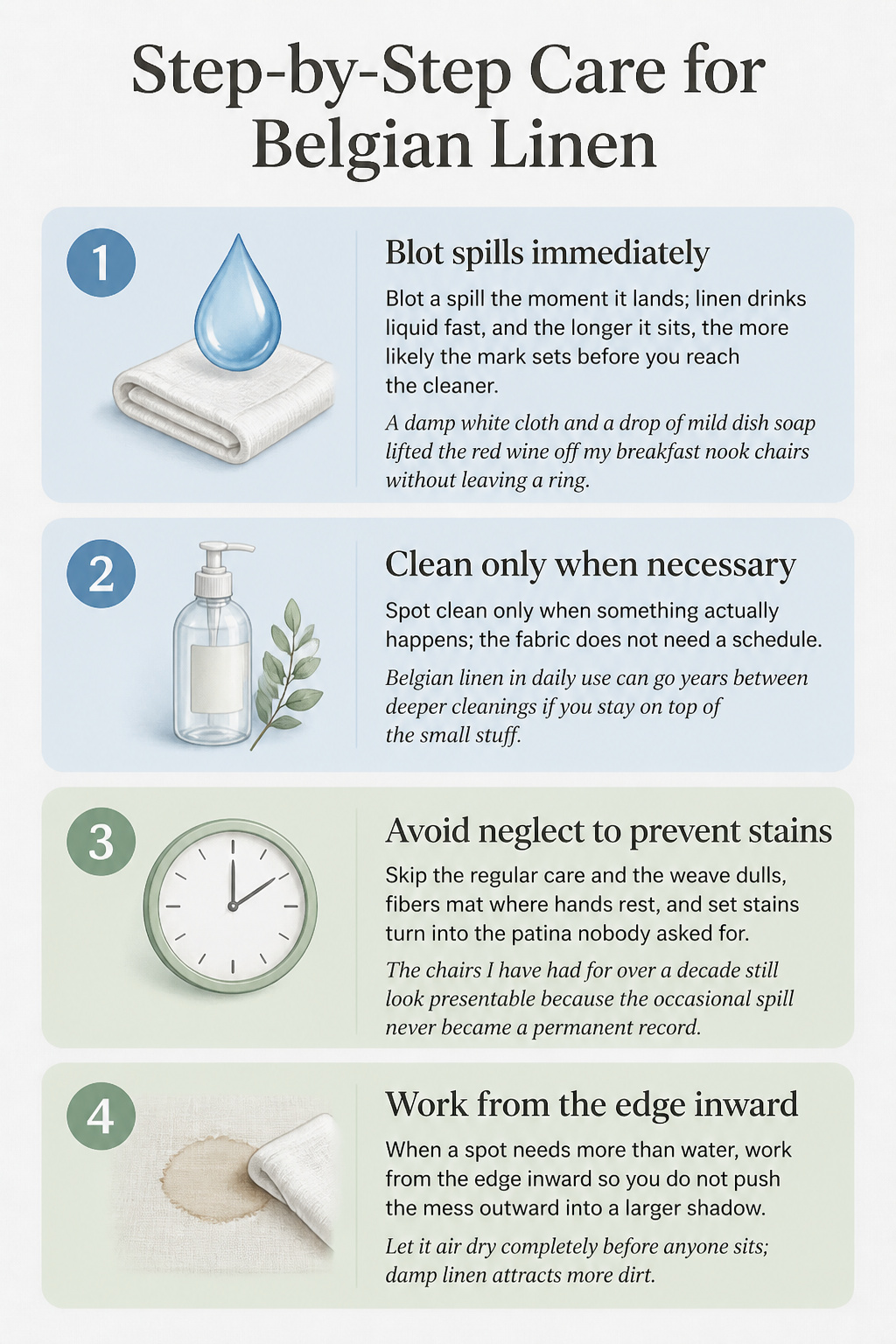
- Blot a spill the moment it lands; linen drinks liquid fast, and the longer it sits, the more likely the mark sets before you reach the cleaner. A damp white cloth and a drop of mild dish soap lifted the red wine off my breakfast nook chairs without leaving a ring.
- Spot clean only when something actually happens; the fabric does not need a schedule. Belgian linen in daily use can go years between deeper cleanings if you stay on top of the small stuff.
- Skip the regular care and the weave dulls, fibers mat where hands rest, and set stains turn into the patina nobody asked for. The chairs I have had for over a decade still look presentable because the occasional spill never became a permanent record.
- When a spot needs more than water, work from the edge inward so you do not push the mess outward into a larger shadow. Let it air dry completely before anyone sits; damp linen attracts more dirt.
Styling Linen Chairs Across Decor Styles

Linen chairs earn their keep by sliding between moods without demanding a full room overhaul. A slouchy linen armchair beside a clean-lined sofa reads modern French, not country kitsch, because the relaxed fabric keeps the silhouette from feeling too buttoned-up. The same chair against raw wood and a vintage rug shifts toward rustic simplicity, the kind Joanna Gaines built her dining rooms around.
Mixing takes more nerve than matching, but linen forgives the experiment. I have paired a skirted linen dining chair with a metal café table and lived with the contrast for a year before deciding it worked; the softness of the skirt against the hard edge of the table gave the breakfast nook a tension that matching sets never quite reach. A single linen piece mixed into a room of wood and leather keeps the space from feeling staged, especially when the linen is a natural, undyed tone that picks up something already in the room.
The investment in 100% linen is real, so I buy the slipcovered option when I can. Swapping the cover seasonally, or just washing it after a holiday dinner, extends the life of the chair and lets me shift the color without replacing the frame.
What the Price Range Actually Buys
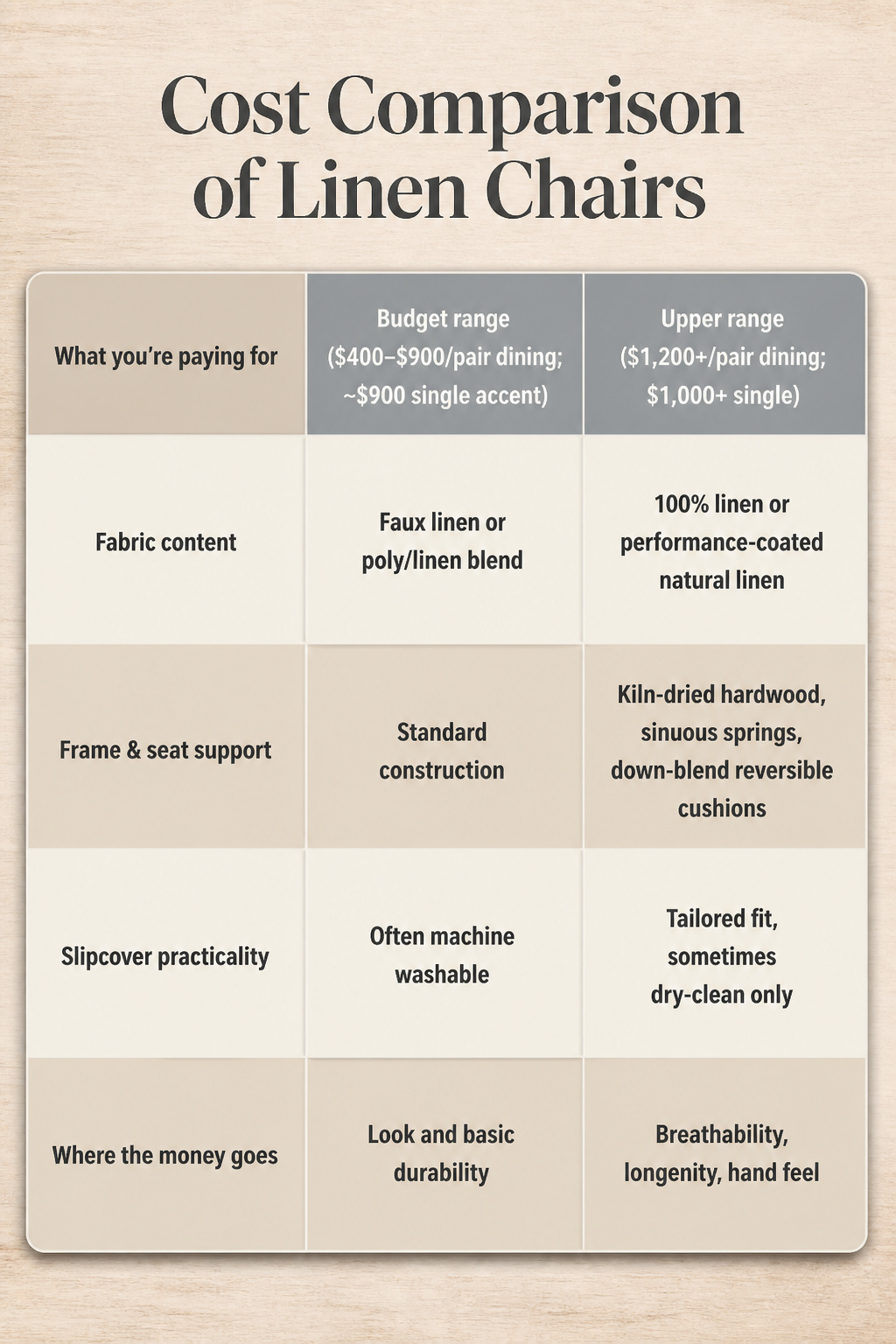
Linen chairs start around $387 for a pair of basic dining sides and climb past $2,500 for designer pairs, but the fabric tag tells you more than the price tag. Budget pieces are usually faux linen or a polyester-heavy blend, like the 78% polyester / 22% linen weave on West Elm’s Marin swivel at $949. That ratio holds up to kids and pets, and the slipcover goes straight into the wash. Higher-end chairs move toward 100% natural linen or add performance coatings, oil- and water-repellent, while the frame underneath shifts from standard construction to kiln-dried hardwood with sinuous spring support and down-blend cushions you can flip.
| What you’re paying for | Budget range ($400–$900/pair dining; ~$900 single accent) | Upper range ($1,200+/pair dining; $1,000+ single) |
|---|---|---|
| Fabric content | Faux linen or poly/linen blend | 100% linen or performance-coated natural linen |
| Frame & seat support | Standard construction | Kiln-dried hardwood, sinuous springs, down-blend reversible cushions |
| Slipcover practicality | Often machine washable | Tailored fit, sometimes dry-clean only |
| Where the money goes | Look and basic durability | Breathability, longevity, hand feel |
For a weekend project with real wear, the blend is usually the smarter spend. Natural linen looks beautiful, but a 22% linen weave still reads like linen across a room and forgives spaghetti night.
Frequently Asked Questions
What are the best linen chairs for dining?
The best linen dining chairs depend on your budget and how you use them. For daily family meals, simpler slipcovered styles like the Charli or Edith hold up better than fringed or tufted versions that trap crumbs. Armchairs cost more than side chairs but offer more support, while 100% natural linen breathes better than performance blends but demands more care.
How do I care for linen chairs?
Blot spills immediately with a damp white cloth; linen absorbs liquid fast and marks set quickly. Spot clean only when something actually happens, working from the edge inward so you do not push the stain outward. Belgian linen in daily use can go years between deeper cleanings if you stay on top of small spills, and performance linen blends let you scrub harder without damage.
What is the price range for linen chairs?
Linen dining chairs run from about $387 on sale to $2,150 for a designer set, while single accent chairs start around $365. Budget pieces are usually faux linen or polyester-heavy blends; higher prices buy 100% natural linen, kiln-dried hardwood frames, sinuous spring support, and down-blend cushions you can flip. The fabric tag tells you more than the price tag about what you are actually getting.