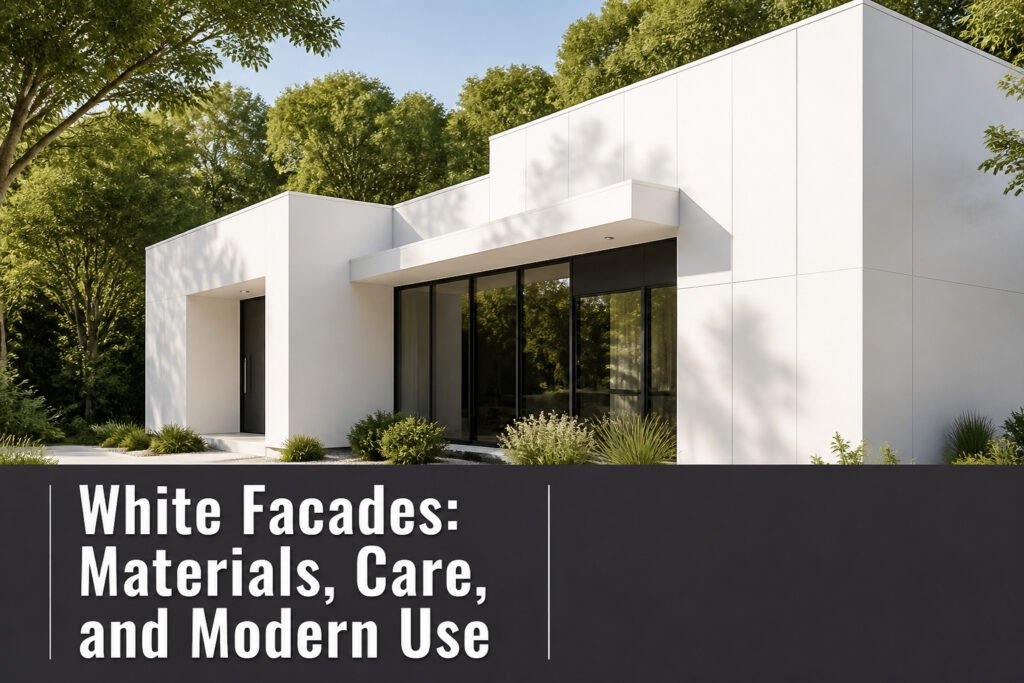
A white facade is any building exterior finished in white, whether through paint, integral color, or natural material. The catch is that white shows every streak of exhaust film and pollen within weeks, not months, so the choice commits you to a rhythm of soft washing twice a year that darker colors skip entirely. Aluminum panels like ALUCOBOND SOLID carry the color through the material itself, which means a scratch does not reveal a different substrate underneath, a durability that factory-white vinyl cannot match once UV fatigue sets in around year twelve.
White Cladding Options
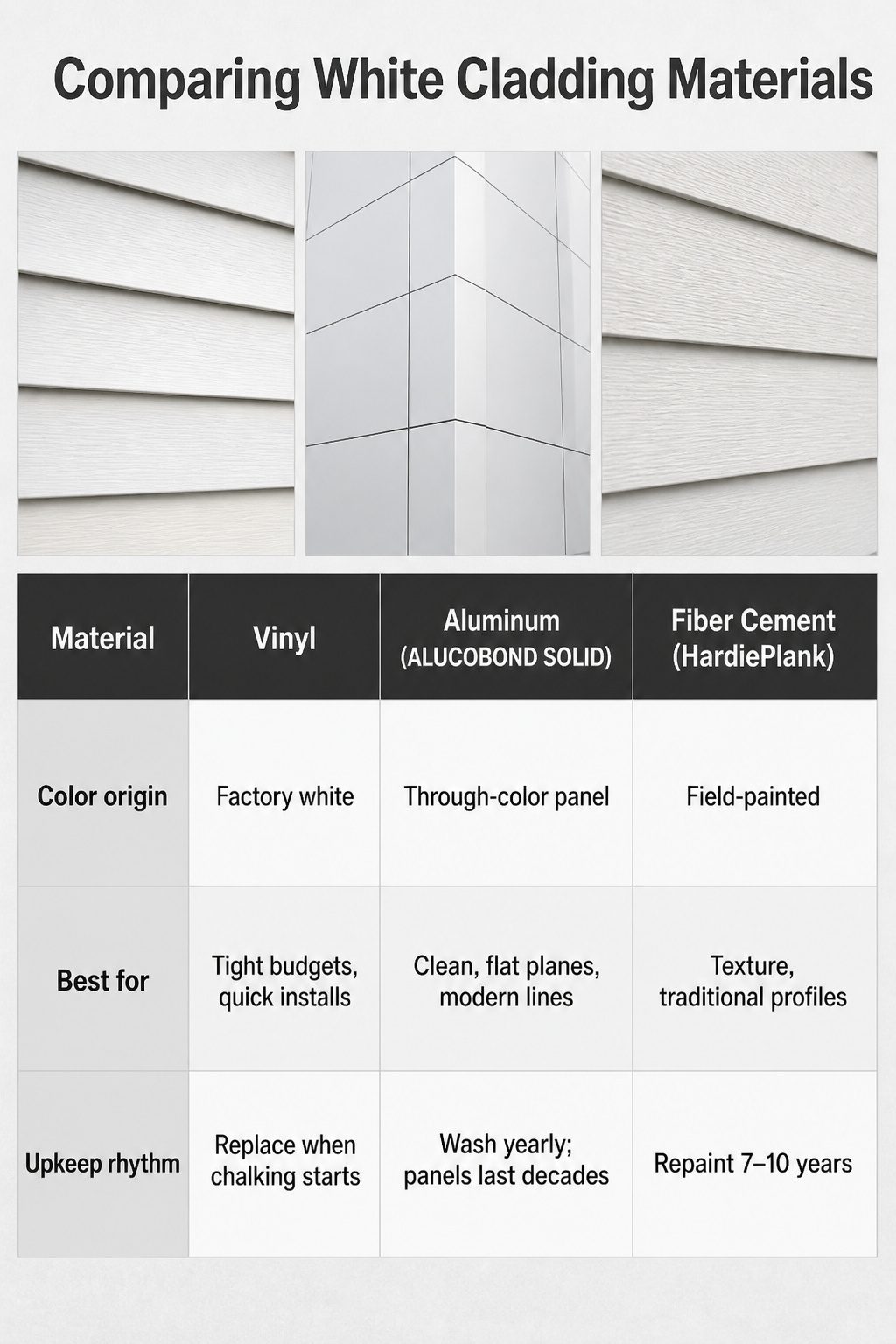
Vinyl, aluminum, and fiber cement each handle a white facade differently, and the choice usually comes down to whether you want the color baked in or painted on. Vinyl arrives white and stays that way until UV fatigue sets in, which in my experience starts around year twelve on south-facing walls. Aluminum, particularly panel systems like ALUCOBOND SOLID cladding, carries the color through the material itself for a uniform appearance without special effects, so scratches don’t reveal a different substrate underneath. HardiePlank fiber cement cladding, known for stylish and strong qualities, takes paint beautifully but will need recoating every seven to ten years depending on your climate.
| Material | Color origin | Best for | Upkeep rhythm |
|---|---|---|---|
| Vinyl | Factory white | Tight budgets, quick installs | Replace when chalking starts |
| Aluminum (ALUCOBOND SOLID) | Through-color panel | Clean, flat planes, modern lines | Wash yearly; panels last decades |
| Fiber cement (HardiePlank) | Field-painted | Texture, traditional profiles | Repaint 7–10 years |
Fiber cement’s weight means you are renting a nail gun if you do not own one, and cutting it without a diamond blade is miserable. Aluminum panels need precise furring or the wall reads wavy from twenty feet away. Vinyl is forgiving to install and unforgiving to look at up close, where the seams and the slight oiliness of the surface give it away.
Decorative Elements
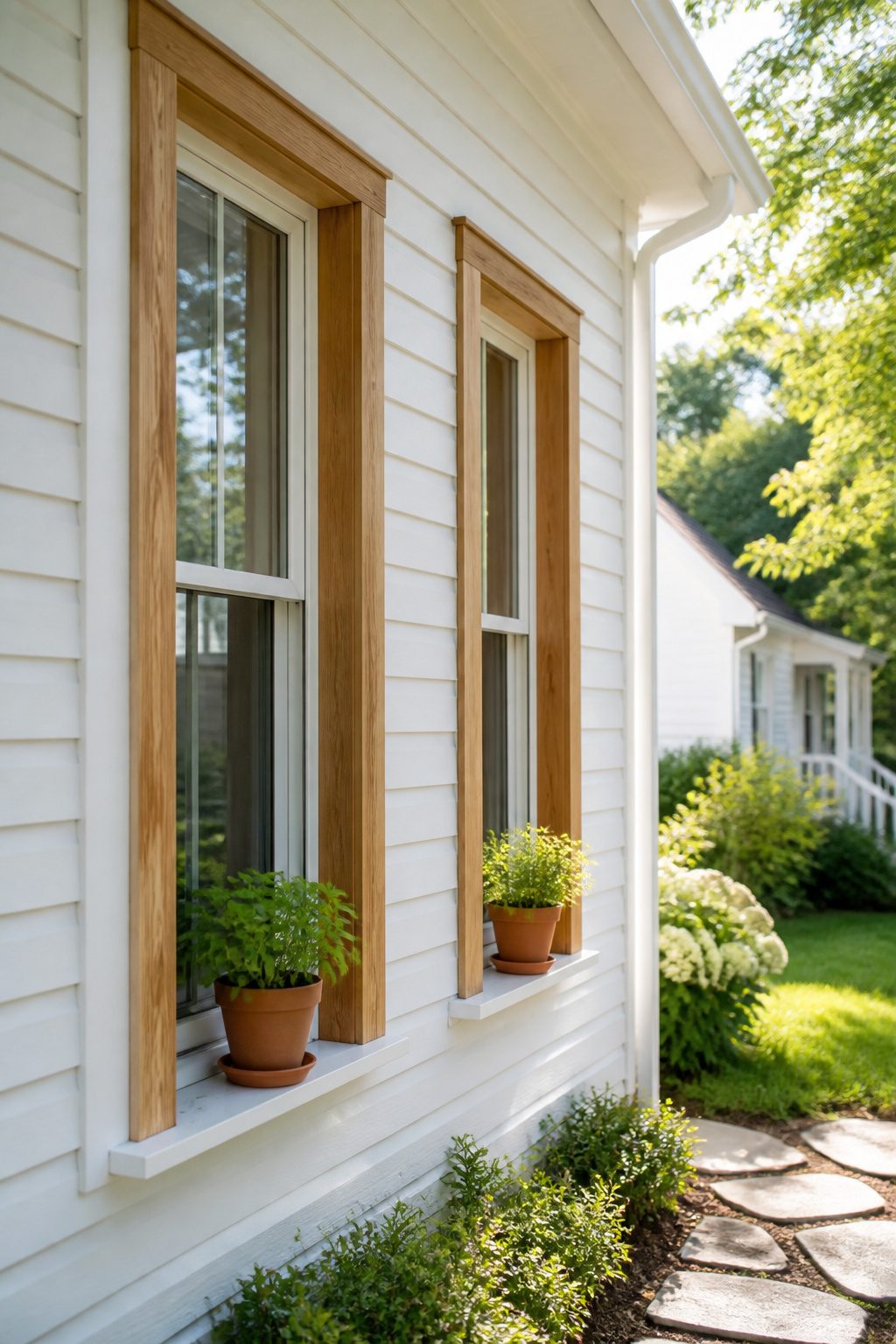
Wooden window frames do more on a white facade than hold glass. They break the surface into smaller planes so the eye reads depth instead of blankness. On my own house, the contrast between painted siding and natural grain does the work that color variation would on a darker exterior. The frames become the detail you notice from the street, not an afterthought.
Molded bars at the corners serve a similar purpose. They catch shadow differently as the light moves, which keeps a white wall from looking flat at every hour of the day. The decoration is modest, enough to read as craftsmanship without turning historical. I have seen this balance fail when owners add too much trim, the white starts to look busy, and the clean effect they wanted disappears under ornament.
The restraint matters more than the material itself. Wood left natural, wood painted to match, even composite made to read like wood, all of them work if the scale is right. What does not work is treating the facade as a frame for every idea at once. One or two elements, placed where the architecture already draws the eye, give a white facade its character without fighting the reason you chose white to begin with.
Historical Significance
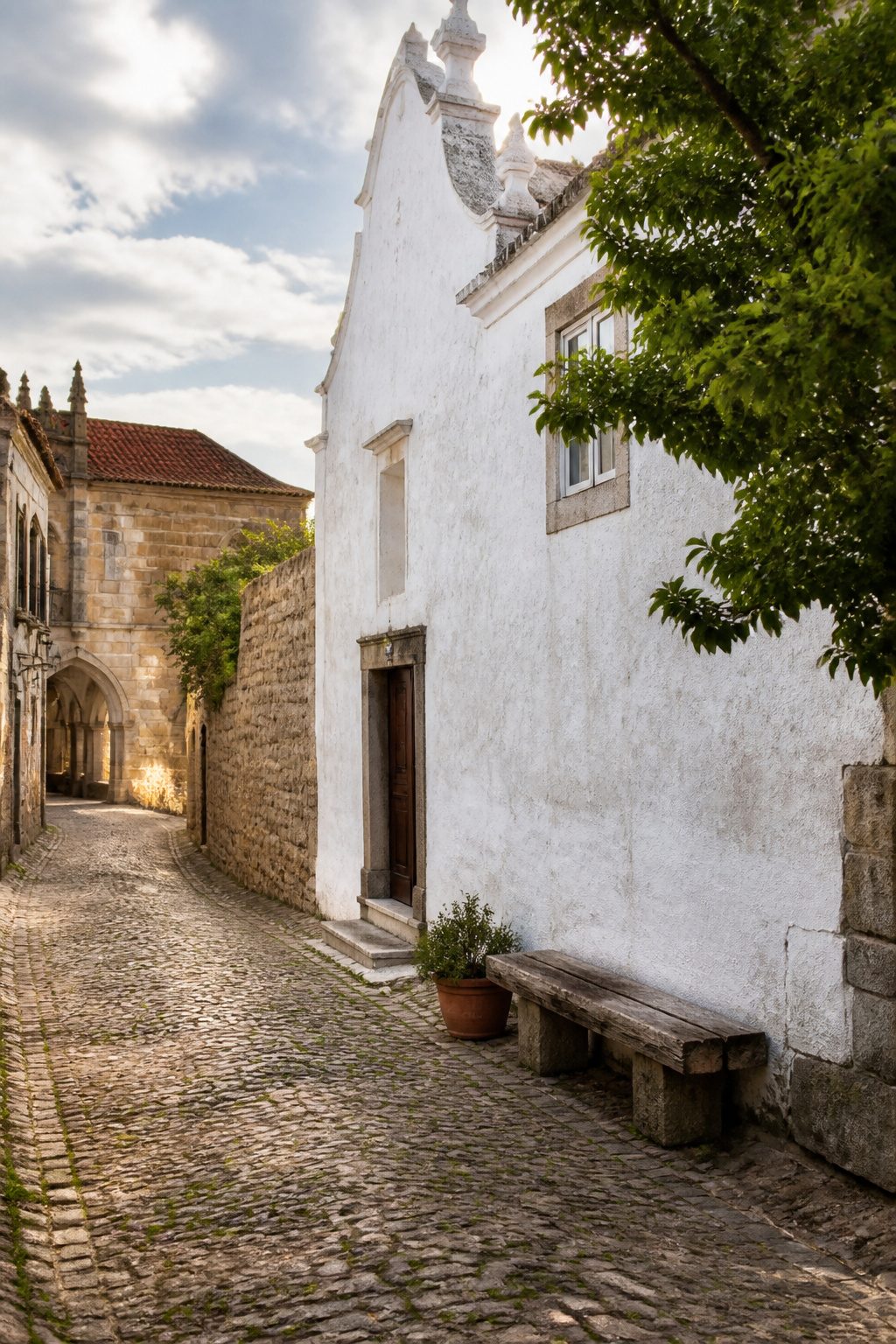
White facades have marked buildings since at least the 13th century, a span that says something about their staying power. The earliest examples I have tracked down date from medieval Europe, where lime wash over stone or plaster gave parish churches and civic structures a pale, uniform skin that caught light differently than bare masonry. That choice was not purely aesthetic. Light-colored surfaces reflected summer heat, and in an era before mechanical cooling, that mattered for interior comfort. The material was also local and cheap: slaked lime, water, sometimes a handful of pigment to keep the tone consistent rather than drifting toward gray.
The tradition carried forward through the Renaissance and into colonial architecture across the Americas. What changed was the binder and the ambition. Stucco formulations grew more sophisticated, and by the 18th century, white facades signaled institutional weight: government buildings, plantation houses, churches. The 2000s downtown renovation wave, with its uniform white facades and red tile roofs, was not inventing something new but borrowing a visual language that already read as deliberate and maintained.
What strikes me, looking at how long this has persisted, is that white facades survived not because they were fashionable but because they solved multiple problems at once. They handled sun, they hid uneven substrates, and they gave builders a finished look without scarce or expensive materials. A coat of lime wash or modern equivalent still costs less than most cladding upgrades, and that economic logic has kept the choice alive across centuries and styles that otherwise had little in common.
Modern Urban Applications
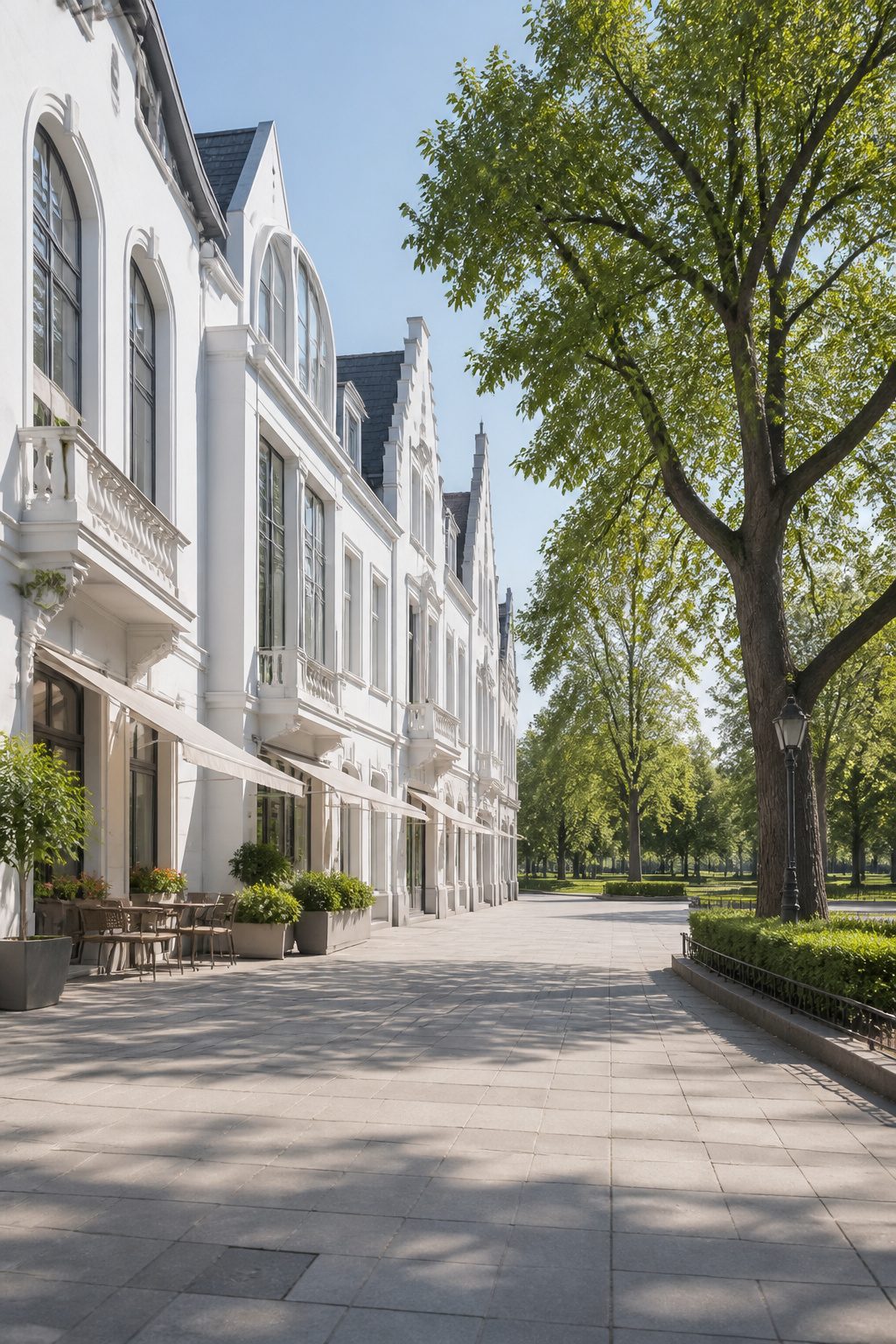
Walking through a downtown block where every facade was painted the same warm white last year, I noticed how the coffee shop, the old hardware store, and the new apartment entrance suddenly read as one place instead of three eras arguing with each other. The city did not match materials or add trim. It just held the color line at the sidewalk, and the effect was enough to make me slow down and look in windows I had walked past for years.
That unifying strategy works because white bounces the most light back onto the street, so even a narrow alley feels wider, and a single tree reads as a deliberate design choice rather than leftover space. In new construction, the same approach lets a taller building settle in beside shorter neighbors; the eye reads the color first and the massing second.
For a renter or owner on a budget, the lesson is practical. If your building sits on a block where even two other owners have gone white, matching that tone makes your project part of a larger whole without your spending on architectural detail you do not have. The cost is paint and patience, not stone or steel.
Maintenance Needs
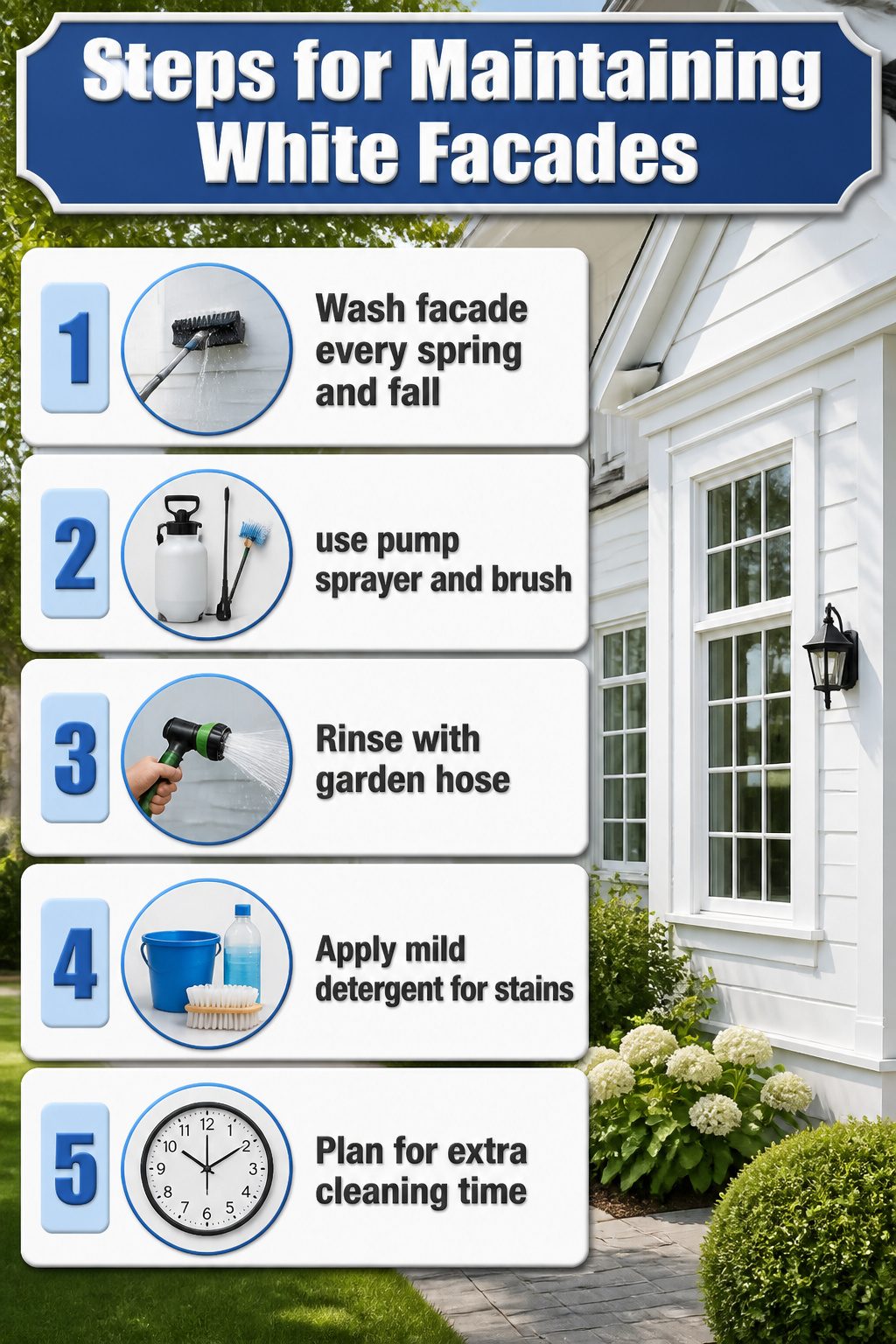
White shows the dirt before any other color does. On a facade, that means exhaust film, pollen streaks, and the gray film that settles near busy roads all announce themselves within weeks, not months. A soft wash every spring and fall keeps the buildup from etching into the surface. I use a pump sprayer and a brush on an extension pole, working from the bottom up so dirty water does not streak across clean areas. Rinse with a hose, not a pressure washer; the force can drive water behind cladding or strip paint from older trim. For the spots that still hold stain, a mild detergent and a nylon brush usually lift them without the bleach that weakens caulk lines over time. The extra passes are the cost of choosing white, and in my experience they add maybe two hours per cleaning cycle compared to darker colors on the same house. Plan for that time, or the facade goes from crisp to dingy faster than guests can notice.
Environmental Impact
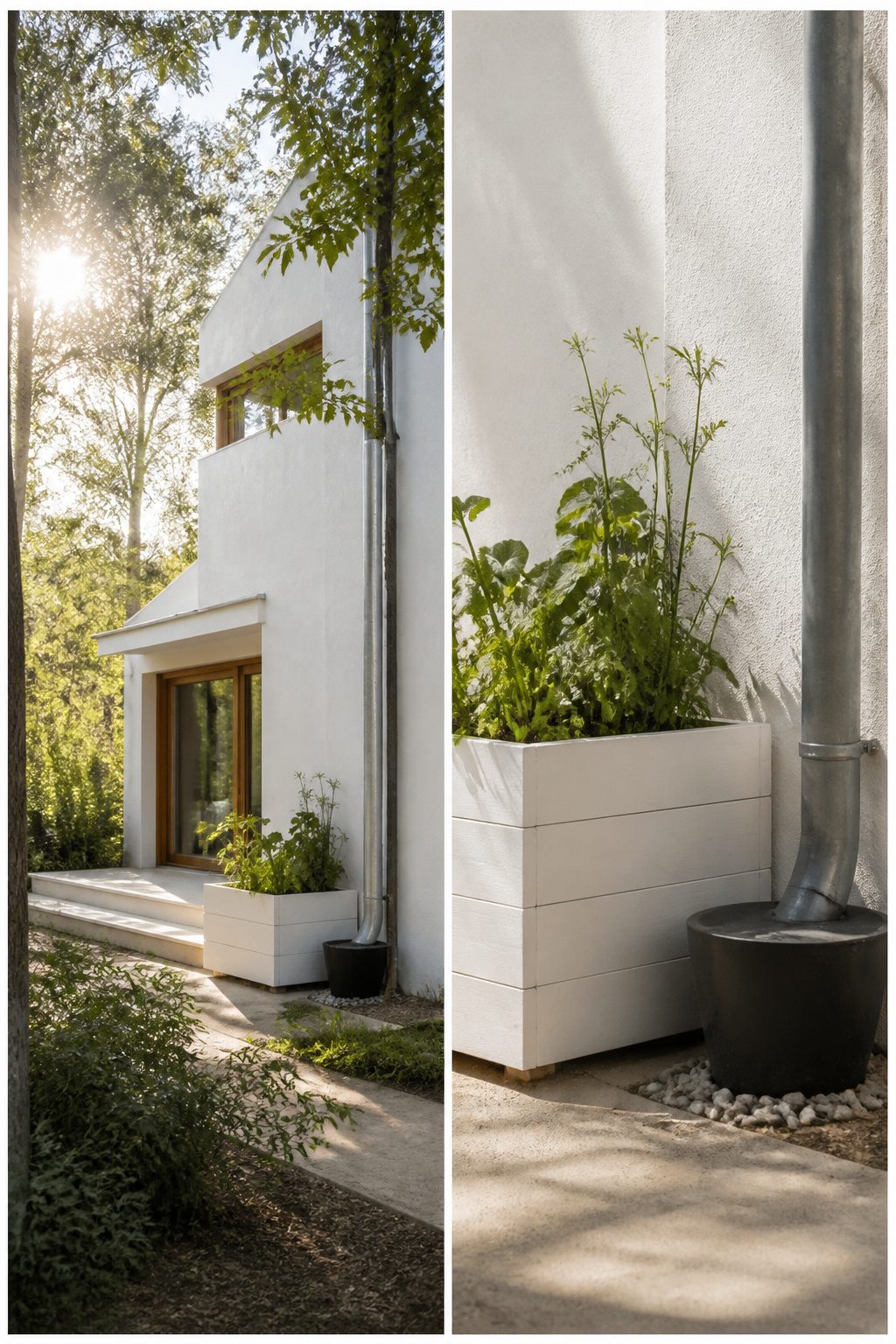
A white facade starts with a choice that will outlast the paint job itself. Portland cement-based render carries a heavy carbon footprint from the kiln, while lime plaster absorbs CO2 as it cures and can be stripped back to bare earth at end of life. That difference mattered when I was weighing options for a small addition last year, and the price gap was narrower than I expected.
Wood cladding in white stain, not solid paint, lets the grain breathe and the boards last longer without replacement. Thermally modified ash or acetylated pine skips the chemical pressure treatment that makes standard lumber hard to dispose of. The tradeoff is upfront cost and a narrower supplier list.
The real sustainability win on a white surface is reflecting heat instead of absorbing it. In cooling-dominant climates, that cuts energy use more than any material sourcing debate, though the benefit flips in cold winters where you want solar gain. Location decides which logic holds.
Self-Cleaning Treatments
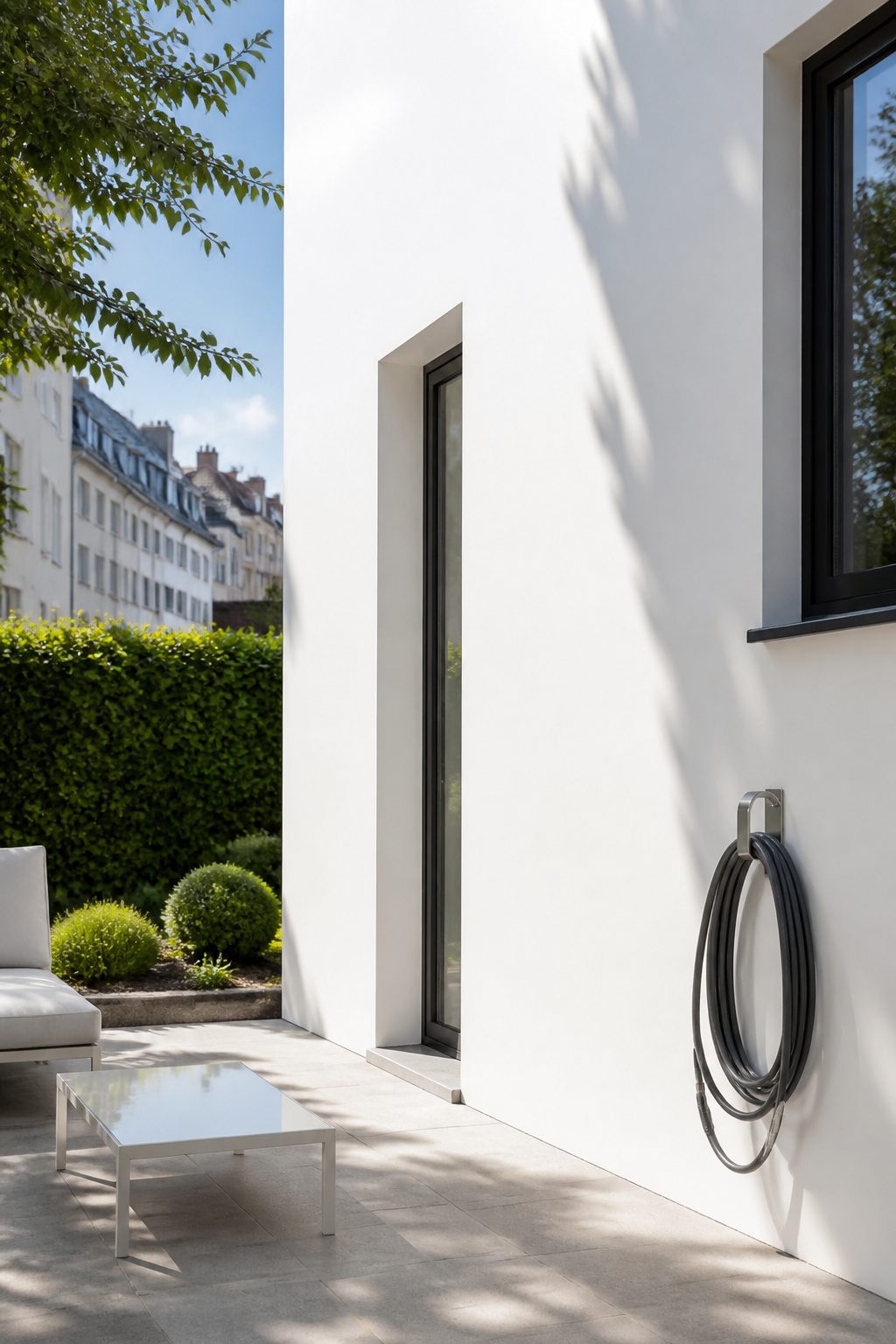
White facades on ventilated systems carry a maintenance burden that stops a lot of weekend projects before they start. The Bios Self-Cleaning treatment, used on these facades for over 14 years, changes the equation by shortening what would otherwise be a seasonal scrubbing schedule into something closer to occasional rinsing.
The mechanism is Hydrotect technology. Sunlight hitting the treated surface triggers a reaction that breaks down organic grime, the kind that turns white cladding gray or green in shaded corners. Rain then washes the residue away. It is not magic, it is photocatalysis, and it works slowly enough that you will not watch it happen.
For a white surface, the payoff is specific. White shows every streak and pollen film, so the self-cleaning layer matters more than it would on charcoal or terracotta. My read, comparing systems, is that this treatment shifts the maintenance rhythm from active cleaning to passive monitoring, which suits owners who want the look without the ladder work. The 14-year track record suggests the coating lasts long enough to justify the upfront cost against saved labor, though that math changes if your facade never sees direct sun.
Specific Products to Know
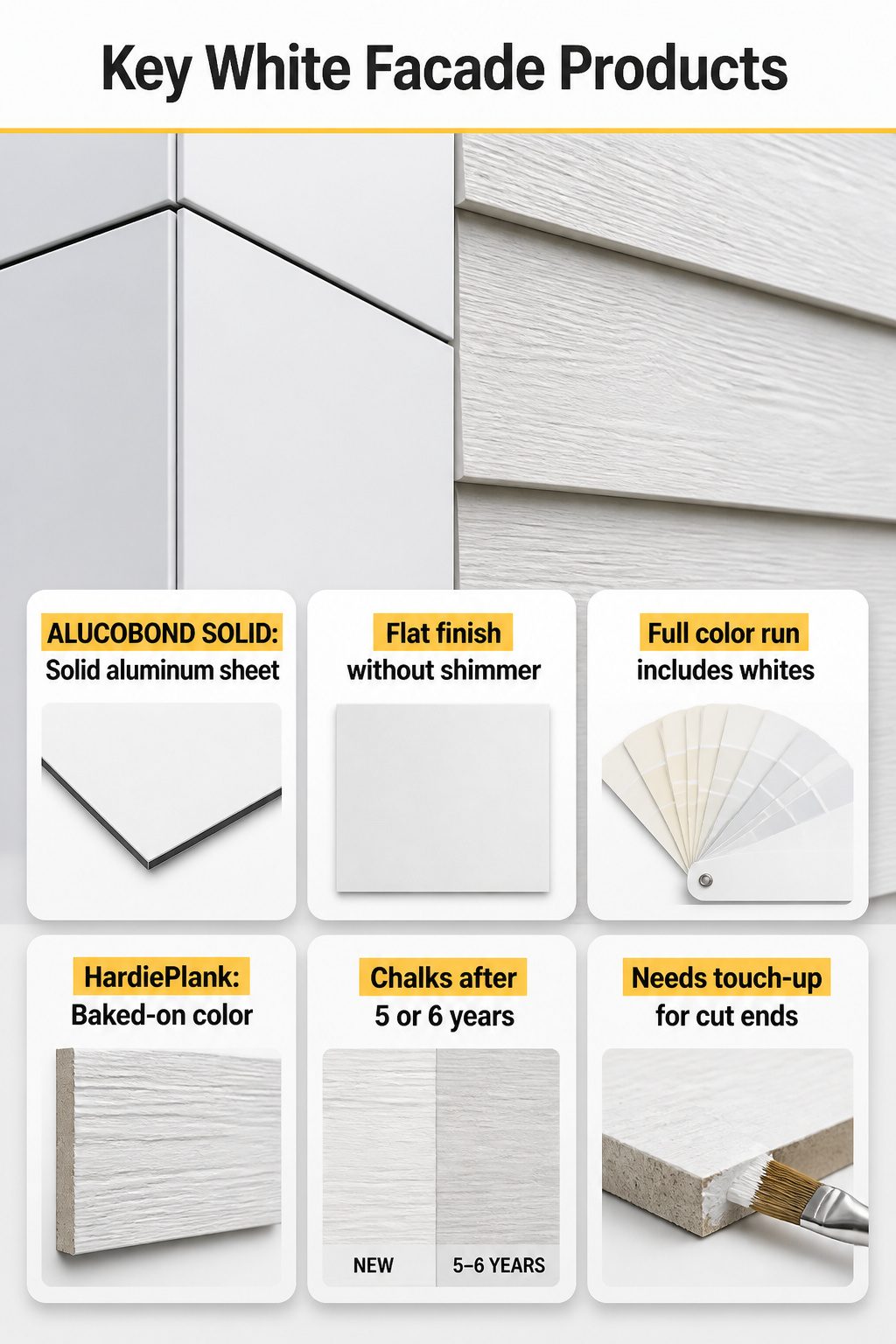
Two products keep surfacing when I look into white facades that have to survive real weather without turning into a maintenance job.
- ALUCOBOND SOLID trades the composite core for a solid-aluminum sheet, which matters if you want a uniform color without the metallic shimmer or stone effects that dominate the rest of the line. The finish reads as flat paint rather than metal, and that makes it useful where the facade needs to stay quiet against brick or glass neighbors. Ask whether your fabricator stocks the full color run; whites can shift between cool and warm undertones, and the sample under showroom lights will not match the south face at noon.
- HardiePlank fiber-cement siding sits at the other end of the cost and weight spectrum. It carries a baked-on color that holds up longer than site-painted wood, though the white shades still chalk slightly after five or six years of hard sun. What I watch for is the edge seal: cut ends on site need touch-up paint, and the factory color rarely matches the canned touch-up exactly. If you are ordering pre-finished, buy the color-matched caulking too; the gap at butt joints is where water gets in and where the white starts looking patched.
Why White Reads as Cohesive
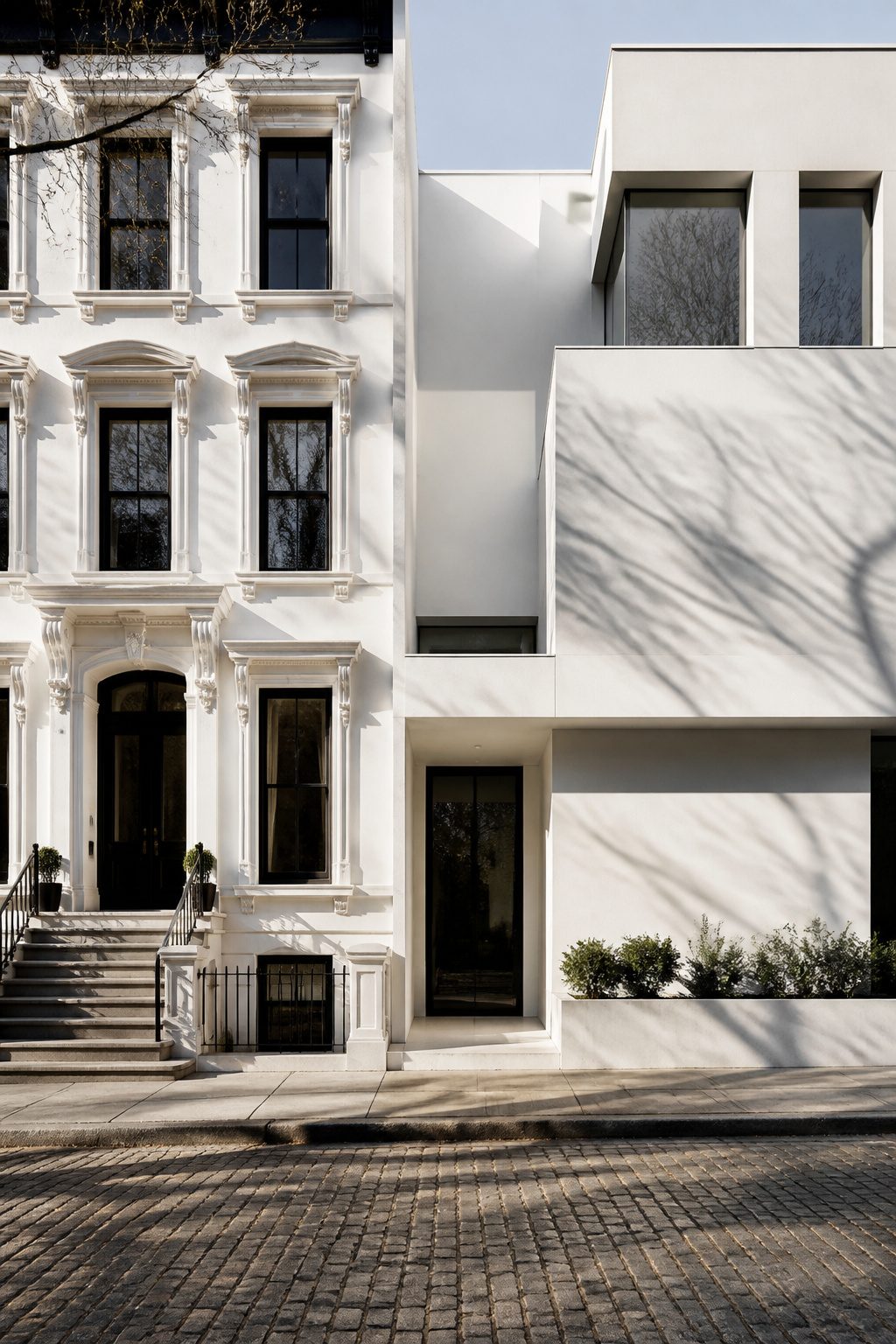
A white facade does not ask for attention; it recedes just enough that the eye reads the building as shape rather than surface. That quietness is what lets neighboring structures, even mismatched ones, settle into the same visual register. I noticed this walking a block in my own neighborhood where a 1920s clapboard sits beside a 1970s brick box, both painted white. The trim details still differ, but the overall massing reads as intentional, almost as if one architect had planned the pair.
For a renter or owner mid-project, this effect is worth using deliberately. If your facade is already white, the pressure to match window styles or rooflines drops sharply. You can replace one element without chasing an exact period look. If you are choosing white now, you are buying tolerance for future changes: a new door, a rebuilt porch, even a neighbor’s addition will not fight the street the way a strong color would.
The risk is flatness. White without any variation in depth or shadow can look like a placeholder. What saves it is material texture: board-and-batten reads differently than smooth stucco, and that difference gives the eye something to do. My own preference runs toward keeping the color consistent but letting the surface tell you what you are looking at. A single white across mismatched textures still coheres, because the light hits each one differently through the day.
What Pollution Actually Does
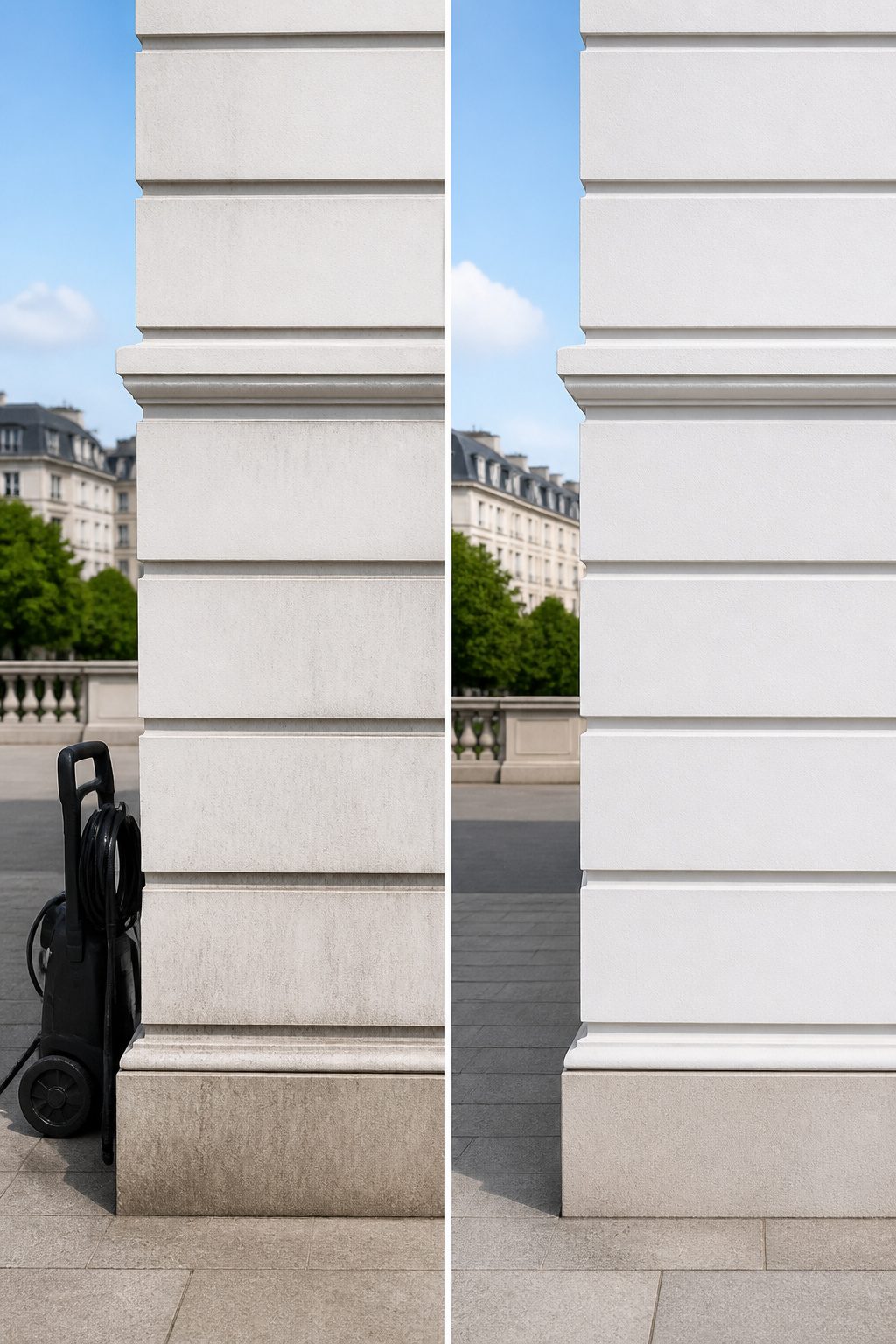
White facades show dirt faster than any other color because the contrast is absolute against a surface meant to reflect light. I learned this the hard way after assuming a north-facing wall would stay cleaner than the rest; the soot from a nearby bus line settled there almost weekly, turning the lower panels a dull gray that regular rain never fully washed off.
The real damage comes from what you cannot see immediately. Acidic particulates from exhaust and industrial output bond with paint and stucco at a chemical level, so a facade can look merely dusty while the surface underneath is already etching. Pressure washing too hard strips the finish before the stain lifts, which is why gentler, more frequent cleaning wins over the dramatic once-a-year blast I used to favor. Carbon deposits also trap moisture against the surface, accelerating the chalking and cracking that make a white wall look tired long before its time.
Understanding the mechanism changed how I schedule maintenance. The discoloration is not just surface dirt waiting for a hose; it is an active layer that deepens the longer it sits. A facade left two seasons between cleanings needs more aggressive treatment than one touched up every few months, and aggressive treatment shortens the material life I am trying to protect.
Reading Material Labels
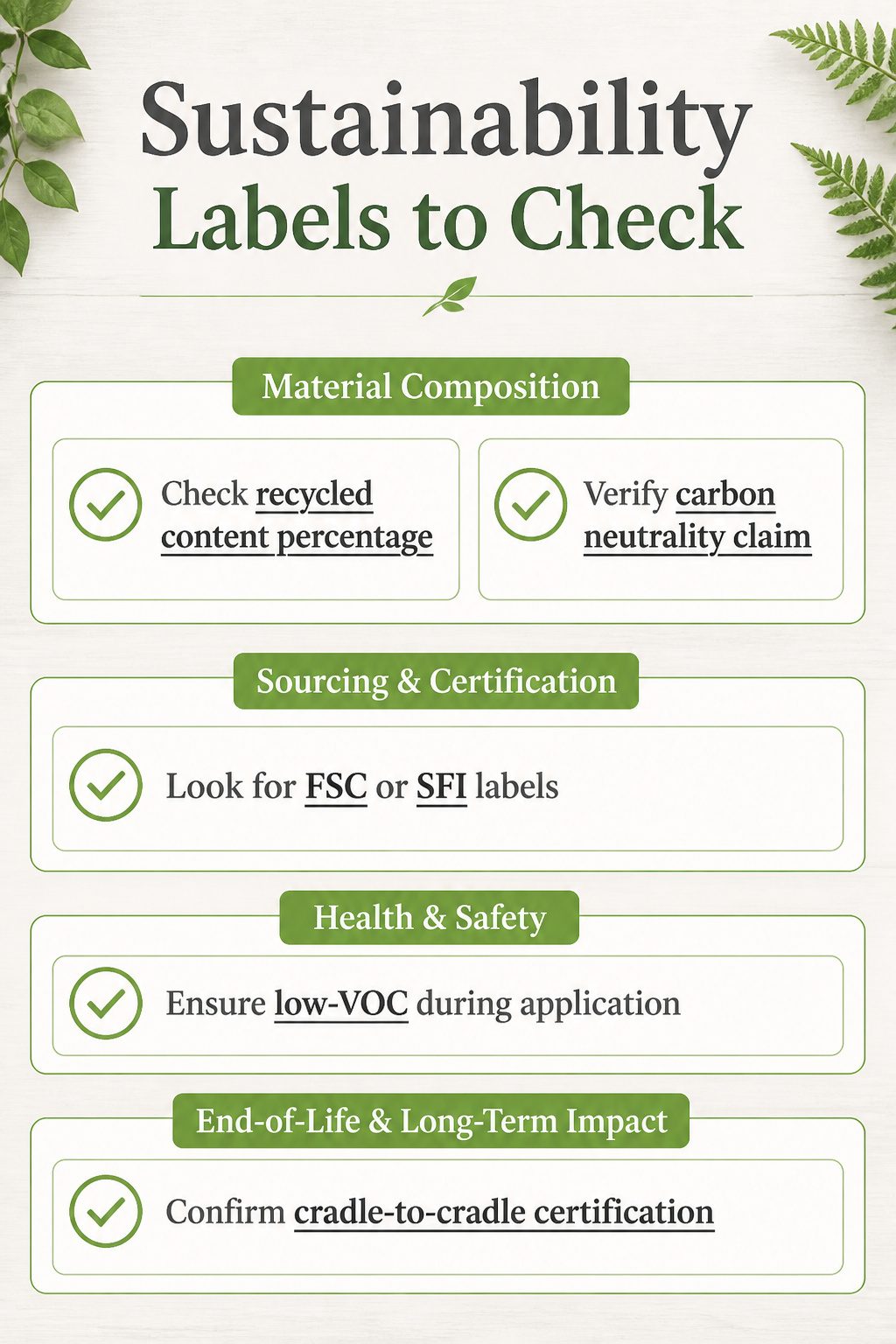
Sustainability labels on cladding mostly describe what the material is made from, not how long it lasts or whether it can be recycled after you remove it. I spent an afternoon once trying to compare two "eco" fiber-cement boards and realized the claims were talking past each other entirely. Here is what to actually look for:
- "Recycled content" tells you only the percentage of pre- or post-consumer material inside. A high number does not mean the board itself is recyclable later, or that the resin binding it is any cleaner.
- "Carbon neutral" or "net zero" usually refers to the factory’s operations, not the shipping to your store or the chemical curing process. Ask whether the figure covers the full product life or just manufacturing.
- FSC or SFI marks on wood mean the forest was managed to a standard. They say nothing about the bleach, paint, or treatment applied after harvest, which is where the real environmental load of white cladding often sits.
- "Low-VOC" matters most if you are cutting or sanding on site. The label refers to what off-gasses during application, not what washes off in rain years later.
- Cradle-to-cradle certification is the rare label that actually plans for end-of-life, but most products I have seen with it carry a price premium that breaks a weekend budget.
If a contractor waves off your questions with "it’s all green now," press on one point: whether the material can be returned to a similar use after removal, or only downcycled to road fill. Their answer usually tells you how much they have actually read the label themselves.
Weekend Projects That Work
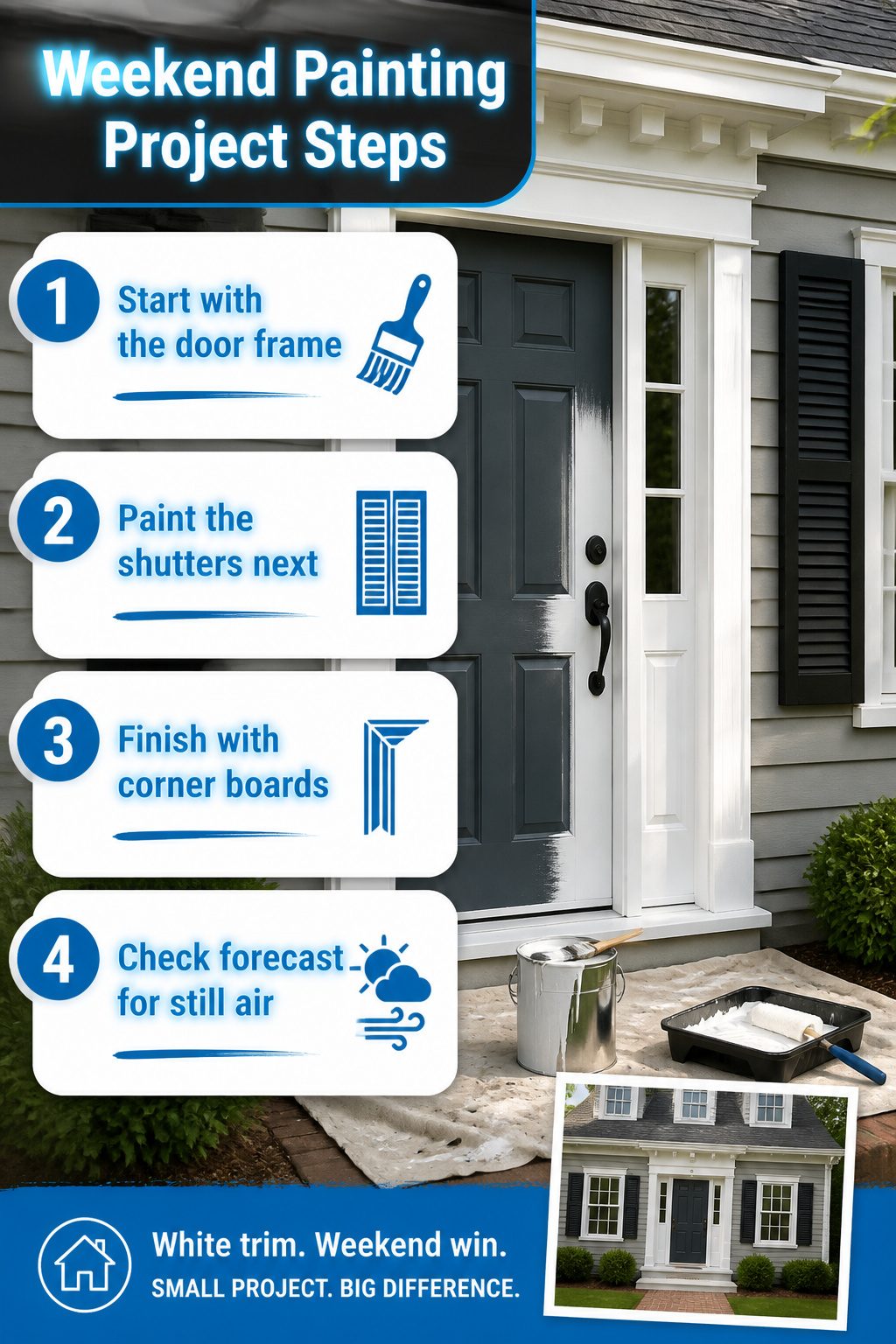
A full facade repaint is a contractor job, but the white parts you can hit yourself are the trim, the shutters, and the door surround. Those are the areas where a weekend and a couple hundred dollars actually moves the needle.
- Start with the door and its frame. This is the smallest surface that gets seen from the street, and fresh white paint here makes the whole entry read as maintained even if the siding behind it is tired. I use a satin or semi-gloss exterior paint; anything flatter shows every handprint and scuff within a month. Two coats, a 2-inch angled brush for the panels, a 4-inch for the flat rails. A door takes Saturday. The frame and sidelights take Sunday morning.
- Paint the shutters next, not before. Shutters are easy to remove and spray on sawhorses, which sounds faster until you factor in the hardware store trip for replacement hinges that always strips out. I leave them hung, mask the siding with a 12-inch paper shield, and brush them in place. The risk of drips is lower than the risk of finding the shutters do not go back on straight.
- The corner boards and window trim come last. These run vertical, so dust settles on the wet paint less than you’d think, but pollen is worse. I check the forecast for still air, not just no rain. A line of white trim where the roof meets the wall, called the frieze, is invisible until it is dirty. Painting it takes an hour, costs maybe a quart, and the effect from the sidewalk is outsized.
Skip the body of the house. The scale is wrong, the ladder height gets unsafe, and the paint quantity puts you past the weekend budget into territory where a crew makes more sense.
Frequently Asked Questions
What are the benefits of using white facades?
White facades reflect summer heat, which cuts cooling costs in warm climates, and they bounce light back onto the street so narrow spaces feel wider. They also unify mismatched buildings into a cohesive visual whole and let you change trim or doors later without clashing. A coat of white paint or lime wash still costs less than most cladding upgrades.
How do you maintain a white facade?
Wash it softly every spring and fall with a pump sprayer, brush, and hose; never pressure wash, since the force drives water behind cladding and strips older paint. Work from the bottom up so dirty water does not streak clean areas, and use mild detergent with a nylon brush for stubborn spots rather than bleach, which weakens caulk lines over time. Expect about two extra hours per cleaning cycle compared to darker colors.
What materials are commonly used for white facades?
Vinyl arrives factory white and suits tight budgets but starts chalking around year twelve on south-facing walls. Aluminum panels like ALUCOBOND SOLID carry color through the material itself so scratches stay hidden, and they last decades with yearly washing. Fiber cement such as HardiePlank takes paint beautifully for traditional profiles but needs recoating every seven to ten years and weighs enough that you will want a nail gun for installation.