
A white sofa works only if the fabric earns its keep against real use, not just photographs. The difference between a piece that lasts and one that becomes a regret is the cleanability code hidden on the tag: W or WS ratings let you lift a red wine spill the same evening, while solvent-only fabrics turn a coffee ring into permanent shadow. Performance weaves run about $28 per yard and still lift most stains with a damp cloth after eighteen months with a dog.
1. Textured Fabrics
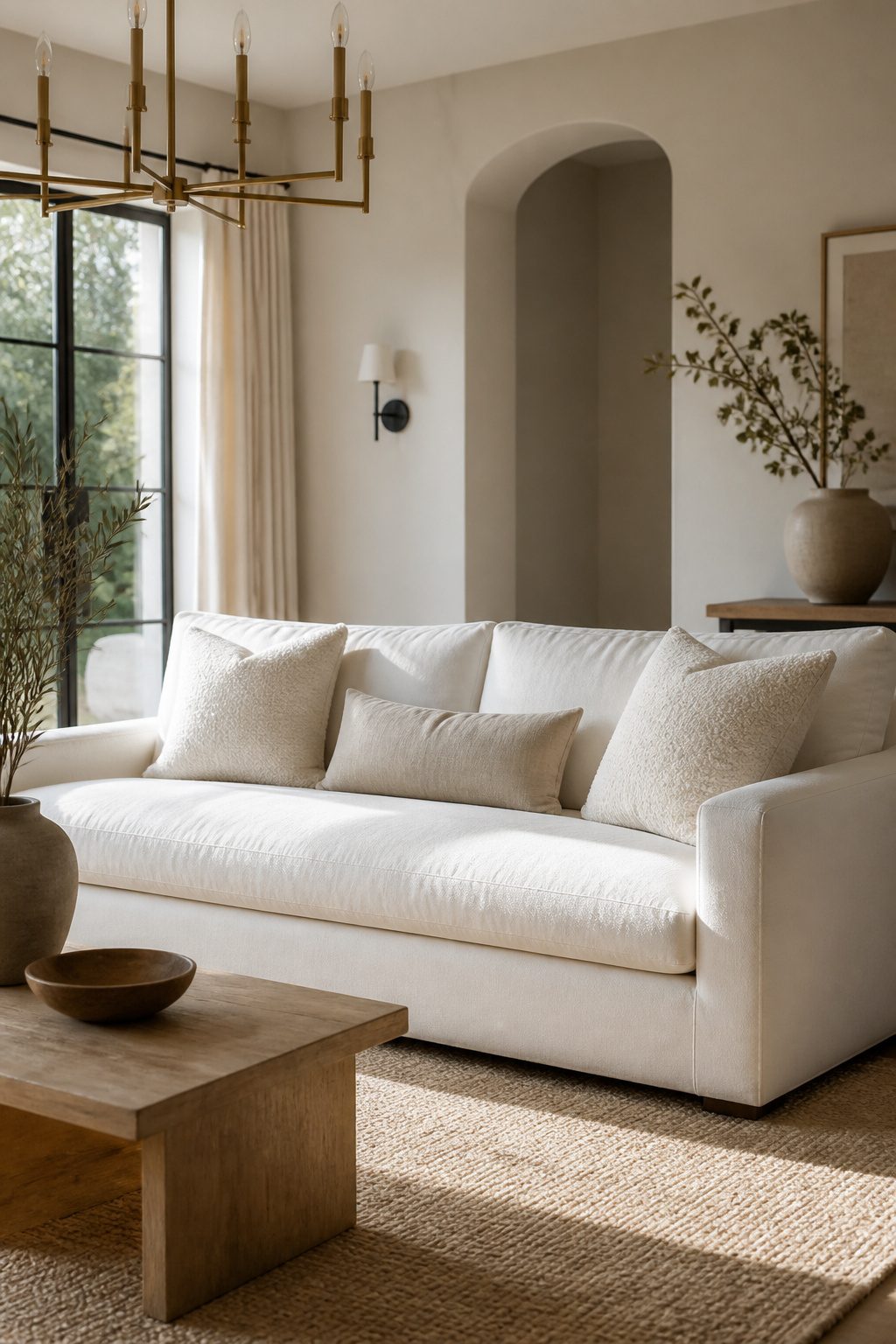
Boucle, brushed linen cotton, and Belgian linen each do something flat weaves cannot: they catch light at different angles, so a white sofa reads as layered rather than blank. Patricia Gibbons at Sofa.com singles these out specifically for white upholstery because the natural texture adds depth without needing extra pillows or throws to rescue it.
Pure white tends to read clinical in most living rooms and shows yellowing from body contact more readily than softer shades. Off-white or cream-white fabrics coordinate with wood tones and warm light in ways pure white resists, which makes the warmer shade the better practical choice for a sofa that actually gets sat on.
For durability, look for fabrics rated between 40,000 and 100,000 double rubs. That range covers genuine home use without paying for commercial-grade weight you will not need. The brushed linen cottons in this group have the added advantage of professional dry cleaning, which matters more on white than on any other color.
2. Accent Colors
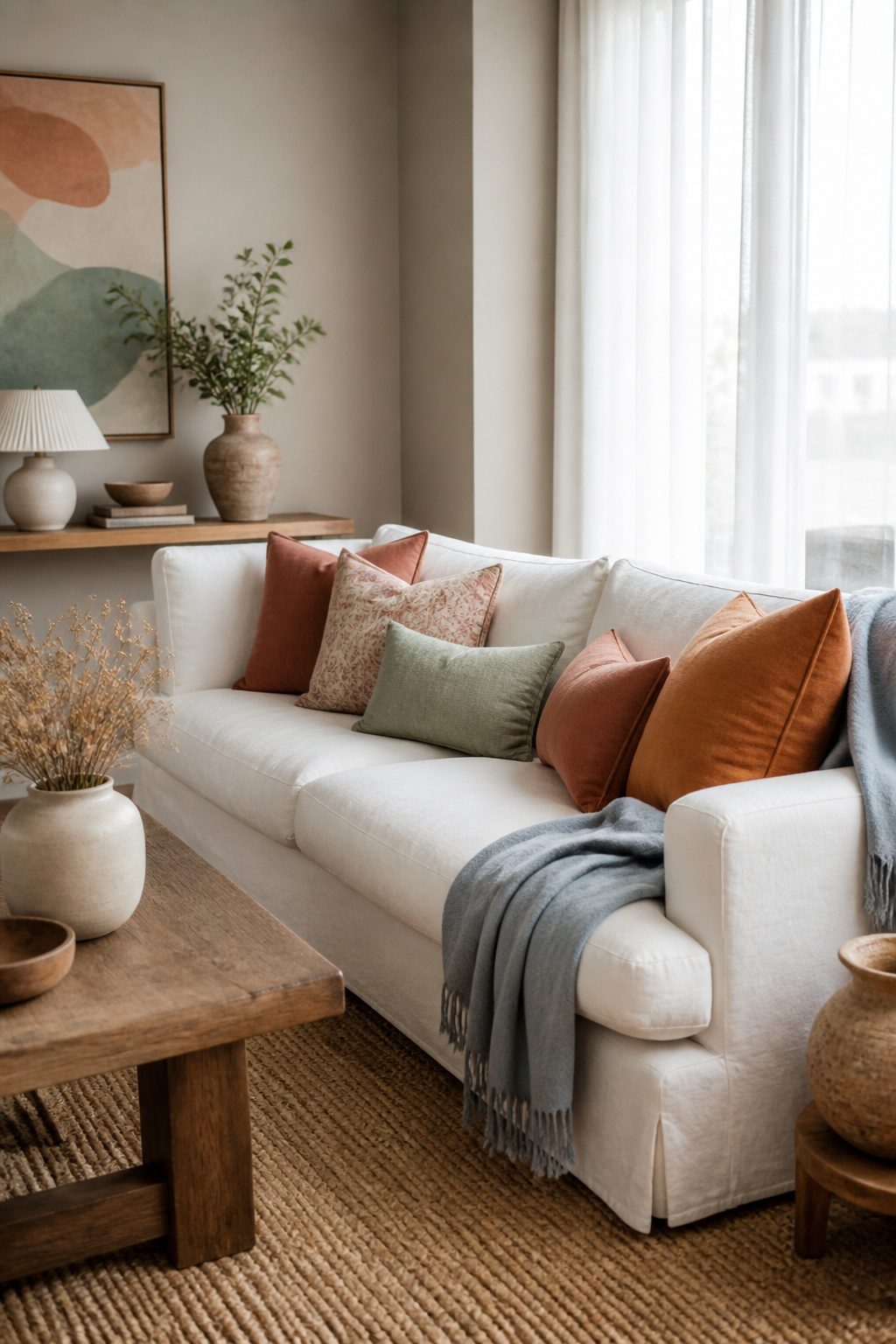
A white sofa hands you the easiest color experiment in the room. Last spring I swapped a set of grey pillows I’d tolerated for two years out for a mix of terracotta and sage green, and the living room felt like someone had opened a window. The warm neutrals, sand and caramel and warm taupe, read as sophisticated without trying for a "palette." Sage green and terracotta together hit an earthy note that still photographs well for the short-term renter’s portfolio. Warm blues, dusty blue or steel blue, pull toward coastal or Provençal without the cliché of navy anchors everywhere.
The only direction I’d push back on is the pale-almost-white pillow. It disappears against the sofa and reads as a stain from across the room. Same for anything neon or oversaturated; it doesn’t complement, it shouts down the blank canvas quality you bought the white sofa for. My terracotta swap cost about $60 for three covers, took ten minutes, and lasted until I was tired of it. That is the actual budget and timeline this audience lives on.
3. Layering Textures
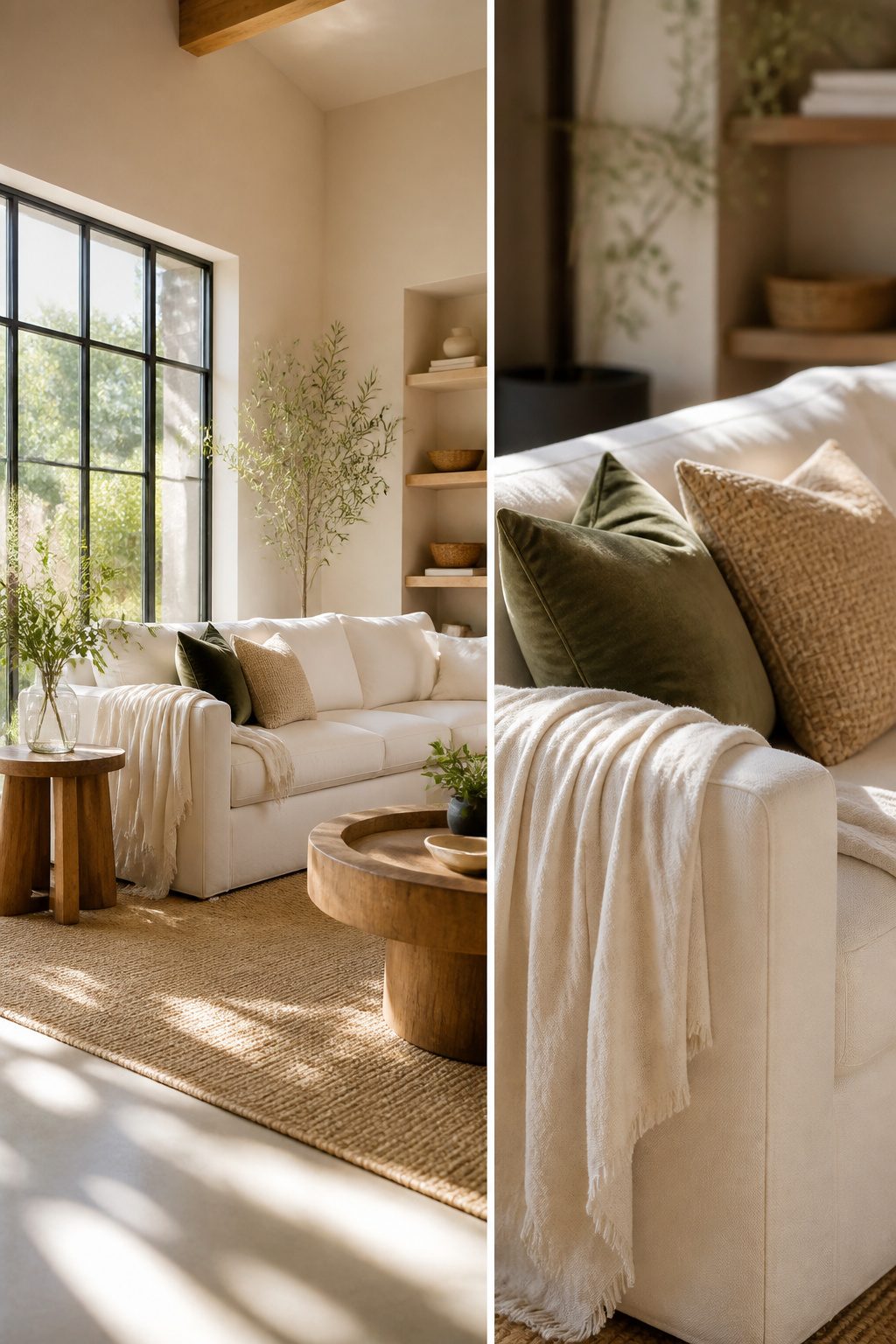
A white sofa without texture reads like a waiting room, not a home. The fix is layering, but the line between cozy and cluttered is thinner than most people think.
Last winter I pushed it too far. Woven rug, chunky knit throw, two velvet cushions, a linen lumbar pillow, and a sheepskin draped over the arm. Each piece worked alone. Together they fought for attention and the sofa disappeared entirely. The room felt smaller, dustier, and somehow colder. The rule I use now: stop at three textures in view at once, and make one of them the dominant layer so the eye has somewhere to rest.
A flat-weave or woven rug underneath does the heavy lifting for warmth without bulk. Throws in a single natural fiber, cotton or wool depending on the season, add the softness you actually use. Cushions should vary in size, not in competing patterns; two solids and one quiet stripe or texture is enough. Colorfast fabric matters more than color itself, since dye transfer from jeans or dark clothes will stain a white cover faster than any spill. Change out of dark layers before you settle in, or accept that the throw is there partly to take the hit.
Ivory or off-white tones in these layers keep the palette from going sterile without forcing contrast where none is needed. The sofa stays the calm center, and the room feels finished rather than decorated.
4. Contrasting Elements
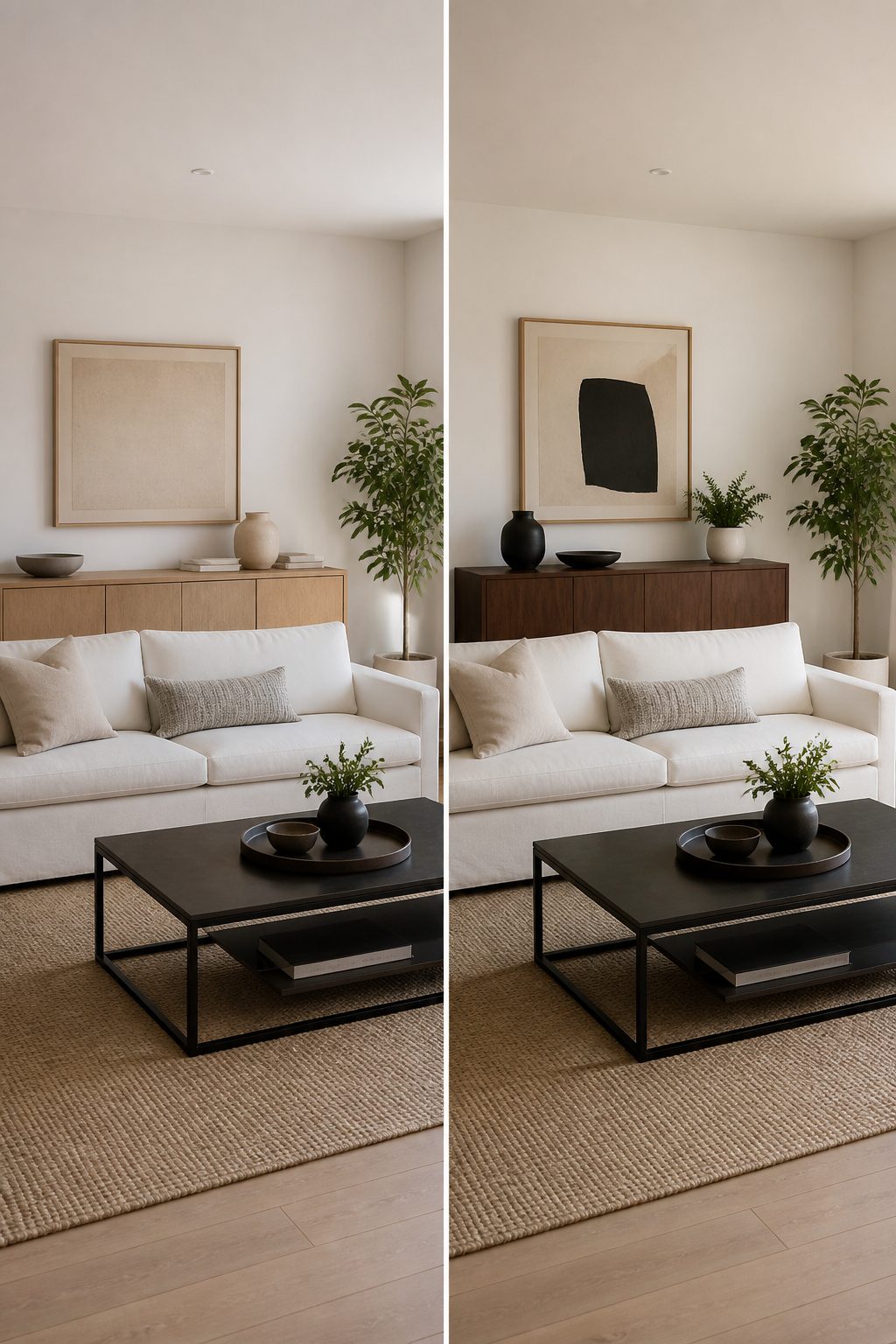
A white sofa on its own can read as unfinished, like a blank page nobody signed. The piece that changed my own living room was a walnut credenza I found secondhand for $180, heavy enough that two people had to wrestle it through the door. Against the sofa’s cotton-linen cover, that dark wood grounded the whole wall. Suddenly the white looked intentional, not tentative.
The contrast works best when one element carries real visual weight, not just a darker shade of the same quiet tone. In a modern room, that might mean a black steel coffee table with some thickness to the frame. In a traditional space, a navy velvet armchair with turned legs does the same job. The white sofa becomes the pause between heavier notes.
The mistake I made first was choosing a piece too close in value, a gray-washed pine that disappeared against the pale upholstery. Fifty dollars and a weekend of sanding later, I stained it walnut instead. The room felt settled the same afternoon.
5. Wall Colors
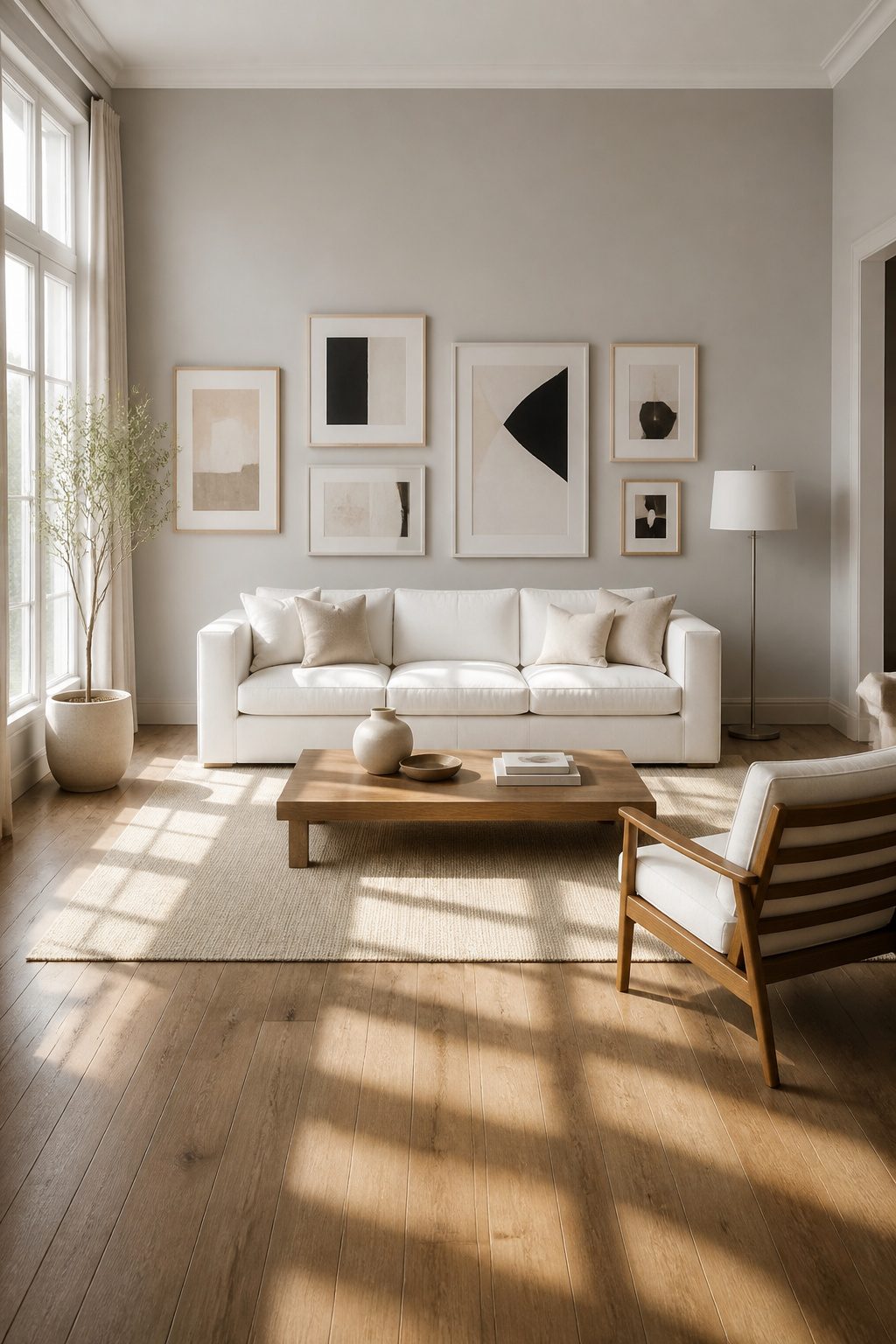
Soft grey walls behind a white sofa give the room breathing room without going cold. The grey recedes, the sofa advances, and daylight bounces between them instead of getting swallowed. Beige works the same way but shifts warmer: wood furniture and rattan read as texture rather than clutter against it, and prints with sandy tones tie the two neutrals together without a single loud accent.
Bold color is the opposite gamble. A dark grey wall turns the same white sofa into a deliberate statement, sharp and gallery-like, but the contrast has to be strong enough to look intentional. Half-measures read as mistake. Vivid primaries or saturated hues on every wall compete with the sofa instead of framing it; the eye has nowhere to rest.
I learned the beige rule the hard way in a rental with walls already painted Sherwin-Williams Accessible Beige. The sofa looked creamier, the walnut bookshelf finally made sense, and I stopped trying to "fix" the warmth with cool grey pillows that fought it. Warm neutrals forgive; bold colors need restraint, or the wall wins and the sofa disappears into the noise.
6. Maintenance Tips

Performance fabrics with a water-resistant treatment make a white sofa manageable even with kids or pets, though easier to maintain is not the same as stain-proof. My own mistake was learning that the hard way. I treated a linen-look polyester with a spray-on fabric protector, missed a coffee ring for two days, and the set-in stain never fully lifted. The product promised a lot; what actually worked was keeping a spray bottle of mild detergent and water under the sink and hitting spots the same afternoon.
Vacuuming weekly with the upholstery attachment matters more than I expected, especially along seams where grit wears the weave. Rotating cushions keeps color even, and leaving space between the sofa and radiators prevents heat marks that read as shadow stains on white. Check the tag for a W or WS cleanability code before you buy; solvent-only fabrics turn a small spill into a service call.
For households that really live in their rooms, a removable, washable cover is the closest thing to forgiveness. Machine washing beats spot cleaning for the grime that builds across armrests and seat fronts over a season.
7. Functional Layouts

A white sofa in a small living room dies fast if you treat it like a stage piece. The first time I arranged mine, I gave it the full centerpiece treatment: centered on the longest wall, facing the entry, coffee table parked dead in the middle. Walking around it felt like squeezing between parked cars. The room looked staged and sat unused.
The fix came after I actually measured what my legs needed. Eighteen inches between sofa edge and coffee table is the distance that keeps a small room passable without your knees hitting wood every time you stand up. I pulled the sofa off the wall, angled it slightly toward the window, and slid the table closer than felt right at first. The path behind the sofa, narrower now, became storage for a slim console the sources mention; the open wedge in front became the actual living space.
Glass or acrylic on that table kept the sight line light, which mattered more than I expected. The white sofa reads as volume, not clutter, when nothing solid blocks the floor beneath it. I had started with oak and switched after two weeks. The transparent surface lets the sofa anchor without the whole arrangement going heavy.
L-shaped or modular pieces can fill a wide room and still leave breathing room, but in a small footprint the low-arm, light-leg styles keep the edges from feeling like walls. My first layout forgot that; the revised one puts the visual weight where people actually sit, and the walking paths stay clear by subtraction, not addition.
Why White Sofas Work in Real Rooms
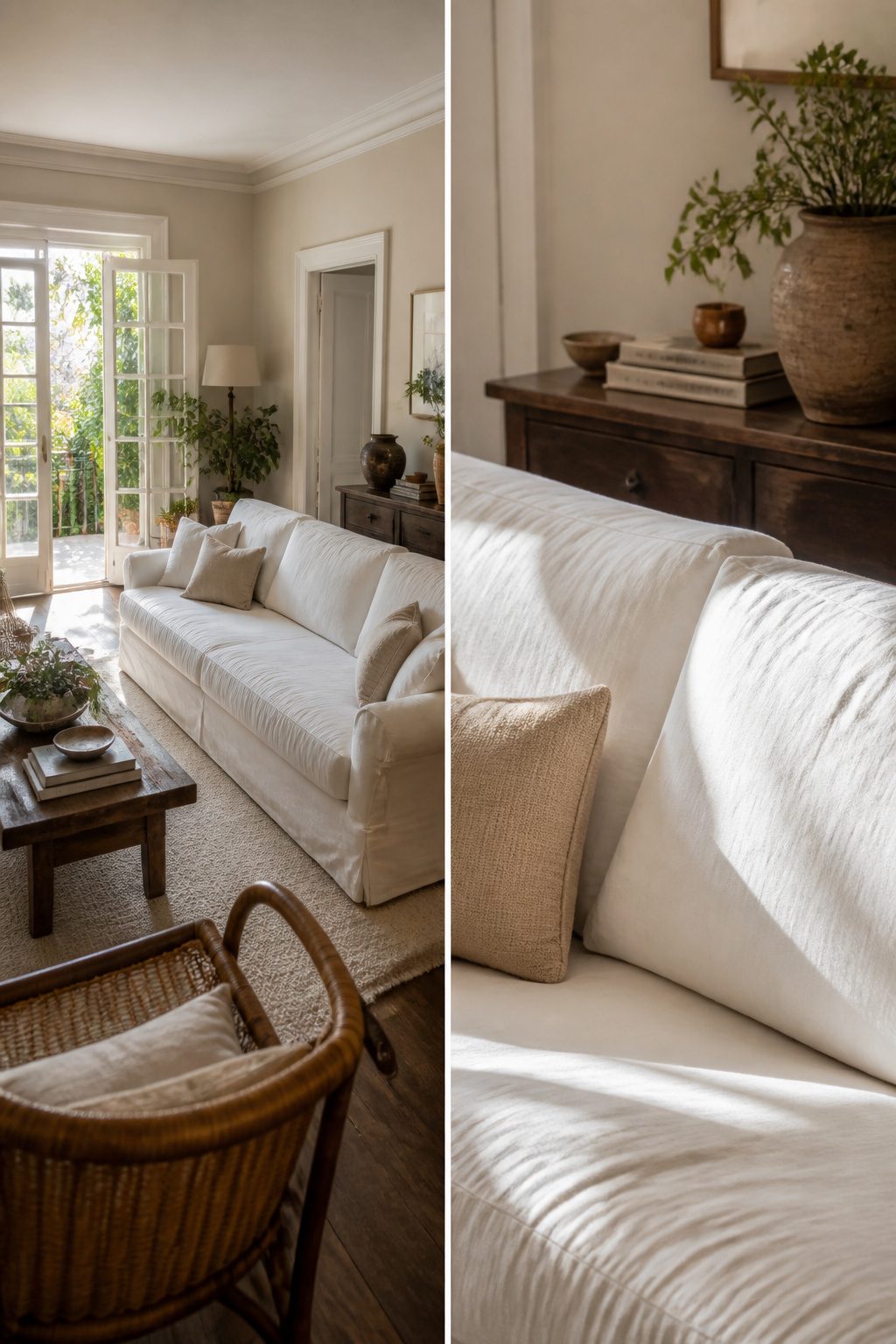
The living room in my sister’s 1940s rental sat heavy with a graphite sectional that swallowed afternoon light. She spent $847 replacing it with a white bench-cushion sofa in a vanilla-toned linen, and the room changed the way air moves through it. White reads as negative space, which let her keep the dark wood sideboard and still feel open.
Gray would have repeated the wall color and flattened everything. Navy would have anchored the room downward, making the 8-foot ceiling feel lower than it already was. White was the only choice that let existing pieces breathe without a full repaint.
The sofa arrived through the back French doors because the front hall turns too tight. That constraint ruled out several wider options, and the delivery itself cost nothing beyond the purchase. Three years later, the vanilla tone has shifted slightly warmer from sun exposure, which she prefers to the original cooler cast.
Fabric Choice for Households That Actually Live
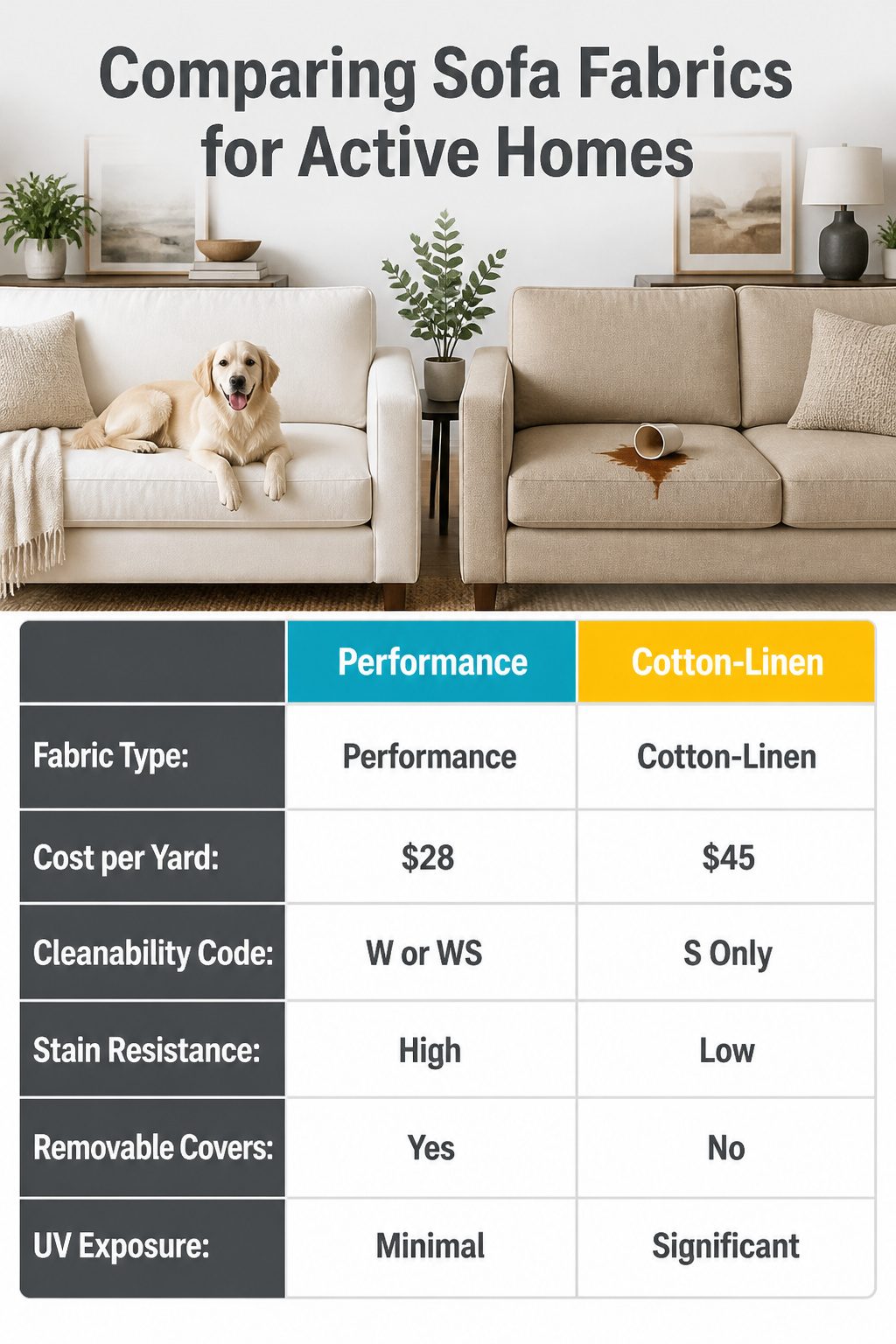
Performance fabric changed what I thought a white sofa could survive. The first one I tracked was a tightly woven polyester treated for water resistance, running about $28 per yard at the time. After eighteen months with a dog and regular use, it still lifted most stains with a damp cloth and mild detergent. The second was a cotton-linen blend without treatment, closer to $45 per yard, and it absorbed a single coffee spill in week three that never fully lifted.
The cleanability code matters more than the hand-feel. W or WS rating is non-negotiable for a light sofa; S-only fabrics leave you solvent-dependent and stuck. I watched the treated polyester get a second purchase when that household moved. The cotton-linen did not.
Protective spray helps but does not replace the base fabric. Applied after purchase, it gives you the minutes that let a damp cloth work. Removable covers are the backup plan; machine-washable ones turn a crisis into a Tuesday evening. UV exposure yellowed the natural fiber where sun hit it, another point for the synthetic in rooms with unfiltered windows.
Styling Without a Designer Budget

Throw pillows and a single throw blanket are where the money actually goes, and where most people overspend. On my last sofa refresh I set a hard ceiling of $180 for accessories and walked out with nine pieces: five pillows in three sizes, one chunky knit throw, two brass candlesticks from a thrift store, and a terracotta pot I already owned. The pillows ate $110 of that budget, the throw was $35, and the candlesticks were $8.
The throw made the most difference per dollar. A white sofa with white pillows reads as furniture showroom; drape something with visible weave across one corner and the whole room loosens up. Mine is 50 by 60 inches, acrylic, and the texture carries from across the room even though the color stays quiet.
Brass or dark wood in small doses does what color usually fails at. A bright pillow on a white sofa tends to look like you are trying to solve the sofa instead of living with it. Small warm objects, repeated, read as intentional without shouting. I keep the candlesticks on the side table, not the sofa itself, so the metal catches light at eye level when you are seated.
The limit that saved me was stopping at one pattern. Mixing prints is where the $180 becomes $340 and the eye still lands on the clash, not the couch.
The Stain Fear and What Changes It
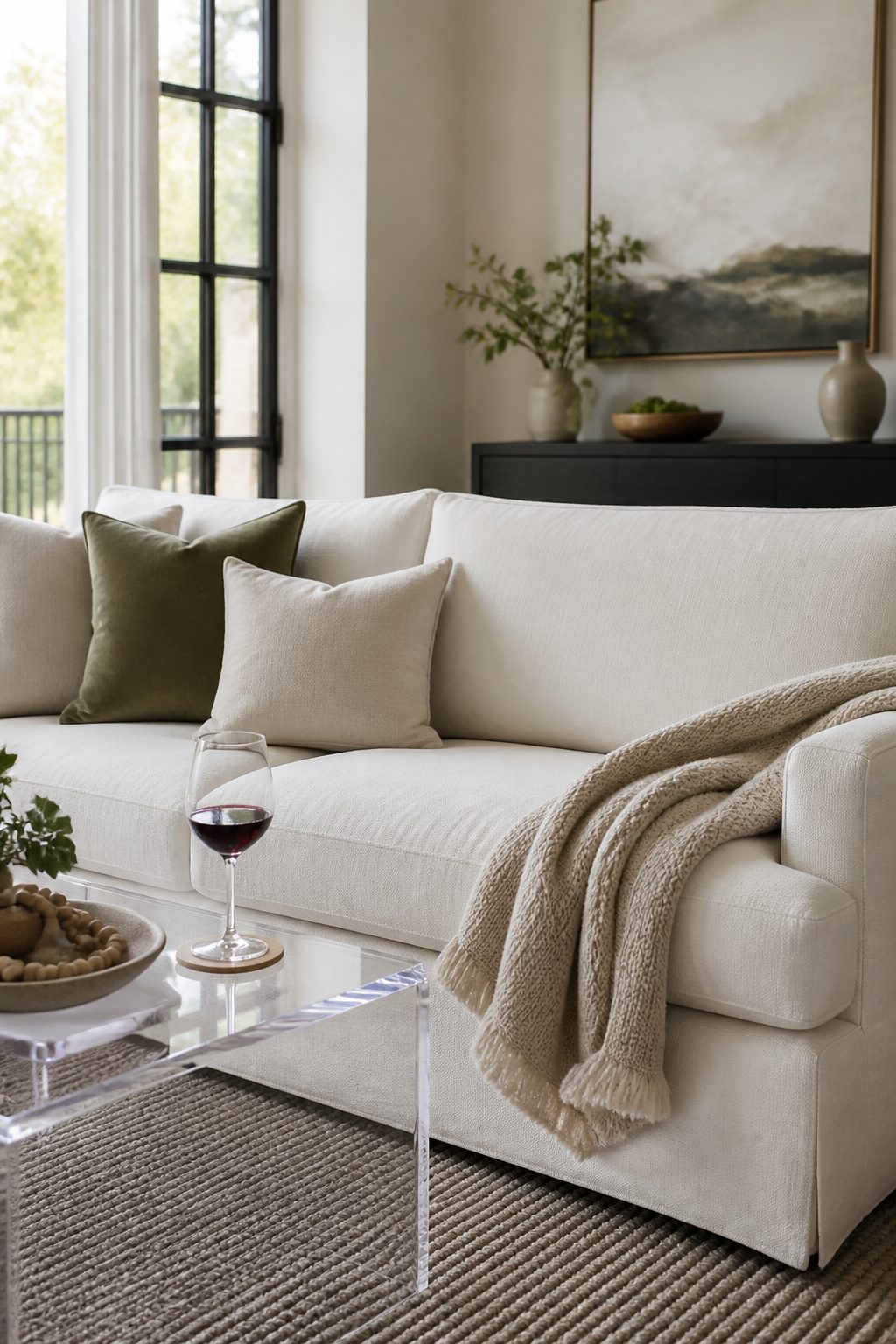
The first real test of my white sofa came on a Sunday evening, three months in. A glass of red wine tipped off the armrest and onto the cushion edge. The fabric was a cotton-linen blend I had chosen for the texture, and the stain sat there like a warning before I even reached for a towel. What I learned that night: the anxiety of owning a light sofa is almost always worse than the cleanup, but only if the fabric is the right kind.
Performance fabrics, specifically tightly woven polyester with a surface treatment or microfiber, buy you the minutes that matter. Most stains in those materials lift with a damp cloth and mild detergent if you catch them quickly. My cotton-linen required immediate spot treatment, patience, and still left a faint shadow. Water-resistant treatments help, though they do not make any fabric fully stain-proof. For households with children or pets, the difference between manageable and not comes down to fabric cleanability codes: W or WS ratings are essential for light upholstery, since solvent-only cleaning (S) leaves you with few options for fresh spills.
Removable, washable covers are the simplest insurance policy. Machine washing beats spot treatment every time, and replacement covers extend the life of the piece without a full reupholstery bill. If I were choosing again, I would trade the raw linen hand for a performance weave and never look back.
Frequently Asked Questions
How do I keep my white sofa clean?
Vacuum weekly with the upholstery attachment, hit spills the same afternoon with a spray bottle of mild detergent and water, and rotate cushions to keep color even. Performance fabrics with a water-resistant treatment make the job manageable, though they are not stain-proof; removable, washable covers are the closest thing to actual forgiveness. Check for a W or WS cleanability code before you buy, since solvent-only fabrics turn a small spill into a service call.
What colors go well with a white sofa?
Warm neutrals like sand, caramel, and warm taupe read as sophisticated without forcing a palette, while sage green and terracotta together hit an earthy note that still photographs well. Warm blues such as dusty or steel blue pull toward coastal or Provençal without cliché. Avoid pale-almost-white pillows, which disappear against the sofa and read as a stain from across the room, and skip anything neon or oversaturated that shouts down the blank canvas quality you bought the white sofa for.
What fabric is best for a white sofa?
Textured fabrics like boucle, brushed linen cotton, and Belgian linen add depth without needing extra pillows, while performance fabrics such as tightly woven polyester with a surface treatment or microfiber buy you the minutes that matter for stain cleanup. For durability, look for a rub count between 40,000 and 100,000 double rubs, which covers genuine home use without paying for commercial-grade weight you will not need. The cleanability code matters most: W or WS is non-negotiable for light upholstery.
How can I style a white sofa?
Stop at three textures in view at once and make one the dominant layer so the eye has somewhere to rest; a flat-weave rug underneath, a single natural-fiber throw, and cushions that vary in size rather than competing patterns. Add contrast with one element that carries real visual weight, such as a walnut credenza or black steel coffee table, so the white sofa reads as intentional rather than tentative. Small warm objects in brass or dark wood, repeated, read as intentional without shouting.