Closet hacks run from a $21 pack of velvet hangers to a full Elfa system, and the deciding factor is whether you own the walls or just the rod inside them. Renters live and die by tension rods and over-the-door brackets; homeowners can drill once and stop rearranging. The detail that separates a working system from a jammed drawer is the one-year rule applied before any hardware goes up, because a third of most closets hold clothes that no longer fit.
1. Slim Hangers
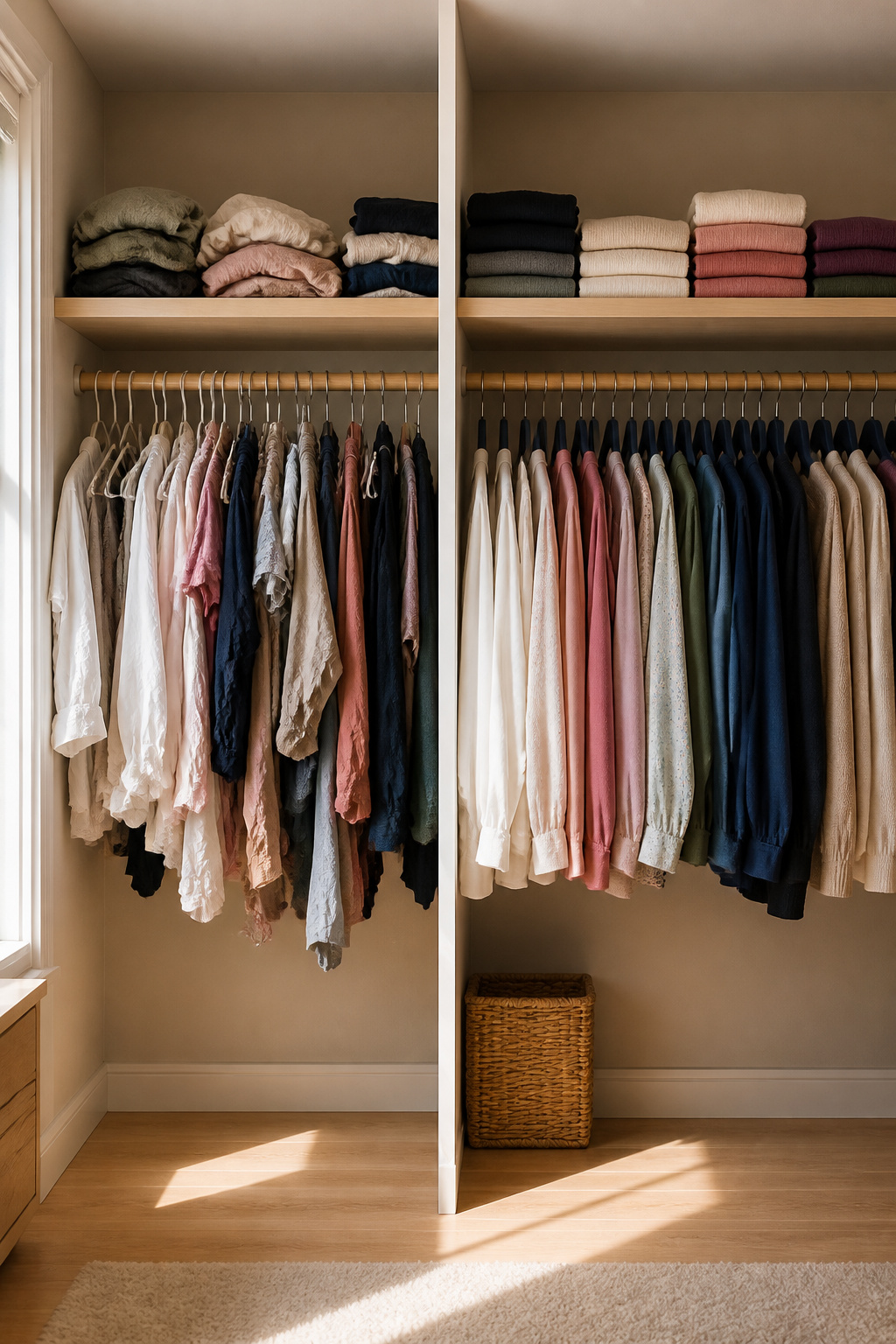
Slim hangers earn their keep in the arithmetic alone: a profile half the thickness of standard plastic or wooden hangers means roughly 50% more garments on the same rod. The velvet or felt flocking matters just as much, since silk blouses and wide-neck sweaters stay put instead of sliding into the puddle at the bottom of the closet.
The Amazon Basics Slim Velvet Hangers run about $21 for fifty, which was enough to rehang my entire closet with a few spares left over. I nearly went cheaper, grabbed a pack of wire slim hangers from a discount bin, and watched one bend into a question mark under a wool winter coat. That experiment lasted one afternoon before I ordered the velvet set.
Heavier items like blazers still need wooden hangers; the slim ones are too slight and will distort the shoulders over time. For everything else, the swap is the fastest square footage a closet gains without moving a wall.
2. Cascading Hangers
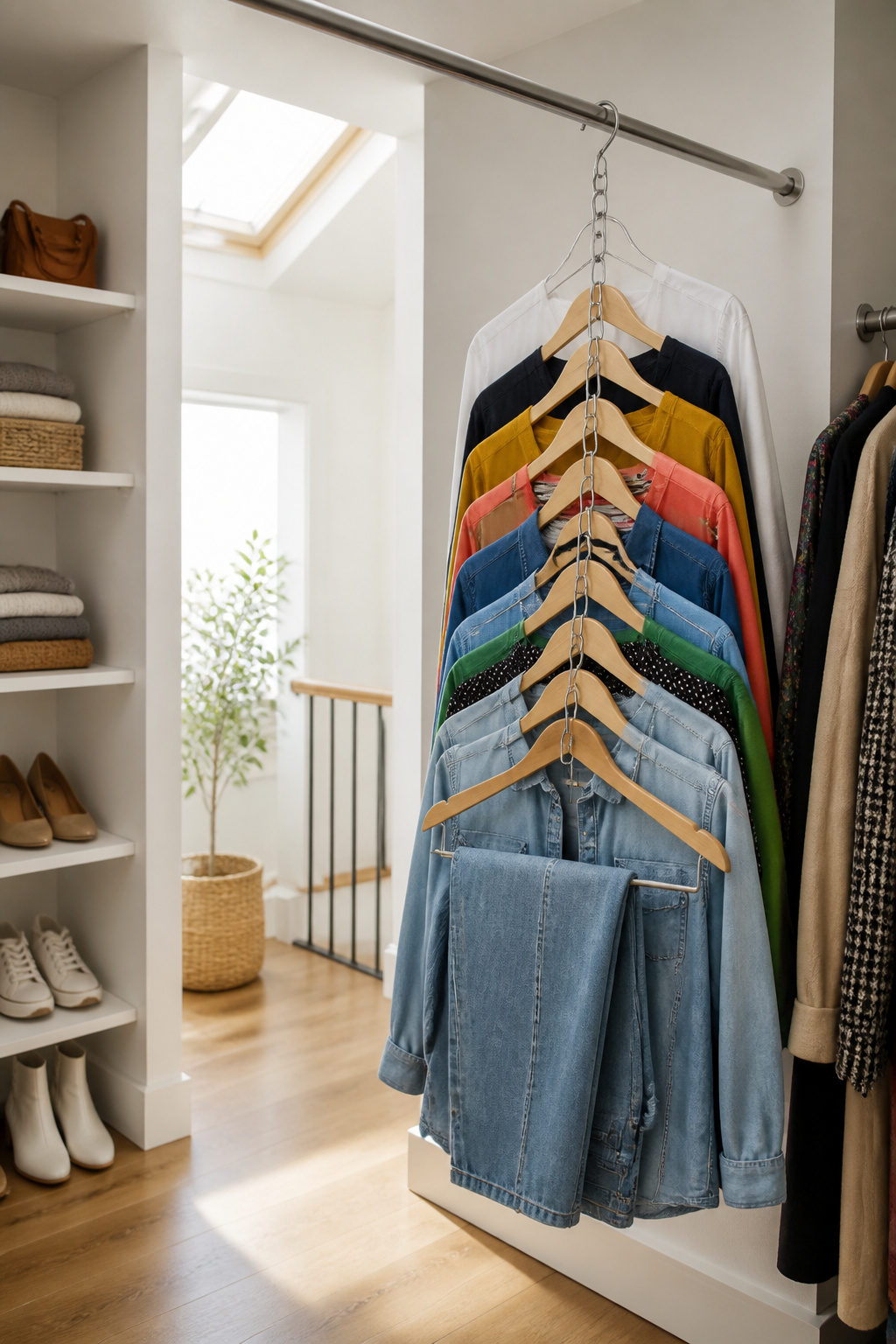
Cascading hangers pull vertical air space into use without touching the walls, which matters in a rental where the rod is the only fixture you own. The chain, either galvanized metal or plastic, loops over the existing rod and drops in a series of links; each link becomes a hook point for a standard hanger. A single chain practically squeezes five or six garments into the footprint of one, and the bottom item will sit on the floor if the total weight pulls the chain straight. Shorter pieces, pants folded at the knee, or children’s clothing hold their shape and stay untangled through the stack. Full-length dresses and anything with thin straps tend to twist around each other and the chain itself, so those stay on the main rod. For quick height changes, a carabiner or S-hook at the top shortens or lengthens the drop to fit the closet you have that season.
3. Over-the-Door Organizers
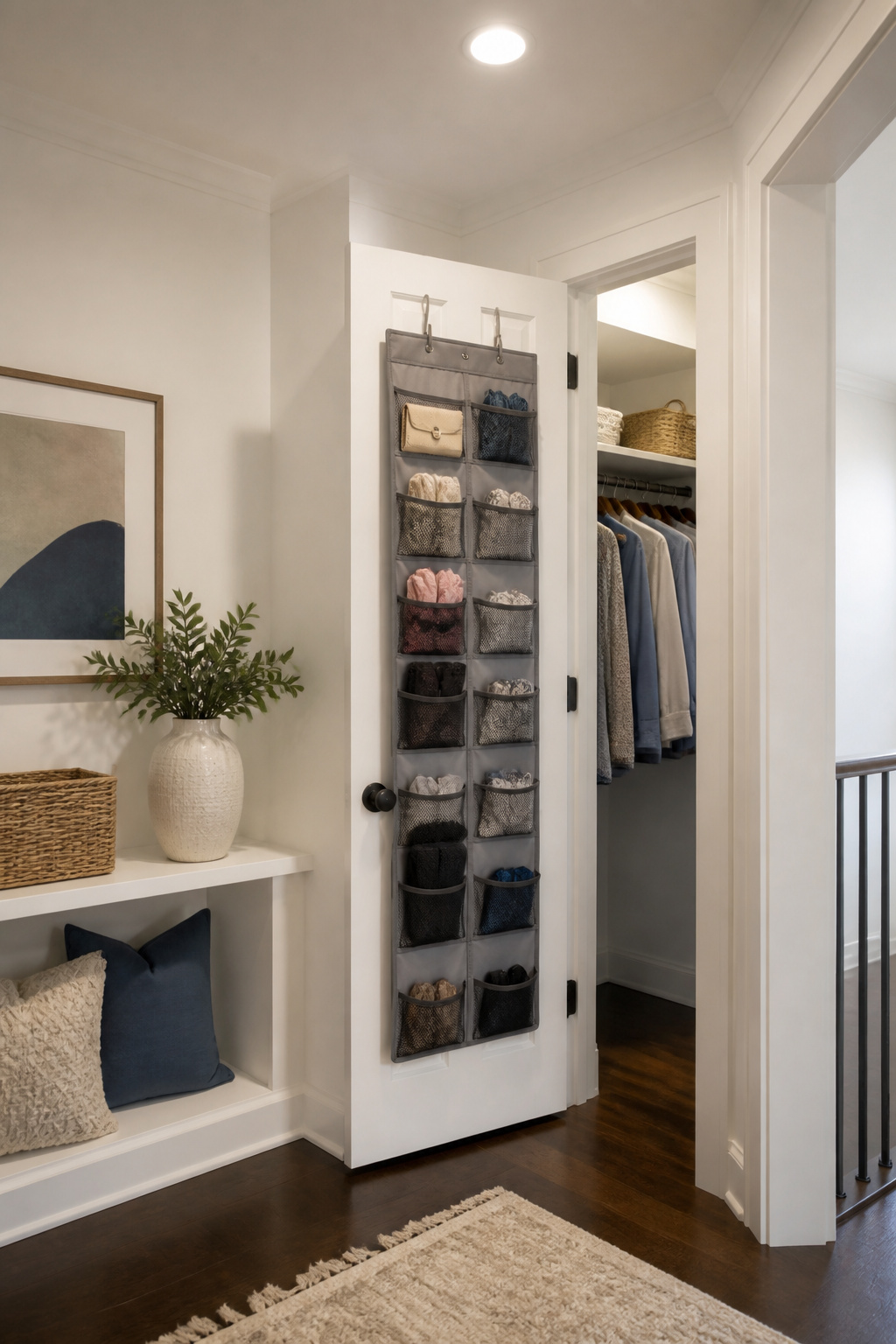
The back of a closet door is usually the first place lease anxiety wins. Most renters see it as dead space rather than storage because drilling feels like a deposit risk, so they leave it bare and complain the closet is too small.
Two formats actually work here. Pocket organizers hang flat and add depth without protruding into the room, which matters in a narrow hallway closet where the door barely clears the jamb. Standard pockets run about 12 inches deep, enough for flats, folded socks, clutches, or rolled belts. Shoes are trickier: anything with a heel or a bulky sole bulges and can hold the door open. Mesh or clear plastic pockets let you see contents without pulling each one out, which saves time on rushed mornings.
Hook racks trade that flat profile for speed of access. A low-profile steel rack with hooks sitting about 2 inches below the door top keeps bags, hats, and tote bags up and out of the way. The 2 inches of spacing between hooks suits smaller items; thick winter scarves or multiple purses crowd each other.
Hanging either without drilling comes down to the bracket, not the organizer itself. An over-the-door bracket that hooks over the top rail and rests against the back face, with a thin pad or felt strip to prevent rattling, stays put through daily closings. The key is weight distribution: a full pocket organizer hung only from its top two hooks will swing. Look for one with a stabilizing hook or strap at the bottom that loops around the doorknob or a small adhesive pad placed low on the door.
4. Vertical Storage
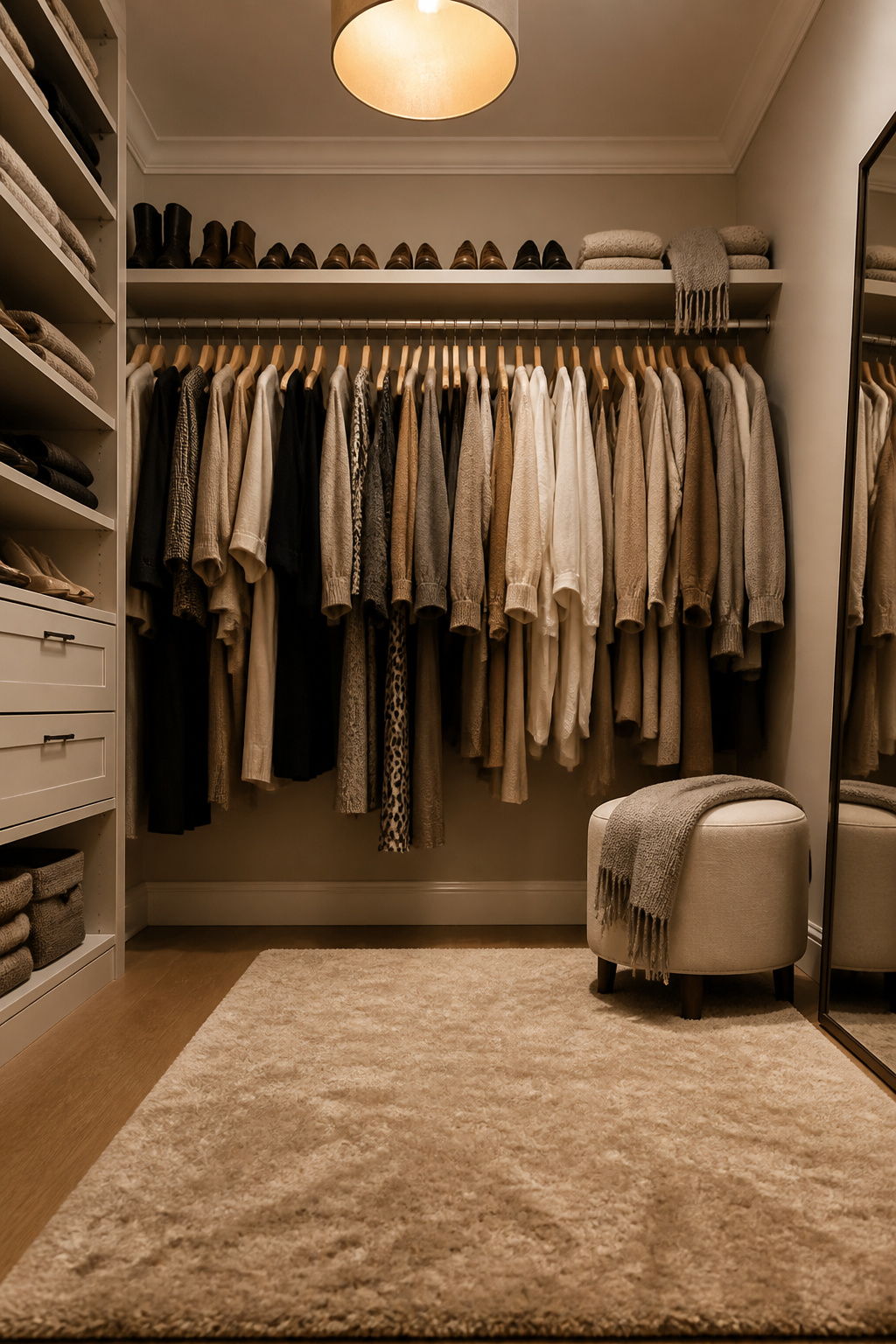
Most closets waste the six to twelve inches between the standard rod and the ceiling. I added a narrow shelf above my hanging bar for off-season shoes and scarves, reachable with a two-step stool even at five foot two. The problem came later: a pair of leather boots sat up there for eight months, completely out of my sight and out of my mind, until a warm day in April reminded me they existed. Anything stored above eye level needs a scheduled check-in, or it becomes storage you pay rent for but never use.
A second rod, hung below shirts and above pants or skirts, doubles the hanging depth without drilling into walls. For renters, a tension rod wedged front-to-back in a tight corner catches diagonal space that straight rods miss; steel core with a twist-lock mechanism and rubber bumpers keeps it from chewing paint. The angled position holds full-length coats without crowding the center aisle.
With a small closet especially, it’s important to not squander precious vertical space.
That means looking up at the frame itself for small accessories, not just adding shelf units. A hanging shelf clipped to the existing rod works for light sweaters and undershirts, the lower-weight items that sag a rod but collapse in a pile. The ceiling is free real estate; just keep what you put there visible enough to retrieve.
5. Seasonal Rotation
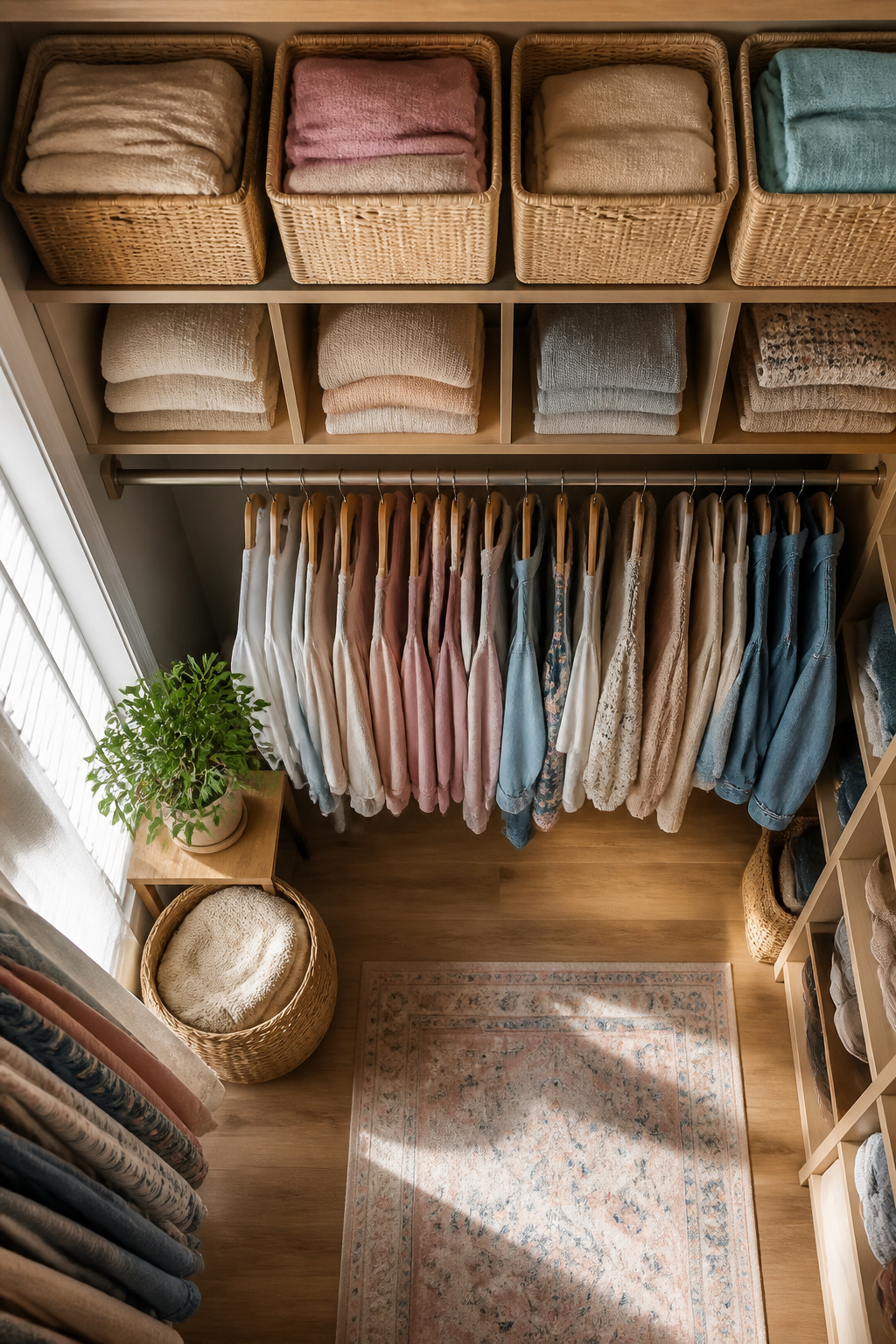
The bin-and-swap system only works if you actually know what you packed. Label every container with the season and the year, not just "winter," because that puffy coat you shoved in a bin in 2024 might not come back into rotation until 2026, and by then you will have forgotten whether the zipper was already sticky when you stored it. Chalkboard tags from the dollar store handle this fine; wipe and rewrite when the contents change.
Off-season pieces live in what organizers call cold zones: the shelf above the hanging rod you cannot reach without a step stool, the far ends of the closet behind the door swing, or flat under the bed. I use the top shelf for bins and the under-bed space for soft duffels and old suitcases, since luggage already takes up that footprint and sweaters compress inside it without extra cost.
The mistake that still stings happened last March. I had packed every warm layer into bins and pushed them under the bed during a weekend of seventy-degree false spring. A late freeze dropped the temperature to twenty-two degrees ten days later. The down vest I needed was buried behind the bed frame, and the bin on top held summer linens I had not bothered to rotate yet. Now I keep one mid-weight layer in the active closet until April, no matter what the forecast promises.
6. Baskets for Small Items
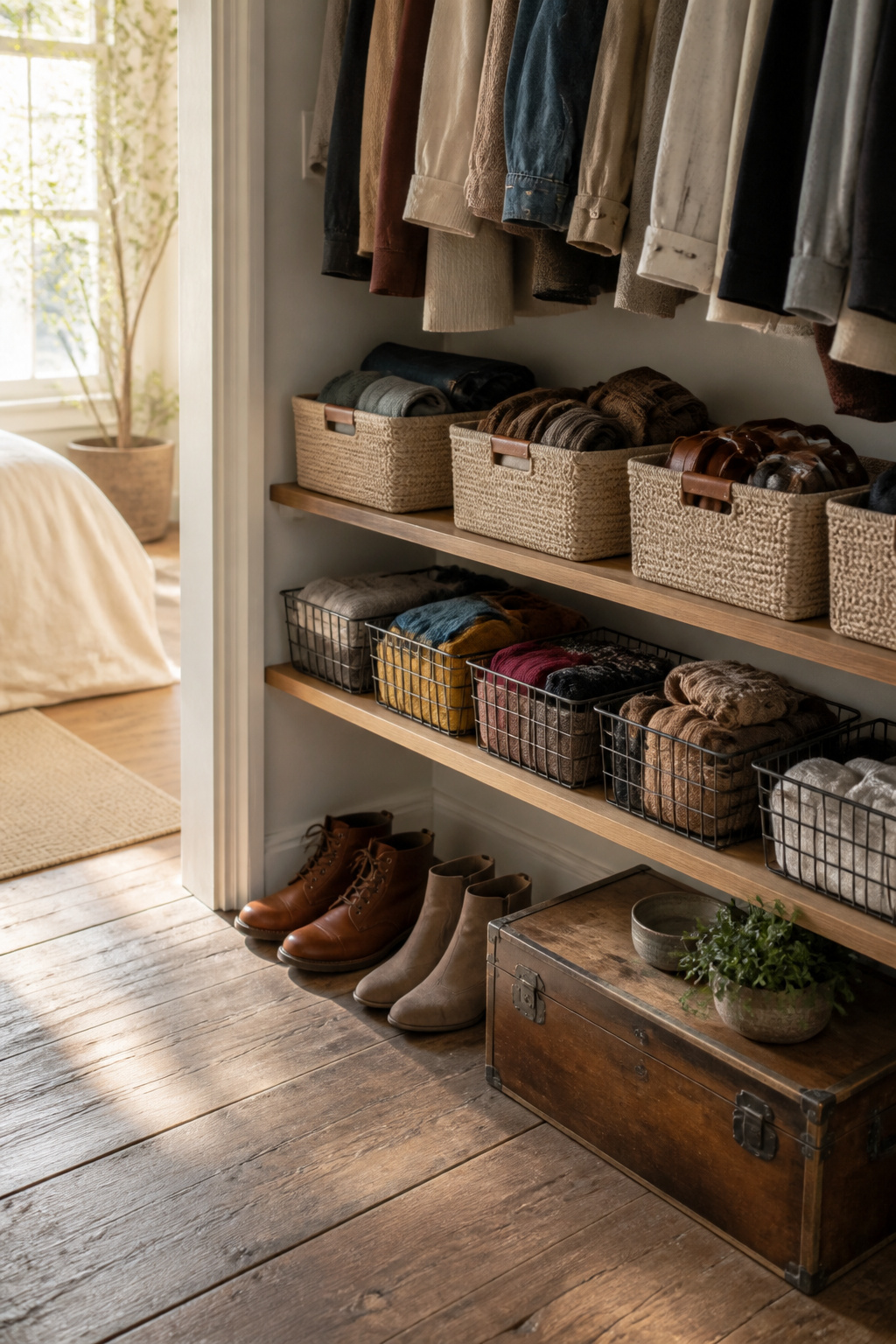
Fabric baskets slide quietly onto shelves and hide the jumble of scarves and belts that otherwise drift to the closet floor. Wire versions let me see the sock count without pulling anything out, though anything small enough to slip through the gaps will. Plastic bins, especially the clear ones, protect folded undergarments from dust and spare me the game of flipping containers to read a label.
Labels actually stick to fabric and plastic; wire needs a tag hanging from the handle or it slides off within a week. Round baskets waste corner space no matter how tightly I pack them. Rectangular or square shapes sit flush against walls and leave no gap where a single rolled belt disappears forever.
Sizing is where I have measured wrong more than once. A basket that looks reasonable on the store shelf swallows a whole closet cubby once home. The rule I follow now: buy one, test the fit, then buy the rest. Uniformity matters more than the exact weave, and the style I liked in March is usually gone by June.
7. Added Rods and Hooks
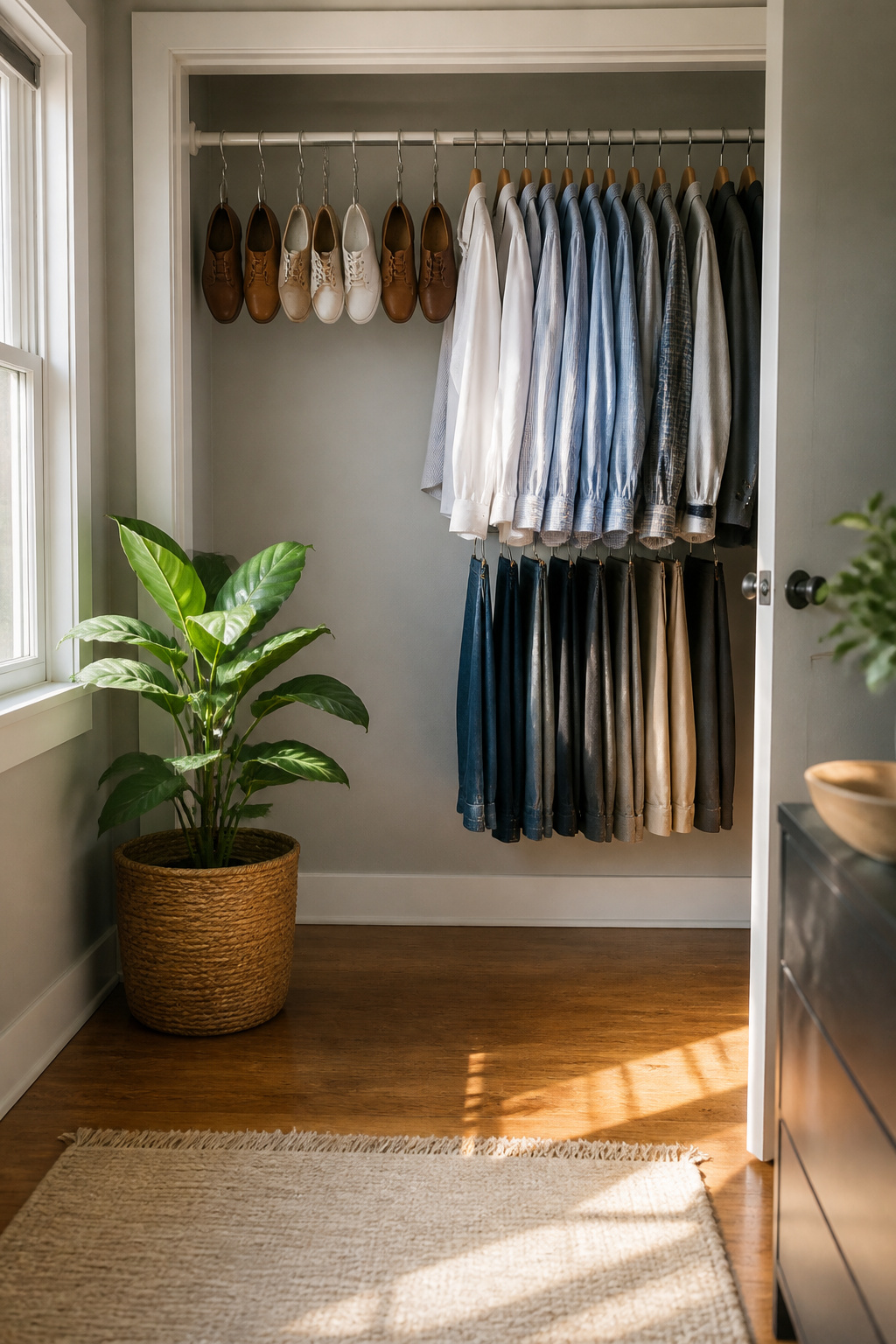
A second lower rod doubles hanging space for shirts and pants without touching the floor, and the cheapest way to get there is a tension rod rated for heavy loads. Look for a steel core with a twist-lock mechanism and rubber bumpers against painted walls. In my reading, the light-duty ones fail fast; the twist-lock steel rods are what actually hold a full row of dress pants without sagging by Wednesday.
S-hooks through belt loops or heel straps turn that same rod into shoe storage a few inches above the baseboard. For renters, this keeps the floor clear and leaves no holes to patch later.
Command hooks work for handbags, clutches, and belts, but the weight limit matters more than the package claims. The adhesive holds until summer humidity or a heavy leather strap proves otherwise. I would not trust them for daily-use items you reach for at 6 a.m.
Wire shelving lips look like they could suspend a rod between brackets. They cannot. The lip bends under any real load, and the whole shelf warps. Tension rods or wall-mounted brackets are the only two ways that hold.
8. Clear Storage Bins
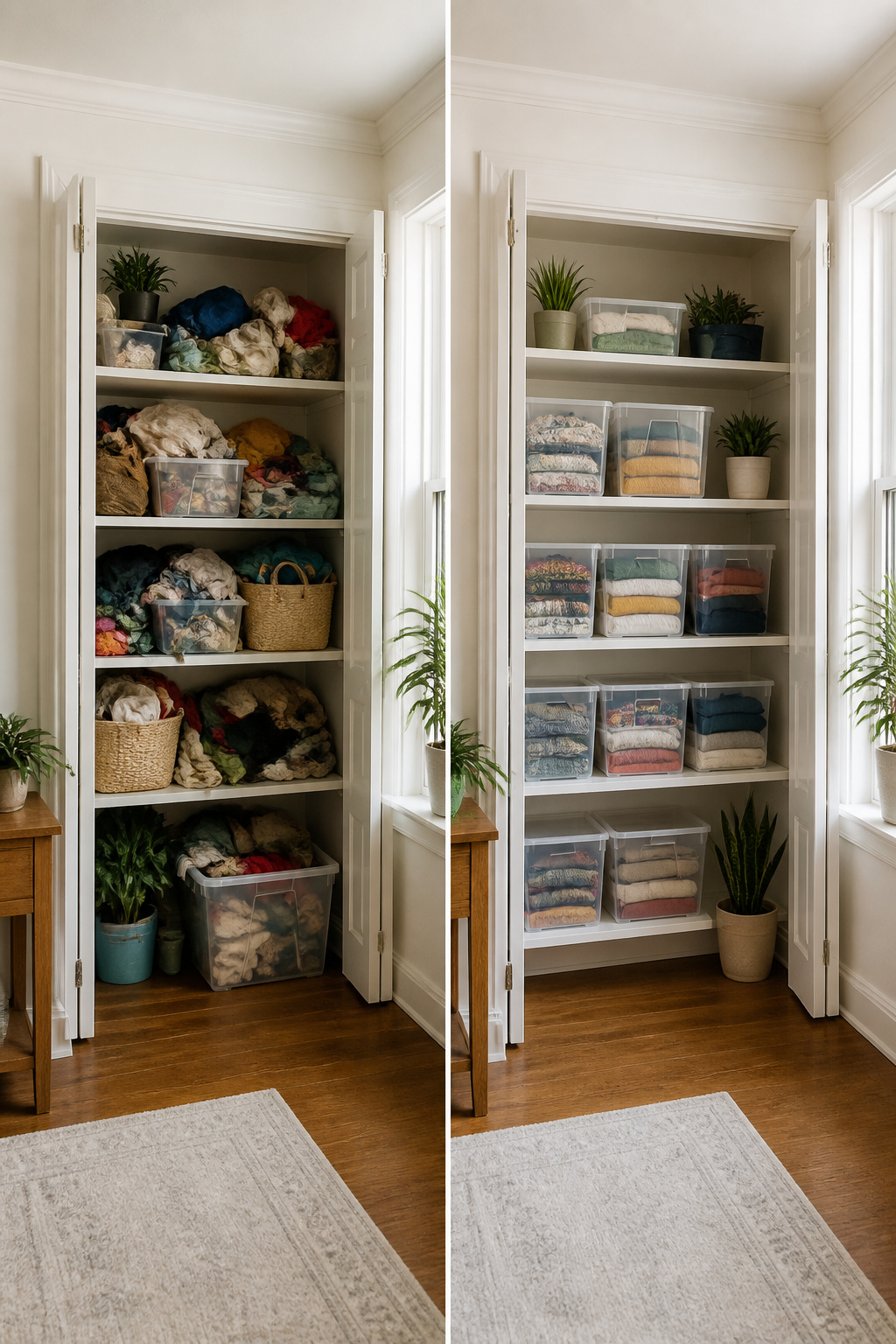
Clear bins earn their shelf space on items you touch less than once a month. A label on an opaque box still forces you to lift, open, and dig; transparency lets you confirm the contents from any angle without unstacking. The Container Store’s Clearline line sells lids separately, which matters more than it sounds: a bin holding seasonal sweaters needs a lid that actually seals dust out, while an open-top version works better for folded shirts you grab weekly. Stack height has a practical ceiling before the bottom bin starts to deform. In my own closet, three Clearline bins deep is the limit before the lowest lid begins to bow; four becomes a gamble on the plastic. Cost scales fast with size. Shoebox-clear containers run cheap enough to buy in batches, but stepping up to sweater-size clear boxes roughly triples the per-unit price. For shoes specifically, the drop-front style beats lifting an entire stack: the front panel opens without disturbing the bins above it, and you still get the visibility that cardboard never offered.
9. Jewelry Trays and Hooks
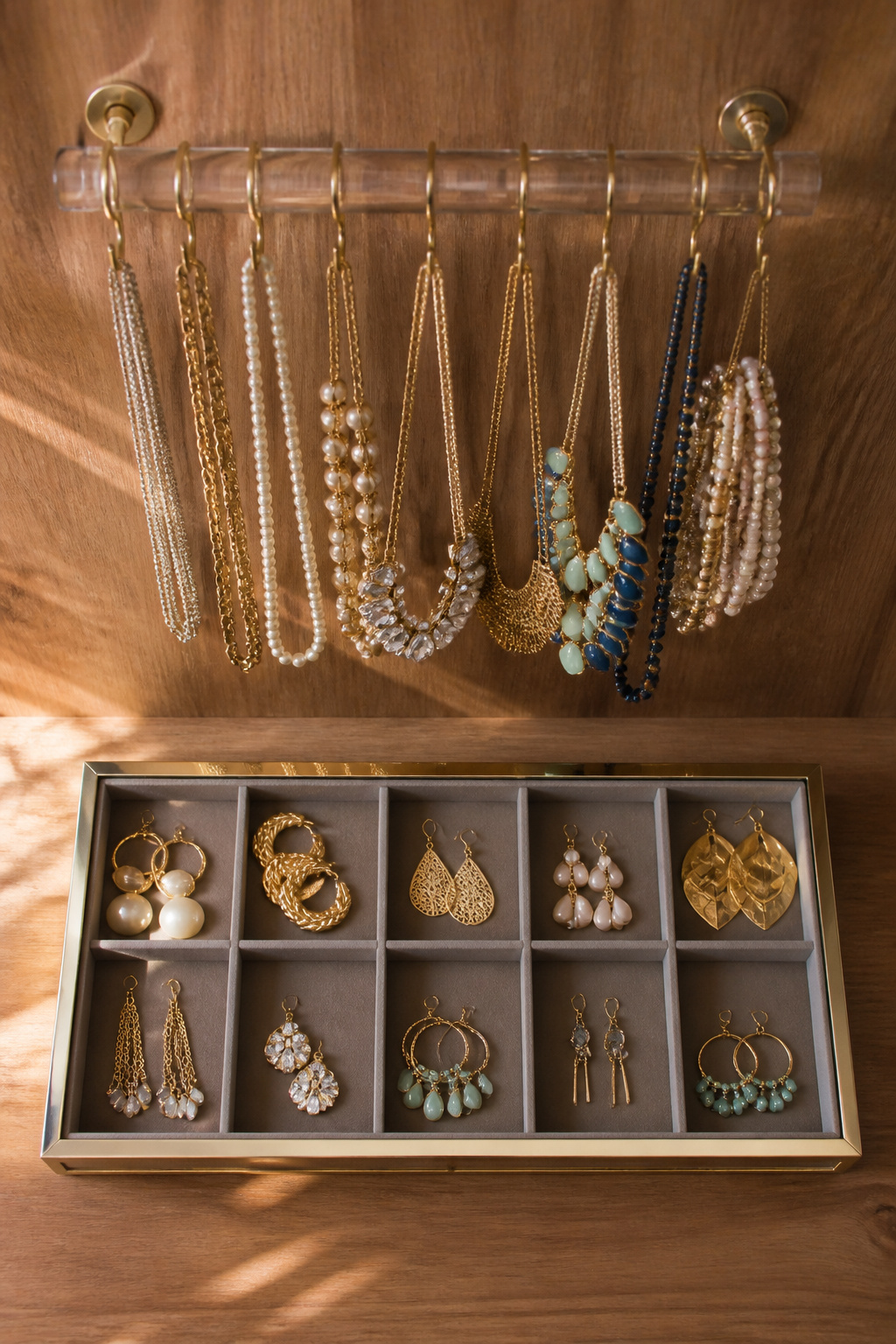
Necklaces with fine chains will tangle no matter what you do, so the real choice is where you want to fight that battle. Flat trays that slip into a drawer keep everything dust-free and out of sight, but a divided compartment is non-negotiable for earrings. Without those little walls, pairs drift together into a single felt-bottomed pile and you will spend mornings sorting studs from hoops by touch.
Wall-mounted hooks and small cork boards solve the tangle problem for chunkier chains and statement pieces you reach for often. The Franklin Brass hooks run about $9 to $10 for a five-pack, hold 35 pounds when you hit a stud, and sit nearly flush so they do not snag sleeves. I like the white finish against painted closet walls, though black or brass work if your trim demands it.
A velvet tray with built-in dividers sits around $20 for a set. My cheaper route was a shallow wooden tray from a thrift store with a piece of felt cut to fit the bottom. The felt liner cost under $4, and the lack of fixed compartments means I rearrange the small bowls and ring dishes I already owned. For renters, the tray moves with you; the hooks leave two tiny holes that a dab of spackle fixes in ten minutes.
10. Folded Sweater Storage
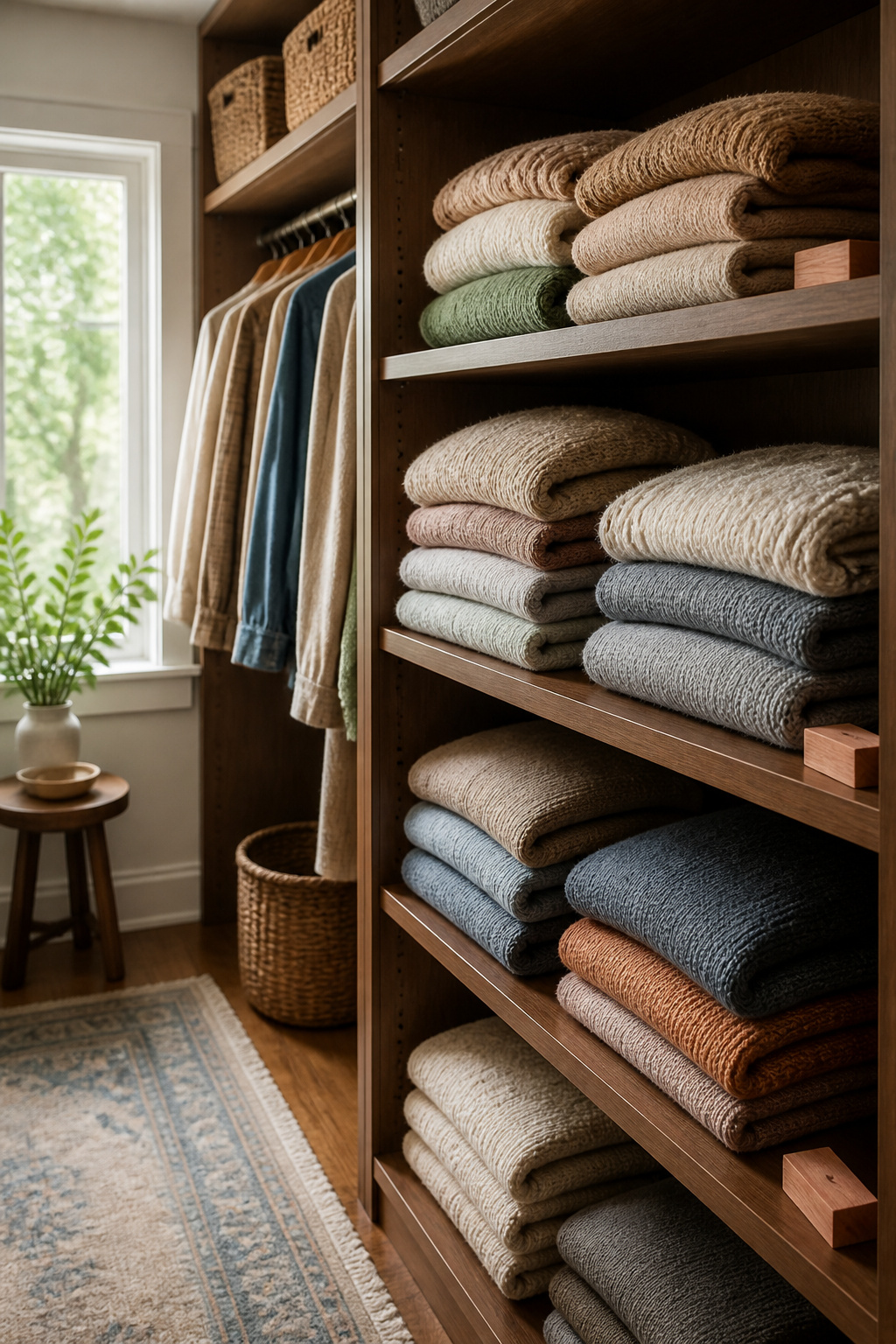
Knits stretch on hangers because the weight of the garment pulls the shoulder fibers downward over time, leaving those permanent bumps that never steam out flat. The fix is folding, but the fold matters more than most people realize. Lay the sweater face down, fold each arm straight across the back, then fold the body in thirds from the bottom up so the hem meets the neckline. This keeps the shoulder line intact and stacks the bulk evenly.
A 12-inch deep shelf holds about four to five folded sweaters before the pile starts leaning and avalanching into the closet floor. Any deeper and you waste reach; any shallower and the front edge becomes a ledge for toppling stacks. I keep my stacks horizontal, not vertical, since file-folding works for shirts but leaves sweaters too thick to stand on their own.
For moth protection, cedar blocks do the same work mothballs do without the chemical smell that lingers on wool for weeks. The blocks need a light sanding every season or two to refresh the oils, but that ten-second task beats airing out a closet for days.
11. Floor Space Dressers and Carts
A standard double-hang rod sits 42 inches above the floor, which leaves a narrow window underneath for any piece with drawers. I learned that the hard way after buying a 30-inch dresser that looked compact in the store but trapped my longer coats against the shelf above. Anything over 28 inches starts a fight with your hems, so measure your longest jacket before you shop.
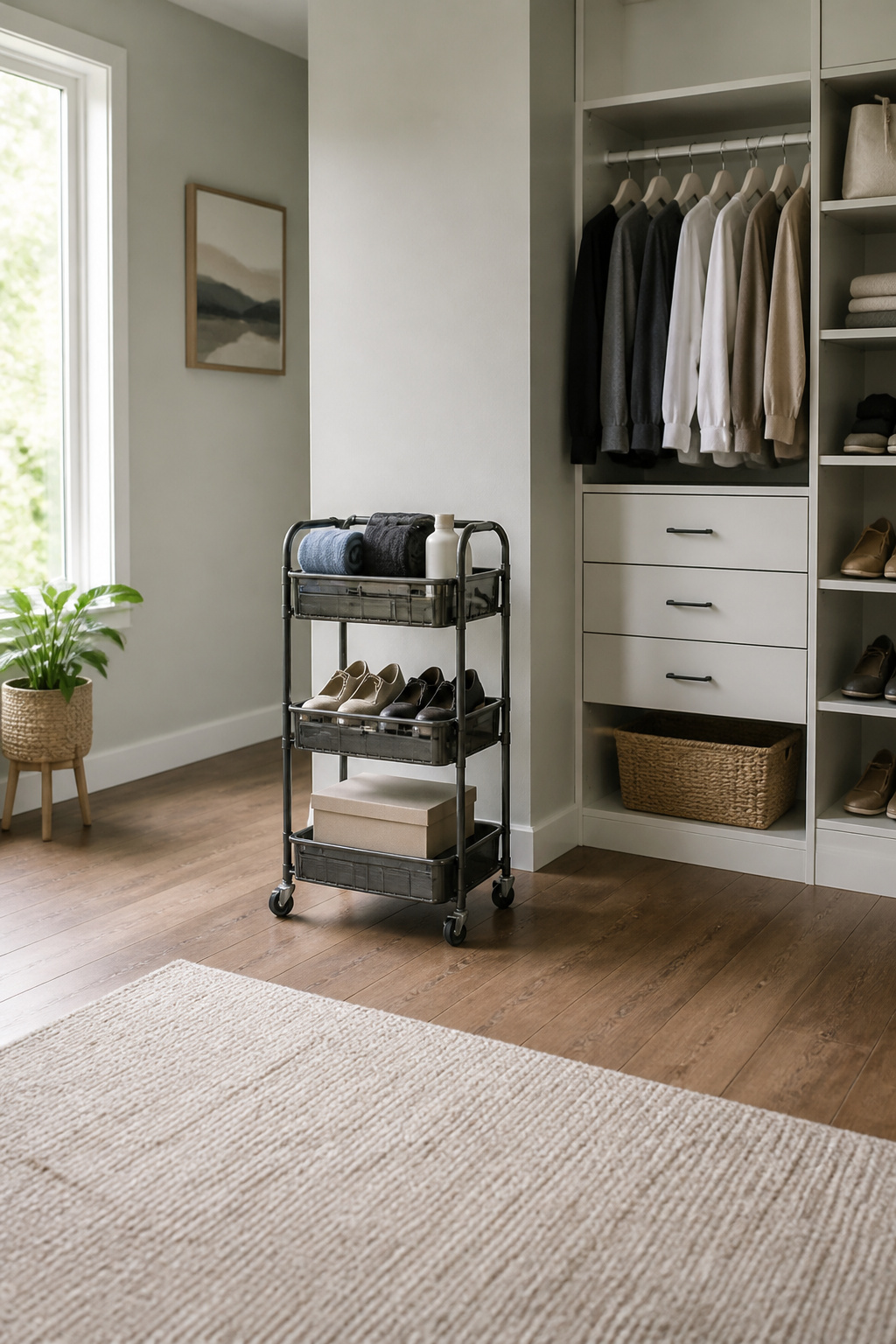
Rolling carts solve the height problem, but the wheels are a separate headache. On carpet, even thick-pile versions, small casters sink and drag instead of glide. My first cart needed two hands to pull out, which defeated the whole point of easy access. Hard floors or a thin mat underneath fixes it, or skip wheels entirely and use a flat-based bin you can slide.
The three-tier cart I kept holds the stuff that used to disappear: folded workout clothes on top, a middle basket for socks I match later, and the bottom for shoes I wear often enough that they do not belong in a box. It eats about a foot of floor depth, but I gained more from not stacking those same items on the one shelf I could reach without a step stool.
12. Shower Rings for Scarves

Plastic shower curtain rings clip onto a standard hanger in about thirty seconds, and each hanger holds six to eight rings before the bottom wire starts to bow. I tried ten once on a lightweight wire hanger, and by week three the bar had warped into a lazy curve that let the whole assembly swing. A sturdier plastic hanger or a wood suit hanger carries that load without complaint.
Loop each scarf through its own ring and the full collection stays visible in a single row, no digging through folded piles to find the one print you wanted. The plastic seams on cheap curtain rings catch on open knits and loosely woven wool; those fibers snag where the mold line runs. Smooth metal rings, the kind sold for actual curtain rods, glide against silk and cashmere without pulling threads. For synthetic blends or tighter weaves, the plastic works fine and costs a fraction of the price.
Declutter First
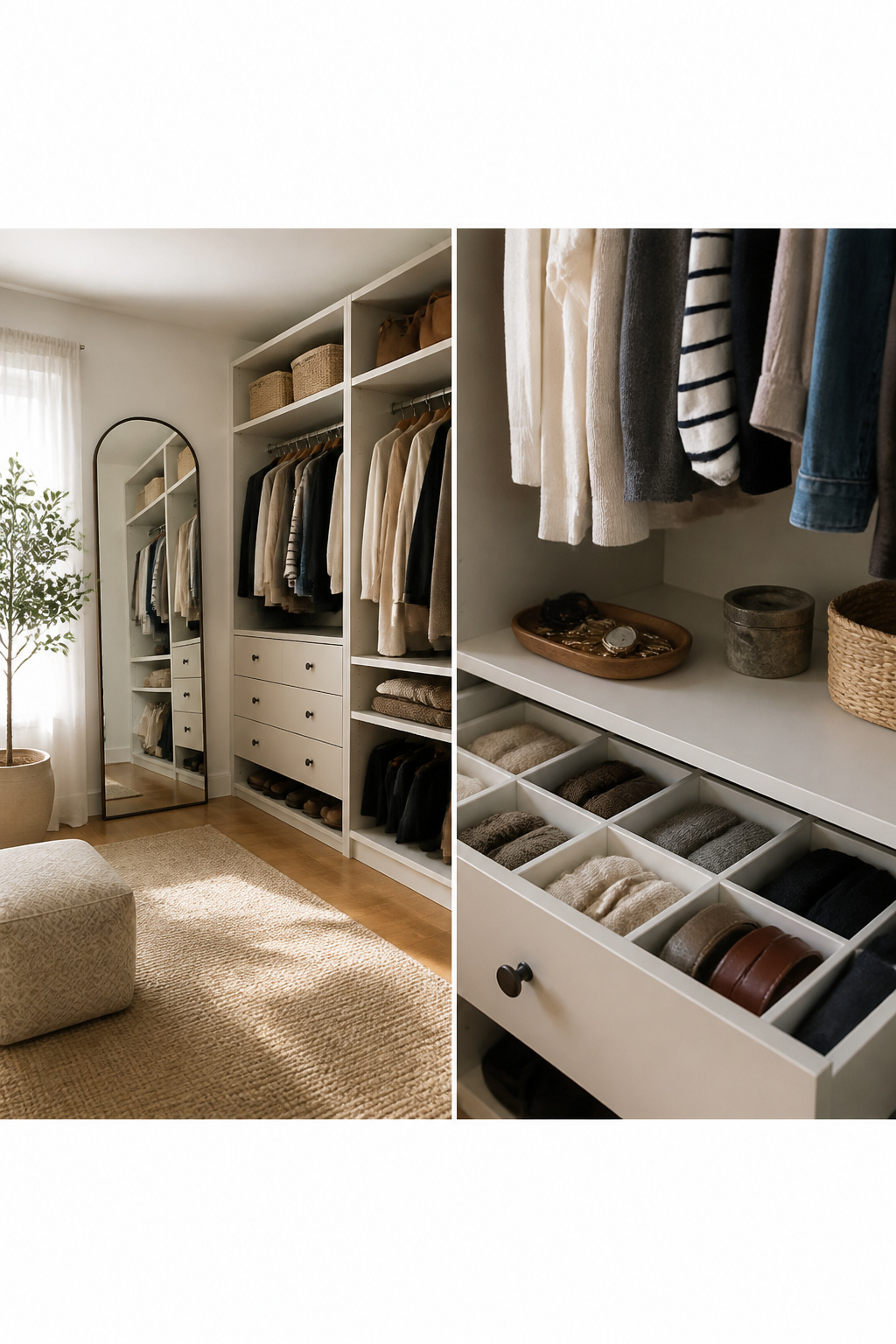
Closet systems only work once the volume inside them matches what they were built to hold. I learned this the hard way after installing a full Elfa system in a reach-in closet and watching the drawers jam against winter coats I had not worn in three years. The one-year rule is not a minimalism trend; it is a measurement tool. Anything unworn in twelve months gets removed before any shelf height or rod placement gets decided.
The hardest category for me was the aspirational-size section, the jeans and blazers kept for a weight I have not been since 2019. Those pieces occupied prime real estate at eye level while clothes I actually wore got crammed into under-bed bins. Moving them out, not to storage but out of the house entirely, dropped my hanging load by roughly a third. That reduction changed what I needed: a single rod and one high shelf replaced the double-rod setup I had planned. The money I did not spend on extra hardware went to a floor mirror instead.
Sentimental items are the other trap. A bridesmaid dress or a college sweatshirt does not need hanger space to prove it mattered. A photograph of the thing often preserves the memory with zero cubic footage.
Storage Types Compared
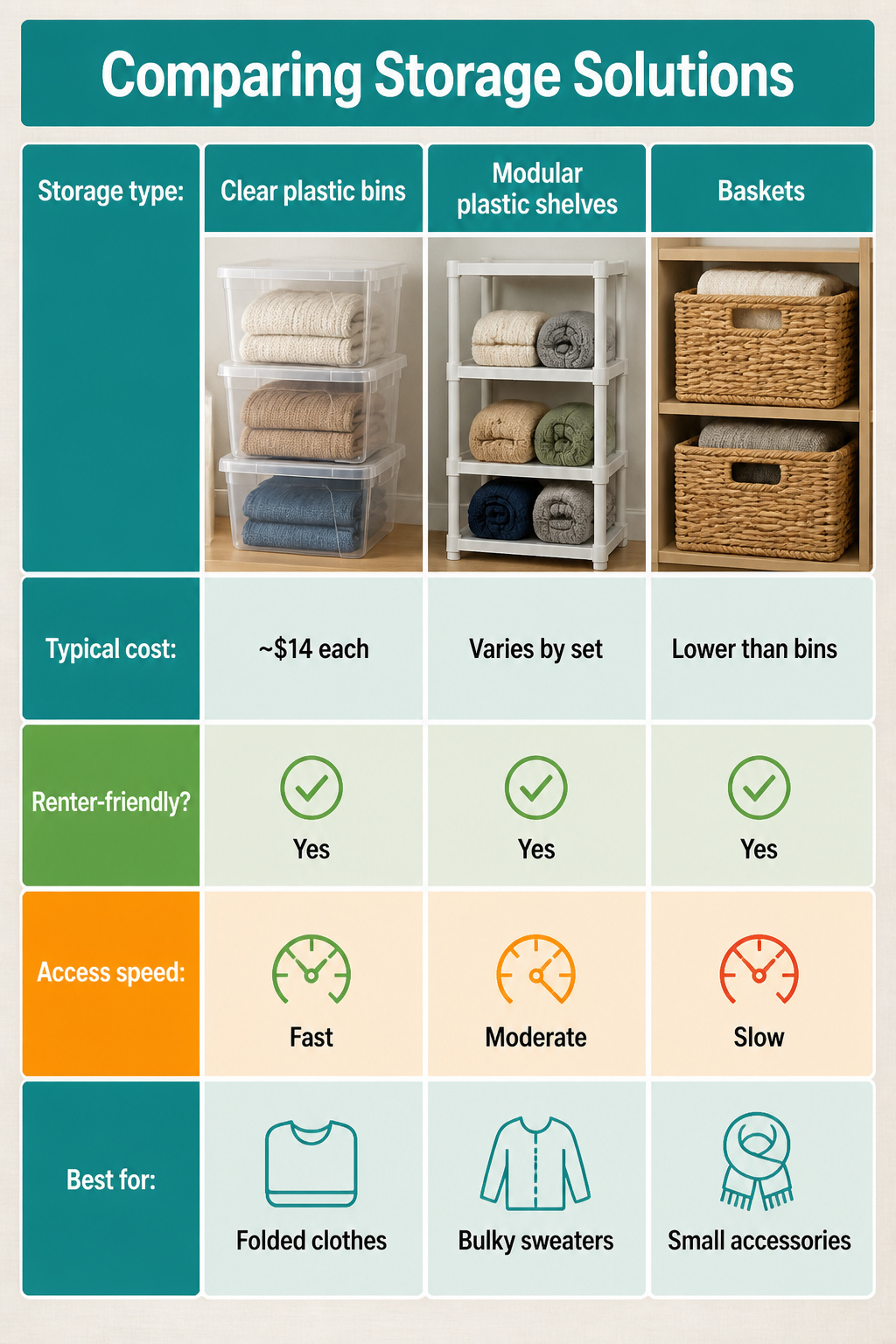
Clear bins run about $14 each at The Container Store, sold separately so you stack exactly the height you need. I have used mine through two apartments now, and the transparency matters more than I expected; you spot the sweater without unstacking anything. Plastic modular shelves work for bulky knits too, though rolling sweaters finely enough to fit takes patience I do not always have.
Baskets hide what clear bins display. They cost less per unit and look tidier on open shelving, but the trade is speed. You will not know which basket holds the scarves unless you labeled it, and even then you are lifting and checking. For renters, both beat installed systems. Drilled shelving or fixed hanging rods leave holes to patch later; bins and baskets move with you.
| Storage type | Typical cost | Renter-friendly? | Access speed | Best for |
|---|---|---|---|---|
| Clear plastic bins | ~$14 each | Yes | Fast | Folded clothes, seasonal items |
| Modular plastic shelves | Varies by set | Yes | Moderate | Bulky sweaters, rolled items |
| Baskets | Lower than bins | Yes | Slow | Small accessories, concealment |
| Fixed hanging/installed systems | Highest | No | Fast once set | Long-term closets you own |
Modular systems justify their price only when you stay put and the closet geometry is awkward enough that ad hoc stacks fall over. For a weekend project under a few hundred dollars, mixing bins for visibility with baskets for the messy stuff usually wins.
Hanger Materials
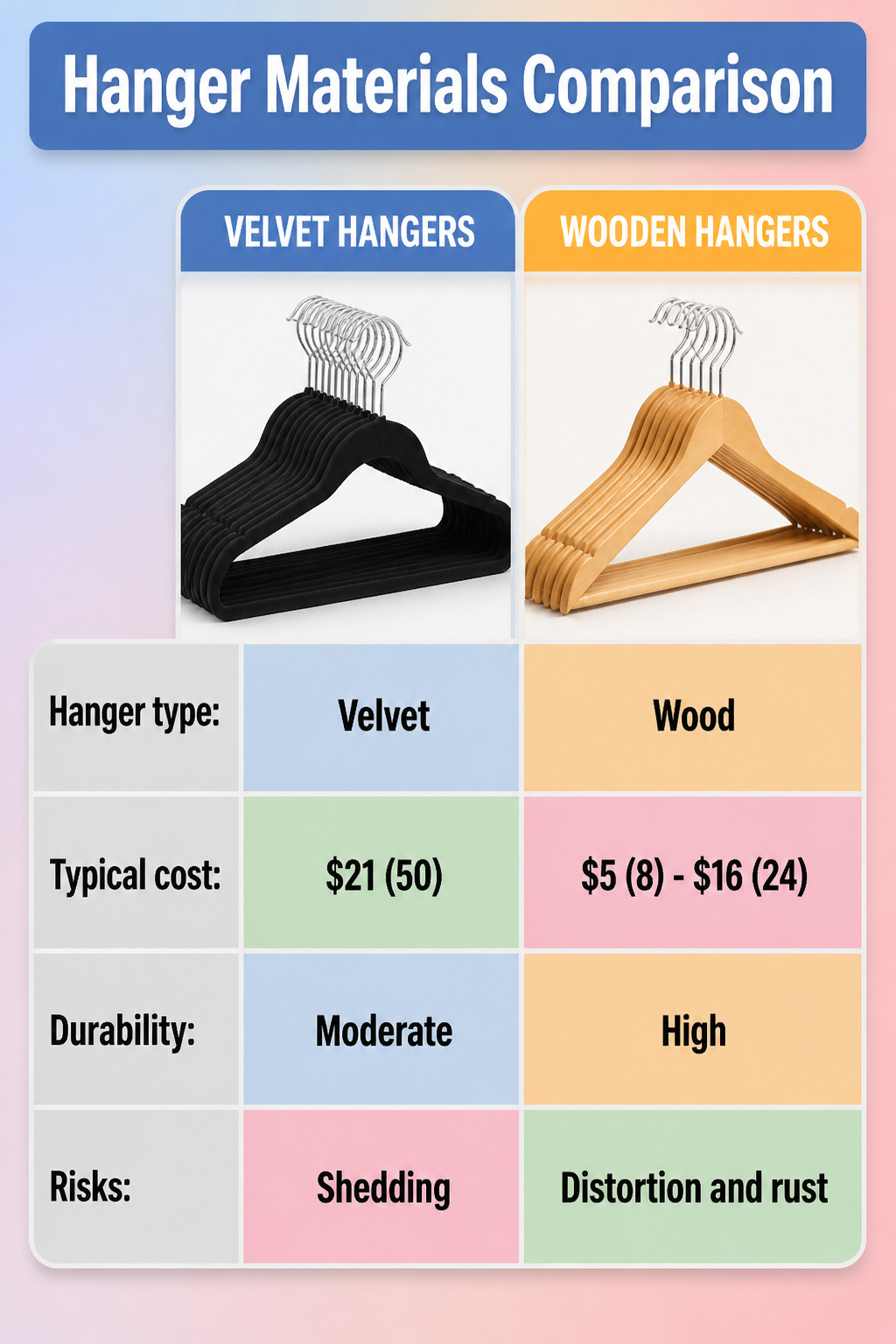
Velvet hangers run about $21 for a pack of 50 from Amazon Basics, which puts the per-hanger cost under fifty cents. That slim profile buys back inches of rod space, and the flocking keeps silk and knits from sliding into a heap. The catch is shedding: cheaper velvet leaves red lint on light-colored shoulders, and the thin build collapses under a wool blazer. For those heavier pieces, wood makes more sense. IKEA sells wooden hangers at roughly $5 for eight, Target lists $16 for 24, and both protect shoulder shape far better than wire ever did.
Wire hangers are free from the dry cleaner and worth exactly that. They distort knits, leave rust marks on damp fabric, and the narrow curve carves a permanent bump into jacket shoulders. Plastic hangers split the difference on cost but slip almost as easily as wire and bulk out the rod with their thick hooks and wide bodies. The loaded cost of replacing a full closet, say 50 pieces, lands around $20–$40 for velvet, $30–$50 for basic wood, and near zero if you keep the wire you already resent.
DIY Budget Reality
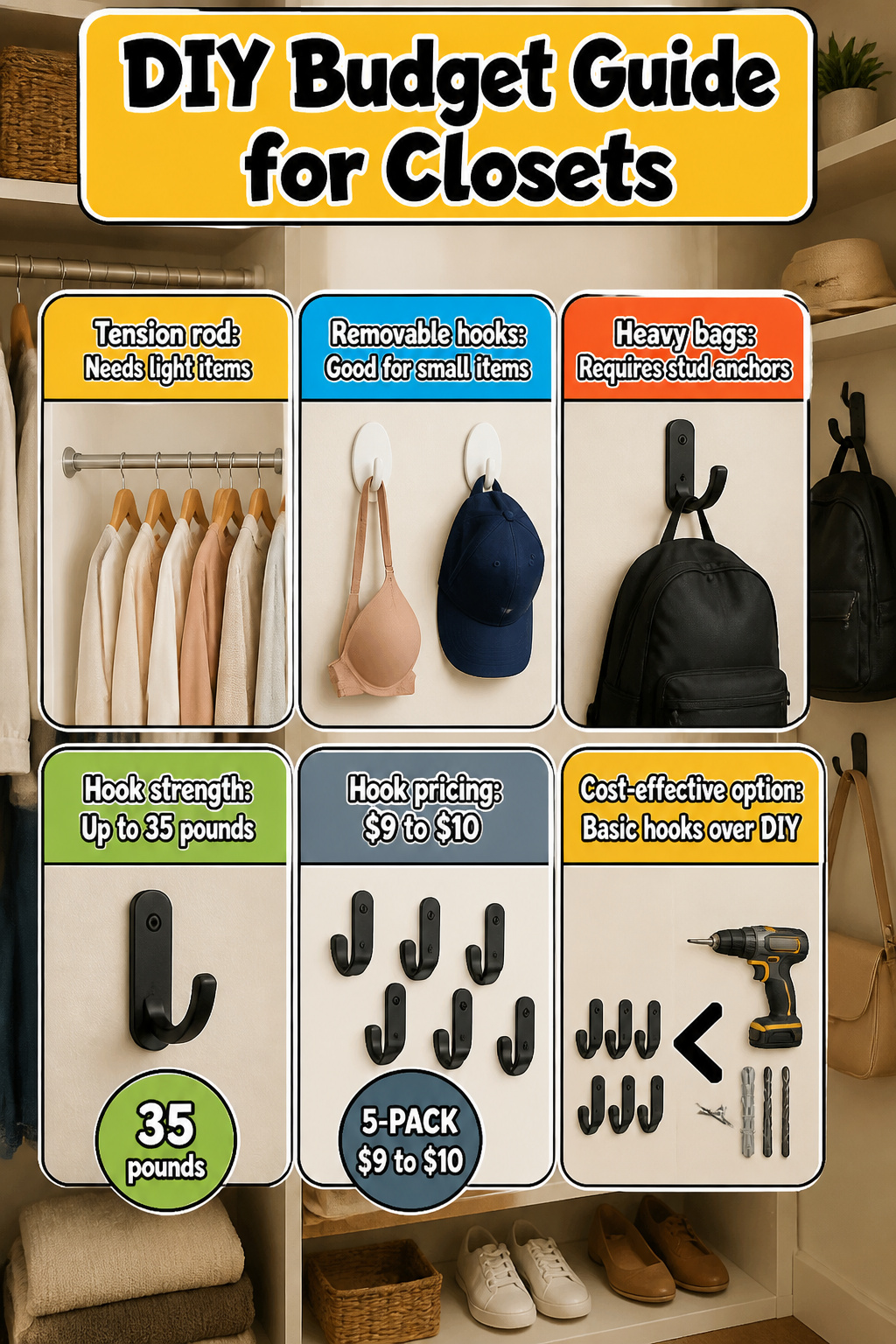
A tension rod wedged between closet walls looks like a no-tool win, but the cheap ones sag under anything heavier than a few empty hangers. The better test is what adhesive hooks actually hold. Removable self-adhesive hooks work fine for bras, baseball caps, and lightweight bags, yet a loaded backpack or heavy purse needs something anchored to a stud. The Franklin Brass wall hooks come in a five-pack for around $9 to $10 and hold small items easily; mounted into a wooden stud, the capacity jumps to 35 pounds, though most renters will use the included anchors and stay well under that. The Drop Metal Modern J Hook runs about $15 per hook plus $5 shipping, which only makes sense if you are ordering several at once to spread that shipping cost across the project. A store-bought five-pack of basic hooks often costs less than the rod, anchors, and drill bits a renter would need to buy for a single DIY mounting job. If you do not already own a drill and a stud finder, the math flips fast toward buying the finished hardware and skipping the tool rental entirely.
Seasonal Storage Locations
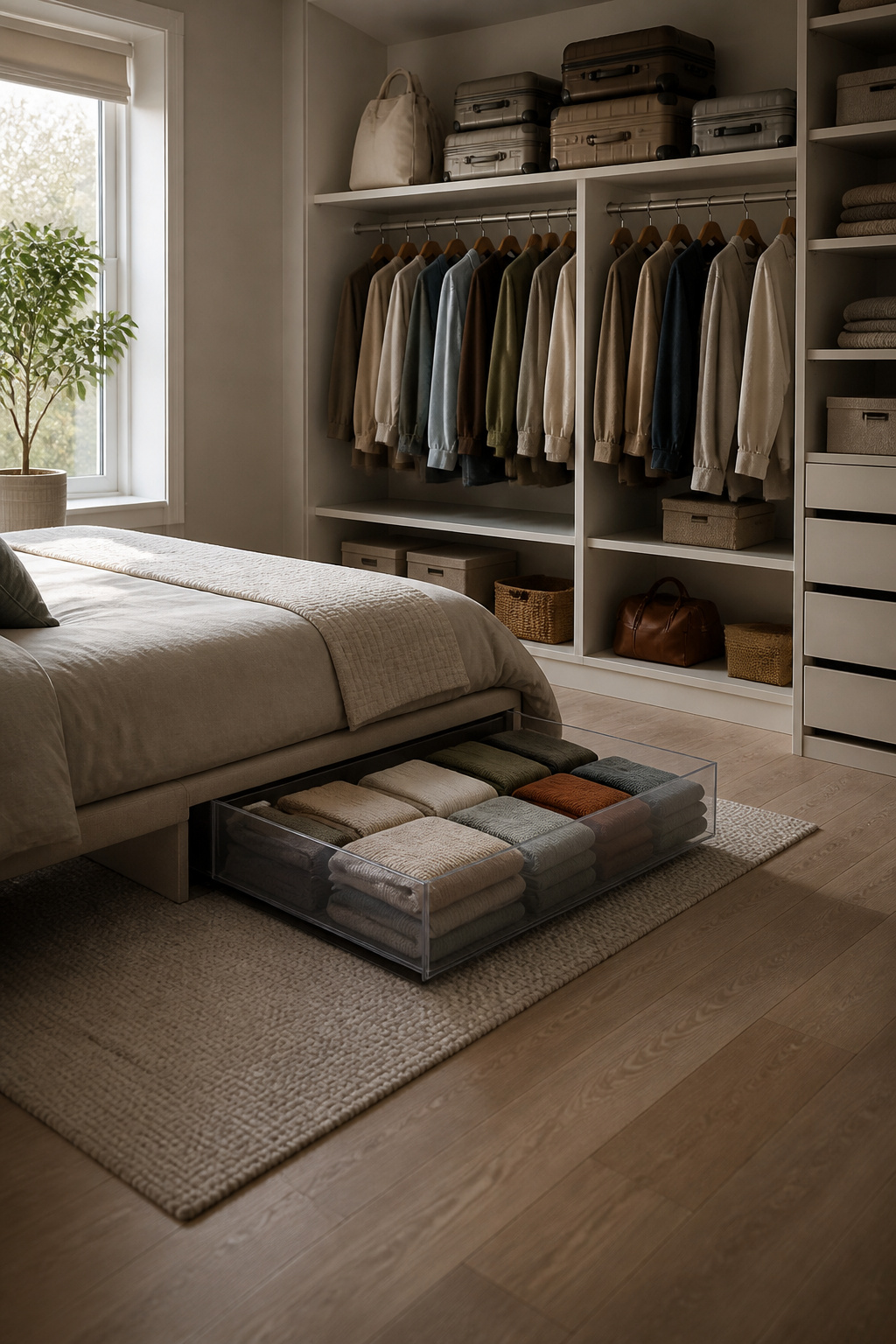
The Iris Under Bed Drawer sits just under six inches tall and glides in and out smoothly, which matters when you are pulling out sweaters at 7 a.m. without wanting to wrestle the bin. At $25 to $30, it costs about what two cheap takeout dinners run, and the 30-inch depth fits most bed frames without sticking out into your walking path. I would watch the fill level, though; the unit tips forward slightly when it is overloaded or pulled too far, and the plastic can chip in shipping without being worth the return hassle.
Suitcases already collecting dust in the closet make decent free storage for the same off-season load. Fill them with ski coats or summer linens and slide them under the bed or park them on the top shelf where they are out of the prime real estate. The top shelf and the extreme ends of the rod act as what organizers call cold zones: visible enough that you remember the items exist, but far enough from daily reach that you are not shoving past them every morning.
Borrowing space in a guest closet works if you have one and if the guest actually shows up rarely enough that your bins do not become furniture. A rental storage unit for one person’s seasonal rotation has never made sense to me; you are paying monthly to house clothes that cost less than six months of the unit. The math only shifts if you are holding heirloom fur or a full ski wardrobe, and most renters are not.
Frequently Asked Questions
How do I organize a small closet?
Use vertical space and over-the-door organizers to maximize every inch. A second rod hung below shirts, tension rods wedged into corners, and pocket organizers on the back of the door all pull dead space into service without drilling into walls. The ceiling shelf above the hanging rod and cascading chains can practically double what the closet holds.
What are the best hangers for closet organization?
Slim velvet hangers are the best all-around choice, saving roughly 50% more rod space than standard plastic or wood and keeping silk and knits from sliding off. The Amazon Basics set runs about $21 for fifty. Reserve wooden hangers for blazers and heavier coats; velvet hangers will distort the shoulders of bulky items over time.
How can I store off-season clothes?
Label every bin with the season and year, then move it to a cold zone: the shelf above the rod, the far end behind the door swing, or flat under the bed. Suitcases already in the closet work as free storage; fill them and slide them out of the way. Keep one mid-weight layer in the active closet until late spring no matter what the forecast says.
What can I use to organize my jewelry?
Flat trays with felt bottoms and divided compartments keep earrings paired and necklaces dust-free in a drawer. For pieces you reach for often, wall-mounted hooks or a small cork board keep chunky chains untangled and visible. A thrifted shallow tray with a $4 felt liner and your own small bowls costs less than a $20 velvet tray set and moves with you when you relocate.
How can I maximize closet space?
Add a second lower rod for shirts and pants, use cascading hangers to pull vertical air into service, and clip a hanging shelf onto the existing rod for light sweaters. Over-the-door organizers and S-hooks through belt loops turn every surface into storage. The one move that matters most is decluttering first: remove anything unworn in a year before deciding on any hardware, since a third less clothing often means a simpler system altogether.