
A bathroom spa in 2026 can run from a $4 Trader Joe’s candle to a $4,000 heated floor that fails in two winters. What separates the ones that last from the ones that photograph well is whether the change can travel with you when the lease ends. The 700 GSM towel that actually dries you, the bamboo mat that dries before mildew sets in, the battery-powered sconce that leaves zero trace: these are the details that hold up past Wednesday.
1. Use Natural Elements
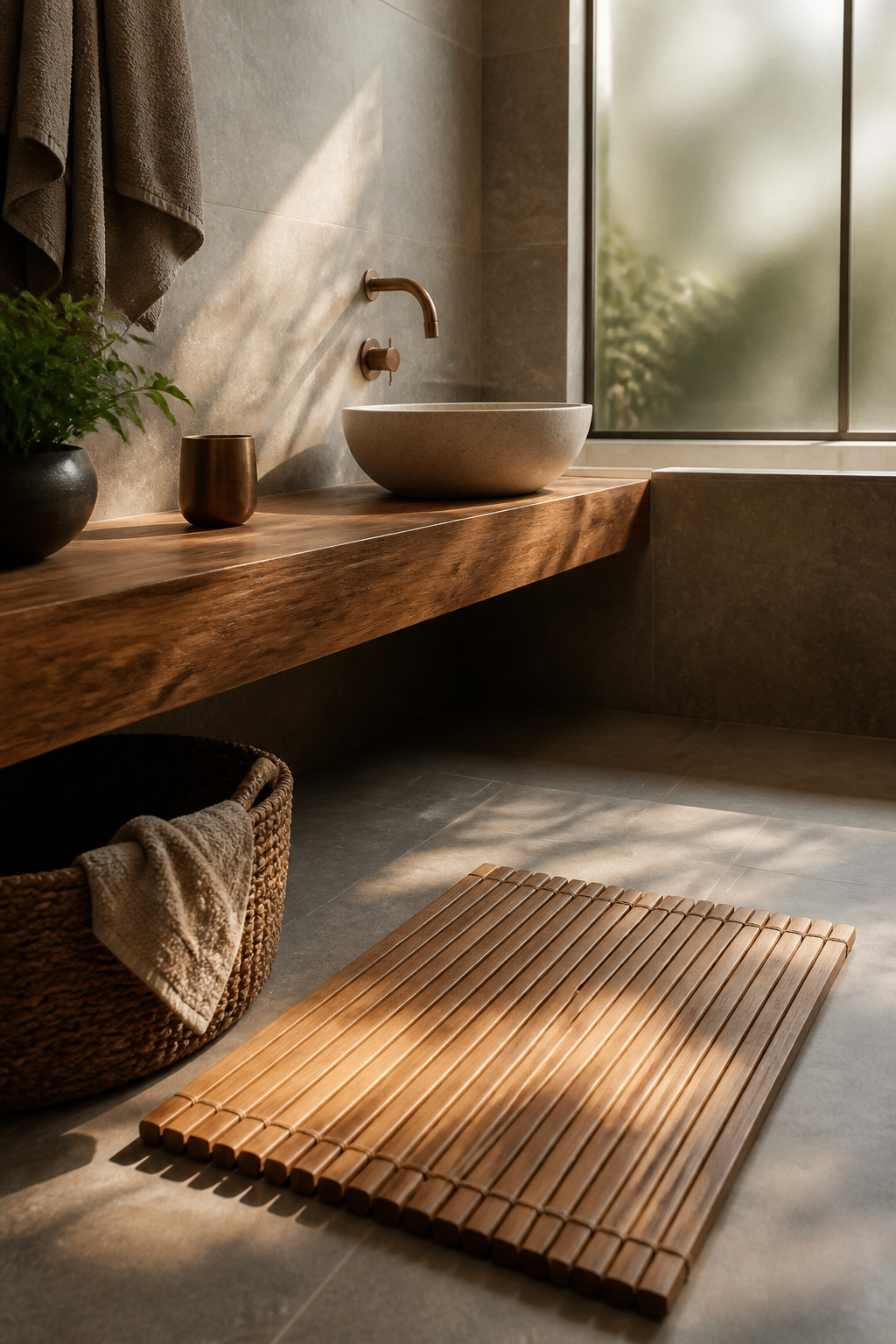
Natural materials like wood, stone, and bamboo are essential for any spa-inspired bathroom. The warmth of wood grain against cool tile does more than look balanced; it signals, somewhere below conscious thought, that the room is connected to living things rather than manufactured ones.
Stone brings permanence and variation that keeps a small space from feeling sterile. Large-format slabs or distinctive tile patterns establish visual flow where standard fixtures fight for attention. Sealing matters here; porosity is the enemy in a steam-filled room, and regular reapplication protects the investment. For renters, stone-look peel-and-stick tiles offer the same sensory depth without the commitment or the sealing schedule.
Bamboo and reed fill the gaps between heavier elements. A bamboo bath mat runs about $25–40 and dries faster than fabric, which means less mildew behind the toilet. Teak shower benches serve the same purpose with more weight; they tolerate wet cycles without warping and can move with you when the lease ends. Reed baskets or wooden caddies keep counters clear, which in a rental bathroom is often the single biggest visual upgrade available.
The metal finish that ties these together is bronze. It develops patina rather than corroding, and it sits comfortably against both warm wood and cool stone without demanding the room’s full attention.
2. Layered Lighting
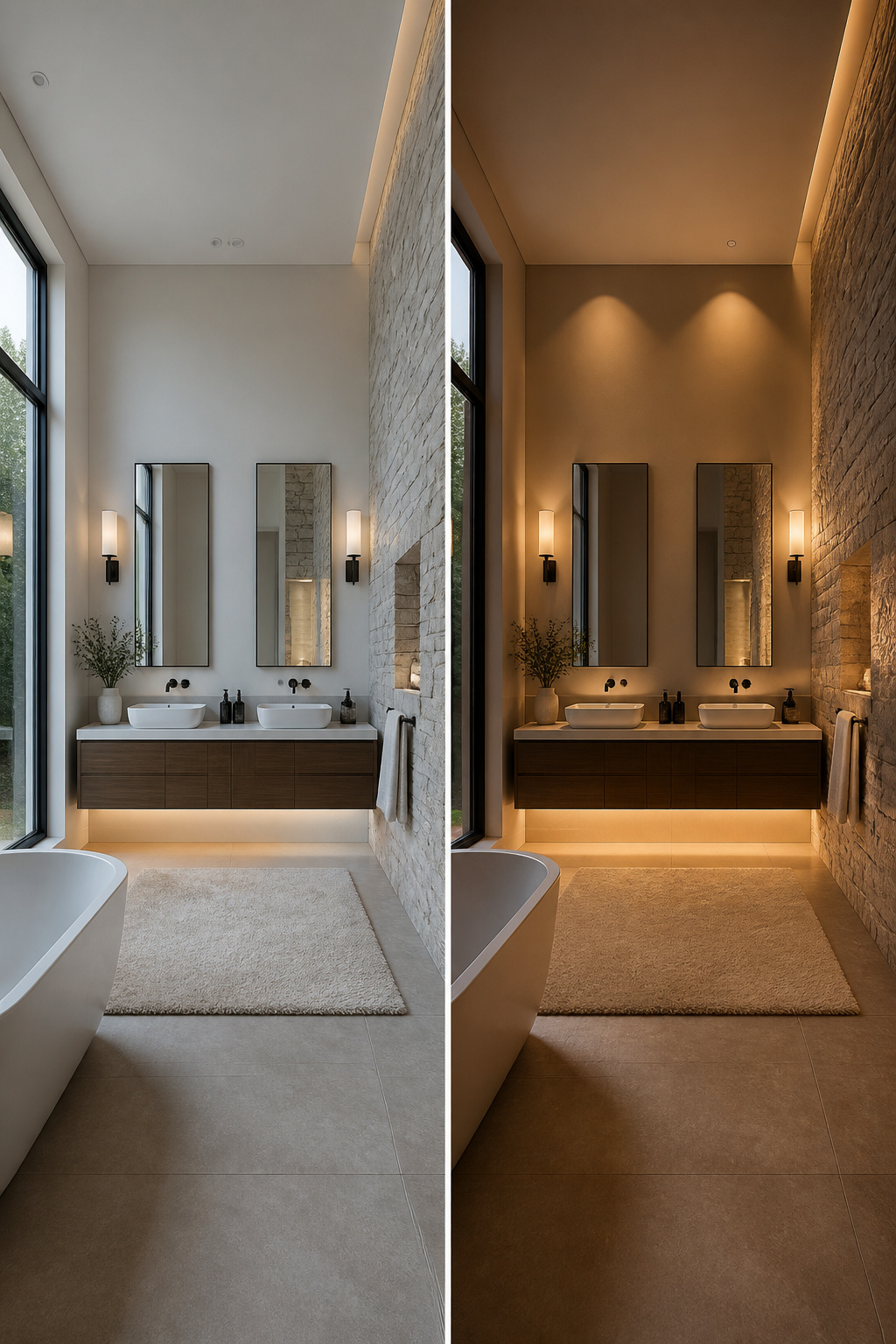
Layering is the sought-after approach as it combines ambient, task, and accent lighting to support functionality and mood. Soft ambient cove lighting in a high ceiling provides a gentle, overall glow and reduces harsh shadows. For most bathrooms, that means a dimmable overhead fixture or a wall sconce you can dial down for evening use.
Task lighting belongs at the vanity. Adjustable or dimmable sources there give you clarity for grooming without trapping you in a single brightness. The color temperature matters more than the fixture price: warm white flatters wood, woven baskets, and cream textiles, while mismatched bulbs leave one corner blue and another orange.
Accent lights add depth where the room has none. Backlit shelves, flush LED soft white strips beneath vanities, or small fixtures behind mirrors emphasize texture and shape. Renters can get there with plug-in or battery-operated options rated for damp locations, positioned safely away from splash zones. Never place a portable lamp, plug, or extension cord where it could be reached from a tub or shower.
3. Incorporate Plants
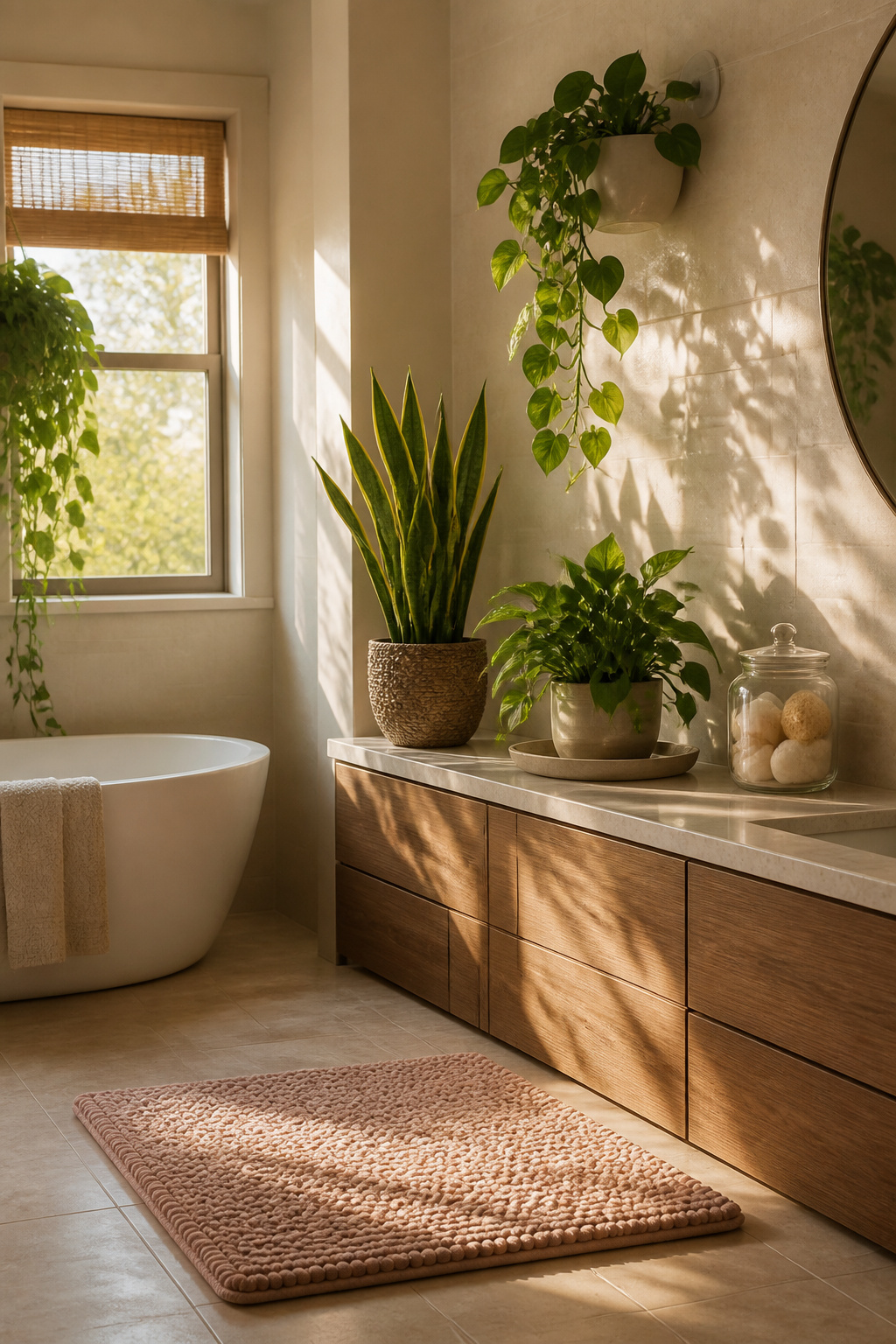
Pothos and snake plants are the only two I have kept alive through multiple bathrooms, and that is because both tolerate the dim light behind a shower curtain and the sudden humidity spike when someone actually uses the room. Ferns looked lush for about three weeks, then browned at the tips from the mineral content in my tap water; switching to distilled helped, but not enough to justify the routine. Orchids are the plant I keep trying because the blooms feel genuinely spa-like, and they are also the plant I keep killing because the bathroom temperature swing between my morning shower and an unheated room overnight shocks them.
For renters, suction-cup planters on the tile itself save the drill holes a landlord would notice, though the cheap ones drop after a few weeks of steam cycles. A humidity tray under a pot on the counter works better than misting, which I tried for a year and which mostly left water spots on the mirror. The plants that survive being lifted off the windowsill and set in the tub while I clean are the ones that stay; the ones that sulk for two days after being moved are the ones I stopped buying.
4. Upgrade Textiles
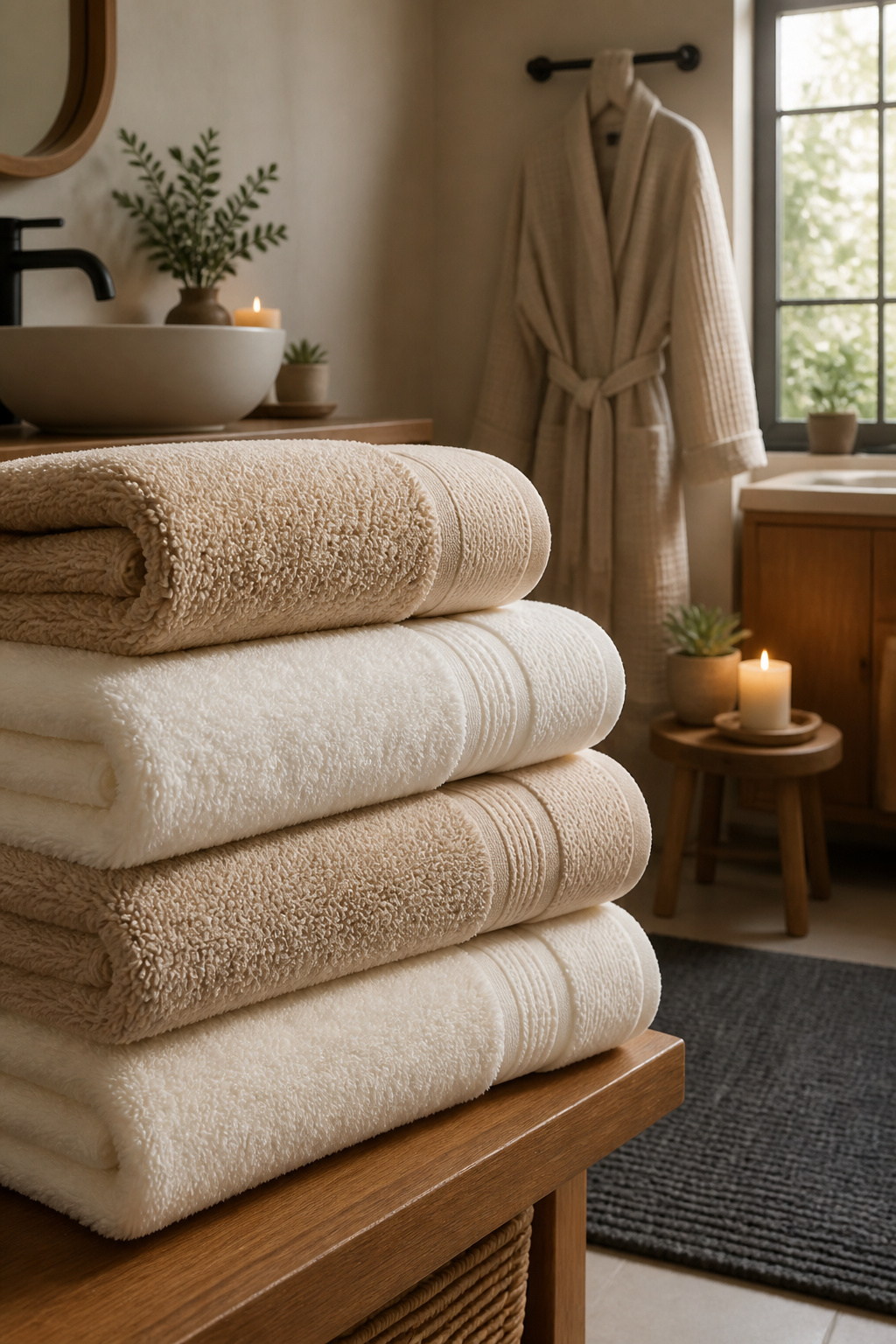
The first time I tried to build a bathroom spa feel, I ordered a thin Turkish-cotton set that photographed beautifully and arrived feeling like a dish towel. 700 GSM is the floor for towels that actually dry you instead of just pushing water around, and most of those budget bundles clock in closer to 300. GSM, grams per square meter, is the number that matters; anything below 500 starts to feel like a beach wrap after three washes.
Hotel quality mostly means long-staple cotton at that 700–900 GSM range with double-turned edges, and the good news is you do not need a hotel budget to find it. TJ Maxx and Marshalls get overstocks from the same mills that supply department stores; I have pulled 800 GSM ringspun sets out of there for under $25 per towel. Target’s Threshold Performance line runs a consistent 700 GSM and goes on sale seasonally. Costco’s Charisma or their occasional Hotel Signature stock are the best value per ounce if you already have the membership.
Bath mats follow the same rule. Memory foam toppers look plush in packaging but flatten to pancakes in six months; a dense cotton mat at 1200 GSM or higher keeps its structure and actually absorbs water from your feet. Shower curtains and robes matter too, though less for weight than for hand-feel. A heavyweight linen or waffle-weave cotton robe in the 400 GSM range beats any thin microfiber "spa robe" that catalogs push. I learned that after the towel mistake, walking through Target and actually touching the fabric before buying.
5. Create a Relaxation Zone

A rainfall showerhead or a deep soaking tub can become a physical and visual chill-out zone, but the real work happens in what you build around it. Seating is the part most people skip, and it shows. A waterproof teak bench in the shower gives you somewhere to sit under steam or just park a washcloth within arm’s reach. No built-in bench? A folding stool that stores flat against the wall does the same job and disappears when the floor needs to dry.
Renters have more room here than you’d think. A removable rainfall showerhead threads onto the existing arm in about two minutes and travels with you. A portable bath tray spans the tub without a single screw, holding a book or a cup while keeping the ledges clear enough to feel intentional, not cluttered. I tried the permanent-storage approach once, loading the tray with bottles and brushes. It turned the tub into a shelf I never wanted to sit in. The tray works when it holds only what the ritual needs right then, plus one folded towel within reach.
No tub at all still works. The routine matters more than the fixture size: a warm shower, five quiet minutes, a robe that doesn’t live in the bedroom. The transition from busy day to calm evening is what you’re building, not the marble footprint.
6. Aromatherapy

The first diffuser I tried sat on the tank of my toilet and looked like a little white stone mushroom. It lasted about four months before the ceramic disc clogged with oil residue and started spitting instead of misting. That residue is the real issue with diffusers in a bathroom: the oil film drifts, settles on the mirror, and turns into a hazy ring that takes vinegar to cut. I moved to shower steamers after that, which solve the surface problem entirely because the scent stays in the water stream.
Candles are the cheapest entry point and the most hazardous. A Trader Joe’s cedarwood soy candle runs about four dollars and throws enough scent for a half bath, but an open flame six inches from a polyester shower curtain is not a risk I take anymore. I keep one on the back of the closed toilet lid now, lit only when I am in the tub and watching it.
Bulk essential oils from any health store work out to pennies per drop. I bought a sixteen-ounce bottle of eucalyptus three years ago and am maybe two-thirds through it. For shower steamers, baking soda, citric acid, and a few drops of that oil pressed into a silicone ice mold dry overnight and cost under ten cents each. They fizz for about ninety seconds, which is shorter than a store-bought steamer but long enough for the hot water to carry the scent up. The store versions last three minutes and cost a dollar apiece. That math is easy.
7. Minimalist Design
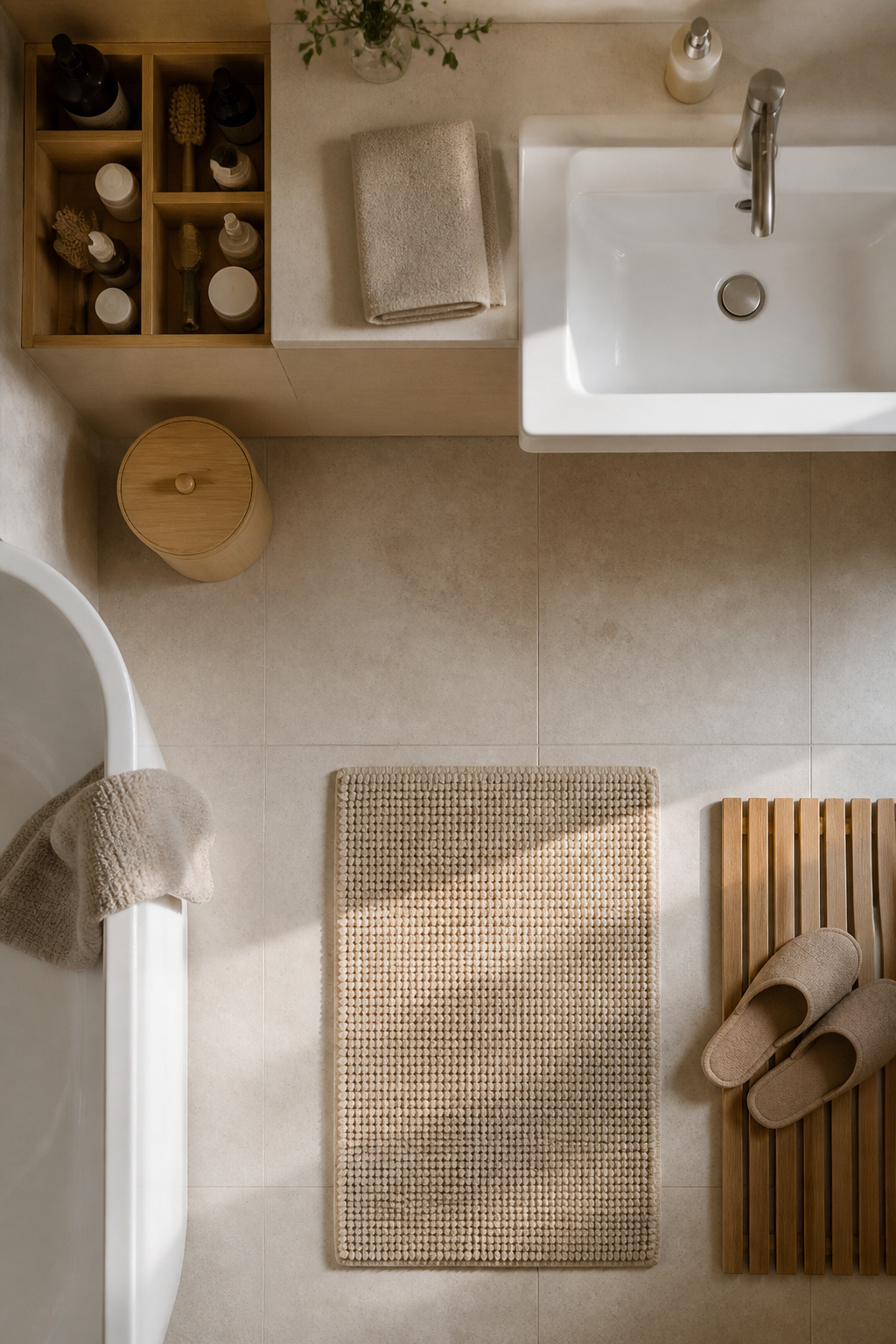
A bathroom spa starts with what you remove, not what you add. Spas keep only necessities visible, and the daily practice of putting everything else away matters more than the containers you buy to do it. I learned this the expensive way: matching reed bins still look like clutter if they are full of half-empty bottles you meant to toss.
The system that actually holds up gives each routine its own zone. Daily items sit where you reach them; backups go in drawers or a cabinet you open only to refill. If an item never makes it back to its assigned spot, the location is wrong, not your discipline. Move the thing closer to where your hand already goes.
The evening reset takes about five minutes. Hang towels to dry, return products to their zones, wipe water from the counter, straighten the curtain. Once a week, refill what is low and pull out empties. That rhythm keeps the room from sliding back into chaos, and it shows you fast what storage is not working.
8. High-Quality Fixtures
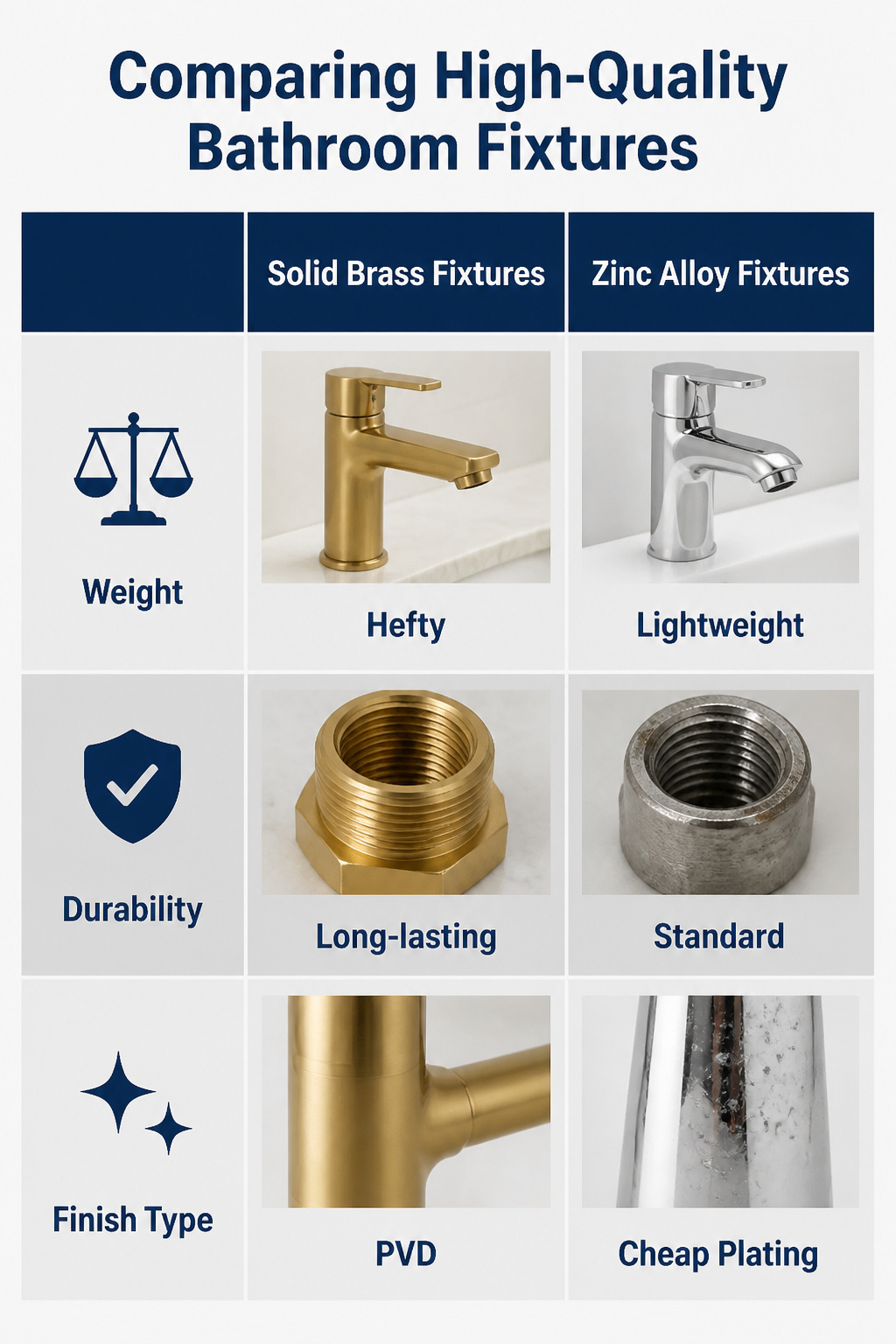
Solid brass fixtures carry weight in your hand in a way zinc alloy never does, and that heft usually means the threads inside will survive three or four installs instead of stripping on the first. Ceramic disc cartridges are the other detail worth checking for: they turn smoothly and they do not drip, which matters more in a bathroom spa setup where the sound of a faucet is part of the point. Finishes labeled PVD or physical vapor deposition cost a little more upfront but do not bubble or spot the way cheaper plating does, especially near toothpaste and cleaning sprays.
A stone countertop elevates the room more than almost any other single change, but prefab vanity tops in quartz or cultured marble get you most of the look for a fraction of the price. I have used contact paper over existing laminate twice now, once on a rental vanity and once on a laundry sink, and the trick is buying the thicker 3-mil product and replacing the edge banding so the seam does not show from standing height.
Renter-friendly swaps that need no plumber include handheld shower heads that thread onto the existing arm, faucet aerators with built-in flow restrictors for a softer stream, and cabinet hardware that changes the whole feel of the vanity for under thirty dollars.
9. Sound System
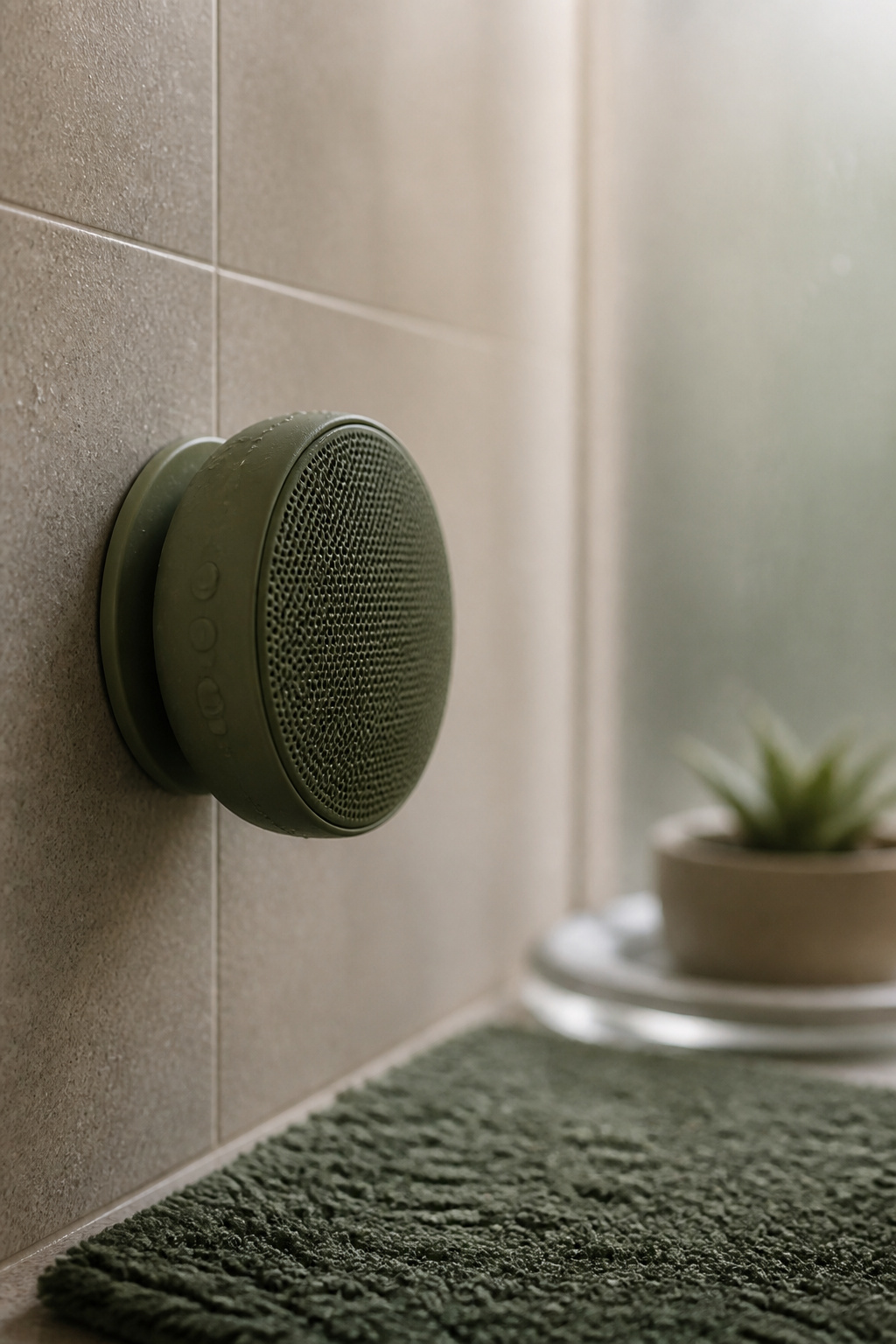
The cheapest sound fix I tried was the phone-in-a-bowl trick, propping my phone inside a ceramic cereal bowl to amplify the speaker. It worked for about three showers before the humidity got in and the sound went muddy. Water-resistant is not waterproof, and that distinction matters once steam starts condensing on every surface. A phone speaker rated IPX4 can handle splashes, but sustained moisture eventually seeps past the grille and dulls the output permanently.
A dedicated waterproof Bluetooth speaker, rated IPX7 or IP67, is the replacement that actually survives the room. I spent around $35 on a compact cylinder that suction-cups to the tile, and after eight months the audio is still clear. The water-resistant options Hilliard mentions in neutral shades blend fine, but check the rating before buying. IPX7 means it can survive submersion in a meter of water for thirty minutes; IPX5 only handles sprayed jets. For a steamy bathroom, that difference is worth the few extra dollars.
Fabric towels and a shower curtain already soften the hard echoes that make bathrooms feel clinical, so the speaker does not need to fight reverberation too. A short playlist, kept to fifteen or twenty minutes, signals the end of the day without adding another screen to stare at.
10. Use of Color
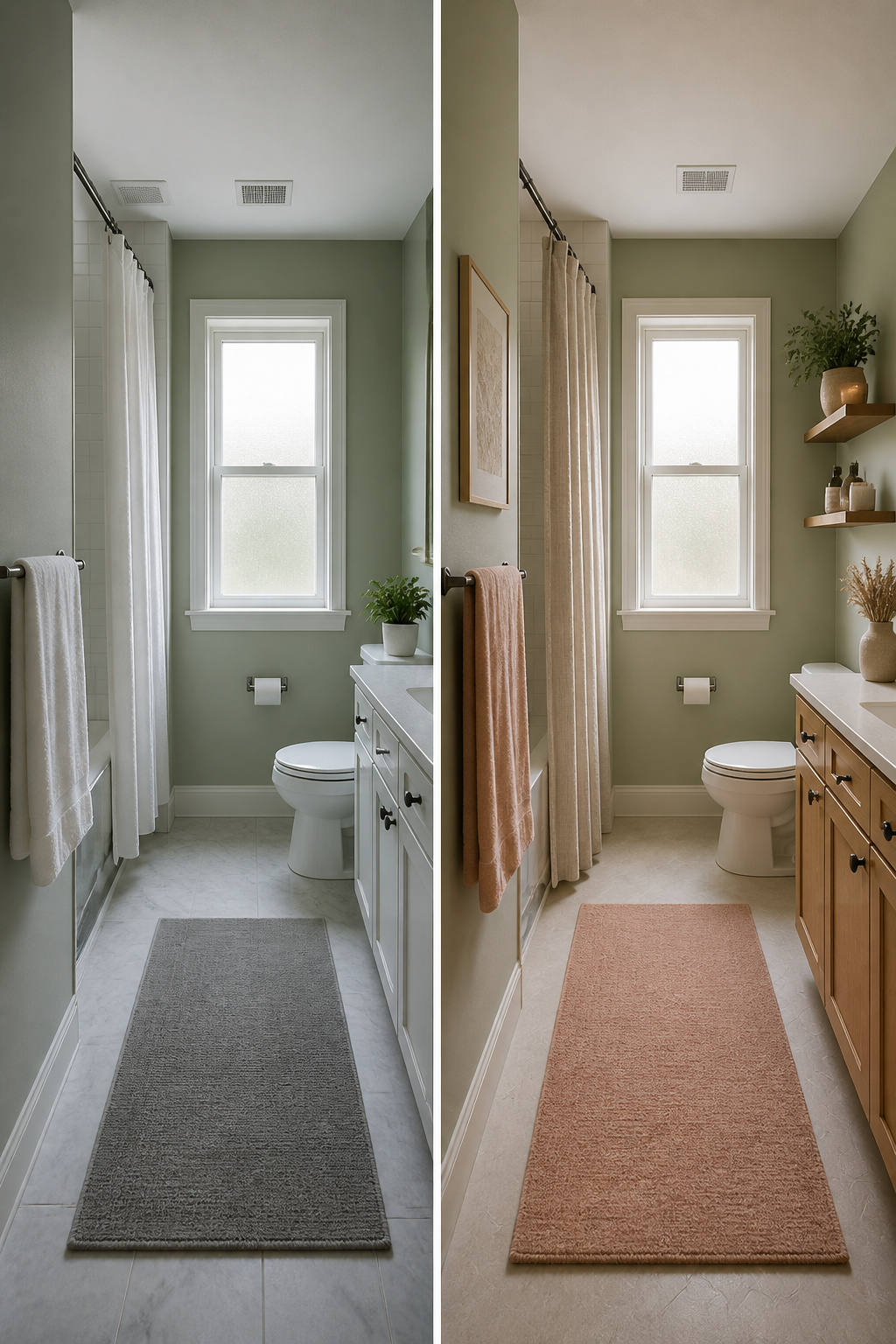
Warm white, beige, mushroom, soft sage, pale clay, muted blue, and natural wood tones are the colors that actually hold up in a bathroom under real morning light. I learned that the hard way after painting a previous rental bathroom in a cool gray that looked spa-like in the store and institutional by 6 a.m. Test the color beside your tile and flooring at different times of day before you buy. Paint is the most direct route, but it is not the only one.
If your lease says no paint, removable wallpaper can carry the palette on one wall without risking the deposit. More often, I have relied on towels, a shower curtain, a bath mat, and a few pieces of removable art to do the work. The quote that stuck with me from planning this out: "Soft neutrals, muted blues, gentle greens, and all-white schemes are ideal for creating a spa-like atmosphere in bathrooms." What that means in practice is choosing two or three related neutrals, not stacking competing colors. Black or aged brass in small doses, a mirror frame or a tray, keeps the quiet palette from going flat.
The textiles become your paint. A warm white shower curtain against mushroom towels and a pale clay bath mat reads as intentional without changing a single permanent surface.
What Renters Can Actually Change
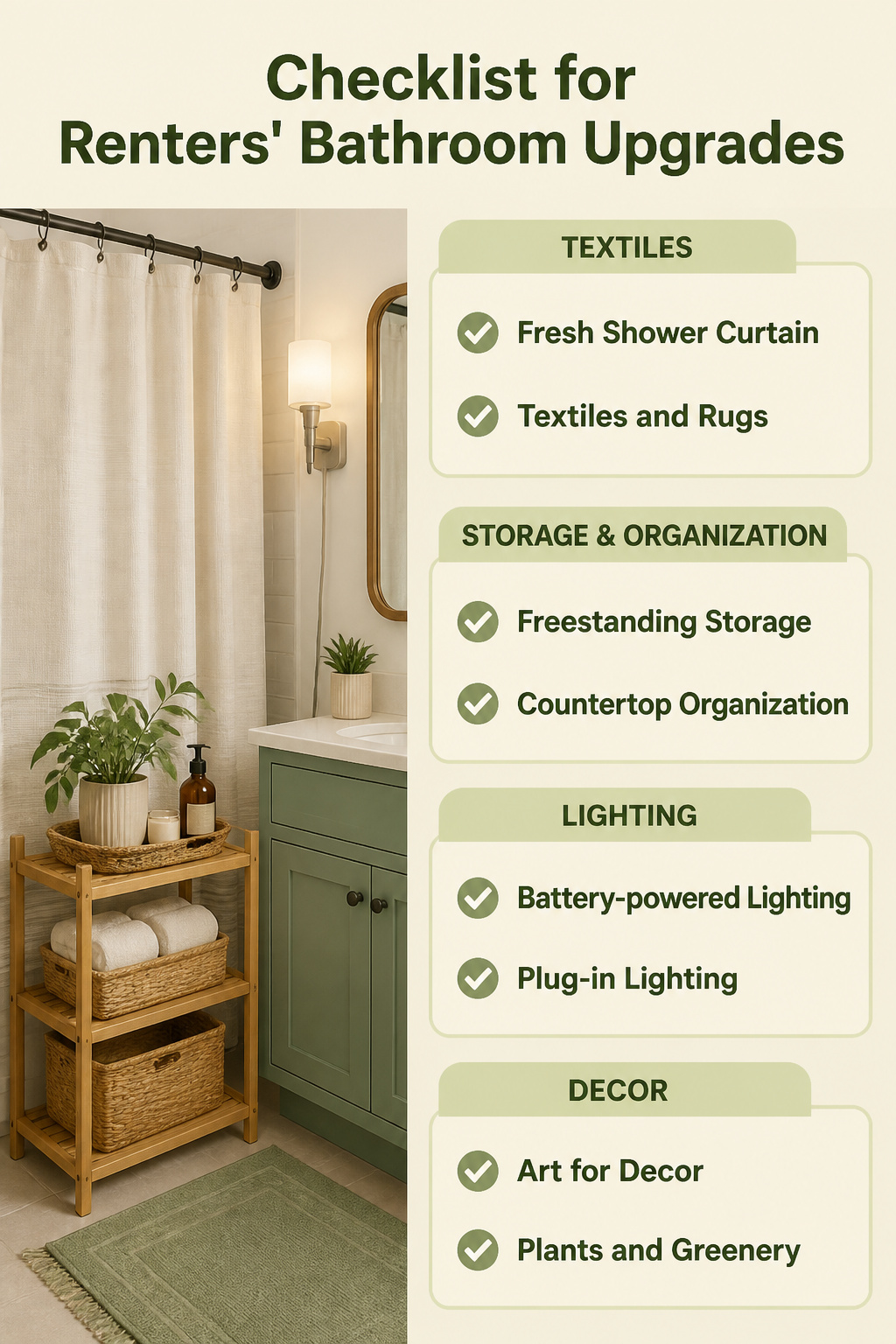
Renters can build a real bathroom spa, but the trick is knowing what actually travels with you when the lease ends. Removable changes are the whole game: textiles, a fresh shower curtain, countertop organization, freestanding storage, artwork, and lighting that plugs in or runs on batteries. Paint, drill holes, or swap fixtures only after written permission, and even then the deposit hangs in the balance.
In my experience, landlords notice wall damage and water stains fast. They do not notice a tension-rod curtain replaced with a weighted linen one, or a battery-powered sconce stuck to the tile with adhesive strips. I lost part of a deposit once for a mounted shelf with visible anchors, but the freestanding bamboo stool and the plug-in dimmer lamp never came up at walkthrough. The lesson cost about $80, which was more than the shelf had been worth.
Plug-in lighting is the easiest win most renters skip. A small waterproof-rated LED on a cord, hung over the existing fixture with a hook, shifts the whole mood for under $30 and leaves zero trace. Battery puck lights inside a medicine cabinet do the same. Keep the original hardware in a labeled box; reinstalling it takes ten minutes and removes one more reason for a deduction.
Colors That Survive Morning Light
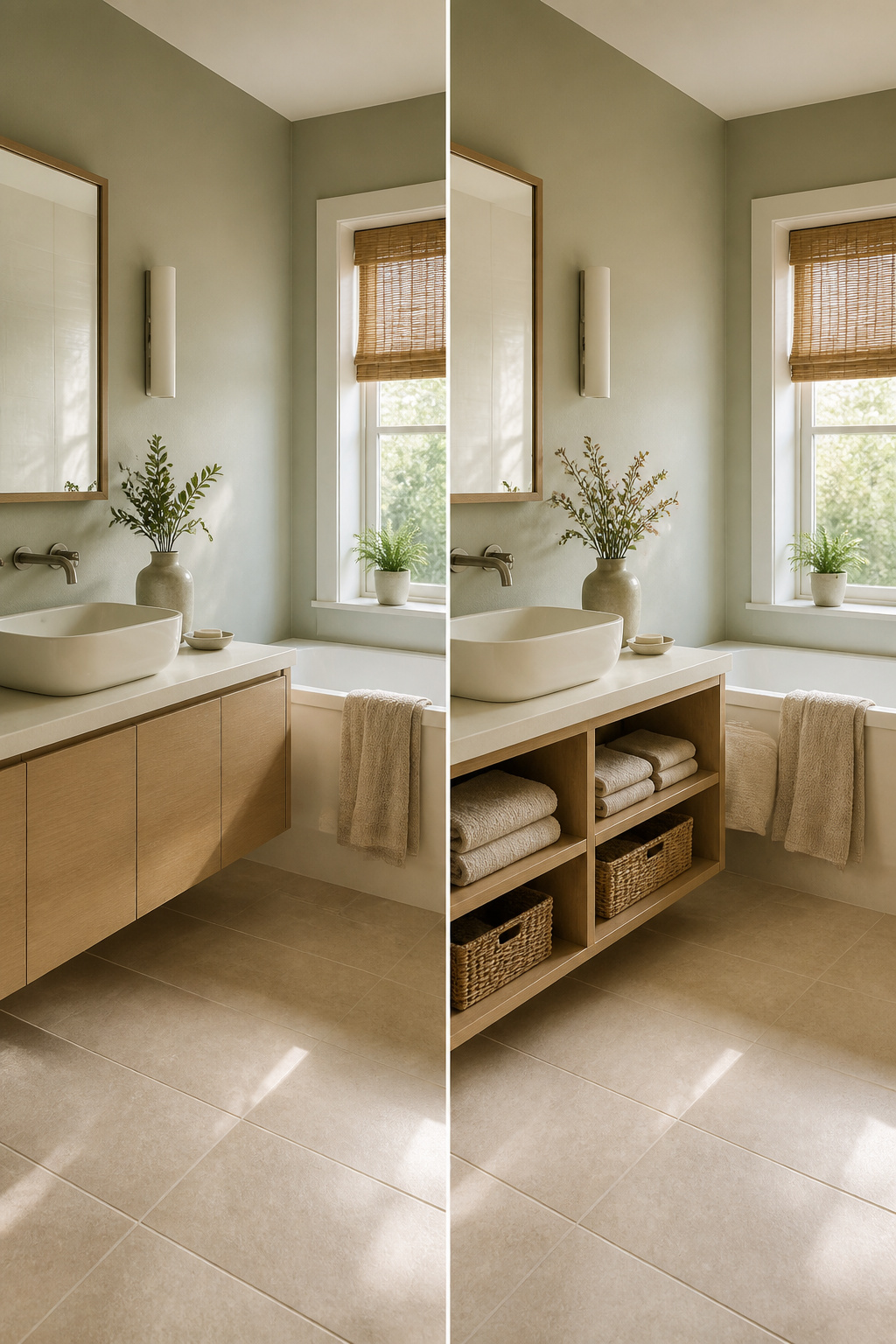
The color that reads as soft sage at noon can turn institutional gray by 6 a.m. under cheap LED bulbs, and I learned that the hard way with a guest bath I painted two years ago. The sample looked warm and quiet in the afternoon sun, but morning light stripped every green note out of it, leaving something closer to a hospital corridor. Test your paint at the hour you actually use the bathroom, not when the light is flattering.
Warm white and beige pink carry enough pigment to hold their tone through both conditions, though beige pink can shift unexpectedly toward peach if your bulbs run even slightly warm. Muted blues and greens are the standard recommendation for spa calm, and they do work, but only when the undertone leans clearly green rather than gray. The gray-based ones die under low morning light.
Matte and eggshell finishes help by softening reflections rather than bouncing harsh glare back at you. I skip pure white entirely; it survives the bulb test but reads sterile by afternoon, and a spa feeling needs some warmth to feel lived-in. Pale clay and mushroom have been more reliable in my experience than the trendier sage shades, though they demand light wood or stone tile nearby to keep from feeling flat.
Metallic accents help, but only as small moves. A brass towel bar or a thin mirror frame adds enough dimension to keep a muted palette from going muddy without introducing a color that fights the morning light.
The Evening Reset
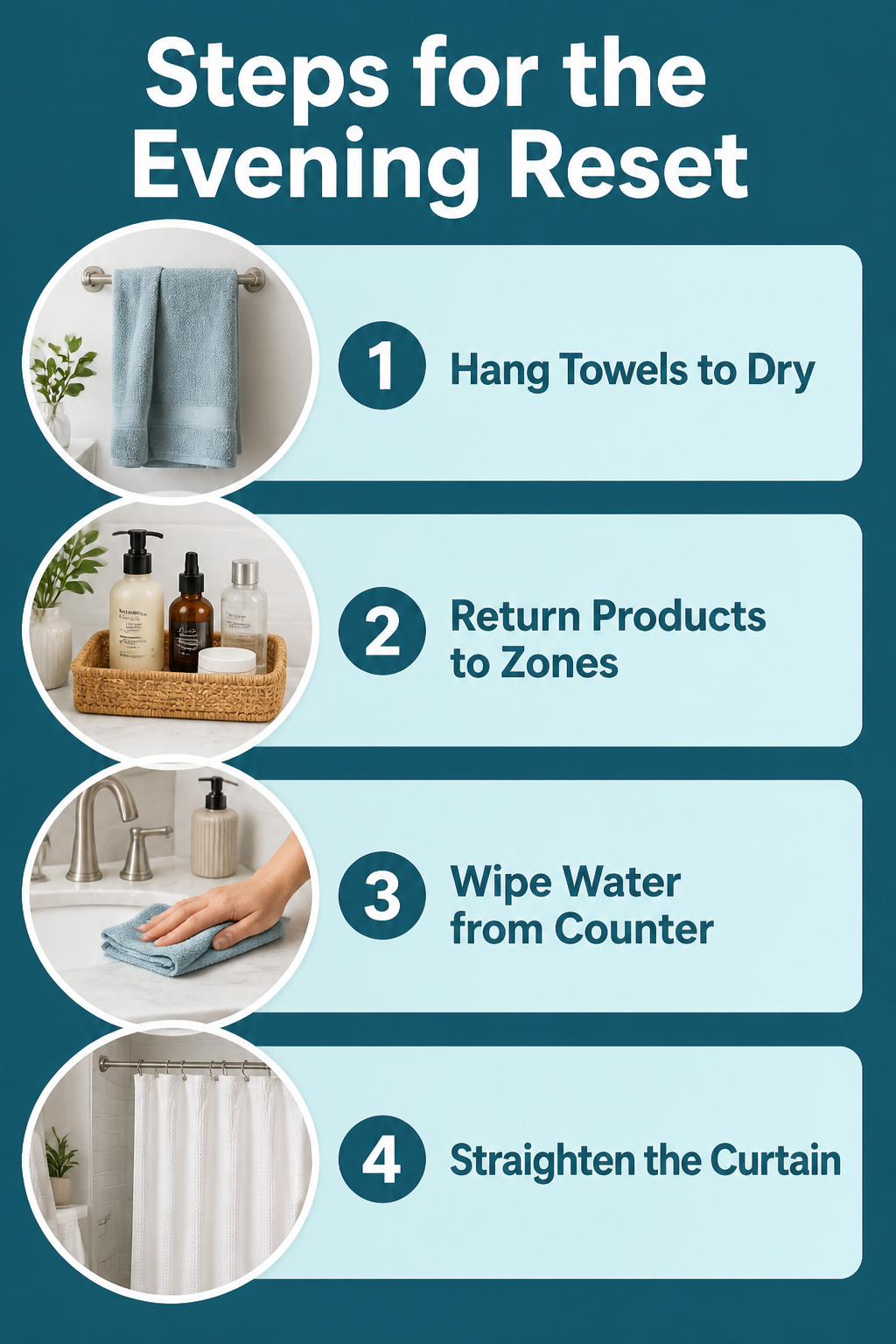
The evening reset is what separates a bathroom spa from a styled photo that falls apart by Wednesday. After the last person uses the sink, hang towels to dry, return products to their zones, wipe visible water from the counter, and straighten the curtain. Five minutes, done. The version that takes fifteen minutes happens once a week: refill the soap, toss the empty serum bottle, check whether the backup toilet paper still fits in its drawer or if it has migrated to the counter again.
If an item never makes it back to its storage place, the location is wrong, not your discipline. I have moved the same face cream between three drawers before I admitted the first one was too deep to reach at night. Small caddies in reed or jute help when built-in storage is missing, but only after you measure what actually needs hiding. Natural bins look calm until they are stuffed with plastic tubes.
Skip the decorative organizers until you know the count. Buying the basket before the inventory is how the clutter returns in a prettier container.
The routine will break. A week of late nights and the counter holds three products, then six, then a pile. Recovery takes one evening reset, not a weekend purge. The Sunday version exists because the five-minute one fails sometimes, not instead of it.
Artwork and Water Features

Metal prints and sealed-frame photographs survive bathroom humidity where standard paper prints will mold within a season. I learned that after a framed concert poster grew a ring of green fuzz behind the glass; the frame had looked tight, but steam finds every gap. Canvas alternatives labeled "water-resistant" rather than fully sealed tend to sag and ripple above a tub. Hang anything with a paper core on the wall opposite the shower, not the adjacent one, and keep it at least a foot above typical steam height.
The small tabletop fountain I tried for running-water sound lasted about six weeks before hard water scaled the pump and the hum turned into a grind. Cleaning it meant disassembling a dozen pieces weekly. The replacement was simpler: a wide ceramic bowl on the counter, filled with water and a few floating gardenias or orchid heads changed every other day. It gives the same visual calm without the mechanical burden, and the flowers compost instead of clogging.
What I Skip and Why
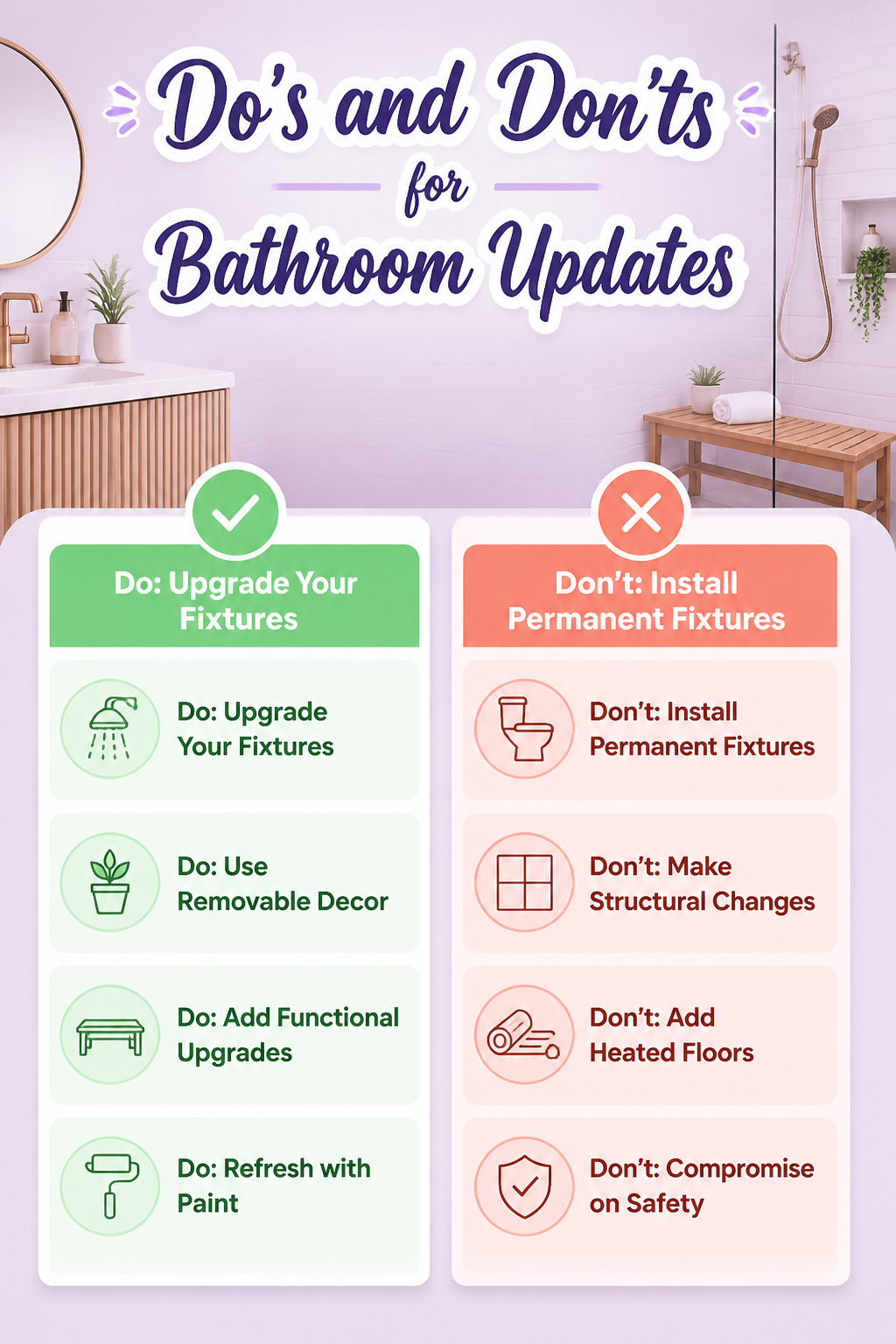
Heated floors came up twice while I was reading through project lists, and both times the numbers stopped me cold. The quote I asked for, just to see, ran north of four thousand dollars for a forty-square-foot bath. The contractor laughed when I mentioned it, not unkindly, just the laugh of someone who knew I would not do it. I did try an electric mat system instead, the kind you roll out under tile. Three square feet near the vanity actually got warm. The rest stayed concrete-cold, and the mat failed inside two winters.
That money went toward a solid teak shower bench and a handheld shower arm with actual pressure behind it. The bench gets used every morning. The mat is rolled up in the garage, waiting for a project I will probably never start. For a weekend budget and a rental timeline, heated floors are a fantasy that eats the budget for fixes you touch every day.
Frequently Asked Questions
How can I make my bathroom look like a spa?
Start with natural materials like wood, stone, and bamboo, then layer your lighting so you can dim the room for evening use. Plush towels at 700 GSM or higher and a strict evening reset routine, where everything returns to its assigned zone, keep the calm intact through the week.
What colors work best for spa bathroom ideas?
Warm white, beige, mushroom, soft sage, pale clay, muted blue, and natural wood tones hold up under real morning light. Test any paint sample beside your tile at the hour you actually use the room; cool grays and gray-greens often turn institutional under cheap LED bulbs at 6 a.m.
Can renters create a spa bathroom?
Yes, if every change is removable. Textiles, a weighted linen shower curtain, freestanding storage, and plug-in or battery lighting shift the mood without touching the deposit. Keep the original hardware in a labeled box and reinstall it before walkthrough.
How do I keep a spa bathroom from becoming cluttered?
Give each routine its own zone and keep only daily items visible; backups belong in drawers. If something never makes it back to its spot, move the storage closer to where your hand already goes. A five-minute evening reset, hanging towels and wiping the counter, prevents the Sunday purge.